





In the long time of Western sculpture, forms never completely disappear. They change state, matter, context, but continue to resurface as traces of a memory that does not allow itself to be fixed in a single image. In this perspective, the reference to Mnemosyne, the personification of remembering and mother of the Muses, according to Hesiod, seems almost inevitable: form seems to hold an engram, a sedimentation that transcends languages and ages. Starting from this consideration, Greek statues of the Classical and Hellenistic periods, since their emergence in the fifth century B.C., have known a stratified history, marked by continuous displacements, restorations, fragmentations, reuses and copies, until their dispersal in submerged wrecks or their rediscovery in modern times in the great centers of the Mediterranean.
Within this discontinuous flux, sculpture thus presents itself as an organism that accumulates time. It is not a stable element. It is precisely in this delicate balance of preservation and change that the work of Massimiliano Pelletti (Pietrasanta, 1975), an artist who has always been deeply connected to ancient history,archaeology and geology, areas that feed his research and his formal universe, fits. His practice is located within a reflection on the material memory of forms and their continuous reworking, as if the works were touched by a mnestic tension.
“Since childhood I have always had a strong passion for the old, for old things, for the past time. I’ve always been a rather nostalgic person and I’ve naturally been fond of history, of everything that holds a memory,” the artist tells me. “In my work I am not so much interested in showmanship, but rather in poetry. I would like those who are in front of a work to be able to perceive this dimension, establishing a deep, emotional relationship that is not based only on immediate wonder.”
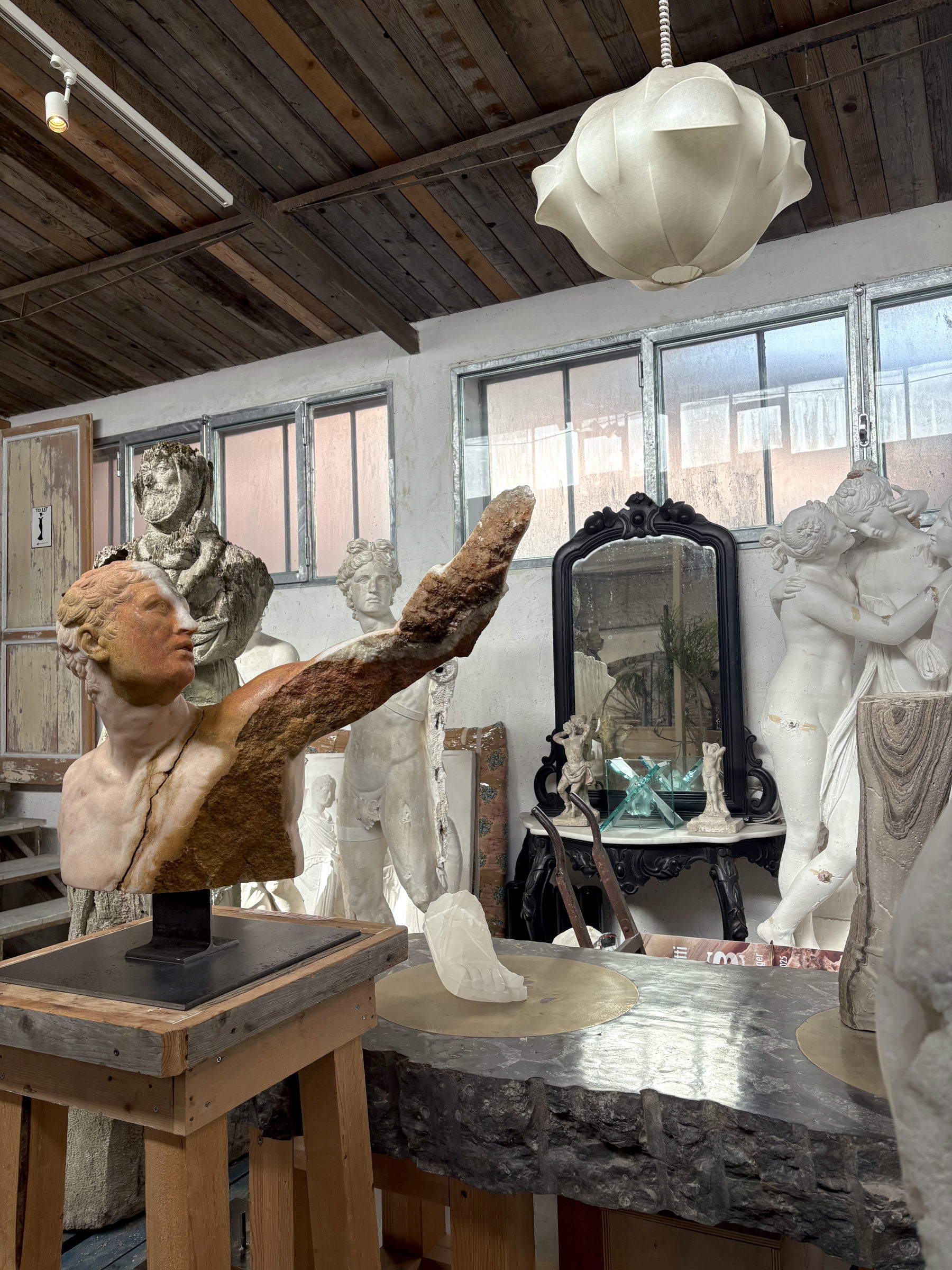
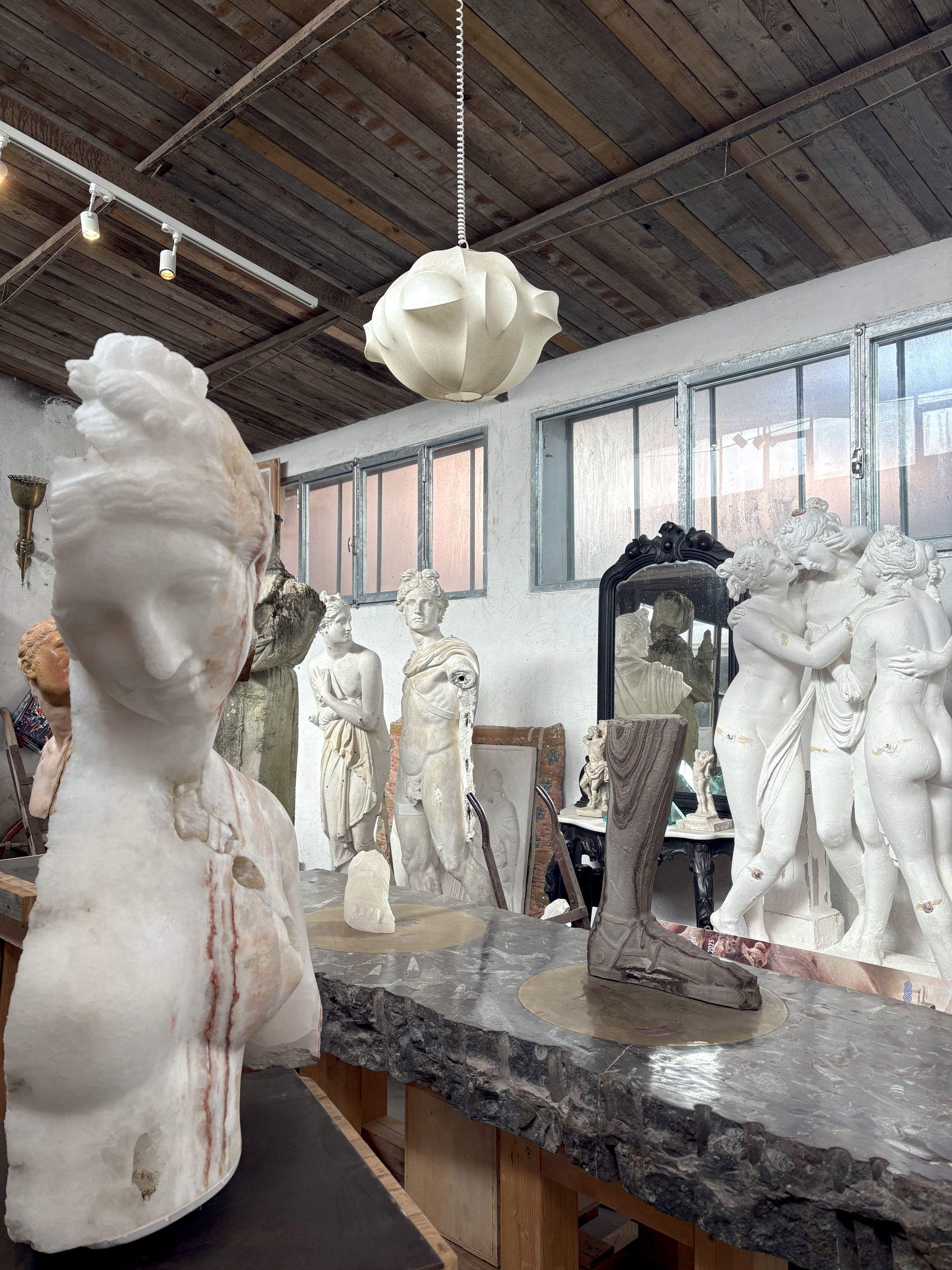
From childhood, Pelletti came into contact with marble working within the family artisan workshop, where he learned traditional techniques from his grandfather. His first sculptures were born precisely out of the use of marble, a material that is the identity of the artist’s home territory, employed as the central element of his formal construction. In the initial phase, the sculptural language is linked to a direct manual skill, still deeply connected to the local tradition of stone working. Subsequently, his field of investigation gradually expands toward the use of quartz, onyx, limestone and other rocks, that is, stones rarely employed in sculpture. The shift toward different stones, as opposed to white marble from the Apuan Alps, introduces a change that becomes increasingly open to the geological variability of natural materials. Pelletti works the single rock element as a potential field of intervention and welcomes what nature bestows without pre-established hierarchies, almost recognizing in the material a primal force that refers back to Gaea, the original mother of the Earth and the generator of every natural element.
His practice is developed through a rigorous yet experimental composition, in which matter is treated with almost compositional attention, without renouncing the unexpectedness it contains. The balance that exists between control and openness finds a reference in a core of traditional models: a collection of plaster casts of classical sculpture, inherited from his grandfather, which keeps alive the link with the history of representation and the academic transmission of forms. Within this system, his studio is configured as a place where the memory of sculpture manifests itself through different levels. A vast collection of plaster casts, including The Three Graces, Venus Italica, Michelangelo’s majestic Pieta, or even theApollo of Belvedere, occupies the space with heterogeneous subjects and dimensions, returning a kind of three-dimensional atlas of classical and Renaissance form. The presence of the collection takes on a special value. In fact, inside his studio, Pelletti explains to me that, to this day, it is increasingly difficult to encounter collections of plaster casts preserved in their entirety.
We can therefore consider the artist’s casts as memory devices. All casts preserve a trace, a passage, a transformation, a metamorphosis that refers back to the long history of copying and variation. In this sense, the studio becomes an archive of engrams, understood as imprints that invest the material and structure its perception. The engram in the case of the artist’s plasters is a superposition of processes, the residue of a continuity that manifests itself through form.
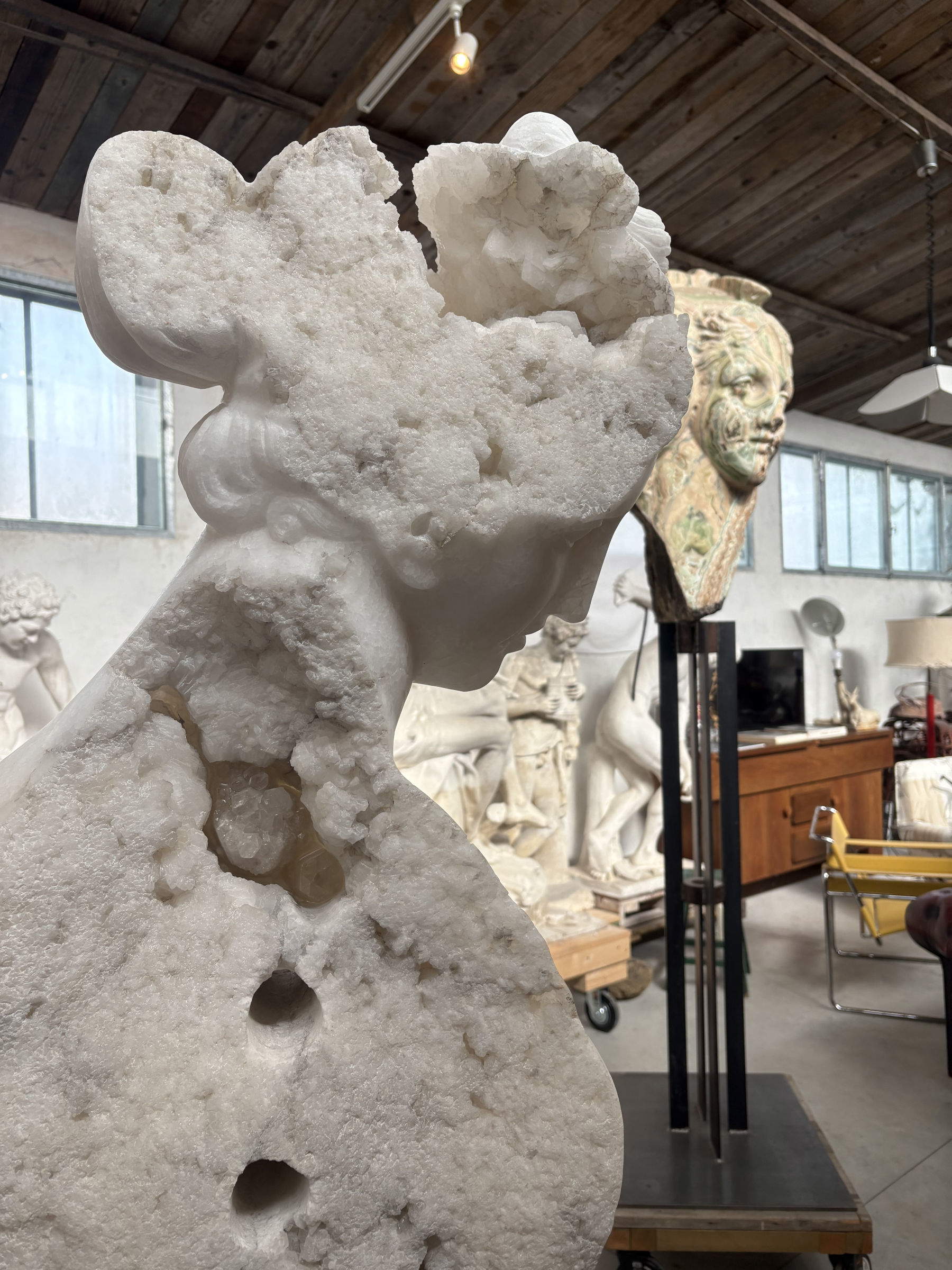
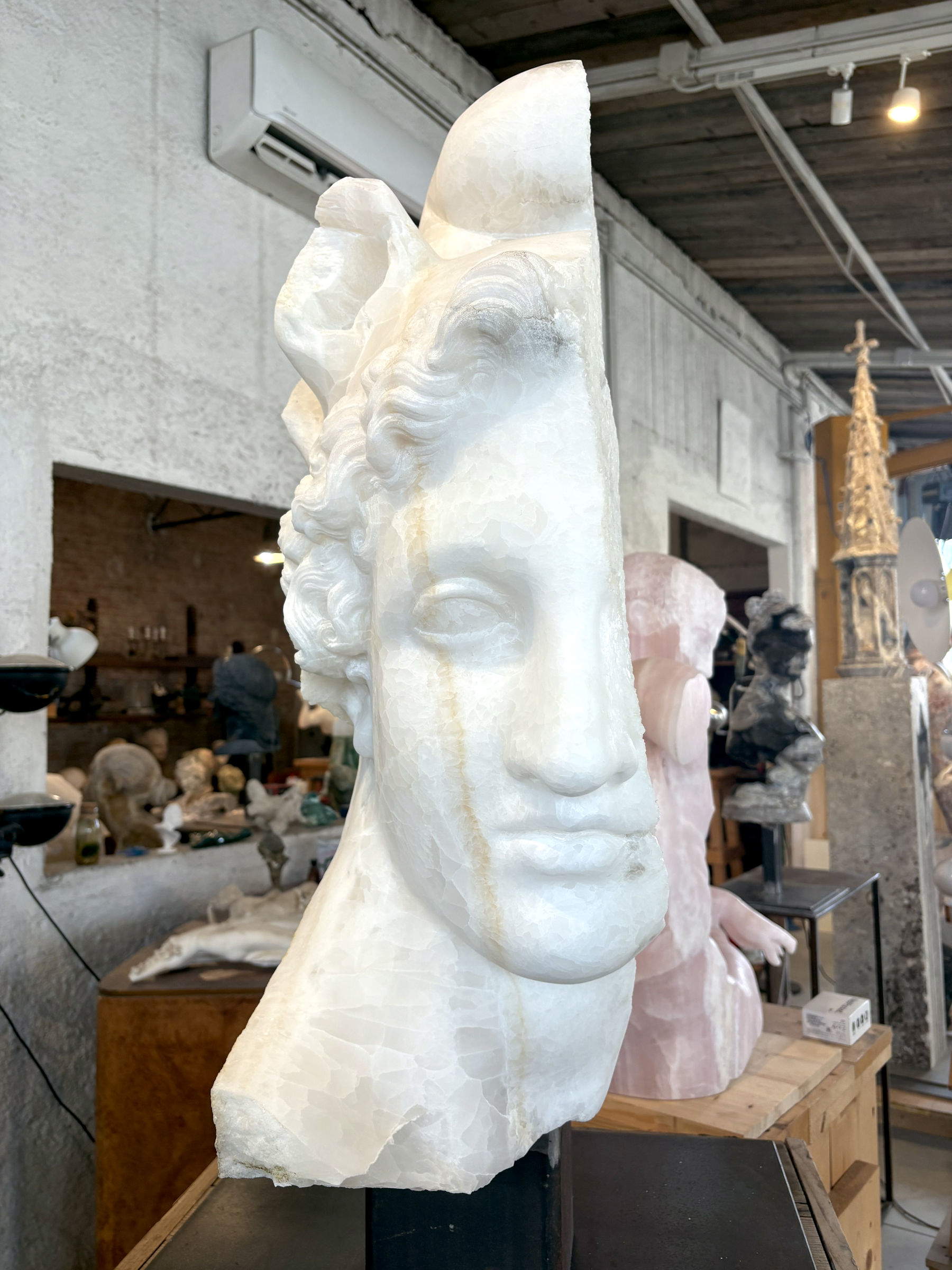
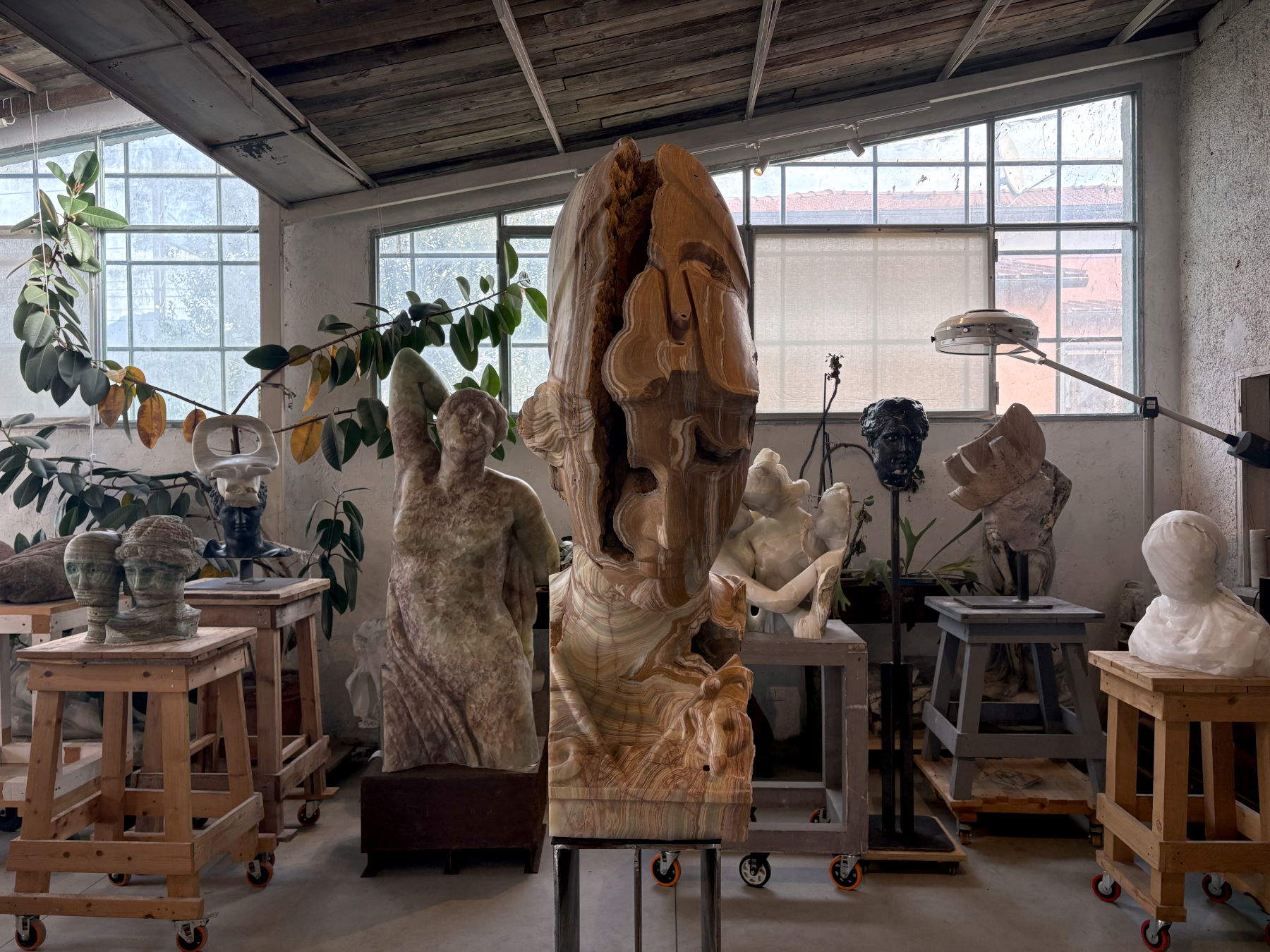
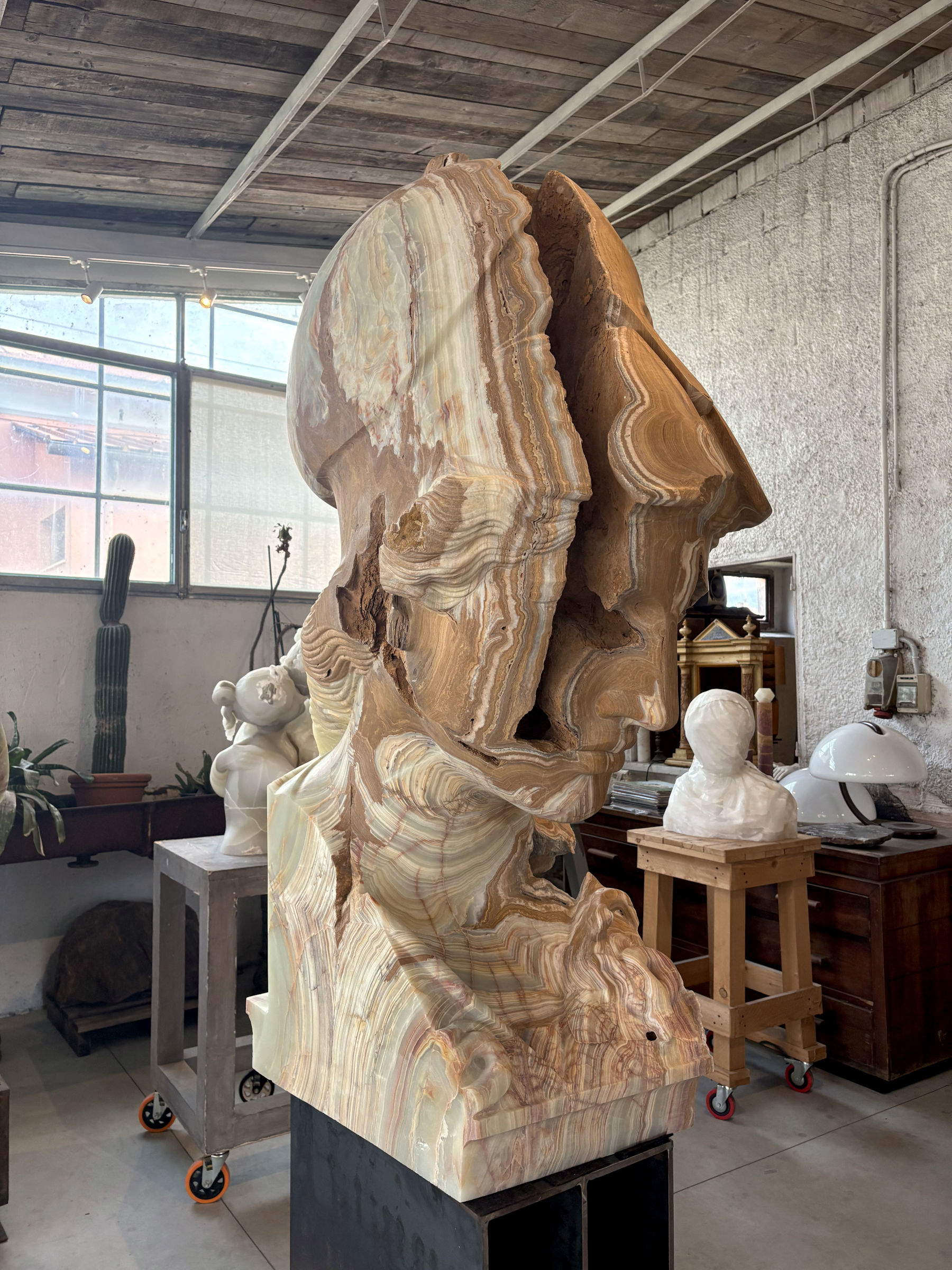
Alongside this dimension, the artist’s work within his studio is developed through a constant reinterpretation of classical sculpture, whose forms and iconographies he recovers in order to restore them through a new material language. As anticipated earlier, ancient statues are reinterpreted through a vast use of materials from different geographical and geological contexts. The stones used come from a global network that includes South America, as in the case of Blue Venus (2025, sodalite, white marble, malachite, and bronze) and Broken White (2023, Mexican white onyx), but also Asia, Europe, and the Middle East from which comes the pink onyx used for the Lancellotti Disk of 2024. The materials belong to different mineral families that are often difficult to classify uniquely.
Pelletti’s research reflects on how stones are culturally defined and placed. For the artist, stone does not possess a fixed, neutral identity; it acquires it in the contexts in which it circulates and is interpreted. It is time that sculpts the identity and memory of the material, as if Gaea herself, in her primordial dimension, continues to operate through the slow transformations of the earth’s crust. Within the system just described, the selection of materials follows a logic that privilegesirregularity. Cavities, fractures, inclusions and chromatic discontinuities are assumed as structural elements. Theidea of defect, in Pelletti’s practice, loses its negative connotation and is reinterpreted as a generative condition. Imperfection, if we want to call it that, is not removed or even reshaped. Matter is observed in its capacity to produce unexpected forms. Within the thought lies the monumental head of Athena in the studio, which the artist shows me and invites me to observe and touch.
“I like the works to be touched. If someone asks to do so, I immediately say yes, because without touching you can’t really understand. It is a tactile matter: touch enters visual perception and completes it,” the artist explains.
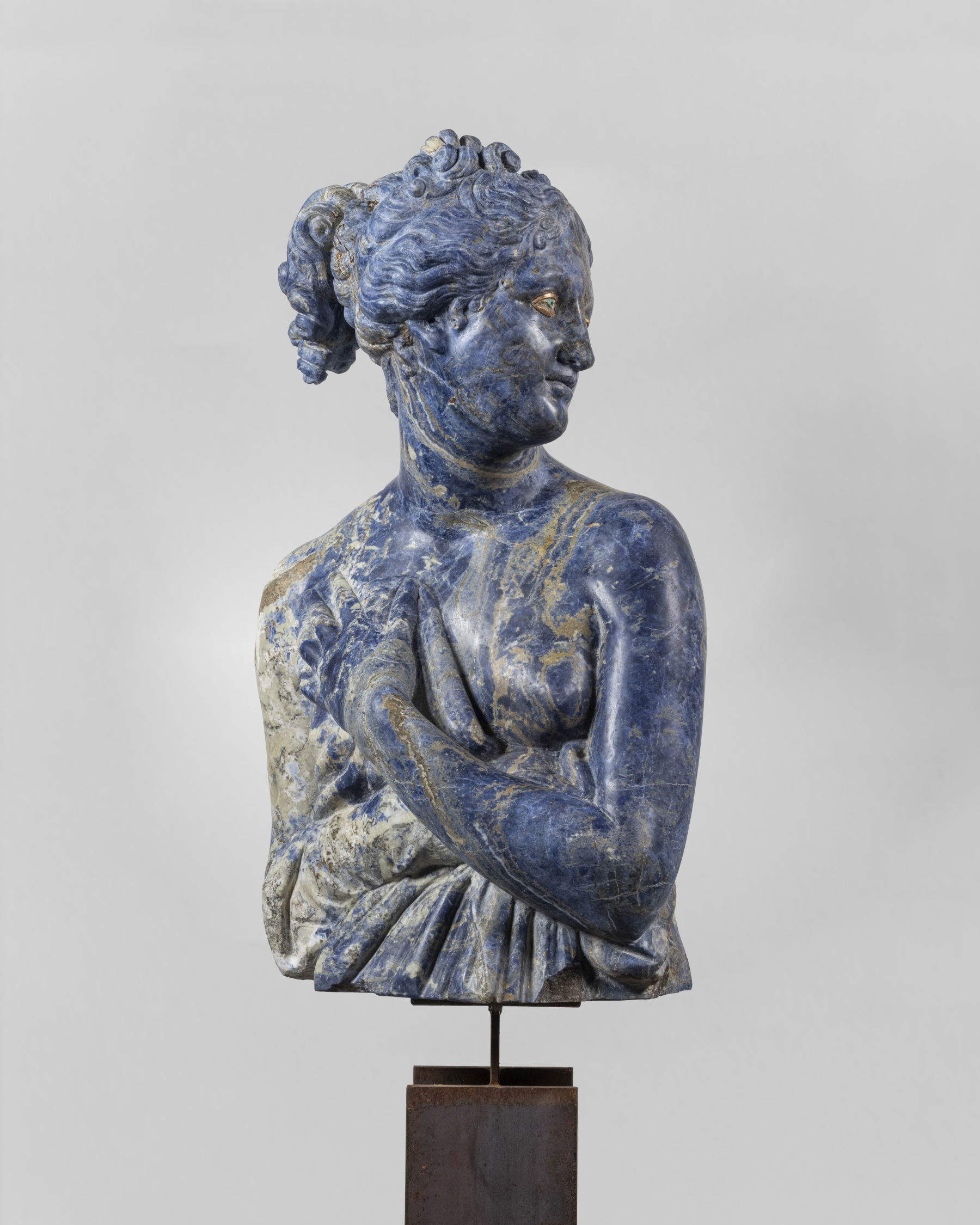
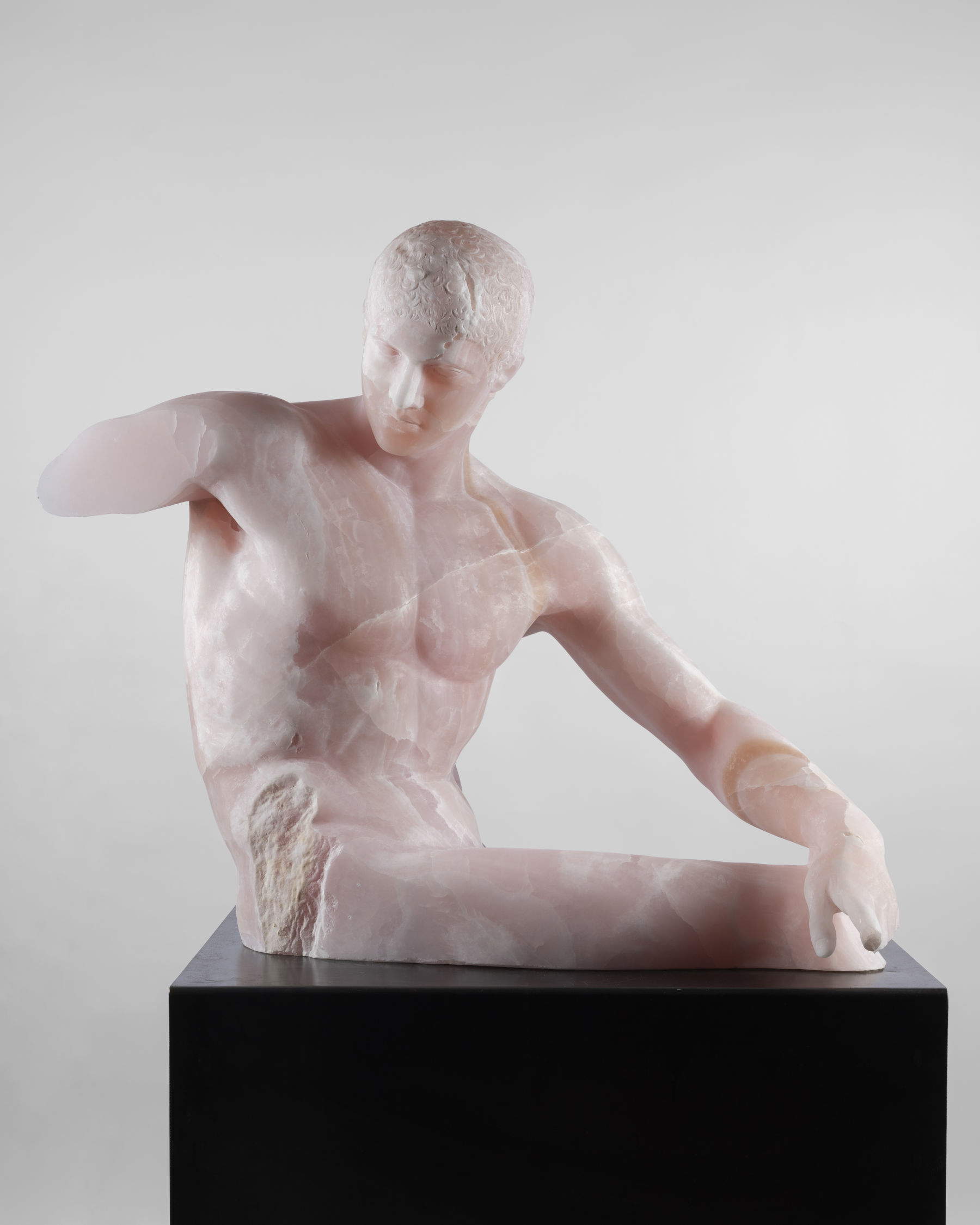
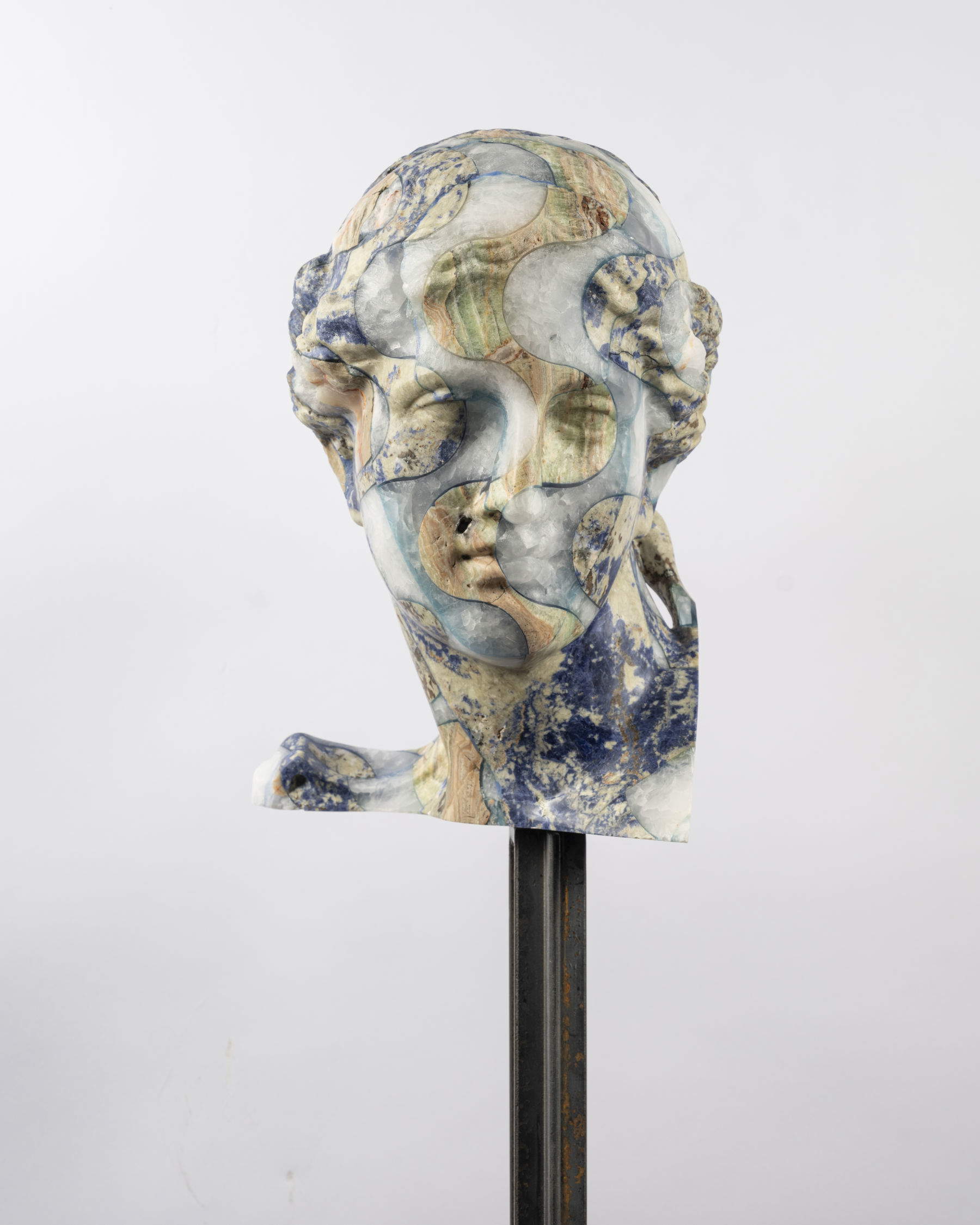
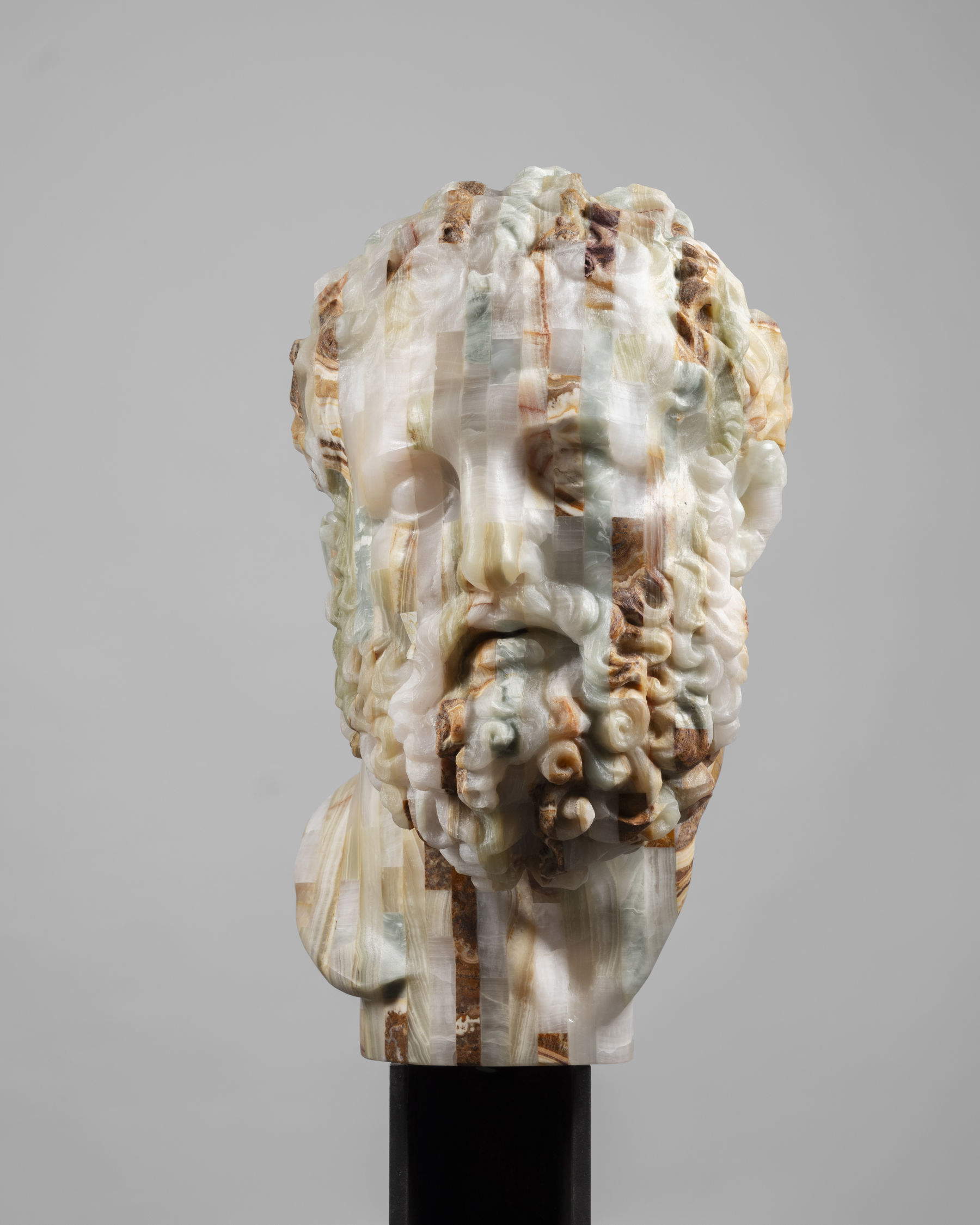
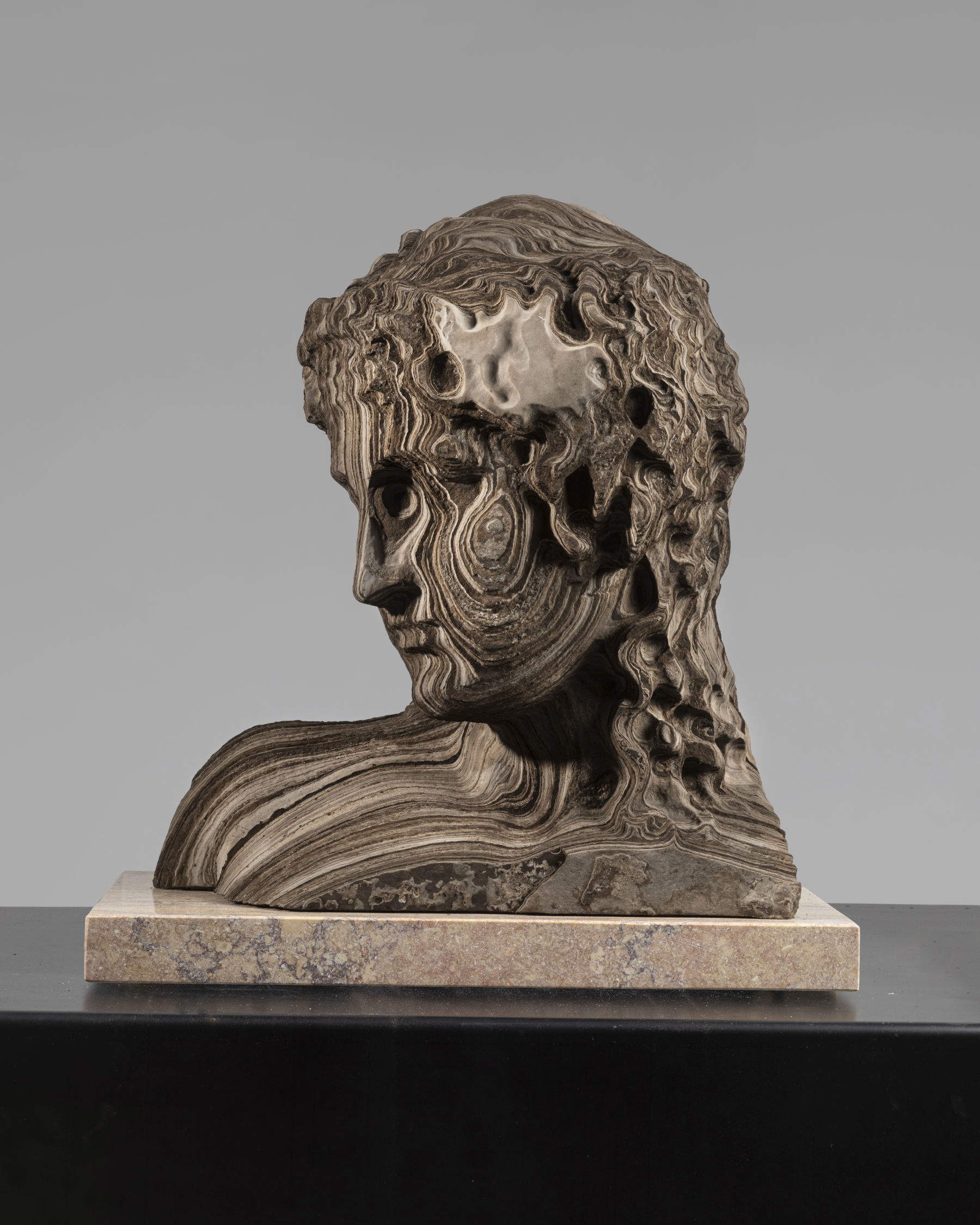
Alongside this dimension is the theme of erosion, translated in works such as Natural Erosion (2025, eroded sedimentary marble) and Eroded Eros (2023, bronze), where classical heads appear consumed by the material itself, as the outcome of a slow process of transformation. In parallel, the process of multi-matter emerges, evident in works such as Head of Heracles (2024, polychrome onyx), Fusion (2023, Mexican white onyx, sodalite and emerald onyx) and Wavy Venus (2023, white and cream onyx with lapis lazuli inlays). In some cases, stones are supplemented with artificial materials obtained through resins and heterogeneous mineral inlays, generating composite blocks in which elements of different origins are recomposed into a single structure. This process introduces a further level of hybridization, where nature and artifice overlap seamlessly.
The sculptural process thus develops from an encounter with the material and not from a design or a subjectoriginally defined. The final form of the work emerges in the confrontation between what the artist imagines and what the stone allows, and this is a fundamental aspect in Pelletti’s practice. In this relationship, the material itself participates in the construction of the work, conditioning its direction and structure. The artist explains to me that stone suggests possibilities and limits, imposing a bond that fuses intention and resistance. The form is defined as the outcome of this negotiation, never assuming a definitive character.
“The personality of the material is always decisive,” Pelletti tells me. “In some cases, for example, a crystal-like formation emerging on a block is read through an archaeological matrix aesthetic, but it is not a fracture or an absence: it is a presence, because crystal is a kind of natural sculpture. The work of the sculptor and the work of nature coexist in the same piece, without arriving at an unambiguous result. My work never starts with the subject. I do not decide first to make a figure and then look for the material to make it, as in the case of Athena or other models. On the contrary, I always start from the subject. I look for materials and select them based on their geological and morphological characteristics. When I encounter a material that I consider interesting, an initial dialogue arises with the material itself, until I understand what direction it can suggest and what it can become within the sculptural process.”
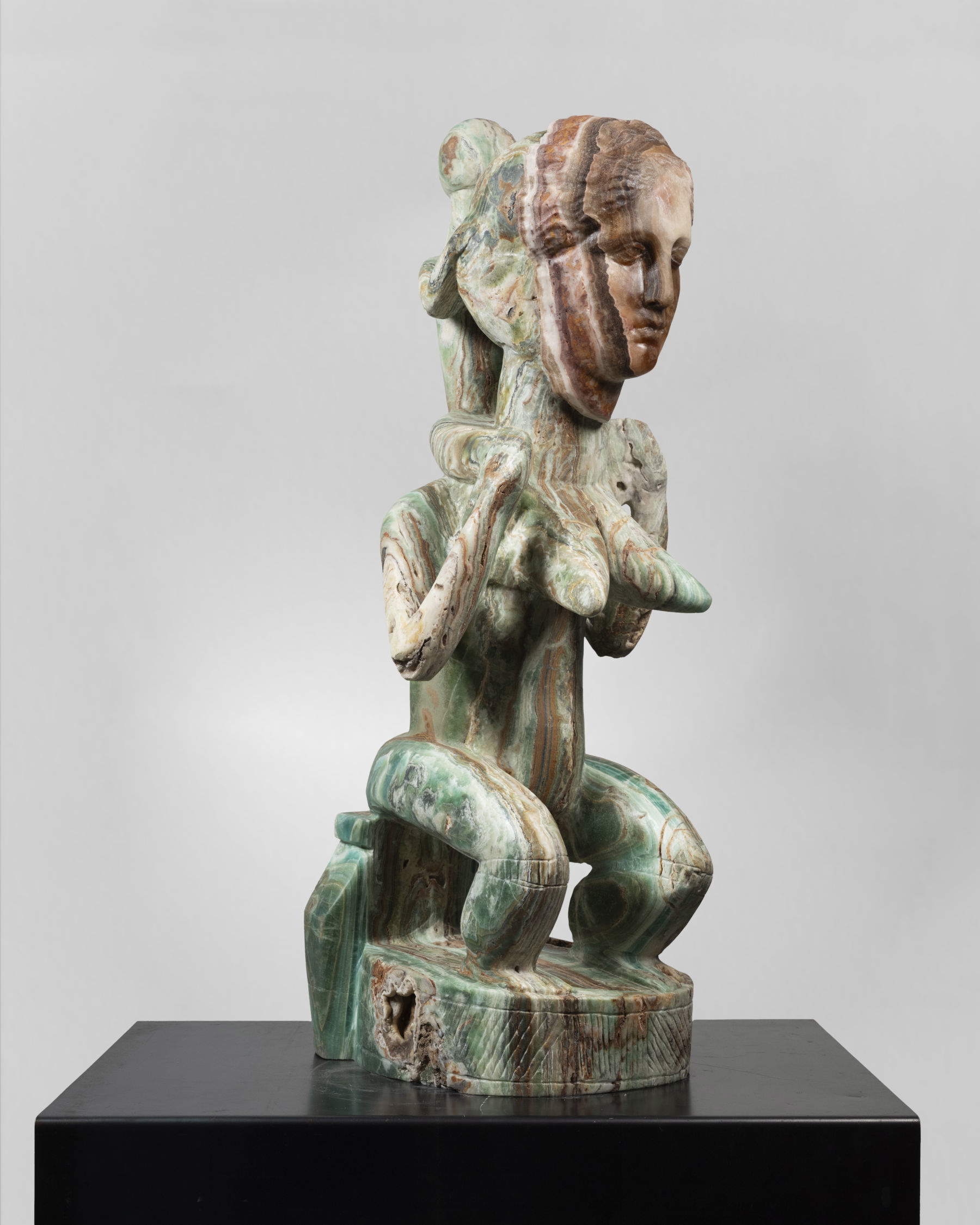
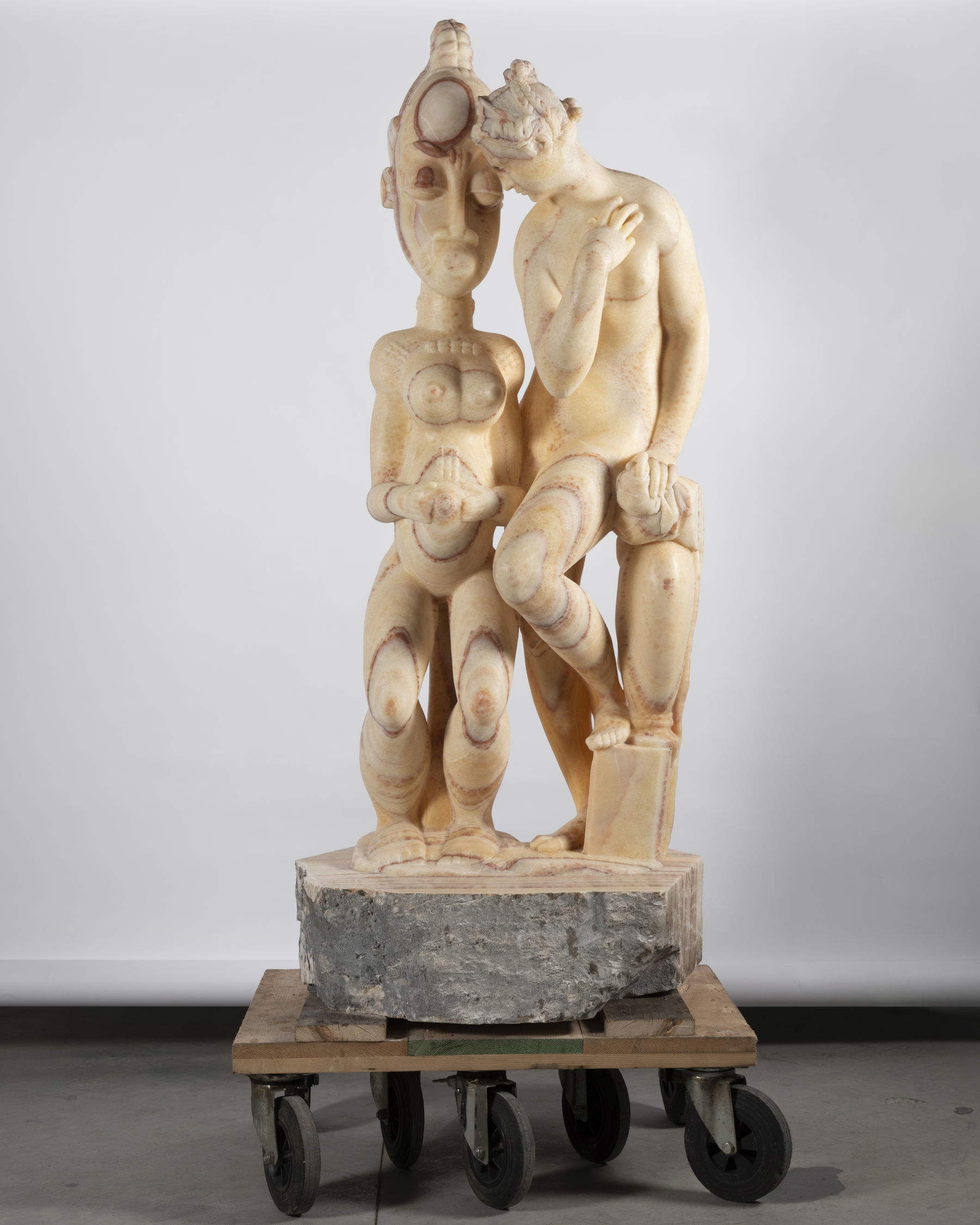
The studio also houses a large collection of works that cross different cultural references: Greek forms sit alongside suggestions of African idols, sometimes merging into hybrid configurations, such as The Two Graces (2024, peach onyx), Tribal Hermes (2023-2025, black Marquinia marble and green onyx), Mother Earth (2022-2025, emerald onyx), and Venus with African Mask (2025, grotto limestone and travertine).
“I’m interested in the fact that these are two different classicisms, developed on different continents, along with a more primitive classicism, the African one, which nevertheless manifests itself in a similar way, each with its own gods, its own myths, its own figures,” the artist adds. “I found in this mix, a very representative sign of the cultural force of the present. I was interested in creating a connection, in building a kind of new representation of these fetishes through materials that, in fact, have never been used before.”
The surfaces of the sculptures thus return a dual tension: the precision that comes from the study of historical models and technical rigor is contrasted with an irregular component, born of direct confrontation with the material. Ambivalence characterizes the entire structure of the works, in which the signs of the transformative process remain visible.
In some cases, Pelletti’s works seem to emerge from the sea, as if their surfaces bear the signs of a long stay inside a submerged hold. One would almost think of Damien Hirst’s Treasures from the Wreck of the Unbelievable project, but unlike Hirst’s imaginary narratives, Pelletti’s sculptures recall more directly the archaeological finds of shipwrecks that transported works from Greece to Italy. In the late Hellenistic shipwrecks of Antikythera and Mahdia, the marble statues display a duplicity: on the one hand the ideal perfection of classical form, on the other the corrosion produced by the marine environment. Such tension, involving ideal and deterioration, restores to those works a surprising topicality. At the same time, Pelletti’s sculptures evoke a condition of unfinishedness, as if they were left by the artist as a result of the internal resistance of the marble. A dual temporality is thus configured: works still in the process of formation that seem to have faced centuries of erosion before their appearance.
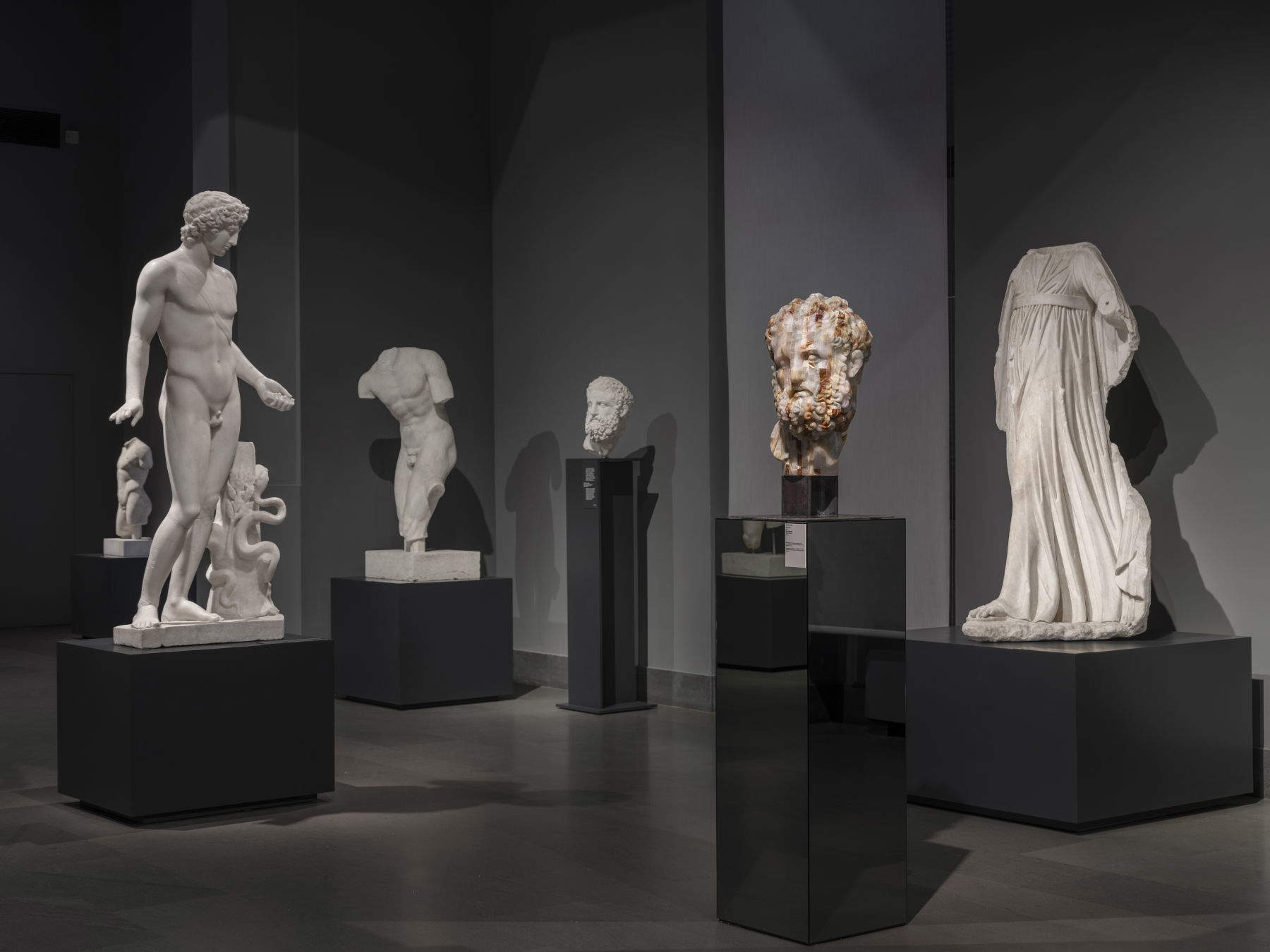
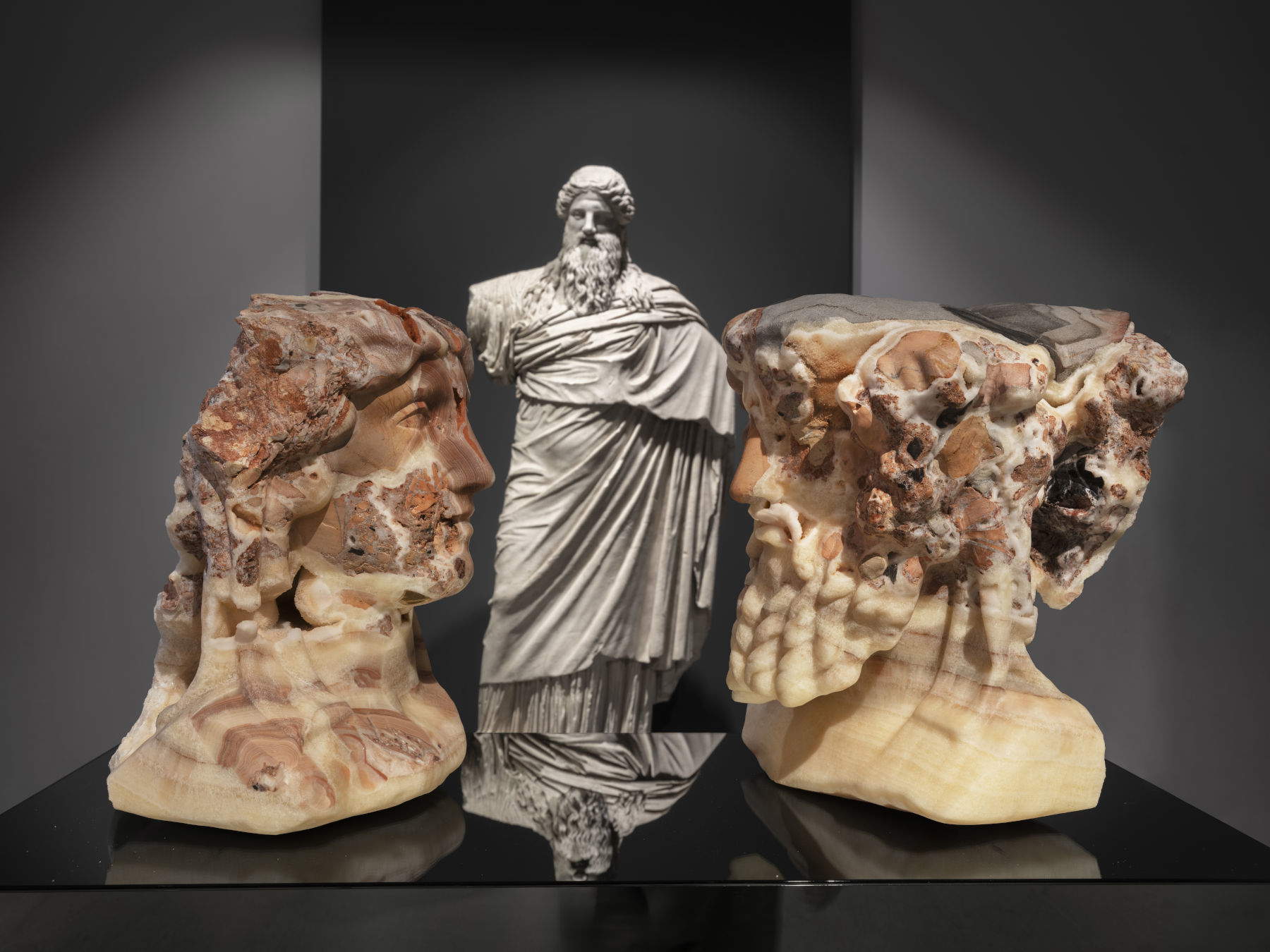
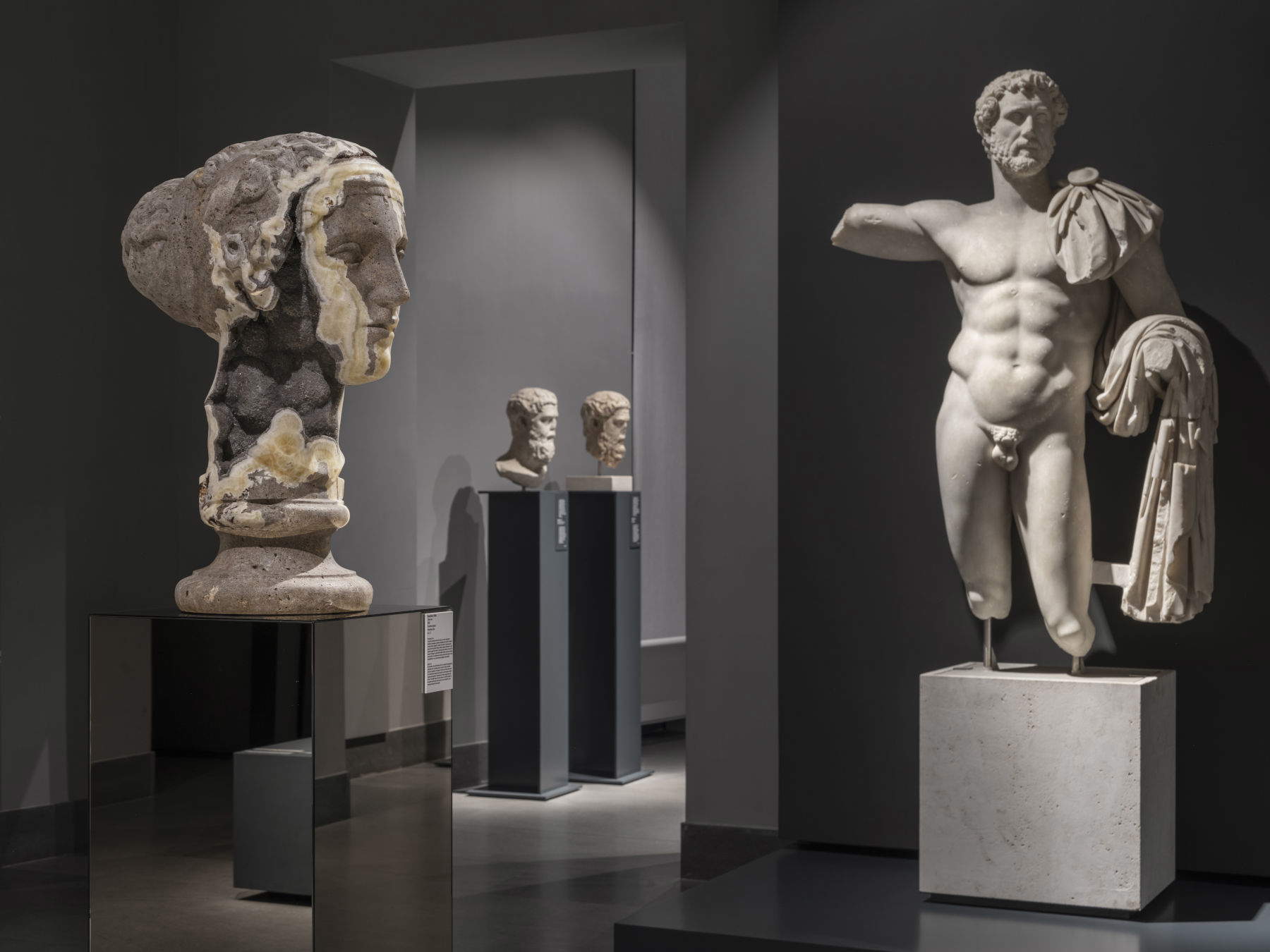
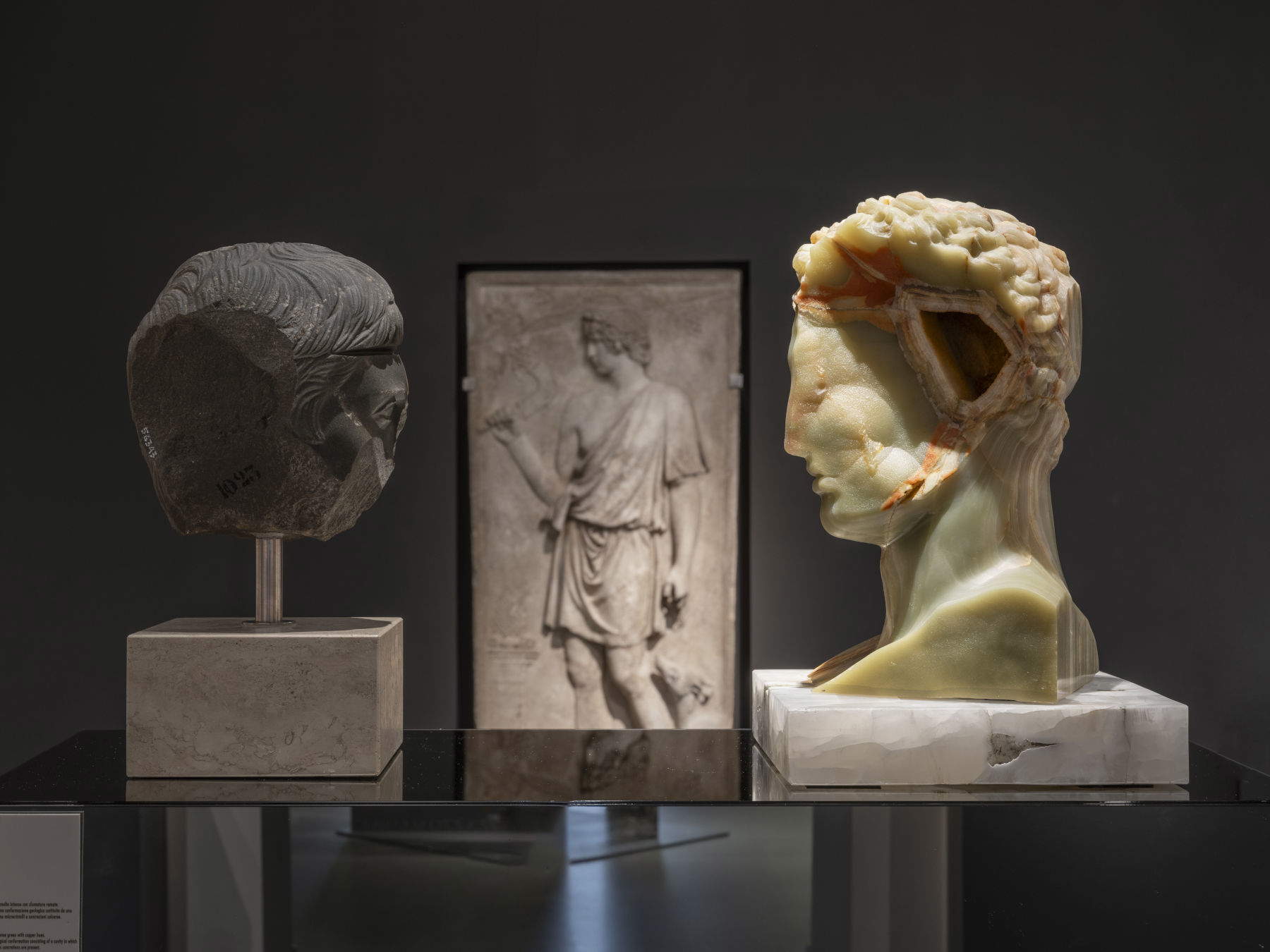
The condition of suspension relates directly to the reflection developed within the exhibition VERSUS /// Massimiliano Pelletti at the National Roman Museum, Palazzo Massimo in Rome, where the relationship with ancient sculpture is based on a direct comparison and not on a simple quotation. In fact, the exhibition articulates a link between works belonging to the museum collection and sculptures created from scratch by the artist, relating two temporalities that observe each other without ever resolving into a definitive synthesis. It is a meditation on present time, marked by constant acceleration and a predilection for short-term actions, oriented toward the production of immediate and verifiable results. In this context, Pelletti’s work introduces a counter-temporality that opposes the logic of urgency, reactivating a slower, layered and sedimentary dimension in which form remains open to duration and transformation. Perspective merges with the time of sculpture and the material memory that runs through both the museum and the studio.
In Pelletti’s work, memory takes the form of a still-operating trace that is deposited and preserved within matter. In this framework, the engram constitutes a central interpretive key: a persistence of forms and information that continue to act in the present of the sculpture. Pelletti’s work and sculpture is thus a process in a constant state of emergence, and it is in this suspension that the possibility of a more intimate encounter with the viewer arises, called upon to recognize in the work, as Pelletti says, a memory capable of generating emotion.


The author of this article: Noemi Capoccia
Originaria di Lecce, classe 1995, ha conseguito la laurea presso l'Accademia di Belle Arti di Carrara nel 2021. Le sue passioni sono l'arte antica e l'archeologia. Dal 2024 lavora in Finestre sull'Arte.Warning: the translation into English of the original Italian article was created using automatic tools. We undertake to review all articles, but we do not guarantee the total absence of inaccuracies in the translation due to the program. You can find the original by clicking on the ITA button. If you find any mistake,please contact us.




















 IT
IT FR
FR DE
DE ES
ES CN
CN