By Redazione | 22/12/2025 11:54
Perched atop the rocky promontory overlooking the sea, the Palace of the Princes of Monaco is the physical embodiment of Grimaldi dynastic continuity and Monegasque sovereignty. Unlike many other European royal residences, often built from scratch in Baroque or Renaissance styles, this mansion is the result of complex historical layering, born of defensive needs and transformed over the centuries into a lavish palace.
The building's history is rooted in the 12th century, when the Republic of Genoa was granted the port and surrounding lands by Emperor Henry IV, with a mandate to protect the coast from pirate raids. It was in 1215 that work began on the construction of an initial fortification, consisting of four towers connected by walls, which still forms the original core of the present residence. The decisive turning point came in January 1297, when Francesco Grimaldi, known by the nickname of Malizia, chased out of Genoa, managed to penetrate the fortress disguised as a monk, took possession of it together with his cousin Ranieri (later to become the first lord of Monaco), taking the village away from the Genoese and beginning his family's rule over the fortress. From that time, and for more than seven hundred years, the Grimaldis maintained possession of the manor, constantly adapting it to the political and housing needs of each era, possessing no other alternative residences within the small state.
The architectural evolution of the complex reflects the fortunes and political alliances of the principality. While initially the structure maintained a purely military character, necessary to resist numerous sieges by foreign powers such as Genoa and Pisa, it was from the 15th century onward that the slow metamorphosis into a stately residence began. Under the reign of Lucian I, in the early 16th century, new buildings were added that now form part of the state apartments, despite the need to repair damage caused by a heavy Genoese siege in 1506. However, it was with the recognition of independence and elevation to a principality in the 17th century that the palace experienced its period of artistic heyday.
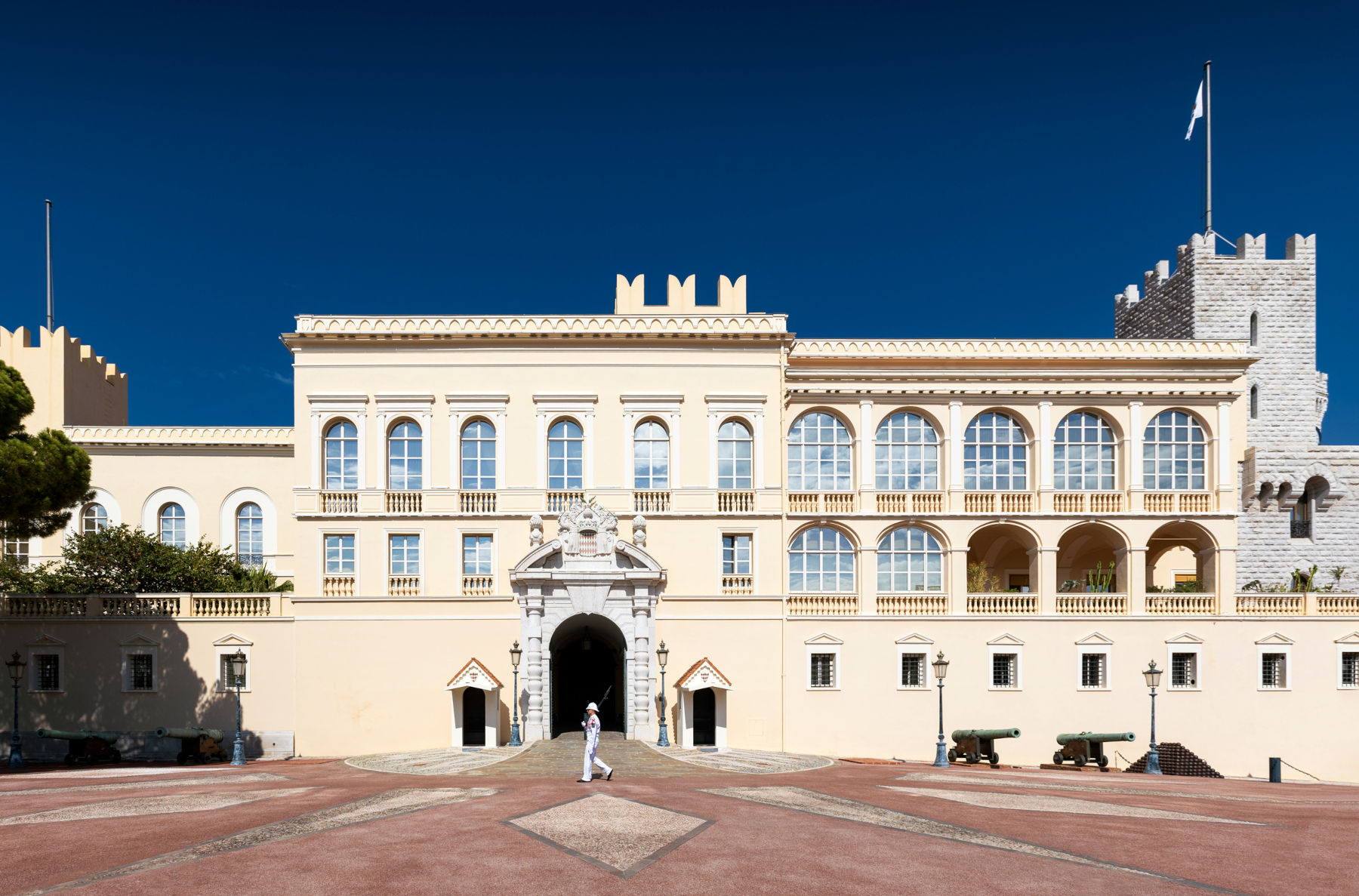
Prince Honoré II, a key figure in this transition, embarked on a beautification campaign aimed at transforming the gloomy fortress into a palace worthy of a European ruler. A great collector of art, he enriched the mansion with works by masters such as Titian, Raphael and Rubens, and commissioned architect Jacques Cato to soften the severe defensive lines. To this period date the arrangement of the courtyard of honor and the creation of the Gallery of Hercules, whose vaults were frescoed with the labors of the mythological hero, emphasizing the grandeur of the household. His successor, Louis I, also left an indelible mark, drawing inspiration from the style of the French court and Versailles in particular; he was responsible for the majestic Baroque portal and the famous horseshoe-shaped staircase in the courtyard, whose steps are said to have been carved from a single block of Carrara marble.
The French Revolution marked a dramatic moment for the Palace. With the annexation of Monaco to France in 1793, the building was stripped of its treasures, confiscated and turned into a military hospital and poorhouse, suffering significant decay. It was only with the restoration of the Grimaldis in 1814 that a long process of recovery began. In the 19th century, under Charles III, the palace underwent massive works that rebuilt the towers and redecorated the interiors, often following the neo-Renaissance taste of the time and covering, sometimes unwittingly, the older original decorations.
It is precisely these historical stratifications that have been the focus of one of the most significant artistic-archaeological discoveries in recent years. In 2014, during trivial maintenance work on the courtyard's facade, restorers noticed traces of ancient painting beneath successive layers of paint. What emerged was astonishing: a vast cycle of Renaissance frescoes, concealed for centuries, decorated the palace walls directly on plaster. Prince Albert II immediately ordered a thorough investigation, which, within weeks, revealed the presence of similar decorations in several rooms, covering an estimated total area of about 600 square meters.
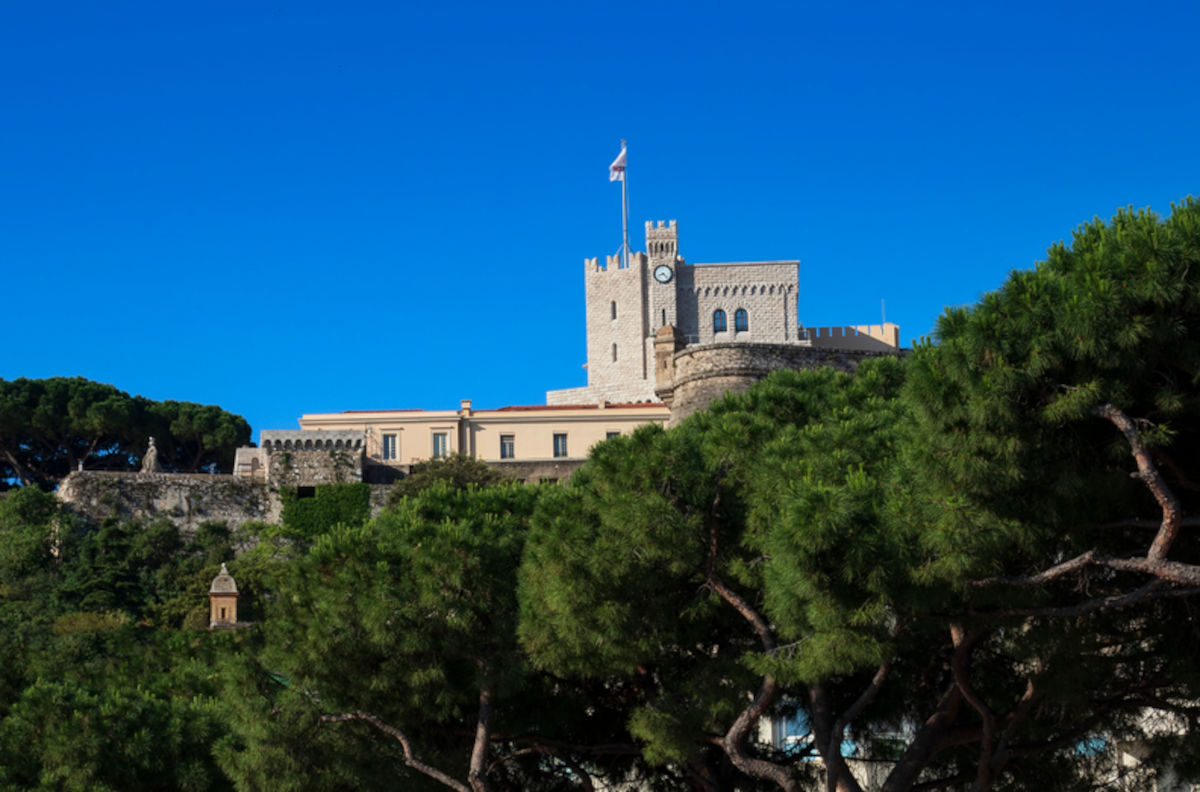
This discovery kicked off one of Europe's largest restoration and conservation sites, characterized by an eco-responsible and respectful approach to ancient techniques. Experts worked meticulously to remove nineteenth-century repainting and bring back extraordinarily well-crafted mythological scenes. In the Hercules Gallery and the Grand Apartments, heroes such as Ulysses and Europa have re-emerged, figures that testify to the dynasty's deep cultural connection with the Italian Renaissance and the great myths of the Mediterranean. The project, which began in 2014, saw restorers working inside the Grand Apartments even in the presence of visitors, thanks to large tarps that hid the scaffolding. The palace naturally closes to the public every year from October to the end of March, as it is still the official residence of the princely family. During the winter season it can host official ceremonies and state visits, and when the work is completed, visitors will see a completely renovated and historically more authentic face of the palace.
When the palace is open to the public, the tour through the Grand Apartments allows visitors to immerse themselves in an atmosphere of solemn royalty. The tour usually begins at the Galerie d'Hercule and ends with the Gallery of Mirrors, a room that clearly emulates the gallery of the same name at Versailles, used for the reception of guests of honor before audiences, just before the Salle du Trône. From here one enters a series of reception rooms, each with its own chromatic and historical identity. The Blue Room, covered in brocades and adorned with family portraits and Murano chandeliers, leads to the majestic Throne Room. The latter room is the symbolic heart of Monegasque power: the ceiling frescoed by Orazio de Ferrari celebrates the exploits of Alexander the Great, while the empire-style throne, topped by a red canopy with a princely crown, dominates the scene on a Carrara marble floor. The most important ceremonies, such as civil marriages of the ruling family and official oaths, still take place here.
Continuing the itinerary, one encounters the Red Room, which houses paintings by Jan Brueghel the Elder, and the York Room. The latter owes its name to a sad historical event: in 1767, the Duke of York, brother of King George III of England, fell ill while on a sea voyage and was rushed to Munich, where he died in this very room, which has borne his title ever since. Another key stop is the Mazarin Room, decorated with polychrome woodwork brought from France by Cardinal Mazarin, related to the Grimaldis, whose portrait stands above the fireplace. Each room is furnished with 18th-century French furniture and works of art that Charles III and his successors patiently repurchased to fill the gaps left by revolutionary spoliations.
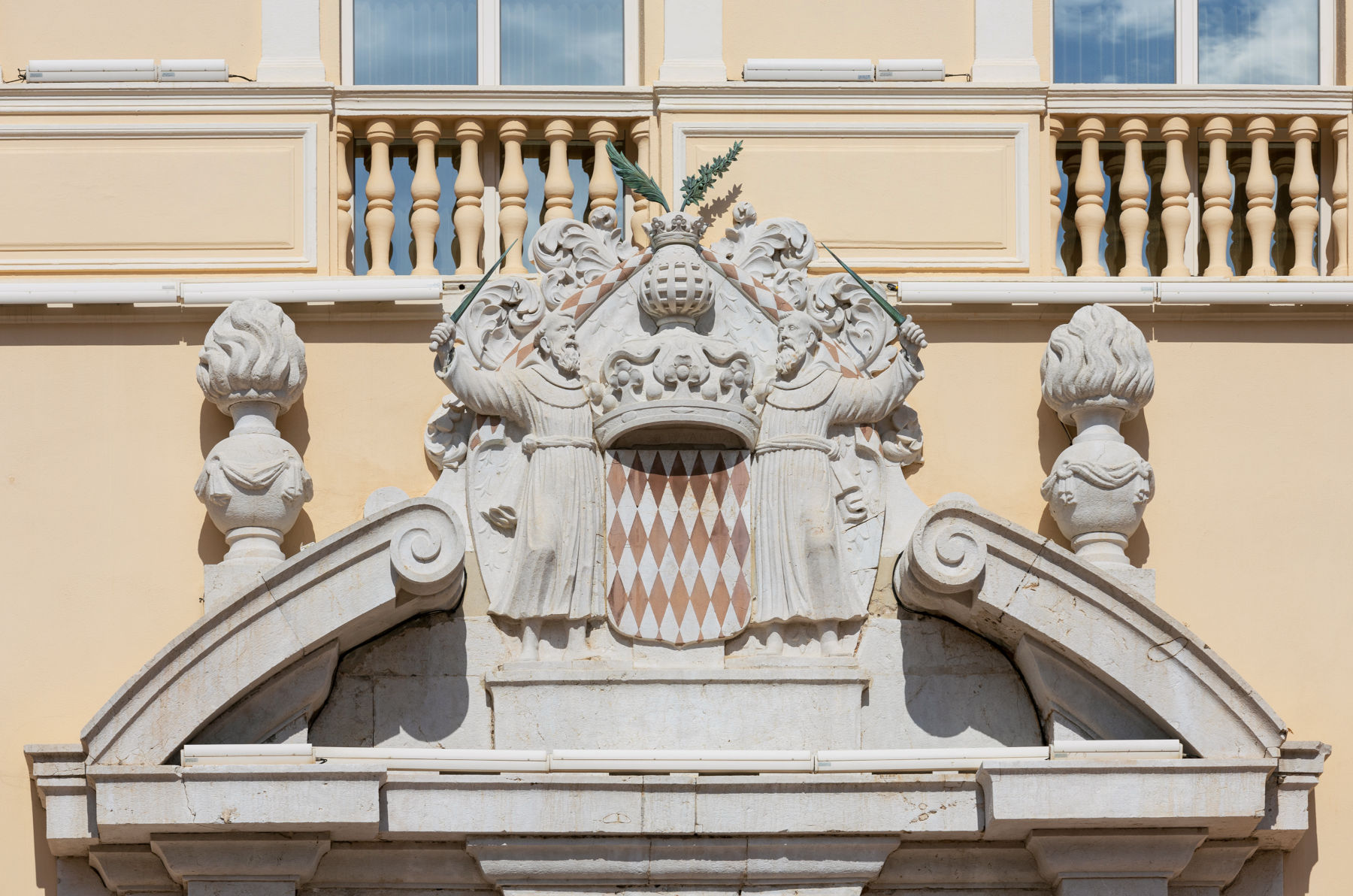
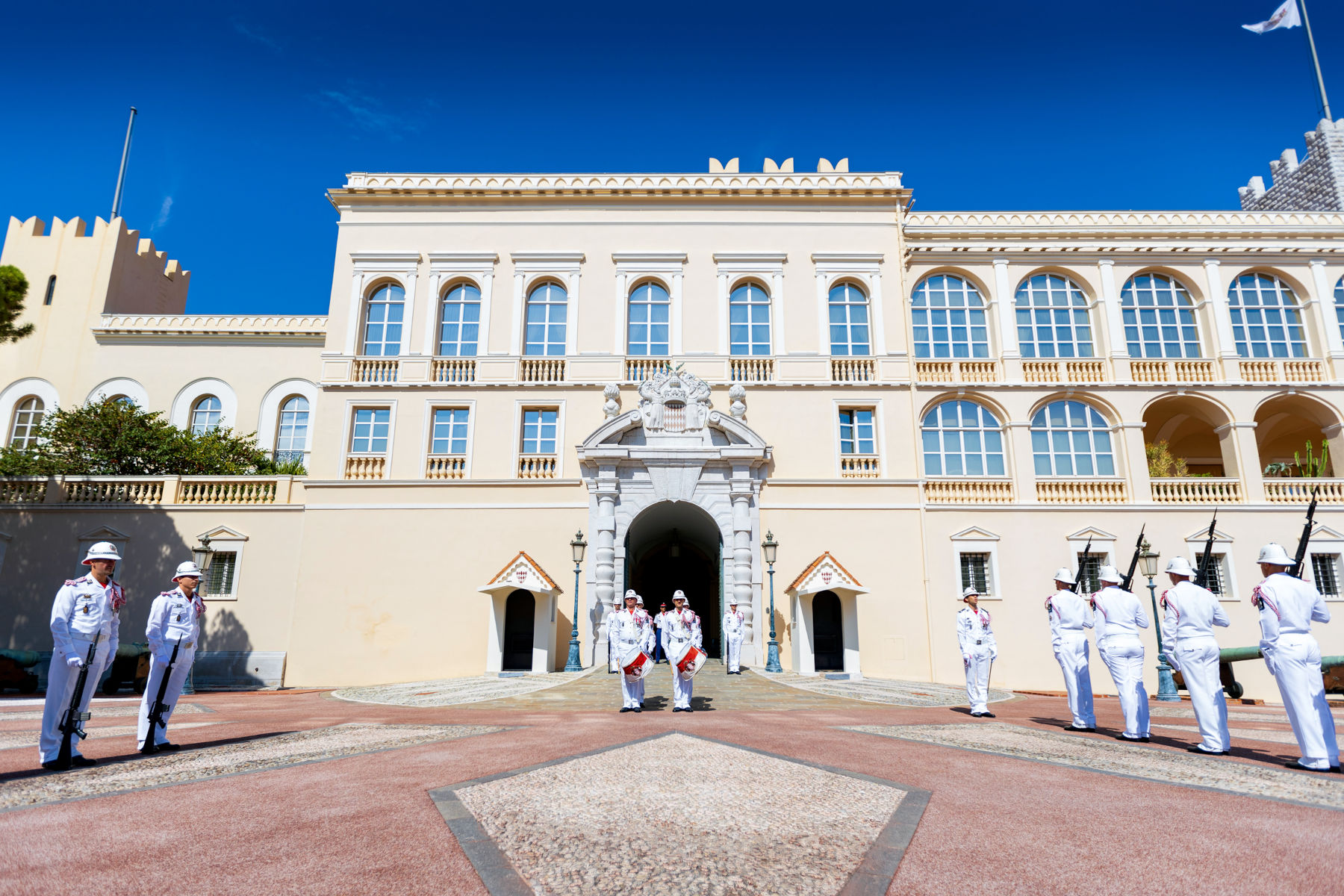
It should not be forgotten that the Princes' Palace is not a static museum, but an inhabited residence and an active center of power. The daily presence of the princely family is signaled by the banner that flies on the main tower when the sovereign is present in Monaco. Palace life is marked by unchanging rituals, the most famous of which is the changing of the guard. Every day, at 11:55 a.m. sharp, on the Palace Square, the Prince's Carabiniers perform this ceremony with pinpoint precision. The corps, founded in 1817, is tasked with watching over the safety of the sovereign and his family, with the motto "Honor, Loyalty, Devotion." This daily appointment attracts crowds of tourists who gather to admire the uniforms and military discipline against a striking backdrop, with the historic cannons donated by Louis XIV still pointing toward the harbor and the two sentry boxes framing the entrance portal.
In addition to the historic apartments, the palace complex and its immediate surroundings offer other evidence of the passions of successive princes. The Prince of Monaco's Car Collection deserves special mention. Started in the late 1950s by Prince Rainier III, a great motor enthusiast, this collection soon became so vast that it could no longer be contained in the palace garage. In 1993, Rainier decided to open it to the public, and as of July 2022, the collection has found a new and modern location near the nautical stadium, leaving its previous home on the Terraces of Fontvieille. It is a unique exhibit that traces the history of the automobile through about one hundred vehicles: from the first De Dion Bouton in 1903 to modern Formula 1 cars that have raced around the city circuit, passing through legendary brands such as Rolls Royce, Ferrari, Lamborghini, and the Lexus hybrid used for the princely wedding in 2011.
Another legacy left by Prince Rainier III is the Animal Garden, founded in 1954 on the south flank of the Rock, in a location overlooking the port of Fontvieille. The uniqueness of the Zoological Park lies not so much in the exoticism of the species housed as in its philosophy: the park mainly takes in animals that have been abandoned, seized by customs or from exchanges with other parks, offering them a refuge. Despite its small size and steep terrain, the garden is home to about three hundred animals of sixty species, including Polux, a hippopotamus rescued in 1986 after a circus closed down, as well as primates, reptiles, and exotic birds. It is a true natural oasis in the heart of the Principality, where more than 20 percent of the territory already consists of gardens and green spaces.
Accessibility and tours of the Palace are carefully curated aspects, although constrained by the historic nature of the building. While exterior collections such as the car collection are fully accessible, the interior visit to the Palace has limitations for people with mobility disabilities due to the numerous stairways and the medieval structure that does not allow for adequate elevators to be installed at all points along the route. However, the princely administration provides several tools to facilitate the visitor experience, including audio guides in eleven languages, smartphone apps, and materials specifically for the blind, such as braille booklets.
It is important to note that as an operational state residence, the Palace can close to the public without notice for institutional needs. Currently, as mentioned, the Grand Apartments remain closed for the usual annual closure with reopening scheduled for 2026. In the meantime, visitors can still enjoy the majestic Palace Square, the view of Monaco's ports, and the Changing of the Guard ceremony, which remains one of the most vivid symbols of Monegasque tradition.