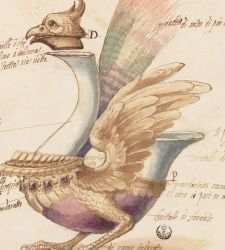
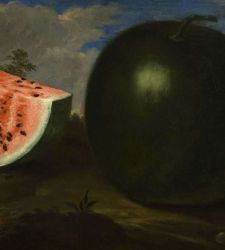
During the final decade of his long career in Florence, Jacopo Ligozzi—who was one of the most original painters active between the late sixteenth and early seventeenth centuries—devoted himself to an undertaking that at first glance seems far remove...
Read more...

When standing before a painting by Jean-Michel Basquiat, something specific—almost automatic—often happens: the gaze tries to make sense of it. It doesn’t just look; it behaves as it would when faced with a page. It draws closer, searching for ...
Read more...
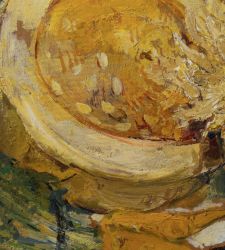
“Although largely overlooked by critics for a time, Giovanni Bartolena has recently been ‘rediscovered’ by several scholars who have rightly highlighted his solid artistic talents.” So wrote journalist Mario Lepore in 1966, re...
Read more...
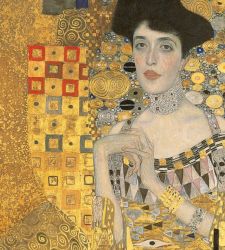
A profusion of gold floods Gustav Klimt’s *Portrait of Adele Bloch-Bauer I* , sweeping through the entire composition like a river of precious metal and immersing the viewer in a dazzling vision. Gold is the undisputed protagonist of the entire...
Read more...
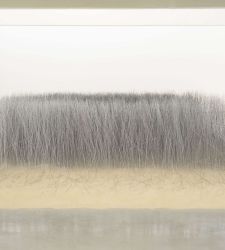
There is a silence you don’t truly perceive until you stand before a work by Lee Ufan. It is not stillness; it is a dense suspension, made of matter, distance, and breath. A steel plate captures the light and reflects it back coldly; an irregul...
Read more...
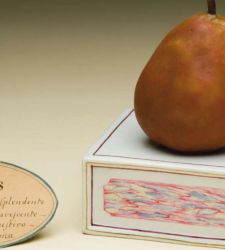
“It is unforgivable—except for those who are ignorant of every aspect of the arts of drawing—to claim that an ignorant person […] can, in a single month, become a wax modeler capable of imitating all of nature’s creations. One&rsqu...
Read more...
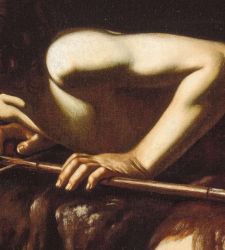
These days, it seems that the public’s interest in Caravaggio tends to overshadow that directed at every other genius of painting, driven by the constant stream of solo exhibitions popping up just about everywhere, the endless films and documen...
Read more...
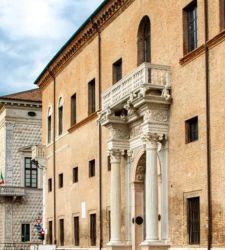
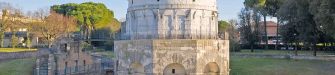
Ferrara is a magnificent and enchanting city: it never fails to offer new thrills to visitors who tirelessly plan their returns to the historic realm of art’s embrace, where they are enveloped by the continuous, almost miraculous resurgence of the tr...
Read more...
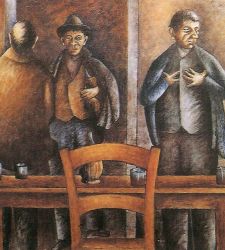
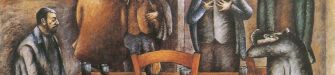
If there is one place where, at the dawn of the 20th century, popular social life revealed all its ambiguity, it is the tavern. Trattoria, tavern, wine bar, and inn: different names for spaces that we today tend to associate solely with conviviality,...
Read more...

When one thinks of Michelangelo Buonarroti ( Capri, 1475 – Rome, 1564), one’s imagination inevitably turns to the great masterpieces that have shaped the history of Western art. The Vatican Pietà housed in St. Peter’s Basilic...
Read more...
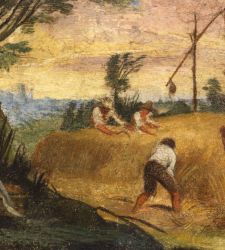
The landscapes of his homeland would always remain etched in Guercino’s mind: the woods along the banks of the Rhine, the countryside around his hometown of Cento, and the dusty roads that cut through this stretch of the Po Valley halfway betwe...
Read more...
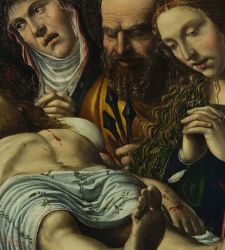
The career of Giovanni Antonio Bazzi, better known as Sodoma (Vercelli, 1477 – Siena, 1549) is undoubtedly one of the most fascinating and complex chapters of the High Renaissance, that transitional period between the 15th and 16th centuries, a...
Read more...

Enrico Minguzzi's cabinet of curiosities is a humble and shy little doodle, a shrine half a meter or so high, with a lock that struggles to close, a glass cabinet hidden in the white half-light of an antechamber of his house in Bagnacavallo. A house ...
Read more...
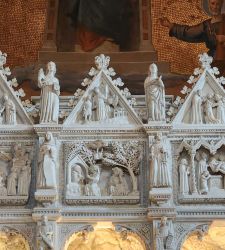
Located in Pavia, inside the basilica of San Pietro in Ciel d'Oro, is one of the pinnacles of Italian Gothic sculpture: theArk of St. Augustine. This imposing cenotaph (i.e., a funerary monument not intended to hold the remains of the deceased, as it...
Read more...
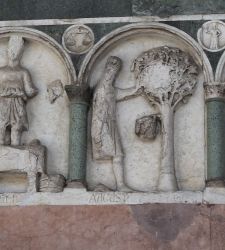
A calendar carved in stone that accompanies visitors along the succession of the seasons, telling the story of man's work, his relationship with nature and the passage of time. It is the cycle of the Months that decorates the frieze arranged on the p...
Read more...
The Villa della Topaia, close to the better-known Medici residences of Castello and Pietraia, still bears the signs of the time when it was a casino of rest and delights for Cosimo III. Two elegant cartouches, placed in the hall of honor, accommodate...
Read more...

























 IT
IT FR
FR DE
DE ES
ES CN
CN