Saint Devote: history, faith and tradition in the heart of Monaco
by Redazione 28 January 2026
Destination: Monaco
In the neighborhood of La Condamine, St. Devote Church guards the identity of Monegasques. Between legend and history, relics, solemn rites and ties to the Grimaldi family, Monaco's patron saint is a central spiritual and cultural landmark.

In the urban fabric of the Principality of Monaco, specifically in the neighborhood of La Condamine, stands a building that transcends its simple architectural function to become the custodian of the very identity of the Monegasques. St. Devote Church, located in theGaumates valley , represents one of the oldest and most heartfelt landmarks for citizens and the Princely Family. Its location is not accidental, since according to tradition it stands in the area where, at the dawn of the 4th century, the boat carrying the martyred remains of the young Christian Devota landed.

Historical and legendary narratives are inextricably intertwined in the foundations of this place of worship. The sources tell the story of a young Corsican woman who, during the persecutions ordered by the Roman governor Diocletian around the year 304, in Lucciana, a town twinned with Munich since 2008 precisely because of this memory, preferred to face imprisonment and torture rather than abjure her faith. After her sacrifice, some Christians smuggled the body away from the stake, placing it on a boat bound for the African coast to ensure a proper burial. However, a sudden storm changed the course of the voyage, and it was only thanks to a dove, which miraculously came out of the saint's mouth, that the boat found refuge in the Gaumates valley, the exact spot where the church stands today. It was Jan. 27, a date that still marks the Principality's main feast day.
The first documentary evidence of an oratory dedicated to the martyr dates back to 1070. For centuries, this small chapel was linked to the Abbey of St. Pontius of Nice, remaining under its jurisdiction until the end of the 18th century. During this long period, the building underwent several transformations and extensions, evidenced by the interventions of 1476 and 1606. Under the principality of Honoré II, in the 17th century, the structure was enriched with a new portal and portico, marking the beginning of an increasingly pronounced official devotion that led St. Devote to be recognized as the Patron Saint of Monaco, or Corsica. Interestingly, the original church was probably built on the remains of an ancient pagan temple dedicated to Hercules, demonstrating a sacred continuity at the site.
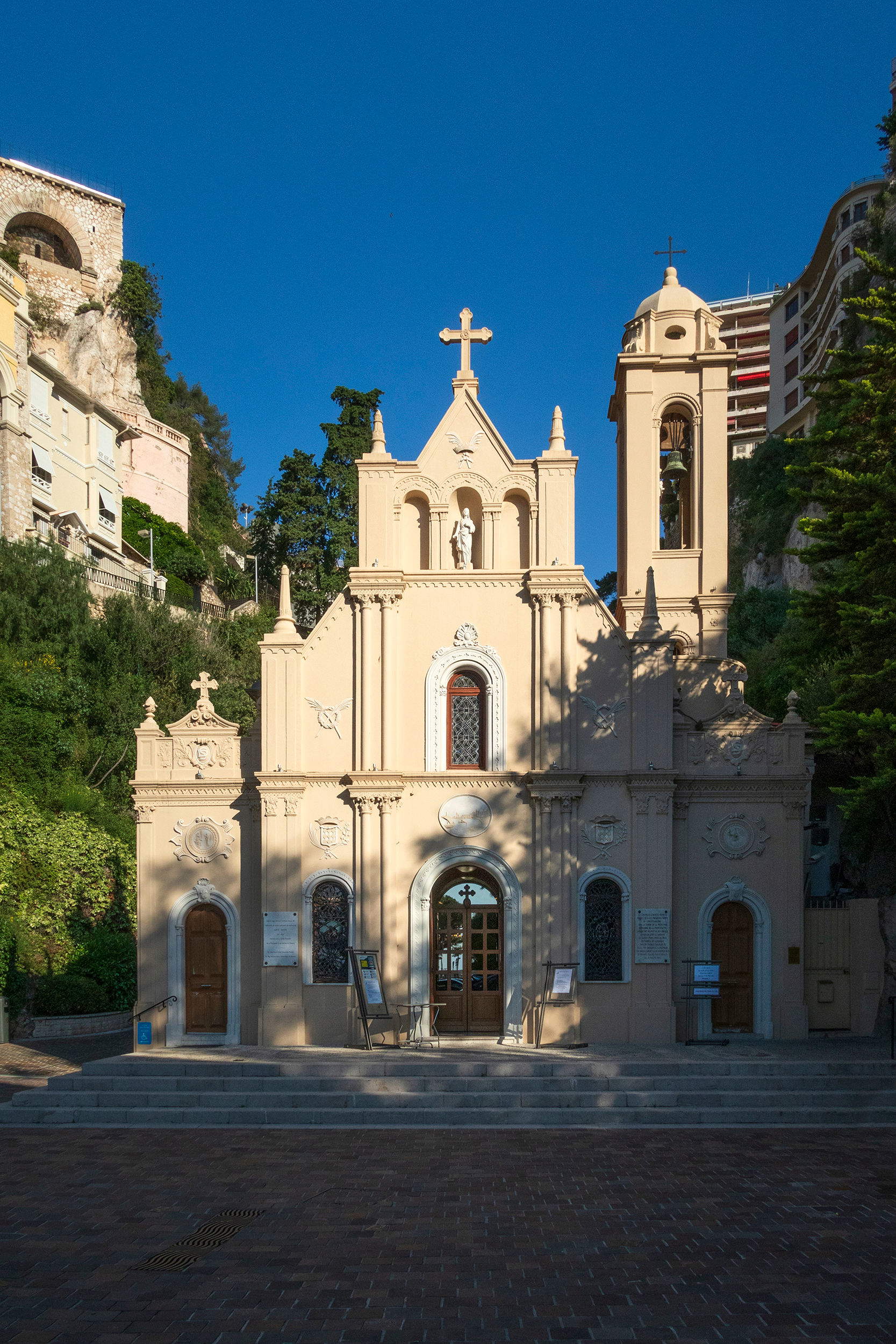
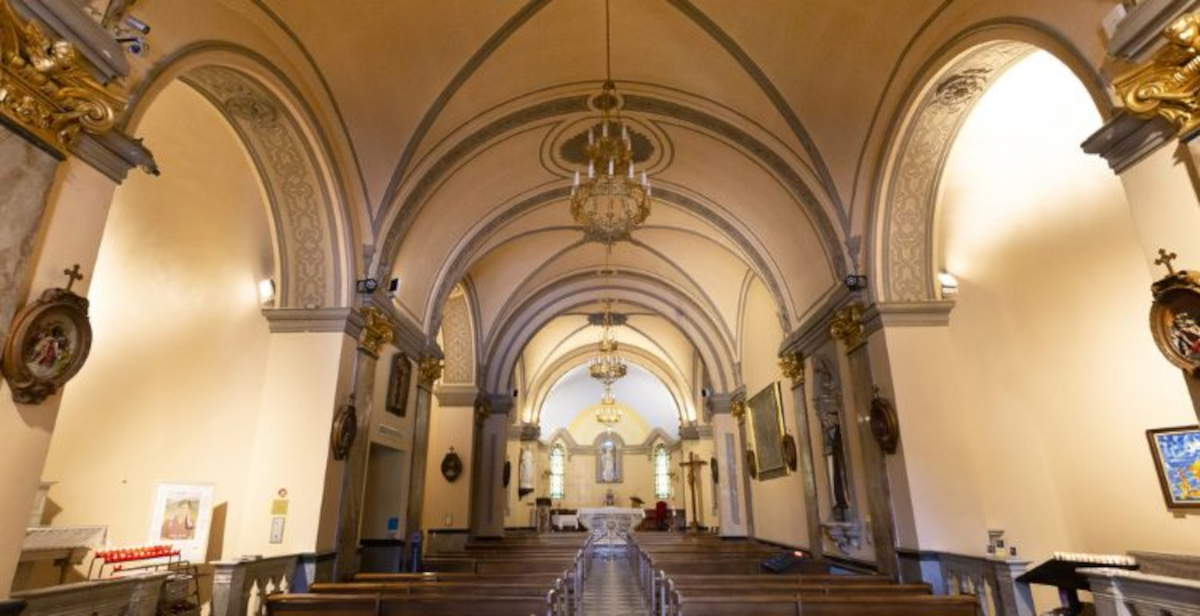
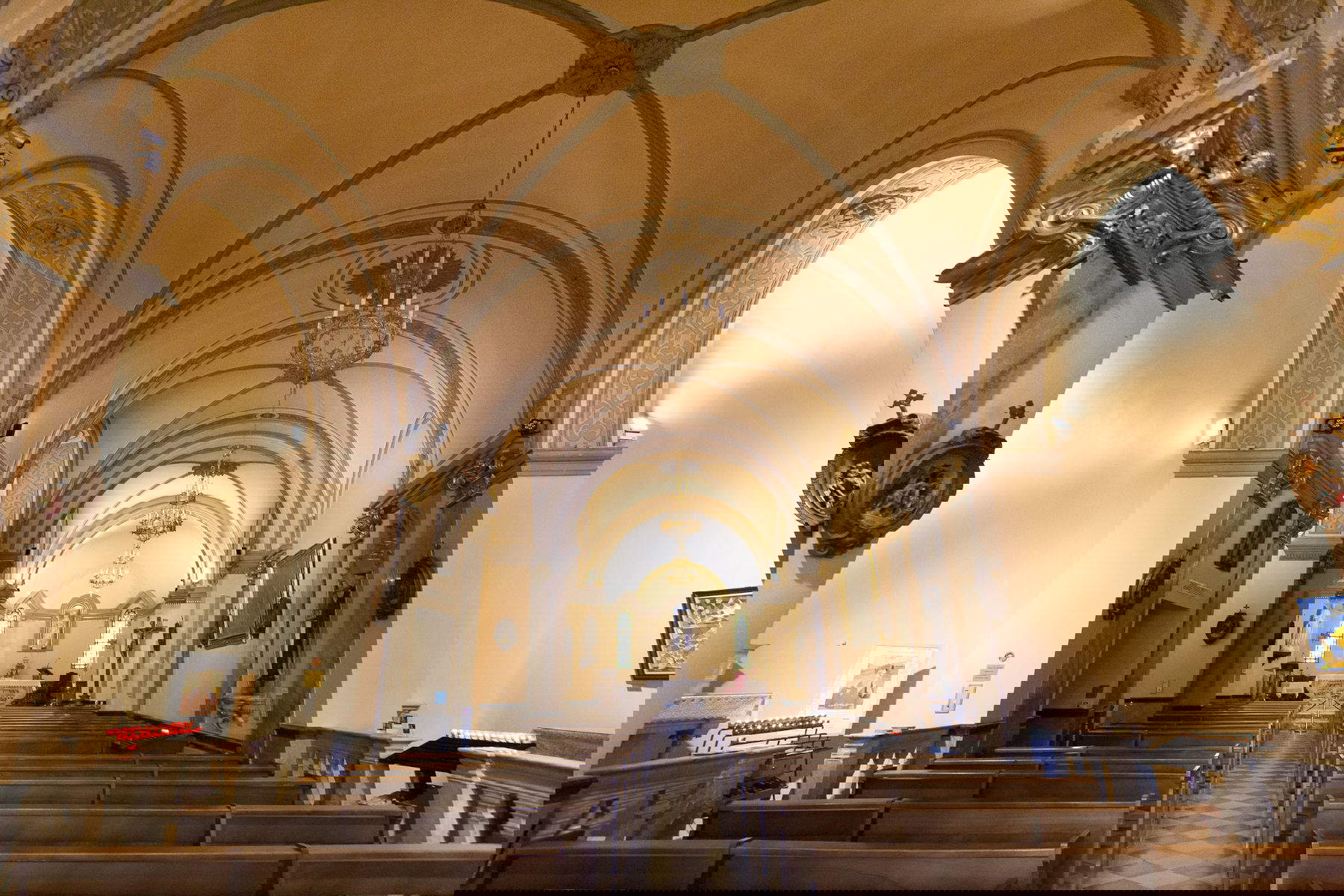
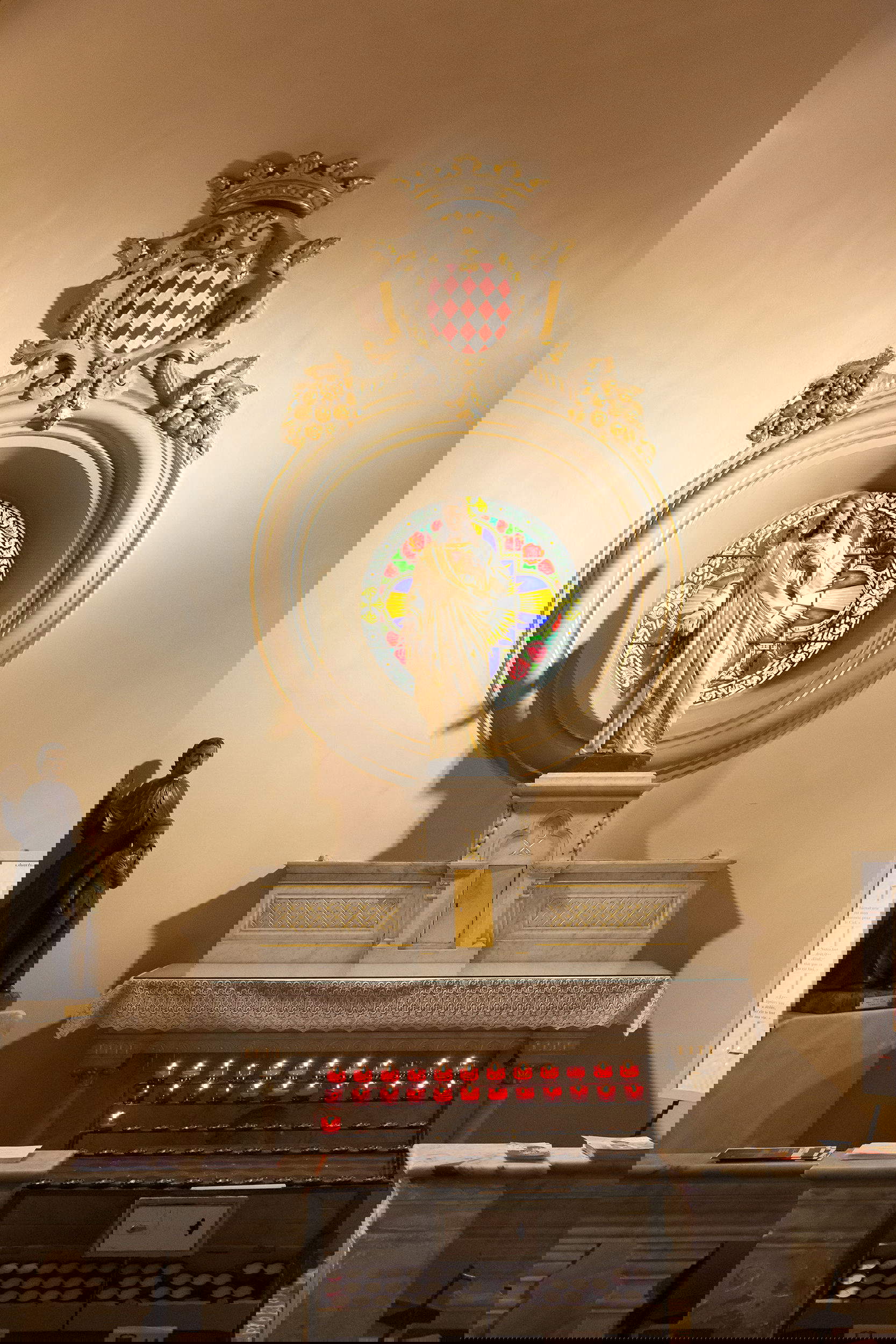
The current appearance of the building, however, dates back to the second half of the 19th century. It was Prince Charles III who decided to demolish the old structure in order to proceed with a complete reconstruction. The new church was solemnly inaugurated on January 26, 1871, and a few years later, in 1887, it was elevated to the rank of parish church, becoming fully integrated into the Archdiocese of Munich. The architecture reflects the sober style of the period, holding within it treasures of art and faith, such as the polychrome marble altar adorned with the Grimaldi coat of arms, a gift from Prince Anthony I and originally from the palace chapel.
The interior decorations tell the life of the martyr through three medallions, while a precious chest containing relics finds its place on the altar dedicated to her. Light also plays a key role thanks to the stained glass windows made by Nicolas Lorin of Chartres, which were unfortunately destroyed by bombing during World War II and later carefully restored in 1948 by Fassi Cadet. Outside, the saint's presence is celebrated by a life-size bronze statue with green patina, by sculptor Cyril de La Patellière and unveiled by Prince Rainier III in 1997. The sculpture rests on a gray Carrara marble base that reproduces the legendary boat, complemented by a white lacquered bronze dove.
A contemporary artistic highlight is the pipe organ, made between 2011 and 2013 by Francesco Zanin to a sound design by Silvano Rodi. This instrument, inspired by North German Baroque models and equipped with an entirely mechanical transmission, was donated by the Italian community living in the principality on the occasion of the wedding of Albert II and Charlene Wittstock. Music plays an essential role in the life of the parish, not only during liturgies but also through organ concerts of international resonance, such as those given by maestro Giulio Mercati.
The church is not only a historical monument, but the pulsating center of the ceremonies and celebrations that define the Monegasque calendar year. The most celebrated tradition takes place on January 26, the eve of the patronal feast, when a symbolic boat is set on fire on the square in front of the building. This rite evokes a legendary episode from the past, when an ill-intentioned person attempted to steal the saint's relics. The theft was foiled by local fishermen who, after recovering the sacred treasure, burned the thief's boat as an act of purification. Today, this ceremony sees the active participation of the princely family, which personally lights the stake in an atmosphere of great popular fervor.
The celebrations are spread over two packed days. January 26 begins with the traditional Mass in the Monegasque language, followed by the blessing of the sea. At 6 p.m. the procession of the relics of St. Devote begins at the Grand Prix chicane; this is followed by the arrival of a boat that symbolically enters Port Hercule, accompanied by the flight of a dove, and then proceeds to the handover of the relics to the Archbishop. The evening continues with a salute to the Blessed Sacrament and concludes with the burning of the boat and a fireworks display, which has recently been joined by choreography created with drones. The next day, Jan. 27, the center of celebrations moves to the Cathedral for the pontifical mass, followed by a solemn procession through the streets of Monaco-Ville to bless the city, the palace and the sea.
The link between St. Devote Church and the Grimaldi dynasty is also evidenced by gestures of deep private devotion that have become public customs. One of the most touching traditions concerns the brides of the ruling family. In 1956, Princess Grace inaugurated the custom of depositing her wedding bouquet in this church immediately after the ceremony in the Cathedral. This tradition was also honored by Princess Charlene in 2011, who chose to offer her flowers to the martyr saint as a sign of thanksgiving and protection for her new union.
In addition to individual protection, St. Devote is considered the savior of the nation at critical moments in its history. It is said that in 1507, during a long siege led by Genoese and Pisan troops against the fortress of Monaco, the saint appeared to the defenders to reassure them of divine support. Thanks to this vision, the Monegasques found the strength to hold out for more than six months, leading the besiegers to abandon the enterprise on March 15 of that year. This episode reinforced the idea of the martyr as the patron saint of Monaco.
The cult of the patron saint is not limited to the church dedicated to her, but is widespread throughout the territory. Images and references to the saint appear in almost every religious building in the city and even in the Principality's coinage, a sign of a presence deeply rooted in both daily and institutional life. On Monegasque coins, it is generally the Prince's face that is depicted; an exception is the commemorative coin dedicated to Saint Devote, issued in 2004 in silver to mark the 1700th anniversary of the patron saint. It is a particularly rare collector's item, minted in only 14,999 pieces. The preservation of traditions associated with the saint, from the procession of relics to the spiritual concert, is not just an exercise in folklore, but the reaffirmation of a spiritual bond that defines Monaco as a community united around its symbols.