By Redazione | 24/03/2026 12:48
For the past few months, the city of Valencia has been one of the great centers of pilgrimage in Christendom, on the occasion of the Third Jubilee Year of the Holy Grail, which began on Oct. 30, 2025, and will end on Oct. 29, 2026. The event, recognized by the Holy See in 2015 thanks to the concession of Pope Francis, allows the Turia capital to celebrate every five years a Holy Year dedicated to the famous relic kept in its Cathedral: the Holy Chalice (Santo Cáliz), a cup that has been a candidate for being the Holy Grail of the famous legend since the Middle Ages. The commemoration places Valencia among the world's seven Jubilee cities, along with Rome, Jerusalem, Santiago de Compostela, Camaleño, Urda and Caravaca de la Cruz: during this special period, pilgrims and visitors can obtain plenary indulgence by participating in religious celebrations and making the traditional spiritual journey in the Valencian Cathedral.
The Jubilee Year, in the tradition of the Catholic Church, represents a time of spiritual renewal, conversion and forgiveness. In this context, the faithful are offered the opportunity to obtain the complete remission of sins, a concrete sign of divine mercy. This grace is received by following a well-defined path: pilgrimage to the Jubilee Temple, identified in the Cathedral of Valencia, approaching the sacrament of confession, participating in the Eucharist and praying according to the Pope's intentions.
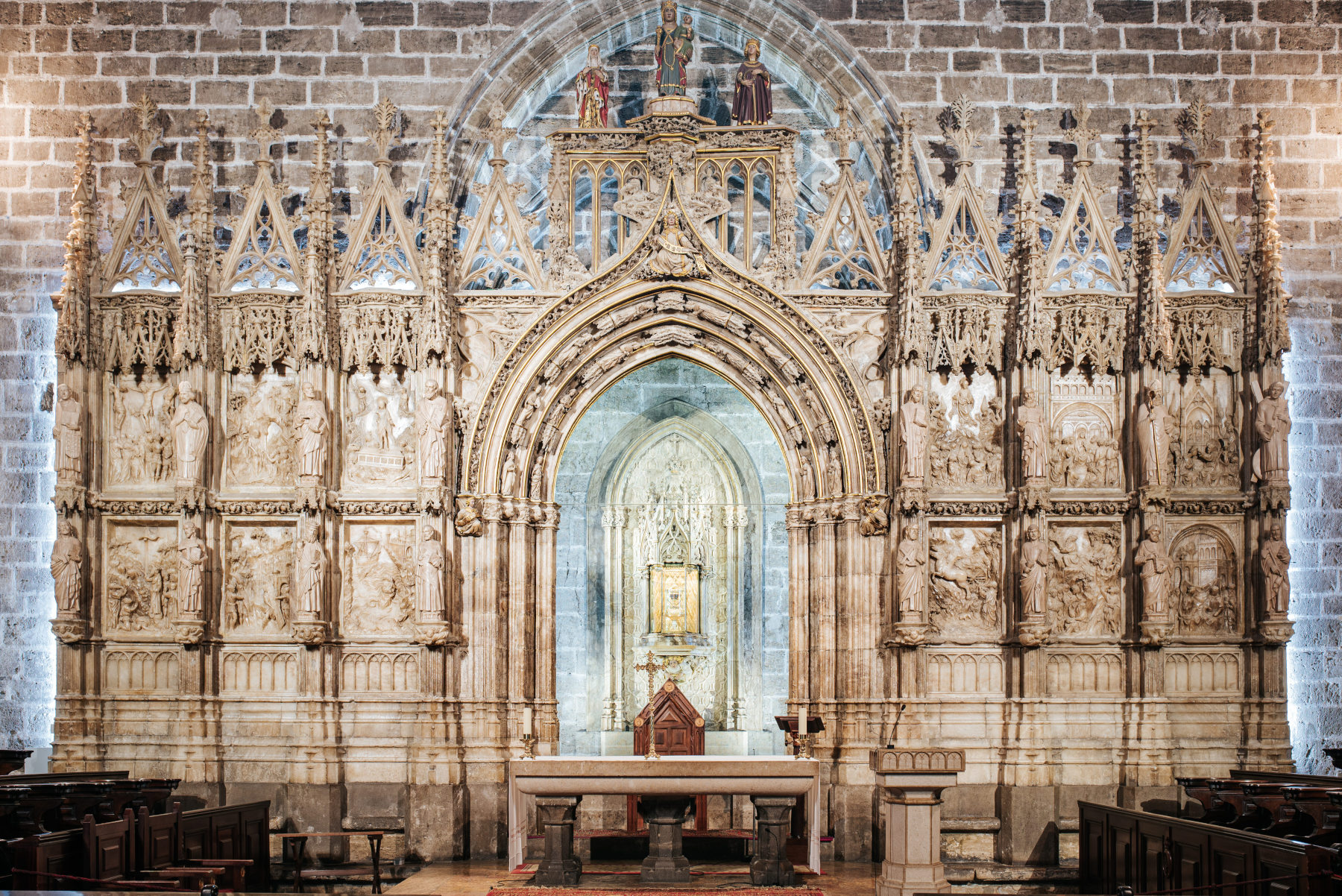
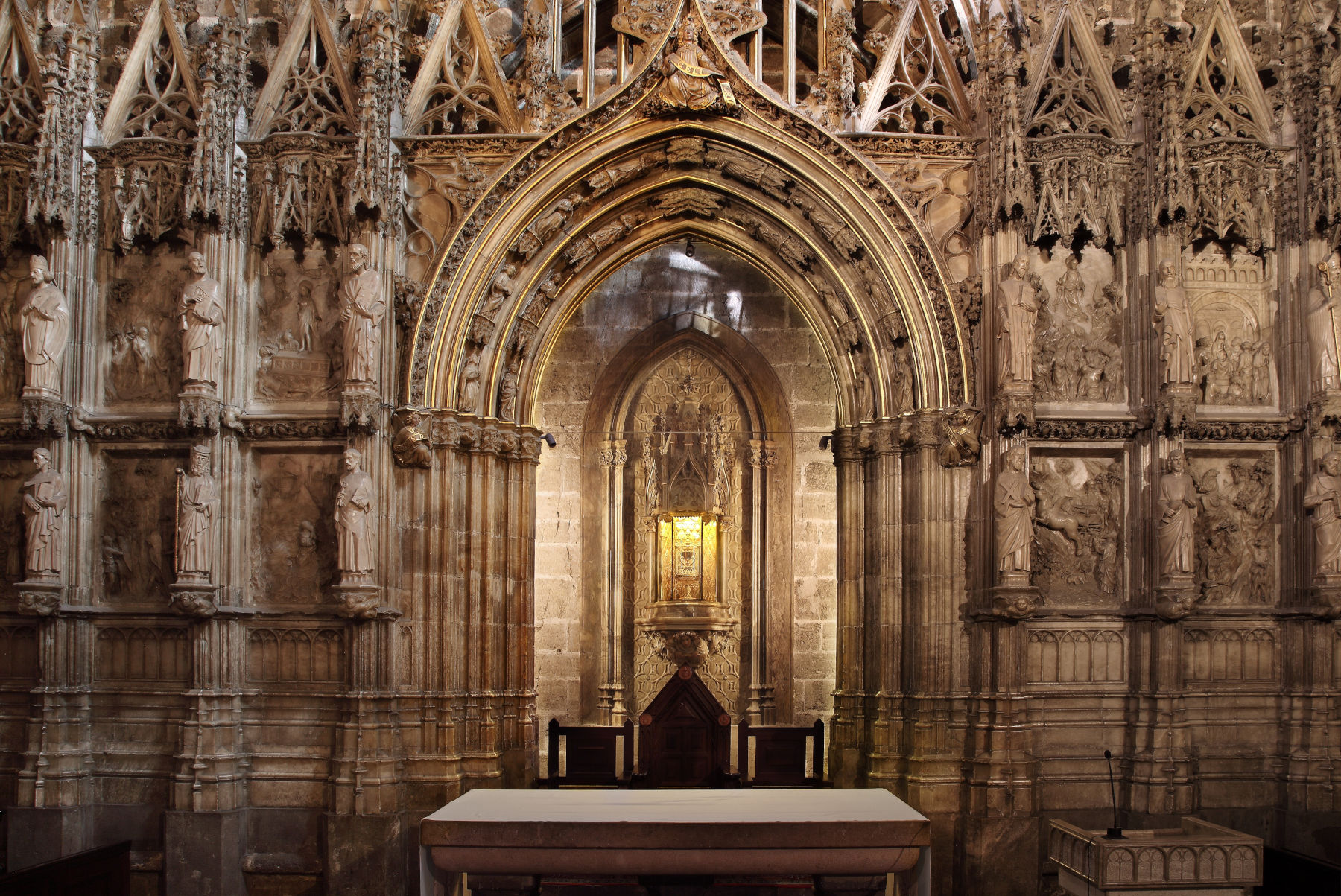
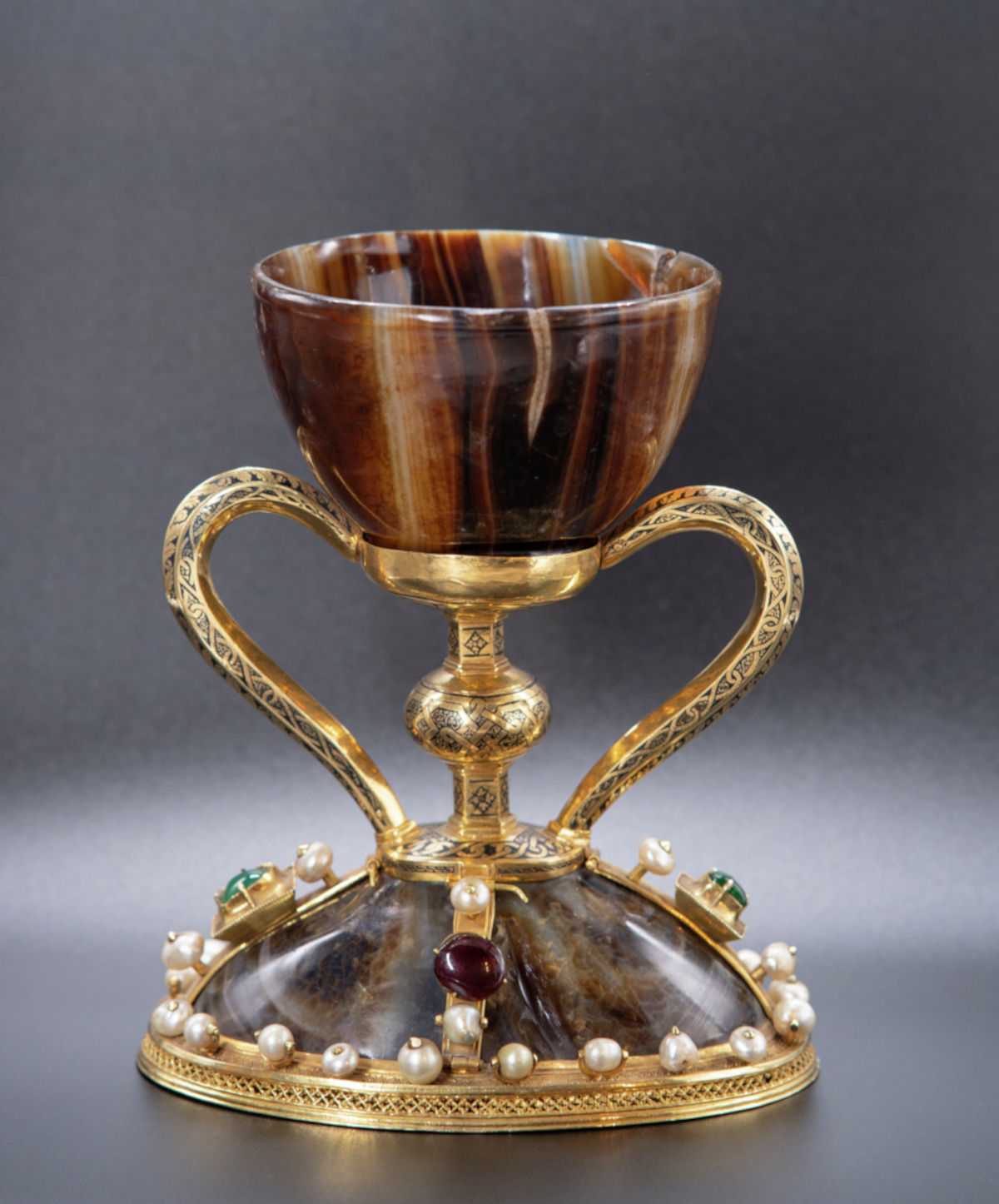
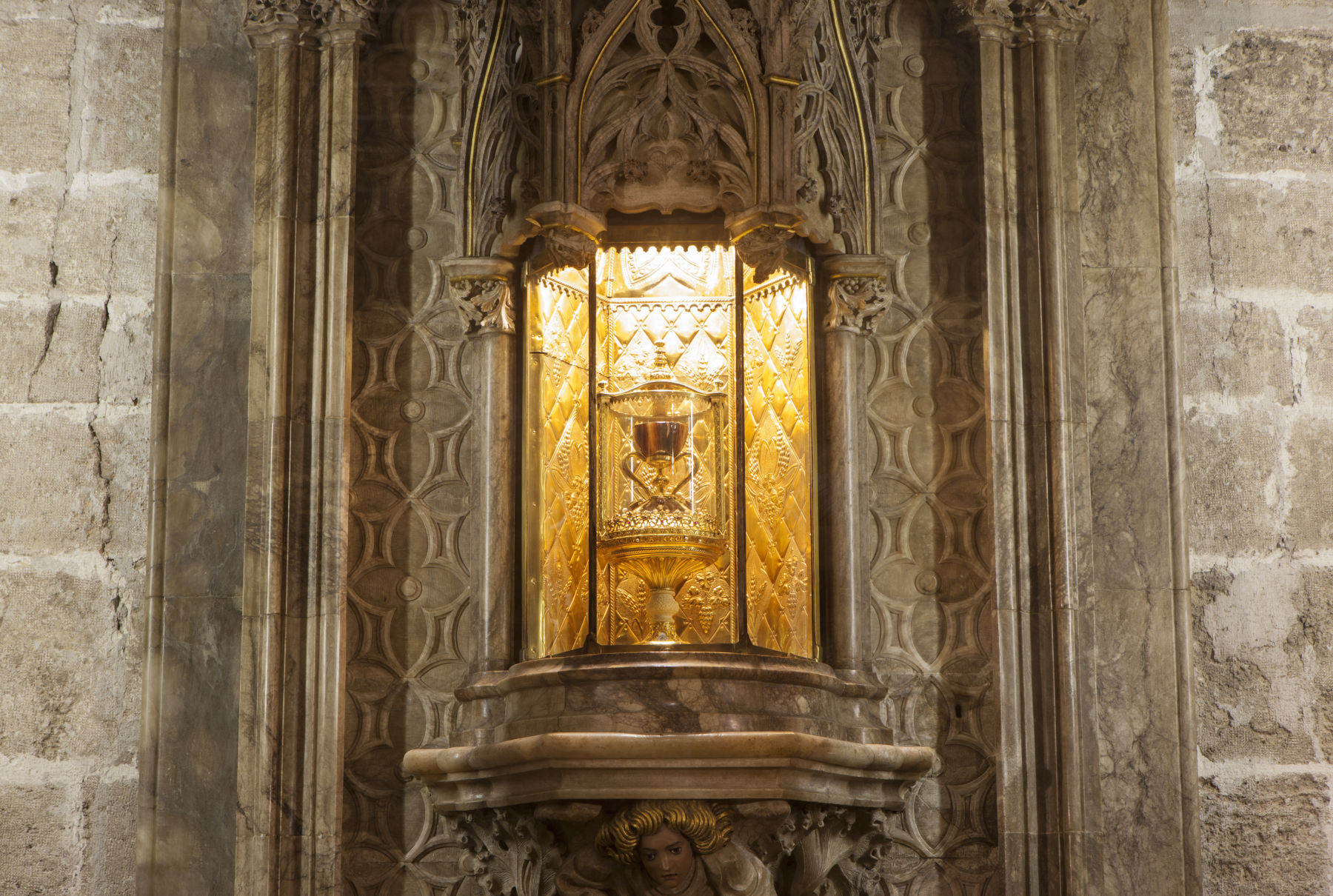
The heart of the celebrations is the Chapel of the Holy Grail, a secluded and silent space located inside the Cathedral. Here the relic is kept in a glass urn placed behind the altar, a continuous destination for the faithful and curious people from all over the world. According to tradition, the chalice kept in Valencia is in fact the Grail, or chalice used by Jesus Christ during the Last Supper. The relic is a dark red agate cup mounted on a base added in medieval times. The upper part, considered the oldest, is about nine centimeters in diameter and was probably made between the second century B.C. and the first century A.D. in a workshop in the eastern Mediterranean, perhaps in Egypt, Syria or Palestine. The present structure comprises three distinct elements: the upper agate vase, the stem, and the base with handles, enriched with decorations and precious stones added over the centuries.
The history of the relic spans nearly two millennia and is intertwined with the history of Christianity itself. According to tradition, the chalice was brought from Jerusalem to Rome by St. Peter and used in the Church's first Eucharistic celebrations. During the persecutions of Emperor Valerian in the third century, Pope Sixtus II is said to have entrusted the chalice to the deacon St. Lawrence to be saved. St. Lawrence sent it, to Aragon, where the relic was kept for centuries. The chalice was hidden in the monastery of San Juan de la Peña and in 1399 was given to King Martin I of Aragon. It later became part of the royal collections and was kept in the chapel of the royal palace in Zaragoza. However, the final transfer to Valencia occurred in the 15th century. Alfonso V of Aragon, known as the Magnanimous, transferred the relic to the city in 1432. A few years later, in 1437, the chalice was delivered to Valencia Cathedral as collateral for a loan granted to the sovereign by the ecclesiastical hierarchy to finance his military campaigns in the Kingdom of Naples. Since then the relic has remained permanently in the Cathedral, becoming an object of veneration and symbol of the city.
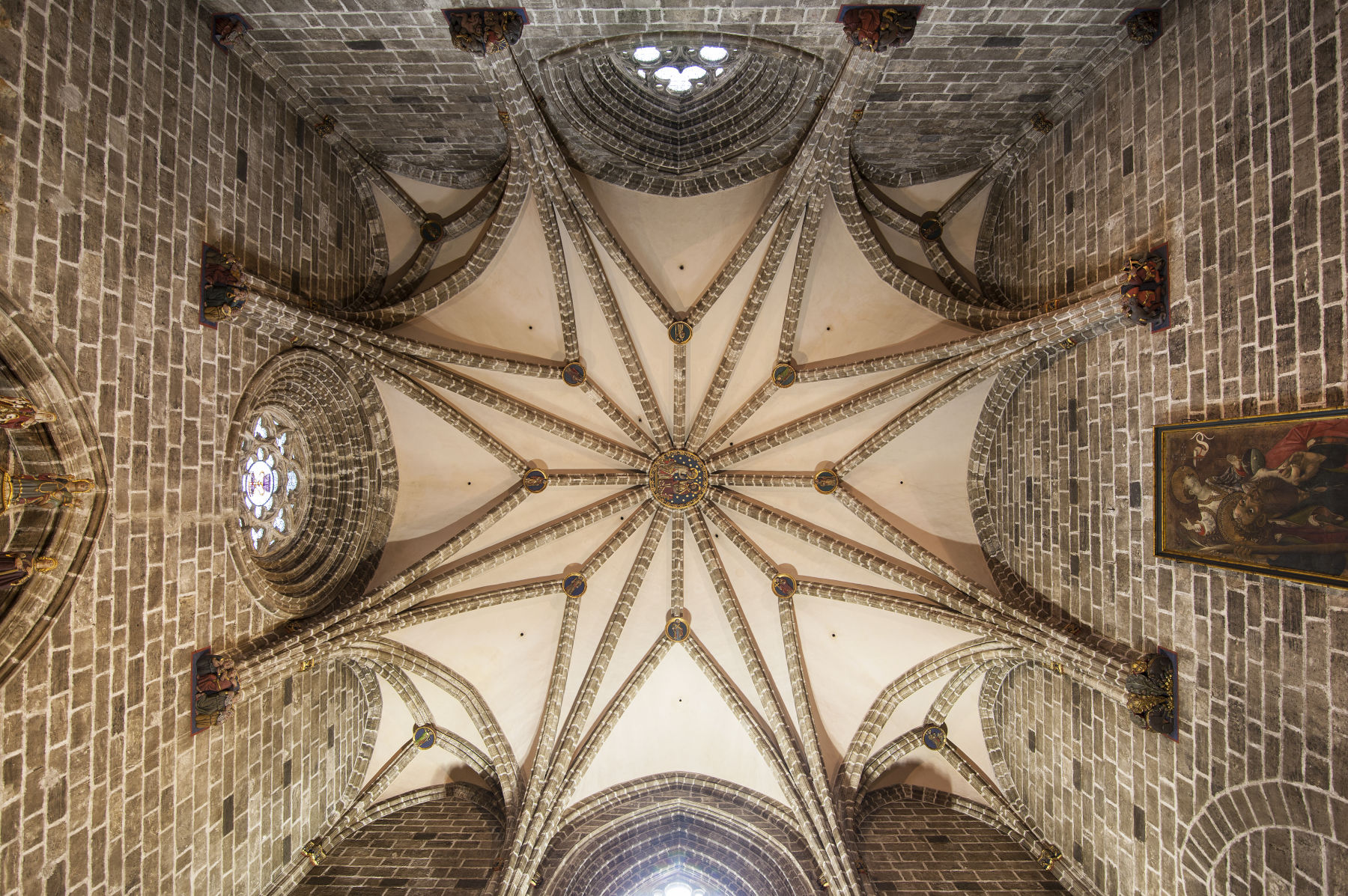
In 1916 the Cathedral's former chapter house was transformed into the Chapel of the Holy Grail, the space that now houses the chalice. The room retains an extraordinary artistic richness, starting with the alabaster altar made by the sculptor Giuliano Fiorentino (Giuliano di Giovanni da Poggibonsi; Poggibonsi, c. 1395 - c. 1435), a pupil of Lorenzo Ghiberti. The work, which was originally a 15th-century choir door, features twelve reliefs with scenes from the Old and New Testaments. The chapel is surmounted by a star-studded cross vault decorated with figures of the twelve apostles and a scene of the coronation of the Virgin. Prominent among the historical elements in the space are the great chains from the port of Marseilles, brought to Valencia by Alfonso the Magnanimous in 1423 as a war trophy. The chapel also contains pictorial works such as Vicente López's Expulsion of the Moors and the Adoration of the Magi attributed to Nicolás Florentino.
The Holy Grail is only displayed outside its chapel on two annual occasions. The first occasion is on Holy Thursday, during the Mass in Coena Domini, when it is carried in procession to the Cathedral's high altar; while the second is on the last Thursday in October, during the celebration of the annual feast dedicated to the relic. Over time, the chalice has also attracted the attention of pontiffs and scholars. In November 1982 Pope John Paul II celebrated Mass using the Holy Chalice and called it a "witness of Christ's passage on Earth." Pope Benedict XVI also celebrated the Eucharist with the chalice in 2006 during the World Meeting of Families in Valencia.
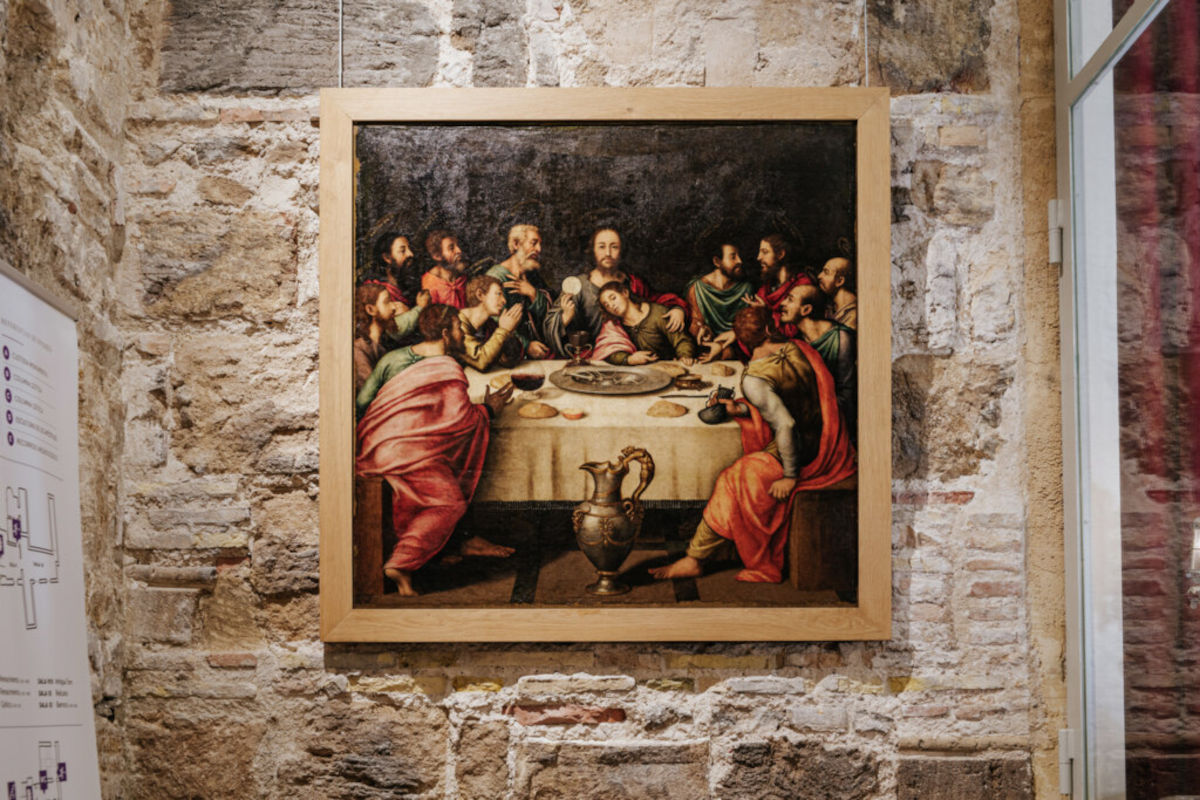
Alongside the religious dimension, the Jubilee also offers an important cultural opportunity. A short walk from the Cathedral, in the historic Almudín building, is the Holy Grail Visitor Center, an exhibition space dedicated to the history and legends of the relic. The tour offers a visual and educational narrative of the origin of the chalice and its journey through the centuries. Eight explanatory panels illustrate the historical and religious context of the relic, while interactive screens allow visitors to consult historical documents and insights. Visitors can also follow a chronological projection that reconstructs the most important stages in the Grail's history and access audiovisual content dedicated to its iconography and presence in European culture. The visit also allows visitors to discover theAlmudín, a medieval building that once served as a grain storehouse and preserves popular frescoes related to the grain trade and the patron saints of the guilds. Its basilican architecture and the building's long history enrich the experience of the exhibition tour.
The presence of the Holy Grail in Valencia is closely linked to the city's heyday, the so-called Valencian Golden Age of the 15th century. At that time, the Turia capital was one of the main commercial centers of the Mediterranean thanks to the silk trade and its strategic position in the maritime trade. The city was also a vibrant cultural center, home to the first book printing in Spain and the University of Valencia. Authors such as Ausiàs March and Joanot Martorell contributed to a prominent literary season, while the patronage of Valencian popes Callistus III and Alexander VI from the Borja family fostered the city's artistic and religious development. Even today, this heritage can be seen in the historic sites that dot Valencia, such as the Lonja de la Seda, a Gothic masterpiece that has been declared a UNESCO World Heritage Site, or the Velluters district, where hundreds of silk artisans once worked.
The Third Jubilee Year of the Holy Grail therefore invites people to rediscover Valencia through a route that combines faith, history and art. The city offers itineraries that lead to places associated with the relic, from the Museum of Fine Arts to the Royal Monastery of the Holy Trinity, from the Church of the Patriarch to the Basilica of the Virgin of the Forsaken, to the Cathedral itself where the spiritual journey ends. Centuries after the arrival of the chalice, regardless of its legendary bearing, Valencia continues to cherish this relic as a symbol of its history and identity. The Jubilee thus represents not only a moment of religious devotion, but also an opportunity to rediscover the cultural and spiritual heritage of a city that over the centuries has been able to combine faith and art.