By Ilaria Baratta | 29/05/2026 16:33
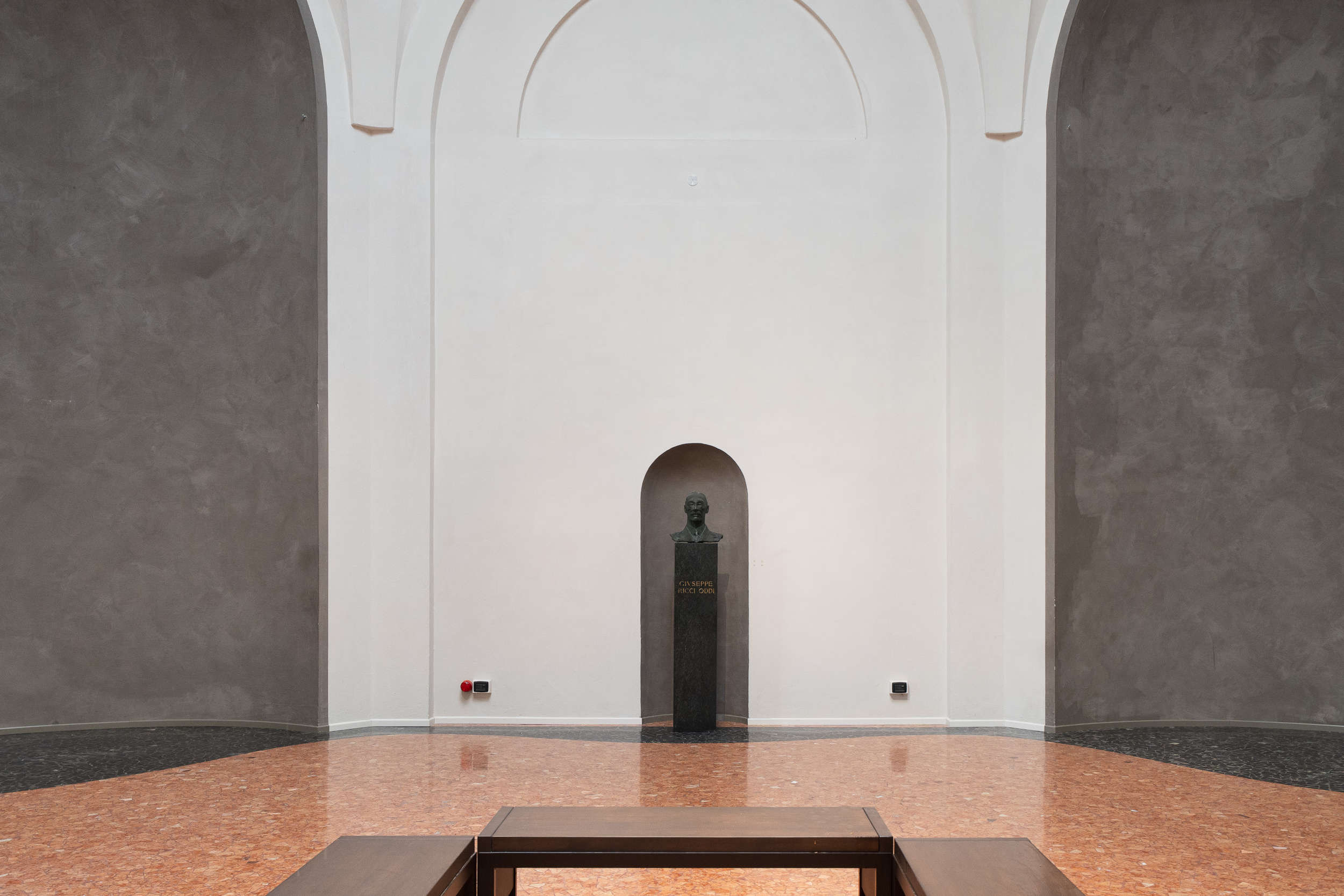
The dream came true in 1931: it was in fact October 11 of that year when the Ricci Oddi Gallery in Piacenza was inaugurated to the public in the presence of the princes of Savoy, Umberto II and Maria José. Curiously, however, the official opening was not attended by him, Giuseppe Ricci Oddi, the founder of the collection, without whom the Gallery of Modern Art, now totally refurbished following a complex intervention that began in the spring of 2025 and since April 28, 2026 visible in its new guise, would never have seen the light of day. He was too shy and reserved a character, little inclined to worldliness, to attend official events, but what he had long dreamed of had become reality.
A distinguished, garrulous man devoted to such passions as rowing, gymnastics, music, hunting, and horseback riding, Ricci Oddi, a member of the city's elite, returned at the age of twenty-eight to Piacenza, the city of his birth in 1869, after studying law between Rome and Turin, settling in the family apartment at 24 Via Poggiali. In addition to his increasing involvement in the administration of the family estate and the afternoons in the office on Via Mazzini where he took care of his work and business activities, his existence found a definitive center of gravity in the creation of a collection of modern art, which, begun almost for pleasure and so as not to leave the walls of the apartment empty, turned into a true passion, going so far as to devote almost all his free time from work to it.
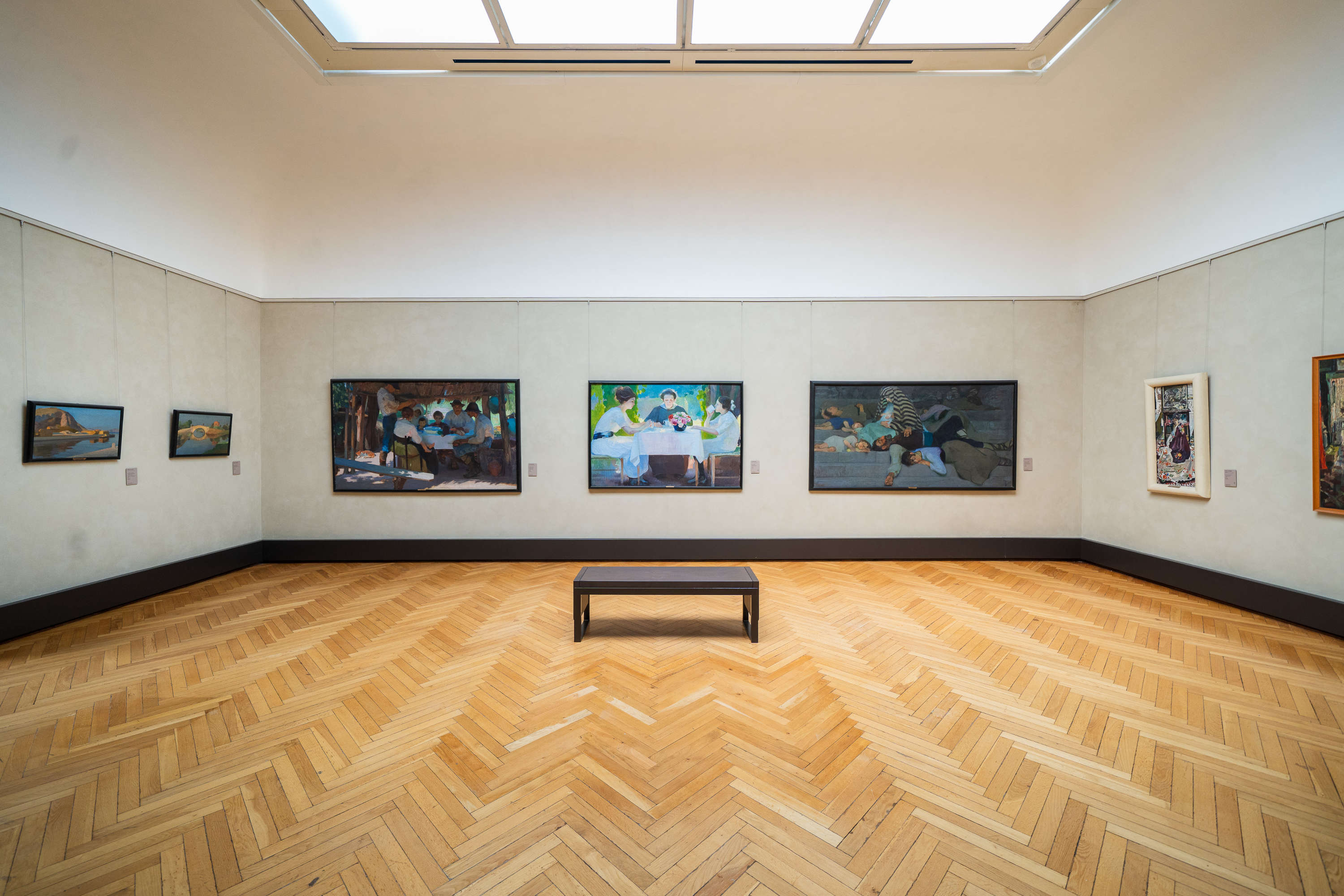
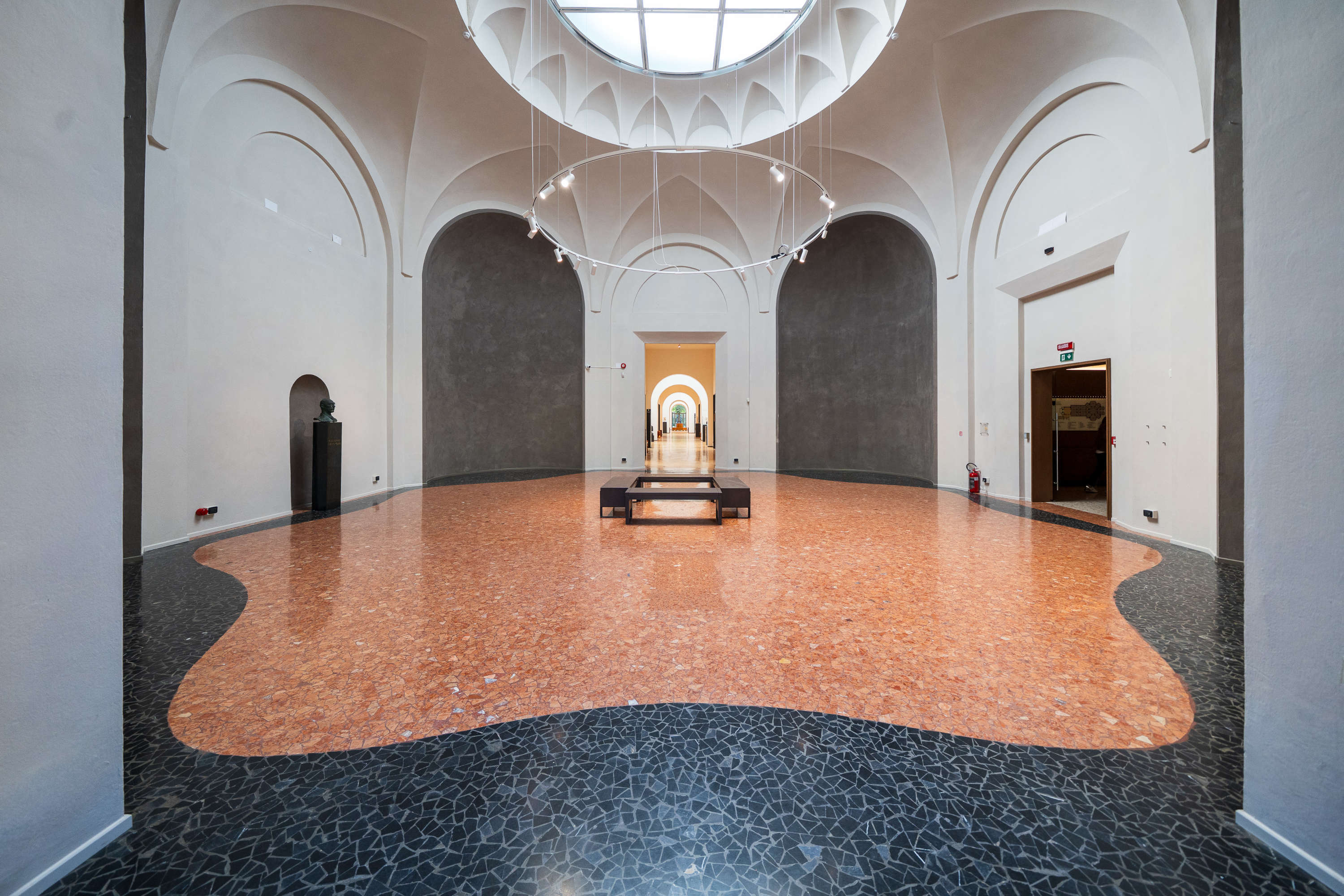

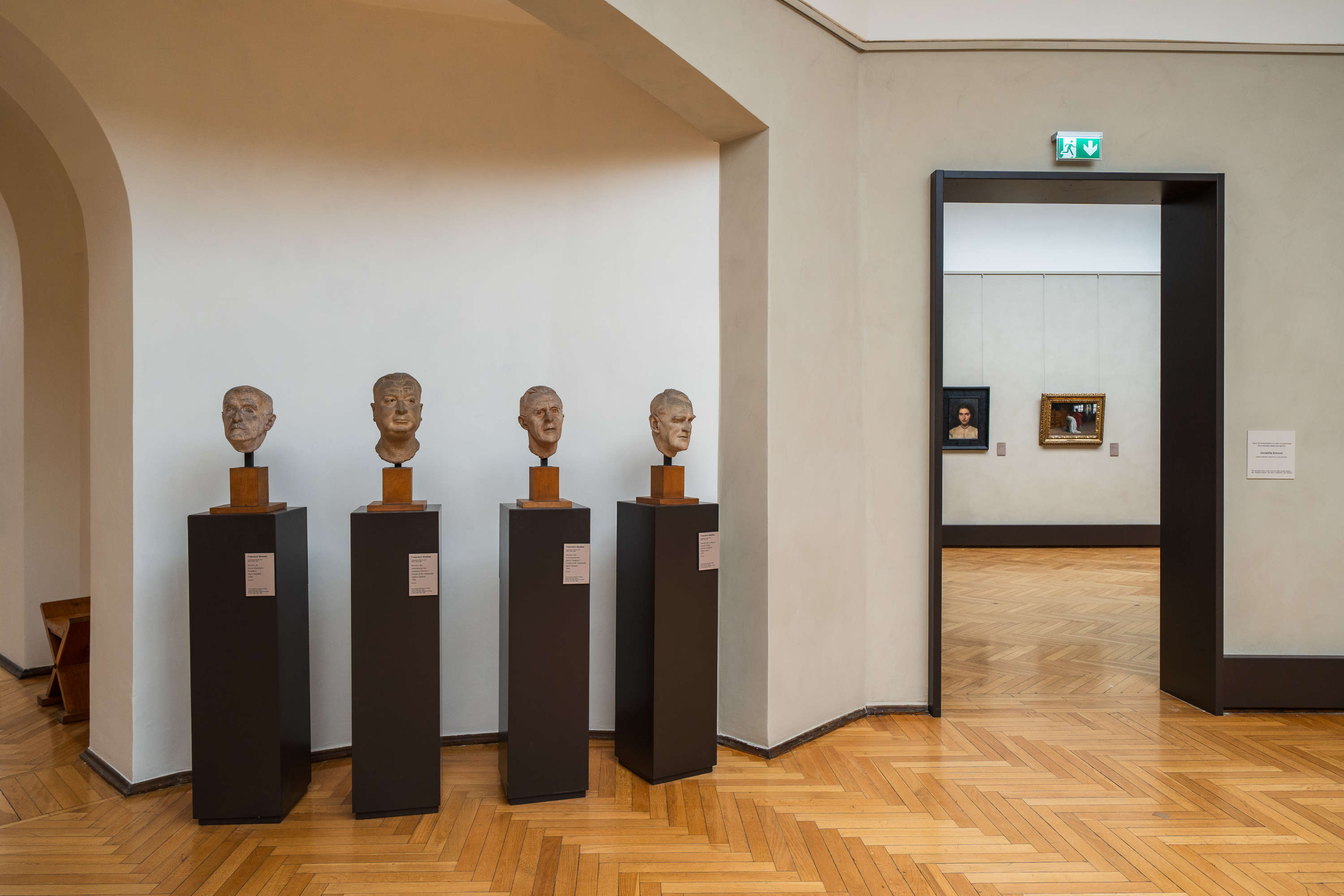
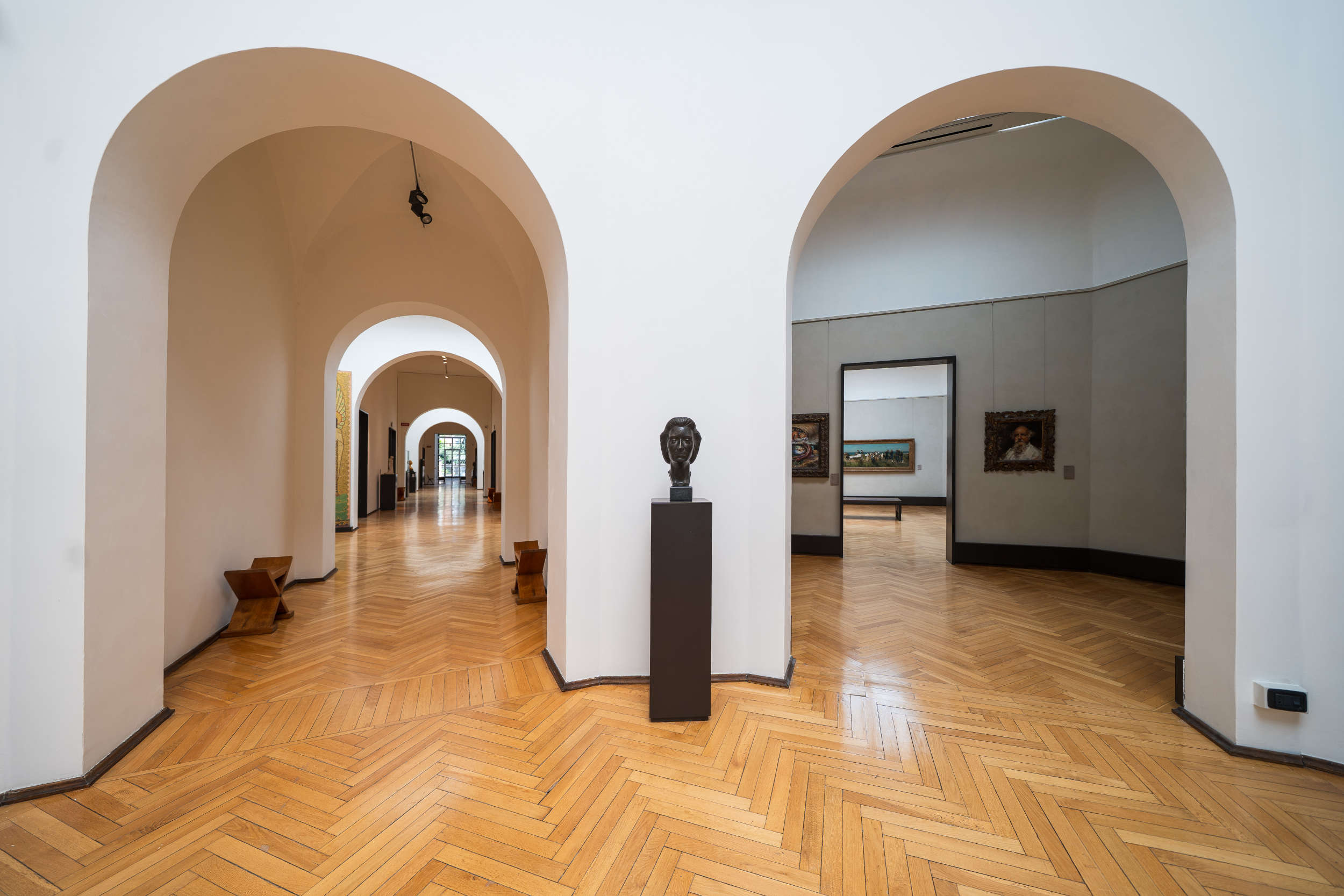
He began buying his first works in 1897: Gaetano Previati's Dopo Novara (After Novara ) and Francesco Filippini's Sheared Sheep, on the advice of his fellow citizen artist Oreste Labò. From that moment on, the pace of purchases became more and more unrelenting, leaning mainly toward modern Italian art, also following the advice of another friend of his, Carlo Pennaroli. Initially set up in the apartment on Via Poggiali, the collection grew, to the point that Ricci Oddi felt the need to give it a home of its own, and to transform his private collection into a true Gallery open to the public: his dream was in fact to form "a gallery that one day (I hope!!!) will have to succeed pleasing and interesting not only to artists and scholars who are good connoisseurs of art, but also to the mass of visitors," he wrote in 1918 in his diary, rediscovered in the 1980s, in which he noted purchases, travels, resolutions, failures, successes and desires until 1926. However, as early as 1913, he had begun negotiations to purchase a suitable building to house the collection, but numerous failures led him to have a building constructed ex novo at his own expense in the area of the former San Siro Convent, an area that the City of Piacenza made available to him free of charge. The project was entrusted in 1924 to the architect Giulio Ulisse Arata, who recovered the spaces of the former convent, maintaining a dialogue between the seventeenth-century remains of the convent, suitably plastered, and the new brick structures, and creating a sequence of rooms that develops along a main corridor that flows into a central room; from here radiate the other rooms, arranged according to an octagonal geometry. The result was a large and bright exhibition space with a distinctly modern feel, enhanced, moreover, by the innovative choice of natural zenithal lighting, strongly desired by the founder himself to allow light to rain directly on the works. The official inauguration in 1931 thus saw the fulfillment of his wish to "place in a building worthily adapted or specially built my collection so that I may then donate it to my city," as he noted in 1919 in the pages of his diary, and indeed this is what happened, opening his art collection to his fellow citizens and to anyone who wished to admire it, so that the whole community could benefit from it. Masterpieces of remarkable quality and value continued to enrich the collection even after it was opened to the public and after the founder's death in 1937. Today, the Ricci Oddi Gallery of Modern Art is one of the most relevant museums in Italy, with 1184 works, of which about 250 are on display and more than 800 are kept in storage, including graphic works, with masterpieces by great artists from the 1830s to the 1930s, particularly landscapes and figure paintings, genres favored by the founder.
The current redevelopment and rearrangement project, twenty years after the last significant maintenance, involved all twenty-two rooms of the exhibition itinerary (which during the works, however, remained open on a rotating basis), for a total of more than 1,000 square meters of floor space. The intervention, entrusted to Piero Lissoni with Antonella De Martino and Gianni Fiore of the Milan-based firm Lissoni & Partners, was aimed at restoring the original architectural and structural features of the exhibition spaces, designed by Giulio Ulisse Arata, also based on Ricci Oddi's own indications, to dialogue with the collection. In fact, it is one of the rare examples of early 20th-century Italian buildings built from scratch with a precise museum function intended for modern art, where content and container are closely interconnected from the outset.
The renovation was made possible thanks to the contribution of twenty-four supporters including companies, trade associations and private citizens of the Piacenza area. Decisive was the role of the President of the Ricci Oddi Modern Art Gallery Foundation - ETS, Massimo Toscani, promoter of the fundraising. "I like to emphasize," said the President, "how the support of the patrons who made possible the renovation of the Ricci Oddi is a living and tangible sign of an enlightened Piacenza community that identifies with and reappropriates the Gallery. To them goes my most sincere thanks. The renovated Gallery now offers itself as an inclusive and dynamic place, truly at the service of citizens and visitors: a new look in tune with a purposeful, open and dynamic identity."
The work was carried out under the supervision of the Soprintendenza Archeologia Belle Arti e Paesaggio for the provinces of Parma and Piacenza. Studio Milani Carini of Piacenza was in charge of the construction management and executive design with the contribution of architect Ravazzani, while Gallery director Lucia Pini coordinated the different phases of the intervention on the museum front and was in charge of the exhibition itinerary. "Enhancing the importance of the collection by giving breath to the works, restoring beauty and harmony to Giulio Ulisse Arata's stupendous architecture so as to bring out that close dialogue between collection and building, which is one of Ricci Oddi's strong points: these are the two main guidelines that have guided the work conducted in recent months," explained director Pini. "Now the Gallery finally welcomes the public in environments that live up to the founder's intentions and offers tools for understanding the collection that can enrich the visitor experience. I cannot hide my satisfaction with these results, which mark an important stage in a process of growth that must continue in the years to come."
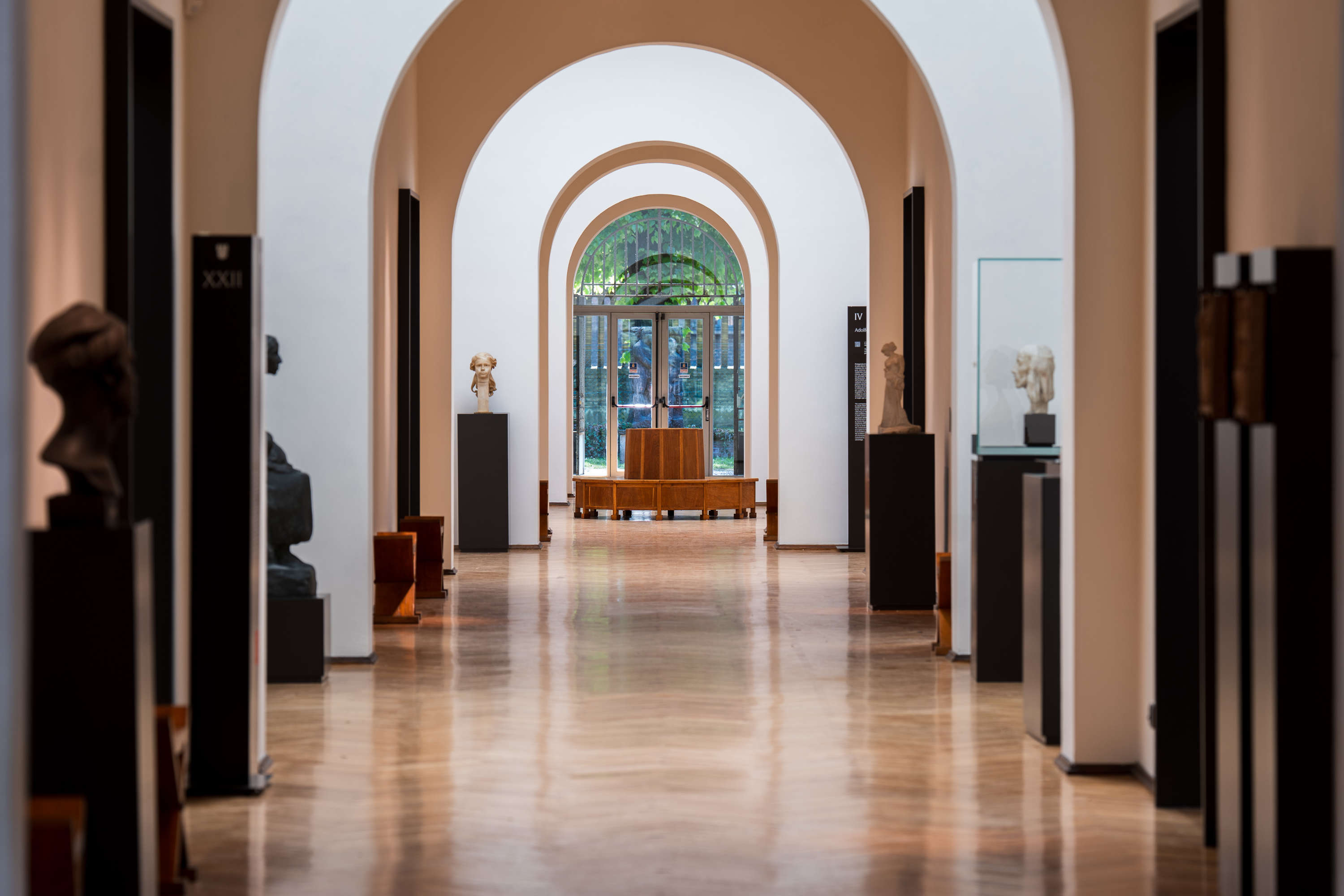
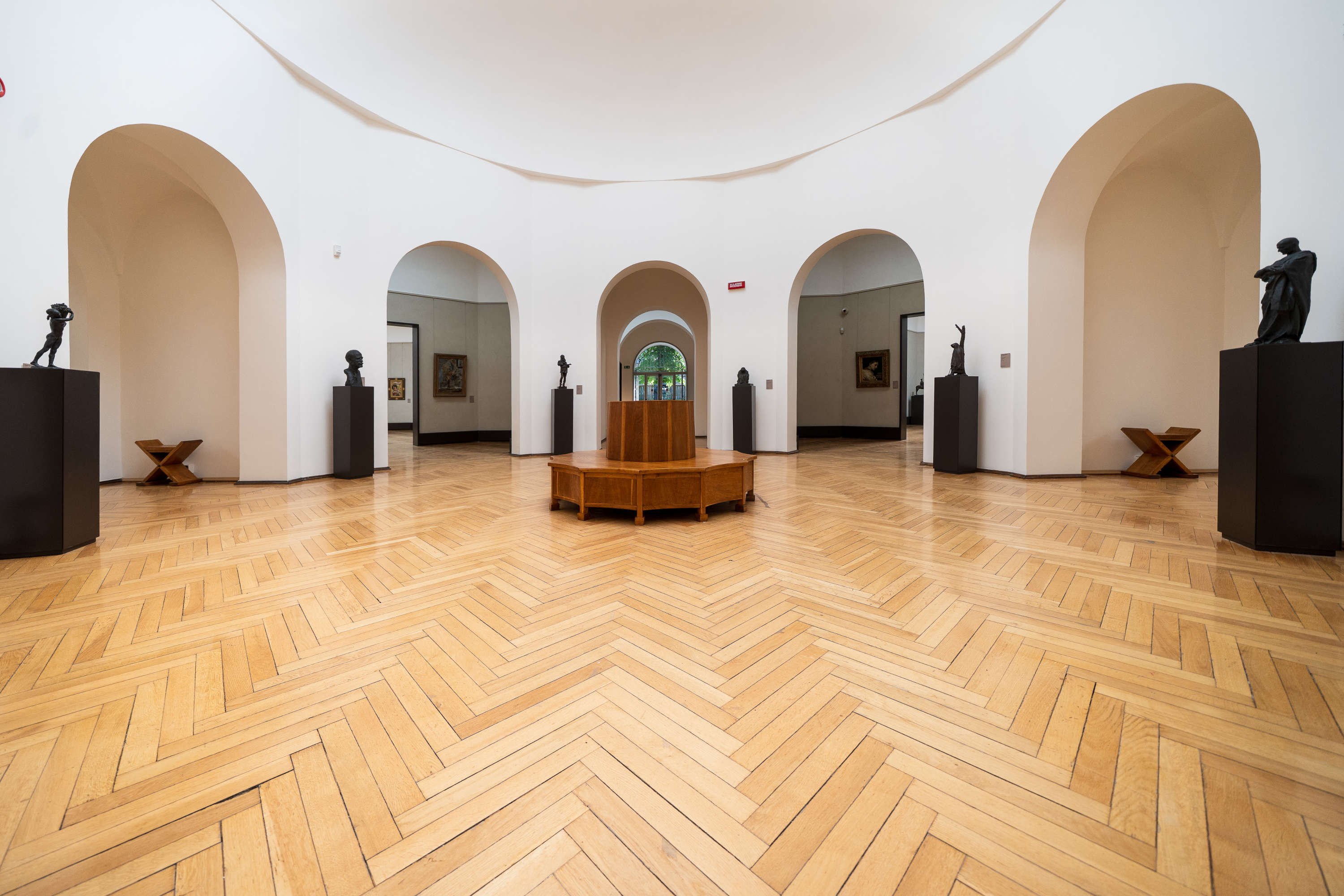
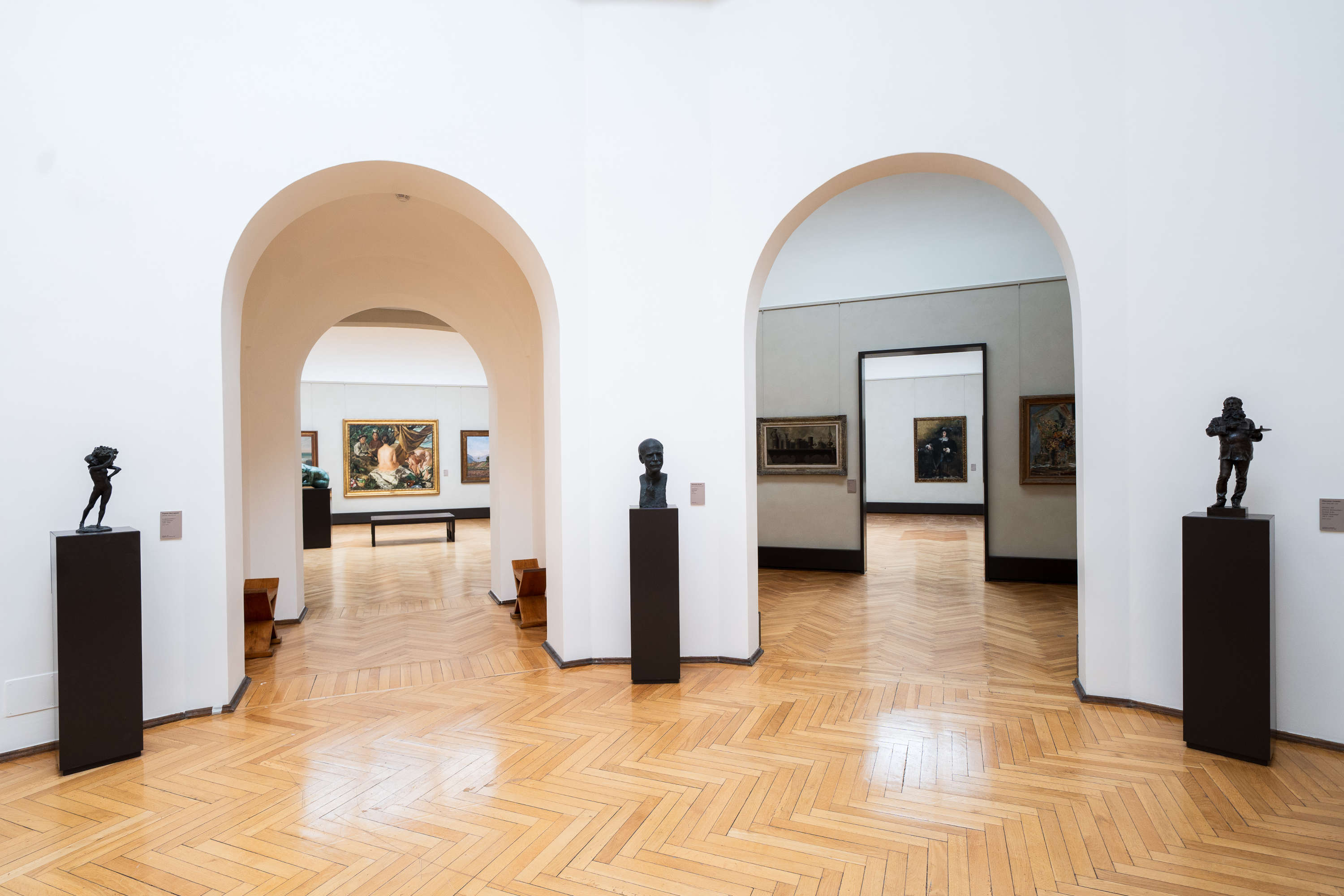
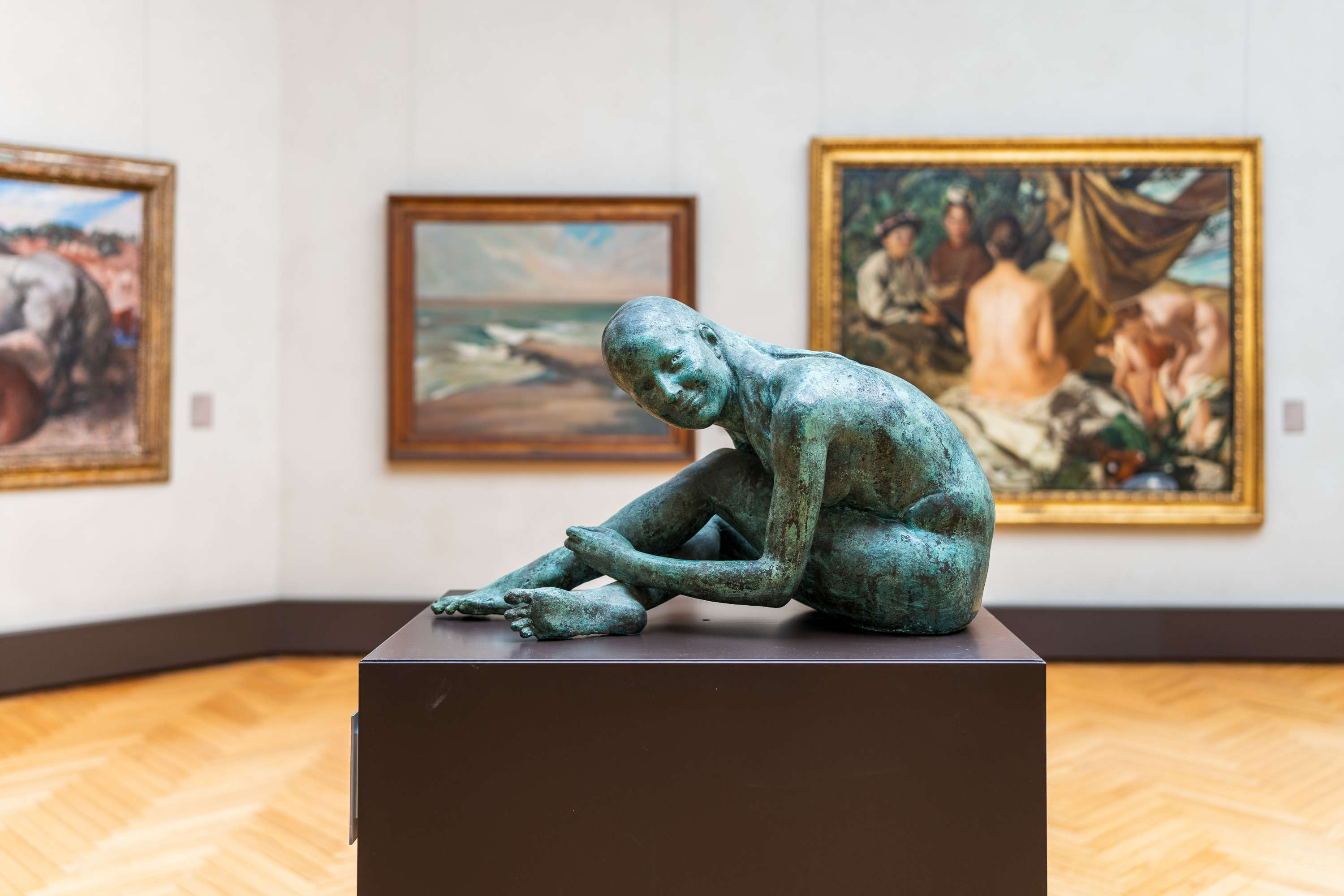
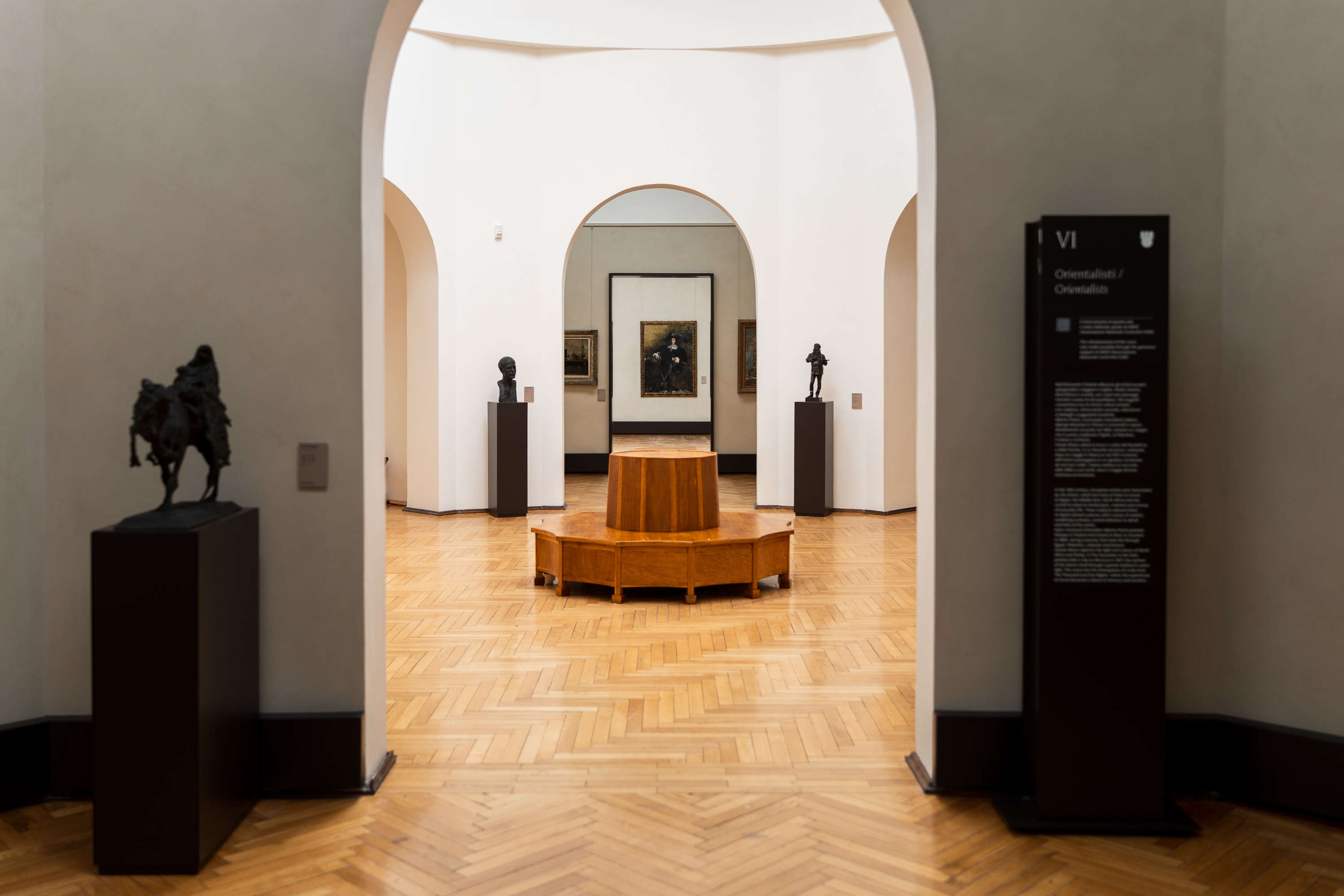
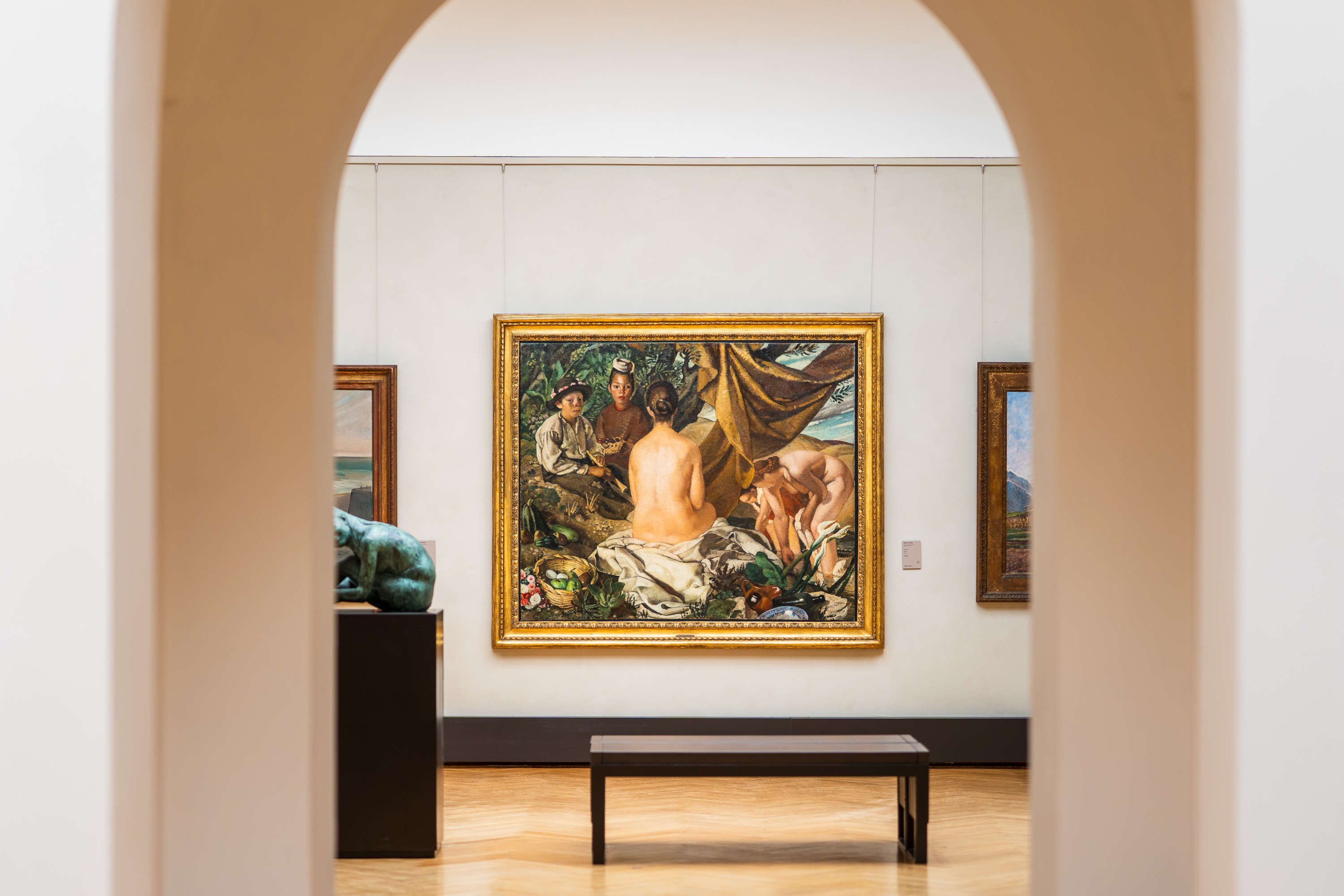
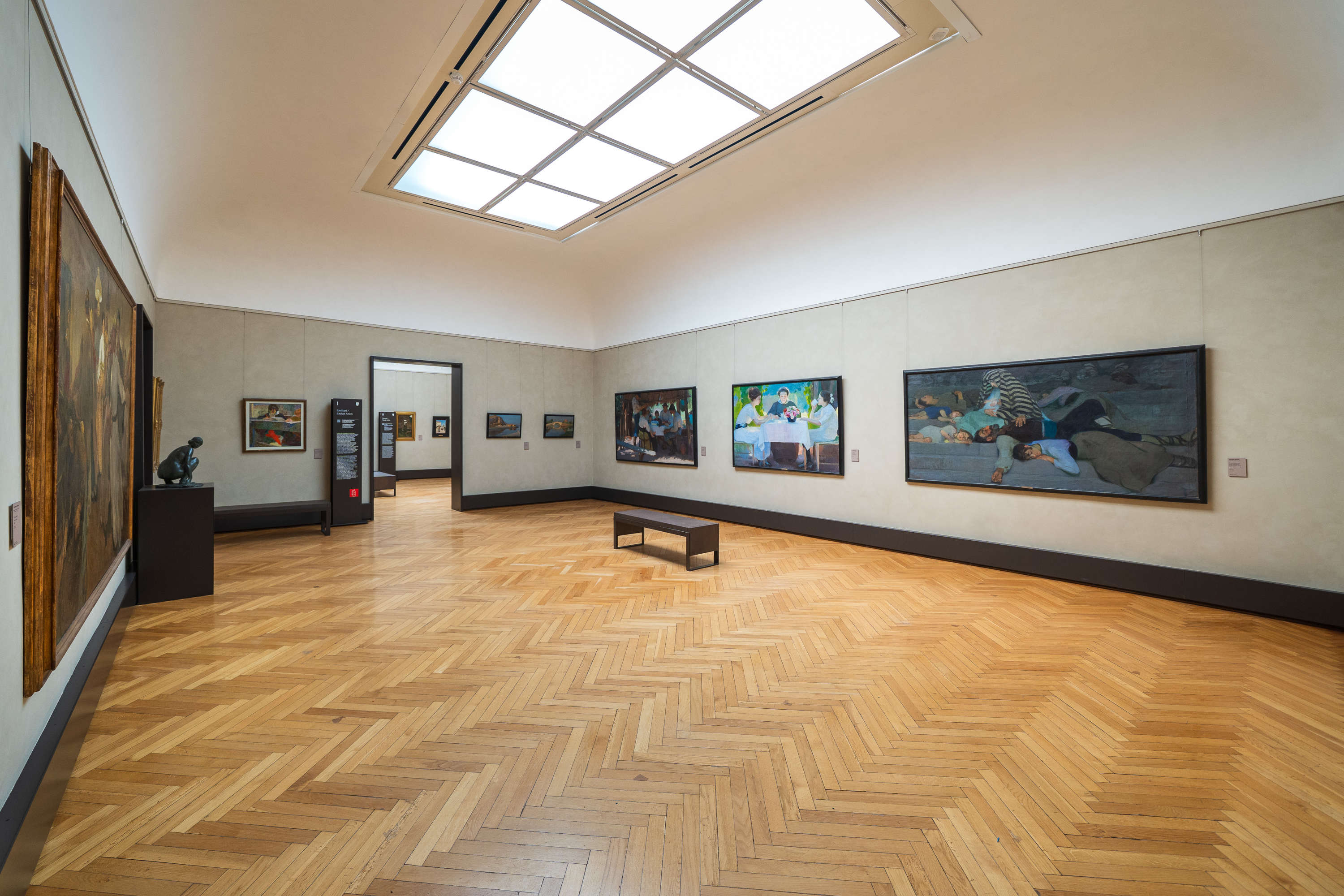
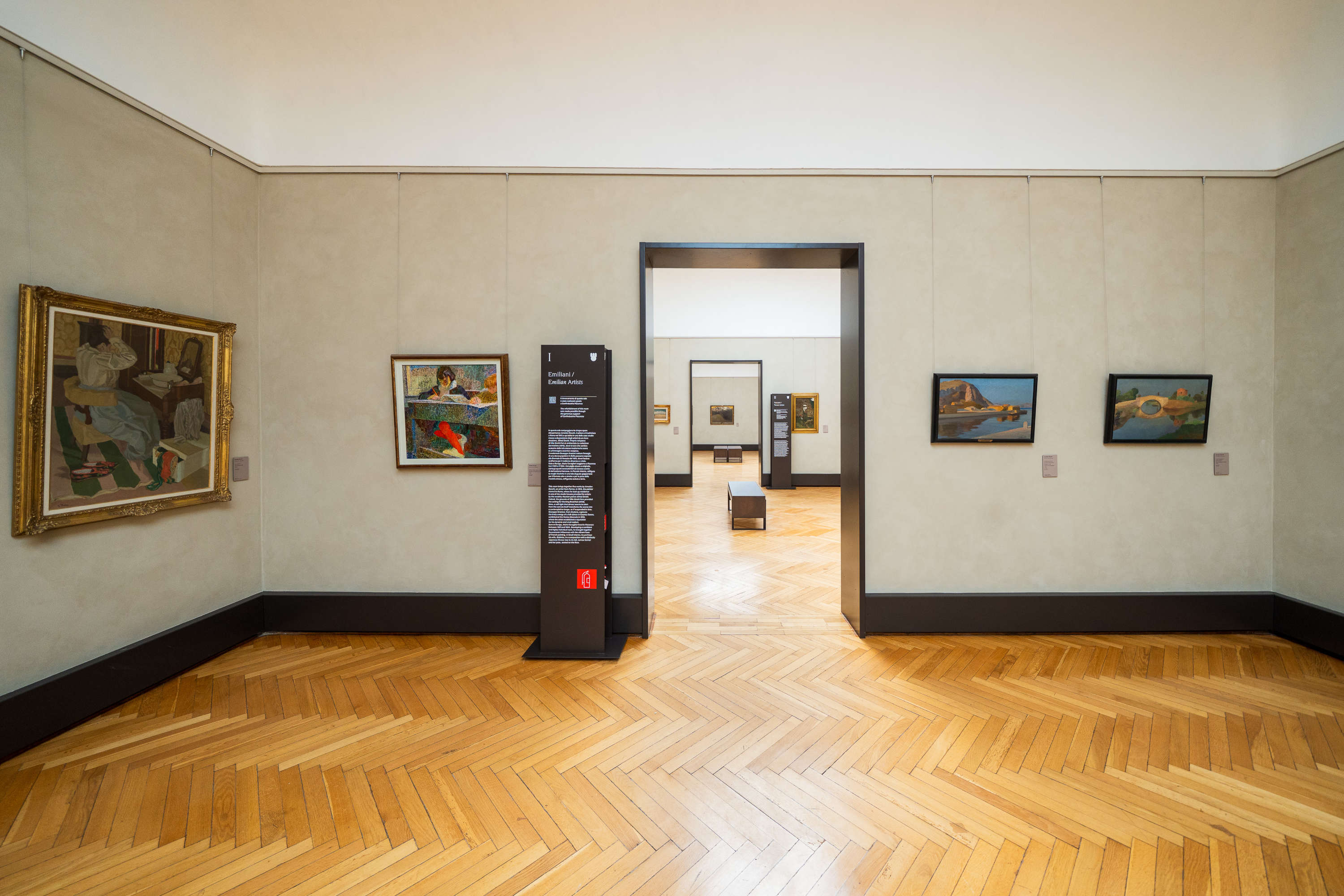
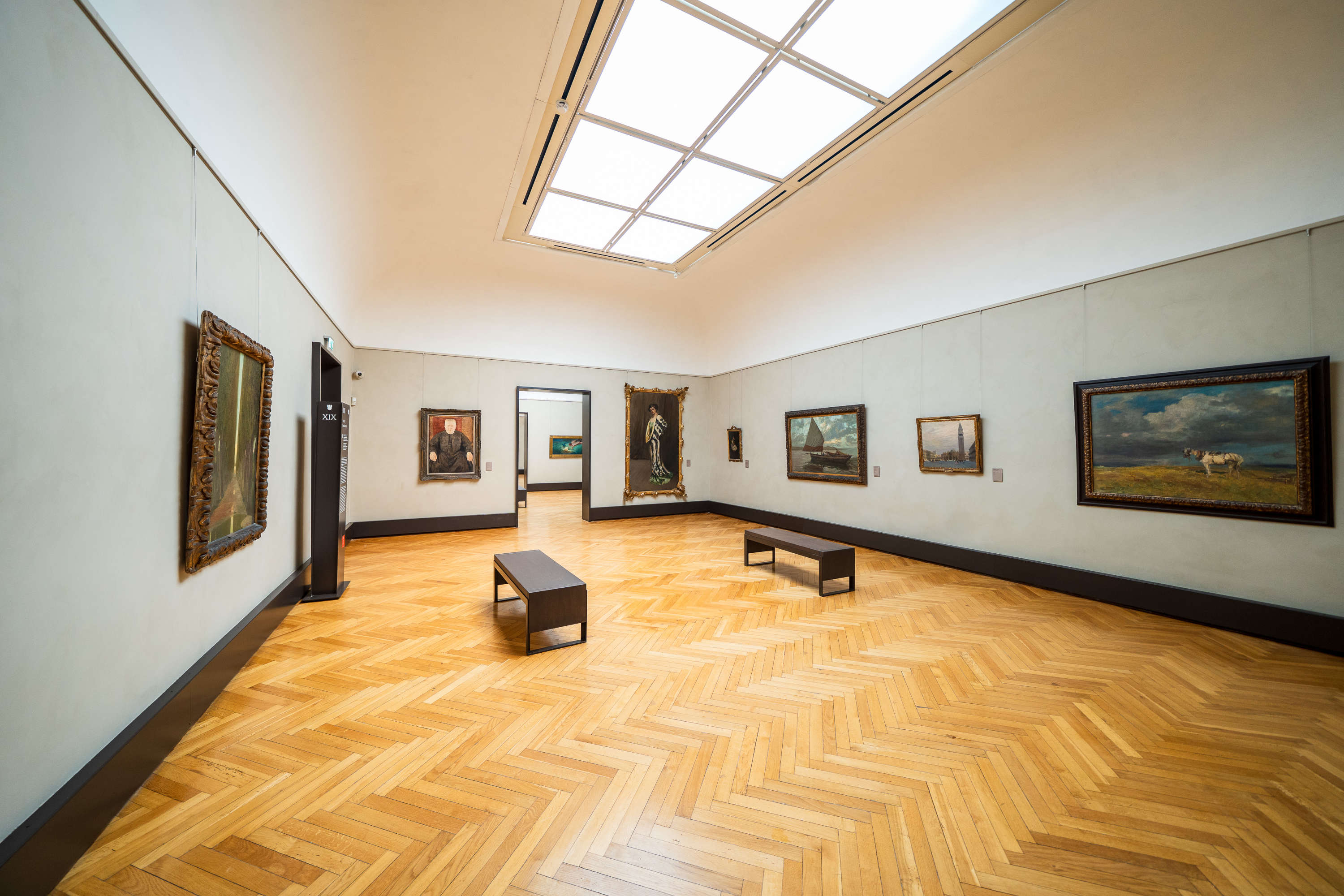
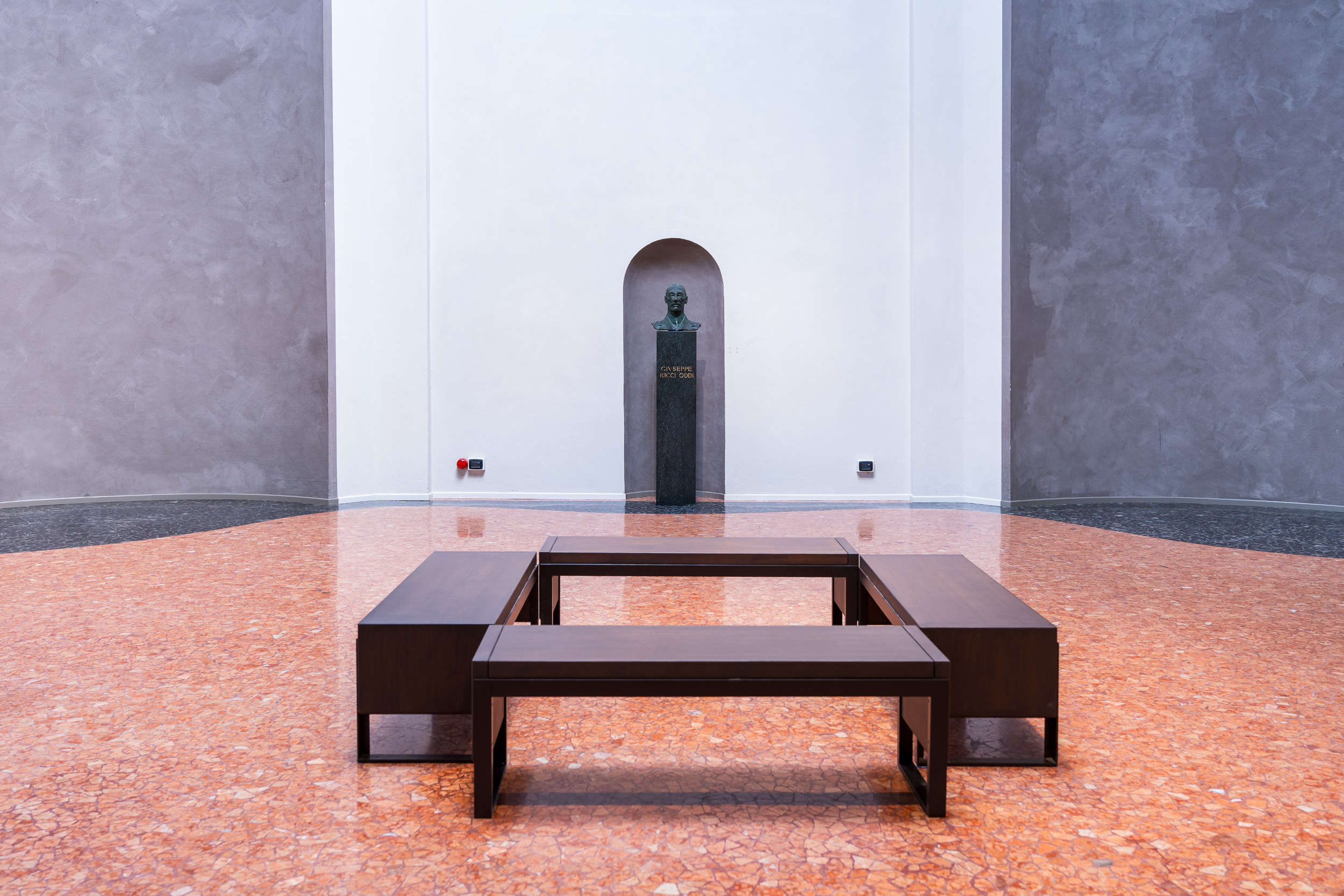
Underlying the renovation project was a careful historical and architectural rereading of the building, with the aim of re-establishing spatial coherence through an essential and current language, freeing the original layout from dissonant additions. The intervention involved the removal of deteriorated wallpaper and the restoration of wall surfaces, finished with lime and accompanied by a neutral color palette designed to enhance the works on display. New interior fixtures, an updated system for displaying the paintings and bilingual (Italian/English) magnetic captions designed to ensure maximum mobility without damaging the walls were introduced. Characterizing the path is the system of dark brown metal portals, which mark the passage between rooms and dialogue with the continuous design of the flooring, creating a unified thread. At the same time, the historic furnishings have been restored and reinterpreted: these include the large central bench and stools, part of the original complements, probably designed by Arata himself. The interior doors were restored to their original heights, re-establishing proportions more faithful to the architectural layout.
Furniture, information totems and technical devices, including the sound system and sculpture bases, have been coherently integrated, maintaining a balance between functionality and aesthetics. The new graphic communication apparatus, by Ma:design, completes the intervention. Finally, the visitor route has been enriched by a new bilingual audioguide service, developed by Orpheo Audioguide under the direction of Lucia Pini, with texts by Stefano Bosi and the director herself.
The journey through modern art kicks off in the first room, dedicated to the Emiliani, in which the five works by Parma-born Amedeo Bocchi dominate, among which La colazione del mattino (1919) stands out, where light envelops the scene in an aura of absorbed stillness. Next to him is the dynamic realism of Giuseppe Graziosi from Modena in Ballo paesano, exhibited at the 1910 Venice Biennale, and the bright colors of Mario Cavaglieri, who in Piccolo interno portrays his wife Giulietta with Japanese suggestions. It continues with the Tuscans of the second half of the 19th century: the Macchiaioli revolution comes to life through the masterpieces of Giovanni Fattori, Silvestro Lega and Telemaco Signorini; and with the Ligurians and Piedmontese in Room III, where stands out perhaps the most emblematic work of Divisionism in the collection: Sunset (Il roveto) by Giuseppe Pellizza da Volpedo.
The protagonist of the fourth room is Adolfo Wildt, with his Portrait of Julia Alberta Planet, but the room also features a portrait of Arata by Quirino Ruggeri, a tribute to the architect who shaped Ricci Oddi's dream. The next room, on the other hand, celebrates Antonio Fontanesi, one of the founder's most beloved painters, who collected an extraordinary nucleus of his paintings, drawings and etchings.
Ricci Oddi's taste for distant cultures is evidenced in Room VI of the Orientalists, where Alberto Pasini and Cesare Biseo transport visitors to Egypt and Morocco, capturing atmospheres reminiscent of tales from the Arabian Nights. Sculpture picks up steam in the Rotunda, dominated by the vital bronze of Vincenzo Gemito's Portrait of the Painter Meissonier, a work that delves into the subject's psychology with a vibrant realism typical of the Southern School. Rooms VIII and IX offer an overview of Lombard painting, starting with the Romantic strains of Francesco Hayez, Gerolamo Induno and il Piccio, and ending with the innovations of Segantini, Previati and Filippini. It is here that one can admire the aforementioned Sheep Sheared by Filippini and After Novara by Previati, the first works Giuseppe Ricci Oddi purchased. The Lombard journey continues into the early decades of the twentieth century with the naturalism of Leonardo Bazzaro and Giorgio Belloni, culminating with Angelo Morbelli'sAba domenicale (1915), in which the rising of the sun and the presence of three elderly people leads one to reflect on the cyclical nature of life and death.
A separate chapter deserves the room devoted to Scapigliatura, a movement that dissolves formal precision into nuanced atmospheres. One example is Amaro calice, in which Tranquillo Cremona depicts a young woman from a very close vantage point, capturing her in a suspended gesture. It continues with a tribute to Medardo Rosso: Ricci Oddi became a friend of the sculptor and in 1926 purchasedEcce Puer, modeled in wax in a single night after a fleeting vision of a child who, during a party, suddenly appeared between the curtains, illuminated by a ray of light.
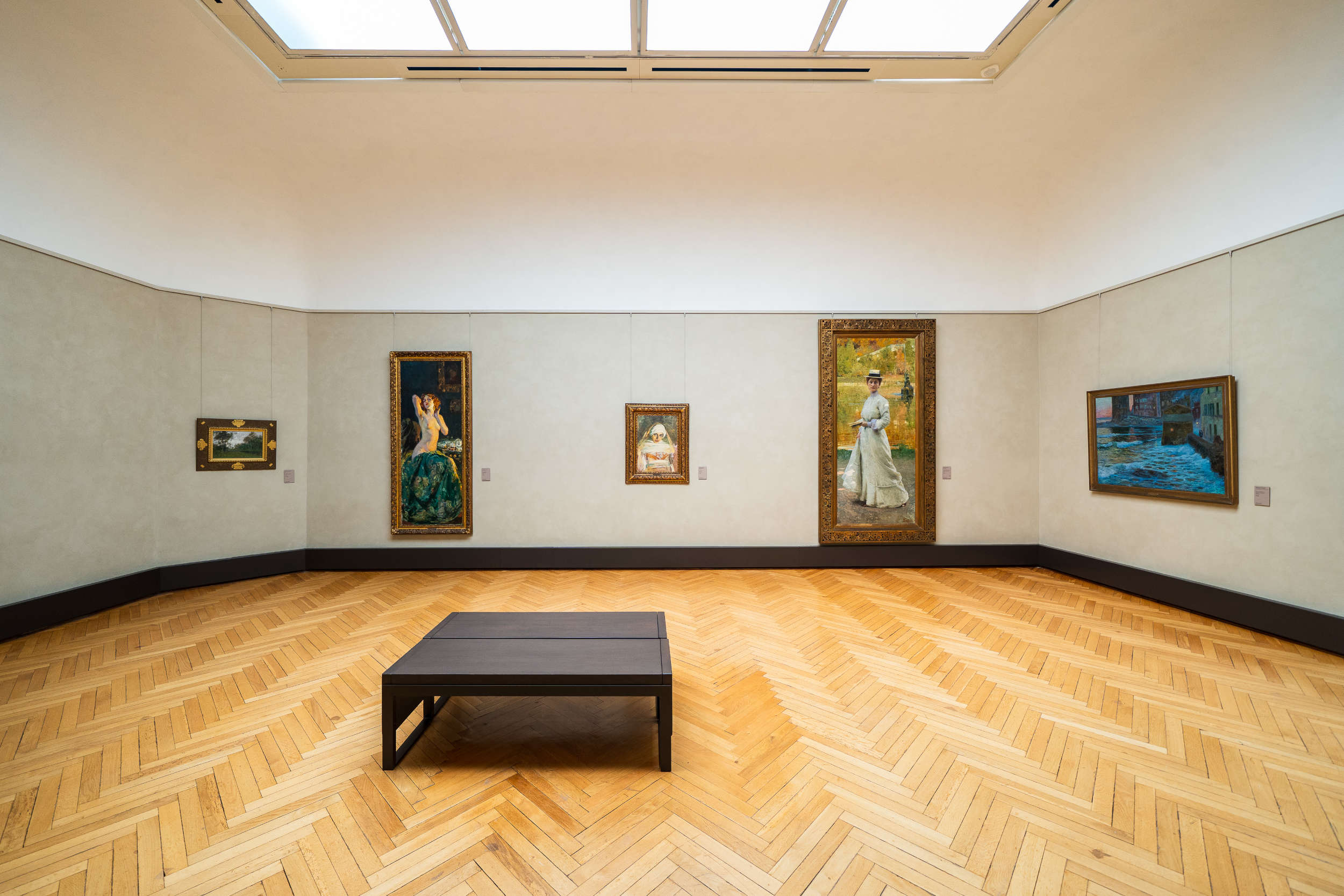
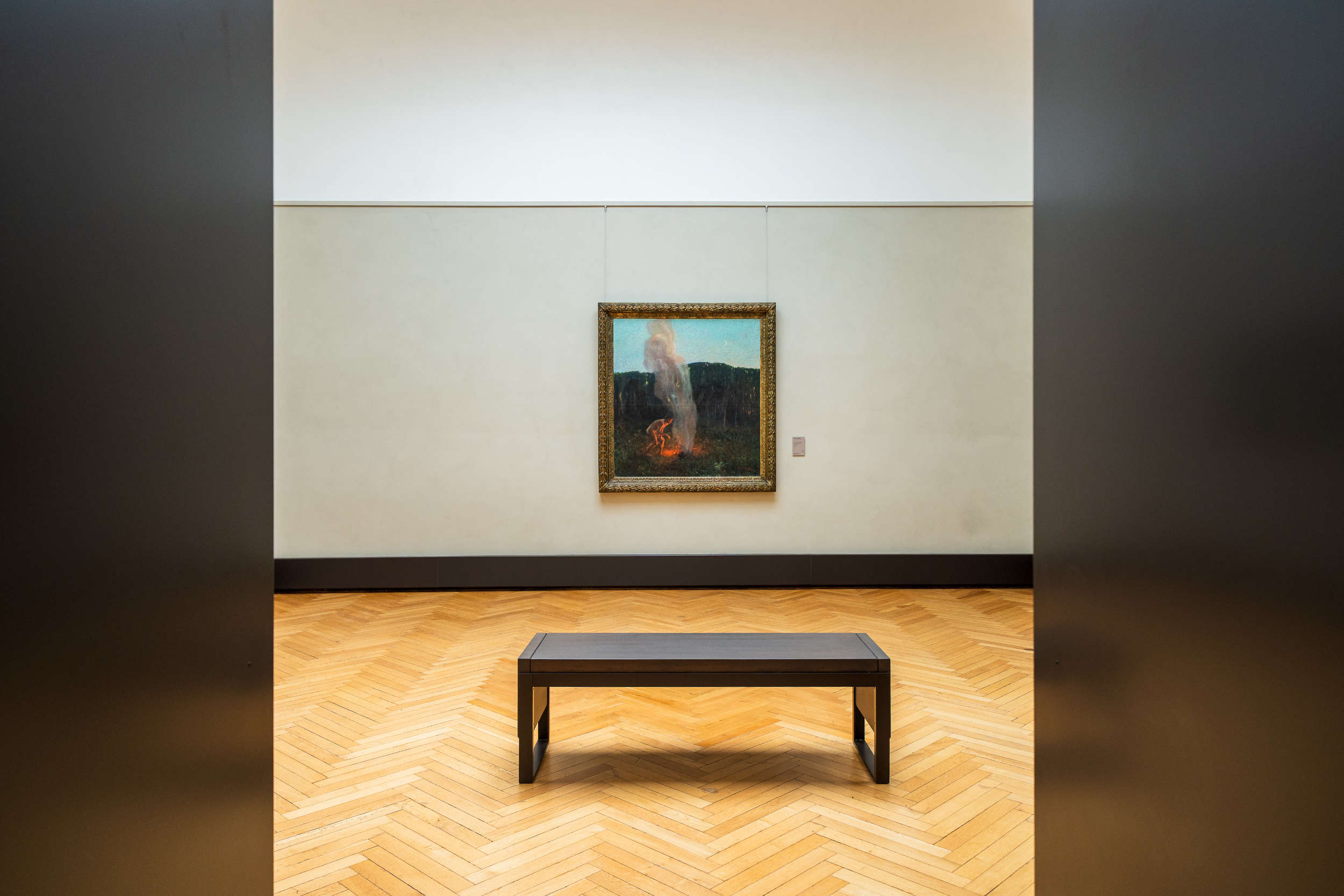
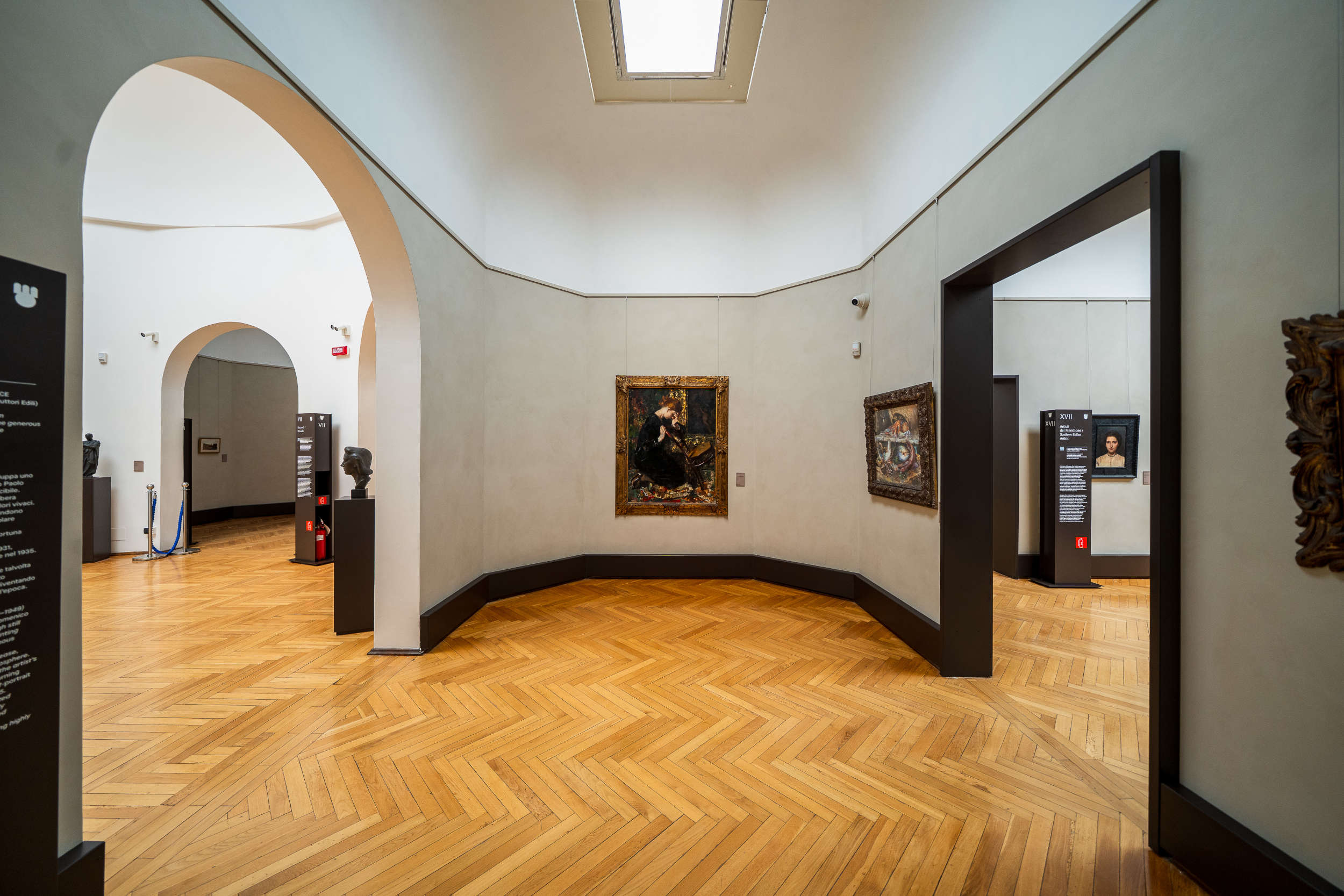
Attention to the Piacenza area is expressed by the academic verism of Francesco Ghittoni, the monumental language of Luciano Ricchetti and the futurist experiments of Osvaldo Barbieri, known as BOT. To the most famous 19th-century local painter, Stefano Bruzzi, Room XIII is entirely dedicated, as it was in 1934. Giuseppe Ricci Oddi purchased from him, in 1903, La sorgente dei Lamoni and, in 1910, Autunno nel bosco di faggi.
To the early twentieth century, on the other hand, are dedicated rooms XIV and XVI, where one can admire works with a Secessionist taste by Camilla Innocenti and Pietro Gaudenzi and the compositional rigor of Usellini, Marussig and Dudreville, but it is the masterpieces of Felice Casorati and Carlo Carrà that define a modernity that dialogues with Italian tradition. Also prominent is Felice Carena's Quiete , a work that reworks the 16th-century theme of the country concert in a modern key. In between, there is the room dedicated to Antonio Mancini, whose painting Ricci Oddi admired so much that he purchased a large nucleus of works for his collection.
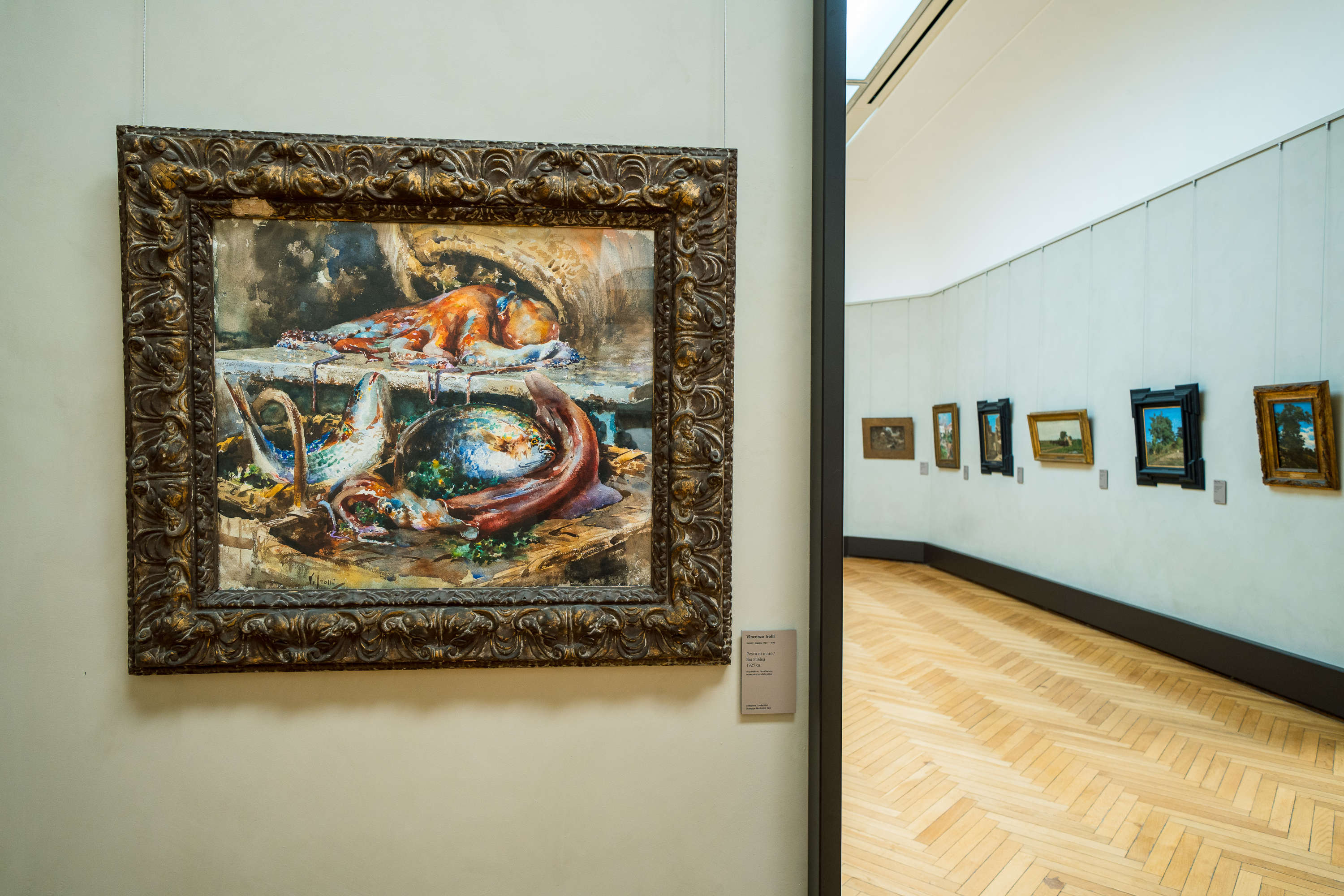
The richness of southern painting is revealed in rooms XVII and XVIII, with the Abruzzese Francesco Paolo Michetti and the Neapolitans Domenico Morelli and Vincenzo Irolli. The latter, beloved by foreign collectors, is featured in the collection with Il bagno, Preghiera del mattino (Morning Prayer ) and Pesca di mare (Sea Fishing), as well asSelf-Portrait.
The regional panorama is completed with the Veneti in the next room, which features Lino Selvatico, Ettore Tito, Guglielmo and Beppe Ciardi. Toward the end of the exhibition itinerary, Room XX then immerses the visitor in the suggestions of Symbolism. It is here, in fact, that one encounters Giulio Aristide Sartorio's Abisso verde: the mermaid with a mother-of-pearl body embodies the aesthetics of the femme fatale, bewitching the young man in the boat.
The symbol of the Ricci Oddi Gallery, however, is Gustav Klimt's Portrait of a Lady, which entered the collection in 1925 following its purchase from Luigi Scopinich's Gallery in Milan. The painting was at the center of an affair that deeply marked the very history of Ricci Oddi: stolen in 1997, it was found in 2019 during garden maintenance work along the museum's outer wall, inside a plastic bag.
The "Lady" has now been set up together with foreign artists, with the Tyrolean Egger-Lienz and Scandinavians Thorolf Holmboe and Carl Larsson, but also with the so-called Italiens de Paris, the Italian artists who moved to Paris in the second half of the 19th century to breathe in the modernity of the Ville Lumière, namely Giovanni Boldini, Giuseppe De Nittis and Federico Zandomeneghi.
Closing the journey is finally the Corridor, which holds, among other sculptural works, Antonio Maraini's terracotta tiles with Painting and Sculpture depicted, which are actually the sketches for the large marble reliefs of the Gallery's facade, commissioned by the founder himself to enrich the building's exterior elevation.
Upgraded and refurbished, the Gallery now presents itself in a renewed guise, to carry on into the future the realized dream of the nobleman collector.