By Redazione | 08/06/2026 14:55
The understated elegance of its façade, located along Via Tonducci in Faenza, does not hint at the wonders that await the visitor beyond the threshold of Palazzo Milzetti: yet, that is how one might consider this jewel in the center of the city of ceramics. That is, as a place of wonder, a building that, two hundred years later, manages to accurately tell the story of the culture of a noble family that lived and prospered in the era ofNapoleonic Italy. Considered one of the most remarkable neoclassical mansions in the entire peninsula, Palazzo Milzetti is not only a historic building, but a living palimpsest of the aristocratic culture of the time. Since 2001, the palace has housed the National Museum of the Neoclassical Age in Romagna, an institution that has been able to preserve the integrity of an era in which every detail, from the layout of the rooms to the choice of pictorial subjects, responded to an ideal of aesthetic perfection and functional rationality. To enter these spaces is to immerse oneself in a constant dialogue between the different arts: here the architecture of Giuseppe Pistocchi and Giovanni Antolini is married to the decorative genius of Felice Giani, creating a unicum in which stucco sculpture and the applied arts are not mere ornaments, but integral parts of a unified project. The charm of Palazzo Milzetti lies precisely in this preservation: here, unlike many other coeval mansions, time seems not to have altered the physiognomy of its rooms, where mythological scenes and themes from antiquity continue to surprise modern audiences. The narrative the palace offers is that of a family, the Milzettis, capable of interpreting the ferments of a century that looked to classicism not as a distant past, but as a model of civic rigor as well as artistic splendor.
The historical roots of this mansion go back to the 15th century, but its neoclassical identity is the child of a traumatic event: the 1781 earthquake. It was Count Nicola Milzetti who commissioned the reconstruction from architect Giuseppe Pistocchi (Faenza, 1744 - 1814) in August 1792, seeking to reconcile static needs with a desire for radical formal renewal. Pistocchi conceived a monumental but restrained facade, characterized by a pointed ashlar that emphasizes volumes without resorting to excessive compartmentalization, a passionate homage to the legacy of Giulio Romano and Mannerism in Mantua. However, Pistocchi's career suffered a setback in 1796, when his pro-French sympathies led to his imprisonment in the fort of San Leo. Upon his return, the political climate had changed and the patronage, now led by Francesco Milzetti after the death of his father Nicola, preferred architect Giovanni Antonio Antolini (Castel Bolognese, 1753 - Bologna, 1841). Antolini, trained in Rome and connected to the Masonic circles of the Laderchi family, brought a new sensibility, designing the completion of the staircase and octagonal hall between 1800 and 1801. It was in this phase that the extraordinary work of Felice Giani (San Sebastiano Curone, 1758 - Rome, 1823), whose intervention officially began on October 19, 1802, was grafted in. In just three years, Giani and his close-knit workshop (which included plasterer Antonio Trentanove and ornamentist Gaetano Bertolani, among others) transformed the interior into what we might call a workshop of pictorial invention. Despite the impressive investment, the Milzettis did not enjoy the mansion for long; in 1808, Francesco was forced to sell the palace due to financial woes and his commitments at the viceroyal court in Milan. After a brief passage to the Papiani family and use of the building by the Austrian authorities, the palace was purchased in 1817 by the Rondinini family, who completed the furnishings and expanded the garden in a romantic sense. Ownership then passed to the Magnaguti of Mantua and later to the lawyer Bolognesi, until the Italian state acquired the entire complex in 1973 to make it a museum: the historic palace, after restoration by the Superintendency of Ravenna, was opened to the public in 1979, and then, in 2001, moreover after the publication of the first guide to the palace, dating back to 2000, came the recognition that made it the National Museum of the Neoclassical Age in Romagna, a designation already planned from the time the state had acquired the building.
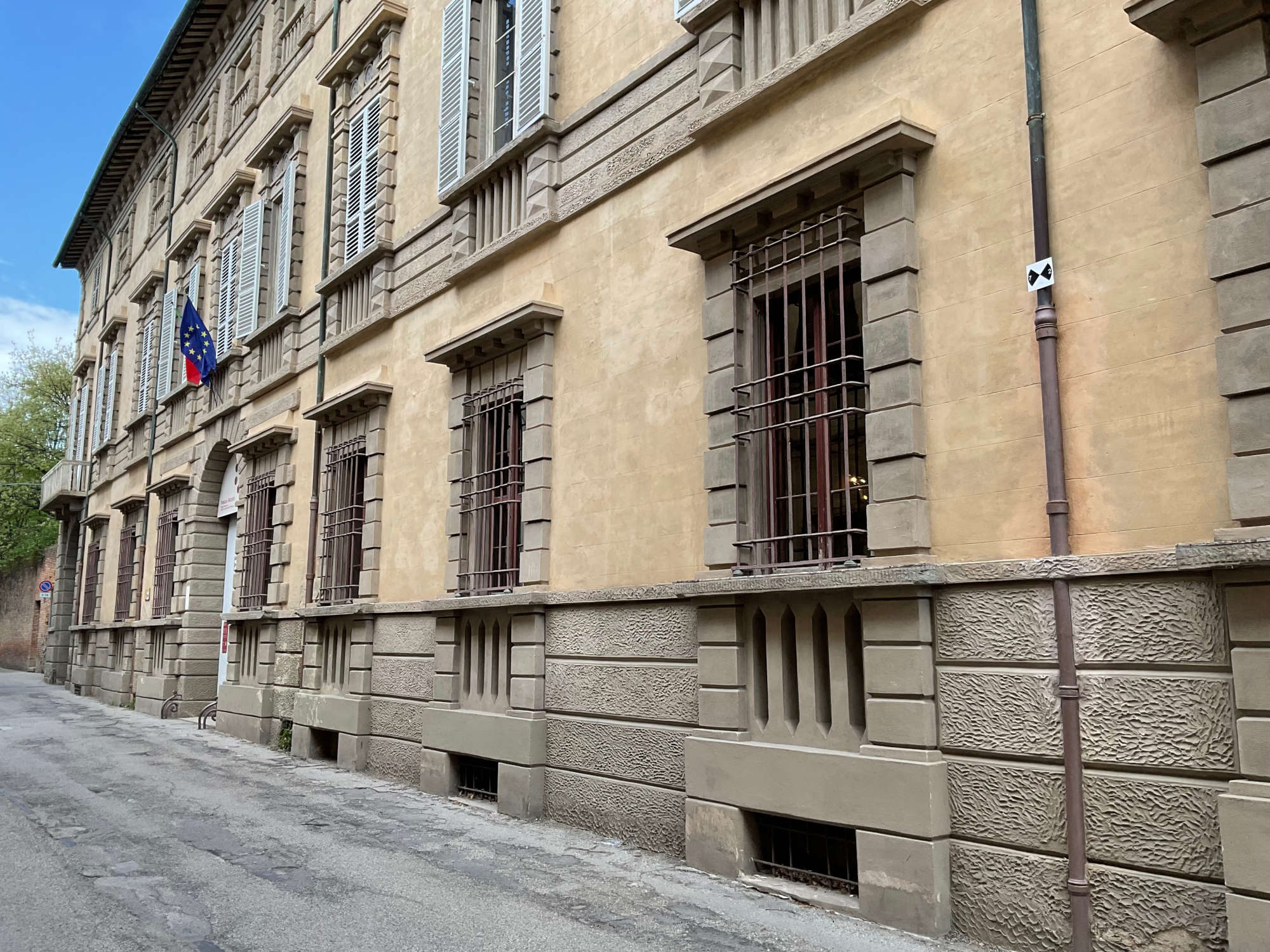
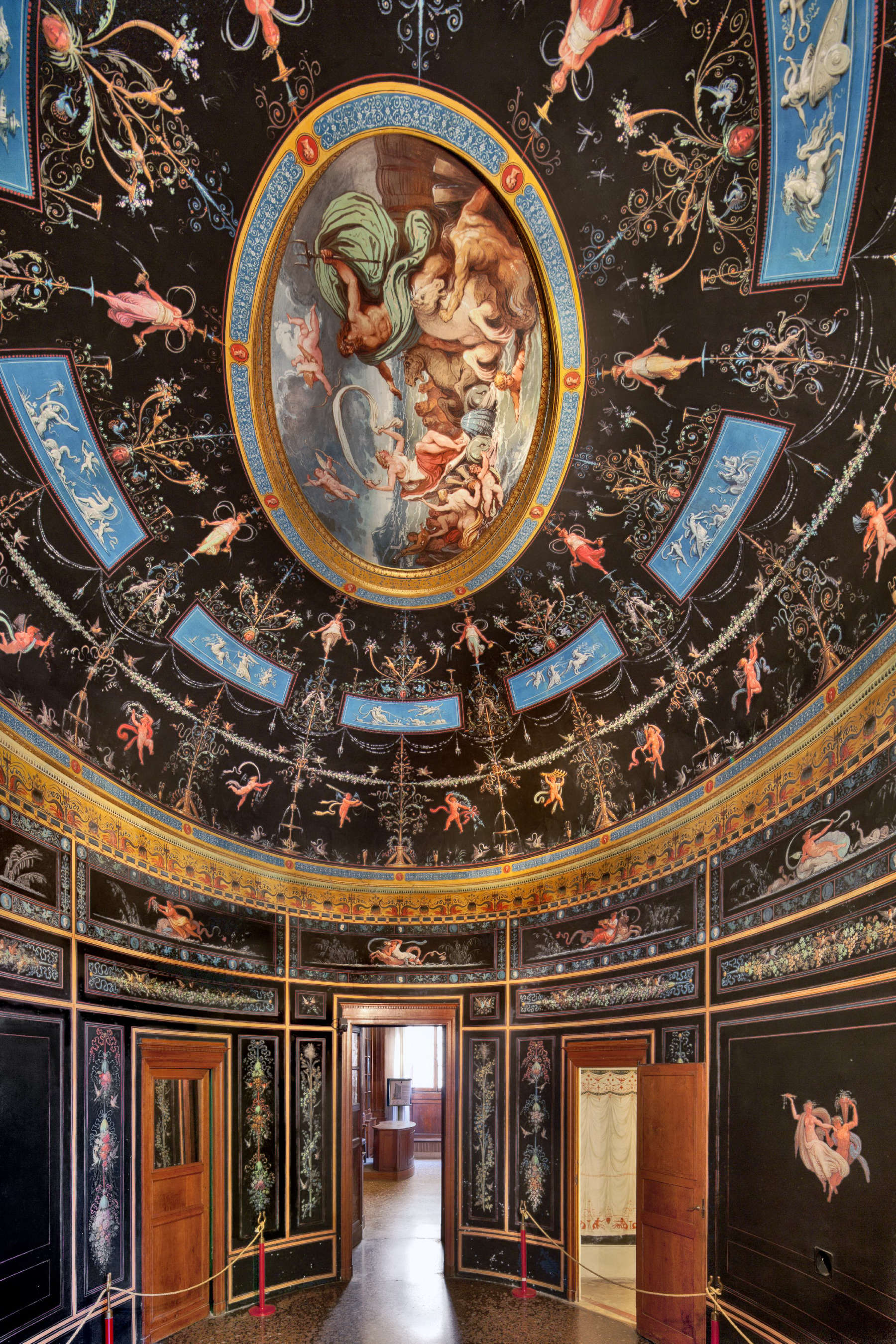
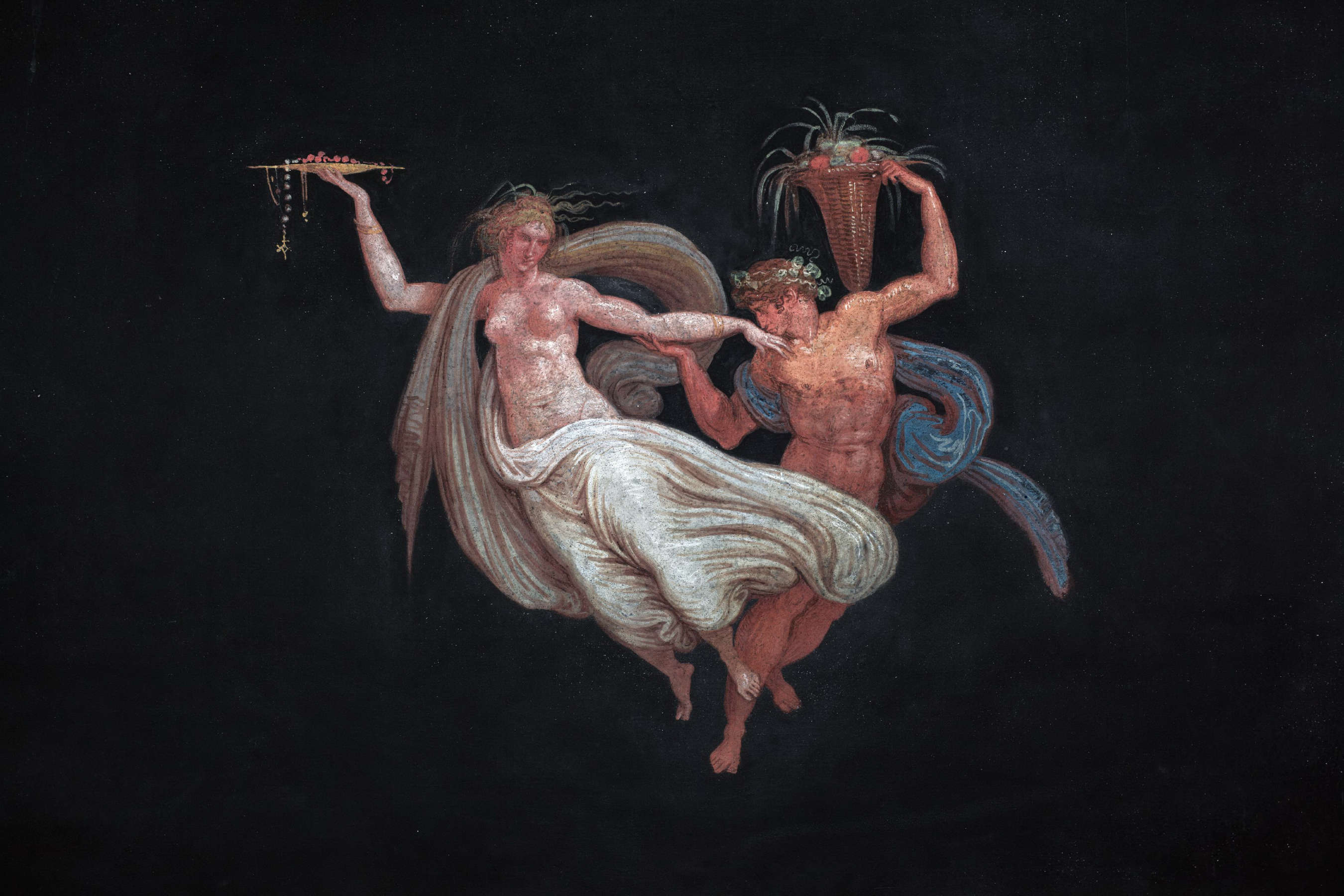
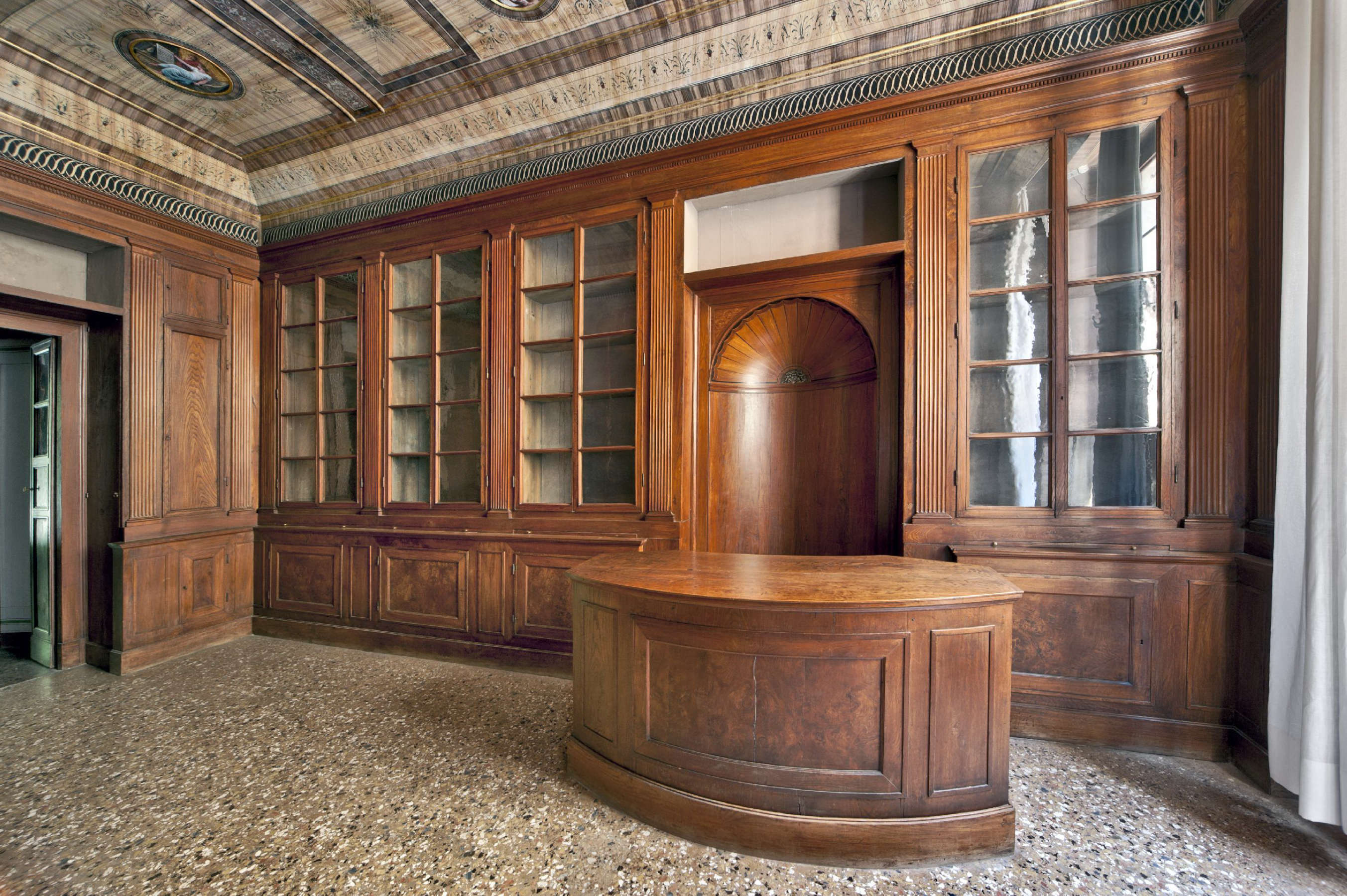
The museum itinerary is on three levels, beginning with the underground rooms and then ascending to the magnificence of the main floor. It begins in the basement, where the ancient kitchen is located, a room that preserves the oven, the large stone sink and an ingenious system of communication with the external well, which testifies to the Enlightenment attention to domestic functionality. Ascending to the ground floor, the visitor is welcomed into a sequence of rooms intended for Francesco Milzetti's daily life before his wedding. One passes through the Anticamera, devoid of decoration, to reach the Saletta da pranzo, whose ceiling features the Banchetto dei Dei (Banquet of the Gods) decoration, inspired by Roman triclinia. Next comes the Camera per ricevere, which in 1808 in the deed of sale was defined "as in the use of Villa Adriana," entirely covered with paintings imitating gray marble and monochrome stucco by Gaetano Bertolani. One of the high points of this floor is theAntibagno, named "all'uso delle Terme di Tito" also in the 1808 deed, where the black walls highlight minute decorations in bright colors, recalling the Pompeian style. The visit continues in the Library, a masterpiece of trompe-l'oeil where painting feints wooden shelving and pyrographed panels. The private rooms are completed with the Four Seasons Company Room, the Bedroom with its starry veil, the Music Room dominated by the muse Euterpe, and an additional Company Room embellished with a Milzetti coat of arms in faux marble. The itinerary reaches its climax by ascending the solemn Scalone, the work of Antolini and Ballanti Graziani, which leads to the piano nobile.
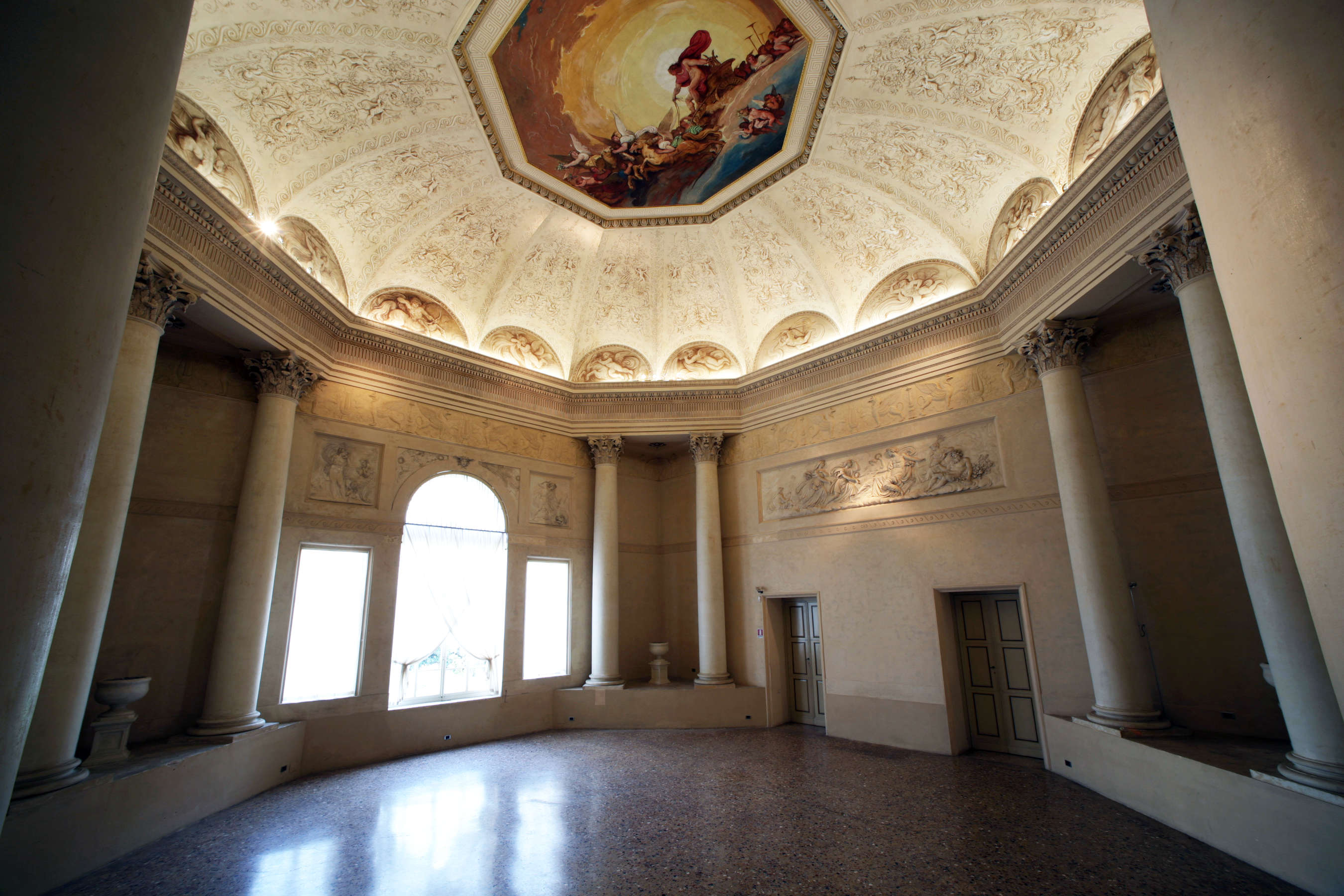
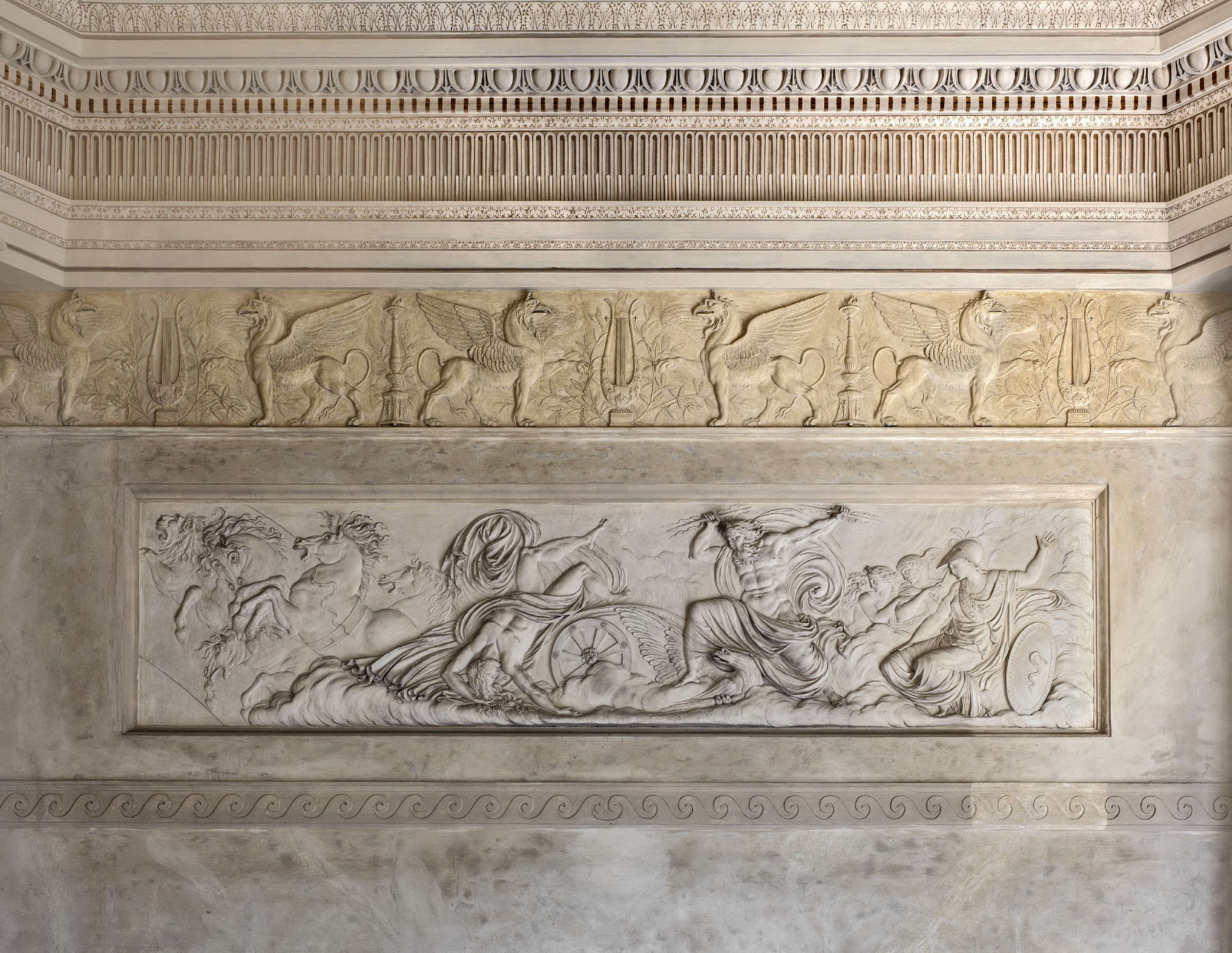
Here opens the Salone Ottagonale or Temple of Apollo, the symbolic centerpiece of the house. A true architectural masterpiece by Giovanni Antonio Antolini, the Salone Ottagonale is conceived as a sacred space dedicated to the sun god, imbued with complex Masonic meanings. The room is dominated by a large serliana window that floods the room with light, highlighting the sixteen-segment domed canopy, an invention reminiscent of Raphaelesque umbrella vaults. In the center of the ceiling, Giani painted the triumphant chariot of Apollo surrounded by the Dancing Hours, immersed in a golden sky that serves as a metaphor for a higher cosmic and civic order. The monochrome decoration of the rest of the vault accentuates the sense of rigor and solemnity, while the walls house white stucco reliefs telling the story of Phaeton, taken from Ovid's Metamorphoses. These bas-reliefs, attributed to Antonio Trentanove and later completed by the Ballanti Graziani, show episodes of great drama, such as the fall of Phaeton electrocuted by Jupiter. The room, in fact, is designed to surprise the visitor who ascends from the grand staircase: the discontinuity from the more modest rooms on the ground floor is intended to emphasize the transition to a "sublime" dimension of living. Here, the architecture is not just a container but an active part of the mythological tale, and the giant columns and symmetry of the profiles contribute to an atmosphere of monumental elegance.
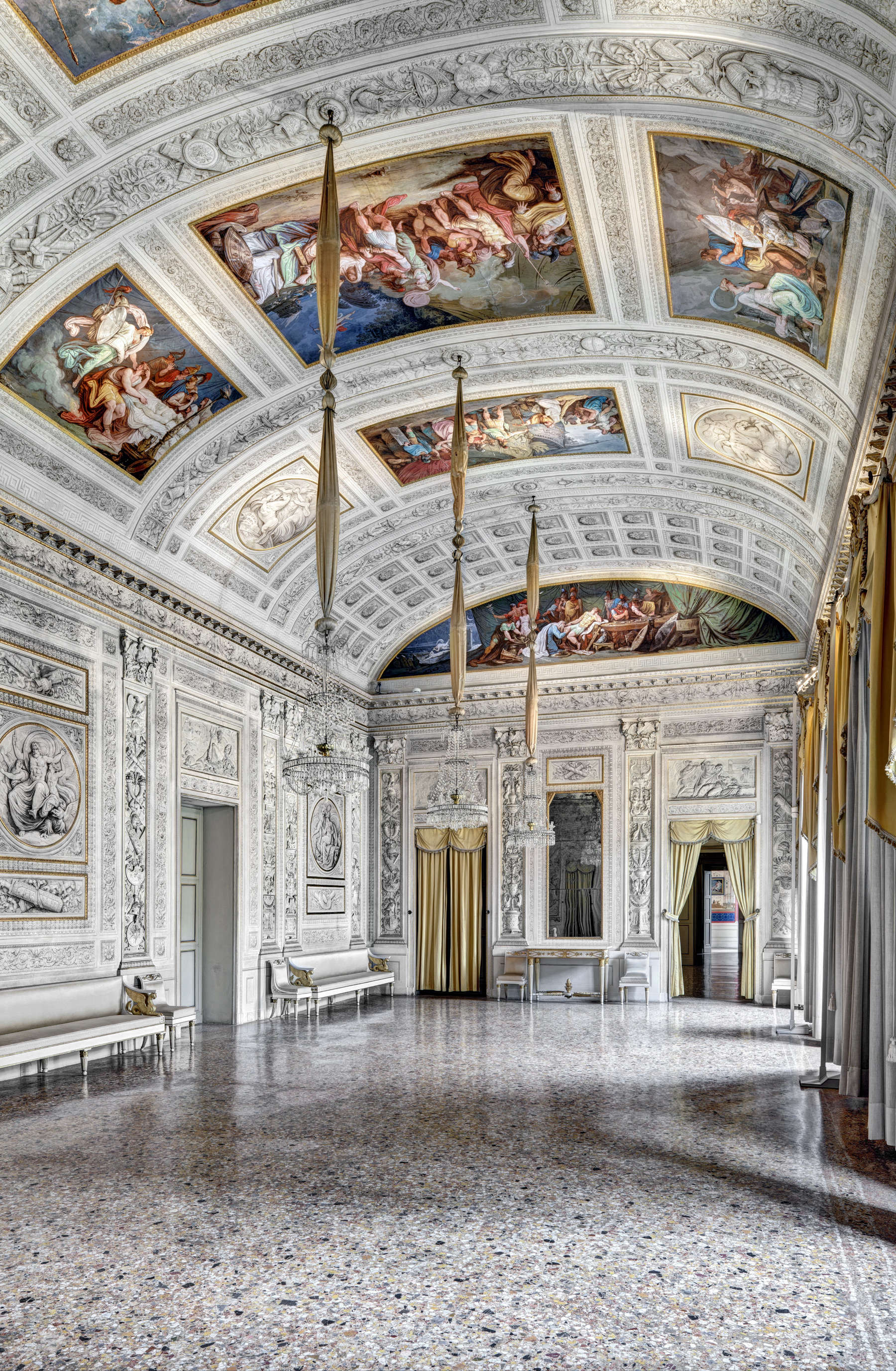
From here one enters the majestic Ballroom, also known as the Gallery of Achilles: this room represents the social heart of the palace, designed to host receptions and impress the Jacobean aristocracy of the time. Its elongated rectangular shape is surmounted by a segmental vault, where the genius of Felice Giani was able to condense the salient episodes of the Iliad. In the center of the vault shine five brightly colored panels, framed by twenty-four pilasters in relief that set the rhythm of the walls. The theme of Achilles' heroism is not chosen at random: it reflects the ambitions and status of the Milzetti family, integrating perfectly with the decorative apparatus of the Ballanti Graziani brothers, authors of the refined white stuccoes that decorate the lunettes of the headboards. In this room, the contrast between the whiteness of the reliefs and the executive speed of Giani's tempera paintings creates an atmosphere of vibrant dynamism. The illusion is total: many of the draperies and architectural elements that appear three-dimensional are actually masterful exercises in monochrome painting, designed to amplify space and impart a richness that goes beyond the mere value of the materials used. The furnishings, some of which date back to the Rondinini property, include mirrors that multiply viewpoints and satin sofas with zoomorphic sphinx arms that dialogue with the fantastical motifs painted on the walls. The Galleria d'Achille remains one of the happiest testimonies to the collaboration between Giani and Bertolani, a place where epic narrative is transformed into pure ambient decoration.
The tour continues in the rooms facing Via Tonducci: it begins with the Room of Peace and War. Intended as a "Company Room," as it is officially called, this room owes its most famous name to decorations celebrating Hannibal's oath and Roman military virtues. In the center of the vault, an episode from the Histories of Titus Livy shows the young Hannibal, instigated by his father Hamilcar, swearing eternal hatred to the Romans. This main scene is flanked by two ovals depicting the allegories of Peace and War: the first identifiable with the Pax Augusta and the second with a male figure driving a chariot. It is impossible not to discern in these subjects a tribute to the military career of Francesco Milzetti, captain colonel of the Napoleonic Guard of Honor, drawing a parallel between the heroes of antiquity and contemporary glories. The decoration follows Raphaelesque models inspired by the Villa Madama, with a colorful "carpet" in the center that expands toward the corners with elegant connections. Also in this room, the collaboration between Antolini's architecture and Giani's painting reaches heights of absolute beauty, where every color field is designed to enhance the room's representative function. The presence of historical figures such as Consul Marcello further underscores the appreciation for the arts and sciences understood as the moral duty of the commander and gentleman.
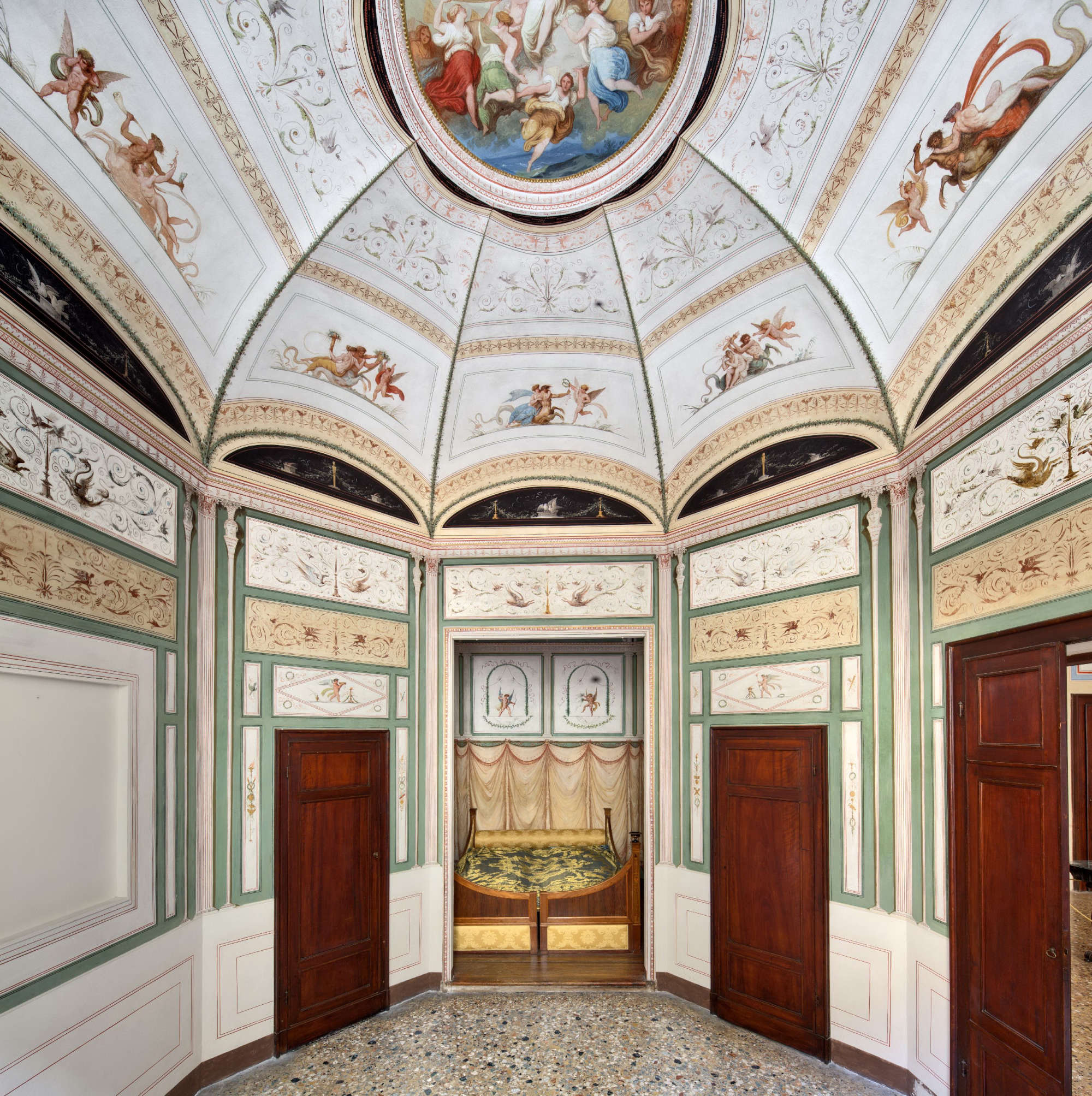
After a pause in the Bedroom with the Alcove, embellished with a pattern of faux tapestry, we retrace our steps to move on to the solemn Hall of Numa Pompilius. Intended for public functions and official meetings, the Hall of Numa Pompilius is distinguished by a character of severe officialdom that reflects the Milzetti family's role in the political life of the time. Felice Giani dedicated the decoration of the vault to the legends of Rome's second king, an emblematic figure of legislator and founder of religious institutions. In the roundels painted along the ceiling, the encounter between Numa and the nymph Egeria stands out, described not as an amorous idyll but as a dialogue of high moral and civic value, during which laws for the city are dictated. Giani's painting here becomes charged with solemnity, with narrative excerpts set in compartments of monochrome ornamentation that enhance the gravity of the themes addressed. Another significant episode depicted is the establishment of the college of the Vestal Virgins, guardians of the sacred fire, whose severity is underscored by the dramatic scene of the punishment of a transgressing priestess, condemned to be buried alive. In this room, the echo of Giani's Roman training and the influence of his studies of the northern European masters are particularly evident, giving the figures an expressive force that anticipates pre-Romantic sensibilities. The room thus serves as a mirror of the civic virtues that the nobility of the early nineteenth century intended to promote through reference to ancient history.
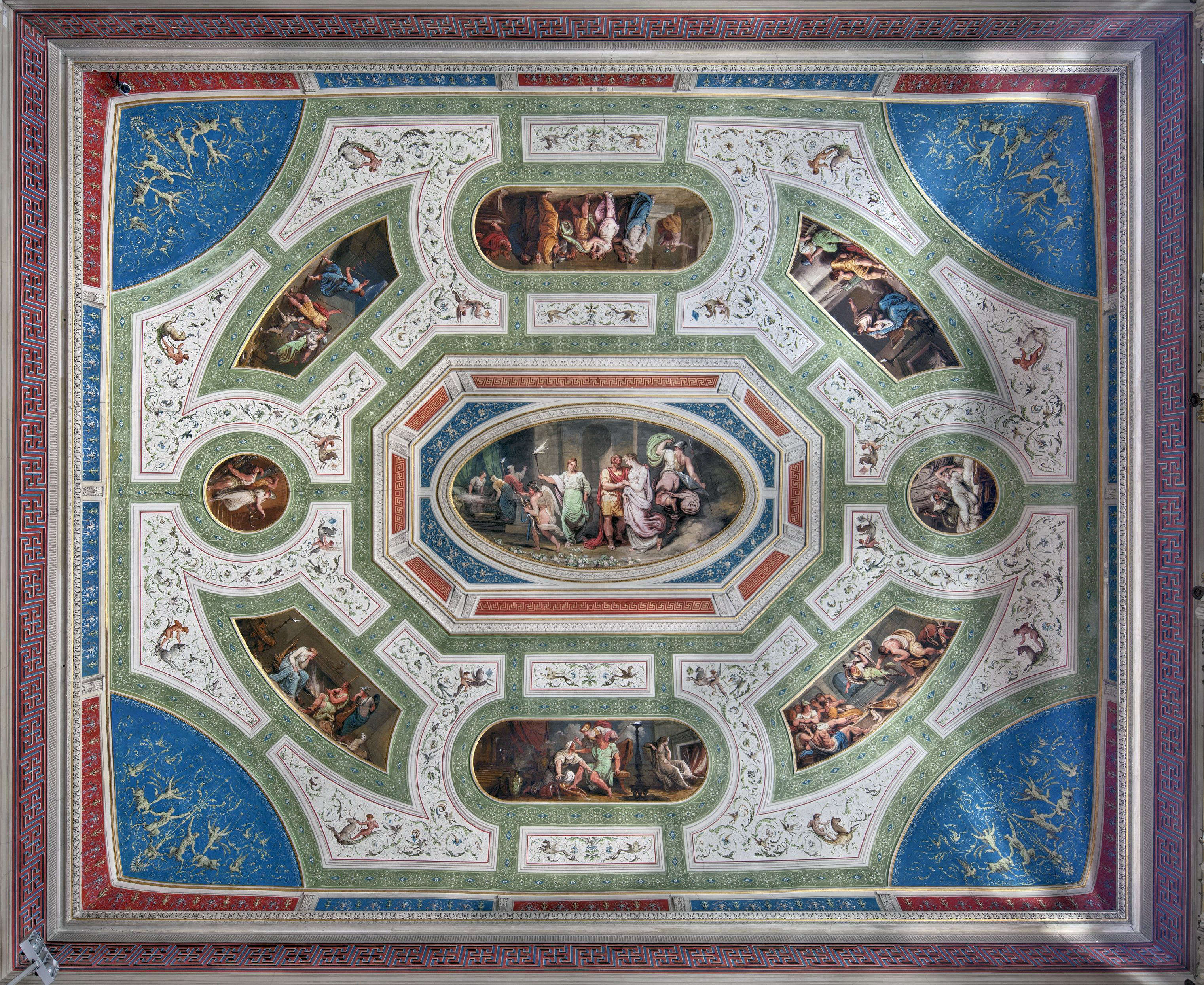
We then move directly to the Ulysses Room, the wedding chamber of Francesco and Giacinta Milzetti, dedicated to the theme of the hero's return and marital fidelity, inspired byHomer's Odyssey. Compared to the other rooms on the piano nobile, the Ulysses Room is distinguished by an unusually bright and bold use of color: backgrounds of red, green and lapis lazuli create a strong contrast with the white background of the vault. The narrative is divided into nine scenes surrounding a central oval, where the final reunion of the newlyweds is celebrated. Giani draws here on the vast repertoire of his travel notebooks, populating the corners of the room with an unparalleled richness of plant motifs, cupids and fantastic figures that seem to defy the laws of gravity. The decorative texture is dense and reveals an inventive freedom that draws on both the Domus Aurea and late Mannerist painting, such as the "human pyramid" motifs. Although the wear and tear of time has partly faded the original silks that lined the walls (once a golden olive green with stars) the room retains its intimate and precious charm. The center of the room once also featured a fine work table, now repurchased by the museum, which completed the unified furnishings designed for this area of the house.
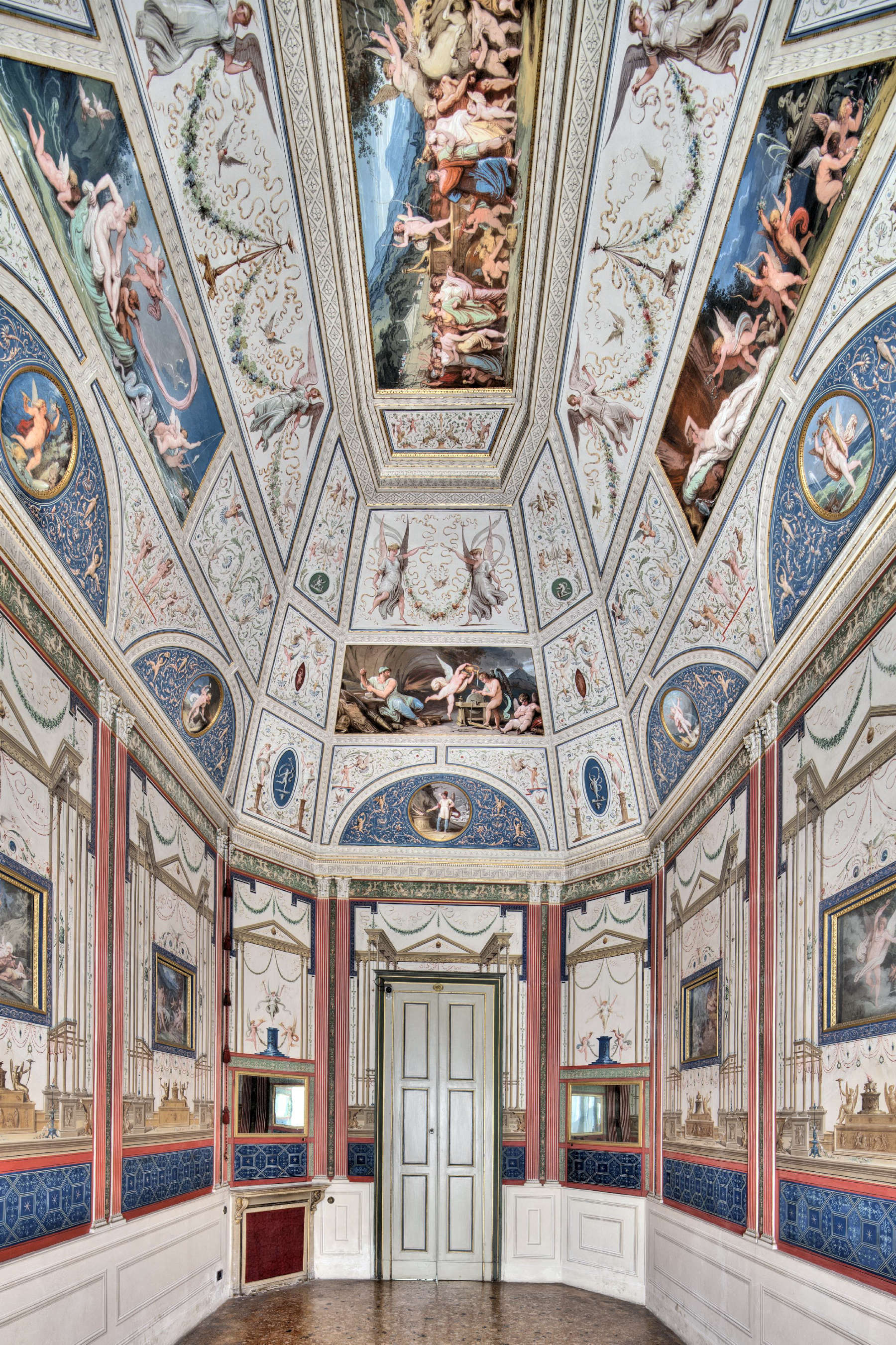
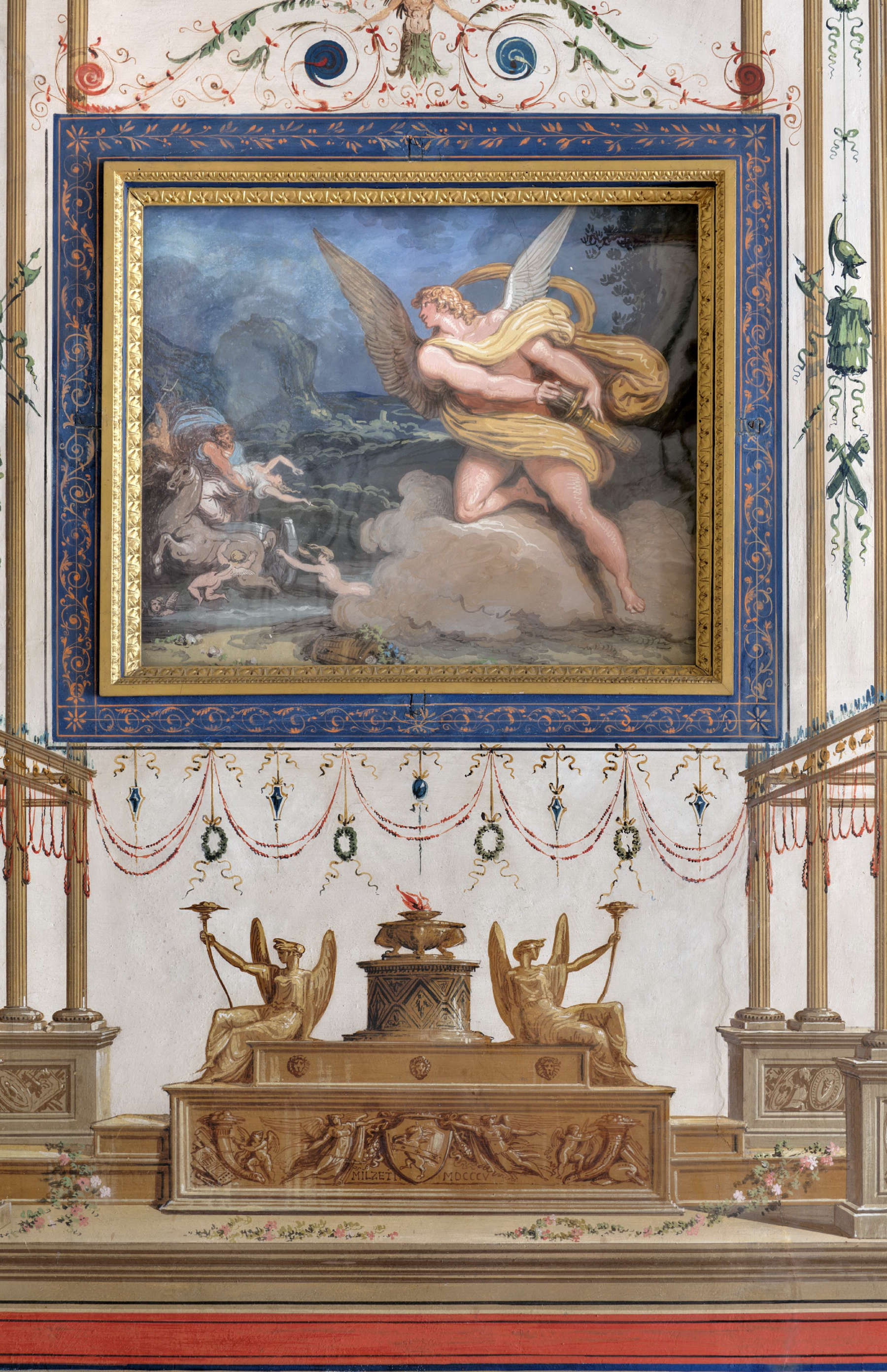
Next comes the exquisite Cabinet of Love, a boudoir that concludes the sequence of private apartments. Located directly above the Antibagno on the ground floor, it is dedicated to the Triumph of Love and is the most intimate and private room in the entire apartment. The room's octagonal structure is accentuated by double red fluted pilasters and a vault score that divides the space into trapezoidal segments. In the center of the ceiling, Giani has inserted a scene inspired by Petrarch's Triumphi, where Love appears as the true protagonist and engine of the seasons and elements. The walls are decorated with scenes from Ovid's Metamorphoses, such as the Rape of Proserpine and Apollo and Daphne, presented in the form of framed paintings that seem almost like open windows onto a mythological world. A detail of great historical significance is the date "MDCCCV" (1805) inscribed under the Milzetti coat of arms, marking the official conclusion of Giani's workshop work in the palace. The optical effect is one of slight vertigo, thanks to the skillful use of foreshortened fugue columns and mirrors that multiply the space. The Cabinet of Love, with its minute decorations on a black background and its suffused atmosphere, is the final jewel of the mansion, a place where the celebration of marital affection is transformed into a refined intellectual game inspired by the rediscovery of Pompeian antiquities. Before concluding, however, it is worth mentioning the 18th-century Chapel and the sequence of rooms in the west wing, now used for temporary exhibitions.
Finally, there is an extraordinarily important piece of news has recently enriched the history of Palazzo Milzetti: on March 10, 2026, the acquisition of the "rustic hut" to the state property was made official. This property, which was part of the mansion's original romantic garden, had been separated from the complex some eighty years ago following a sale to private individuals. Thanks to a virtuous synergy between the Ministry of Culture, the State Property Office, FS Sistemi Urbani and Ferservizi, this historic and scenic element has finally become part of the museum's appurtenances again. "Interventions such as this," Museums Director General Massimo Osanna said on the occasion of the acquisition, "help make monumental complexes more legible and strengthen their cultural accessibility, allowing the public to better understand the history and original configuration of the spaces. The successful outcome of the operation shows how dialogue between entities and institutions can produce concrete results for the enhancement of heritage and its full enjoyment by citizens."
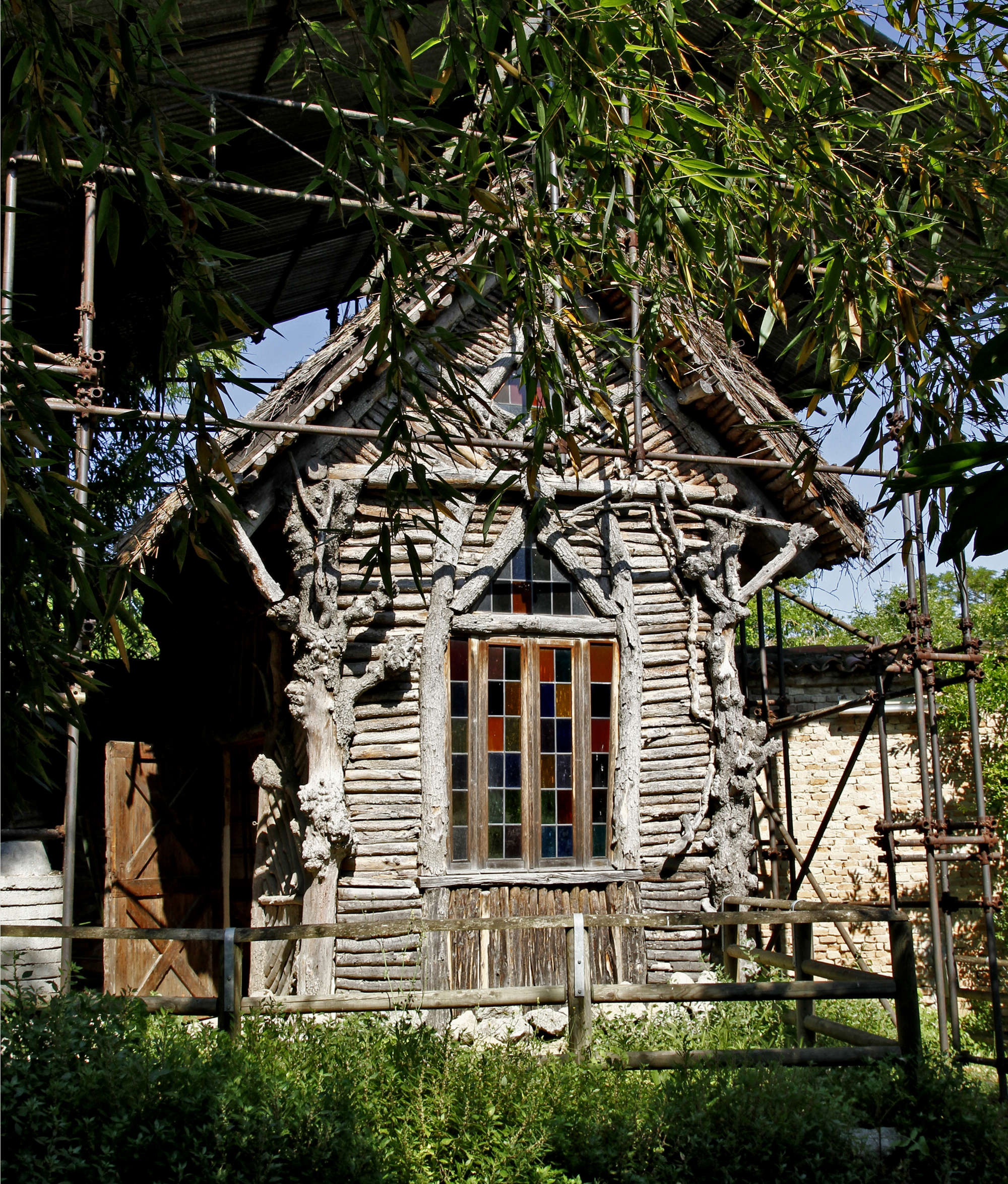
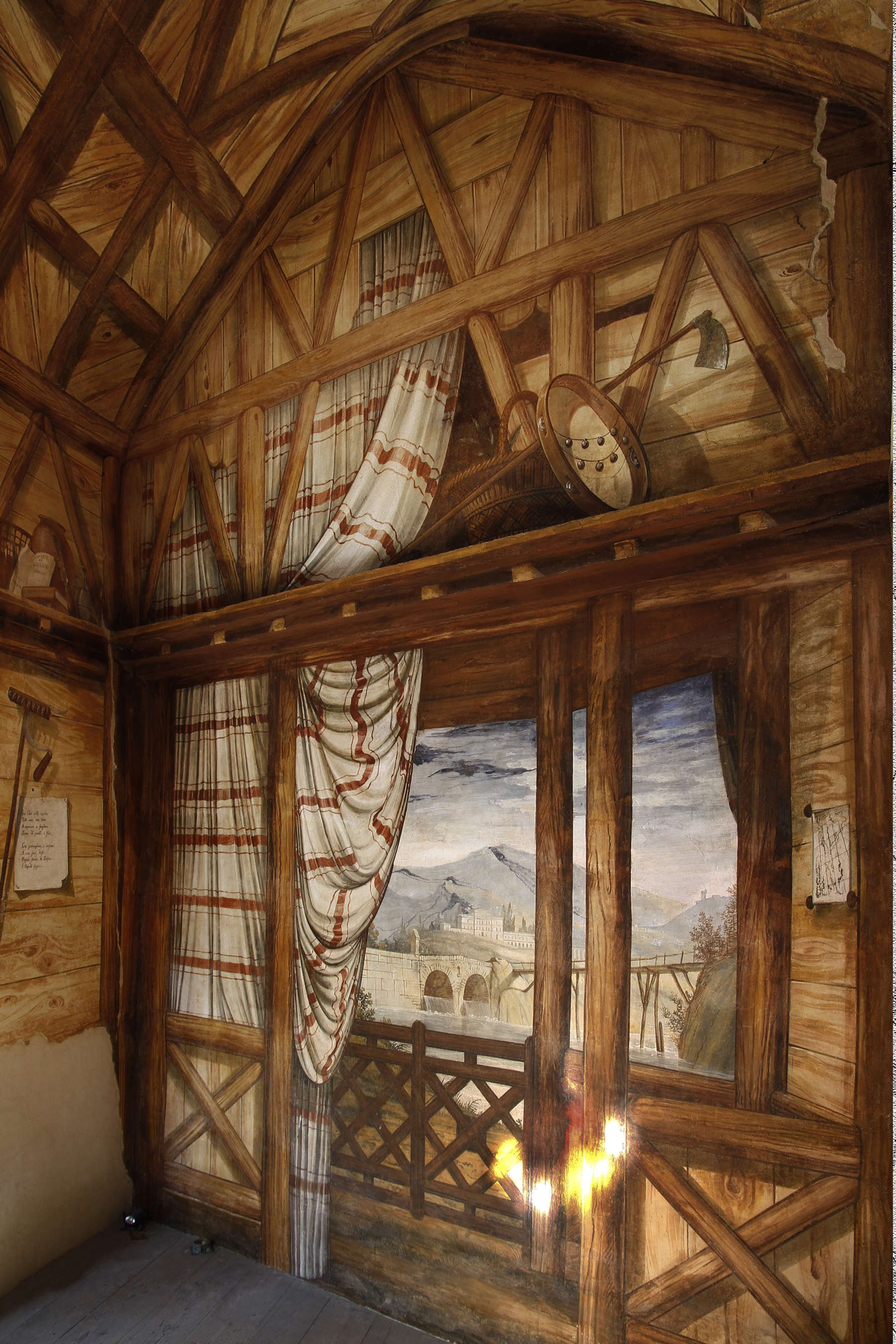
The rustic hut, or hameau, is part of a tradition typical of romantic gardens in the second half of the 18th century, inspired by French models such as the park at Versailles, where small eccentric constructions were built to surprise visitors. Built in 1851 by the Rondinini family, the hut features an exterior covered with tree trunks and a roof of marsh grasses, but it is inside that hides its most precious secret: an integral trompe-l'oeil decoration signed by Romolo Liverani and his son Tancredi. The painted walls simulate a gardener's retreat, with fantastical countryside views, shelves with caged birds and garden tools, creating a fascinating contrast to the neoclassical solemnity of the main building. The acquisition not only recomposes the original integrity of the spaces, but opens a new phase of restoration that will also be supported through the activation of an Art Bonus, directly involving the community in the recovery of this unique asset. As stated by director Elena Rossoni, reuniting the hut with the garden is a goal pursued since 1973, a feat that will make the experience of visiting one of Italy's most important museum centers even more exceptional. "The intervention," he said, "is in addition to the many works carried out in the past two years, with the reopening and re-functionalization of spaces that were already closed, plant adaptations and everything done to bring the museum within international standards that are at the level of its artistic quality, with the intention of increasing its visibility and relationship with the public." With the return of the hut to its garden, therefore, the museum not only expands its spaces, but also completes the historical narrative of the palace, offering visitors the chance to fully immerse themselves in the romantic dream that followed the splendor of the Napoleonic age.