By Andrea Fusani | 31/07/2026 17:52
We tiptoe into the Medici villa at Poggio Imperiale, on the hill of Arcetri, a quarter-hour’s ride on horseback from the Pitti Palace. It is the spring of 1768, and the sumptuous residence, after three decades of neglect, is bustling with activity. The new Grand Duke, the very young Pietro Leopoldo of Habsburg-Lorraine, has transformed the villa into a construction site: the building is being expanded, a modern kitchen with an icehouse and cellar is being built, and new stables, outbuildings, and quarters are springing up to modernize the summer residence beloved by the royal couple. Not everything, however, has been swept up in this wave of renewal: the diligent Lorraine official Pietro Armand, our guide on this journey through time, introduces us to what was once the apartment of Gian Gastone, the last Grand Duke of the House of Medici. We slip quietly into a room where everything seems to have been frozen in a bygone era: the “Porcelain Cabinet known as the Aurora, with a canvas painting in the background by Cesare Dandini, featuring a window overlooking the Prato toward Florence” is still there, almost hidden, spared (for now) from the onslaught of modernization.
The room’s lavish decor had been conceived, nearly a century earlier, as a celebration of the role of Vittoria Della Rovere (Pesaro, 1622 – Pisa, 1694), the last descendant of the Dukes of Urbino and widow of Ferdinando II de’ Medici. Among the hundreds of pieces of Oriental porcelain, small bronzes, vases, ivory figurines, and natural curiosities mounted in silver filigree, the Grand Duchess Mother took care to assemble in the lavish “Gabinetto” a collection of at least thirty-eight miniatures (to limit the count to subjects clearly identified by critics) by Giovanna Garzoni ( Ascoli Piceno, 1600 – Rome, 1670), making them “the pictorial backdrop of a thematic space, where they achieved maximum visibility” and giving the room the character of “a striking tribute to the artist” (Pasquale Focarile).
All the magic of this space would soon vanish, swept away by the expansions of the ground-floor rooms commissioned by Pietro Leopoldo, causing even the canvas—set into the ceiling—depicting *The Chariot of Aurora and the Hours* by Vincenzo Dandini (Florence, 1609–1675) and his nephew Pier Dandini (Florence, 1646–1712): the sketch for it survives in the Uffizi’s Department of Drawings and Prints. In 1768, however, we could still have enjoyed the ethereal atmosphere of Vittoria’s “Gabinetto,” decorated with “white satin brocade with multicolored silk flowers” and chairs upholstered in “yellow ammuer” (a dense silk fabric with rippling reflections). The eye risked getting lost in such abundance, but sooner or later, one’s attention was bound to fall, inexorably, on the small painting on cartapecora (today we would say parchment) depicting “a white and red dog lying on a small table covered with red velvet, with pastries and a porcelain bowl on it.” Signed in the lower right corner “Giovanna Garzoni F.,” the small painting is undoubtedly identifiable as the “Dog with Cookies and a Chinese Cup” (c. 1648) in the Palatine Gallery, the undisputed star of the exhibition *The Grandeur of the Universe in the Art of Giovanna Garzoni* (curated by Sheila Barker, Florence, Palazzo Pitti, 2020) and the cover image of the accompanying catalog.
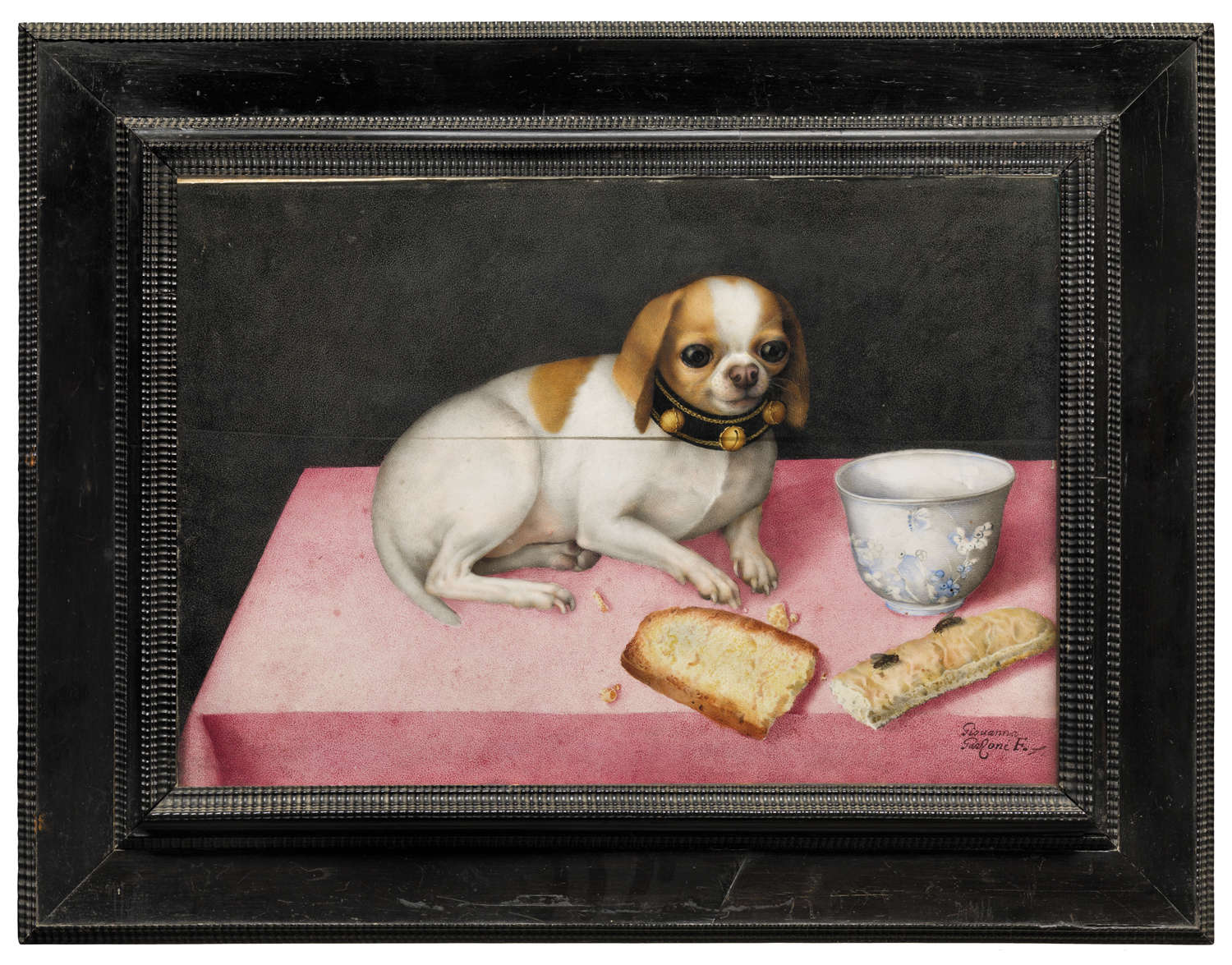
The little dog, likely a pug, occupies the center of the scene and seems to be gazing directly into the viewer’s eyes. She wears a simple collar with metal bells, suggesting an intimate and familiar atmosphere that reflects Vittoria della Rovere’s well-known passion for dogs — who was often portrayed in the company of her trusted four-legged friends, as evidenced by the presence of doghouses in nearly every room of the Poggio Imperiale in the late seventeenth century. The exquisitely refined cup—a Chinese “chicchera” contemporary with the painting (and thus very much in vogue)—stands out against the pink of the tablecloth, recalling the Medici custom of sipping hot chocolate and likely mirroring the similar porcelain pieces preserved in the room. This interplay of references is completed by the cookies—broken, nibbled, or in crumbs—and by the flies that seem to be feasting on the leftovers of a grand ducal snack: a rare balance between naturalism, domestic serenity, and courtly subtleties (I don’t think many of you would leave a precious Chinese cup next to a pet, let alone food) tinged with sweetness and enlivened by a delightful, playful, and intriguing inspiration. These are the characteristics we’ll find in nearly all of Garzoni’s work—or, at the very least, in her most successful and acclaimed pieces.
Almost right next to the dog, on the same wall, a strange bearded figure—wearing a curious cylindrical headdress and holding two cockerels in his lap—peered out from behind a profusion of fruit, vegetables, cured meats, eggs, and all manner of other goods—a veritable theater of abundance watched over by the old man who seems to emerge from the background, as if he were climbing a steep, rugged slope: “view of a mountainous village, with the Old Man of Artimino holding two cockerels in his arms, a white dog, and other figures in the foreground; with a glass panel above and an ebony frame partially carved in waves.”
Once again, it is easy to recognize this as a celebrated—and enigmatic—work by Giovanna Garzoni, *The Old Man of Artimino* (Palatine Gallery, c. 1648), elsewhere identified as a certain “Bencino Brugnolaio”: while critics focus on the identity of the figure and the relevance of the landscape and local products to the Medici estate at Artimino (whose profile is certainly a far cry from the rugged Alpine terrain of the painting) we prefer to let ourselves be seduced by the fresh ricotta, placed in an elegant blue-and-white porcelain cup (already eyed by a great tit), by the aged prosciutto,the ripe grapes, orthe enormous, halved melon. One gets the feeling that in the ancient kitchens—perhaps those of Ferdinanda, the Medici villa of the “hundred chimneys” in Artimino—a sumptuous grand ducal banquet is being prepared, and it is no coincidence that, in 2023, the Uffizi Galleries asked Michelin-starred chef Vito Mollica to prepare a dish inspired by this very painting.
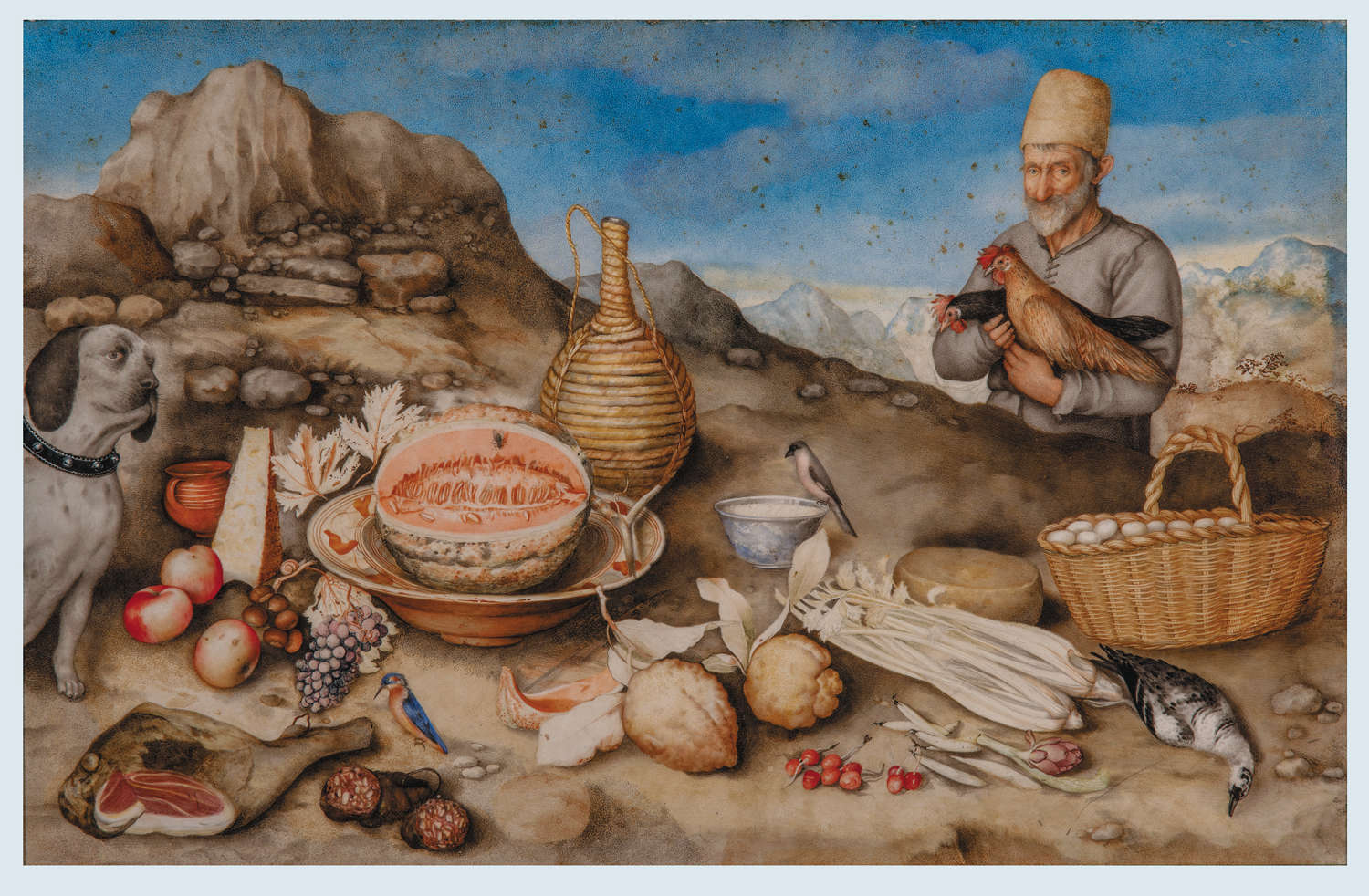
Behind the customary lenticular depiction of fruits, vegetables, and animals, the painter still manages to blur the lines, astonishing the viewer with a subtle, provocative—almost ironic—touch. It is impossible to pigeonhole the painting into a single genre: still life, landscape, portrait, and genre scene coexist without any one element prevailing—a freedom that was uncommon for an artist, let alone a woman, in the mid-17th century grappling with commissions of such prestige. The depiction of animals ranges from an almost scientific illustration (the kingfisher in profile, as in a naturalistic illustration) to a hunting scene (the already dead gray goose, ready to be plucked) to more playful elements (the snail climbing the bunch of grapes and the fly on the melon’s flesh). Finally, the interplay of gazes is entrusted to the figure of the old man/Bencino—a veritable intruder in court circles—and his dog, whose contrast with Vittoria’s elegant pug could not be more striking.
This brief journey through time through the halls of the Poggio Imperiale, following Leopold’s 1768 inventory (Florence State Archives, Imperial and Royal Court, 4855), and the encounter with the two small paintings now in Palazzo Pitti, have opened more than one window onto Giovanna Garzoni’s pictorial universe and the unique character of her depiction of food. The continuous interplay between genres and media, her cosmopolitan style, and a profile that is, to some extent, elusive, also seem to be reflected in the biographical story of the painter, who was born in Ascoli Piceno to parents of Venetian origin and was variously identified, throughout her career, as being from Lucca, Genoa, L’Aquila, but also as French or Flemish. Her travels between Venice, Naples, Turin, Florence, and—it seems—England, where she joined her friend Artemisia Gentileschi (Rome, 1593 – Naples, 1654), combined with her youthful habit of dedicating exquisite calligraphic exercises to nobles in Siena, Verona, and Rome, helped muddy the waters, sketching the profile of a painter who is not easily categorized.
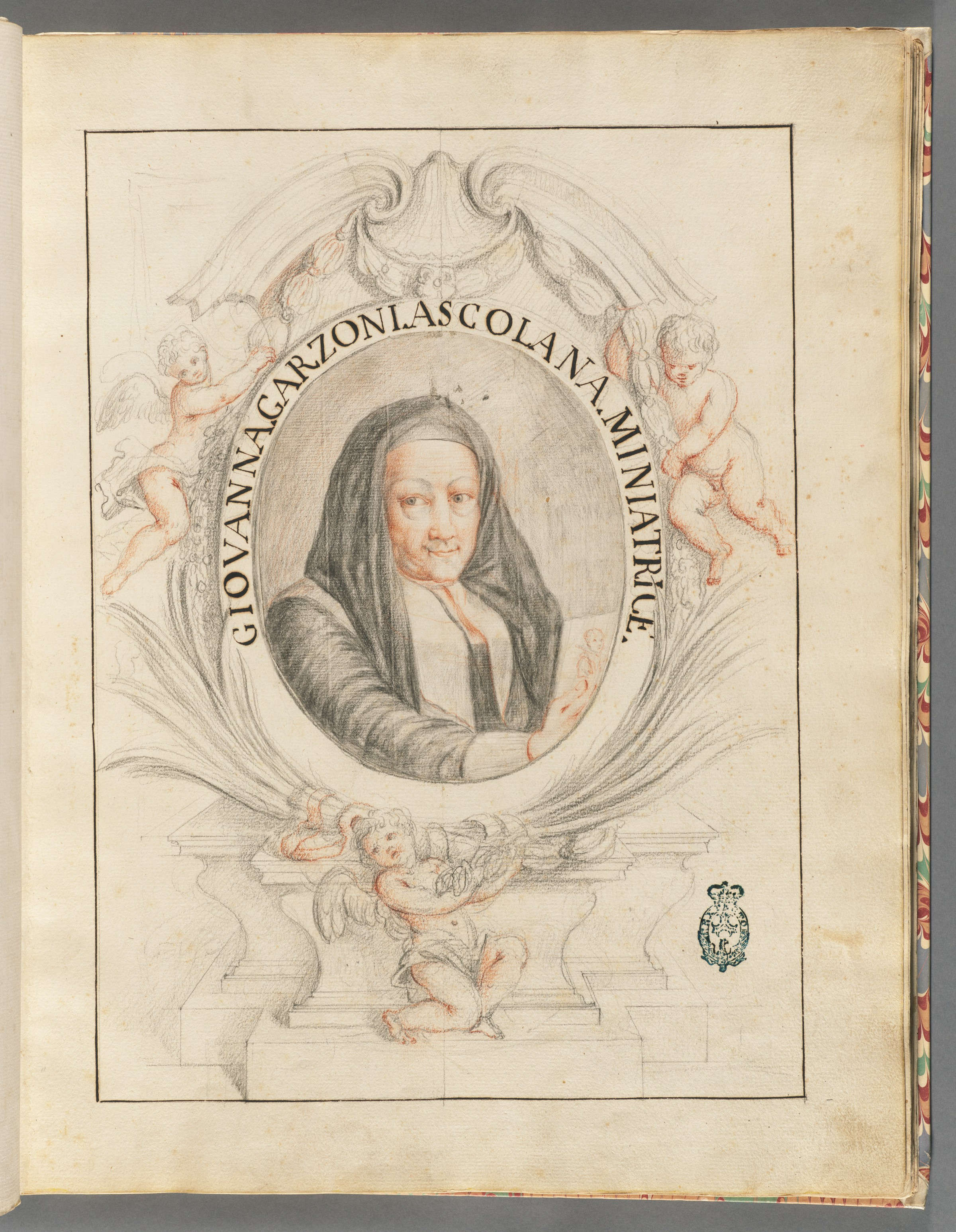
Her most recognizable portrait, attributed to Pier Leone Ghezzi (Rome, 1674 – 1755) —Washington, D.C., Dumbarton Oaks Research Library—presents an austere portrait of her in almost monastic attire, yet with a sharp and lively gaze and a faint smile. The severity of her attire, however, far from indicating a consecrated life, reveals her status as a widow: yet her marriage, contracted at a young age to the painter Tiberio Tinelli ( Venice, 1587–1639), had lasted less than two years. At the time, rumors circulated that Giovanna had kept a vow of chastity she had taken to escape a grim prophecy, thereby ending an unconsummated marriage. Recently rediscovered documents, however, tell a different story, one that speaks of the young Tinelli’s debts and the risk that his creditors might seize the bride’s dowry. It was her father, Giovanni Garzoni, who filed a lawsuit against his son-in-law, accusing him of having bewitched his future wife with magic to convince her to marry him. We are still faced with a murky, unclear situation, but it is true that her status as a widow—and the aura of moral integrity surrounding her vow of chastity, whether real or presumed—allowed her to move with confidence in European court circles. The unfortunate husband, for his part, after finally achieving some success as a portrait painter, died in 1639 of a malignant fever. Was Garzoni’s decision to wear mourning clothes driven by sincere grief (“she would have remained romantically faithful to him until her last days,” Sheila Barker wrote of her), a strategic choice dictated by practical considerations, or something else? The answer to these mysteries remains forever hidden behind that gentle, self-satisfied smile.
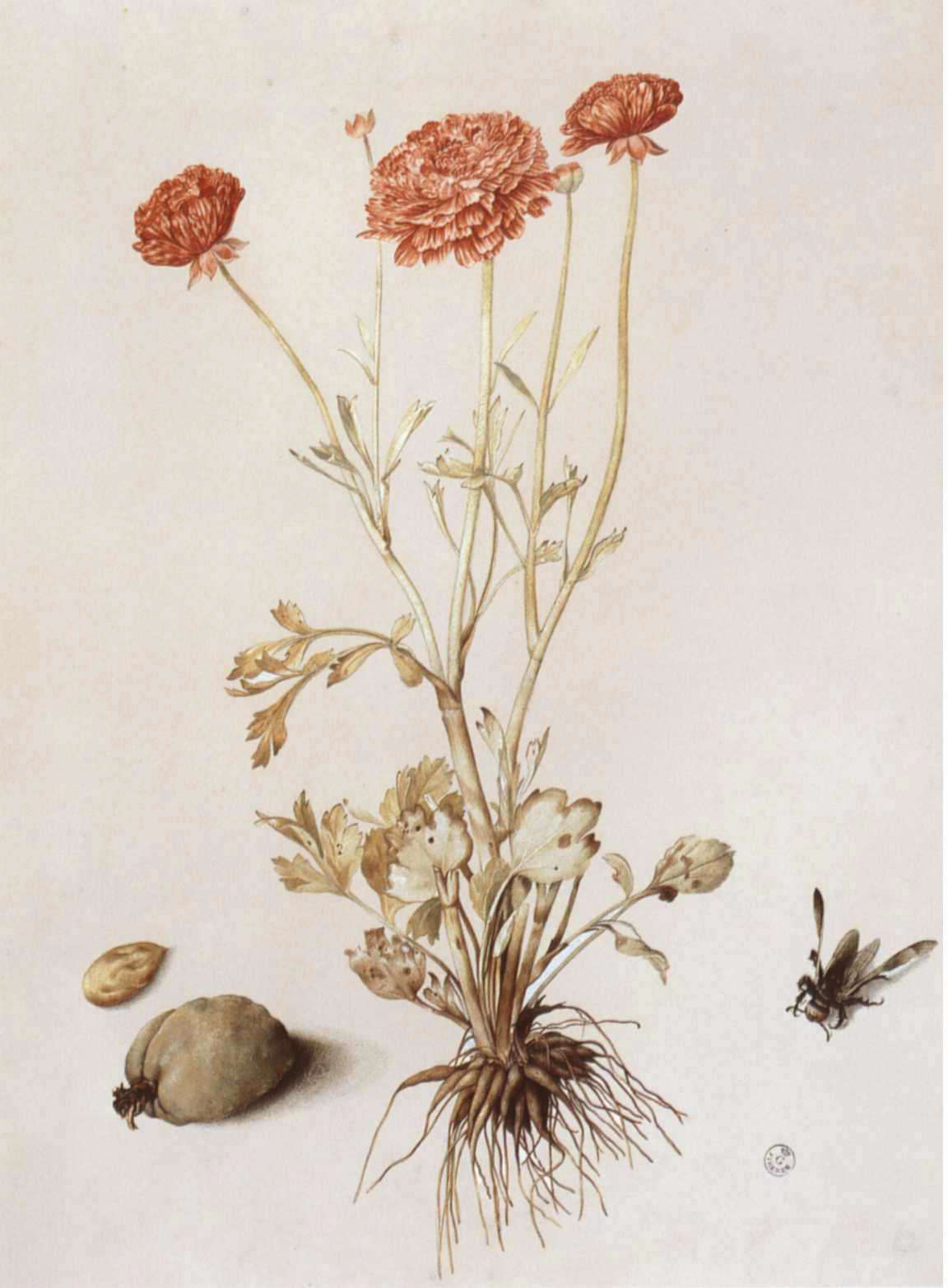
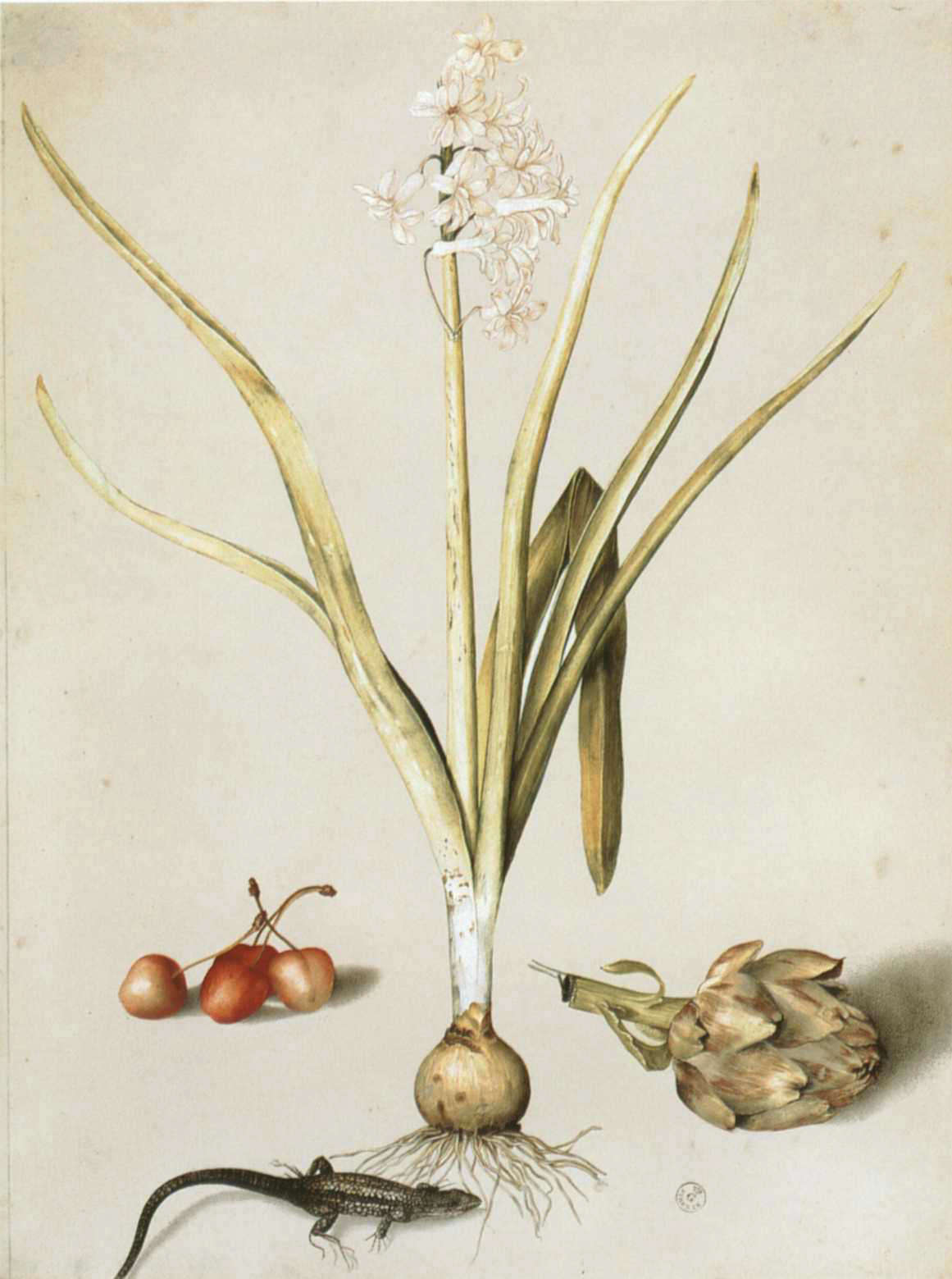
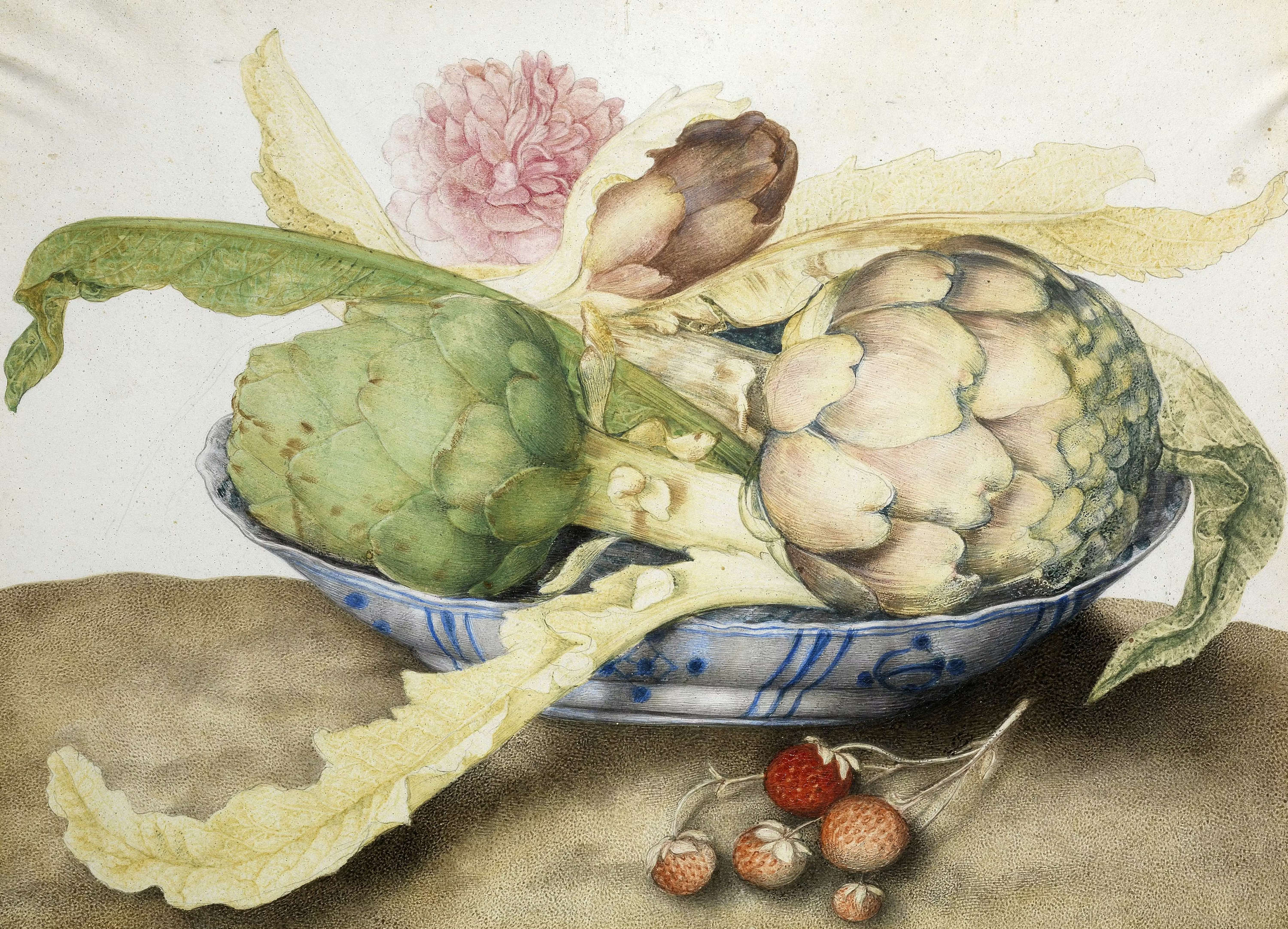
The same subtly amused tone pervades his “not quite still life” paintings (according to a definition by Mary DuBose Garrard), especially those executed for the Florentine court—not only for Vittoria Della Rovere but also for her husband and brothers-in-law, Cardinals Giovan Carlo (Florence, 1611–1663) and Leopoldo (Florence, 1617–1675). Perfectly at ease tackling a repertoire of botanical illustrations with purely scientific objectives (see the manuscript of *Piante Varie* now in Washington), Giovanna also knew how to astonish with the erudite visual enigmas of the “Carte dei semplici” (sent to Ferdinand II in 1648; Florence, Uffizi Galleries, Department of Drawings and Prints). The focus of these parchments is on naturalistic depictions of exotic species, such as the hyacinth or the buttercup, which appear to faithfully adhere to the criteria established for traditional herbariums: the specimens are depicted against an undefined background, without shadows, in frontal view, complete with all their parts and accompanied by their root systems. Upon closer inspection, however, one notices that the plants in these illustrations are not symmetrical and healthy, as required by the most modern scientific criteria, but are true “portraits,” with dried, yellowish leaves, affected by fungi, and featuring breaks and clumsy folds. Also appearing on the same sheets are insects, small reptiles, pods, and fruits that—as if they were part of another visual universe—cast shadows on the parchment. While the exotic species float in undefined space, the “supporting characters” become real objects, part of our everyday experience: the choice of common subjects—lizards, flies, peas, artichokes, and cherries—is no accident, and it clashes with the rarity of the “protagonists” to which they relate, moreover, in unpredictable ways. A hyacinth plant, in its unreachable space, partially covers some pea pods that cast their shadows on the background, thoroughly confusing the viewer. What kind of representation are we observing? A real lizard invades the space of a hyacinth, partially overlapping its roots: are we looking at a real reptile that has climbed onto a scientific illustration? The bewilderment deepens when one considers the total lack of proportional relationship among the various elements populating the images: the bee beside the buttercup must be gigantic, as must the cherries accompanying the artichoke and hyacinth.
Giovanna Garzoni once again demonstrates her mastery in transcending conventions, circumventing the limits of cold abstraction, and creating a world that is inscrutable in its logic yet depicted with meticulous precision. Her technical skill, recognized even as a young girl (it was said she had “truly more virtues than fingers”), does not falter even one millimeter, not even under microscopic analysis of her tempera paintings. No investigation, however, is thorough enough to reveal the secret meaning behind the juxtapositions of plants and animals in her works: religious, literary, and esoteric symbolism have been invoked; a coded system whose understanding remains impossible has been suggested, as have natural philosophy and pure whim, but the riddle is destined to remain unsolved.
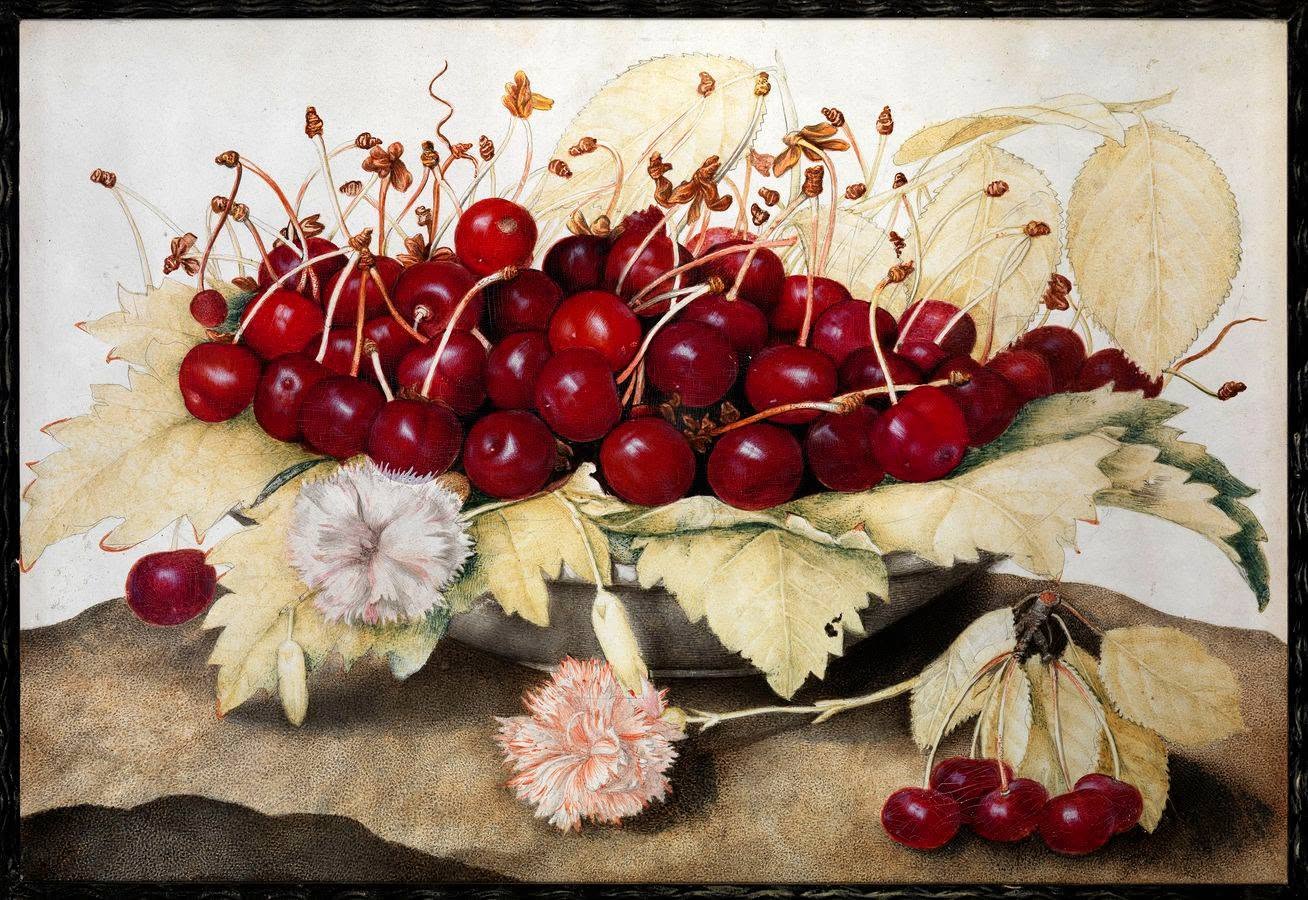
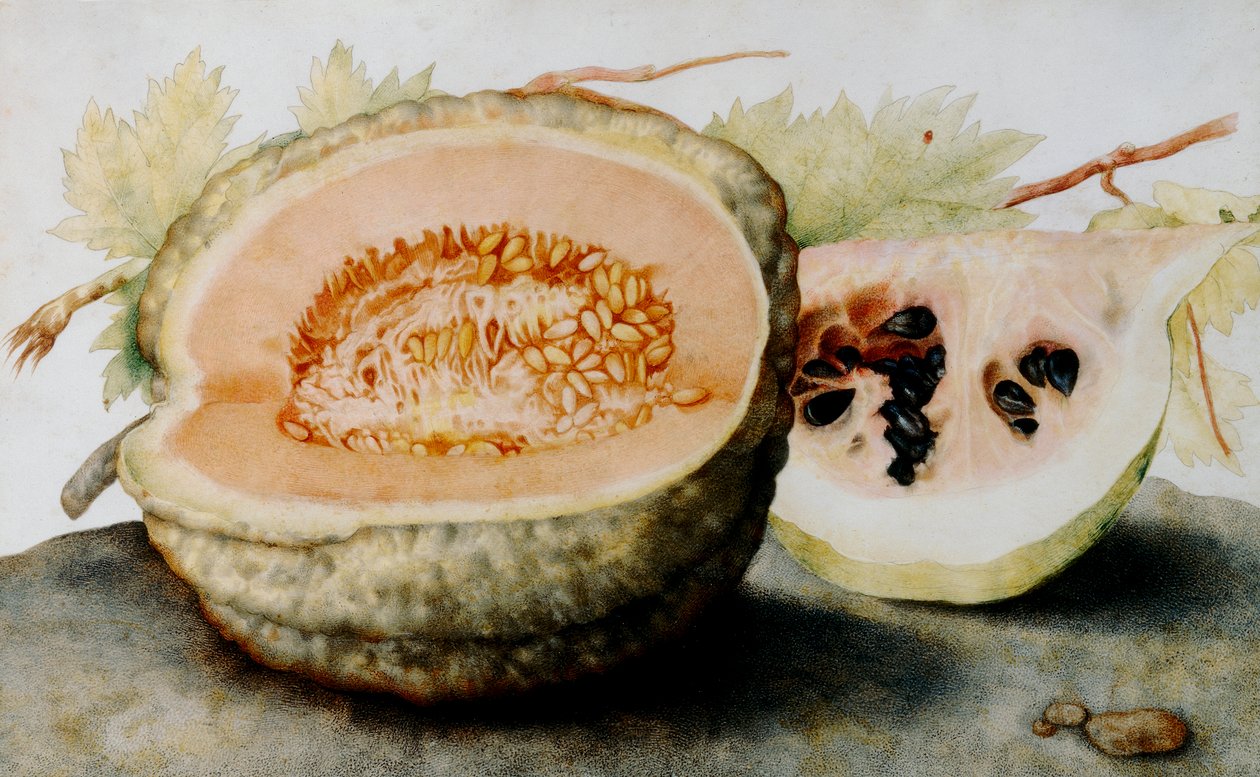
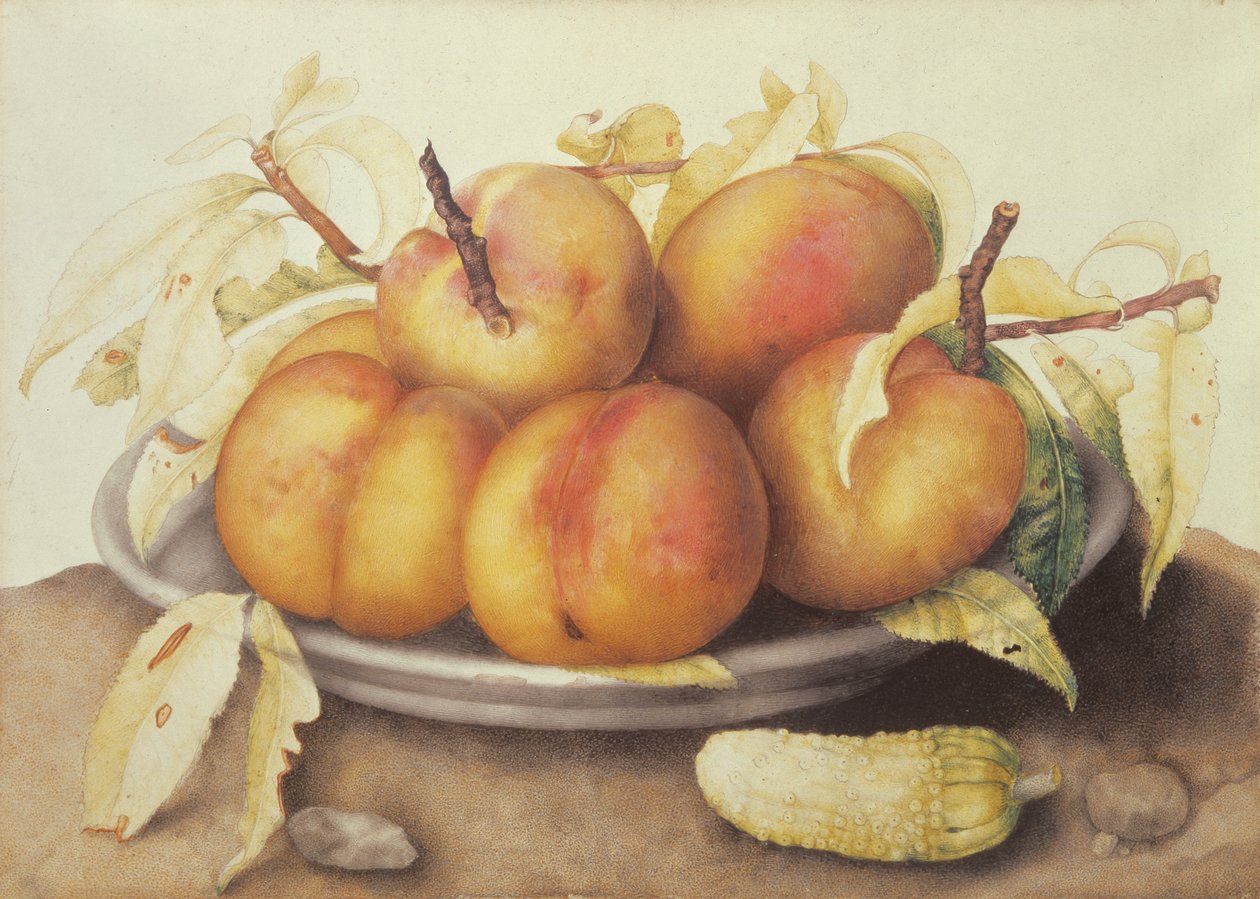
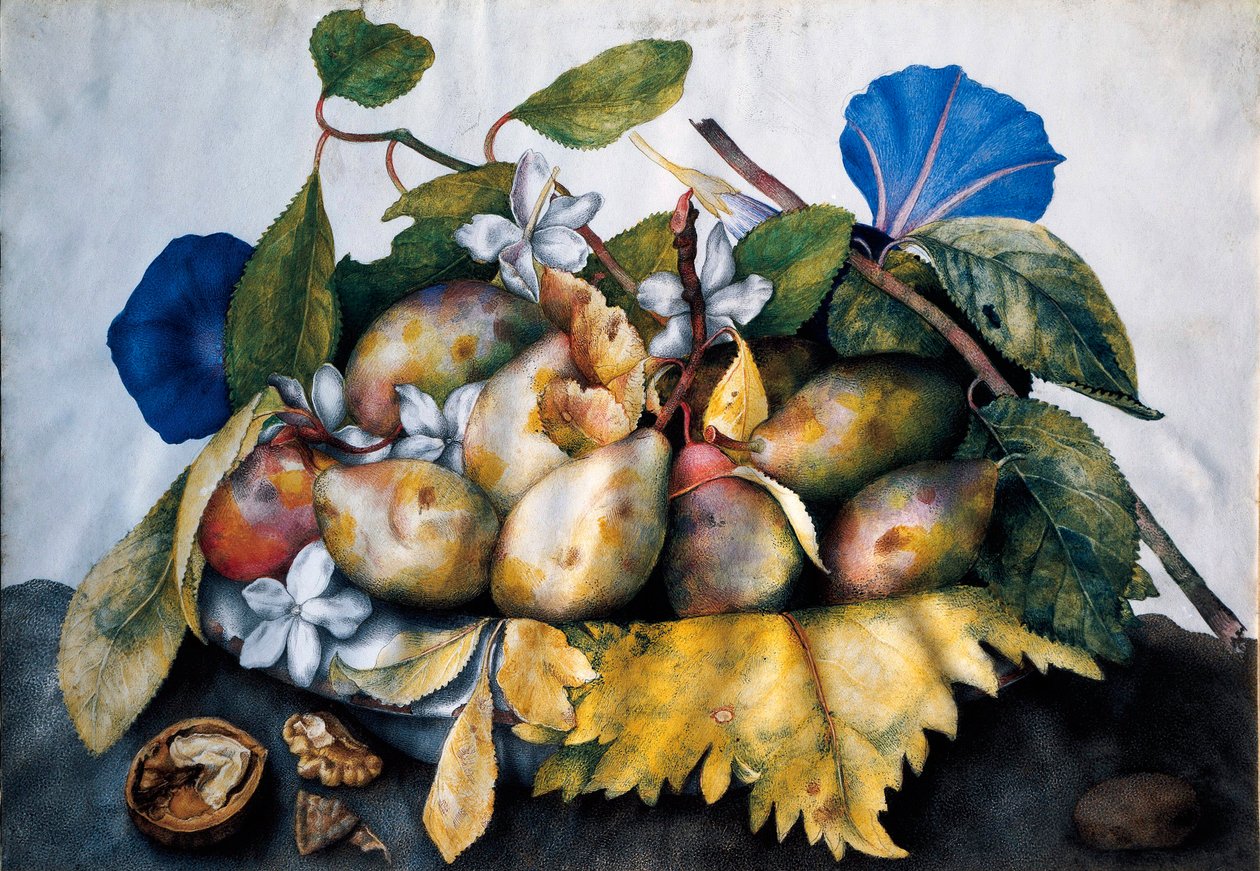
Before concluding this brief journey through Giovanna Garzoni’s pictorial universe, let us return one last time to the Porcelain Collection at Poggio Imperiale to be enchanted by the “twenty small paintings on sheepskin […] miniaturized into a single panel: bunches of grapes and other items; in another, a melon; and in eighteen, a cup in each, some made of majolica and some of porcelain, containing various fruits, with crystal glasses on top.” These are the twenty small still lifes created for the Grand Duke in 1662 (now in Florence, at the Palatine Gallery)—exquisitely refined compositions, rich in technical finesse, dedicated to ordinary subjects, with an intimate and familiar tone. These vibrant depictions vividly illustrate the seductive and sensual character of the fruit painted by the artist: cherries, strawberries, pears, peaches, plums, pomegranates, jujubes, and figs that “stimulate our taste buds, making our mouths water. We cannot help but feast our eyes on those appetizing figs” (Mary DuBose Garrard).
This organic vitality has sometimes led critics to draw parallels between the fruit painted by Garzoni and human genitalia—both male and female—in a context that carries no playful or erotic connotations but rather alludes to the magic of reproduction in nature and the mystery of birth. Inevitable, even in this small series, the usual oddities—from the snail that blends in with the chestnuts, to the nibbled leaves, to the numerous feasts of insects and birds—in a microcosm that is now familiar to us, where human, plant, and animal elements are part of a single great cycle of life.
Before leaving the ancient rooms to their fate, let us cast one last glance at another kind of subject: “a small panel on parchment […] featuring a round miniature of the Madonna della Seggiola, with corners of mixed marble, and a crystal front adorned with ebony, framed with a wavy border.” Giovanna Garzoni’s reputation was—and still is—associated primarily with her still lifes, and it is well known that the grand dukes took care to provide her with a regular supply of fresh fruit for her portraits (a practice partly replicated by Cosimo III with Bartolomeo Bimbi). This does not imply that her skills as a figure painter were not also appreciated: in January 1649, she was even lent Raphael’s *Madonna of the Chair*, which she was able to copy at her leisure at home. This single episode attests to the high esteem in which Garzoni was held at court and is enough to make any modern reader envious of her, given the unique opportunity for a prolonged tête-à-tête with a masterpiece of that caliber (it is worth noting, incidentally, that the precious painting was returned to the gallery “damaged,” precisely to discourage attempts at imitation).
The copy of the Madonna della Seggiola, signed “Giovanna Garzoni F” (private collection, exhibited in Florence in 2020), is, of course, smaller in size, with a slightly lighter color scheme than the original; highly prized for its painterly quality, it also has the merit of reproducing the work’s 16th-century frame, which was replaced by the current one in the late 17th century. It is not yet known when it left the grand ducal collections (it is documented not only at Poggio Imperiale but also at Castello and in Pisa).
Giovanna Garzoni spent the last years of her life in Rome, in a house built at her own request, adjacent to the church of Saints Luke and Martina; the church was under the patronage of the Academy of Saint Luke, to which the painter bequeathed various donations, many works of art, and the house itself. The Academy took care to assist her during her most difficult times, often sending her “sugar loaves and cookies”—gestures of kindness normally reserved for its own members. However, there is no record of Garzoni actively participating in the meetings or the biweekly “Academies.” Moreover, the 1617 charter was quite clear in stipulating that female painters could be admitted “solely for the sake of honoring them, and they may not participate in the Academies and Congregations.”
Buried, in accordance with her wishes, in the Church of Saints Luke and Martina, and commemorated by an elegant monument by Mattia de Rossi (Rome, 1637–1695), embellished with a portrait by Carlo Maratti (Camerano, 1625 – Rome, 1713)—which, unfortunately, was lost in a theft—she was, at the very least, the honor of being celebrated in the volume marking the Academy’s centennial (published in 1696) as “Signora Giovanna Garzoni Ascolana, famous miniaturist and benefactor,” the only woman to be remembered both as an artist and as an active supporter of the Accademia del Disegno.