By Andrea Fusani | 05/06/2026 17:05
The Villa della Topaia, close to the better-known Medici residences of Castello and Pietraia, still bears the signs of the time when it was a casino of rest and delights for Cosimo III. Two elegant cartouches, placed in the hall of honor, accommodate the inscriptions regia manu sunt sata ("By royal hand were planted") and laetitiae cosmus dator, a refined play on words that, quoting Virgil ("laetitiae Bacchus dator," from the invocation preceding Dido's banquet in the first book of the Aeneid), can be rendered as "The cosmos (or Cosimo?) is the dispenser of gladness." The reference is, clearly, to the grand ducal orchards and vineyards that surrounded the casino (with the term "laetitia" also to be understood in the rural sense of fruitfulness and lushness) but, with renewed ambivalence, also to "all the sorts of fruits, citrus fruits, grapes and flowers" painted by Bartolomeo Bimbi (Florence, 1648 - 1729) in the many canvases that enriched the villa's rooms.
Born in Settignano (Florence) to Niccolò del Bimbo (or Bimbi), a small local merchant, Bartolomeo demonstrated a lively aptitude for drawing at an early age. At the age of twelve he entered the Florentine workshop of the painter and poet Lorenzo Lippi (Florence, 1606 - 1665) and then, upon the master's death, moved on to that of Onorio Marinari (Florence, 1627 - 1715). Arriving in Rome in the retinue of Cardinal Leopoldo de Medici (Florence, 1617 - 1675), he had the opportunity to frequent, and befriend, the painter Mario Nuzzi (Rome, 1603 - 1673). The latter, the son of a refined floriculturist, became famous for the sought-after botanical subjects of his canvases, earning him the nickname Mario de' Fiori and exerting an obvious influence on Bimbi's future. Back in Florence, Bartolomeo soon decided to specialize in painting "flowers, fruits and animals," indulging a personal inclination and rightly glimpsing the possibilities offered by a market that was still unexplored or almost unexplored. Highly regarded by his contemporaries, he worked extensively for the court, not only for the Grand Duke but also for his children, Grand Prince Ferdinand, Electress Palatine Anna Maria and Gian Gastone. Famous is the judgment on his art expressed by Anton Domenico Gabbiani (Florence, 1652 - 1726) who, after observing his works, had to declare to Cosimo III, "ne Tiziano ne Raffaello ne alcun Pittore del Mondo che avrebbe voluto far frutte, e fiori mai non sarebbe arrivato a fargli in quella forma e così bene."
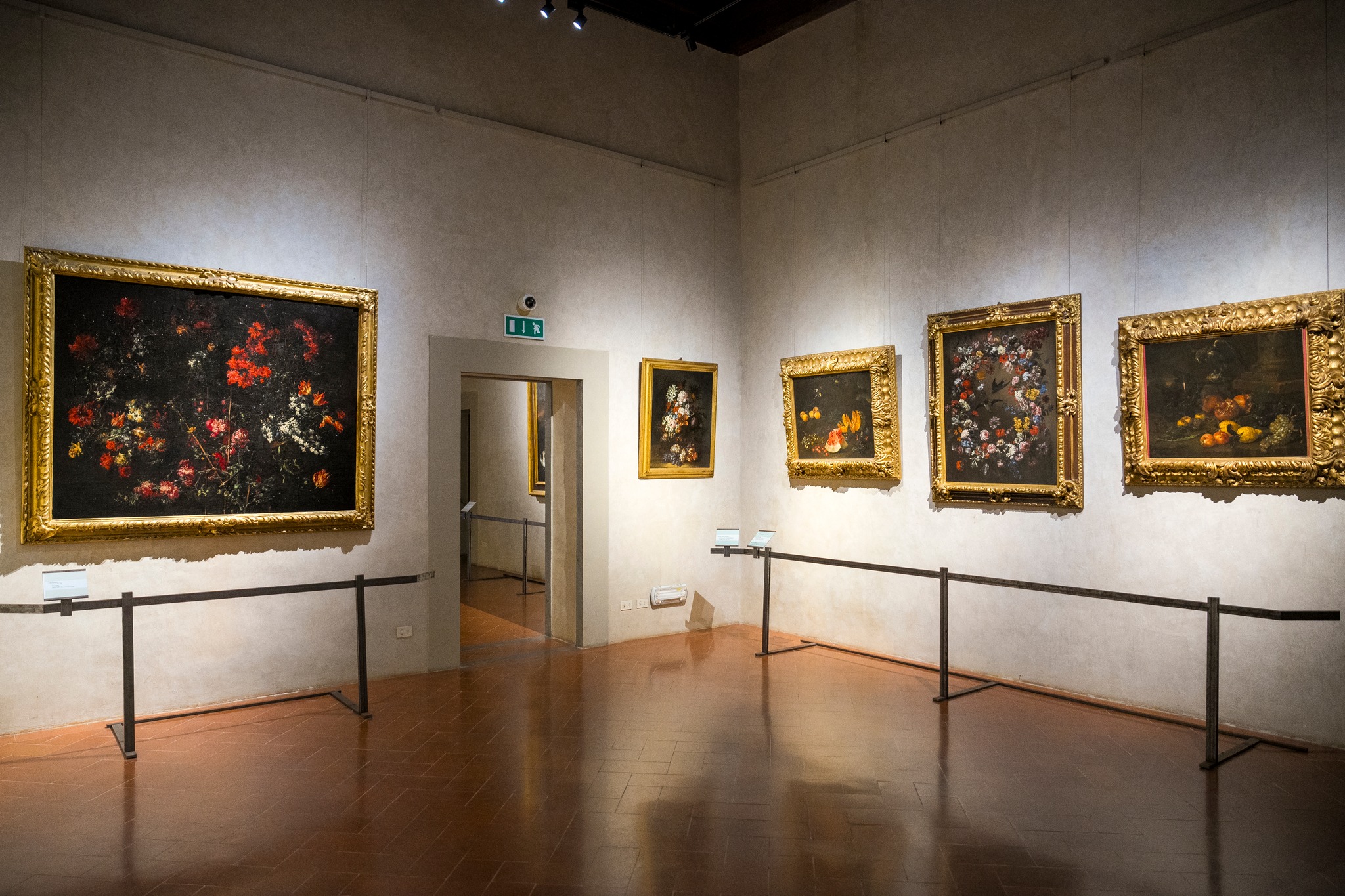
His rediscovery began around 1960 when, thanks to Giuseppe Delogu's studies, a number of Bimbi's paintings emerged from oblivion in Florentine museum storerooms for public display, attracting viewers' attention for the unusual subjects of astonishing variety, but also for the particular dimensions of the canvases and the branching relationships with the botanical and scientific interests of the Medici court between the seventeenth and eighteenth centuries. This attractiveness has never failed, as evidenced by the three monographs dedicated to him after 2000 (the one in Cesena in 2001, the one in Poggio a Caiano 2008, and the exhibition Bartolomeo Bimbi. Eccentrica natura held at Palazzo Madama, in Turin, in 2016), the constant presence in exhibitions dedicated to the Baroque (most recently the one in Forl ì, Barocco. Il gran teatro delle idee, in 2026) and the starring role reserved for him in the setting up of the Museo della Natura Morta in the Medici villa of Poggio a Caiano (2007).
The most recent studies (by Stefano Casciu, Chiara Nepi, Hans W. Hubert and Ilaria Della Monica) have shown how the peculiarity of Bartolomeo Bimbi's paintings should be read as an expression of a unique cultural environment, in the convergence of scientific and religious interests around the figure of Cosimo III: it was in the grand ducal circle consisting of the Jesuit Paolo Segneri (Nettuno, 1624 - Rome, 1694), the physician and naturalist Francesco Redi (Arezzo, 1626 - Pisa, 1697) and the botanist Pier Antonio Micheli (Florence, 1679 - 1737) who matured a new approach to nature, where the encyclopedic will proceeded hand in hand with the interests of the "devout and health-conscious prince" (so Chiara Nepi).
Bimbi's cultural horizon is thus broader than one might be led to believe from a superficial reading of his works. Exploring its links with the products of the earth, and more generally of nature, in their food dimension, nevertheless requires us to narrow the field; the Casino della Topaia, with its character as a place of rest and joy, suspended between the agricultural, intellectual and scientific dimensions, best lends itself to approaching the subject from this perspective. We are greatly helped, at this juncture, by the lively biography that Francesco Saverio Baldinucci dedicated to the painter a few years after his death, full of news and illuminating anecdotes; it is he who reminds us how the grand duke, admiring the casino "filled with all sorts of fruits, citrus fruits, grapes and flowers, which so far could be found both of natural as well as of extravagant, and bizarre abortions of nature", he wanted it "all adorned with paintings representing the same things live, not only so that in the case of the lack of the original plants, the shapes and colors of each species of their fruits would always remain alive in the memory [...] but also so that the true names, already variously confused, of the same would be distinctly known." The choice of artist, at this point, was almost obligatory, and could only fall on that master whom Baldinucci believed to have "far surpassed any other in his genre of painting, and probably may be said to be unsurpassable by anyone who is to come in future times sie Bartolommeo del Bimbo."
"For which thing it never happened that foreign fruit, and extravagant that His Royal Highness did not immediately send it, to have its portrait made by Bimbi, to then be placed in said Casino with due and destined order to its place": the presence of the paintings of ours therefore responded to a well-defined project, implemented by Cosimo III since 1697 and extending as far as the furniture and the exuberant frames with a botanical theme made by the carver Vittorio Crosten and still in place. Striking, from a contemporary perspective, is the repeated use of the term "portrait," now reserved only for paintings of human subjects: the spread of the expression "still life" in Italian, moreover, dates back to the late nineteenth century, while the earliest precedent, the Dutch still-leven (documented from the mid-seventeenth century) remains bound to the character of a static and motionless nature. Bimbi, on the other hand, was known for "portraying" fruit and animals with "truth and expression" (Baldinucci), crossed modes of representation capable of combining a rigor worthy of a table of scientific documentation (accompanied by the pictorial richness typical of Baroque still life) with an "exemplary and solemn tone, in line with the spiritual vision of nature as a mirror of the divine will" (Stefano Casciu).
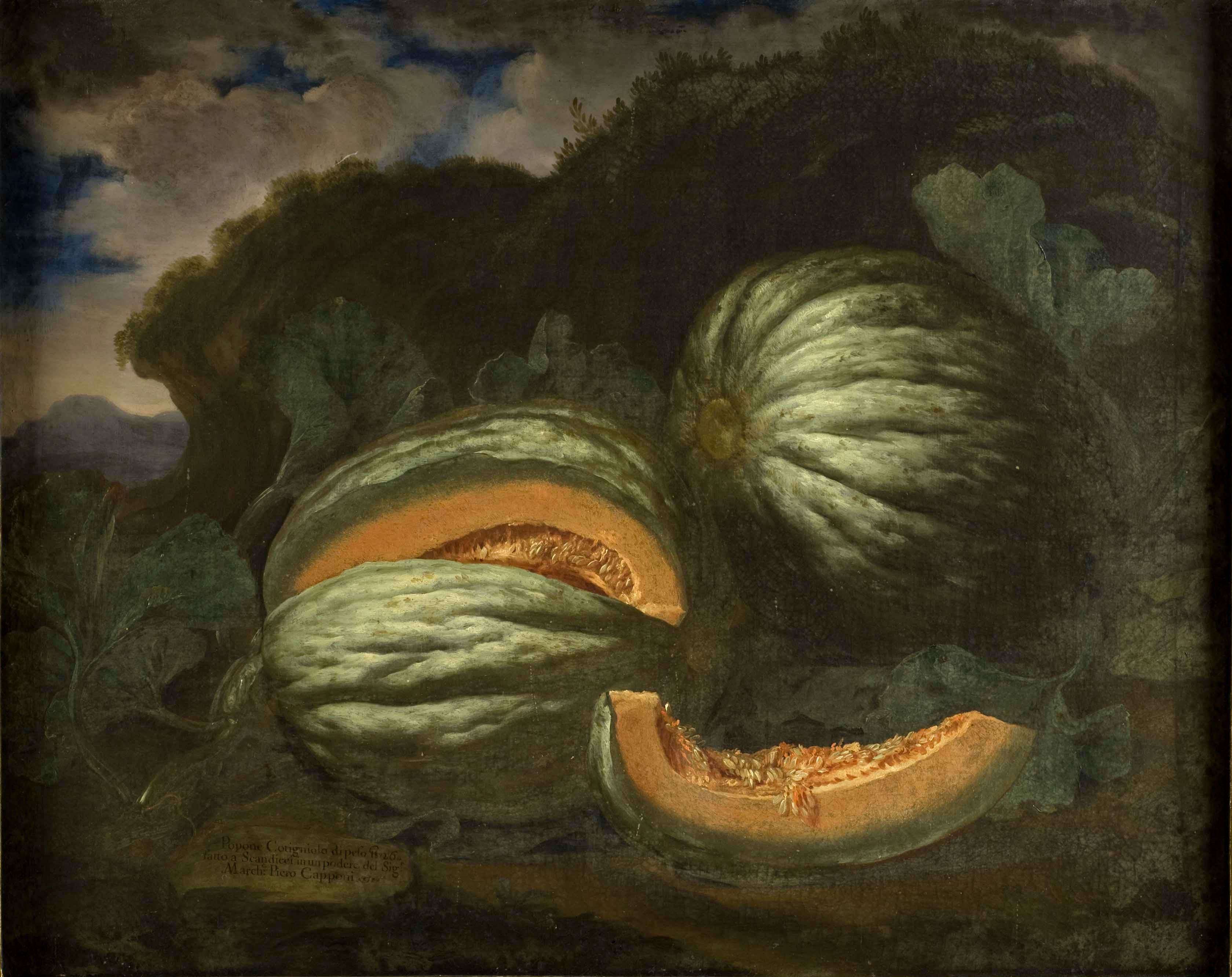
One of the best-known episodes, and one particularly suited to our case, is the one that sees the painter grappling with a gigantic watermelon, a "105-pound [almost 36 kg] beautiful watermelon," sent to him by the grand duke "with orders that to whole he should paint it, and such he should send it back." The diligent author provided, according to Baldinucci's account, in record time but saw himself return the painting the following day, accompanied by a "generous fee" and a very fresh slice ("strongly diacciata and of beautiful color") of the usual watermelon to add to the painting. Cosimo did not fail to join the embassy with instructions regarding the fate of the generous portion (over 10kg) of fruit, specifying how, once the work was finished, it was to be used by Bimbi to satiate "his own family, and his friends, as it followed."

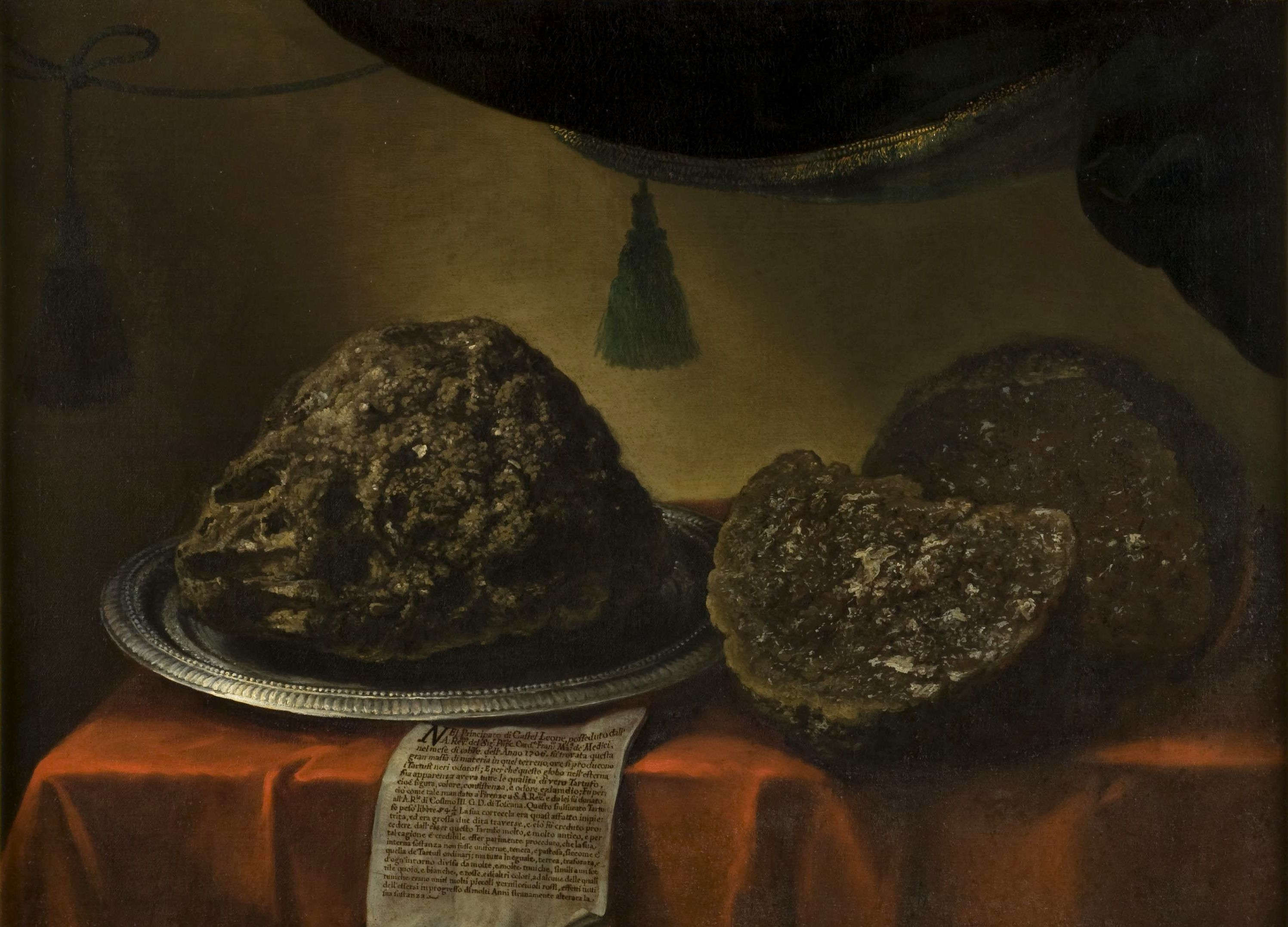
Less happy was the fate of the enormous Castel Leone Truffle (1706) now at the Museum of Natural History in Florence: it was now common practice to present the grand duke with all sorts of eccentric and marvelous products of nature introduced to the city, and the huge truffle (over 18.5 kg) was no exception. Sent to Bimbi so that "with all diligence he would portray it to accommodate it in the Topaia among the aforementioned and other fruits of extraordinary size," the immense tuber was then dissected with surgical precision (Baldinucci recalls, moreover, how Cosimo himself had ordered "that it be made a notomy") revealing an unwelcome surprise: "party in several pieces was recognized to be not already one Truffle, but a group of very many Truffles of every size, conglutinating together [...] but because these had a lot of red vermicciuoli inside them it was forbidden for all to eat according to the opinion of the Most Excellent Doctor of the Pope, and then ordered that each fragment be thrown into the river, after having been painted by Bimbi all the pieces in the form that were found." On the one hand, the intervention of the Empolese physician Giuseppe Del Papa (Empoli, 1648 - Florence, 1735), the court archiater who succeeded Redi, testifies to the scientific rigor of the entire operation; on the other hand, the contamination of the food can only make us imagine the disappointment of those present, and of Bimbi himself, faced with the prospect of tasting a truffle of such rarity!
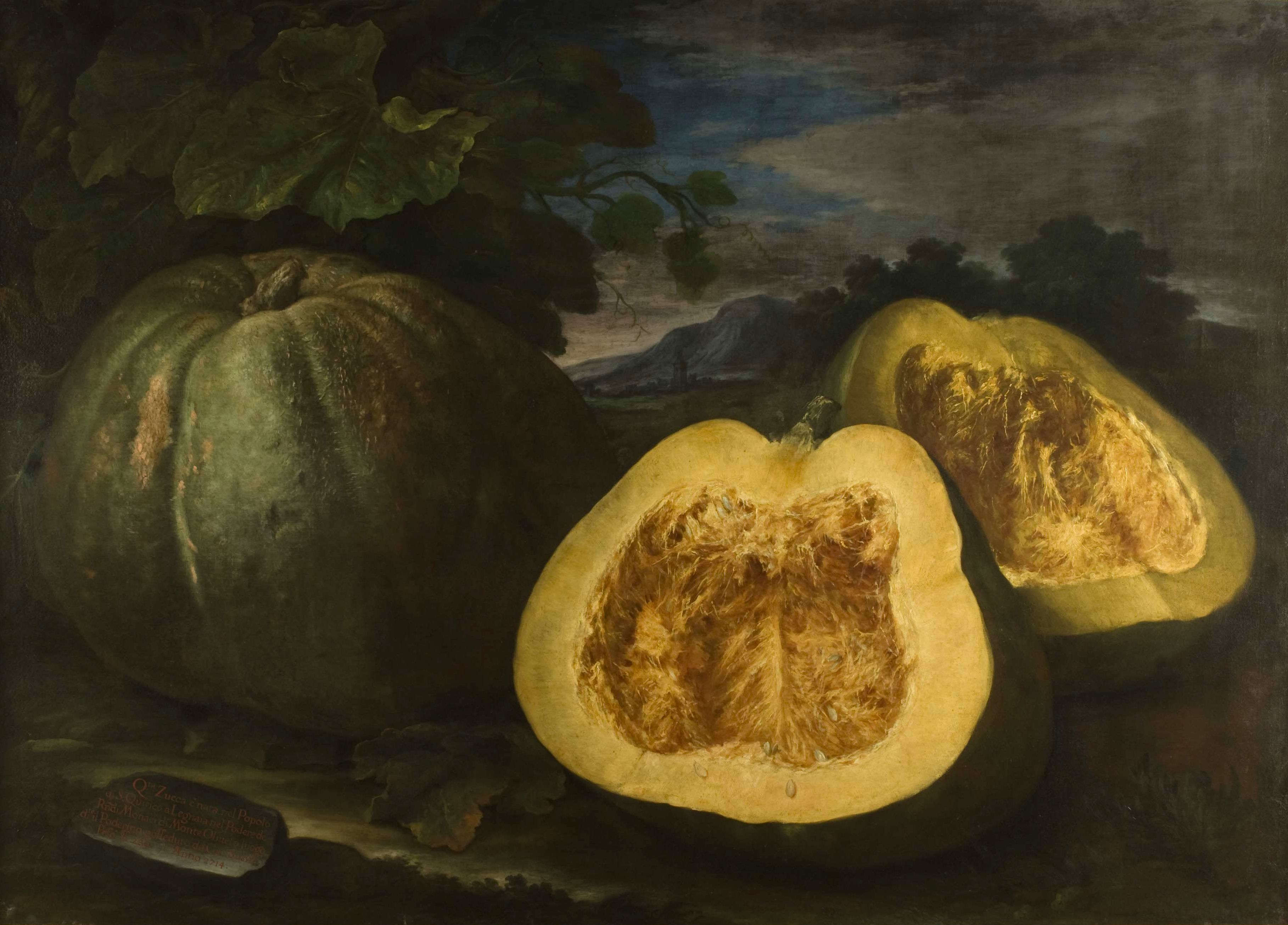
The arrival at the painter's studio of vegetables of disproportionate size also kindled the curiosity and enthusiasm of the people: the path of an enormous 167-pound (about 57 kg) gourd was colored by the "retinue of many curious people" who "with bewilderment" accompanied the two poor porters to his house. The birth of such extraordinary fruits of the earth, however, could also be seen as an omen of misfortune, and the painter himself, seeing yet another oddity arrive at his domicile, could be startled "fearing some sinister event."
These paintings of a teratological character, that is, dedicated to vegetables (but also animals) with exceptional or abnormal characters, were then flanked by veritable horticultural repertories, designed to "show the beautiful and copious diversity of fruits that in the pleasant countryside and Vineyards of Castello produces industry, and nature made." These are the large tableaus that still enchant visitors to the villa at Poggio a Caiano, true samplers of the products of the Medici estates considered among the absolute pinnacles of Italian still life painting (as Stefano Casciu considers them): a focus on crop diversity (today we would say biodiversity) of great relevance, yet rich in symbolic and spiritual references.
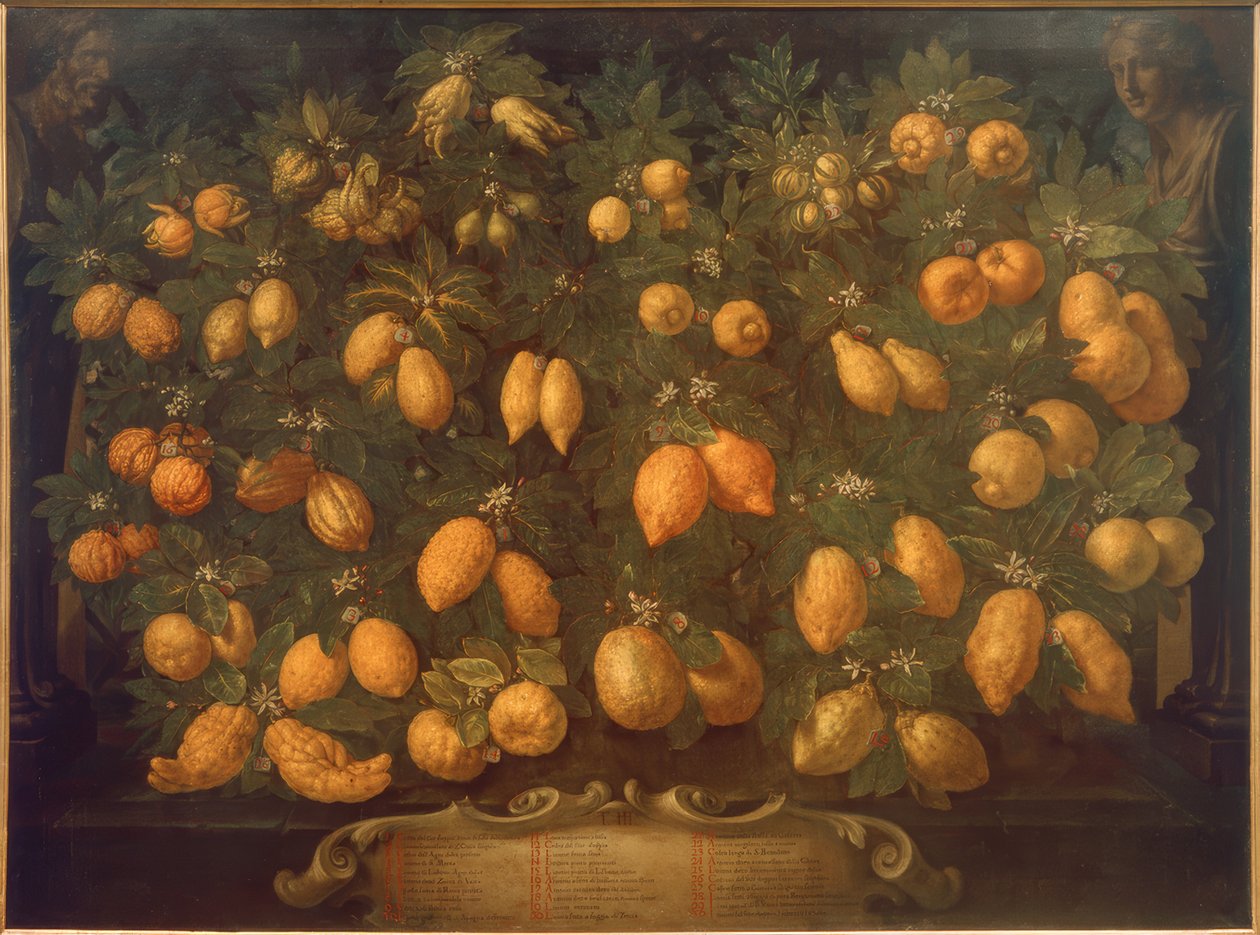
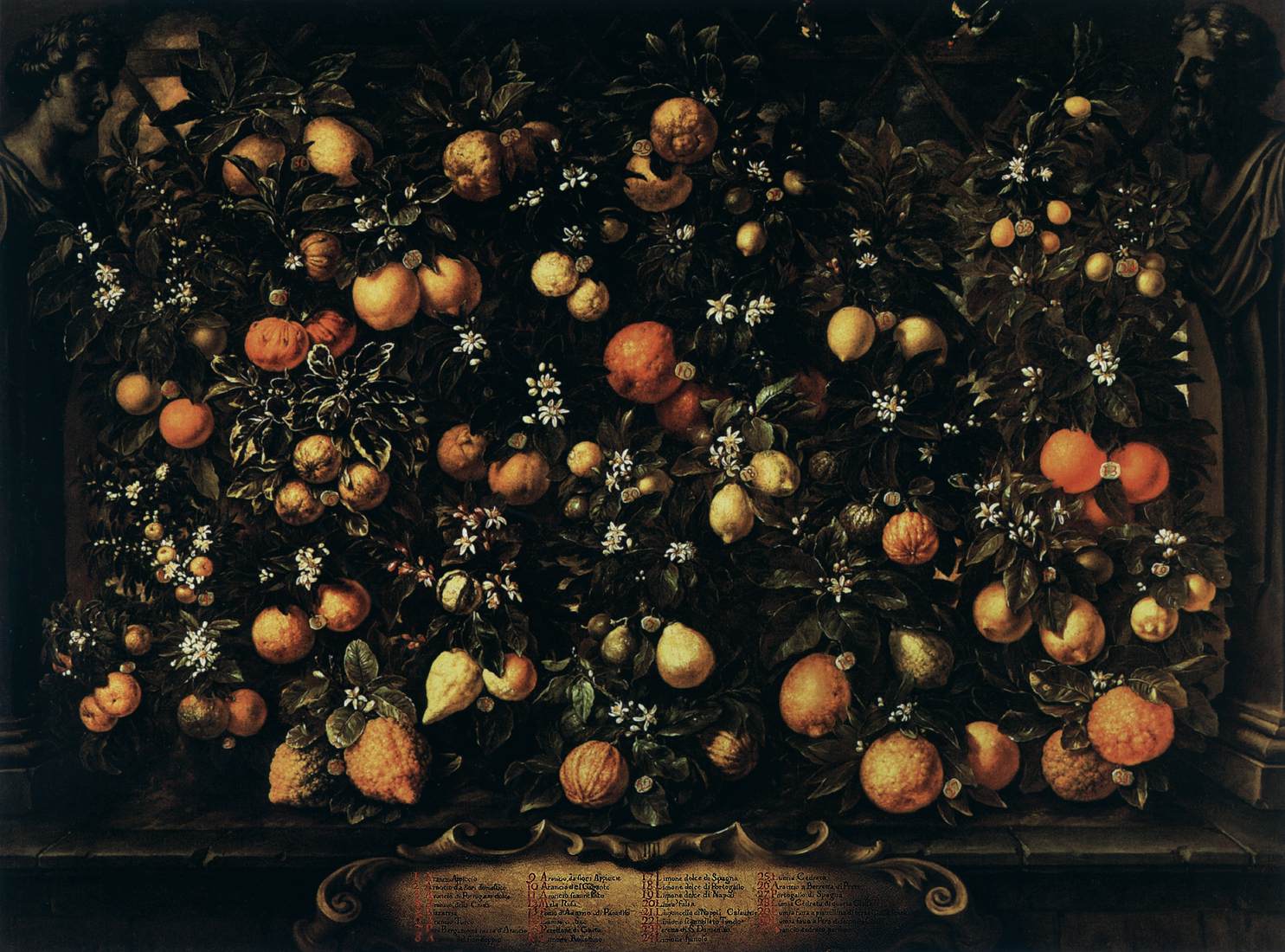
The four canvases dedicated to citrus fruits (1715), in addition to depicting 116 varieties of oranges, lemons, limes, melangoli, citrons and bergamots, could be part of that long tradition that interpreted the myth of the Garden of the Hesperides as an allegory of the happy and prosperous Medici reign over Tuscany. The entire cycle could be read, in its original setting, in dual function: a glorification of divine work but also of the good government of the "agronomist" grand duke: "Because his greatest inclination was always to agriculture, and from his earliest years he had much genius in it, he had this glory, that almost his whole state became in cultivation the most fertile garden of Italy" (fra' Domenico Sandrini, Life of Cosimo III Grand Duke of Tuscany).
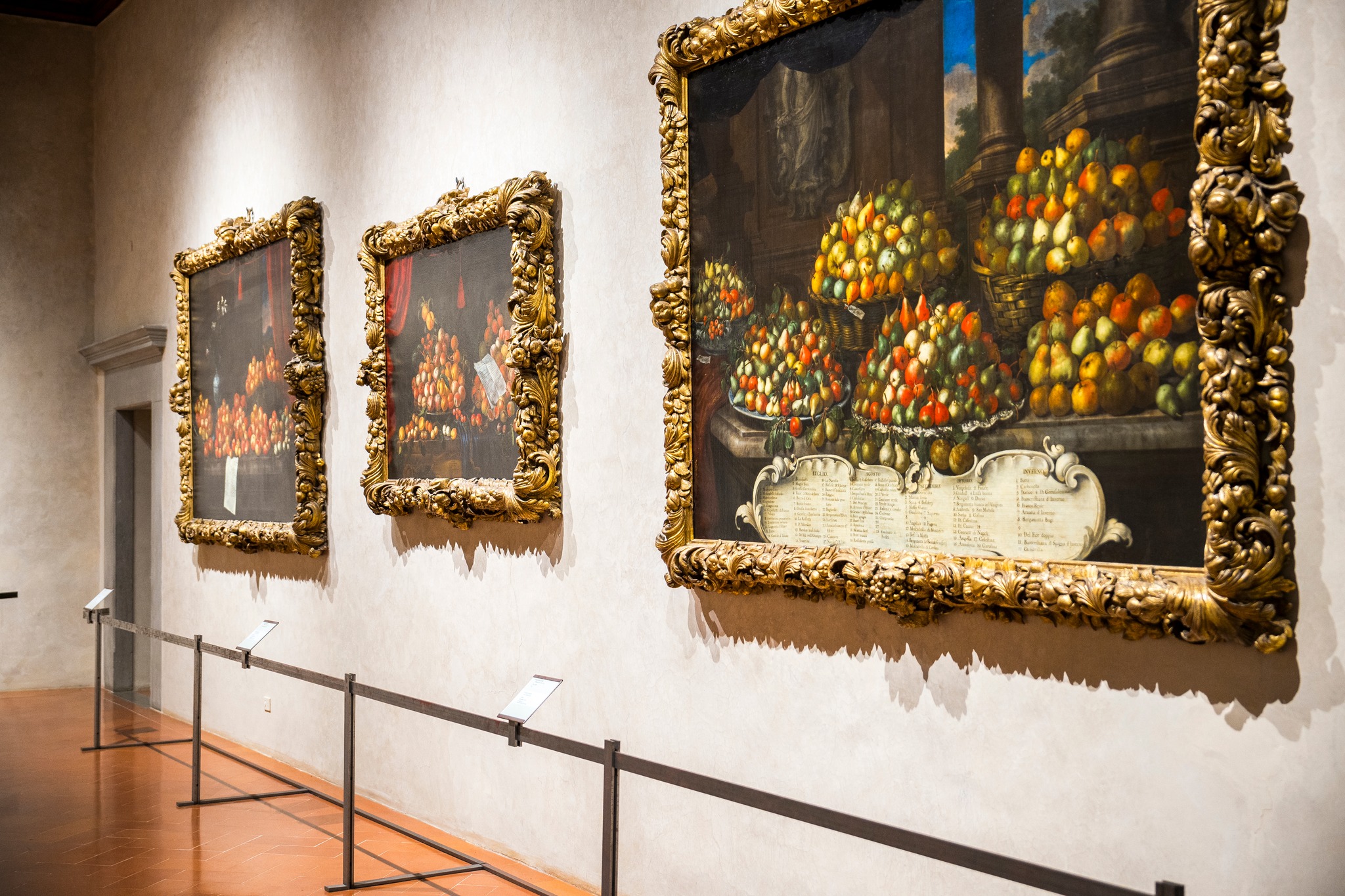
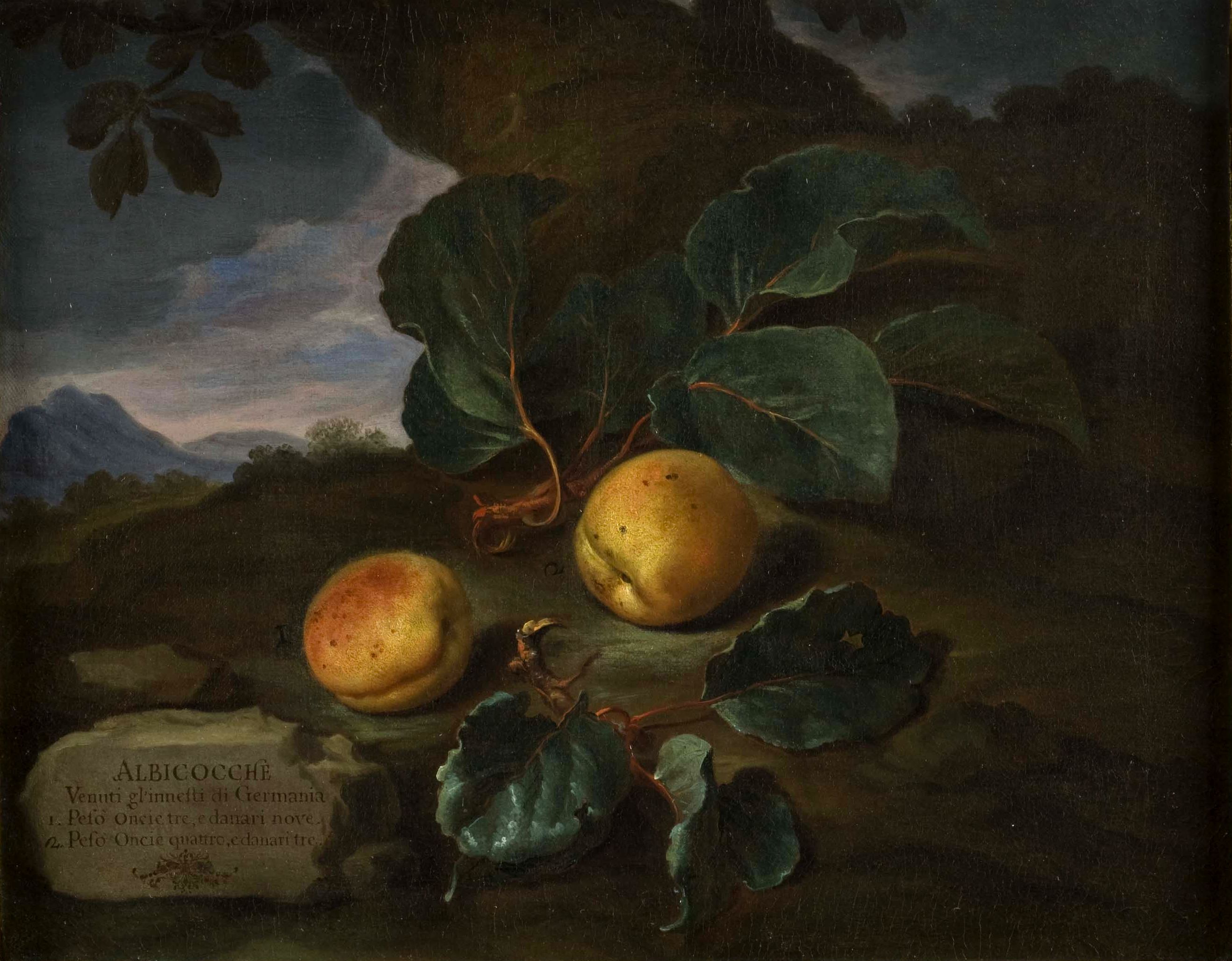
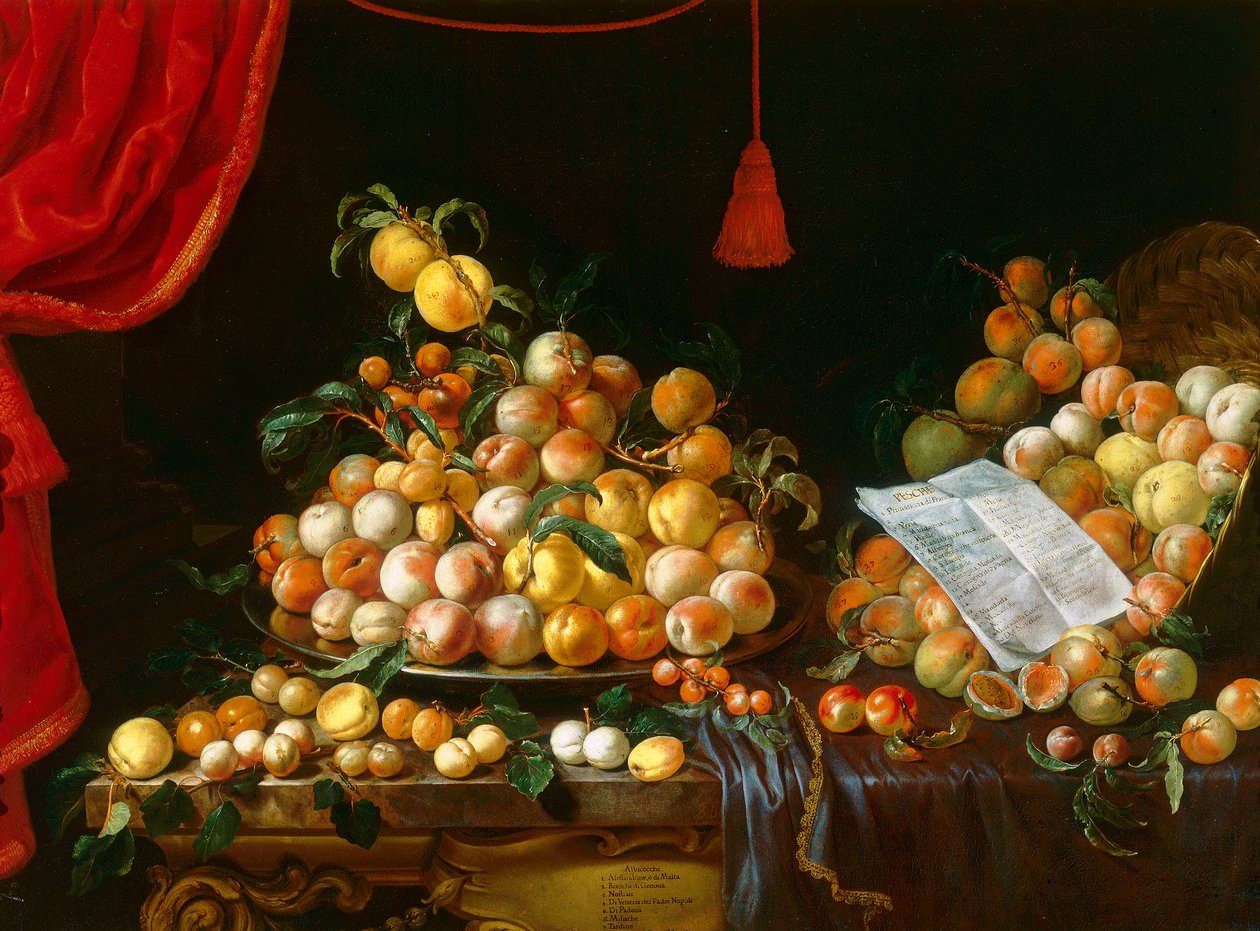
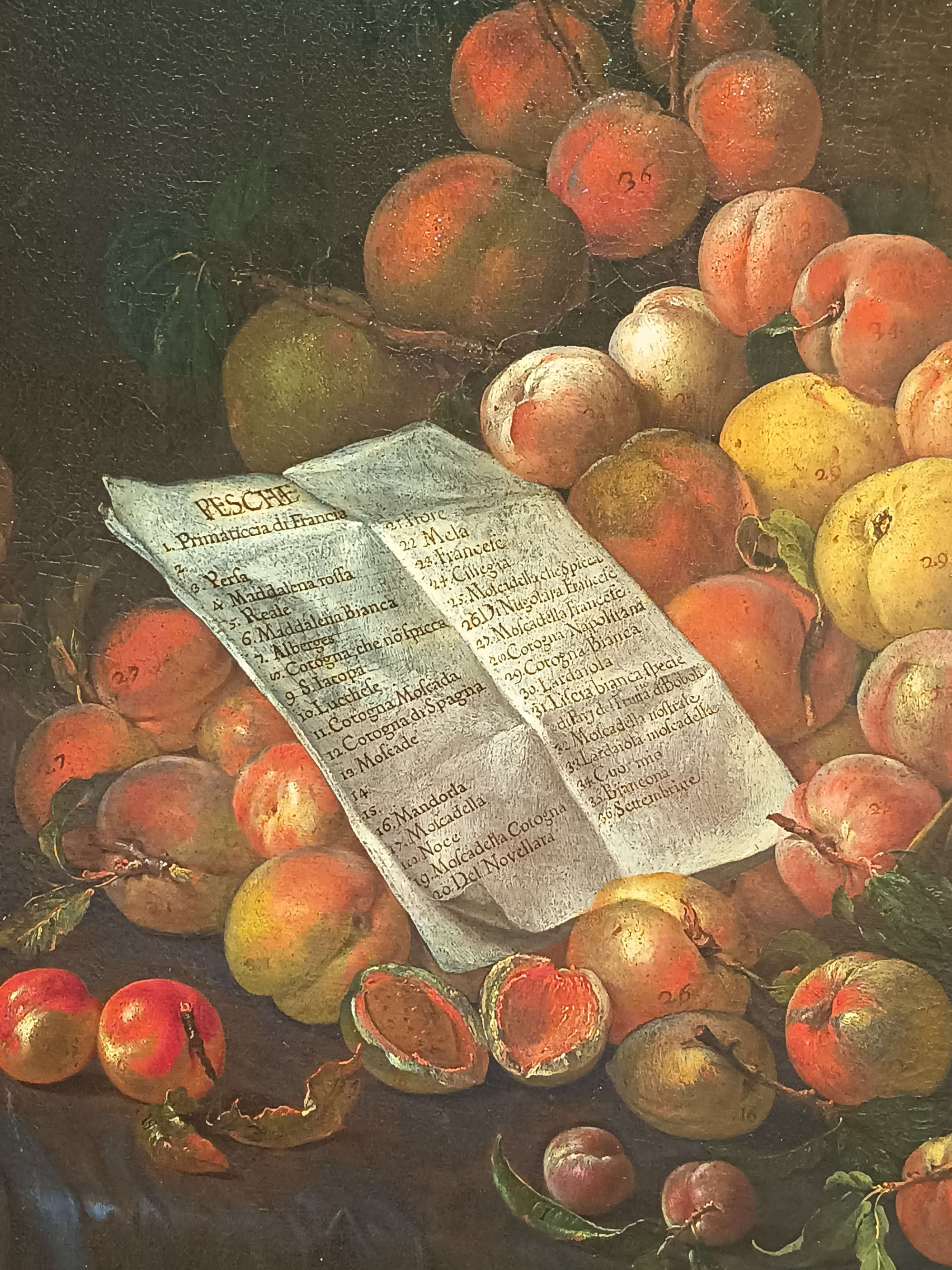
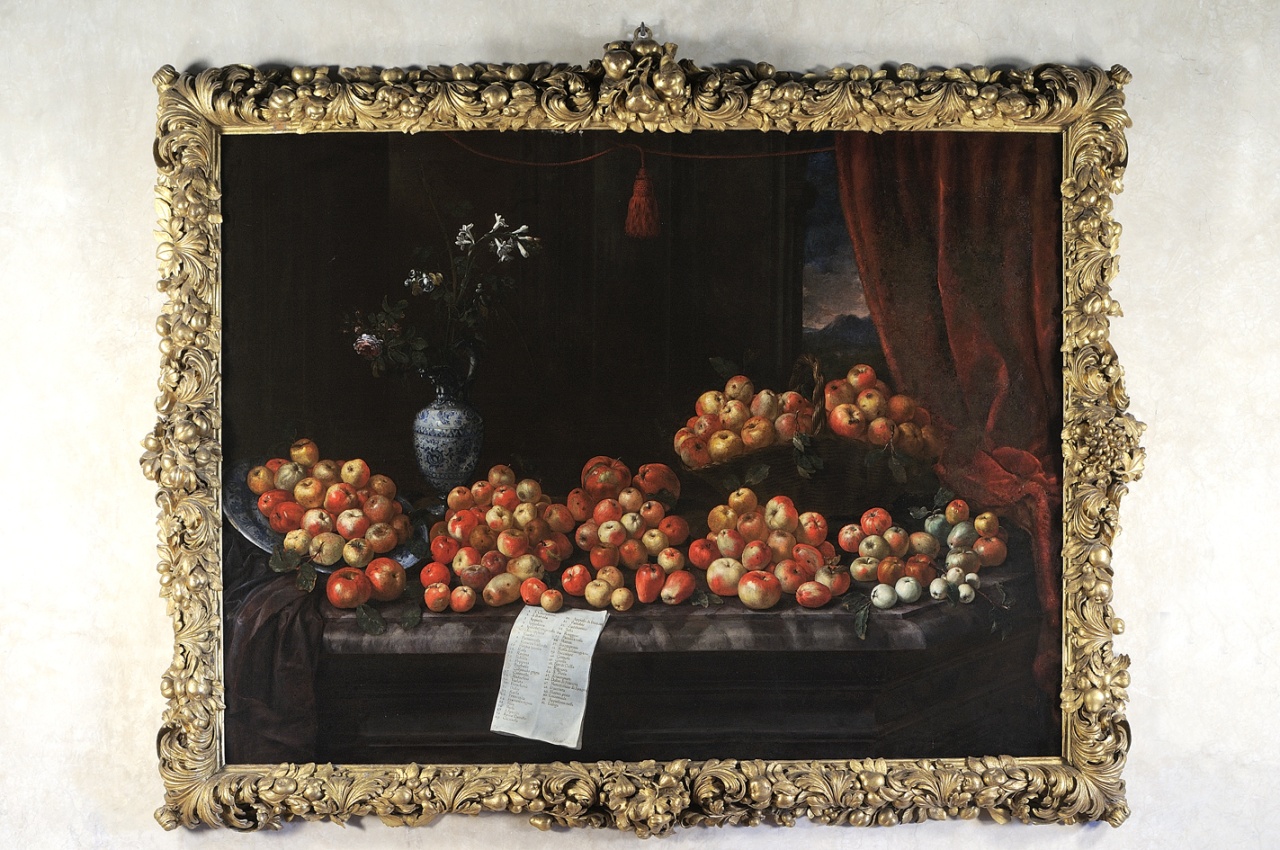
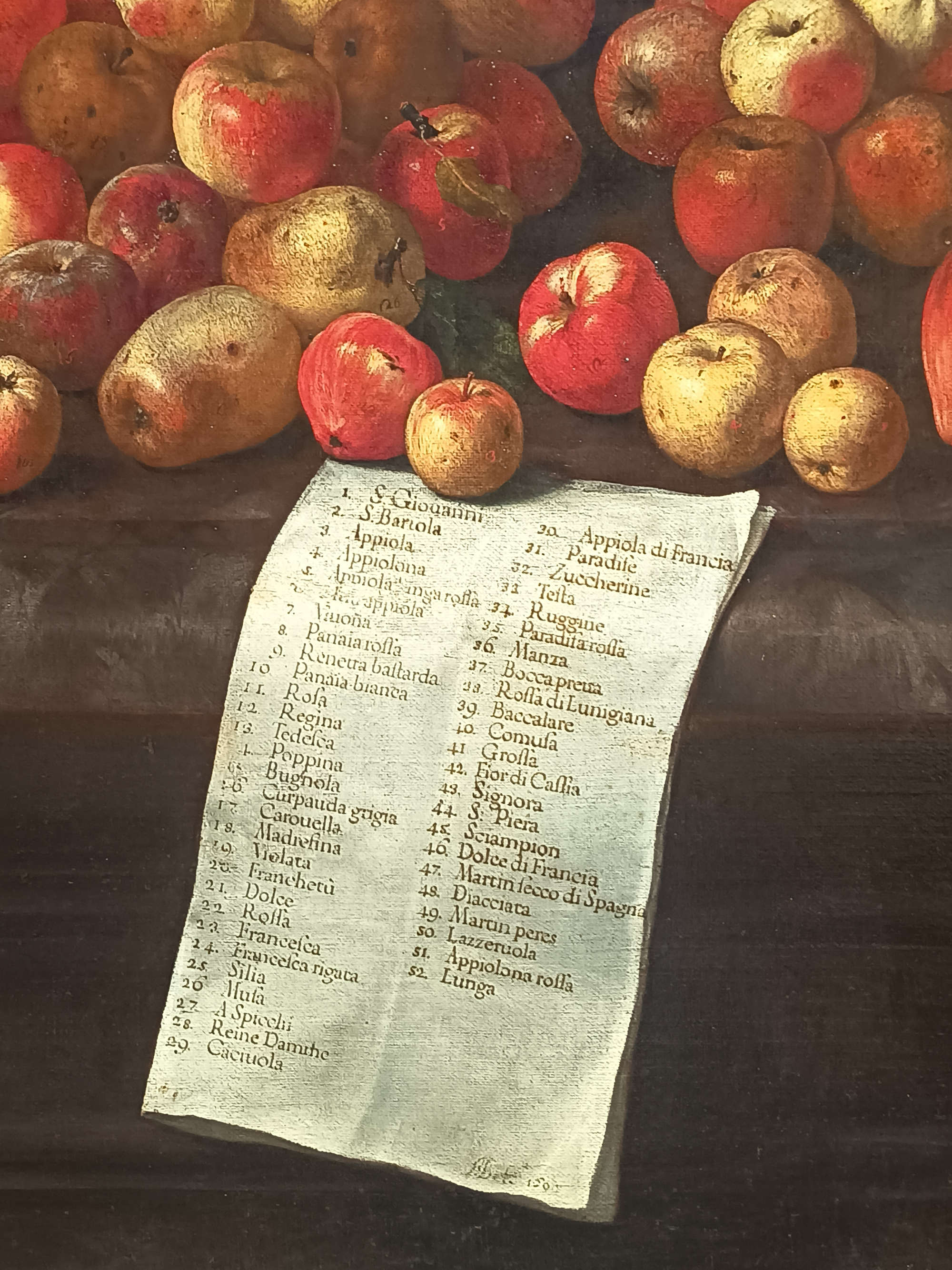
Taken in themselves, however, Bartolomeo Bimbi's paintings do not easily lend themselves to such allegorical readings, stubbornly maintaining that truthful, direct and sensual character born of direct observation of natural phenomena. The triumphs of apples, pears, plums, apricots, figs and peaches fascinate by their immediacy and intrigue with the scientific tone given by the exactness of the representation but, in no less a way, by the presence of very detailed cartouches bearing the names of each specimen. The whole still constitutes valuable subject matter for scholars of botany and food history (most of these fruits are no longer extant, or very rare) going fully to satisfy that ancient documentary need manifested by Cosimo III.
Contributing to the vitality of the compositions, which never take on the character of cold botanical repertories, are both contextual elements with a courtly and evocative tone (carved terms, fountains, richly carved furniture, etc.) and the constant presence of spoiled, open or rotten fruit, in contrast to the healthy specimens "which seem truly picked then from their plant." It is again Baldinucci who recalls, in this regard, a curious episode concerning the canvas dedicated to pears where, next to the luxuriant baskets full of fruits ordered according to seasonality, there were others "scattered about the earth and table broken, and half-soaked, and so beautifully colored and imitated in nature that they seem in truth palpable, and true." We thus learn that the grand duke used to pay Bimbi a so much per fruit (to be exact, two paoli) and that the painter, whose modesty was proverbial, made the count excluding those "that were figured on the ground above the broken, and defective boards." This bizarre attitude perhaps evoked in Bartholomew some memory of his shopkeeper father, but it must be said, to Cosimo's credit, that he was enjoined to redo the count by including everything, "even the other fruits, which were scattered and broken."
Of particular interest, finally, are the two canvases with Grapes, from the most classic Tuscan varieties such as Sangioeto (Sangiovese), Vernaccia, Trebbiano and Mammolo, to those from the rest of Italy such as the "Lacrima di Napoli Nera" (probably a clone of Piedirosso used for today's Lacryma Christi) and Zibibbo, but also ancient vines now rare such as Canaiolo bianco, Barbarossa or Abrostine. These ampelographic triumphs (from the ancient Greek àmpelos, "vine," and graphìa, "description") undoubtedly evoke the verses of Francesco Redi's famous Bacchus in Tuscany (1685), referring precisely to the vineyards that surrounded the Topaia (Ma lodato / Celebrated / Crowned / Sia l'hero / who in the vineyards / Of Petraja and of Castello / Planted first the Moscadello) but also the constant search for new grape varieties for the Castello estate, which, at the time of the last Medici, comprised nearly one hundred and fifty thousand vines, divided neatly among the twenty-five vines planted on the hill. The circle between artistic, scientific, naturalistic and agricultural interests comes full circle with Bimbi's Grappolo d'Uva moscadella picked at Castello in 1706 (Poggio a Caiano, Museo della Natura Morta) and the inevitable mention of the proclamation promulgated in 1716 by Cosimo III "sopra la dichiarazione di confini delle quattro Regioni Chianti, Pomino, Carmignano, e Vald'Arno di sopra," by which the legal, and cultural, basis of today's production regulations was laid.
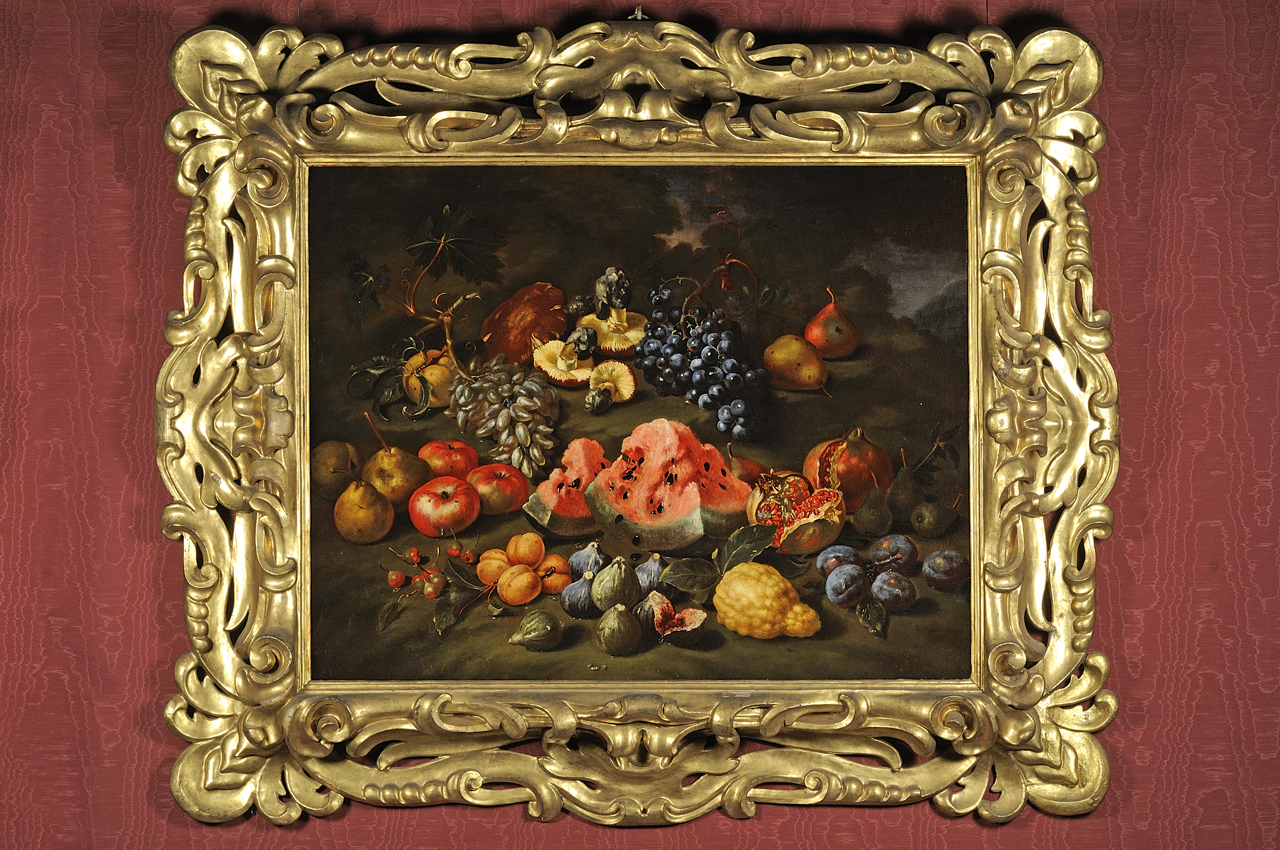
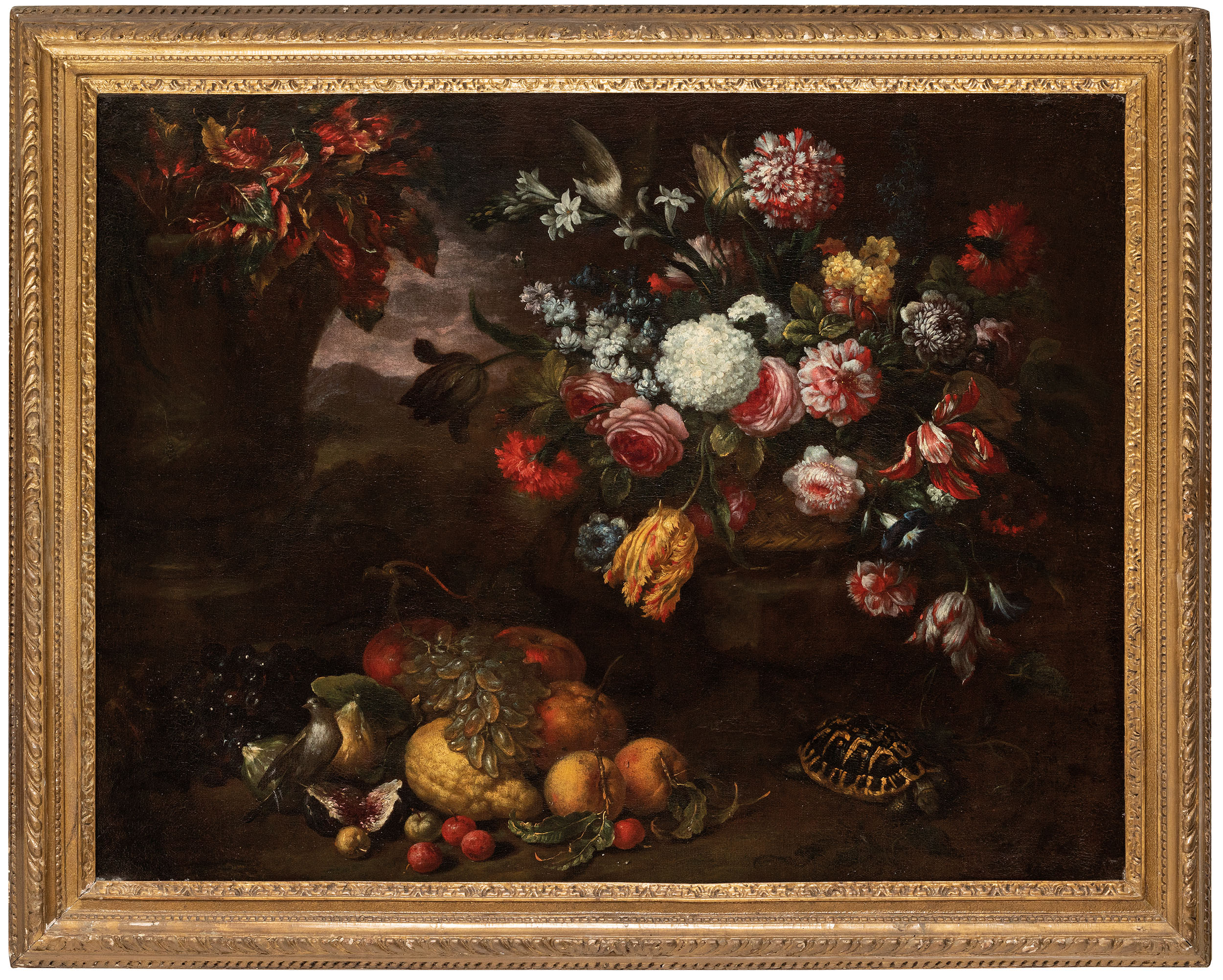
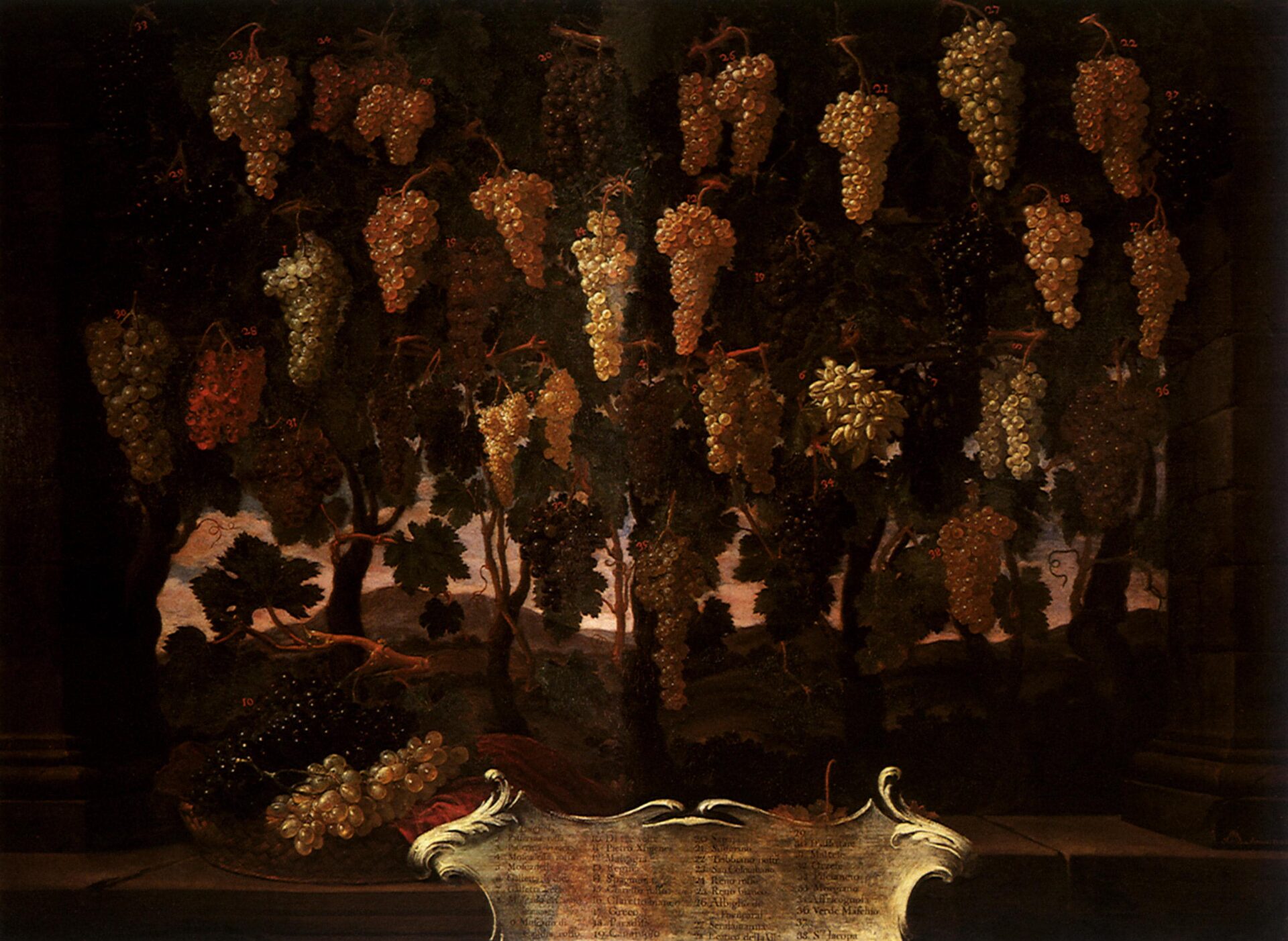

On the other hand, those who attempt to address a food-related discourse in Bimbi's paintings of wildlife and hunting subjects will be disappointed: although hunting is the leading motif of the works created for the Villa dell'Ambrogiana, located on the edge of the largest grand ducal hunting reserve (the Barco Reale), it is still the naturalistic interest in the inexhaustible variety of creation that prevails. Even in cases where the subject involves the depiction of dead animals, caught in hunting parties, the focus never falls on playful or gastronomic aspects; this is the case with the touching Dead Hare and Other Game (1720, still at Poggio a Caiano) where the focus is entirely on the gaze of the living hare, which seems to observe with a mixture of bewilderment and resignation its lifeless companion.
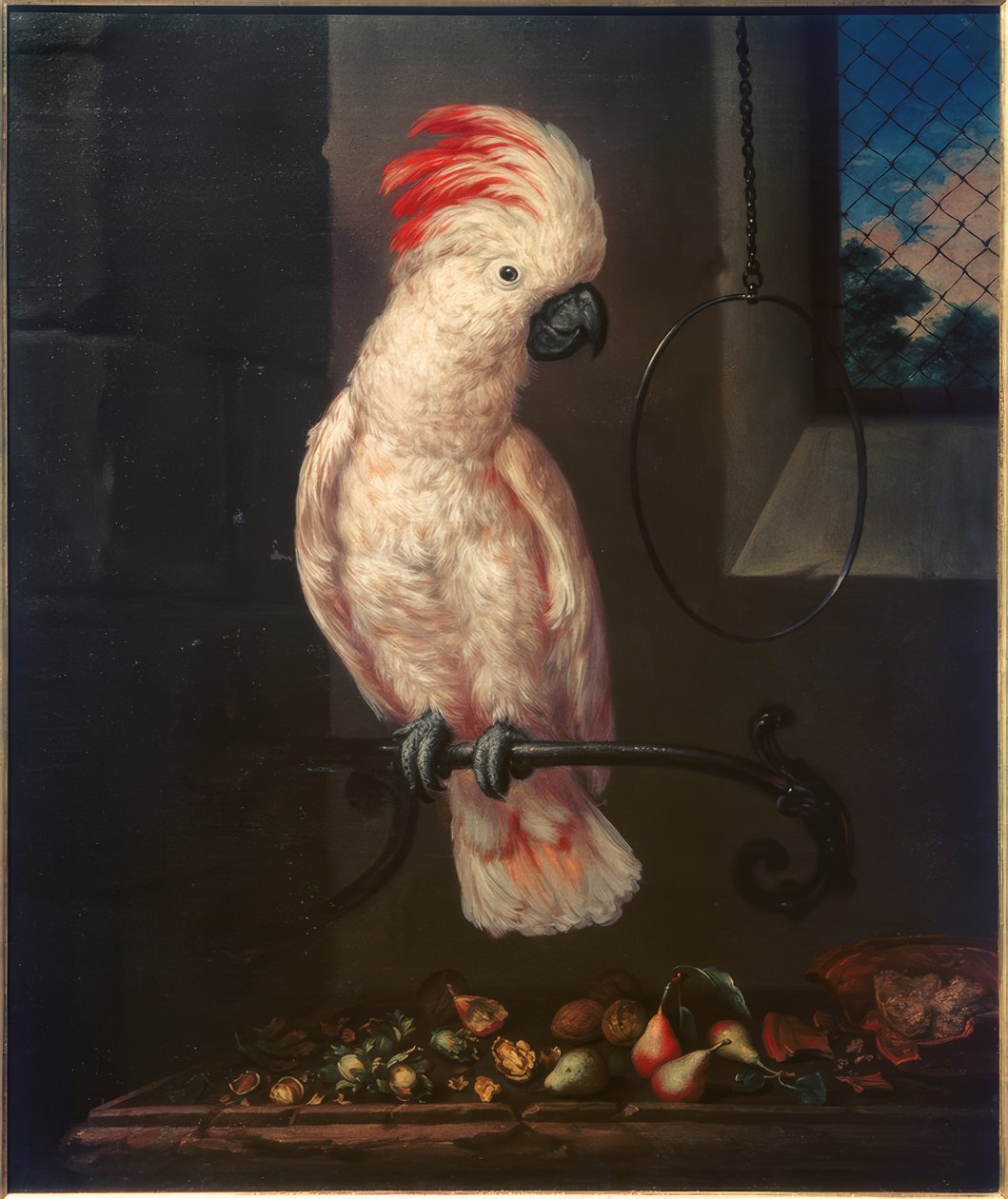
If game, or the numerous other animals, fish and birds painted by Bimbi, are never associated with the table or, more generally, with human nutrition, this is perhaps due to the "Pythagorean" diet, based on fruits and vegetables, suggested to the grand duke by Redi (and it must be said that Cosimo III died an octogenarian). However, the painter took, we do not know whether at the request of the prestigious patron or not, the opportunity to demonstrate, on several occasions, how the "Pythagorean diet" constituted the feeding of various animal forms. Such is the case with the beautiful White Parrot with Red Feathers of 1716, at the foot of which fresh and shelled fruits are depicted, which, already in the Guardaroba Journal of the period, were clearly identified in their function: "plus pears, walnuts, and hazelnuts which serve to eat the said parrot."