





What is Baroque? It is an attitude, and as such it transcends time, becoming a category. This is argued by Cristina Acidini, one of the curators of the exhibition recently opened at the Museo Civico San Domenico in Forlì. If we no longer think of the Baroque as the main movement of the seventeenth century, as a style germinated from the roots of Mannerism and capable of representing the spirituality of the Counter-Reformation, the great revolutions of the seventeenth century and the anxieties of that century, then its chronological terms can extend into the past and the future, and the exhibition itinerary can thus develop along a timeline that goes from the second century A.D. to our contemporary times. The Dead Persian and other Hellenistic-era sculptures from the National Archaeological Museum in Naples and displayed in the introductory room obviously cannot be called Baroque, nor can Fausto Melotti’s ceramics and Lucio Fontana’s sculptures, yet these works share with Baroque the tension toward wonder, excess, illusion, and theatricality.
We decide to tell you about the Forlì exhibition (whose goal is basically to restore the Weltanschauung, the “spirit of the time” of the seventeenth century) starting precisely from the final rooms, since on paper the juxtaposition of twentieth-century art and the outcomes of the Baroque could have raised quite a few perplexities. But instead... Fernando Mazzocca, curator of this section, recalls how the Baroque was rediscovered in the German world in the early twentieth century (especially with Nietzsche and Wölfflin) and that to the reconsideration in Italy of seventeenth-century art (until then despised because irregular, bizarre, extravagant) strongly contributed to a “mammoth review” promoted by Ugo Ojetti that, in 1922, gathered more than a thousand works at Palazzo Pitti in Florence, in an itinerary that saw its fulcrum in the room dedicated to Caravaggio. In the same year an exhibition that focused on the figurative scene of those years was mounted, again in the Tuscan capital: it featured Baccio Maria Bacci, with his Caravaggio-like suggestions, and Armando Spadini, with his synthesis of Impressionism and the Italian seventeenth century. Still in 1922 in the pages of the magazine Valori Plastici a sort of “inquiry into the seventeenth century” was outlined, and critics began to trace Baroque components in the then contemporary languages: Massimo Bontempelli “saw in Futurism the last manifestation of an experimental vocation that began with the Baroque” (Mazzocca writes this in the catalog, on page 139), for Venturi Caravaggio “left an artistic legacy for the not-so-distant future,” while for Longhi Boccioni’s spatial dynamism derived from Bernini. De Chirico, after an initial rejection of the Baroque, from 1938 was blatantly inspired by Velázquez, Van Dyck, Rembrandt, even self-portraying himself in seventeenth-century costume.
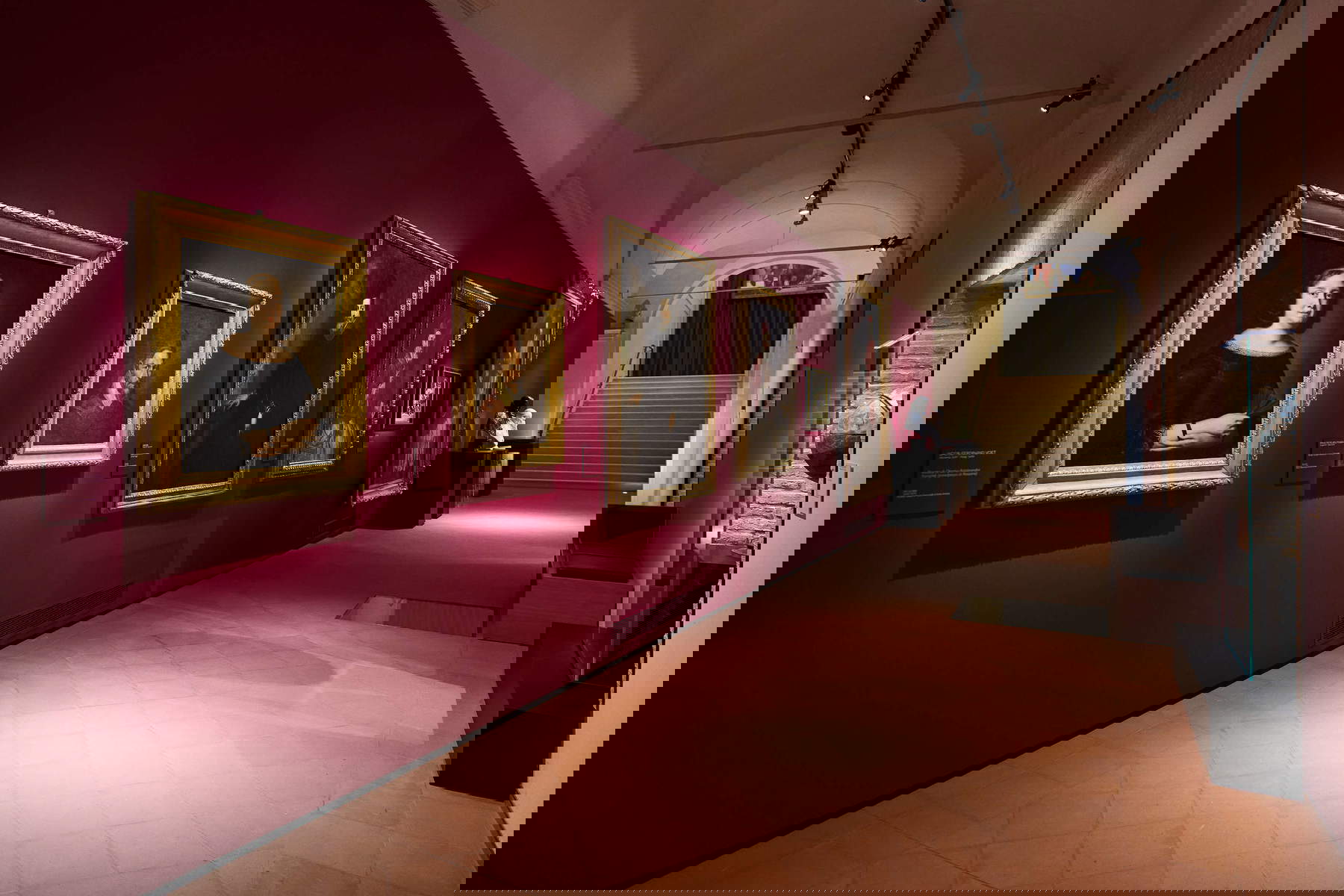
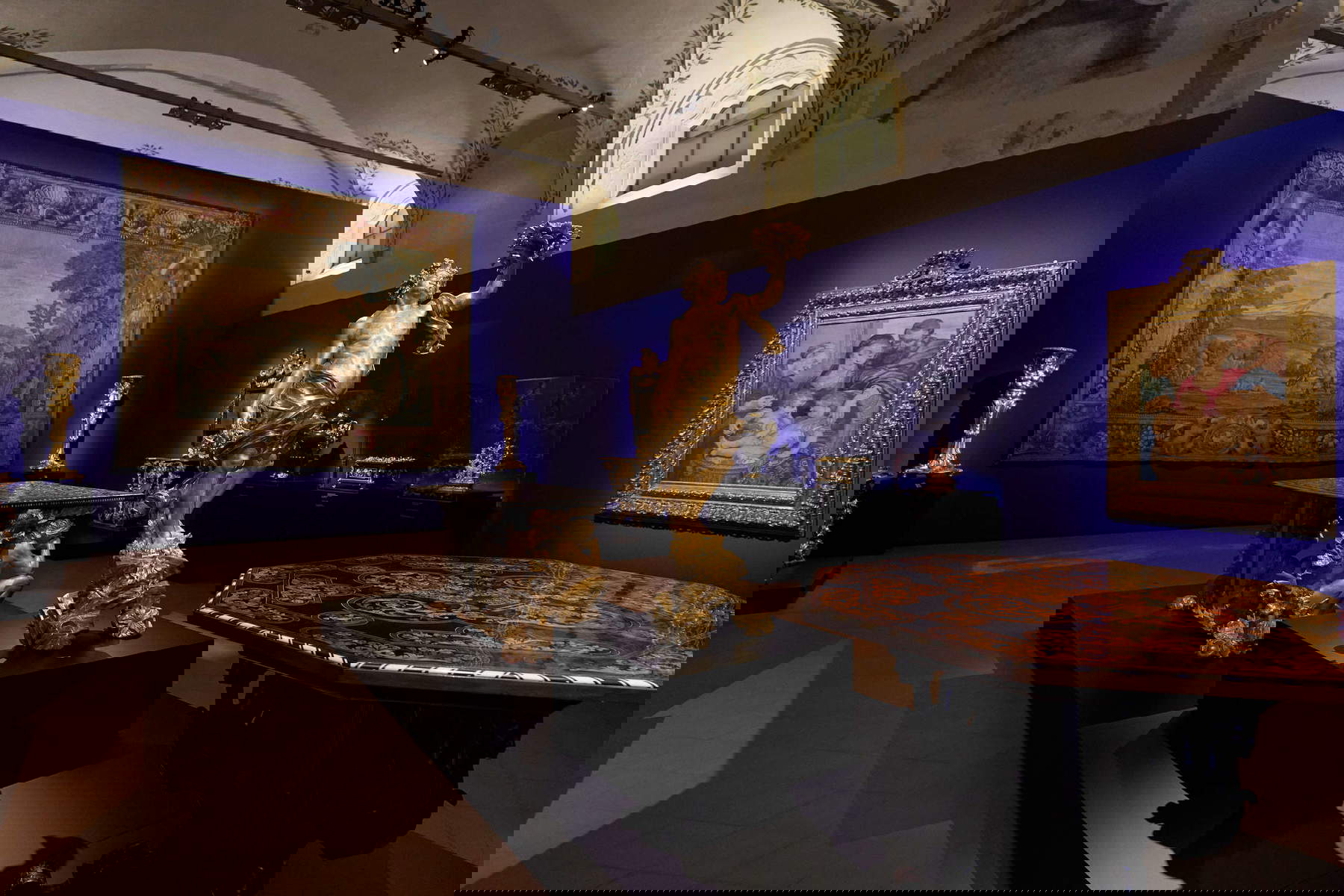
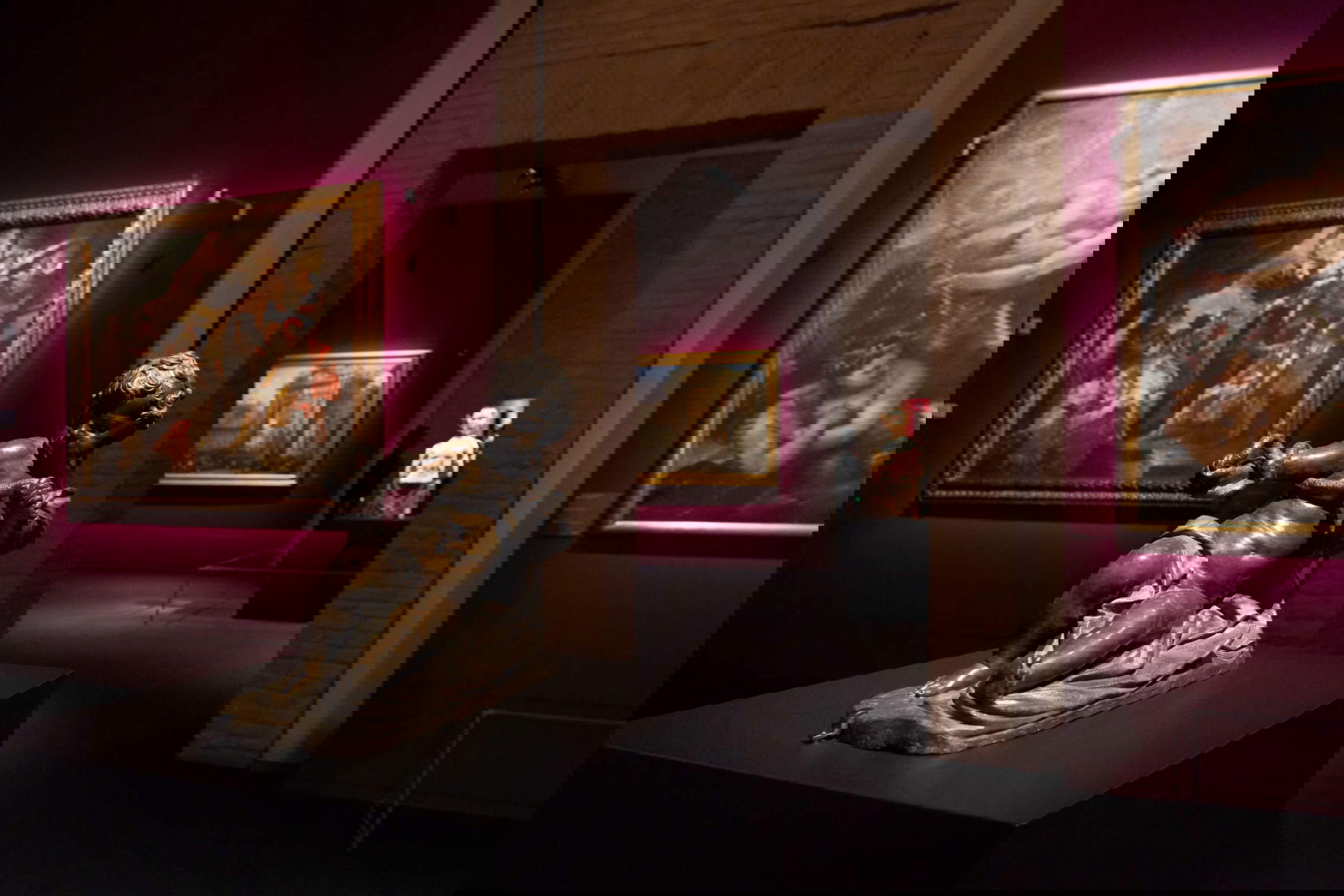
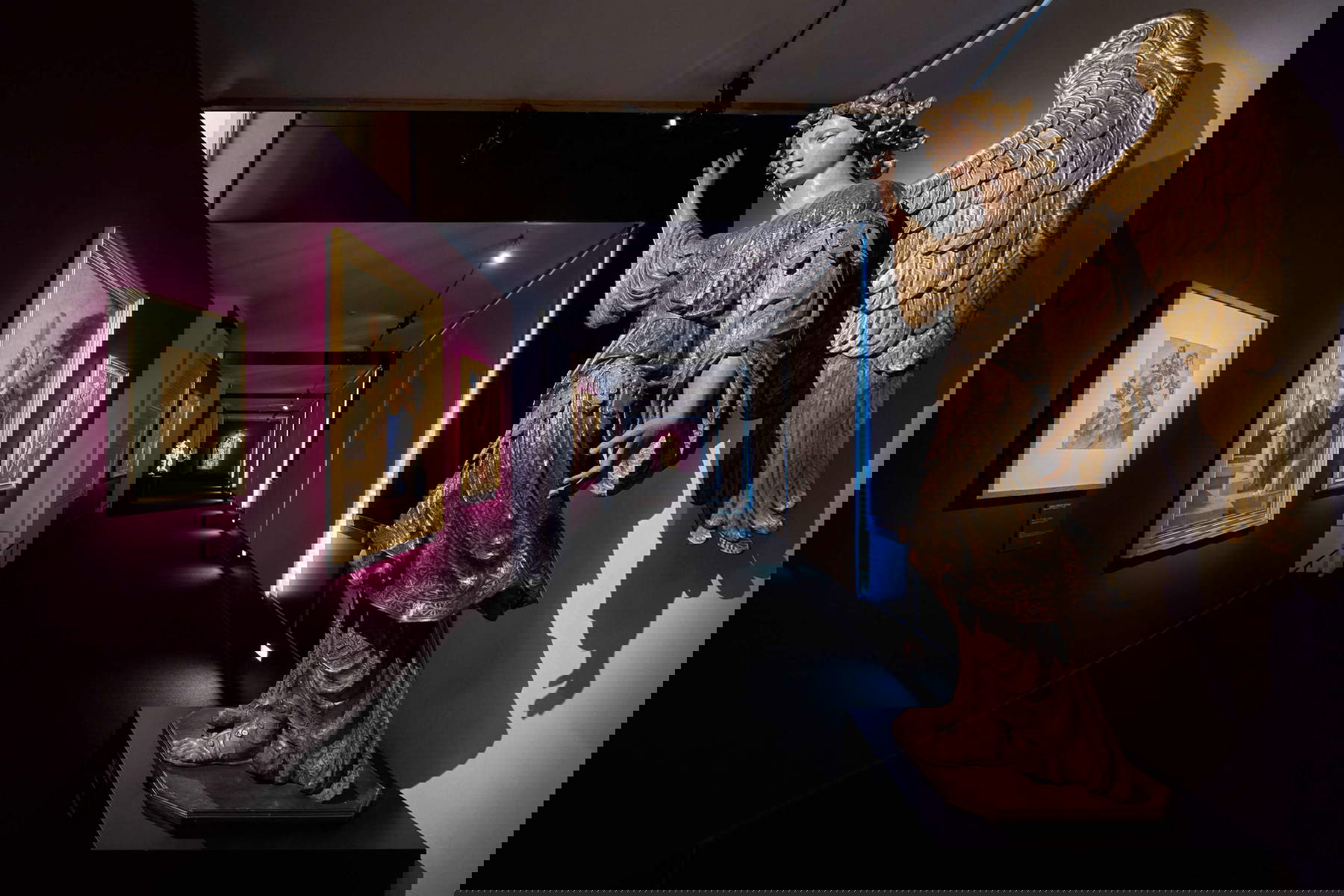
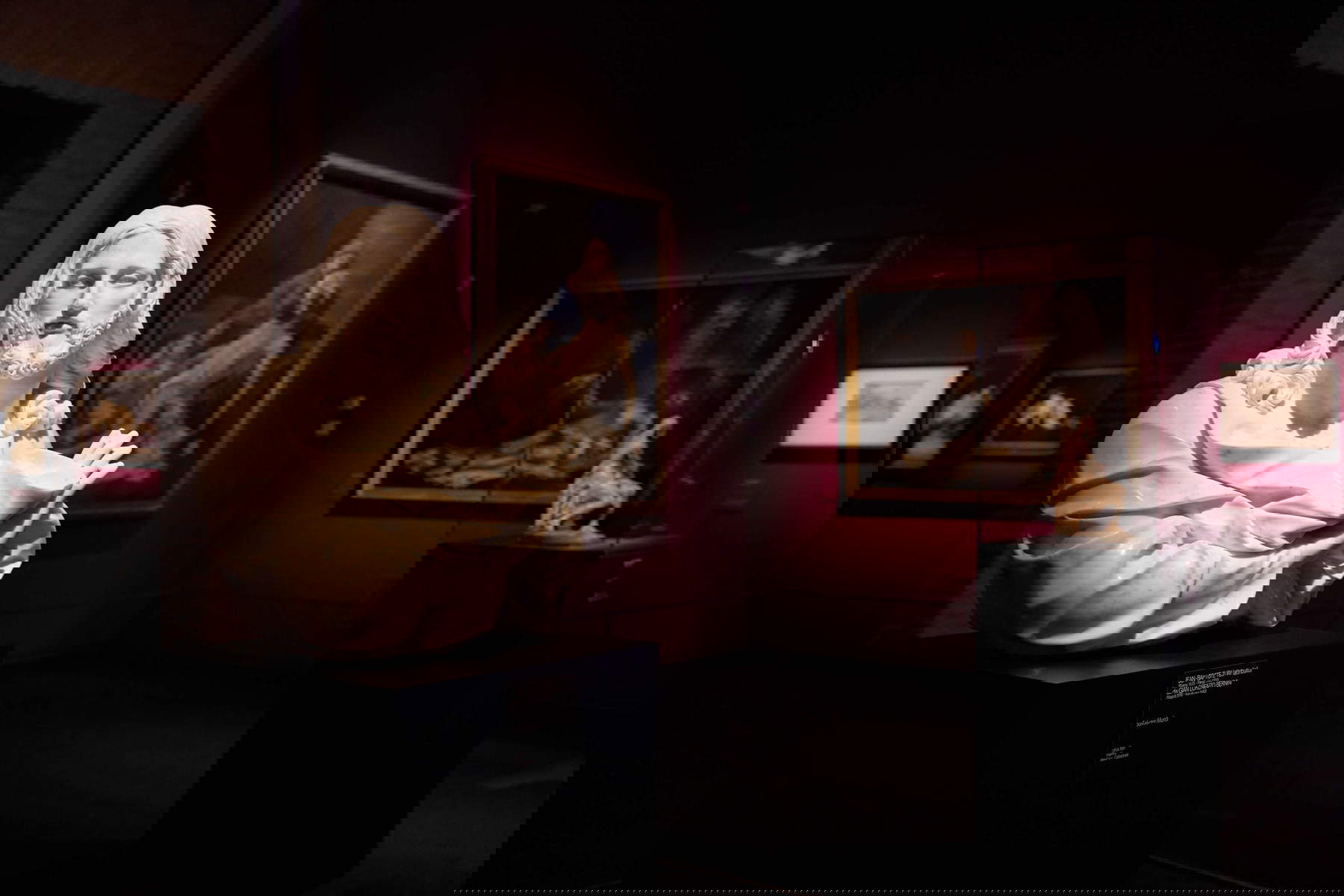
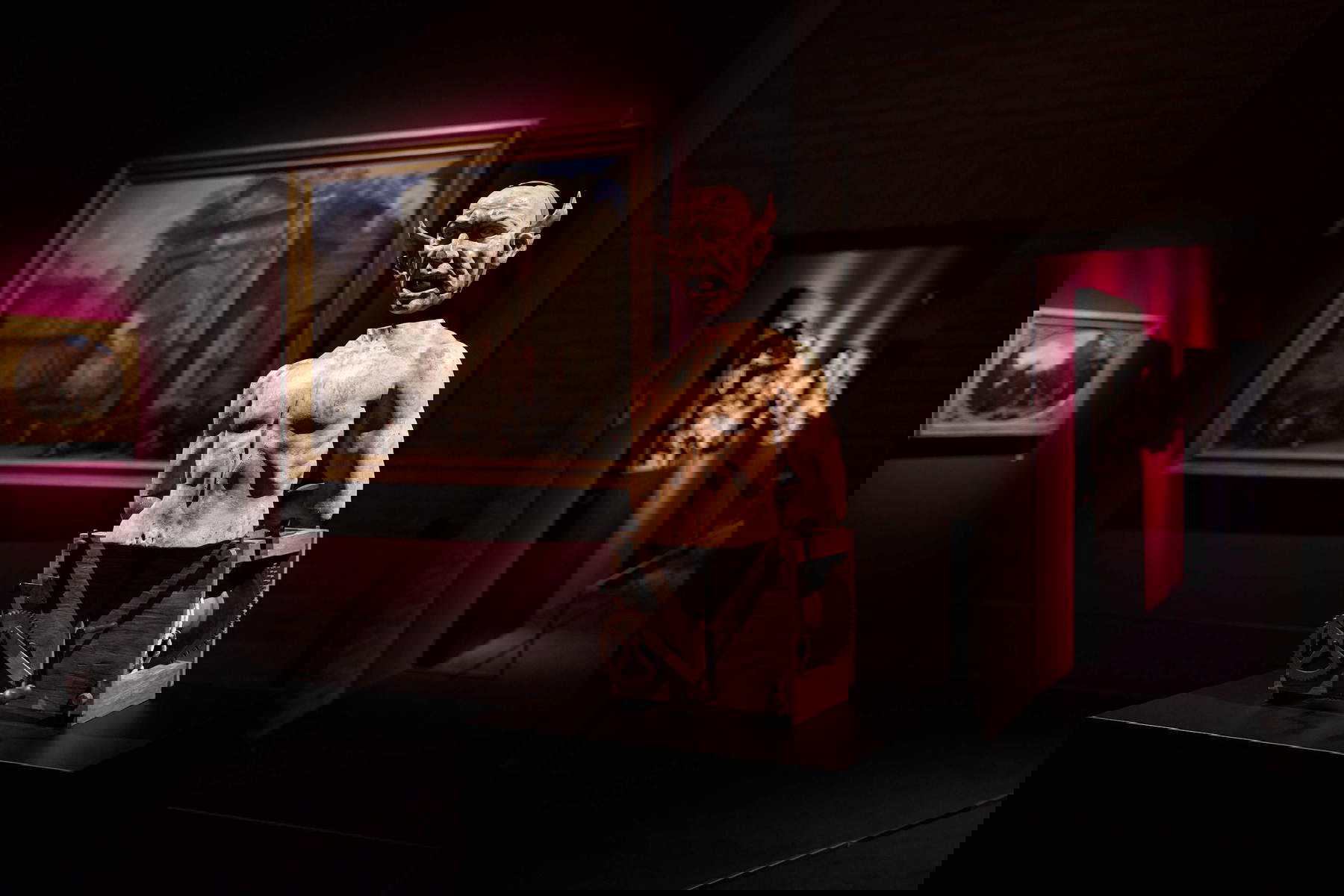
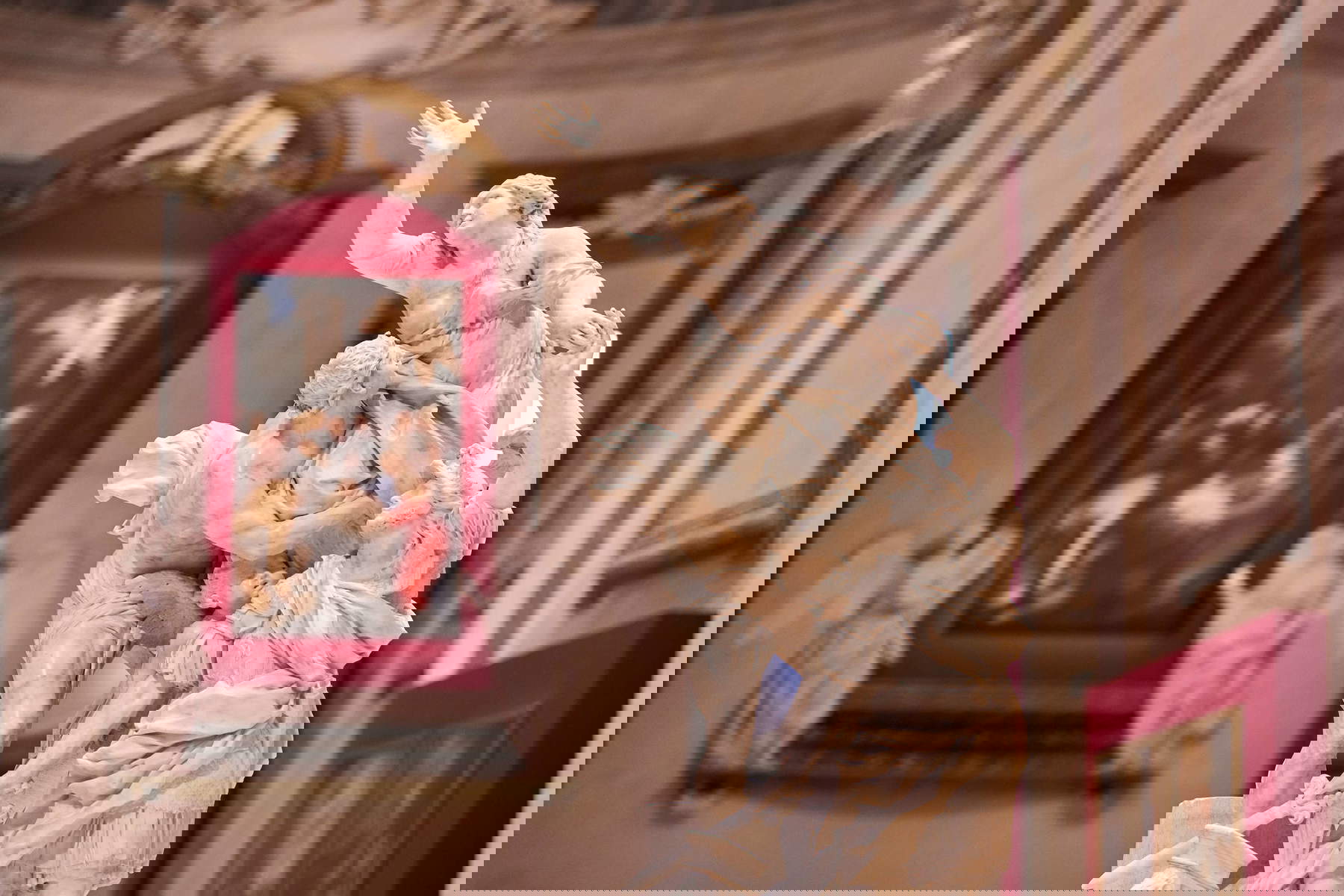
On the basis of this established critical story, a particularly convincing selection of twentieth-century works was made in Forli: Ettore Tito’s 1921 Bozzetto per Aurora looks like a Lanfranco turned on with vivid colors; Wildt’s Santa Lucia (1925-1927) cannot help but bring to mind the typically Baroque Saints in Ecstasy, to which a dedicated a section of the exhibition, Afro’s Still Life of 1937 recalls the paintings of Evaristo Baschenis (his is a painting placed on the ground floor), Leoncillo’s Trophies of 1941 could not be more Baroque than that. But the correspondences between Baroque and twentieth-century art cross the mid-century divide: one senses this when looking at Fausto Melotti’s ceramics and even more so at Lucio Fontana’s plaster casts for the 1950 competition for the Milan cathedral door, which seem to be traversed by the same “plastic and dynamic fury as Bernini,” Mazzocca writes. It is the founder of Spatialism himself who declares the debt to the past: “Space is represented with greater amplitude each time during several centuries. The Baroque artists have made a leap in this sense: they represent it with a grandeur not yet surpassed and add to the plastic the notion of time” (he wrote this in Manifesto Bianco of 1946). An artist contemporary to us, Giuseppe Ducrot, also makes an appearance in the exhibition, but the grand finale is appropriately reserved for Francis Bacon’s Pope (Study of the Portrait of Innocent X by Velázquez) (Argan sees the artist as a “Baroque painter”): Obsessed with the figure of the pontiff, the artist in his series slowly transfigured the likeness until he superimposed those of Pius XII, thus rendering a portrait of the present, as Elena Lissoni points out in the introduction to the room Last Visions. It will be interesting to compare this Forlì section with the exhibition scheduled in Francavilla Fontana (Brindisi), with the title Baroque and Neo-Baroque from Rubens to Fontana.
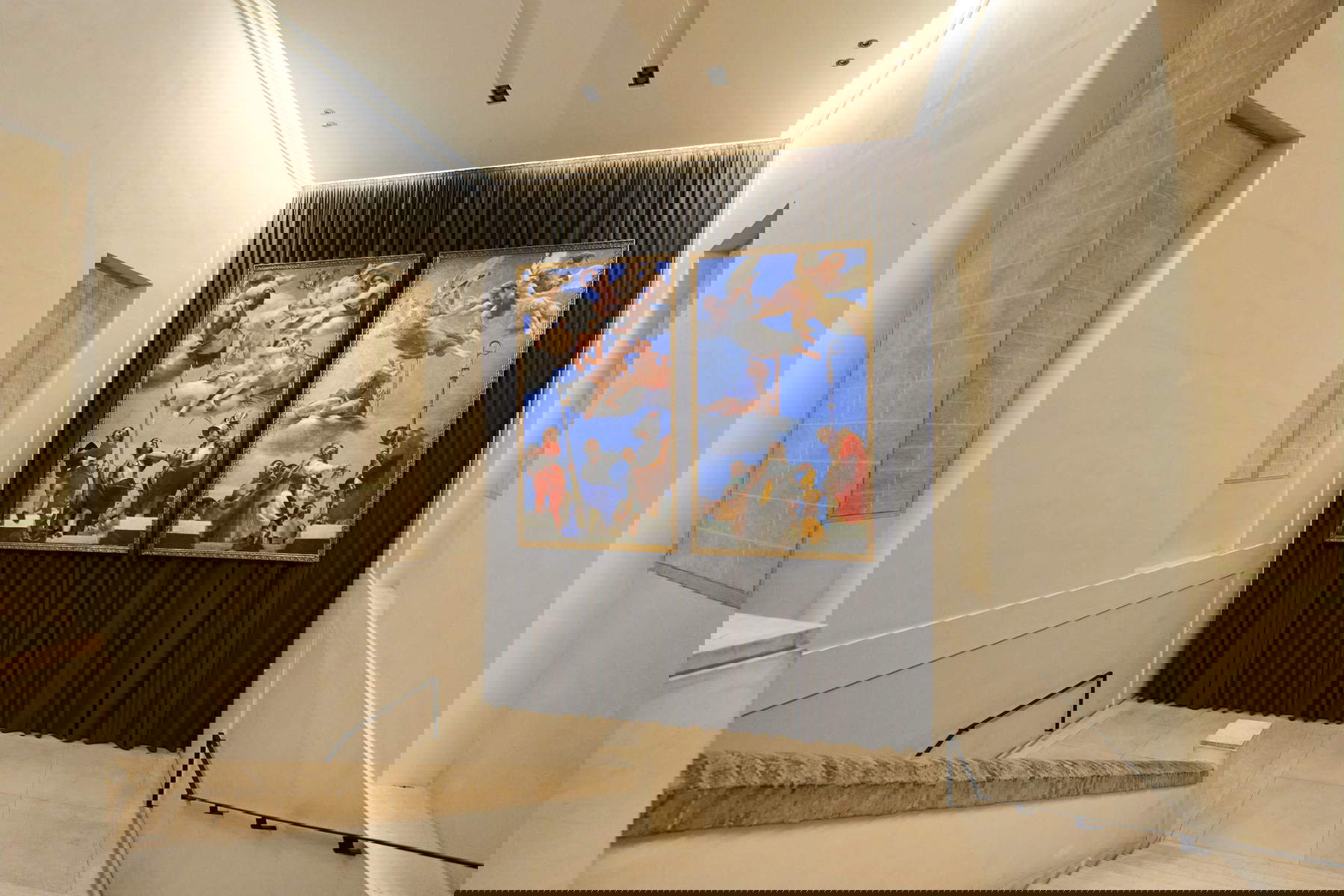
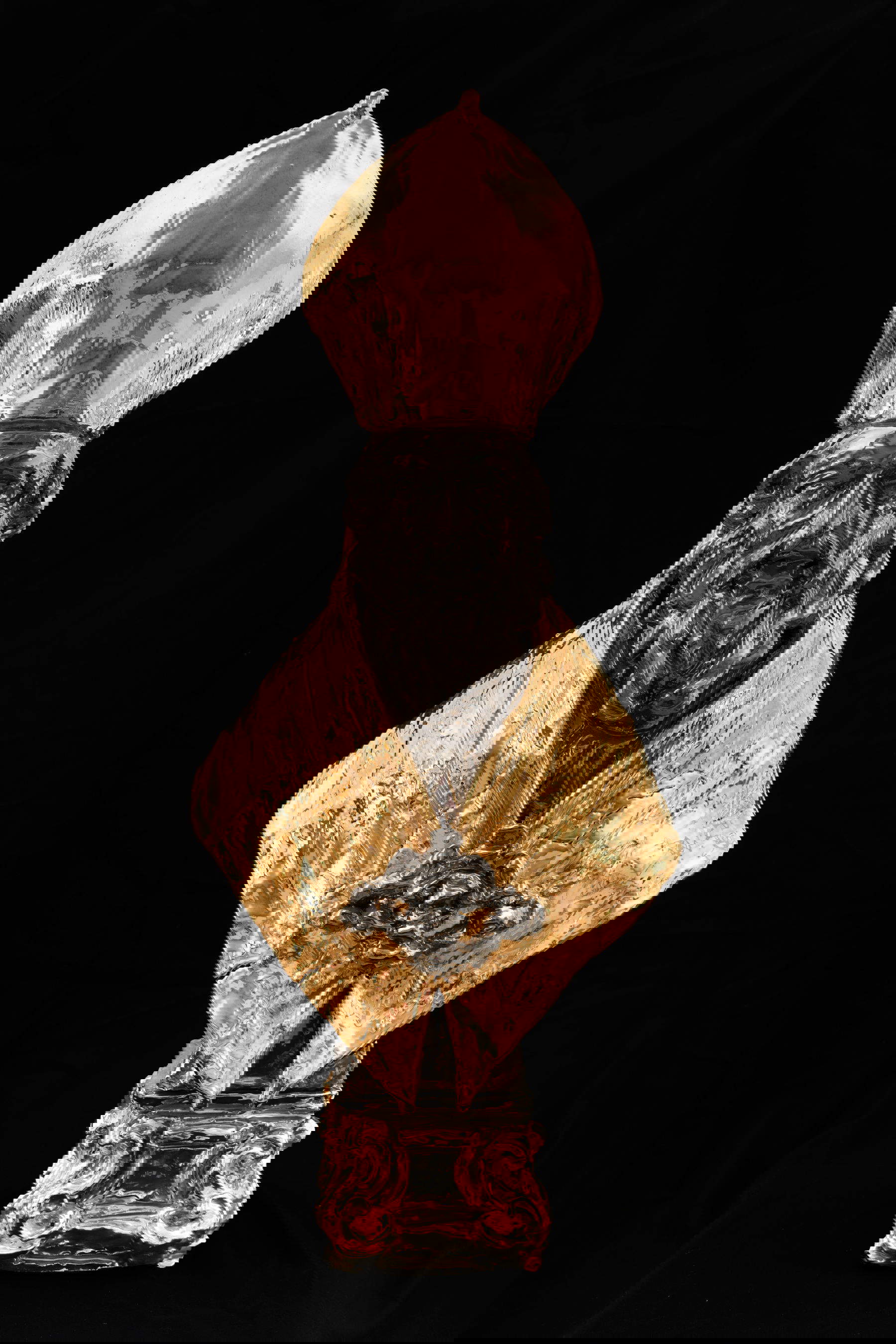
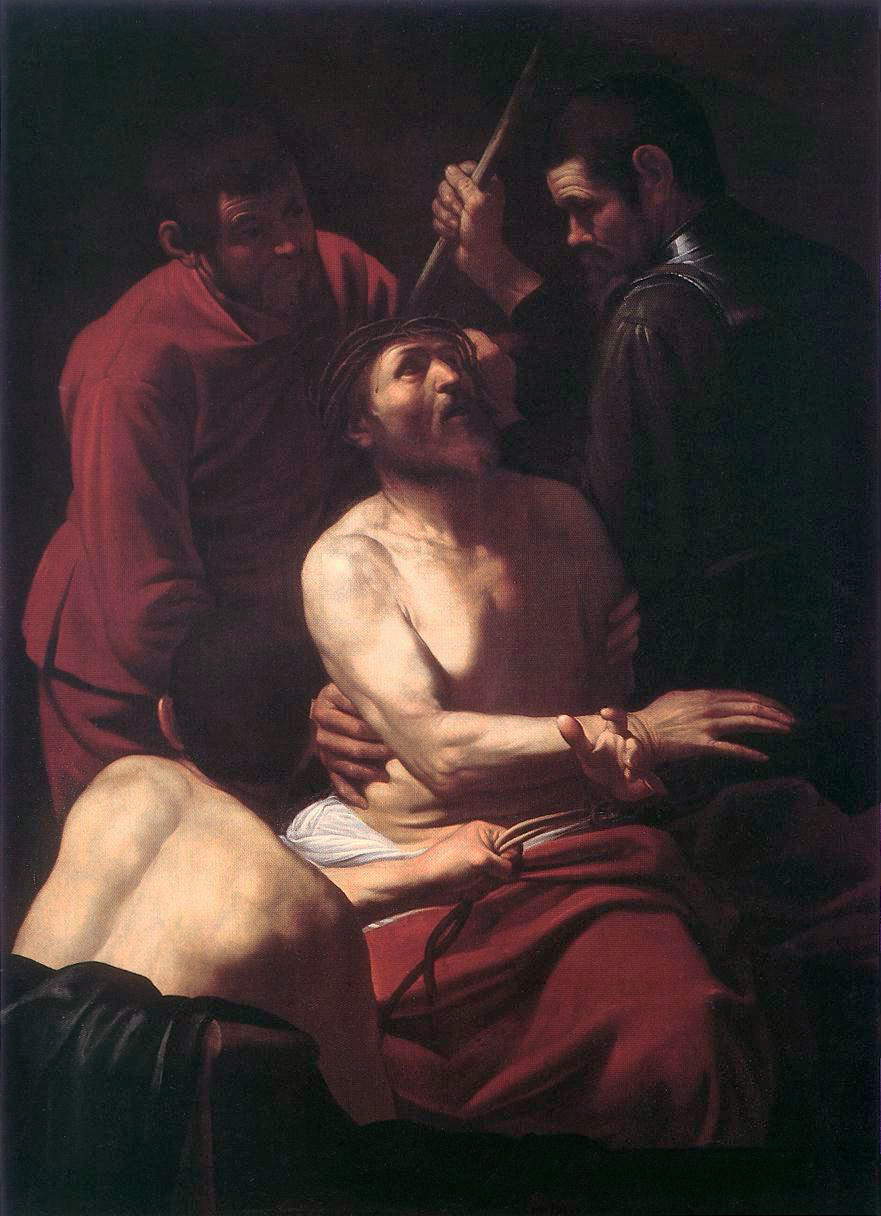
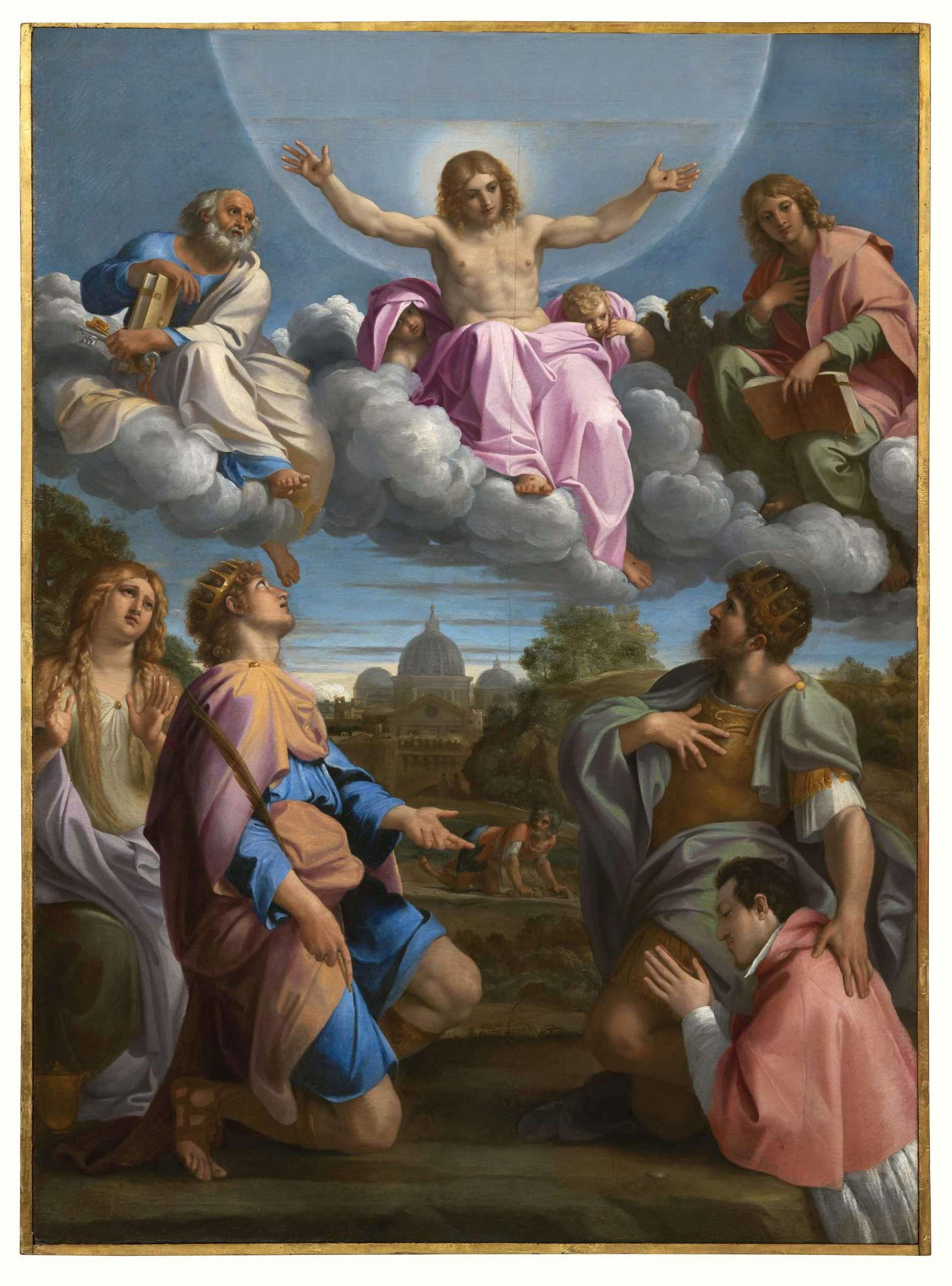
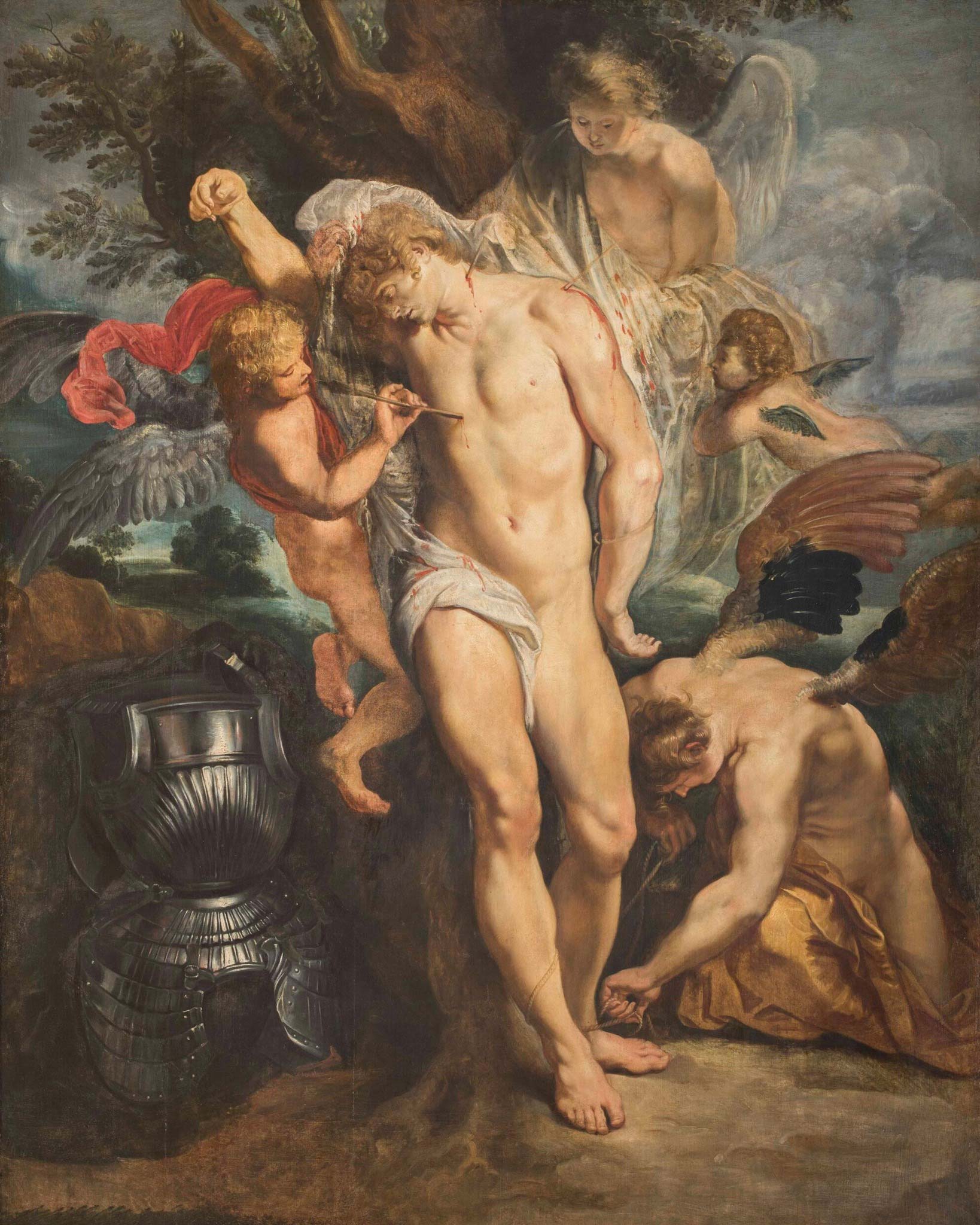
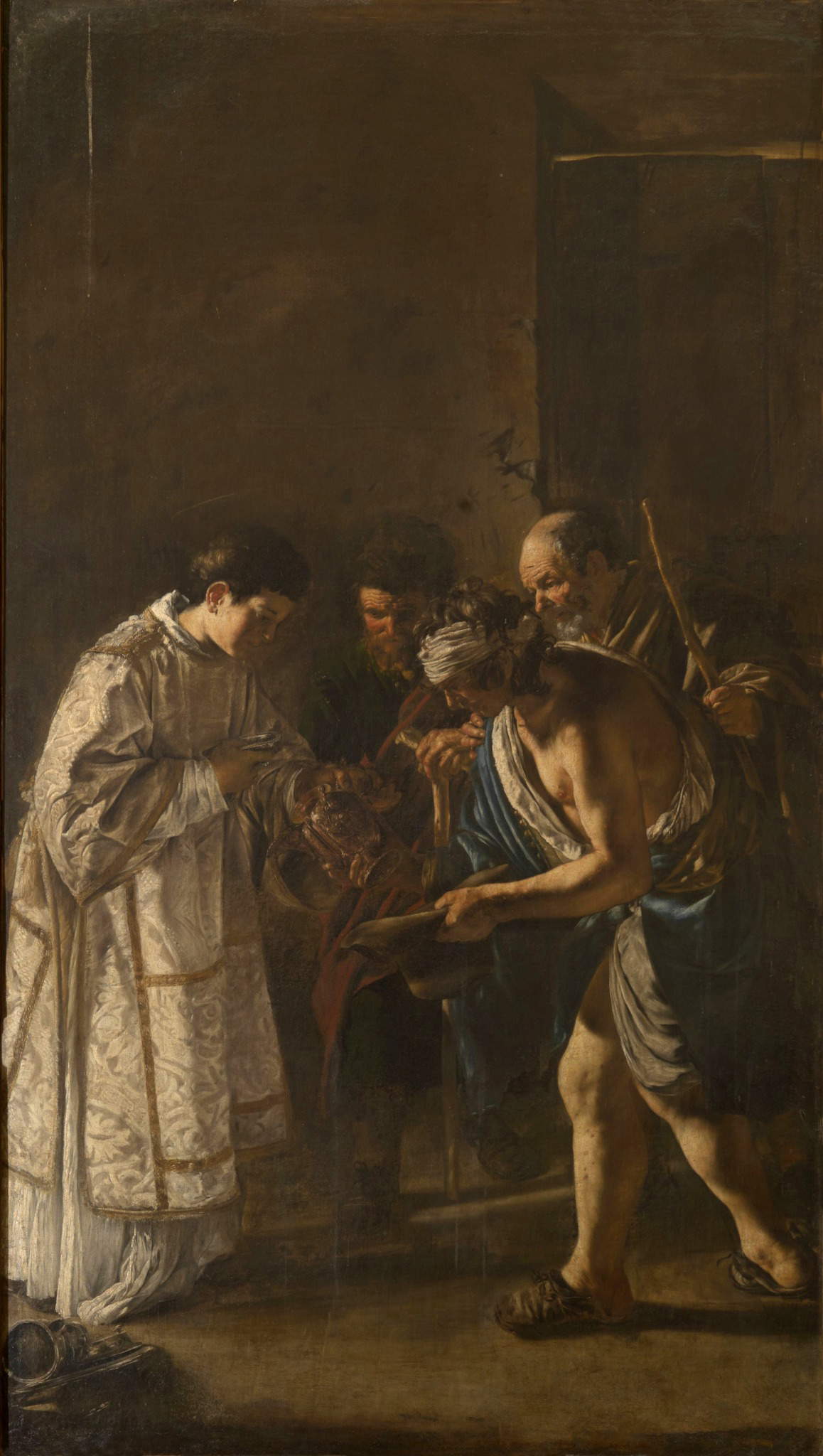
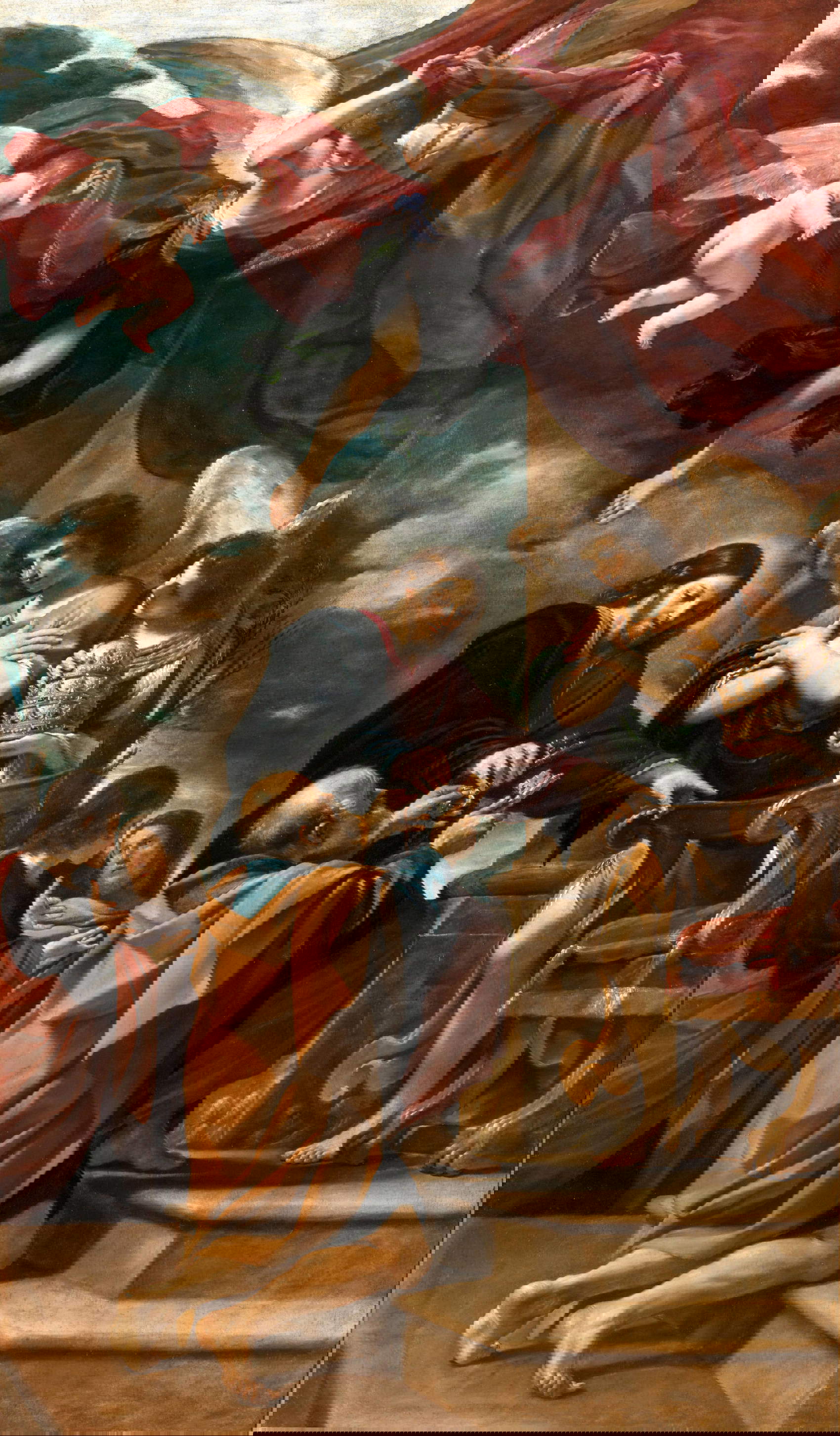
But it is time to go back to the beginning, to walk through the environment of the former church of San Domenico where, as always happens in Forli projects, we are confronted with the “hero” paintings of the exhibition: for example, Caravaggio’sCoronation of Thorns from the Banca Popolare di Vicenza, Annibale Carracci’s Christ in Glory, Saints and Odoardo Farnese from the Palazzo Pitti, Rubens’ Saint Sebastian Freed from the Angels (from the National Galleries ofancient art in Rome), Giovanni Serodine’s extraordinary Elemosina di san Lorenzo from Casamari Abbey, and then Guercino’s Consegna delle chiavi a Pietro, Pietro da Cortona’sAdorazione dei pastori, and Baciccio’s canvas with the same subject. A digital work by Quayola also pops up, but among the daze of seventeenth-century masterpieces it goes somewhat unnoticed and risks being taken with a didactic apparatus.
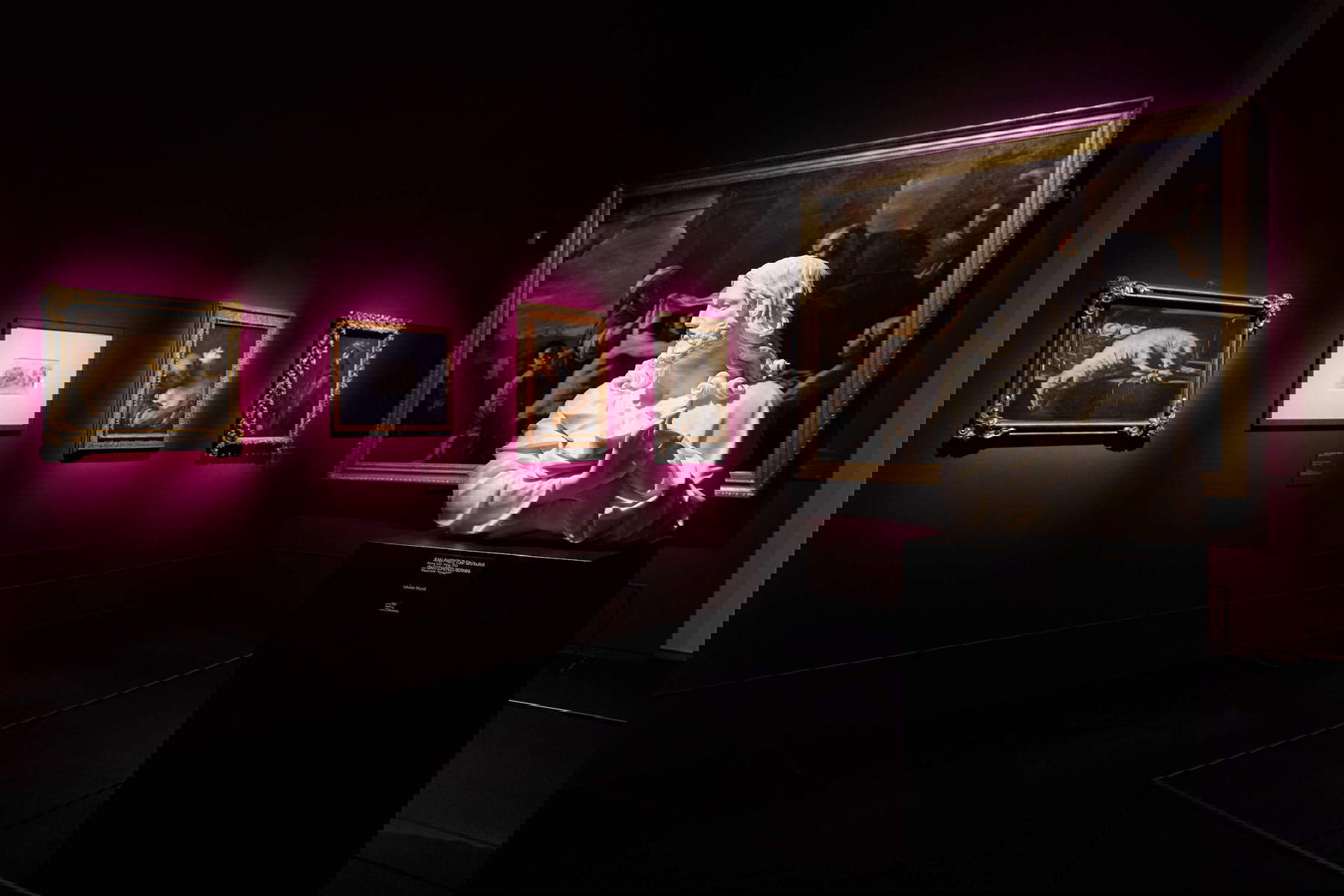
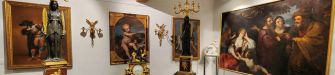
The itinerary then gets into the thick of things with an overview of art and architecture in the Rome of the popes, that is, in the cradle of the Baroque: the projects of Borromini and Bernini are, of course, evoked through their studies (one discovers Bernini the painter), sketches and drawings, to which are added those of another indispensable exponent of the Baroque, Guarino Guarini. Plans for the ephemeral apparatuses (Johann Paul Schor was its master) with which capitals were lavishly adorned at coronations, weddings, and funerals are then recalled, while the painting side presents sketches of dizzying and illusionistic ceilings, such as those by Andrea Pozzo. Very interesting is the section on the portraits of the protagonists of the Baroque era and the relationship between men of power and the artists in charge of rendering their effigies (also in Forlì, as happens in exclusive terms in the current exhibition at Palazzo Barberini in Rome, Bernini’s relationship with Barberini and with Pope Urban VIII is emphasized, but also that of Velázquez with Innocent X). It is a pity that it lacks an original work by the greatest portrait painter of the time, Antoon Van Dyck, whose copy of the Portrait of Quentin Simons is on display: perhaps the Genova monograph about to open has concentrated all the “lendable” works in that project. Very scenic is the selection of furnishings and objects of applied art, functional in stuffing the courts and aristocratic residences of that time with ceremonial pomp.
Still on the ground floor is a review that goes under the title “The Changing Vision of Things” and investigates the transcending of genres and the many and diverse translations in the languages of’art of such subjects as time, with allegorical paintings and objects capable of combining technical wonder and spectacularity, such as theAutomaton Clock in the shape of an elephant; and then still life, Galilean discoveries that open up prospects of infinite worlds, the first appearance of modern science and music.
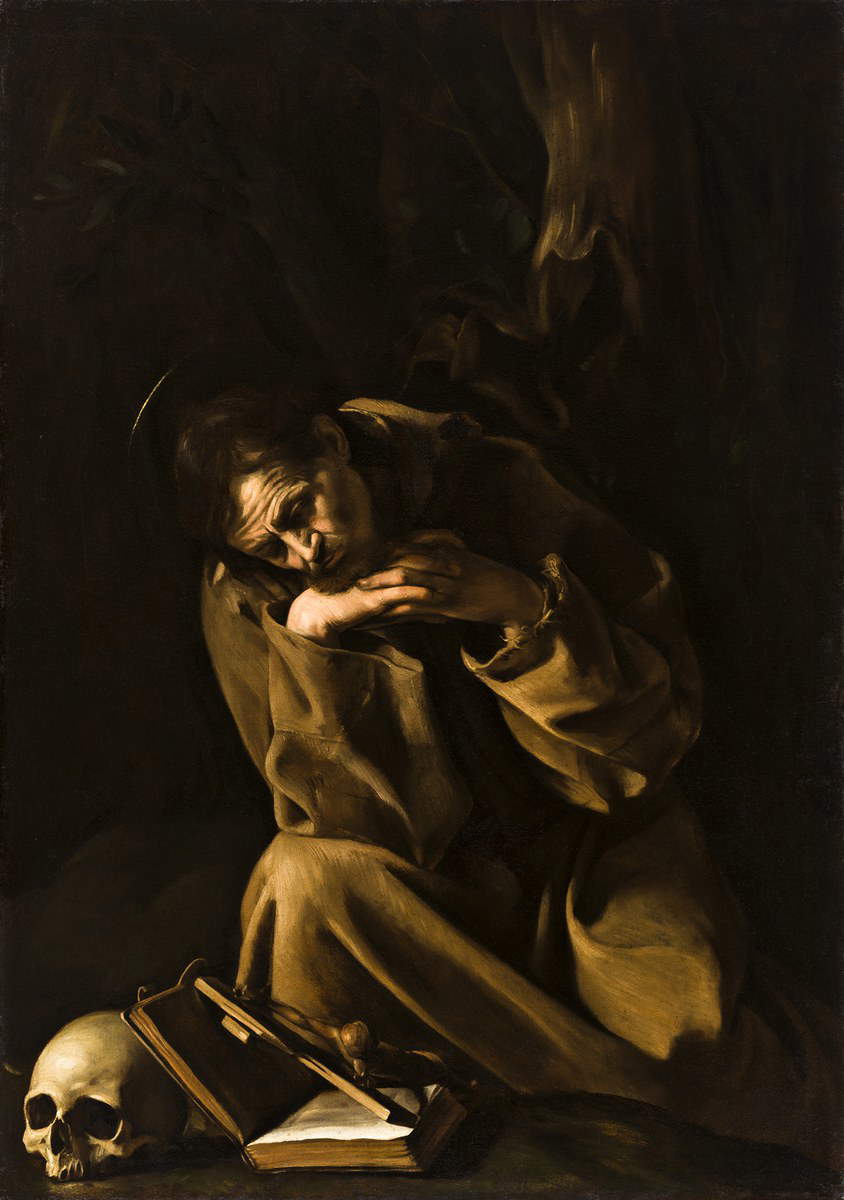
And upstairs, between the first and last parts of this exhibition, what is there? A large number of canvases and sculptures divided by themes that deal with mystical visions (we mention only two works, Caravaggio’s St. Francis in Meditation and Zurbarán’s Christ on the Cross ) to the traces of the ancient legacy and its myths that the seventeenth century translated into the form of allegory, making art a text to be deciphered. We then come to a nucleus of works that focus on the poor and marginalized, already protagonists of the Caravaggesque revolution and later favored by bamboozlers. Inevitably, there is a section on devotion and the demand on artists by post-Tridentine religious patronage to produce works capable of persuasion, arousing emotion and identification. Concluding the properly seventeenth-century part of the exhibition is a focus on the spread of Italian models among artists in other European countries.
Looking at this vast ensemble, one might note that some authors would be more comfortable in the category of “seventeenth-century” than “baroque”: think, for example, of the “bamboccianti” or of Caravaggio himself and his Caravaggisti followers. But it is Gianfranco Brunelli who explains such a wide-ranging design choice thanks to a deep and incisive speech, which we transcribe: “An impossible test was needed, that of a synthesis. Really arduous test to make synthesis of what has no synthesis, to bring to a synthetic reading, possibly homogeneous, what is contradictory, what has within itself different souls. This was the figure on which we moved, not out of ambition, but because only synthesis made one see the internal contradiction. Only the idea of synthesis carried with it the element of multiformity. This is the Baroque game, the game of allegory, which is the hallmark of the Baroque. There is a definition, a place, a space, an image, but the interpretation of that image is not unambiguous, it opens to a much more refined rhetorical discourse, which tends to be infinite.” And that is what the contemporary does with the past, because each present re-reads its own past, selects it, chooses it. “So the Baroque is also the cipher of contemporaneity, it is the cipher of consciousness, it is the cipher of the epiphany of the divine in the time when the divine seems to be no more ... here again is an allegory. That’s why we wanted the Baroque, because we sought the synthesis of what cannot be synthesized. You see them as different [nda: the masterpieces gathered in the first section], and how they are all internal to this movement. The restlessness of form, that is the Baroque. Which is the restlessness of art, of life, of the artist.” Multiformity, allegory, infinity, restlessness: sometimes four words and two and a half minutes of explanation are enough to understand an exhibition.
Such a vast review, on the other hand, inevitably leads one to think about “what is missing”: for example, landscape painting, that of Domenichino, Paul Bril and other artists who intertwined their works with the new idea of the cosmos that arose after Galileo’s discoveries, is almost absent. Some geographical areas are poorly represented, for example Venice, probably too “anti-Roman,” while Rome (of course), Tuscany and Emilia Romagna are favored, thanks in part to curators who are specialists in those territories. Speaking of Veneto, Giambattista Tiepolo, for example, is missing, often referred to as “the last of the great Baroque painters,” but in this case perhaps Roberto Longhi’s critique of the eighteenth-century painter’s presence in the 1922 review weighs heavily; in any case, Forlì’s is a project on the seventeenth century, albeit with a lunge into the twentieth century. The works are many, some say too many, but the itinerary is nevertheless enjoyable, unlike some other exhibitions set up in the same venue that, despite their intrinsic quality, had the disadvantage of being very tiring to visit.

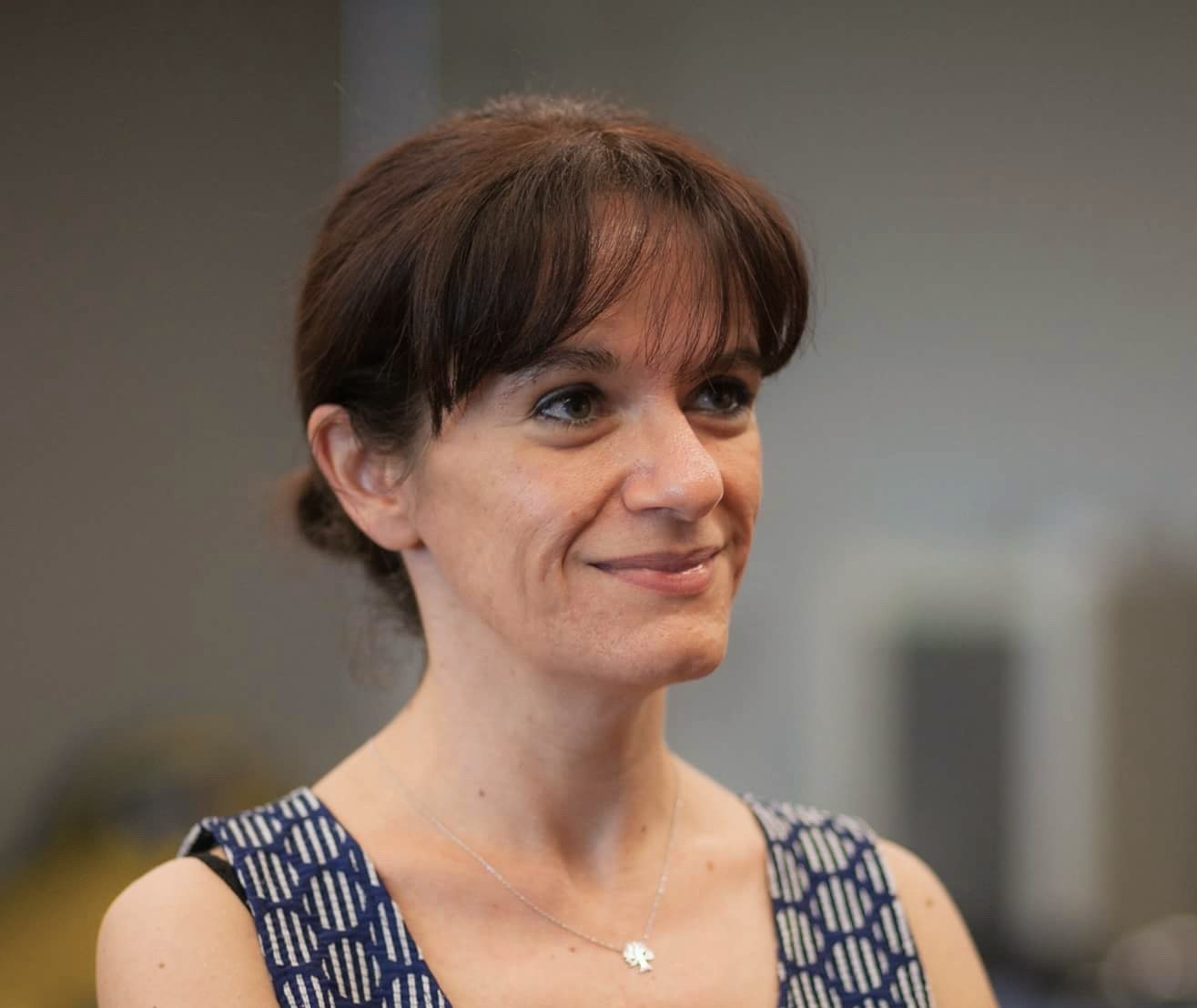
The author of this article: Marta Santacatterina
Marta Santacatterina (Schio, 1974, vive e lavora a Parma) ha conseguito nel 2007 il Dottorato di ricerca in Storia dell’Arte, con indirizzo medievale, all’Università di Parma. È iscritta all’Ordine dei giornalisti dal 2016 e attualmente collabora con diverse riviste specializzate in arte e cultura, privilegiando le epoche antica e moderna. Ha svolto e svolge ancora incarichi di coordinamento per diversi magazine e si occupa inoltre di approfondimenti e inchieste relativi alle tematiche del food e della sostenibilità.Warning: the translation into English of the original Italian article was created using automatic tools. We undertake to review all articles, but we do not guarantee the total absence of inaccuracies in the translation due to the program. You can find the original by clicking on the ITA button. If you find any mistake,please contact us.


















 IT
IT FR
FR DE
DE ES
ES CN
CN


