





Starting July 30, 2026 , the Opificio delle Pietre Dure Museum in Florence will host the *Madonna and Child with Two Cherubs*, known as the *Madonna delle Muneghette*, as part of the exhibition *Caring for Art: Restorations on Display*, dedicated to the most significant conservation projects carried out by the Institute. Attributed to Jacopo Sansovino and belonging to the collectionsof the I.R.E. – Istituzioni di Ricovero ed Educazione of Venice, the sculpture is being presented to the public following its restoration, before its return to its place of origin.
Discovered in the 1970s at the Pensionato delle Muneghette in Venice, the work offers a particularly rare example of Sansovino’s technical experimentation. The sculptural group is, in fact, constructed using a structure composed of layers of canvas and plaster, supplemented by papier-mâché parts that were cast separately and then joined through direct modeling. This unusual technique, according to the most recent studies, does not represent a papier-mâché model for a sculpture to be executed in a more noble material, but rather a definitive work conceived using more economical materials—likely intended for patrons with limited resources and linked to the artist’s experience in creating ephemeral installations.
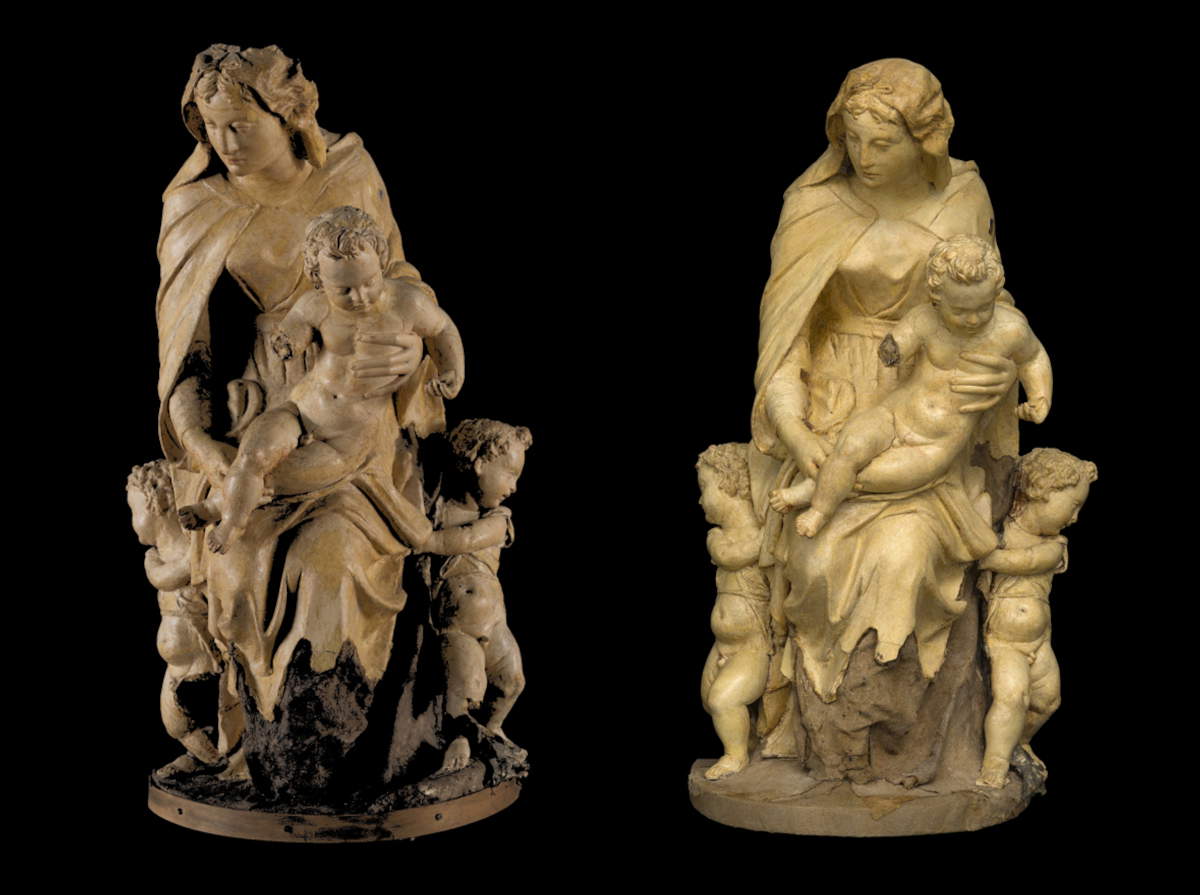
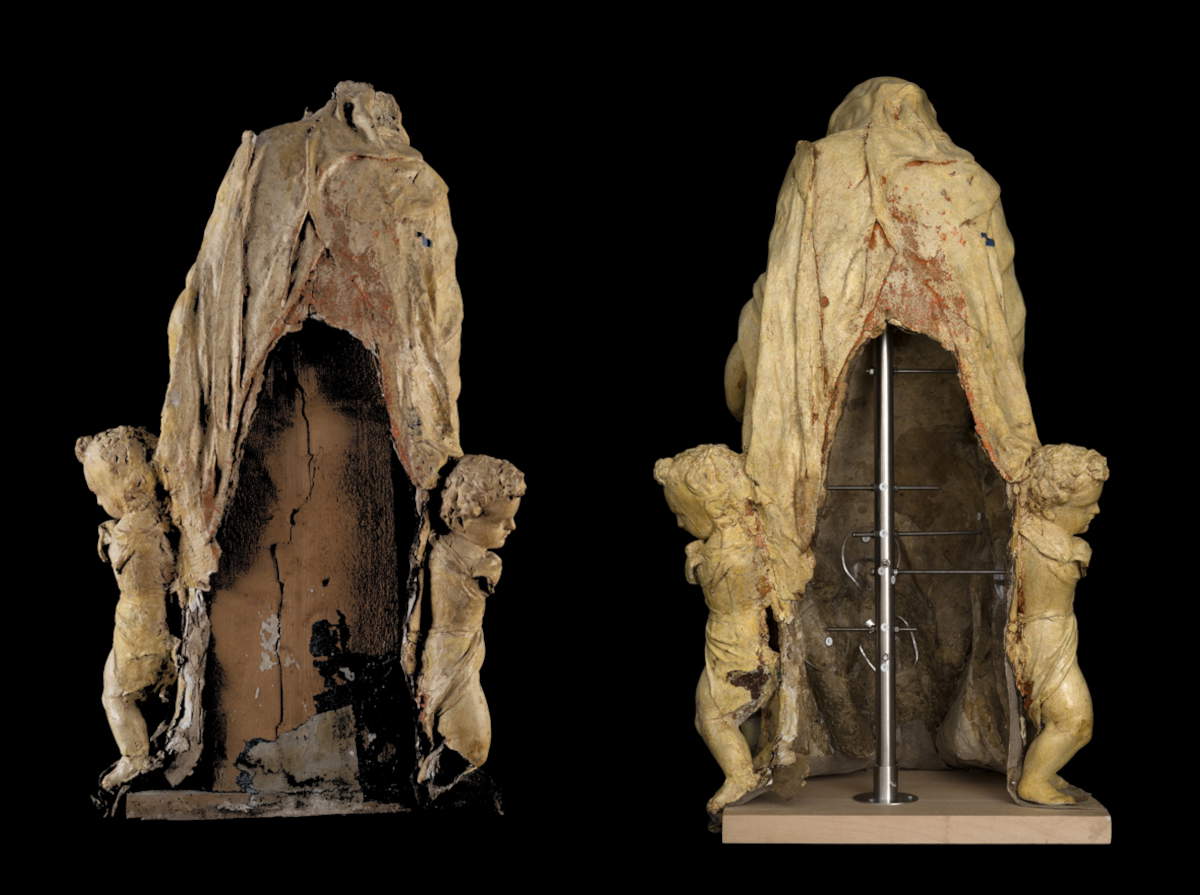
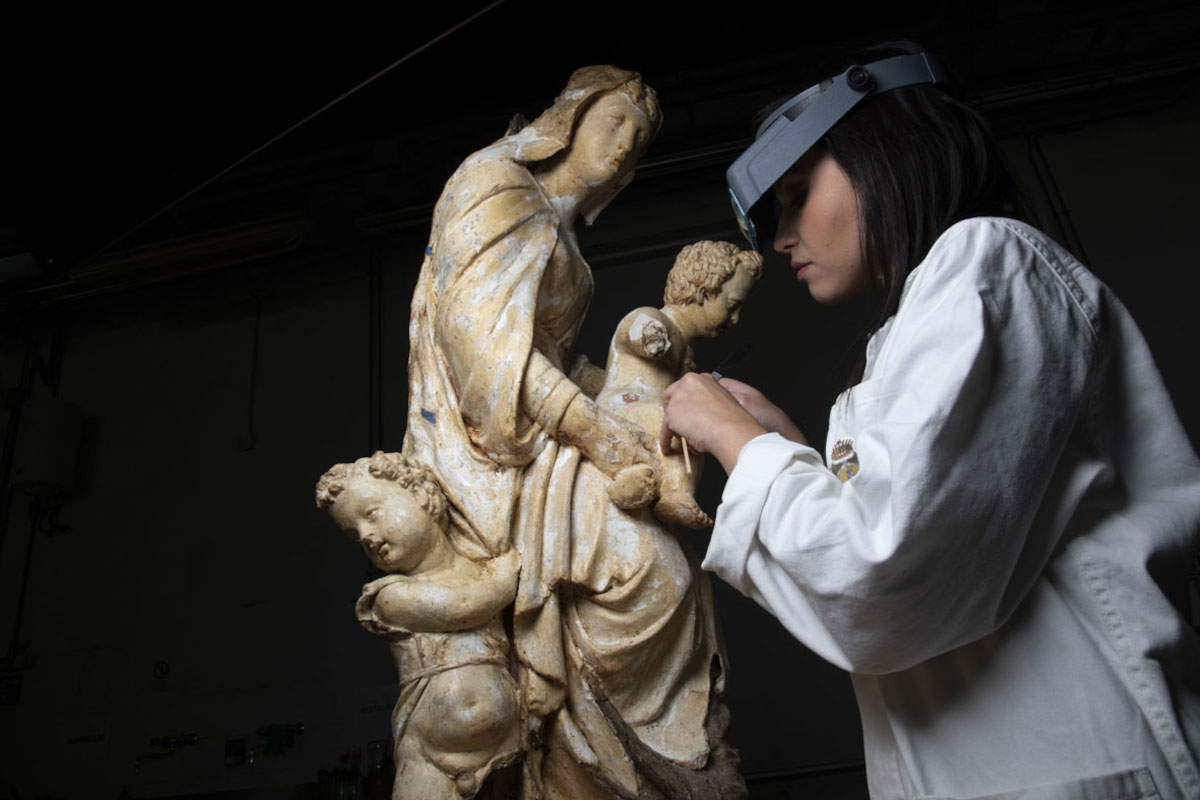
When it arrived at the Opificio’s workshops, the sculpture was in a severely compromised state of preservation, with serious structural problems, deformations, and numerous gaps that compromised its stability and legibility. The restoration project, funded by the Venetian Heritage Foundation, was carried out by the Opificio delle Pietre Dure through collaboration between the departments specializing in polychrome wooden sculptures and in ceramic, plastic, and glass materials, with the support of analyses conducted by the Institute’s scientific laboratory.
The restoration made it possible to restore the work’s expressive power through careful cleaning and a complex conservation process, while respecting the traces of its history. The missing parts were reconstructed using 3D scanning and printing of the missing elements, a solution that made it possible to restore the sculptural group’s original composition, which is now also supported by an innovative internal structural system.
The Madonna delle Muneghette will remain on display at the Opificio delle Pietre Dure Museum through September 30, 2026.
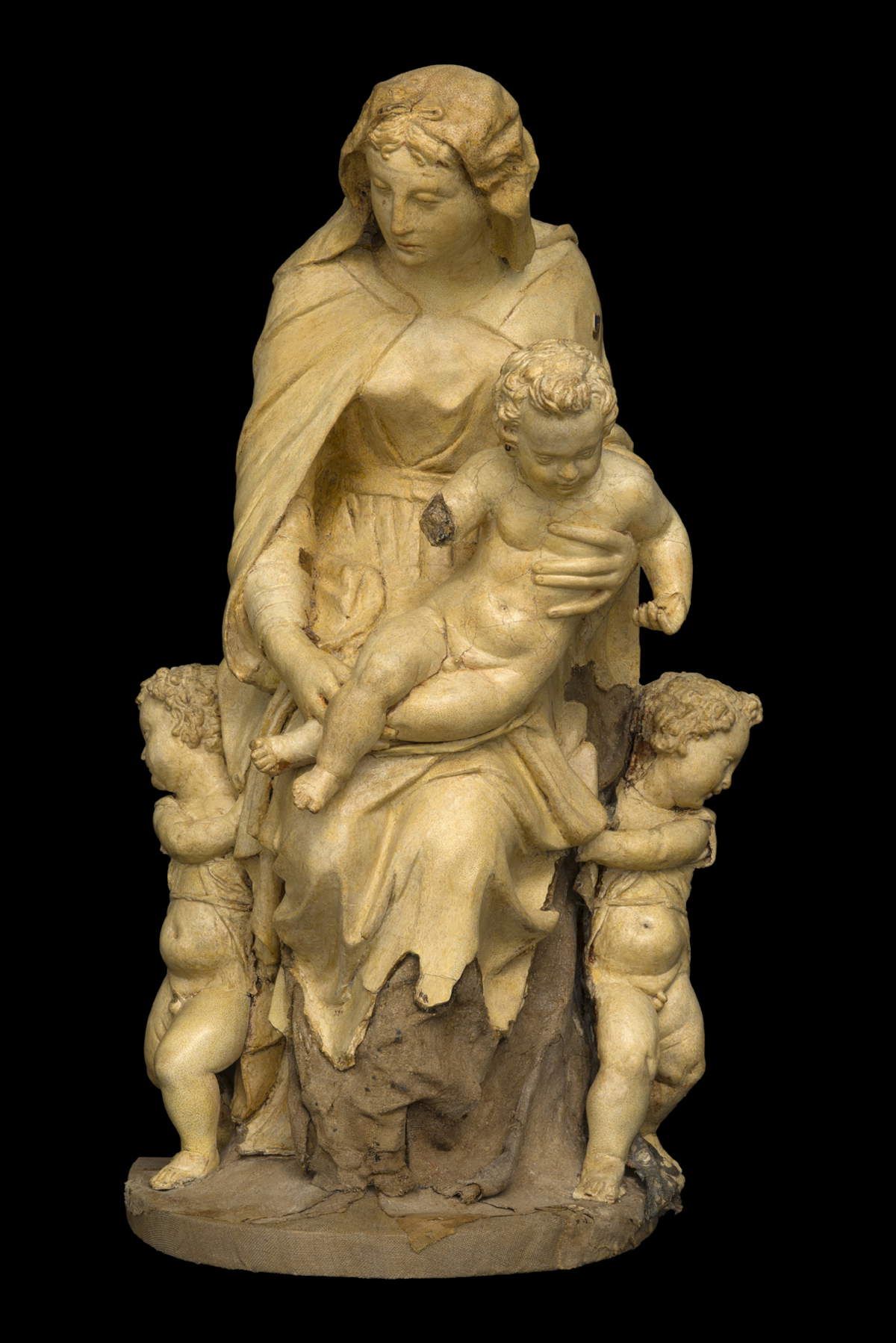
“Jacopo Tatti,” emphasizes Emanuela Daffra, Superintendent of the Opificio delle Pietre Dure, “offers us an interpretation of the ancient theme of the Madonna and Child that is both refined and deeply human. Certainly, in envisioning this young woman with a pensive expression, he had in mind the Virgin created by Donatello for the altar of the Saint in Padua; yet here, as she holds her son, she bends maternally to protect him and gaze upon the faithful. Therefore, to restore this movement, it was essential to replace the internal support and reconstruct the missing parts of the figures, while leaving the gaps intact to allow viewers to appreciate the unique technique used in its creation.”
|
| Florence: The Restored "Madonna delle Muneghette" on Display at the Opificio delle Pietre Dure |

Warning: the translation into English of the original Italian article was created using automatic tools. We undertake to review all articles, but we do not guarantee the total absence of inaccuracies in the translation due to the program. You can find the original by clicking on the ITA button. If you find any mistake,please contact us.
























 IT
IT FR
FR DE
DE ES
ES CN
CN


