





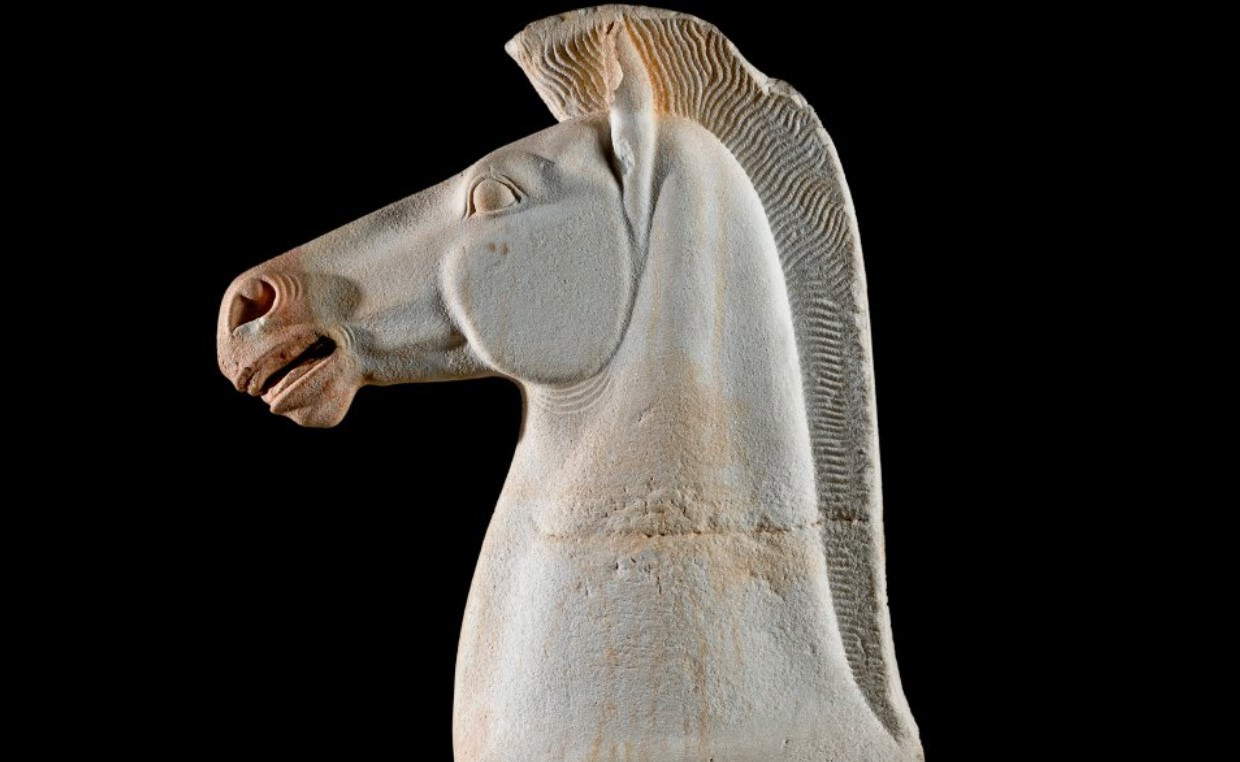
To mark the release of Christopher Nolan’s*The Odyssey*, the Prado Museum in Madrid is presenting a video dedicated to the great myths of classical antiquity. The audiovisual presentation brings together a selection of paintings, sculptures, and drawings from the museum’s collections, accompanied by music from singer-songwriter La Bien Querida, offering a contemporary reinterpretation of some of the most famous stories from the Greco-Roman tradition. The initiative stems from the goal of showcasing the Prado’s heritage through various artistic languages, creating a dialogue between works of the past and contemporary music. The central theme is that of journey—evoked by the song “Dinamita,” which accompanies the entire visual narrative.
The video begins with episodes marking the origins of the Trojan War, such as The Judgment of Paris, The Abduction of Helen, The Sacrifice of Iphigenia, The Banquet of Telemachus, and The Burning of Troy, depicted in works by masters such as Peter Paul Rubens, Tintoretto, Corrado Giaquinto, and Francisco Collantes. Through these images, the video retraces the events that gave rise to the great epics of antiquity. Ample space is also devoted to the theme of the sea and navigation, with works such as Shipwreck Washing Ashore by Jean Pillement, Seascape with Shipwreck by José Carlos de Borbón, and Seascape with the Pillars of Hercules, images that evoke Odysseus’s long journey and the universal themes of loss, quest, and return.
Among the protagonists of the narrative are, of course, Odysseus—depicted in Rubens’s painting *Achilles Found by Odysseus and Diomedes*—along with other key figuresfrom the Homeric universe, such as Polyphemus, Circe, Aeneas, and Hecuba. The exhibition also focuses on the destruction of Troy, depicted by Francisco Collantes for the Buen Retiro Palace, where the events of the ancient world took on strong symbolic and political significance.
The journey continues through works with allegorical significance, including Antonio Canova’s *Venus and Mars*, Rubens’s *The Birth of the Milky Way*, and Diego Velázquez’s *Vulcan’s Forge*, which engage with the theme of transformation and creative force evoked by the soundtrack. Finally, there is no shortage of images dedicated to fate and suffering, with masterpieces such as *Tizio* by José de Ribera, *Sisyphus* by Titian, *Saturn Devouring His Son* by Rubens, and *The Sorrow of Hecuba* by Leonaert Bramer, which depict the most tragic side of classical mythology.
Through this project, the Prado Museum reaffirms its commitment to offering new perspectives on its collections, demonstrating how the great myths of antiquity continue to engage with the present and inspire cinema, music, and contemporary culture.
|
| The Prado celebrates *The Odyssey* with a visual journey through its masterpieces inspired by classical myths |

Warning: the translation into English of the original Italian article was created using automatic tools. We undertake to review all articles, but we do not guarantee the total absence of inaccuracies in the translation due to the program. You can find the original by clicking on the ITA button. If you find any mistake,please contact us.






















 IT
IT FR
FR DE
DE ES
ES CN
CN


