




by Redazione 18/10/2026



Categories: Archaeology / Disclaimer
On the Montagne de Saint-Laurent, in Mesmont, Burgundy, excavations have uncovered a complex of masonry buildings, including a large church and structures that likely featured underfloor heating. The site, which was inhabited between the 5th and 8th centuries, may have been a high-ranking residence.


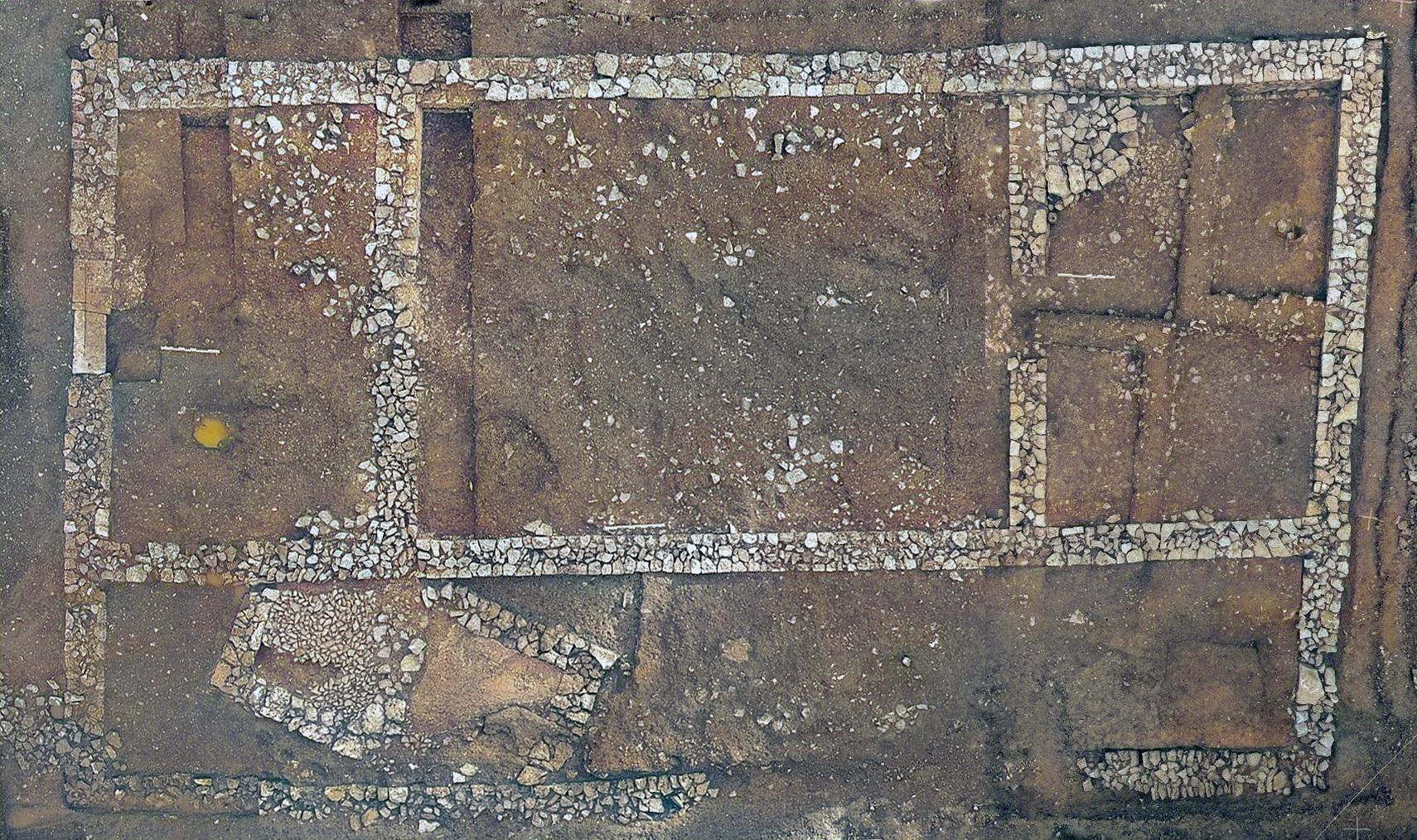
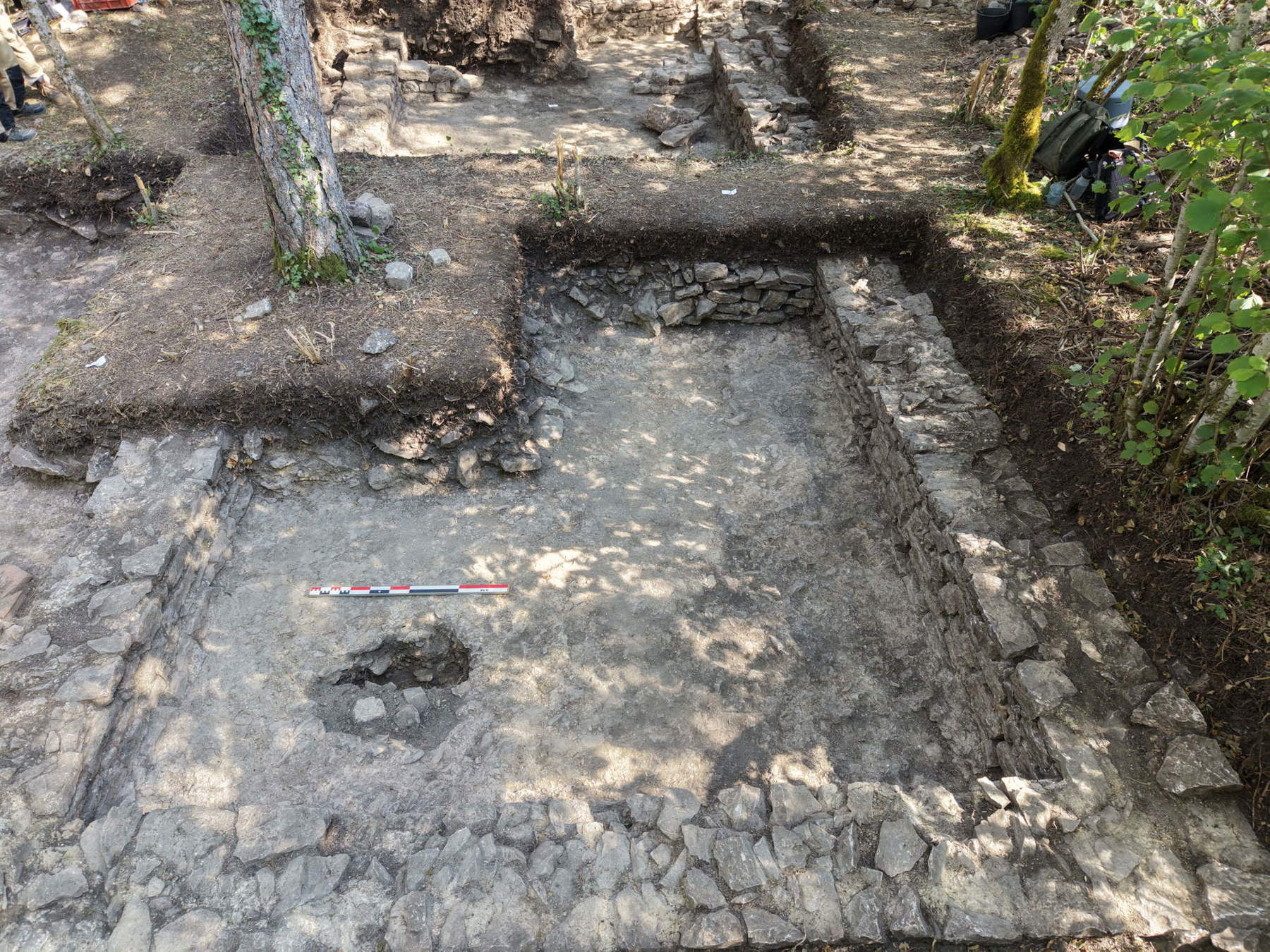
A large church, monumental buildings arranged in a regular pattern, and traces of an underfloor heating system: on the Montagne de Saint-Laurent, in Mesmont, Burgundy (France), archaeological researchby INRAP—the National Institute for Preventive Archaeological Research— is unearthing an early medieval settlement that may have housed a high-ranking residence. The complex, built beginning in the 5th century and in use until the early 8th century, stands out for the size of its structures, the quality of its materials, and the presence of architectural features that required considerable technical expertise and resources. The most recent excavations have identified a building of approximately 180 square meters situated adjacent to a large church and another structure of considerable size to the south of the place of worship: the hypothesis is that the site constituted a center of religious and political power in the Early Middle Ages, during a transitional phase between Roman and medieval territorial organization.


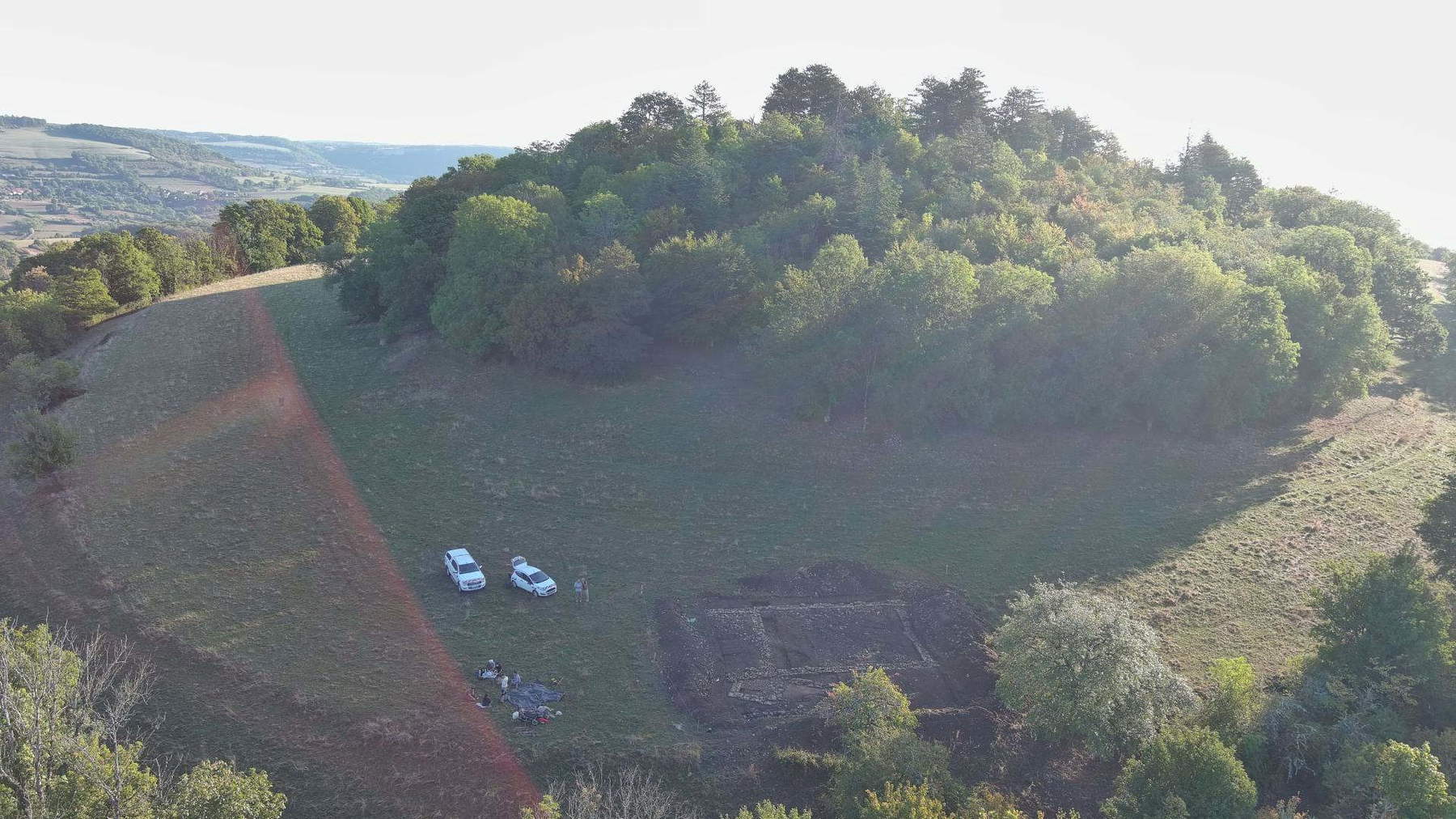
The Montagne de Saint-Laurent is an isolated hill located about twenty kilometers west of Dijon, overlooking the landscape of the middle Ouche Valley. The first reports of archaeological finds date back to the 18th century, but only in recent years have investigations made it possible to reconstruct the settlement’s layout with greater precision; thus, since 2019, a research program has combined surveys, test pits, and excavations, while in 2026 a new three-year project was launched focused on a specific portion of the vast site.


Occupation of the hill dates back to the Neolithic period and intensified particularly during the late Bronze Age andearly Iron Age. After a renewed period of occupation during the final phase of the Second Iron Age, the site was abandoned once again during the Roman period, although the possible presence of a small sanctuary on the hilltop might indicate some continuity of use. However, it was between the 5th and 8th centuries that the Montagne de Saint-Laurent experienced a new phase of intense settlement, a period that had long been overlooked in previous studies.


Geophysical surveys and LiDAR scans—a technology that allows for the reconstruction of terrain morphology even in the presence of vegetation—have helped identify the overall layout of the settlement. The structures appear to be arranged in an orderly fashion on the plateau surrounding a central spur at the highest point of the hill. The complex therefore does not appear to be a simple cluster of isolated dwellings, but rather a structured settlement characterized by large masonry buildings. One of these, dating to the 6th–7th centuries, covers an area of approximately 240 square meters. The quality of the materials used and the complexity of the internal layout of the rooms have raised questions about the social status of the inhabitants. The new research focuses primarily on the western part of the central spur, where the monumental core of the complex is located.
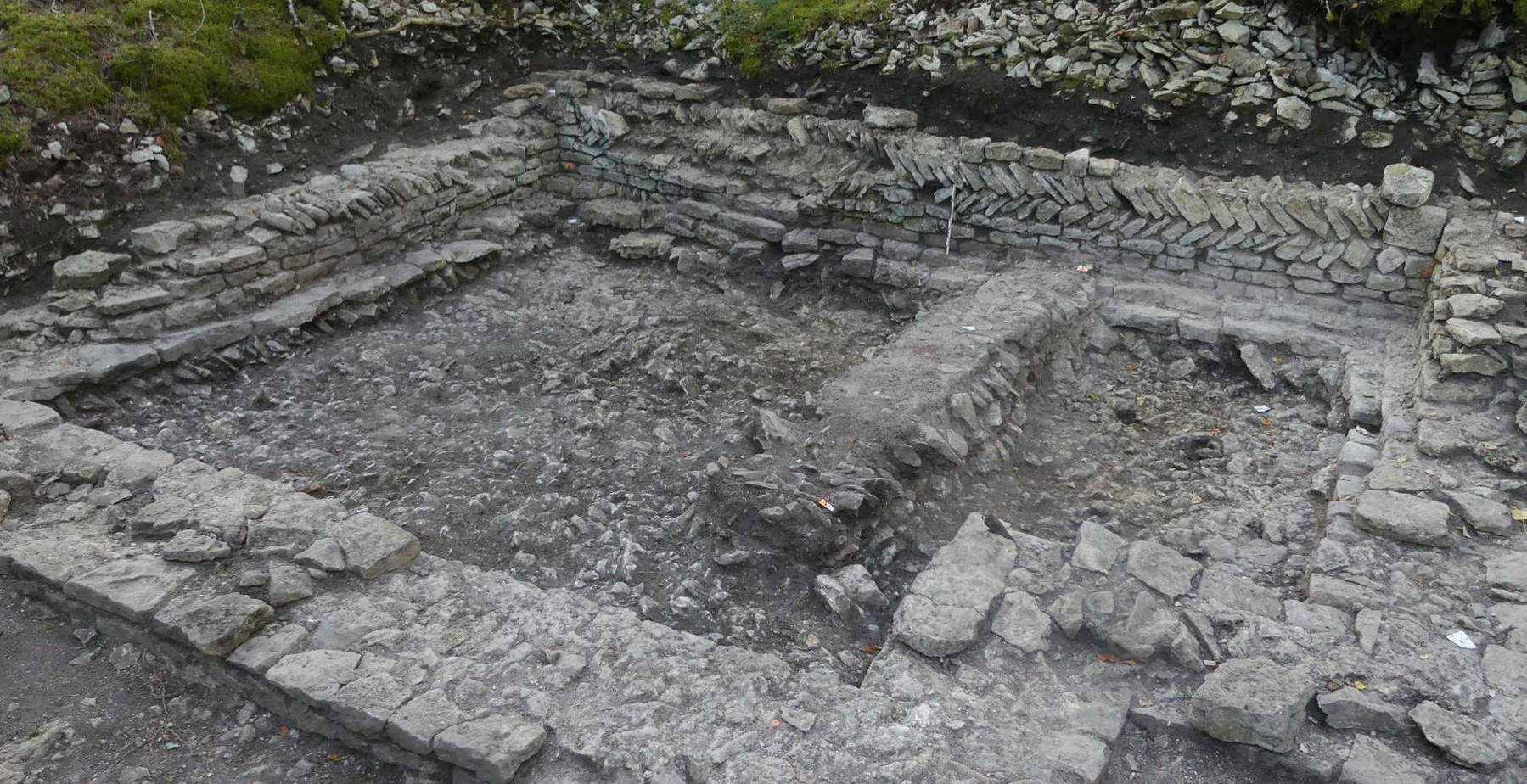
A large masonry church once stood here, first identified in the 1970s and investigated between 2019 and 2024. Initially, the building’s function remained uncertain, partly due to the absence of associated burials. However, the excavations have brought to light architectural elements that allow it to be interpreted as a place of worship: among these are a partition separating the choir and the bases of what may have been a liturgical bench. The church measures 27.5 meters in length and 12.4 meters in width at the nave, including the masonry structures. A room on the southern side was likely used as a presbytery annex.
The 2026 excavation campaigns added an important piece to the reconstruction of the complex: to the west of the church, another masonry building was identified, approximately 15 meters long and 12 meters wide, located in direct alignment with the axis of the place of worship. The dimensions are already significant, but what suggests a particularly imposing structure is above all the thickness of the walls and the quality of the mortar—elements that suggest the presence of an upper floor. Furthermore, to the south of the church, several test pits have revealed a third large masonry structure, which appears to extend over twenty meters, although its width has not yet been determined.
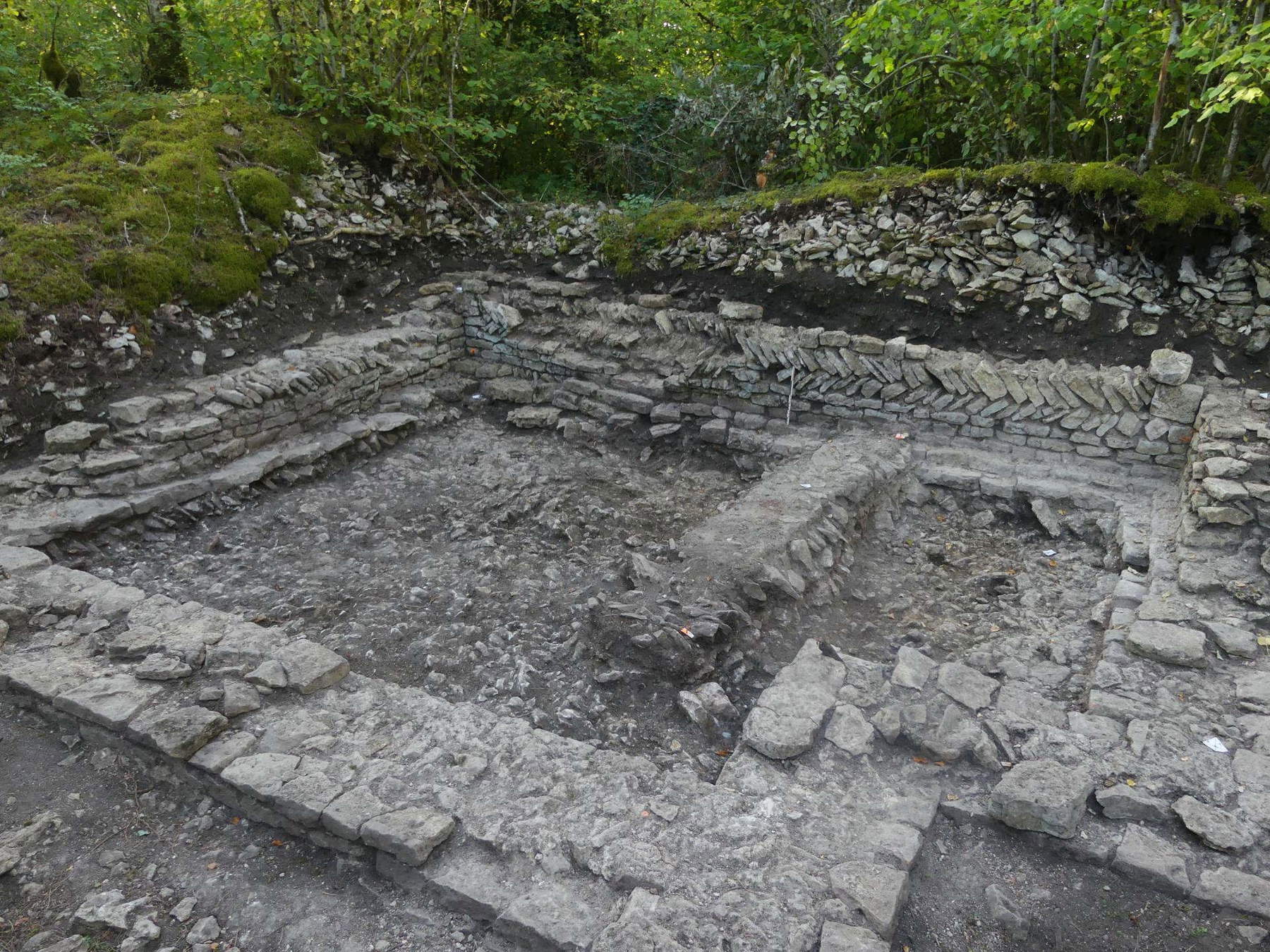
Taken together, the buildings form a monumental complex organized according to a regular layout, extending over several hundred square meters. It is above all the presence of installations related to underfloor heating that suggests the site was frequented by people belonging to privileged social groups: during the excavation campaigns, numerous elements of a hypocaust were recovered—the traditional Roman heating system in which hot air circulated beneath the floor and, in some cases, through ducts in the walls. The finds also include stacks of small brick supports, fragments of small pipes, and remains of suspensura—that is, the structures that raised the floor above the underlying level, allowing heat to circulate. These solutions required skilled labor and specific materials, produced by artisans such as brickmakers and lime producers, and their presence in an early medieval settlement is particularly significant, as it attests to the persistence of Roman-tradition building techniques and the availability of sufficient resources to support works of this kind.
The complex was built during the 5th century and remained in use until the early 8th century, without undergoing any major alterations. The chronology was reconstructed through the study of ceramic materials, including a small group of stamped pottery produced in Argonne, and was verified by radiocarbon analysis. Among the most interesting finds is a fragment of wheel-decorated sigillata pottery, characteristic of the second half of the 5th century. The decoration features motifs interpreted as Christian, including a chalice and a monogrammatic cross. The fragment also serves as evidence of the circulation of religious symbols and the material culture present in the settlement during the early phases of its occupation.
Another significant finding isthe abundance of glass: since 2019, over 500 fragments have been recovered, including about fifty pieces of flat glass with worked edges—elements that may have been used in the church’s stained-glass windows. The material also includes, above all, parts of lamps and tableware—objects that provide insight into the inhabitants’ consumption habits and are characteristic of privileged circles in the Early Middle Ages.
The presence of glass, high-quality ceramics, and heated structures reinforces the hypothesis that the Montagne de Saint-Laurent was home to a community with significant economic resources and a well-organized structure. It is not yet possible to establish with certainty the function of each building or to unequivocally identify the complex as a palace; however, the size of the structures, the layout of the rooms, and the technical characteristics of the buildings suggest a high-status settlement in which religious and residential functions may have been closely intertwined.
Research is made more difficult by repeated looting carried out by individuals equipped with metal detectors: the removal of metal objects has caused an irreversible loss of archaeological information, depriving scholars of artifacts that could have helped reconstruct the activities carried out at the site and the characteristics of its inhabitants.
A Center of Power in Early Medieval Burgundy
The importance of the Montagne de Saint-Laurent is not evident solely from the material remains: the site is also documented in written sources from the Early Middle Ages, which clarify its role in the territorial organization of Burgundy and in the relations between the aristocracy and the clergy. Mesmont is recorded as the main seat of the pagus magnimontensis, the territory of the “great mountain,” belonging to the episcopal city of Langres and the origin of the name “Mesmontois.” The pagus, literally “village,” was an early medieval territorial unit that, in some respects, foreshadowed the organization of later counties. Its extent can be reconstructed through references to the area in documentary sources.
Medieval authors also describe Mesmont as a castrum or an oppidum—terms that may refer to a fortified or hilltop site, but which also suggest a certain urban complexity in the settlement’s layout and functions. The comparison of documents with archaeological finds is therefore one of the central aspects of the research program: it allows us to verify whether the role attributed to Mesmont by the sources corresponds to the characteristics of the site revealed by the excavations.
An important contribution comes from hagiographic literature, which recounts the lives of the early saints of Burgundy. At the beginning of the 6th century, Bishop Gregory of Langres entrusted his nephew Eustathius—then a priest at Mesmont—with the leadership of the monastic community he had founded in Dijon centered on the cult of Saint Benignus. The Gregorii family belonged to the highest senatorial aristocracy of late antiquity and the early medieval period, and among its descendants was Gregory of Tours, bishop and author of one of the principal historical accounts of the Early Middle Ages.
Sigo, who founded the monastery bearing his name in the 6th century in what is now Saint-Seine-l’Abbaye, also came from Mesmont. The abbey played an important role in the region’s religious history: at the end of the 8th century, Benedict of Aniane—who was destined to become one of the leading reformers of Western monasticism and the Benedictine Rule—also stayed there. Another figure associated with the area was Saint Baudry, a hermit and evangelist active between the late 6th and early 7th centuries. Saint Antide is also linked to Mesmont; his name has been preserved in the names of several churches and localities in the area, including Saint-Anthot and Antheuil. According to historical accounts, his relics remained in Mesmont until the 9th century, before being transferred to Brescia, in northern Italy, where they are still kept today. The transfer may reflect the gradual decline of the settlement and serves as an indication of the changes that led to the abandonment of the hill, likely in favor of the present-day town of Sombernon, located further to the west.
The complex’s possible palatial character thus becomes significant not only for its architectural features but also for the role the site played in relations between ecclesiastical authorities and aristocratic groups.
A rare site for studying the transition from antiquity to the Middle Ages
The investigations at Montagne de Saint-Laurent offer the opportunity to study, in its entirety, a settlement founded in late antiquity and inhabited during the early medieval period. Complexes of this type are rarely documented in such detail. Often, excavations cover only limited portions of the sites, or research is hindered by the topography, difficulty of access, or the presence of more recent settlements that have overlapped the ancient structures.
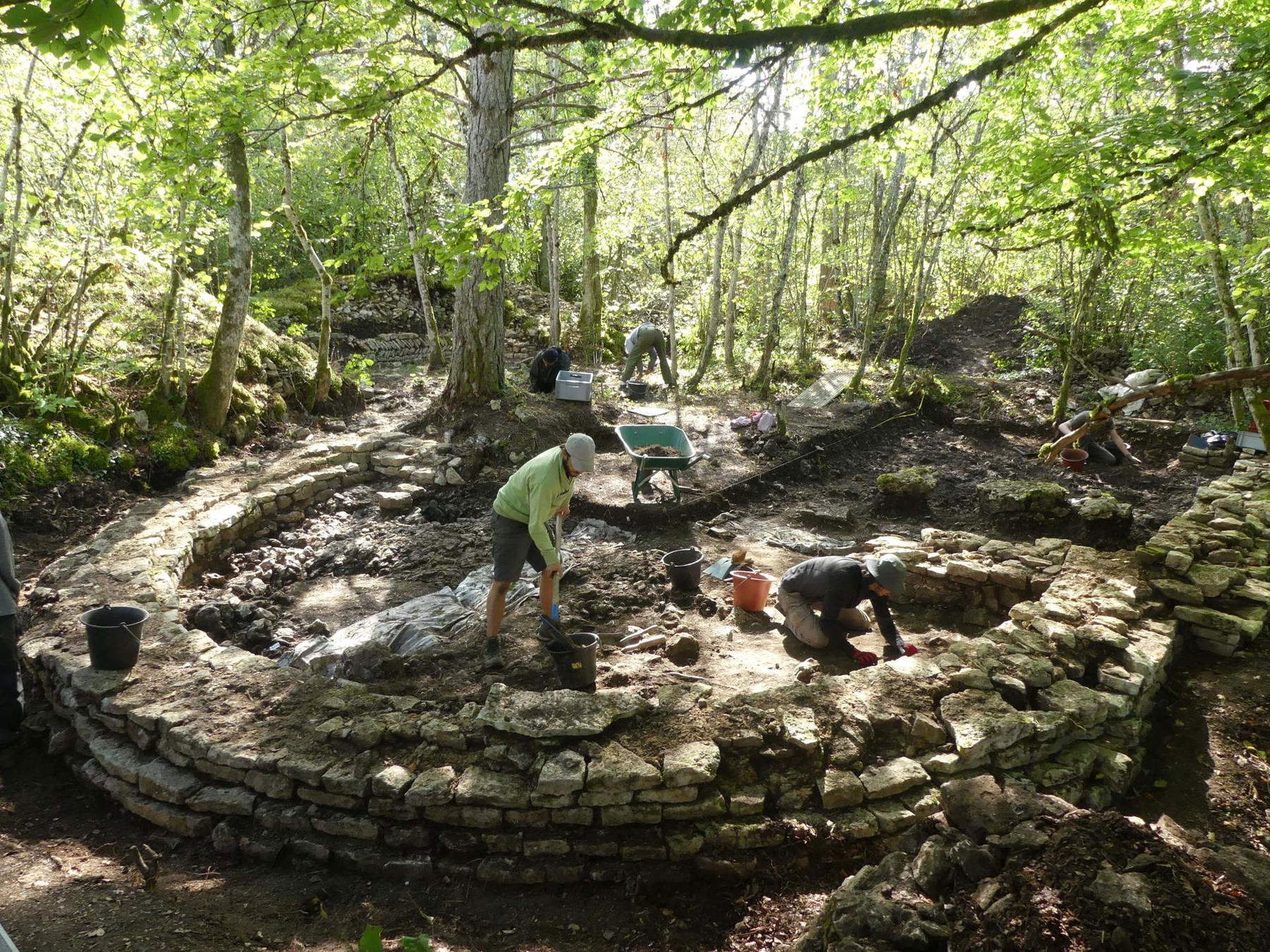
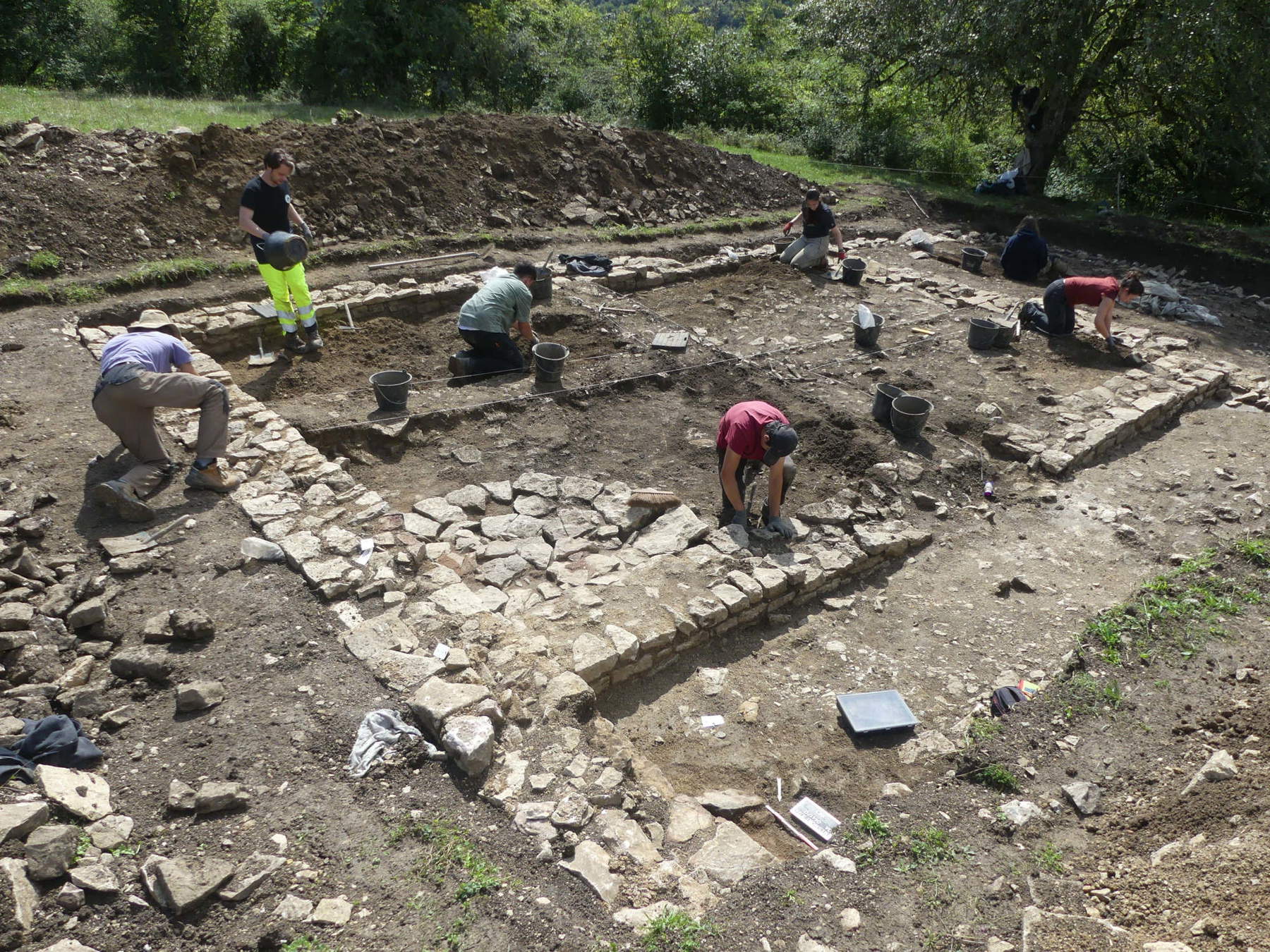
The excavation site also serves an educational purpose: volunteers and numerous archaeology students participate, gaining hands-on experience in excavation techniques. Visits by scholars from various institutions also foster dialogue among specialists and help develop new interpretive hypotheses.
The Ouche Valley, near Dijon, is an area of particular interest for archaeological research, thanks to the preservation of the remains and the opportunities offered by new investigations, both in the context of preventive archaeology and through specific research programs. Among the sites already under study are the Roman-era secondary settlement at Mâlain and the medieval village of Fleurey-sur-Ouche.
New excavation campaigns on the Montagne de Saint-Laurent will continue in the coming years, with the aim of clarifying the extent of the complex, the function of individual buildings, and the settlement’s role in the region’s history. The possibility that a high-ranking residence once stood on the hill remains a hypothesis to be verified through further excavations and analyses.
 |
| France: Excavations at an Early Medieval Monumental Complex—It May Have Been a High-Ranking Palace |
Warning: the translation into English of the original Italian article was created using automatic tools. We undertake to review all articles, but we do not guarantee the total absence of inaccuracies in the translation due to the program. You can find the original by clicking on the ITA button. If you find any mistake,please contact us.