





After Mark Rothko’s death, the critic Harold Rosenberg, a theorist of Action Painting, wrote an obituary for the painter in *The New Yorker*, in which he described him as a “reductive theologian of painting.” He intended that adjective to describe a sort of movement toward an increasingly essential form of painting—achieved through exclusions and erasures—where abstraction was a universal value that could also be seen as the painter’s approach to the Jewish prohibition against making images of God; but, in substance—that is, as evidenced by the works themselves—“it was an aspiration toward an aesthetic essence, which the group of artists close to Rothko sought to achieve not through acts of intuition, but by rationally calculating what was irreducible in painting.” With a drastic formal minimalism and fields of color ( Color Field Painting, a central theme in the discourse of the other great critic of the era of Jewish origin, Clement Greenberg, on American abstract art), Rothko oscillated between tragedy and ecstasy. The “theologians” of Abstract Expressionism had only one idea in mind: the search for “a universal principle” discovered in Mondrian, “not so much for the quality of his sensibility—which they found too mathematical—as for the rigor of his aesthetics of exclusion.” Therefore, Rosenberg argued that “Rothko and his friends—namely Still, Newman, Reinhardt, and Gottlieb—constituted the theological moment of Abstract Expressionism.” During the golden age of the new painting, the relationship between the avant-garde and Jewish identity was a fundamental—yet also extremely complex—issue. Clement Greenberg, while approaching the issue from a very different perspective, also urged artists to transcend ethnic particularism because, in the view of both critics, the universality of abstract painting was the strongest possible response to the trauma of the Holocaust: “Jewishness, to the extent that it must be affirmed in a predominantly Gentile world, should be a personal rather than a mass demonstration” (Greenberg).
In 1966, while giving a lecture at the Jewish Museum in New York, Rosenberg asked: “Is There a Jewish Art? ” And he commented ironically that institutions “first build a Jewish museum, then ask, ‘Is there such a thing as Jewish art?’ Jews!” With that typically Jewish sense of humor, he noted that non-Jews answered the question by saying, “Yes, there is such a thing as Jewish art, and no, there isn’t.” Whereas the Jews’ response is, “What do you mean by Jewish art?” This unresolved question gave rise to two diametrically opposed situations: an excessive identification with Judaism, resulting in art conditioned by religion; or the impossibility of defining a “Jewish style” in art. In examining works of art created by Jewish artists, or images associated with the ghetto and incorporated into ritual practices, Rosenberg highlighted definitions he considered incomplete or simplistic. But he went so far as to argue that ancient Jewish aniconism (the prohibition against creating sculptural and pictorial images of God, because they are associated with idolatry) had foreshadowed modern conceptual and abstract traditions as “anti-art,” where priority is given to the idea of the invisible divine over any possible figurative representation (the 1932 discovery of the frescoes in the synagogue at Dura Europos in Syria, dating to 244 CE—which are not aniconic art, but rather sumptuous images depicting Old Testament stories involving Moses or David, called into question the belief that ancient Judaism absolutely prohibited figurative art). Rosenberg’s conclusion was that there was no modern art defined by symbols or visual styles rooted in a doctrine, because Judaism, if anything, emerged from the analytical and intellectual qualities of individual artists. For his part, Greenberg never wrote an essay linking American abstract painting to Jewish identity, but he scattered his ideas throughout various essays, and the writer and art critic Rhonda Lieberman has called him “the closest thing we have to a rabbi of High Art: in his synagogue of abstraction, the artist transcends ethnicity, social class, and everything else” (Rhonda Lieberman Reader, 2023). The question, though posed cryptically, interpreted abstraction as the convergence of Jewish precepts and Enlightenment universalism.
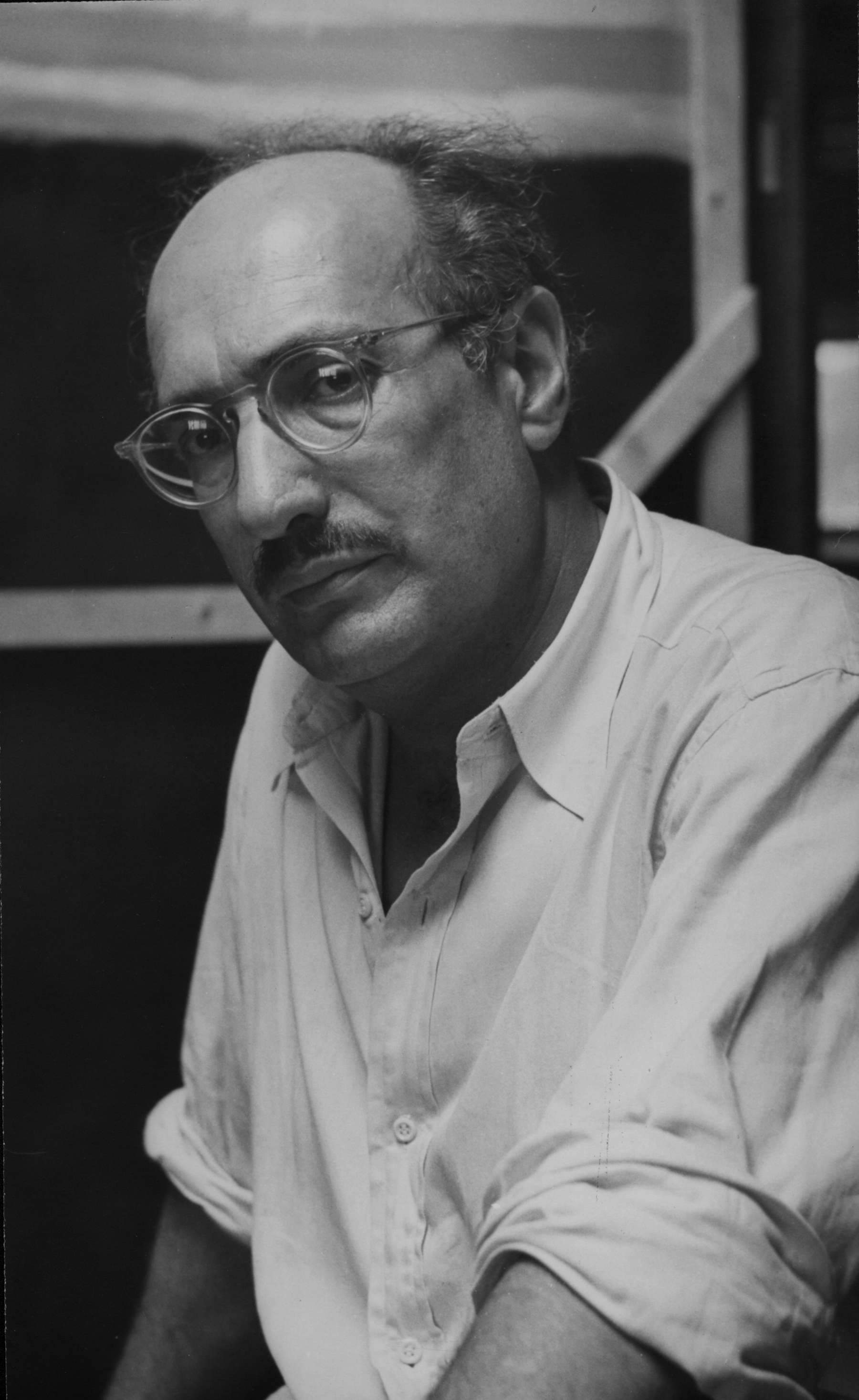
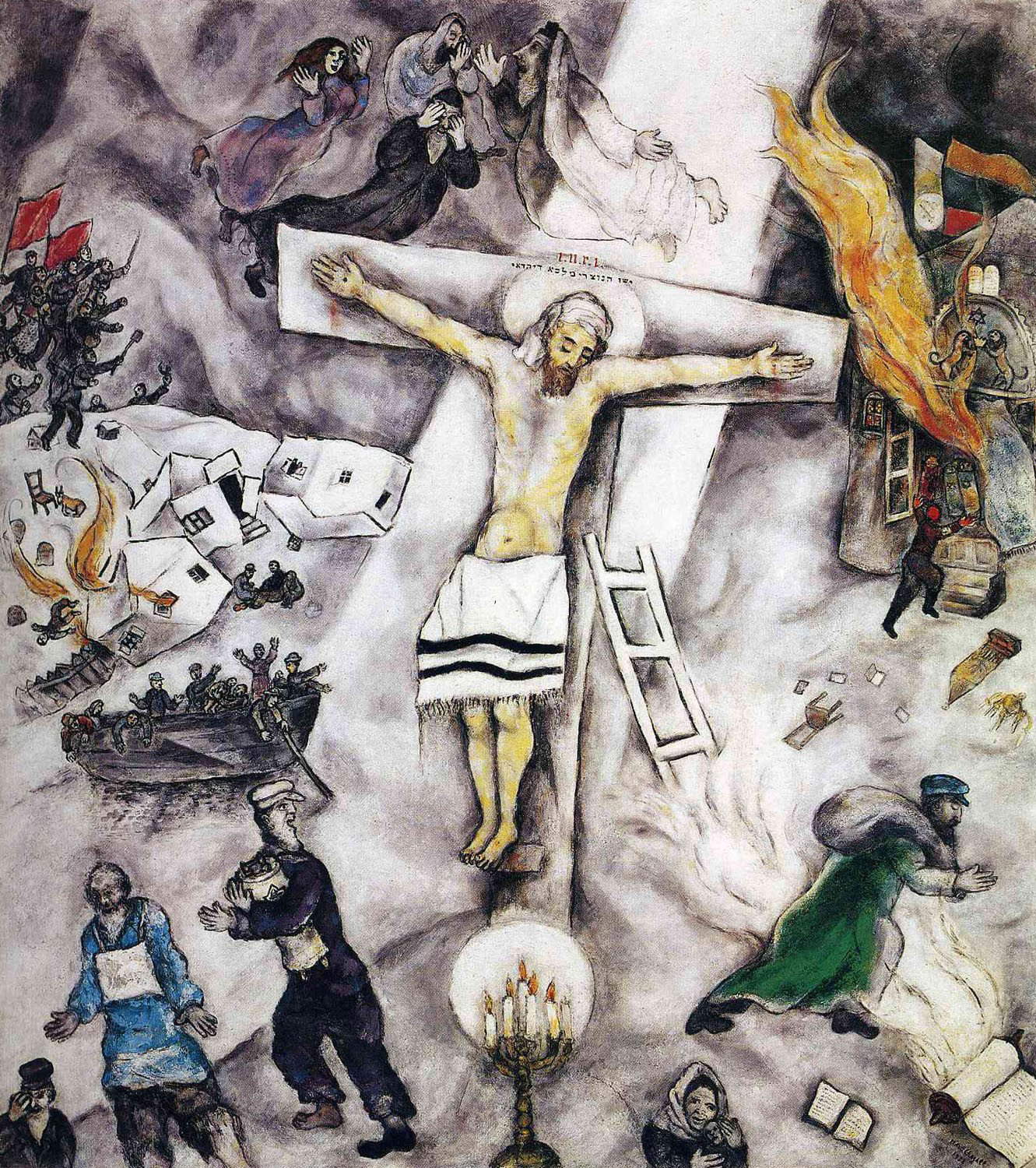
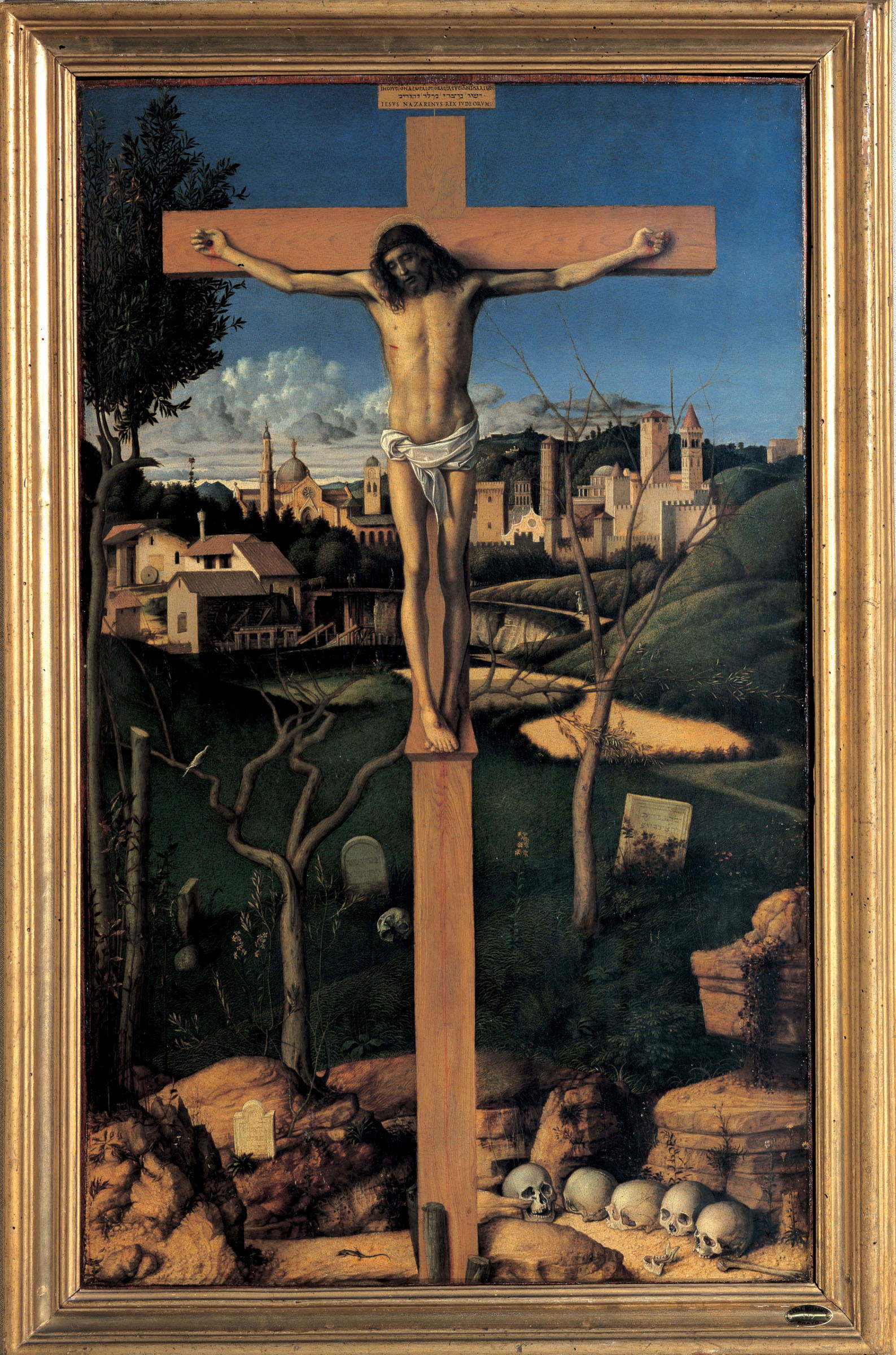
And where did Rothko stand in this debate? His tragic temperament was reinforced by the trauma he suffered as a child when, in 1913, his family fled Latvia for America due to the recurring Russian pogroms against Jews. His father, a pharmacist in Dvinsk, and one of his brothers had already emigrated. Rothko’s “Russian” roots did not disappear upon his arrival in America; rather, from the very beginning, it was imbued with a spirituality that soon extended far beyond Judaism (traces of symbolic Christian iconography have been noted repeatedly in his pictorial universe, but even these should be considered a form of cultural—rather than religious—heritage, inherent in the consciousness of individual artists). Take, for example, Chagall: he is the classic case of an artist whose identity celebrates his Jewish roots by blending the symbols of Judaism with those of other religions. The fact that, as some have argued, he too evoked the symbol of the Cross (in the *White Crucifixion* of 1938) should not, however, be taken as evidence of religious adherence: although the Christ hanging on the cross has his lower body covered by a garment that is also a Jewish symbol, the tallit, the shawl worn by men during prayer; or, even if Chagall placed the menorah—the seven-branched oil lamp that was once lit in the Temple of Jerusalem and was given directly by God to Moses, as recounted in Exodus—at the foot of the cross: the entire context of the painting is not intended to allude to religion, as it refers to the theme of Jewish persecution that was emerging in Europe (a curious blend of Jewish and Christian symbols can be found in a small painting by Giovanni Bellini, likely painted in Vicenza, *The Crucifixion with a Jewish Cemetery*, also known as the *Niccolini Crucifix*—a work intended for the patron’s meditation—in which the dramatic sense of the crucifixion does not prevail; its tragedy is conveyed by a few trickles of blood oozing from the nail holes, as if the painter had been asked to maintain a certain “atarasia” in the face of the resurgence of anti-Judaism in the late 15th century, so as not to emphasize the themes of guilt and deicide. In essence, it is a painting in which devotion is tempered by the deeply human gaze that captures the scene, which here becomes a sort of passing of the torch from the Old to the New Testament—yet, in its own way, it foreshadows, five centuries earlier, the spiritual vision of Chagall and Rothko.
But unlike Rothko’s intentions, there is no doubt that Chagall intended to express his Jewish identity in this painting; yet this image also holds a more universal significance, in which the Christian symbol of suffering and its redemptive icon—the crucified Christ—appears as the witness to a people about to be swept away by a cataclysm: the Holocaust. In Chagall’s painting, the crucified Christ becomes the Jew as the scapegoat of a West that, through totalitarianism, has embarked on the path of its own moral failure.
In Rothko’s paintings, however, this symbolic framework is anything but explicit. Mark was well-informed about what was happening in Europe, and during the war years he had formed a definitive view of human evil—of which, as can be inferred from some of his statements, he was already aware even before the Holocaust. He explained the emotional response of some viewers to his paintings as follows: “Those who weep before my paintings are having the same religious experience that I had when I painted them.” For the painter, the Holocaust is the cause of this very loss of hope in humanity. The extermination of the Jews calls all of humanity into question, but it has also sparked a debate, specifically among Jews themselves, who have often pondered the meaning of God’s silence. Emil Fackenheim, one of the Jewish thinkers who most deeply explored the meaning and reasons behind the Holocaust (an unspeakable catastrophe reflected precisely in God’s silence), observed that this cataclysm had raised doubts among Jews that they were no longer the chosen people, that they had failed to uphold the covenant established with God in the Old Covenant (which was meant to favor and reward them). The post-Holocaust era, Fackenheim writes, rising from the ashes of the extermination camps, calls upon Jews to a “life of resistance”: through His silence, in short, “God was saying to human beings: Stop the Holocaust. Bring about redemption.” God was asking humanity to participate in the work of healing creation from evil. Fackenheim was among the leading interpreters of Tikkun Olam, a concept often translated as “repairing the world”: it is an expression with many nuances that in recent decades has almost monopolized the discussion within the Jewish world, particularly in the United States. And according to Annie Cohen-Solal, who has written a biography of the American painter, it is also at the heart of Mark Rothko’s work, although, to be fair, there is no real evidence to support this interpretation. We will examine the details of this issue more closely shortly.
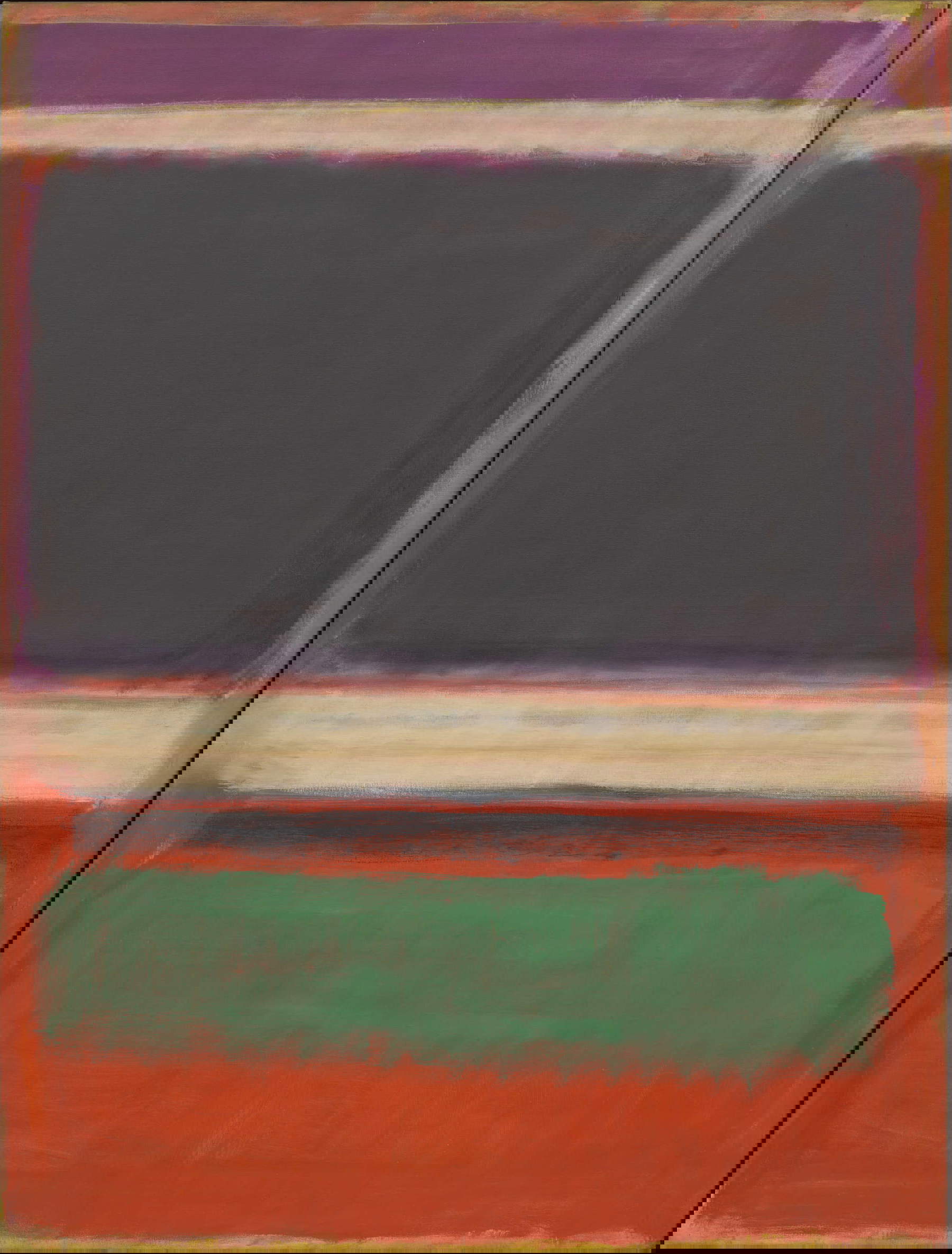
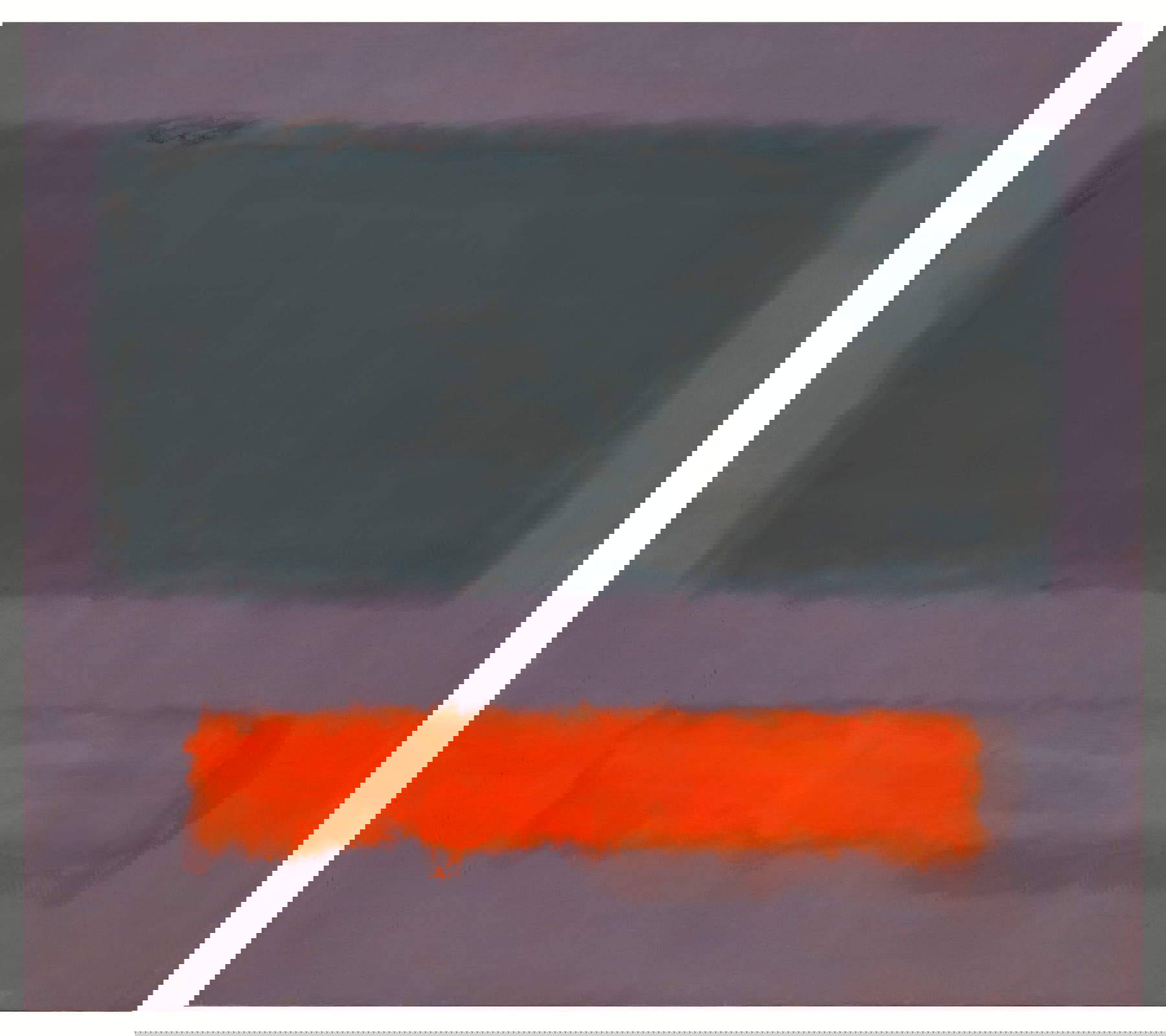
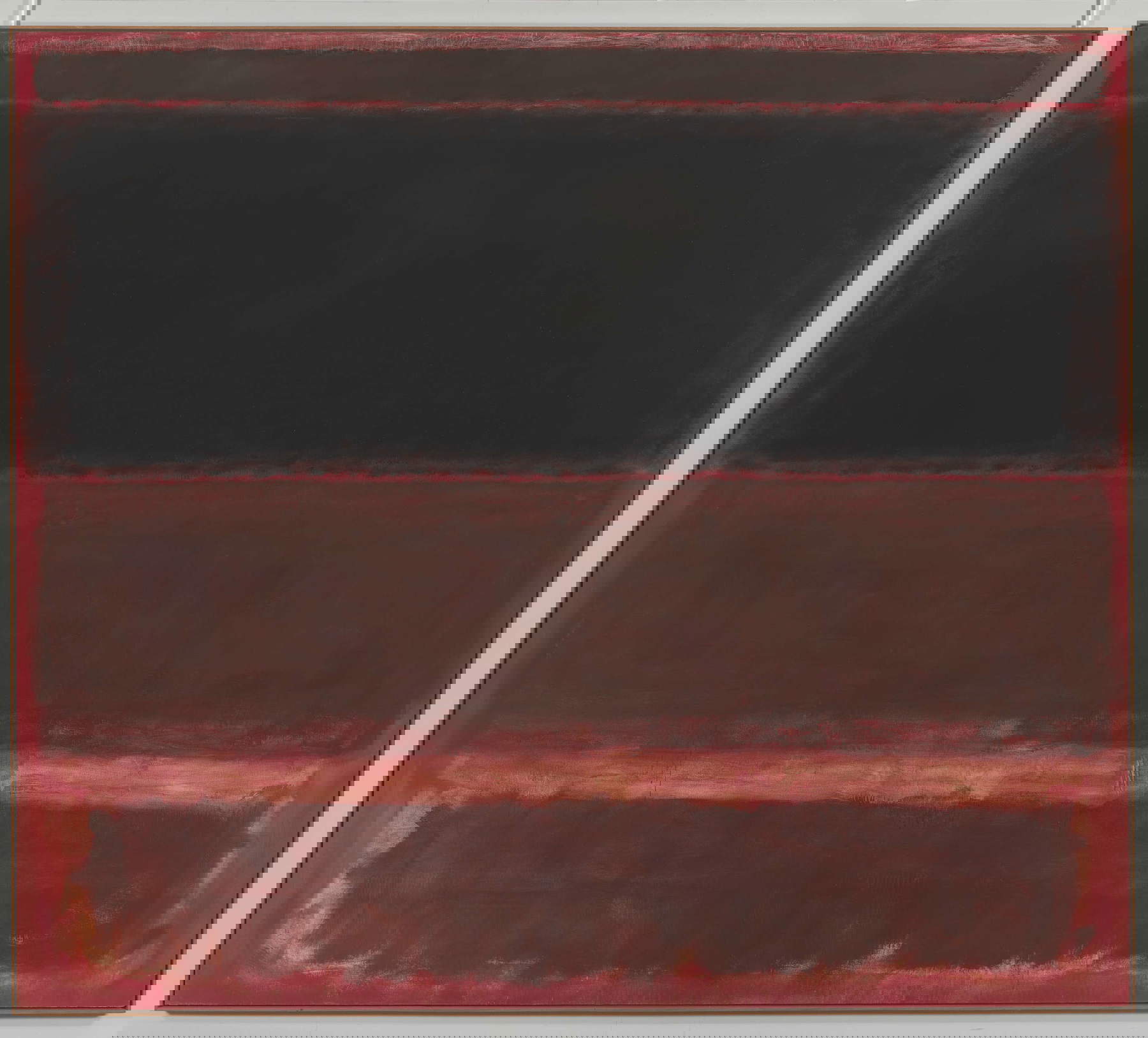
Gillo Dorfles, on the occasion of the major exhibition held in 2007 at the Palazzo delle Esposizioni in Rome, argued that Rothko’s existential struggles during the last decade—he was nearly killed by an aneurysm, he suffered from pulmonary emphysema and liver cirrhosis, compounded by a marital crisis—were at the root of the “chromatic metamorphosis” in his painting, which gradually seems to draw closer to the gates of hell; In particular, the critic highlighted how the opacity of the world—its inexplicable injustice—represented for Rothko an abyss that, while on the one hand filling him with terror, on the other hand stirred in him a desire to explore its limits. The mystical experience of sheol, the underworld, the realm of the dead according to Jewish tradition, resembles the condition that Homer—or the true author of the Odyssey—describes in Book XI of the poem: an underground place, dark, cold, and misty, inhabited by vague, incorporeal shadows. In 1958, during a lecture, Rothko stated that “all art is related to death.” The silence and emptiness that dominate his late paintings seem to be “objective correlatives” of that abyss; but might we also hypothesize that, for Mark, they were the “material” symbols of his exploration of Tikkun olam as a restorative act?
After arriving in America and eventually settling in Oregon, Mark attended various Jewish educational and community institutions in Portland and New York during his youth; this would suggest that he continued to nurture the seeds of his identity and perhaps that he was well acquainted with that concept, whose doctrine dates back to the 16th-century Kabbalah but whose dissemination beyond religious elites occurred only in modern times. Cohen-Solal, in her biography, writes that Mark “never felt at home in America.” The abilities Rothko demonstrated during his freshman year at Yale University, according to the scholar, were the resultof the imprinting he received many years earlier in Latvia while studying at a Talmudic school; his standing out among Yale students—many of whom embodied the WASP social model that discriminated against immigrants—was possible, according to the scholar, because Mark had “grown up within a robust cultural framework.”
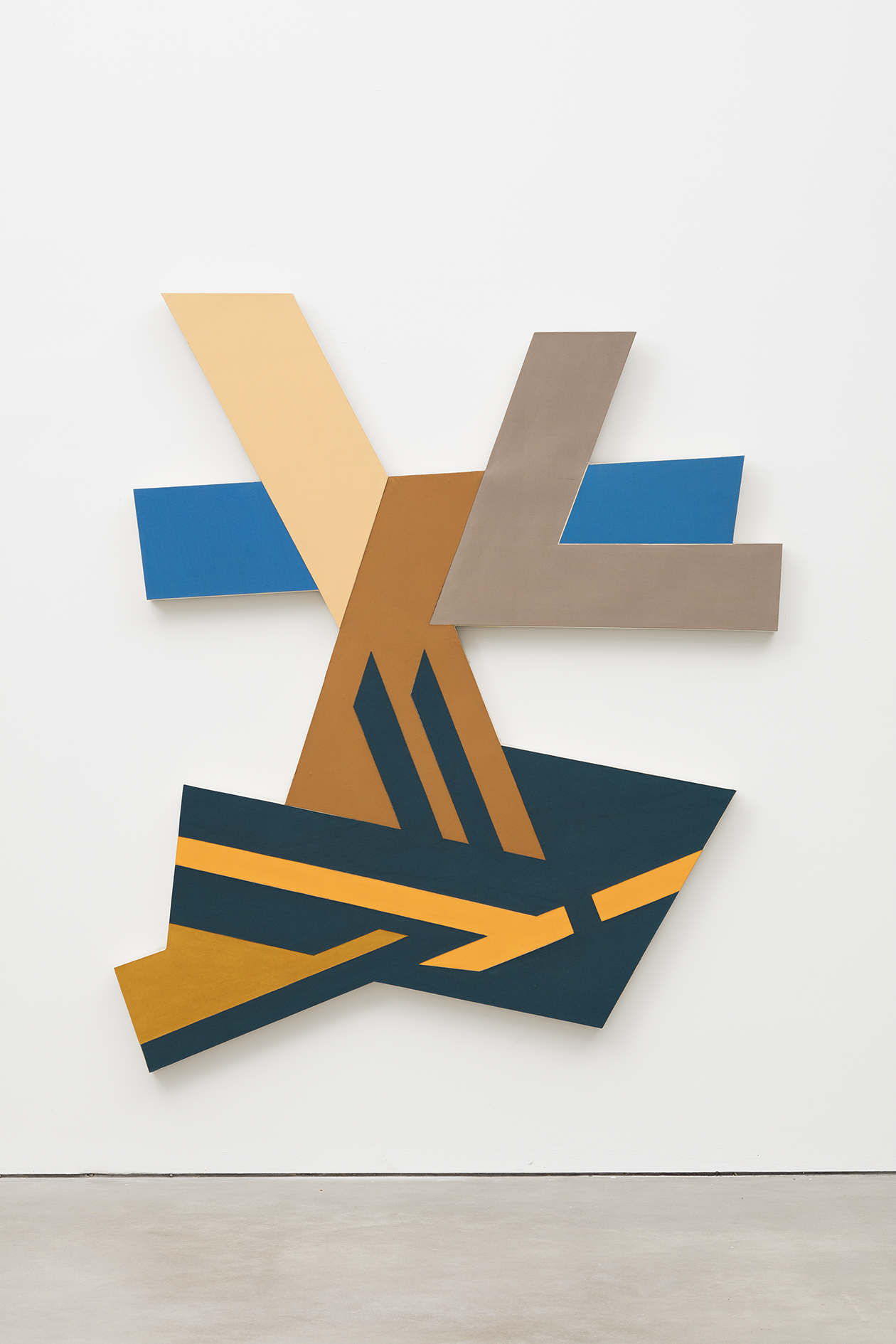
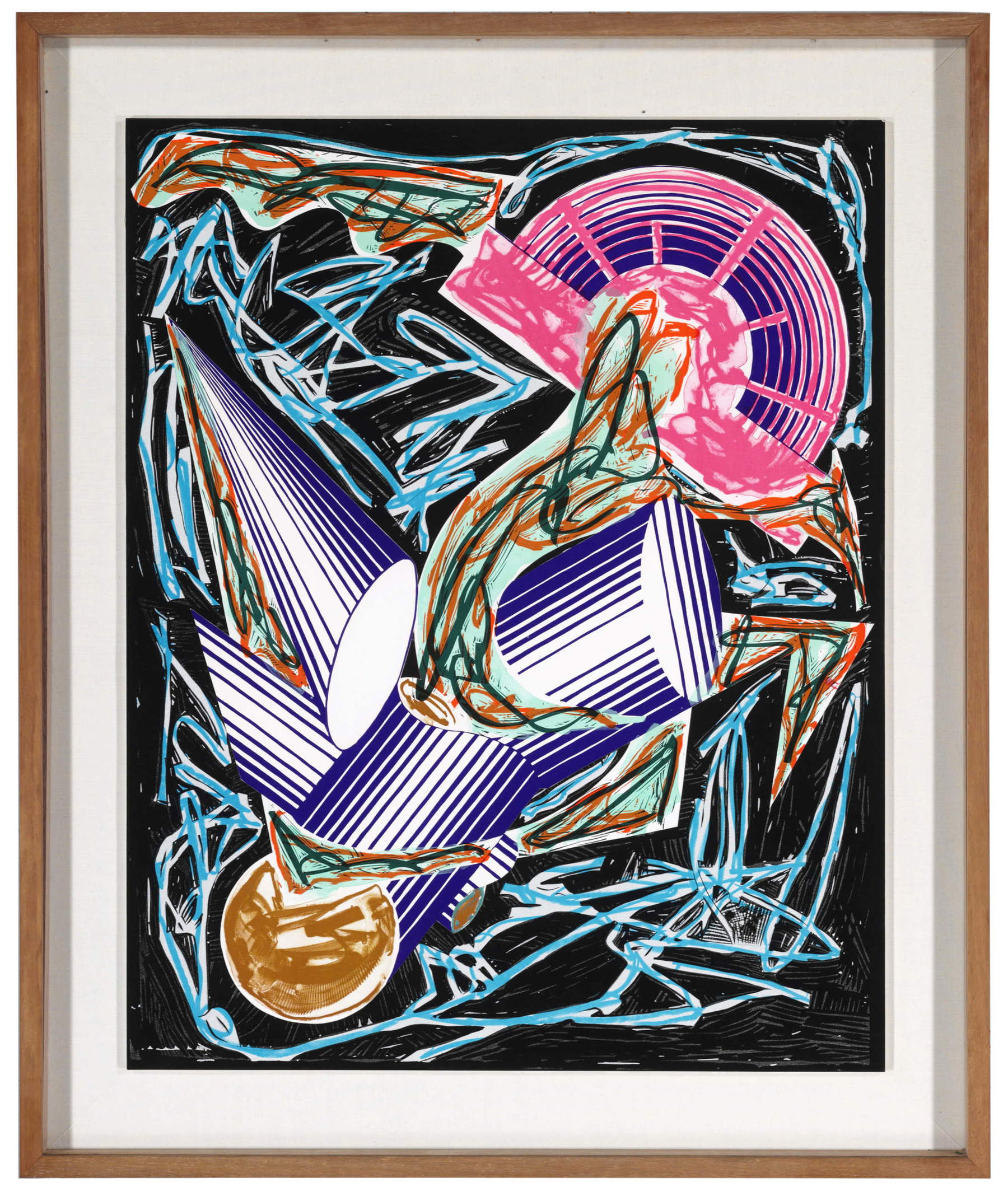
On the relationship between Judaism and the American avant-garde, one of the most important essays is the one published in 2007 by Mark Godfrey, *Abstraction and the Holocaust* (Yale University). The author discusses several works or memorials that have a direct connection to the Holocaust, largely drawing on the structure of his doctoral dissertation, which he submitted in 2002 (*The Memory of Modernism: Abstract Art and the Holocaust*). Godfrey, in particular, devotes several chapters to Barnett Newman, Frank Stella, Louis Kahn, Richard Serra, and Peter Eisenman, but none to Mark Rothko. This is not a methodological oversight, but rather the obvious consequence of a critical project aimed at documenting ideas and works in which the theme of the Holocaust is explicit in an artist’s work. Godfrey examines, for example, Frank Stella’s *Polish Villages* (1970–1974): that series of works arose from the artist’s unprecedented engagement with the Jewish question, inspired by a book published in 1959, *Wooden Synagogues*, written by Maria and Kazimierz Piechotka to document—through texts, photographs, and geometric drawings—the most important wooden synagogues in Poland that were destroyed during World War II. The photographs and drawings of the synagogues had been created for research purposes between the two world wars, primarily at the Department of Polish Architecture (ZAP) of the Faculty of Architecture at the Warsaw University of Technology. The book was given to Stella by architect Richard Meier, and it marked a radical turning point in the artist’s work; she began drawing feverishly, and between the end of summer andfall of 1970, she had already produced dozens of sketches that later became the basis for over 130 large-format works, designed using drawings on graph paper, models, and maquettes. The works had a profound impact because, in many cases, their titles were dedicated to Polish towns and villages such as Bogoria, Lanckorona, Odelsk, and Olkienniki, which had been home to synagogues before World War II. The historical reference to these Jewish sites, in fact, led Stella to revisit many works he had created prior to this series. It was, on closer inspection, a great artist’s attempt to come to terms with a tragedy embodied, among other things, by the destruction of places of worship. Evidently, this was a process that could not be fully resolved, since about ten years later, Stella himself would create a series of works inspired by Had Gadya (“A Little Goat”): an Aramaic/Hebrew song that usually concludes the Passover Seder, the ritual of the Jewish Passover. The song tells the story of cyclical violence and its end through divine redemption: a kid is eaten by a cat, which is bitten by a dog, which is beaten with a stick, and so on. The pattern mirrors that of certain nursery rhymes in which good triumphs. And the cycle, in fact, ends only with God’s intervention. Stella’s reference to that song has also been interpreted as a metaphor for the chain of persecutions that have afflicted the Jewish people since ancient times.
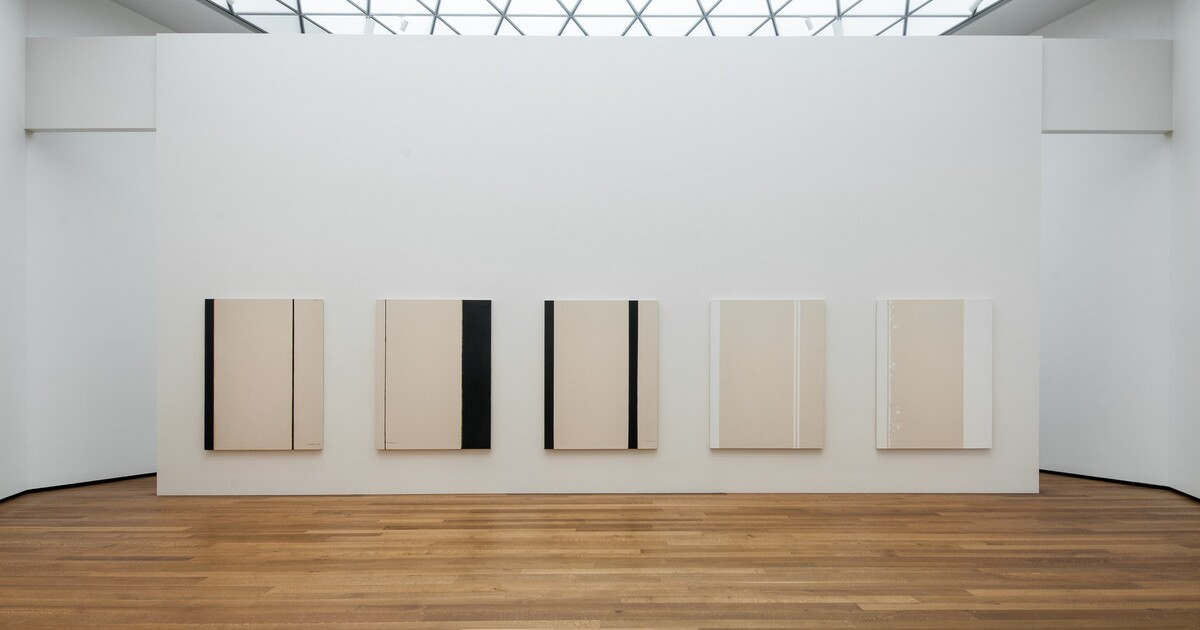
The works Godfrey examines often reveal a universality that extends beyond Judaism, as in the Stations of the Cross painted between 1958 and 1966 by Barnett Newman, who, unlike Stella, was of Jewish descent: large abstract canvases crisscrossed by vertical lines known as “zips.” The series was acquired by the National Gallery of Art in Washington after the artist’s death. The critic demonstrates that the artist sought to explore that anguished phrase Jesus uttered as he was about to die: “My God, my God, why have you forsaken me?”—a heart-wrenching cry of loneliness that echoes through the cosmos until the end of time. That question also calls into question the Jewish people after the Holocaust: “Lema Sabachthani?” is also the subtitle Newman gave to that series, which some consider his most important. A non-practicing Jew, he used this central theme of Christian theology to explore the human condition after the Holocaust. The years during which Newman was working on this series largely coincide with the period when Rothko took his painterly vision to its extreme consequences. But while in Newman’s work the implicit reference to the Holocaust is that of a secular Jew who wishes to pay homage to the persecuted—by drawing on a theme from the Christian religion, the Passion—not so much for its iconography but as a universal symbol of human suffering (which is annihilated both in the word, God’s silence, and in the image—abstract painting), in Rothko, on the other hand, the erasure of all figurative signs does not explicitly refer to the Holocaust, but makes us feel the full drama of his descent into the place where death reveals itself as the breaking point for human thought. A sort of suspended meditation on the void: like Dalí’s crucifix, which depicts the absolute vertigo of that cross pointing, like a spear, toward the infinite sky—or rather, the abyss—and finds its inspiration in the famous vision of Juan de la Cruz, who, in ecstasy, had depicted the crucifixion from a bird’s-eye view broken by two vanishing points, to which Dalí added a dizzying dimension.
While Godfrey addresses the Holocaust in contemporary art through artists who have shaped the history of art in the second half of the 20th century, other scholars have explored Jewish identity from an almost “confessional” perspective. Twenty years ago, a year before Godfrey’s essay, Syracuse University Press published Matthew Baigell’s book, *American Artists, Jewish Images*, examining the work of 15 20th-century Jewish artists—most of whom are absent from contemporary art history textbooks—but whose “knowledge of religion, culture, and traditions must have influenced their creative process.” Examining the way Baigell approaches the work of those artists, Menachem Wecker—an American painter and contributor to the *Washington Post*—noted the persistent contradiction that shapes this debate: on the one hand, Jewish art can be considered too Jewish if it takes its ethnic content more seriously than its own aesthetic identity, on the other hand, it does not appear Jewish enough if it uses its Jewish content only in a casual manner, “as is the case with most of the works chosen by Baigell.” True Jewish art, Wecker concludes, must be “bilingual”—that is, it must respond both to strictly artistic values, universal so to speak, and to the exploration of Jewish content or themes.
The desire of some critics to associate Rothko with Judaism—with ever-increasing conviction—also raises some doubts. One might wonder, for example, why Godfrey did not devote a specific chapter to the American painter? Yet the argument he addresses has a significance that can also encompass Rothko, because it represents a question posed to every contemporary artist in the wake of the Holocaust. The English critic raises issues that remain at the heart of postwar Western thought: for example, he examines the role that abstract art has played in taking on the lesson learned from the Shoah, making its own the call by Theodor Adorno and Maurice Blanchot for Western society to recognize “thinking with pain” as philosophy’s only possibility.
Pain is not an abstract theme or a mere subject of study: Ludwig Wittgenstein, in his *Philosophical Investigations*, thoroughly explores this reality, which becomes the very driving force behind a way of thinking opposed to consolatory solutions and easy reconciliation, and one that engages with totality. Pain is the extremely concrete; objectivity without interpretation—this is how Wittgenstein viewed it when he argued that one must “say only what can be said,” or, as he wrote in the *Tractatus Logico-Philosophicus*, his only work published during his lifetime, “Whereof one cannot speak, thereof one must be silent.”
The Austrian philosopher, whose relevance today stems primarily from his posthumous writings, offered reflections that closely align with Rothko’s vision of painting: “For man, what is eternal and important is often covered by an impenetrable veil. Man knows that there is something beneath it, but he does not see it. The veil reflects the light of day” (Miscellaneous Thoughts). Wittgenstein pondered pain as pure immanence, equating it with the “thing”—that is, a reality that should not depend on subjective interpretation—and trying to understand whether he could still call what he felt “pain”: “I turn to stone, and my pain continues. What if I were wrong and it were no longer pain!?”; but also: “Look at a stone and imagine that it has sensations!” This is a very useful perspective for interpreting art that has pursued the post-organic chimera—even through performance art that intersects with the artist’s life, taking on the burden of technology’s intrusion into the human body; from certain Austrian action artists like Brus and Schwarzkogler, to Orlan’s “plastic surgery” and Stelarc’s body art embedded with electronic or robotic elements, the artists of the late 20th century pushed themselves to the ultimate limit of their bodies reduced to “things,” that is, to an obsolete reality, tormenting it in various ways or hybridizing it with technological prostheses that bring to the forefront what has also been called “terminal realism,” where humanity—confined within the concentration-camp-like regime of hyper-dense metropolitan areas—has lost all connection with nature and its “wisdom,” and has become prey to digital technologies: in a certain sense, this is a classical form of mimesis updated with new technology designed to achieve a state of individual apathy that allows the “object-man” the “object-man,” to determine his own posthuman destiny without looking away—in other words, to “de-subjectivize” the meaning of the end by freeing himself from the fears that persist in the face of non-being and death (see Philosophical Investigations 284).
The approach Wittgenstein takes to reflecting on pain can also be compared to the logic with which Rothko uses color in juxtaposed glazes that render reality through an opaque mirror: “Now we see through a glass, darkly,” wrote Saint Paul, using as a metaphor an object of his time: ancient mirrors, in fact, were made of polished bronze or brass, and thus reflected little more than a shadow—that is, a vague image. Man’s imperfect knowledge requires a spiritual transfiguration which, for the Christian Paul of Tarsus, comes from divine grace. But Rothko is so worn down by his suffering and by the absurdity of what he sees in the world that he certainly no longer reasons like the believer he may once have been—that is, by placing his trust in divine compassion; on the contrary, even as a Jew, his sense of being stateless and of belonging to the chosen people has been eroded to the point of doubting God’s faithful, active, and benevolent love toward the Israelites, according to a covenant no longer tenable after the Shoah, which brings to light the mistrust upon which a debate—still ongoing after the Holocaust (even within Christianity itself)—has grown. Spinoza had cast doubt on the category of the “chosen people,” a criticism that earned him excommunication. The immanence that Baruch Spinoza places at the center of human destiny—the necessity of all things for the attainment of an end that is human bliss and the liberation of humankind—is possible if reason comprehends this necessity by loving reality for what it is (amor Dei intellectualis). Starting from this, to what extent can we imagine that Rothko might have projected his own existential anxiety onto the horizon evoked by Adorno and Blanchot after the war? The Sword of Damocles after the Holocaust: painting with pain is the new, non-negotiable necessity, and it stems from the conatus through which the artist seeks to understand the intersection between God and humanity, moving beyond the image of the “Chosen People.”
For Wittgenstein, the question “What is pain?” becomes: “What is pain?”. The omission of the article reignites that uncertainty regarding the ineffable horizon that is veiled to protect us from absolute light. And Wittgenstein’s question overturns the condition of negative thought: what is not pain; that is, it revives, in logical terms, the apophatic line of thought of Dionysius the Areopagite, and later of Nicholas of Cusa, who give voice to mysticism as expressive silence. What does the physical pain I accidentally experience when I hit my finger with a hammer or when I injure myself with an object have in common with the pain I feel when I suffer a moral offense or when a loved one passes away?
The “warum”—the “why” of Leibniz and Heidegger—raises the question anew: “Why do entities exist rather than nothingness?” And Wittgenstein responds indirectly as follows: “Philosophers are often like children who first scribble marks with a pencil on a sheet of paper and then ask the adult, ‘What is this?’” (1931, “Various Thoughts”). Rothko and Wittgenstein find themselves here, each responding in their own way, and the philosopher goes so far as to say that the representation of pain enters into the linguistic game, but not as an image. Rothko’s abstract painting, on the other hand, is, after all, the boundary that allows us to envision what cannot be reduced to an image; it is the result—or the point of arrival—that, like the mystics, enables us to speak of what cannot be said except by giving form to silence. Come to think of it, this path is not so different from the Platonic one, which revolves around—without ever directly converging on—the ineffable divine. But Rothko made that ineffable aspect an even more terrifying horizon when he painted canvases that erect “walls” against the inexpressible magnitude of the genocidal cataclysm.

The author of this article: Maurizio Cecchetti
Maurizio Cecchetti è nato a Cesena il 13 ottobre 1960. Critico d'arte, scrittore ed editore. Per molti anni è stato critico d'arte del quotidiano "Avvenire". Ora collabora con "Tuttolibri" della "Stampa". Tra i suoi libri si ricordano: Edgar Degas. La vita e l'opera (1998), Le valigie di Ingres (2003), I cerchi delle betulle (2007). Tra i suoi libri recenti: Pedinamenti. Esercizi di critica d'arte (2018), Fuori servizio. Note per la manutenzione di Marcel Duchamp (2019) e Gli anni di Fancello. Una meteora nell'arte italiana tra le due guerre (2023).
Warning: the translation into English of the original Italian article was created using automatic tools. We undertake to review all articles, but we do not guarantee the total absence of inaccuracies in the translation due to the program. You can find the original by clicking on the ITA button. If you find any mistake,please contact us.




















 IT
IT FR
FR DE
DE ES
ES CN
CN


