




by Redazione 14/10/2026



Categories: Archaeology / Disclaimer
Archaeological excavations conducted by Ca’ Foscari University of Venice have unearthed an impressive complex near the ancient city of Sirkap in Pakistan. The discovery opens up new avenues of research into the history of Taxila.


An ancient monument nearly 100 meters long and over 50 meters wide has been unearthed in Taxila, Pakistan, thanks to excavations by the Italian Archaeological Mission of Ca’ Foscari University of Venice. The complex, identified as Jandial D, is located near the ancient fortified city of Sirkap and may offer new insights into the organization of monumental spaces in the Gandhara region. Its function remains to be clarified, but its size and location make the discovery particularly significant for archaeological research.


The discovery is the result of the Khyber PATH project, carried out in collaboration with the Directorate General of Archaeology and Museums of the Pakistani province of Khyber Pakhtunkhwa and funded by the Italian Agency for Development Cooperation (AICS).
Investigations at the Jandial D complex began in mid-August 2026 and revealed a structure of considerable size, with walls preserved to a height of at least one meter and, in some places, even higher.


The monument stands opposite the famous Ionic temple of Jandial, outside the walls of ancient Sirkap. Although it had already been noted in 1864 by the British archaeologist Alexander Cunningham, the complex had never been subjected to a systematic investigation. The current excavations therefore represent a first step toward a deeper understanding of an archaeological area that has remained largely unexplored until now. The building’s location is particularly interesting: Jandial D is situated along the ancient route that led from the northern gate of Sirkap toward Gandhara. This location could help clarify the role of monumental structures situated outside the urban perimeter and their relationship to the organization of the territory.


The original purpose of the monument has not yet been determined. Hypotheses include the possibility that it was a public or religious structure, but only as the investigation progresses will it be possible to determine its function, chronology, and connections to other buildings in the area.
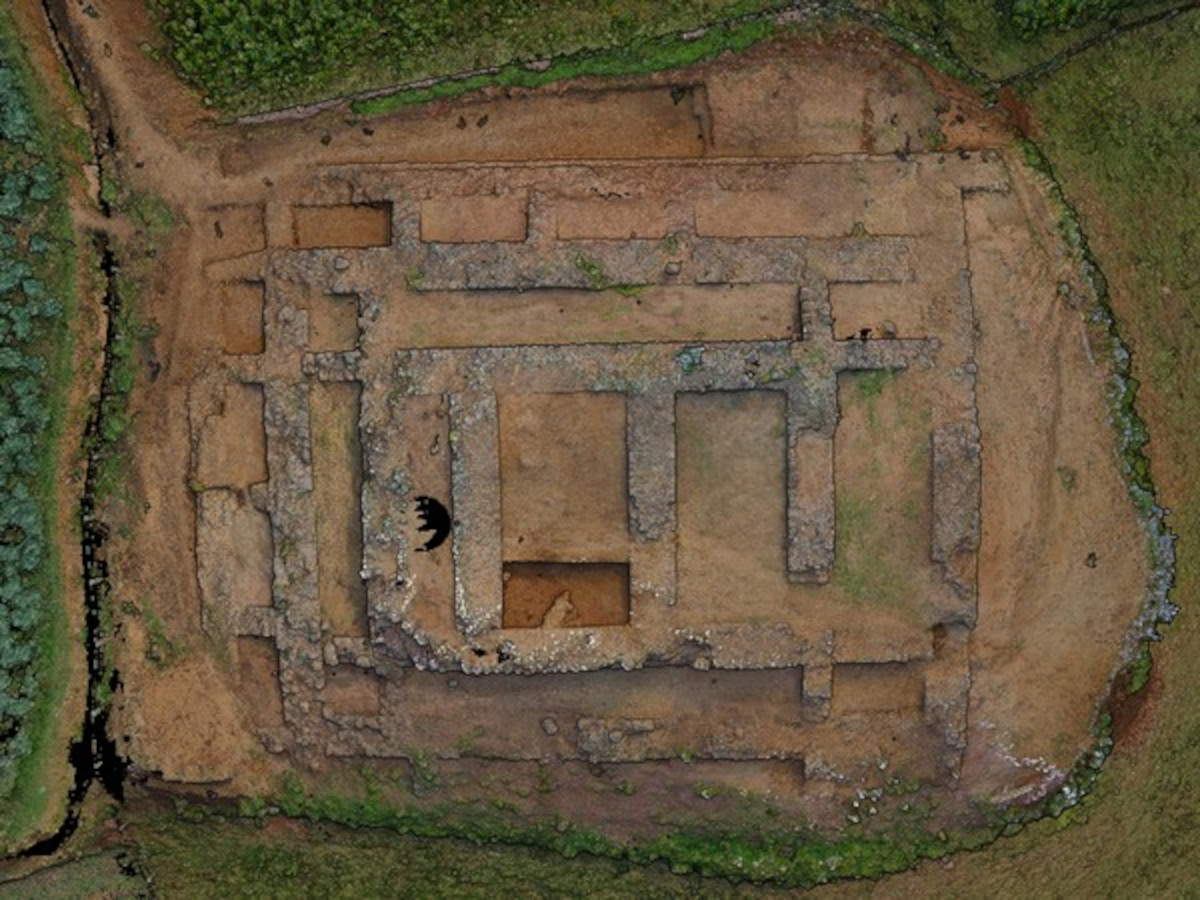
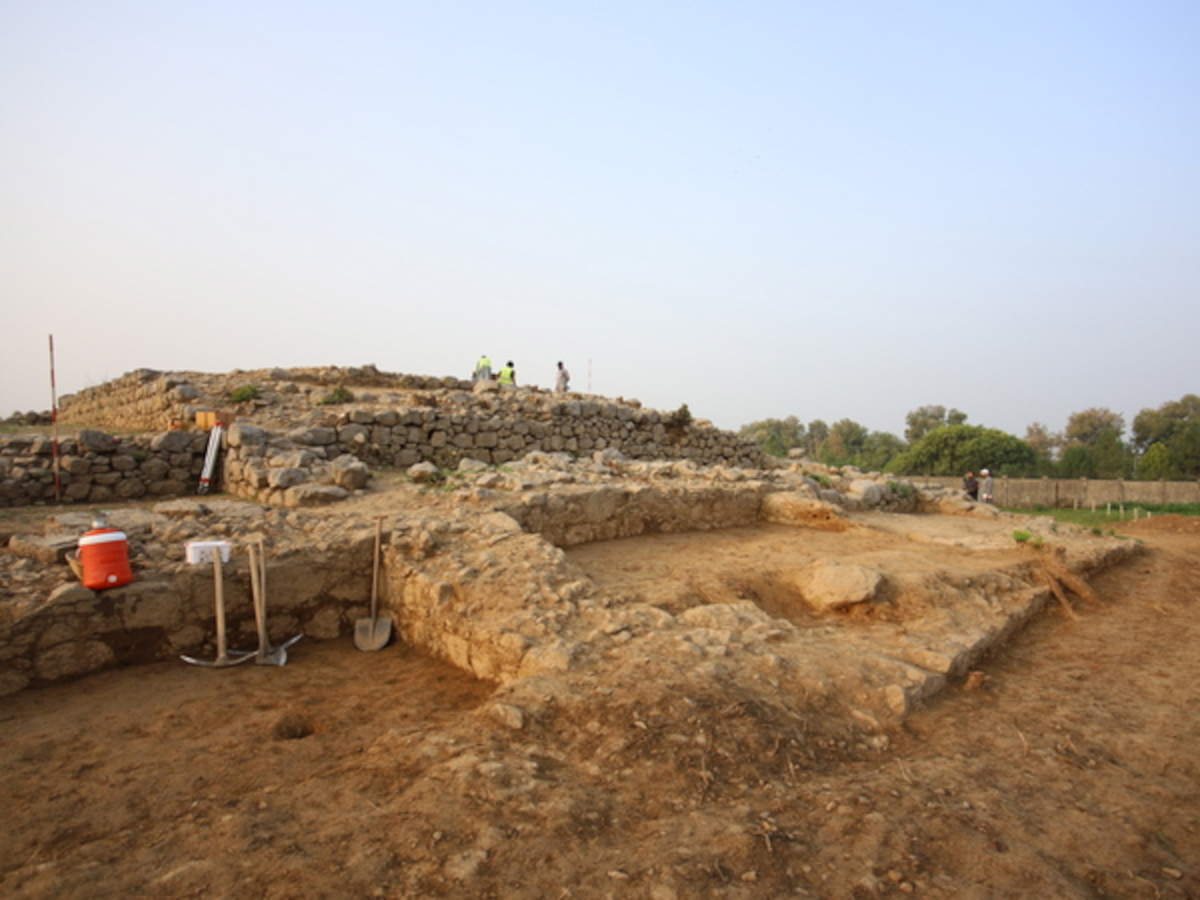
The discovery is particularly significant in the context of Taxila, one of the major historical centers of Gandhara, a region that served as a major crossroads of cultures and traditions in South Asia. The new archaeological evidence confirms the site’s scientific potential and the need to expand research activities to include even the lesser-known aspects of its heritage.
In addition to its research potential, the discovery draws attention to the preservation of a heritage of great historical value, which today faces pressures from urban expansion. The Taxila area contains important archaeological sites recognized by UNESCO and requires ongoing efforts in documentation, protection, and enhancement. Opposite Jandial D, a section of the ancient rammed-earth fortification of Sirkap, known as Kacha-Kot, also remains. This structure, too, requires adequate conservation measures to ensure that the evidence of the past can be preserved and studied over time.
The excavation campaign at Jandial is part of the Khyber PATH project, which was launched a year ago and is active at eight archaeological sites in the province of Khyber Pakhtunkhwa, from the Swat Valley to the Taxila area. The initiative is led by the Italian Archaeological Mission of Ca’ Foscari University of Venice in collaboration with the General Directorate of Archaeology and Museums of the Pakistani province, with logistical and financial support from ISCOS.
Among the sites involved in the project is Bazira, also known as Barikot, in the Swat Valley, which is included on UNESCO’s Tentative List of World Heritage Sites. In Sirsukh, in the Taxila area, activities focus on the excavation, exposure, and conservation of various sections of the ancient fortifications.
Through collaboration between Italian and Pakistani institutions, Khyber PATH combines scientific research with the protection of archaeological sites, helping to deepen our understanding of a region that is fundamental to the cultural history of South Asia.
The value of the mission’s work was also recognized through an award presented by the Ambassador of Pakistan, H.E. Ali Javed. Syed Tauqir Hussain Shah, advisor to the Pakistani Prime Minister and federal minister, attended the ceremony as a guest of honor. Representing Ca’ Foscari University of Venice was Elisa Iori, a researcher and deputy director of the Italian Archaeological Mission, led by Luca Maria Olivieri, professor of Central Asian and Indian Archaeology in the Department of Asian and Mediterranean African Studies.
The discovery at Jandial D is part of a broader program of international research and cooperation, aimed not only at unearthing new evidence of the past but also at ensuring its preservation. Future investigations may help shed light on the monument’s history and better define its role within the archaeological landscape of Taxila. “The discovery confirms the richness and unpredictability of the region’s archaeological heritage. The structure’s monumental dimensions and its strategic location raise new questions about the ancient landscape of Sirkap and the entire Gandhara region,” said Olivieri, coordinator of Ca’ Foscari’s Italian Archaeological Mission in Pakistan.
|
| Pakistan: An ancient monument nearly 100 meters long has been rediscovered in Taxila; the Italian expedition uncovers Jandial D |
Warning: the translation into English of the original Italian article was created using automatic tools. We undertake to review all articles, but we do not guarantee the total absence of inaccuracies in the translation due to the program. You can find the original by clicking on the ITA button. If you find any mistake,please contact us.