



by Redazione 19/10/2026


Categories: Art and artists / Disclaimer
The art therapy project sponsored by Villa di Salute in Trofarello (Turin) brings an immersive artwork to the Marzanati Cultural Center—created by patients in collaboration with artist Dao Thi Mi Linh using old sheets from the former mental hospital.


Art can serve as a bridge between people, a tool for overcoming the stigma associated with mental illness and creating space for those who are often marginalized by society. It is from this conviction that KOMÉO was born, an art therapy and cultural welfare project promoted by Villa di Salute, a psychiatric rehabilitation clinic in Trofarello ( Turin) belonging to the emeis Italia Group, which specializes in the care and treatment of vulnerable individuals.

The name, derived from the ancient Greek word κομέω, meaning “to heal” and “to care for,” encapsulates the essence of the initiative: transforming the artistic experience into an opportunity for connection, personal expression, and collective participation. Conceived within the facility’s Psychology and Rehabilitation Service by Dr. Barbara Alessio—a psychologist, psychotherapist, and Art Director of the D’Acqua Art Collective—the project engaged resident patients in a shared creative journey.
They were guided by artist Dao Thi Mi Linh, whose work focuses on space, matter, and human relationships. The result isan immersive installation that will be unveiled on October 22 in the Velario of the Marzanati Cultural Center, at the “Lelio Basso” Public Library, with the sponsorship and support of the City of Trofarello. The initiative renews the bond between the clinic and the local community, bringing to a public space a work that invites reflection on mental health, fragility, and the value of inclusion.


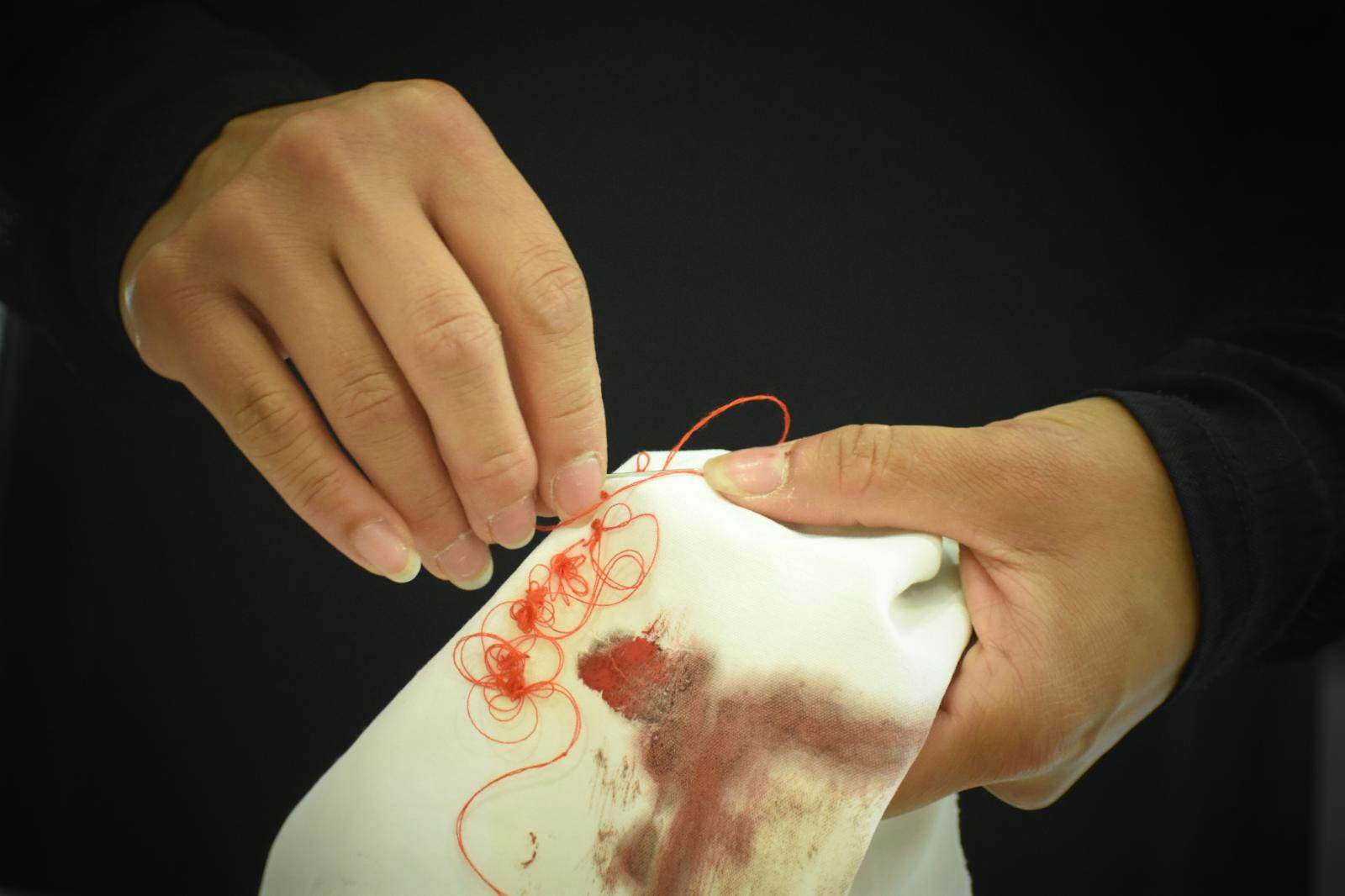
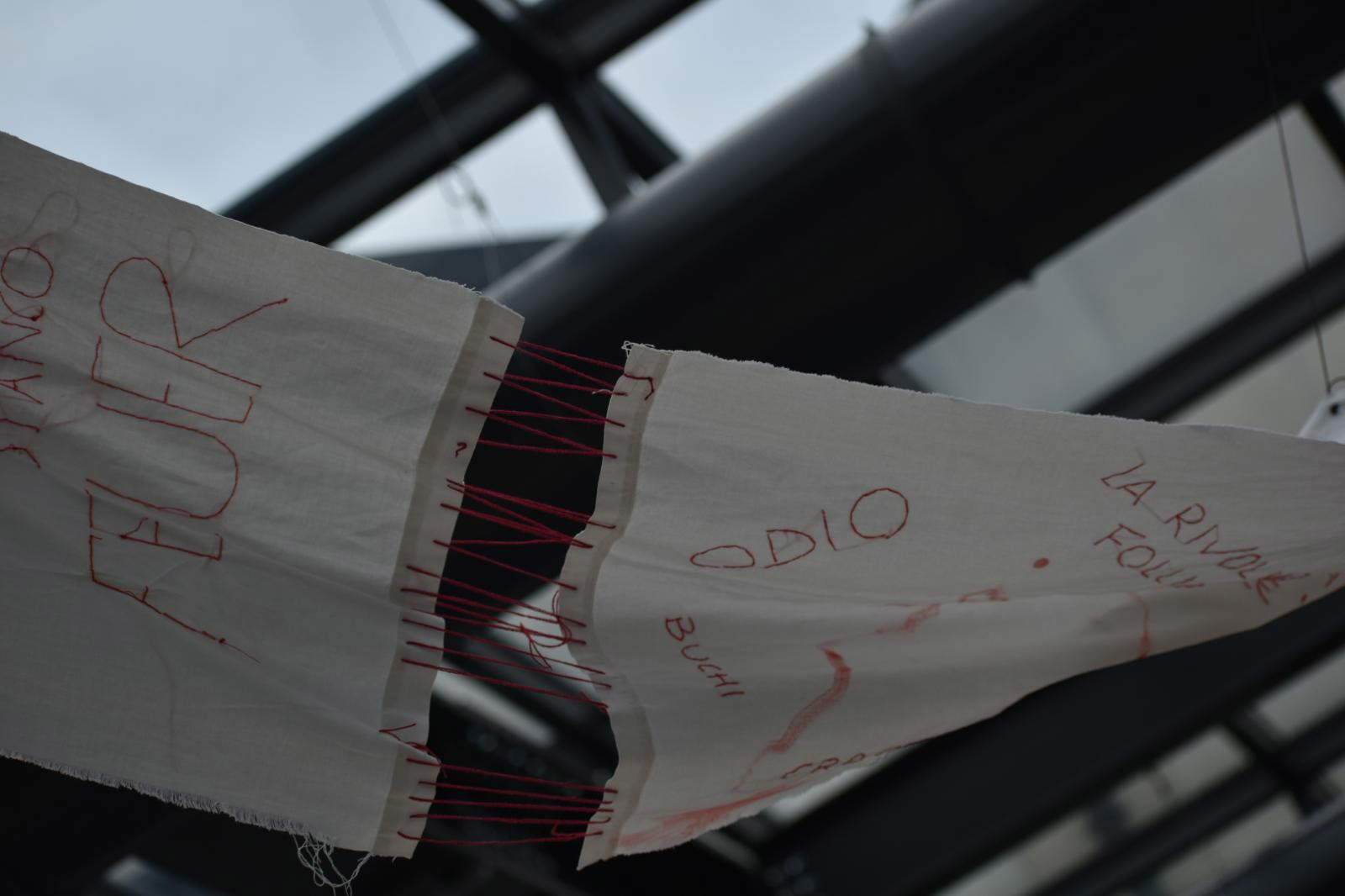
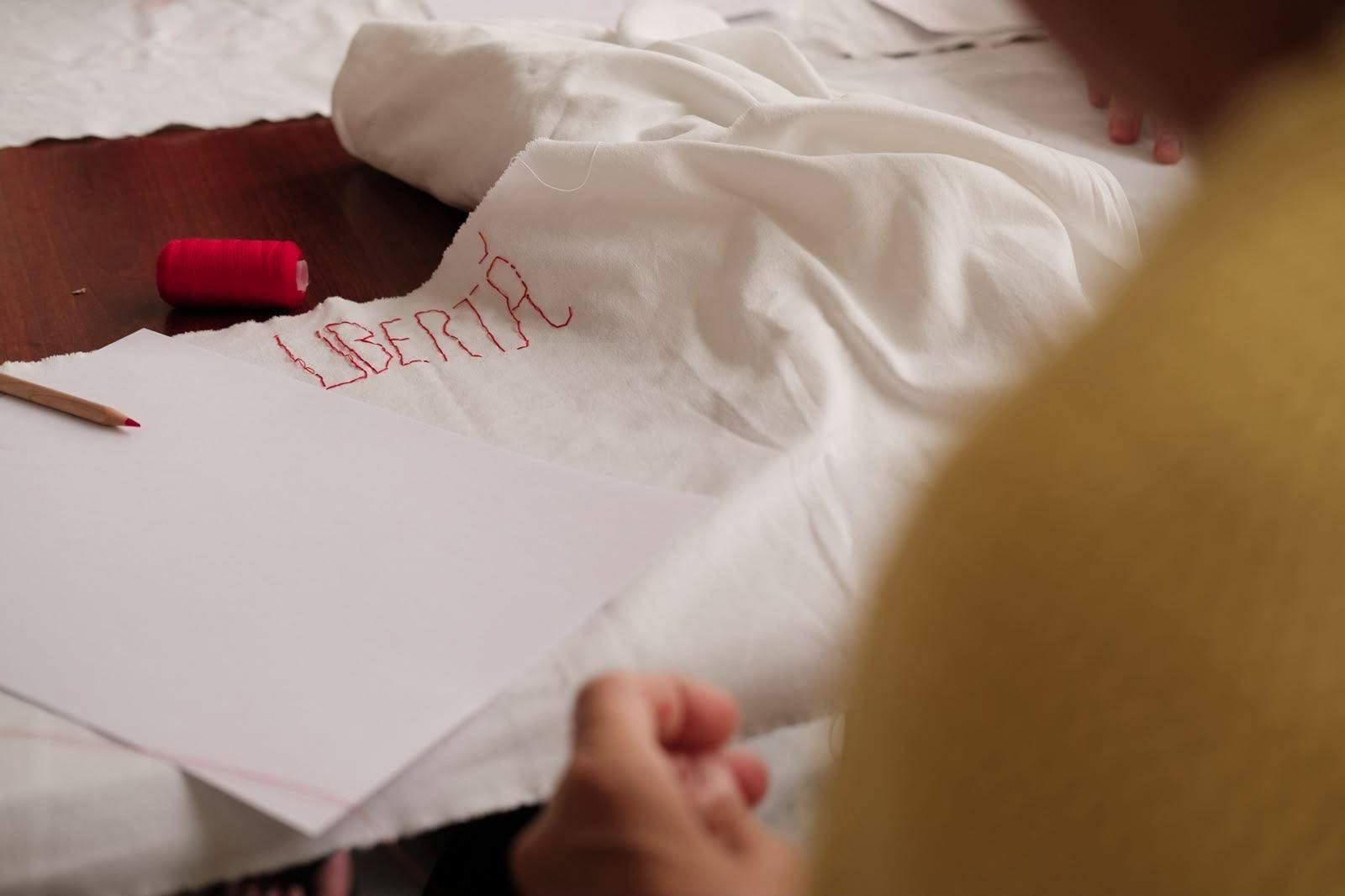
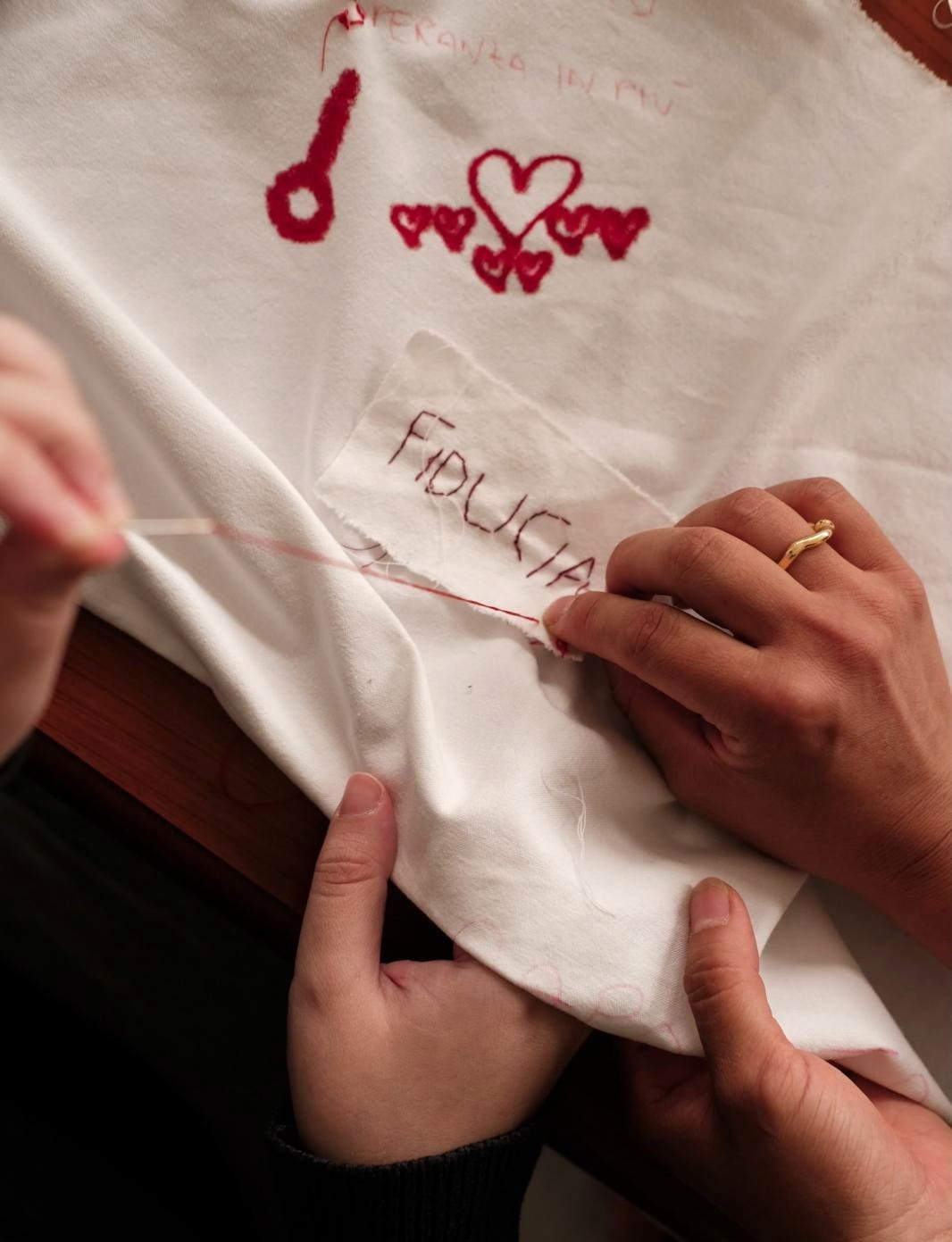
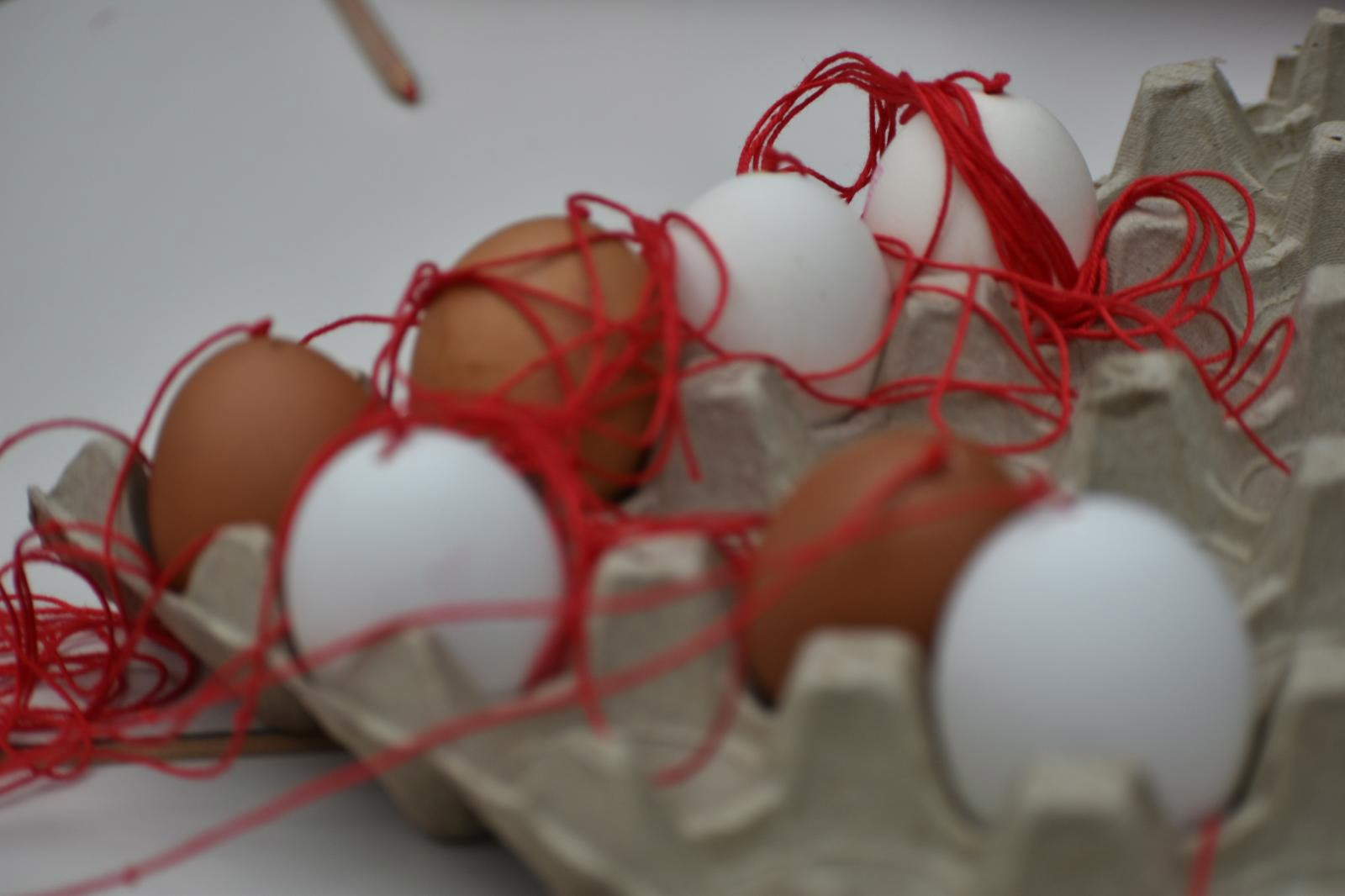
At the heart of the installation are the antique sheets from the former Trofarello mental hospital, transformed by the patient-artists of the Collettivo D’Acqua through cuts, embroidery, and paintings created with egg tempera. Words evoking suffering—but also the possibility of rebirth and finding a new balance—have been imprinted on the fabrics. The sheets, suspended from the ceiling like large sails, create a dramatic composition from which cascades of red and garnet-colored threads flow. These elements, a hallmark of Dao Thi Mi Linh’s artistic language, represent the bonds capable of supporting and guiding the healing journey. On the floor, a large stone symbolizes the weight of illness: a solid, cumbersome presence that, through connection and care, can be confronted and made lighter. Beside it are hollowed-out eggshells—images of regeneration and rebirth—that engage in a dialogue with reworked medical records dating back to the early 20th century. These documents reveal fragments of individual stories and, through artistic intervention, are rescued from oblivion to be viewed from a different perspective—one free from judgment and attentive to human dignity.
With KOMÉO, artistic creation becomes a shared experience that weaves together historical memory, participation, and rehabilitation. The installation does not merely display objects and materials but creates a space for encounter where personal experiences can find an expressive form and become part of a collective narrative.
Opening the work to the public reinforces the project’s social value: bringing art therapy outside clinical settings fosters dialogue among patients, citizens, and institutions, helping to combat prejudices about mental health. The journey proposed by KOMÉO thus invites us to view care not only as a therapeutic intervention but also as a practice rooted in listening, relationships, and mutual recognition. Through fabrics marked by time, threads that unite, and materials that evoke rebirth, art becomes a tool for restoring value to individual stories and building new possibilities for inclusion.
“With KOMÉO, we wanted to demonstrate the power of art therapy when it engages with institutions and the community,” states the management of Villa di Salute (emeis Italia Group). “The young people of the Collettivo D’Acqua, under the guidance of Dr. Alessio and with the talent of Dao Thi Mi Linh, demonstrate that fragility does not extinguish the ability to create beauty and engage with the world. As the emeis Group, we believe that healing always involves social inclusion as well.”
“We gratefully welcome the KOMÉO exhibition, the first event organized in collaboration with Villa di Salute and its Collettivo d’Acqua—a shared journey that opens new horizons for cultural and social collaboration,” says the Mayor of Trofarello, Stefano Napoletano. “The exhibition brings the works of international artist Dao Thi Mi Linh to Trofarello, offering the city an opportunity for deep reflection on the themes of memory and healing. Remembering is healing: a phrase that encapsulates the essence of the entire project and the value of the relationship between the Municipality of Trofarello and Villa di Salute, founded on the desire to restore dignity, a listening ear, and visibility to the stories that inhabit that place. KOMÉO is not just an exhibition, but the beginning of a broader journey that will take shape in the project *Il Salotto di Villa di Salute*, dedicated to video interviews and stories that will allow the residents of Trofarello to gain an intimate understanding of the history and life of this place.”
The KOMÉO installation is open to the public free of charge for two months at the Velario of the Marzanati Cultural Center (“Lelio Basso” Public Library, Via Cesare Battisti 25, Trofarello) during the Center’s regular hours. On Thursday, October 29, at 8:45 p.m., the venue will host an open presentation followed by a discussion on the themes of art and mental health.
|
| From the sheets of a former mental hospital comes a work of art that heals: in Trofarello, patients become artists |
Warning: the translation into English of the original Italian article was created using automatic tools. We undertake to review all articles, but we do not guarantee the total absence of inaccuracies in the translation due to the program. You can find the original by clicking on the ITA button. If you find any mistake,please contact us.