


by Redazione 19/10/2026


Categories: Exhibitions / Disclaimer
From October 20, 2026, to April 4, 2027, the Museo degli Innocenti in Florence is hosting an exhibition dedicated to Artemisia Gentileschi’s years in Florence. More than 50 works trace the path that led the painter to establish herself in Medici-era Florence.


In the Florence of the Medici, Artemisia Gentileschi solidified her artistic identity, measuring herself against the great masters of the time and carving out a place for herself in a cultural milieu dominated by men. The exhibition *Artemisia Gentileschi in Florence*, scheduled at the Museo degli Innocenti from October 20, 2026, to April 4, 2027, is dedicated to this pivotal phase of her career. Curated by Cristina Acidini, Sandro Bellesi, and Costantino D’Orazio, the exhibition aims to refocus attention on the years the artist spent in Florence, between 1613 and 1620, when prestigious commissions and her engagement with Florentine intellectual circles contributed to her rise to prominence. Through more than fifty works from over forty Italian and international museums, foundations, and collections, the exhibition seeks to reconstruct a pivotal chapter in 17th-century painting, highlighting Artemisia’s ability to reinterpret Caravaggio’s legacy through her own original sensibility.

Artemisia arrived in Florence in her early twenties, following the trial against Agostino Tassi and her marriage to the Florentine Pierantonio Stiattesi. The city that welcomed her was a vibrant and competitive cultural hub, animated by the court of Cosimo II de’ Medici, the Grand Duchess Mother Christina of Lorraine, and Maria Magdalena of Austria, Grand Duchess Consort of Tuscany. In this context, the painter came into contact with artists, intellectuals, and important patrons, securing commissions that allowed her to develop her own artistic language and establish the value of her work. In 1615, some of her works were commissioned for the Medici villa at Artimino, while at the same time Michelangelo Buonarroti the Youngerenlisted her to help decorate Casa Buonarroti. Artemisia was the only woman invited to participate in this important collective endeavor, alongside some of the most highly regarded Florentine artists. She createdthe Allegory of Inclination (1615–1616), a work dedicated to vocation and the inner strength that guides each person toward their destiny.


Further recognition came in 1616, when she was admittedto the Accademia delle Arti del Disegno in Florence: she was one of the first women to join this prestigious institution. This was a significant milestone, attesting to the position she had earned through her own abilities in a professional world where women still faced numerous obstacles.

The exhibition brings together paintings held in various locations, some of which are rarely seen by the public or have been loaned on an exceptional basis. Among the institutions involved are the Vatican Museums, the Uffizi Galleries and Palazzo Pitti, the Capodimonte Museum, the Houghton Hall Collection, Palazzo Madama—Civic Museum of Ancient Art in Turin, the Casa Buonarroti Foundation, the National Gallery of Umbria, the National Art Gallery of Bologna, and the National Gallery of the Marche.
Artemisia’s works are presented alongside paintings by other leading figures in 17th-century Florentine painting, including Cristofano Allori, Francesco Furini, Cesare Dandini, Giovanni Martinelli, Filippo Tarchiani, Ottavio Vannini, Lorenzo Lippi, Il Volterrano, and Jacopo Vignali. This comparison offers insight into the characteristics of an artistic period in which different traditions converged and influenced one another.
In Artemisia’s paintings, Caravaggesque naturalism and dramatic tension blend with the compositional elegance and rich color palette of the Florentine school. Her protagonists, drawn from sacred history and mythology, are figures with a strong emotional presence: Judith, Mary Magdalene, Cleopatra, and Catherine emerge from the canvases with intense gestures, piercing gazes, and a physicality that invites the viewer to examine every detail closely. A comparison with other painters highlights how the same subject can take on different meanings depending on the artist’s sensibility.
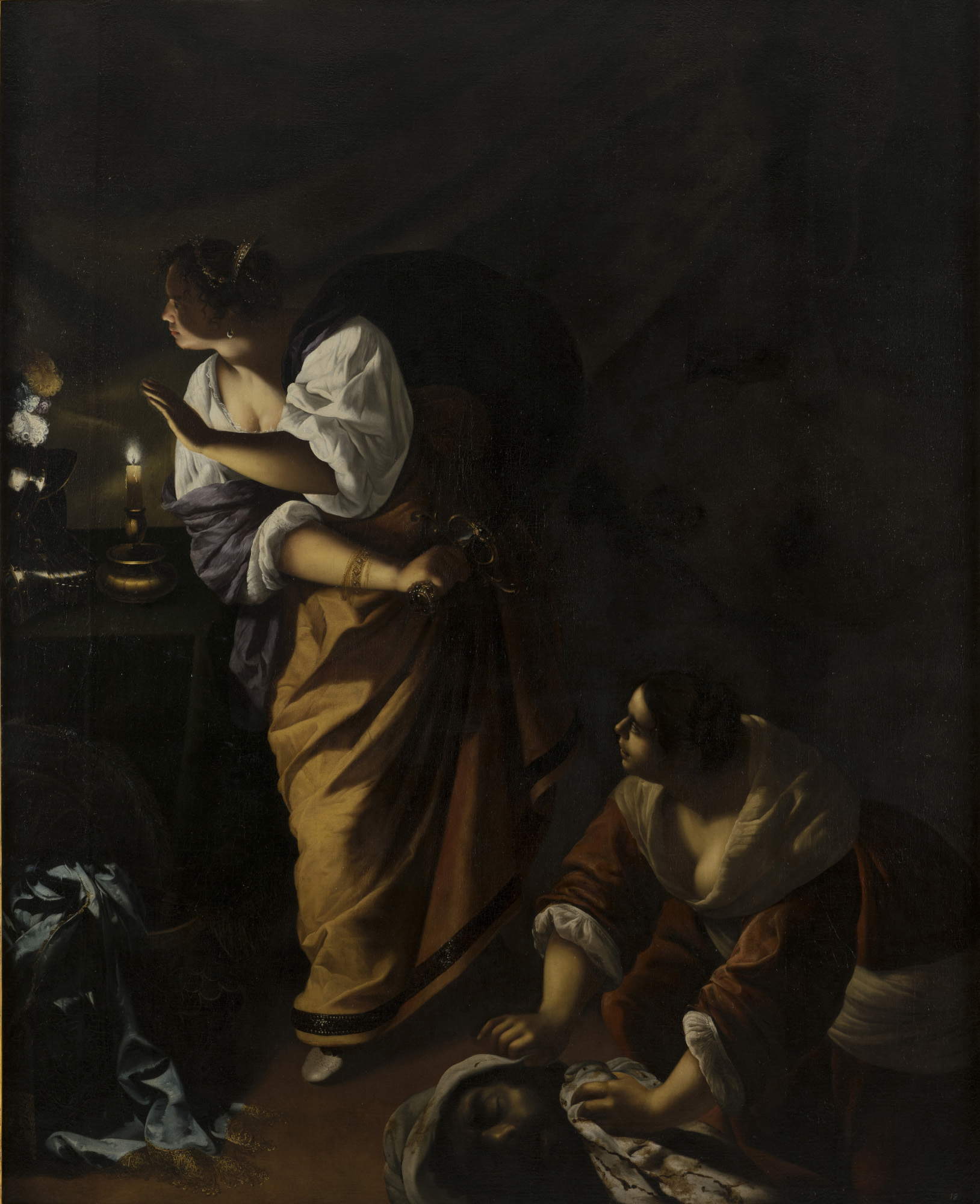
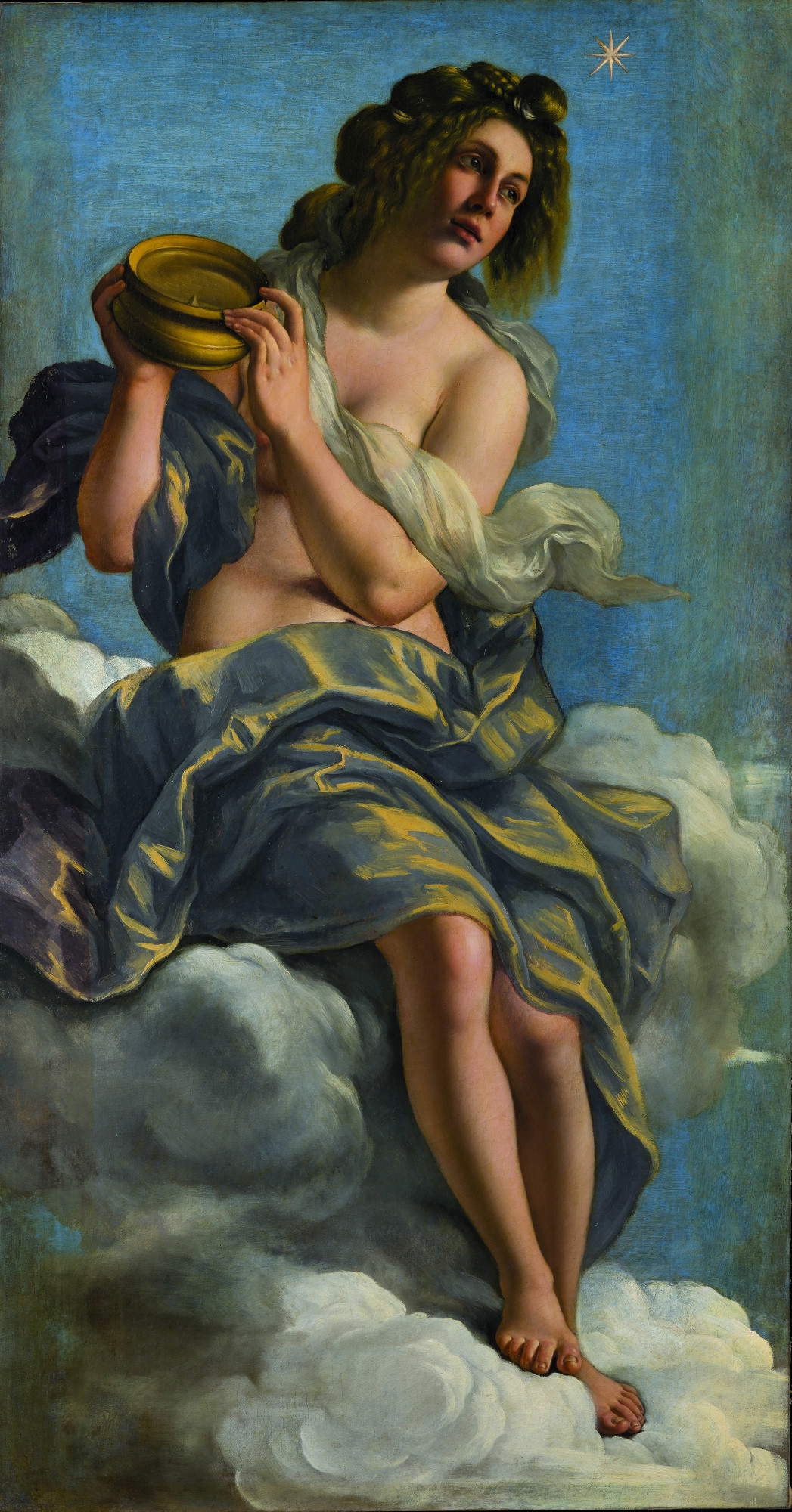
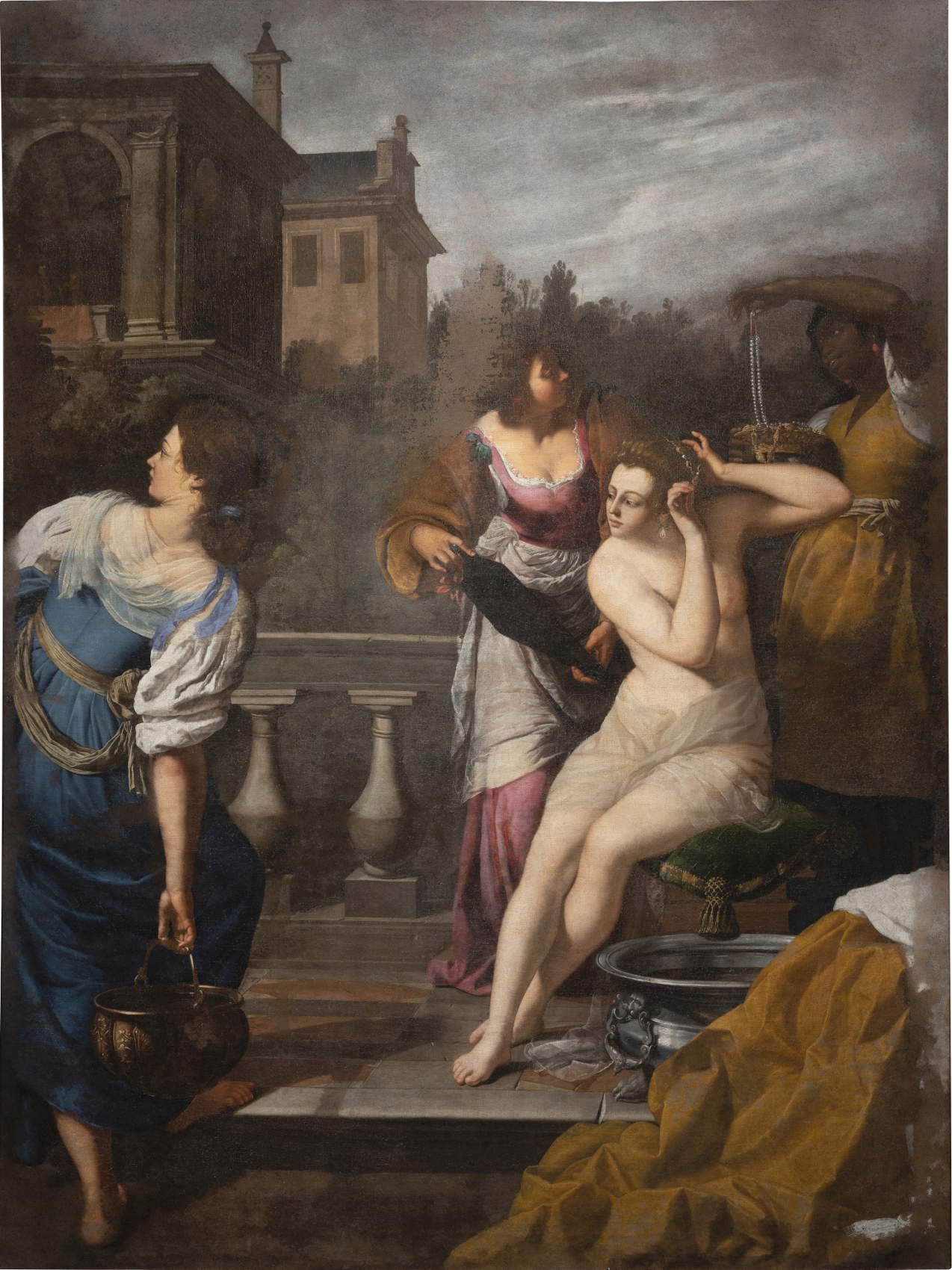
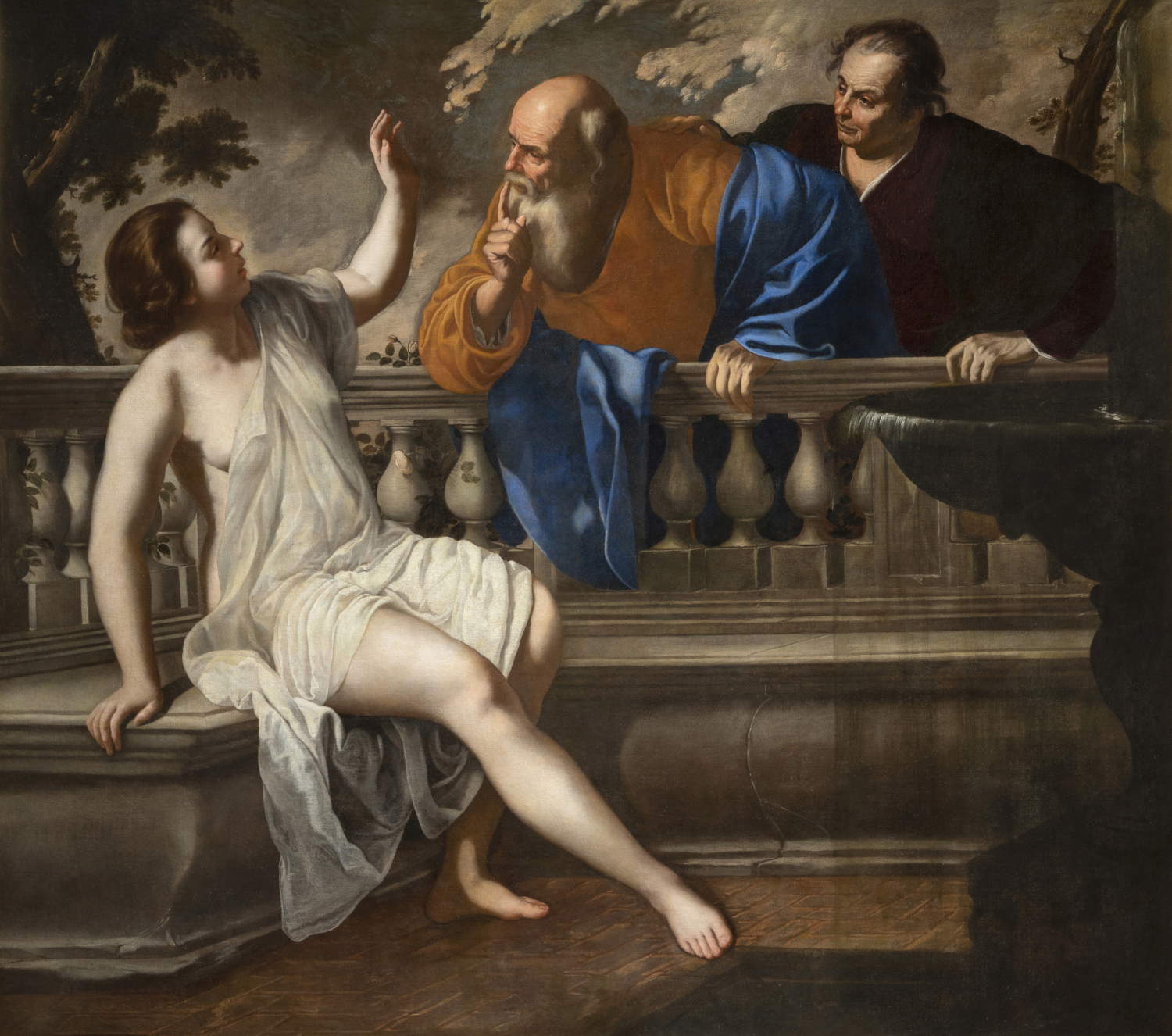
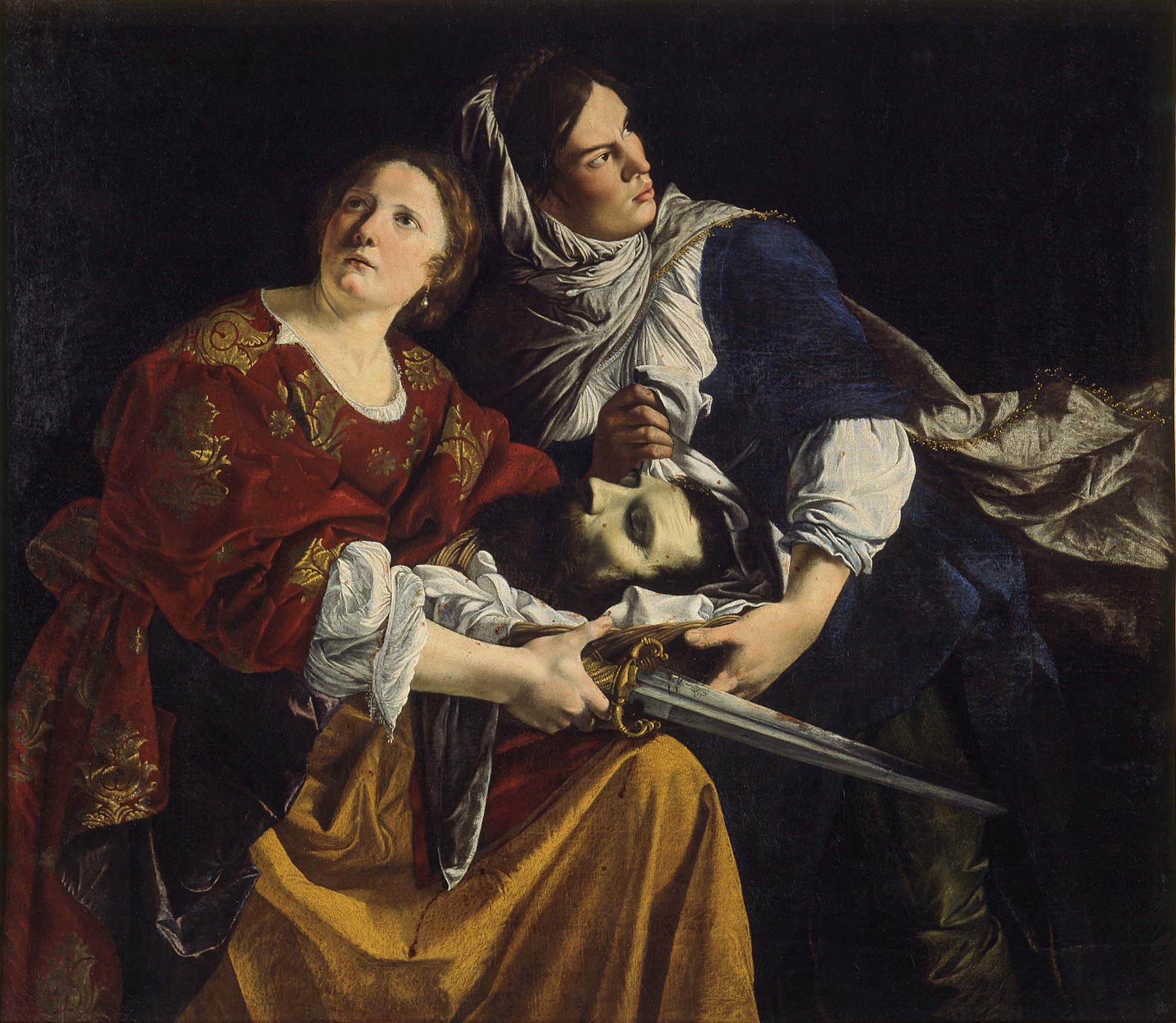
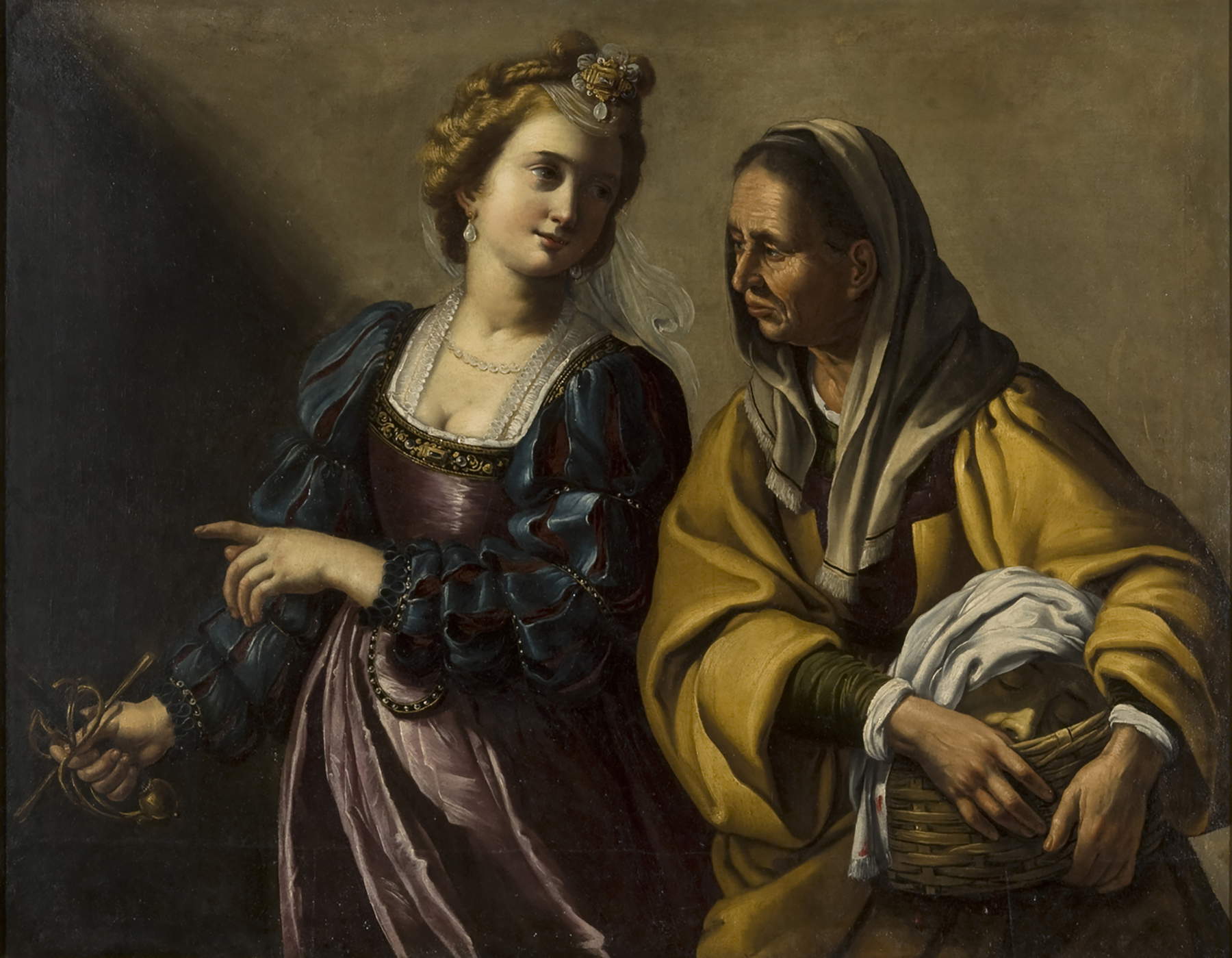
The exhibition opens with the Dickinson version of *The Boy Peeling Fruit* (*Mondafrutto*), likely painted around the mid-1590s. Also on display is an autograph version of Judith with Her Maidservant, dating from around 1610–1620 and rarely accessible to the public. The work, now part of a private Roman collection that has loaned it for the exhibition, had been attributed to Caravaggio in the 1880 catalog of the Corsini Collection. Studies by Roberto Longhi subsequently identified Artemisia Gentileschi as its creator. The painting dates from the artist’s Florentine years and is linked to the success of a painting on the same subject housed at the Palazzo Pitti. The vertical composition and intense nocturnal lighting reveal a close dialogue with Caravaggio’s painting, evident in the arrangement of the figures and in details that recall the master’s famous works, such as *The Calling of Saint Matthew* and *Medusa*.
Artemisia, however, reworks these references through her own personal sensibility, transforming the biblical narrative into a scene of great psychological intensity. The dramatic tension and expressive power of the protagonists thus take on a meaning that intertwines with the painter’s personal and artistic journey, conveying an image of extraordinary determination.
“Artemisia Gentileschi in Florence” traces the journey of an artist who was able to transform the opportunities offered by the Medici city into a decisive phase of her career. Through her paintings, commissions, and comparisons with other leading figures in 17th-century painting, the exhibition captures the complexity of seven years marked by encounters, experimentation, and recognition.
The exhibition also takes place within the Pinacoteca and offers visitors free access to the historical and artistic heritage housed in the galleries of the Museo degli Innocenti. Under the patronage of the City of Florence, the exhibition is produced and organized by Arthemisia in collaboration with Cristoforo, with the support of Generali Valore Cultura as sponsor. The exhibition catalog is published by Moebius.
|
| Artemisia Gentileschi in Florence: Over 50 Works Chronicle the Painter’s Years in the Medici City |
Warning: the translation into English of the original Italian article was created using automatic tools. We undertake to review all articles, but we do not guarantee the total absence of inaccuracies in the translation due to the program. You can find the original by clicking on the ITA button. If you find any mistake,please contact us.