





The Gigi Guadagnucci Museum in Massa is dedicating a new exhibition to sculpture from the second half of the 20th century with *Astratto Organico*, a project curated by Mirco Taddeucci with critical essays by Kevin McManus, scheduled to run from July 31 to October 7, 2026, at Villa Rinchiostra. The exhibition marks the 40th anniversary of Henry Moore’s death and brings together works by six international artists: Henry Moore, Agustín Cárdenas, Antoine Poncet, Alberto Viani, Alicia Penalba, and Maria Papa Rostkowska.
The initiative is part of a program launched by the Municipal Administration of Massa following the exhibition *Gigi Guadagnucci Gio’ Pomodoro, Conversation on Nature*, organized in 2025 at the museum dedicated to the Apuan sculptor. The stated goal is to develop an ongoing cultural program for the Gigi Guadagnucci Museum and Villa Rinchiostra, strengthening their role on the national and international scene through in-depth explorations of modern and contemporary sculpture. The selection of participating artists revolves around a common element: a conception of form that finds its point of origin in nature, as a generative principle capable of transforming into volumes, tensions, cavities, and abstract rhythms. This approach is also linked to the history of the Apuan region, a place where, throughout the 20th century, artists, workshops, and experimental initiatives from various geographic areas converged.
First in France and later in Italy, Gigi Guadagnucci came into contact with some of the leading figures in international sculpture of his time, during a period marked by a particularly vibrant phase of sculptural exploration. His relationship with the Apuan Alps is one of the central themes of the exhibition, alongside his interest in sculpture capable of transcending the traditional representation of reality to explore the deep structures of matter and space.
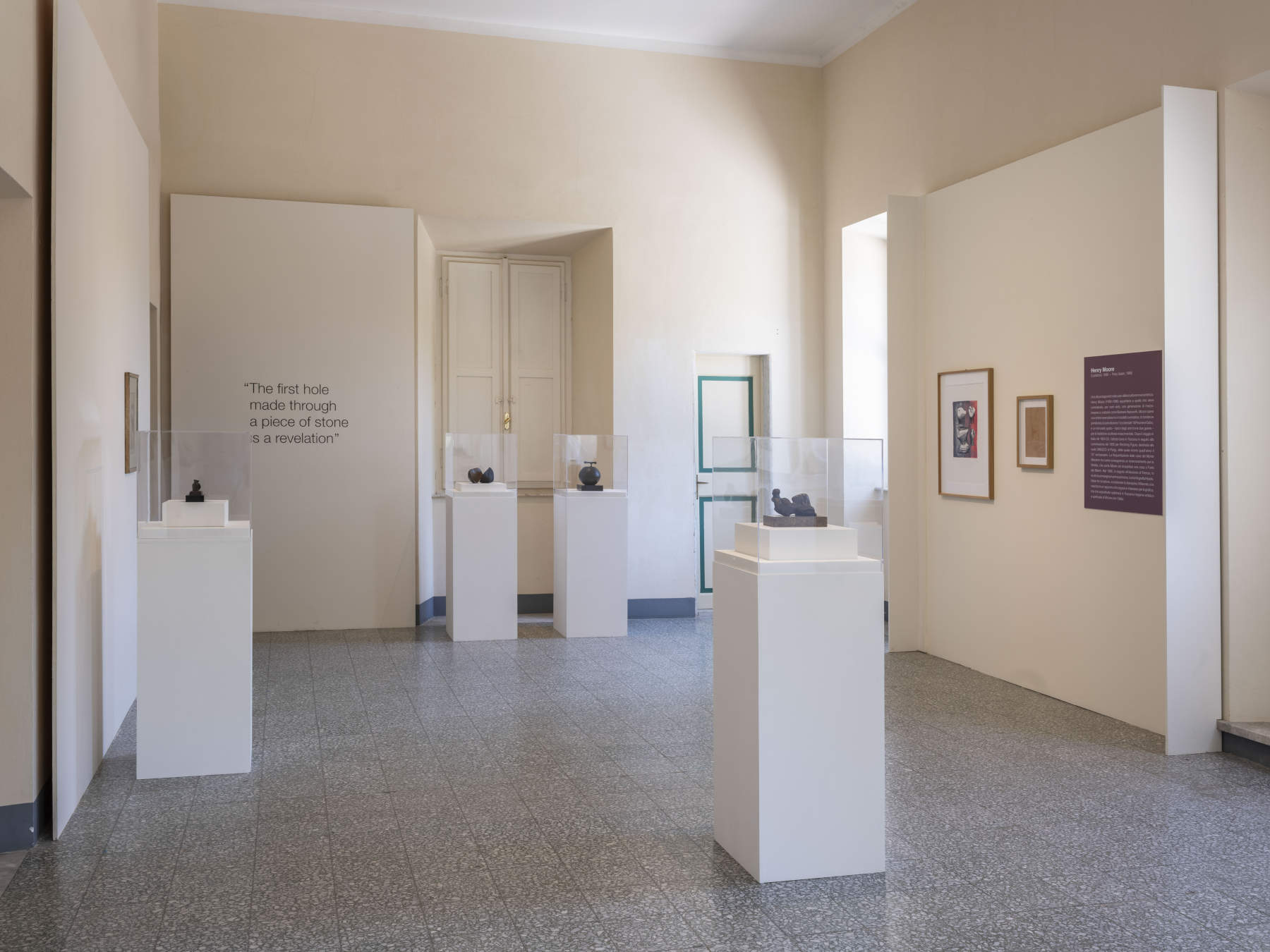
Among the featured artists, Henry Moore plays a central role. In 1956, the British sculptor was commissioned to create *Reclining Figure* for the UNESCO headquarters in Paris, and the following year he arrived in Versilia, beginning a relationship with Tuscany that would come to mark a significant part of his career. From his works created with Henraux to his collaboration on the Bisonte in Florence, and on to the historic 1972 exhibition at Forte Belvedere, his connection to Italy accompanied some of the most significant stages of his artistic development.
Alongside Moore, the exhibition features Antoine Poncet, an artist who found in Apuan marble the ideal material for sculpture based on the balance between formal purity and abstraction. Alicia Penalba, on the other hand, is represented through a body of work centered on the movement of volumes in space, with forms inspired by the plant world that unfold through dynamic lines and structures. Alberto Viani explores the theme of the human figure, transforming it into a biomorphic synthesis suspended between the body and abstraction. Agustín Cárdenas, a Cuban sculptor who also worked in the Versilia workshops, contributes to the exhibition with a reflection in which nature and imagination merge into archetypal forms. Maria Papa Rostkowska, a member of the Nouvelle École de Paris and one of the first women to establish herself in postwar marble sculpture in Versilia, presents work based on the organic synthesis of forms.
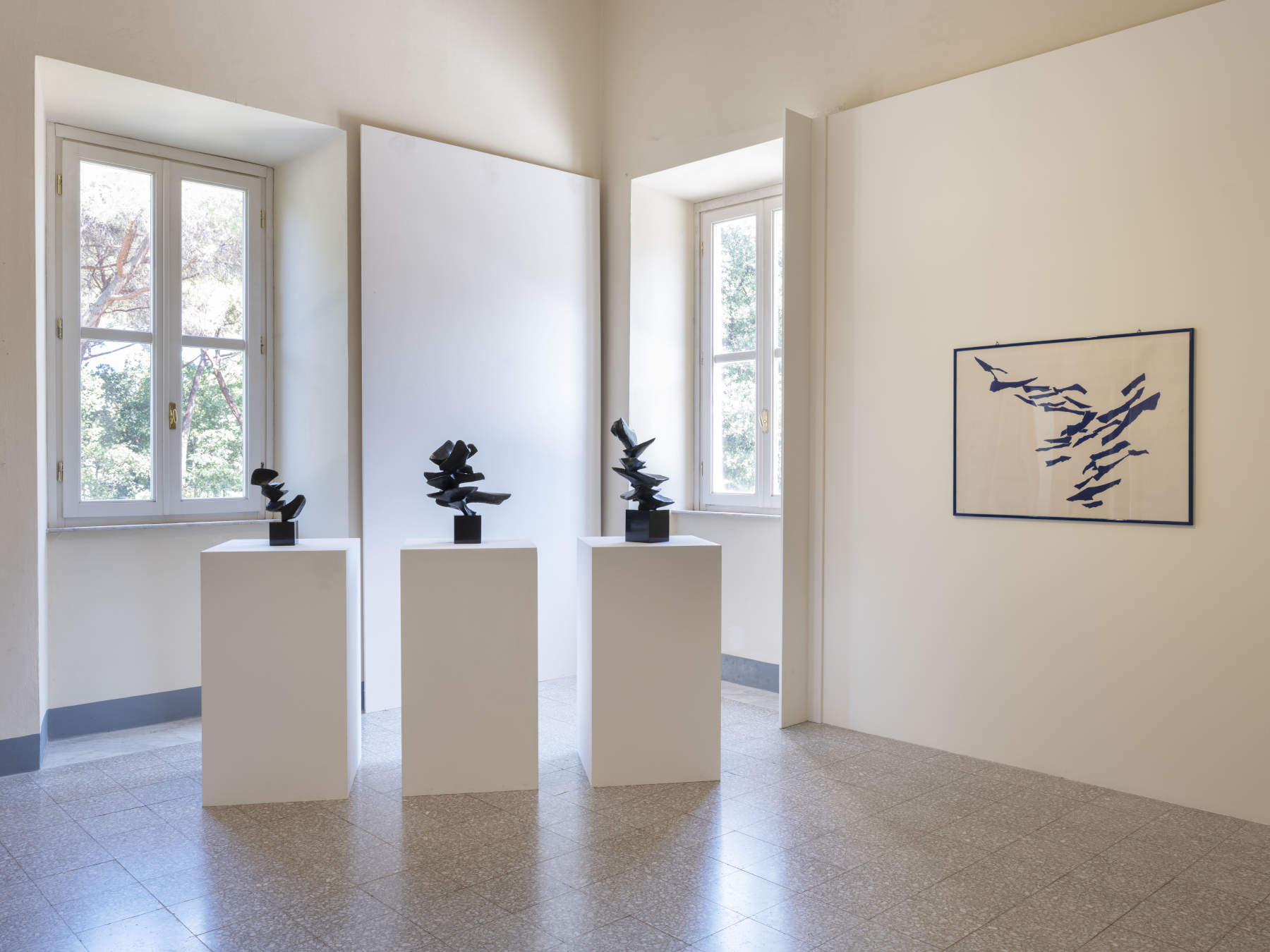
The exhibition brings together 34 works—four of which have never been shown before—created by the six artists. The selection includes stone and bronze sculptures, as well as plaster sketches, paintings, collages, and preparatory drawings, with the aim of presenting the creative process leading up to the creation of the work alongside the sculptures themselves. The project thus highlights the relationship between idea, study, and material, showing the gradual transformation of form during the artist’s creative process.
The exhibition is organized into thematic sections linked to the main visual sources of 20th-century abstract-organic sculpture: the plant and animal worlds, the human body, natural structures, and the relationship between mass, surface, and interior space. Outside Villa Rinchiostra, visitors encounter *Fugue Lacustre*, a monumental sculpture in pink marble by Antoine Poncet, positioned as an ideal introduction to the exhibition, in part through its chromatic dialogue with the building’s façade. The work foreshadows some of the exhibition’s main themes: the transformation of natural form into an essential sculptural structure, the continuity of surfaces, and the relationship between the solidity of matter and dynamism.
Inside, the first galleries highlight the transition from natural inspiration to autonomous form. Alicia Penalba’s plant-inspired structures, such as *Cinq Ailes*, interpret the idea of the wing as a sculptural principle based on vertical tensions and openings in space. Maria Papa Rostkowska, on the other hand, addresses the theme of nature through an animalistic synthesis, as in the case of *Poisson*, where the figure is reduced to an essential and compact presence. Also on display are a collage and a small bronze sculpture by the artist that have never been exhibited before, along with an unpublished painting that broadens the interpretation of her work beyond her sculptural output.
The section dedicated to Alberto Viani focuses on the human body as a starting point for progressive formal simplification. In his nudes and torsos, the figure is not eliminated by abstraction but transformed into an autonomous organism constructed through continuous surfaces, the balance of volumes, and its relationship to space. *Nude in the Sun* represents one of the most significant examples of this tension between body and form.
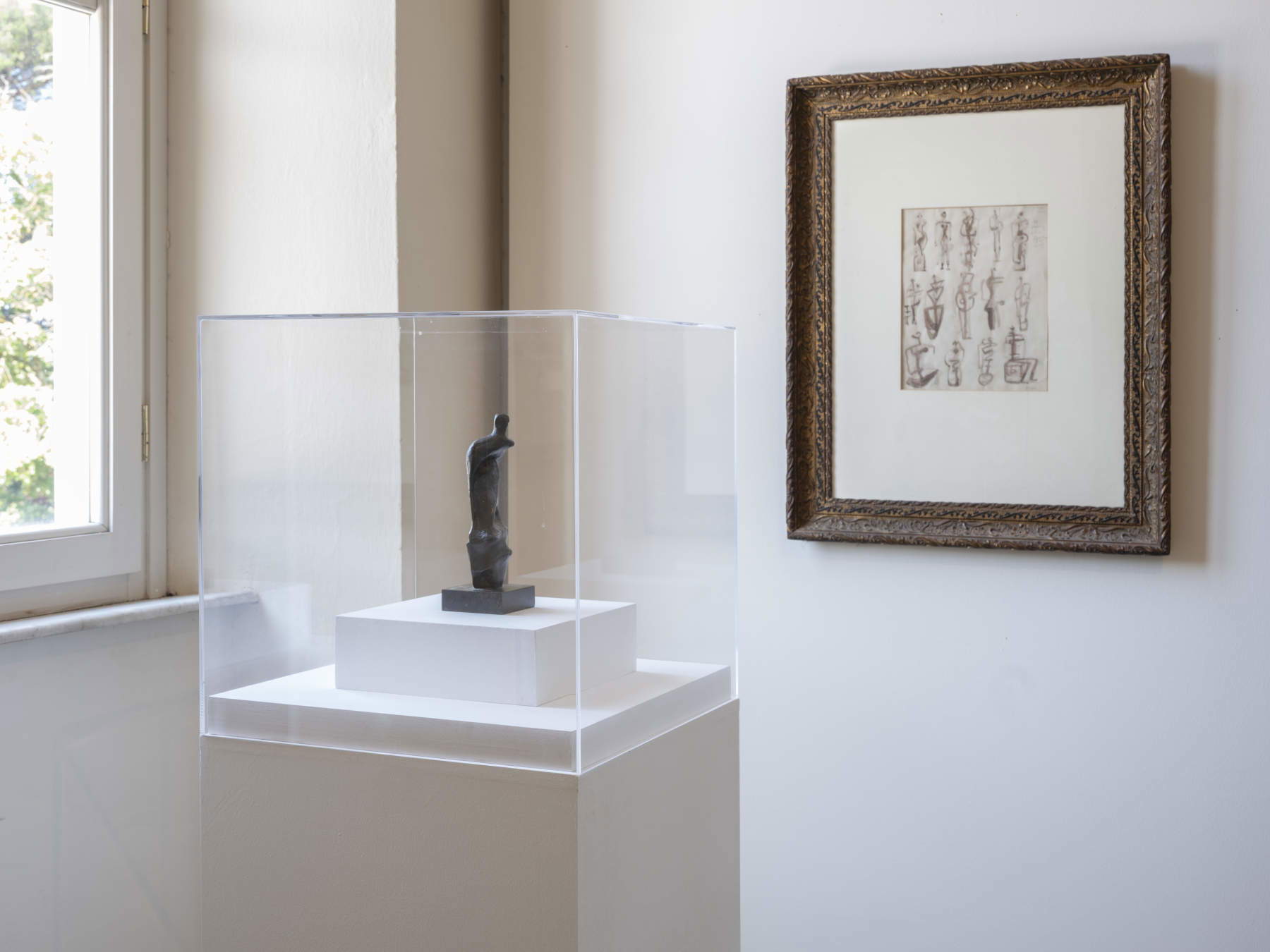
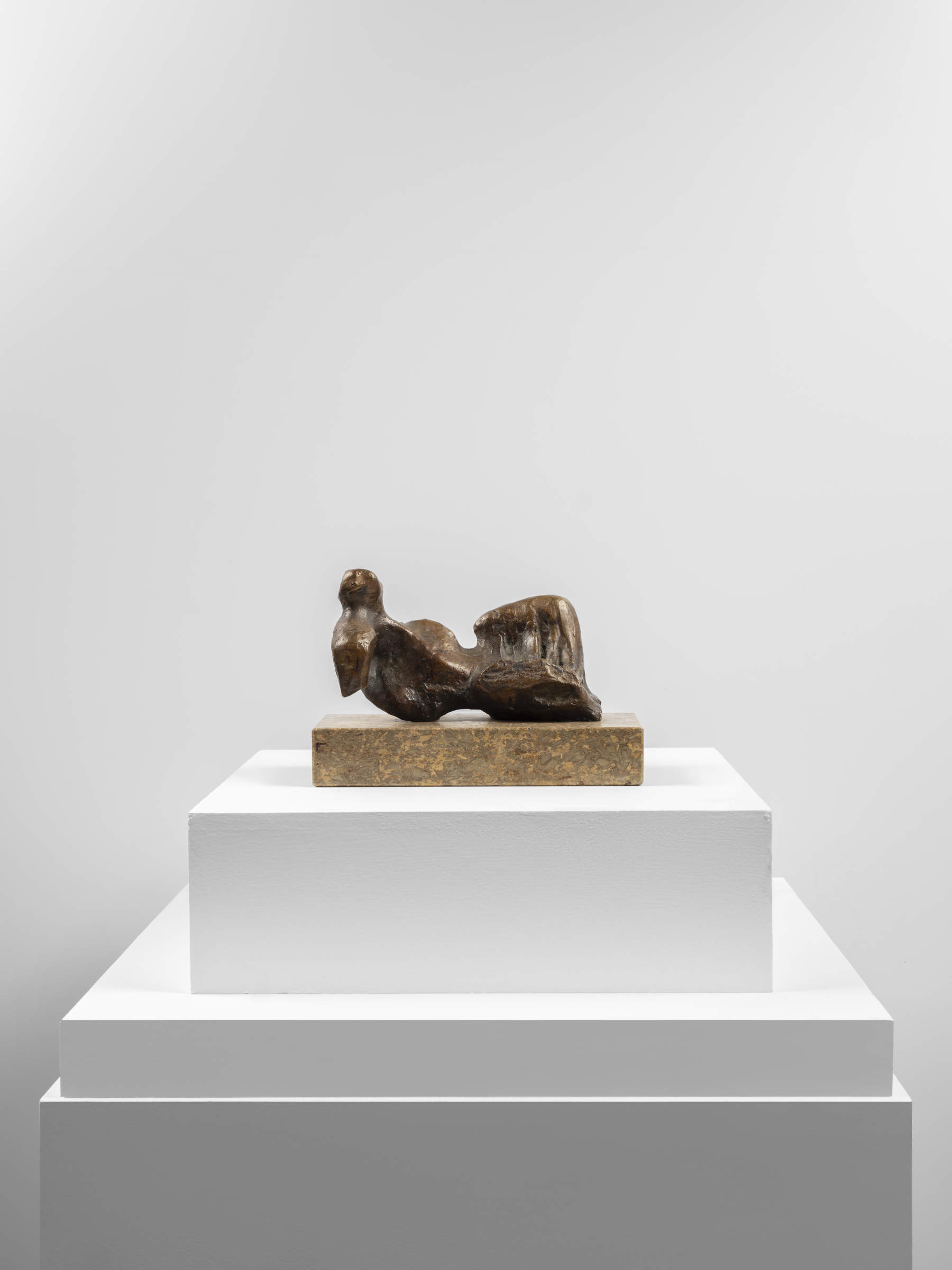
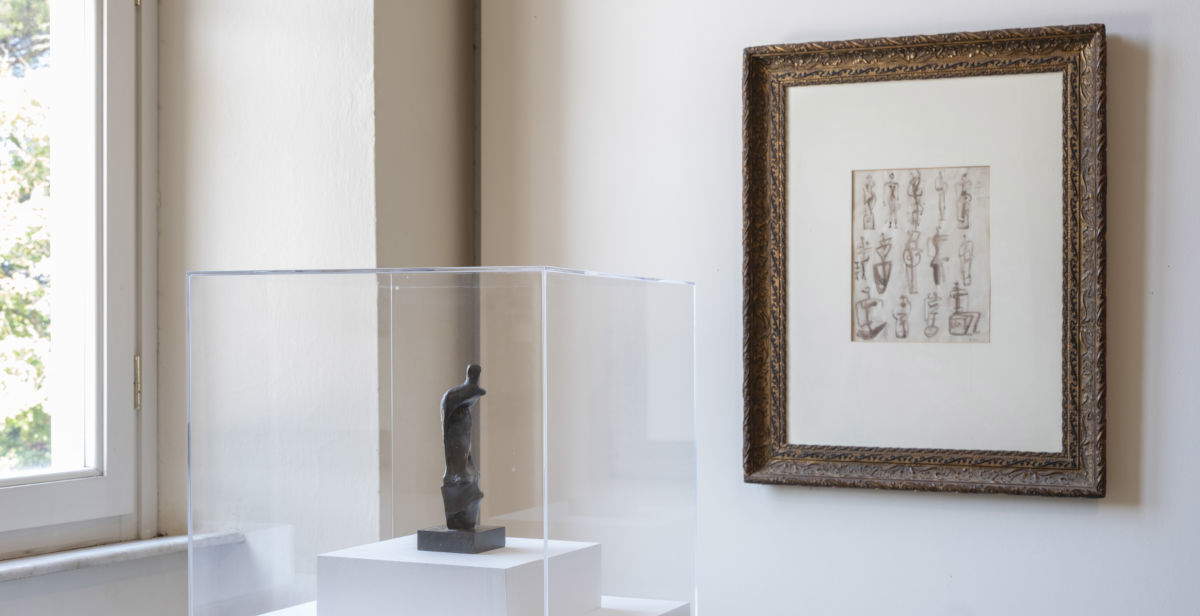
The section dedicated to Henry Moore is one of the highlights of the exhibition. Through studies on paper and works such as *Draped Reclining Figure*, the exhibition analyzes some of the fundamental aspects of the British sculptor’s work: the relationship between the human figure and the landscape, the interplay between mass and void, and the dialogue with the forms of nature. The motif of the Reclining Figure, a recurring theme in his work, becomes a tool for exploring the relationship between the body, space, and sculptural structure.
The graphic studies on display allow visitors to trace the transition from the initial sketches on paper to the finished sculptures, presented alongside various bronze works. The works and documents on display commemorate Moore forty years after his passing and highlight his connection to Tuscany and the Apuan-Versilian area, which began with the 1956 UNESCO commission—marking its seventieth anniversary this year—and continued through his collaborations with Henraux and Il Bisonte.
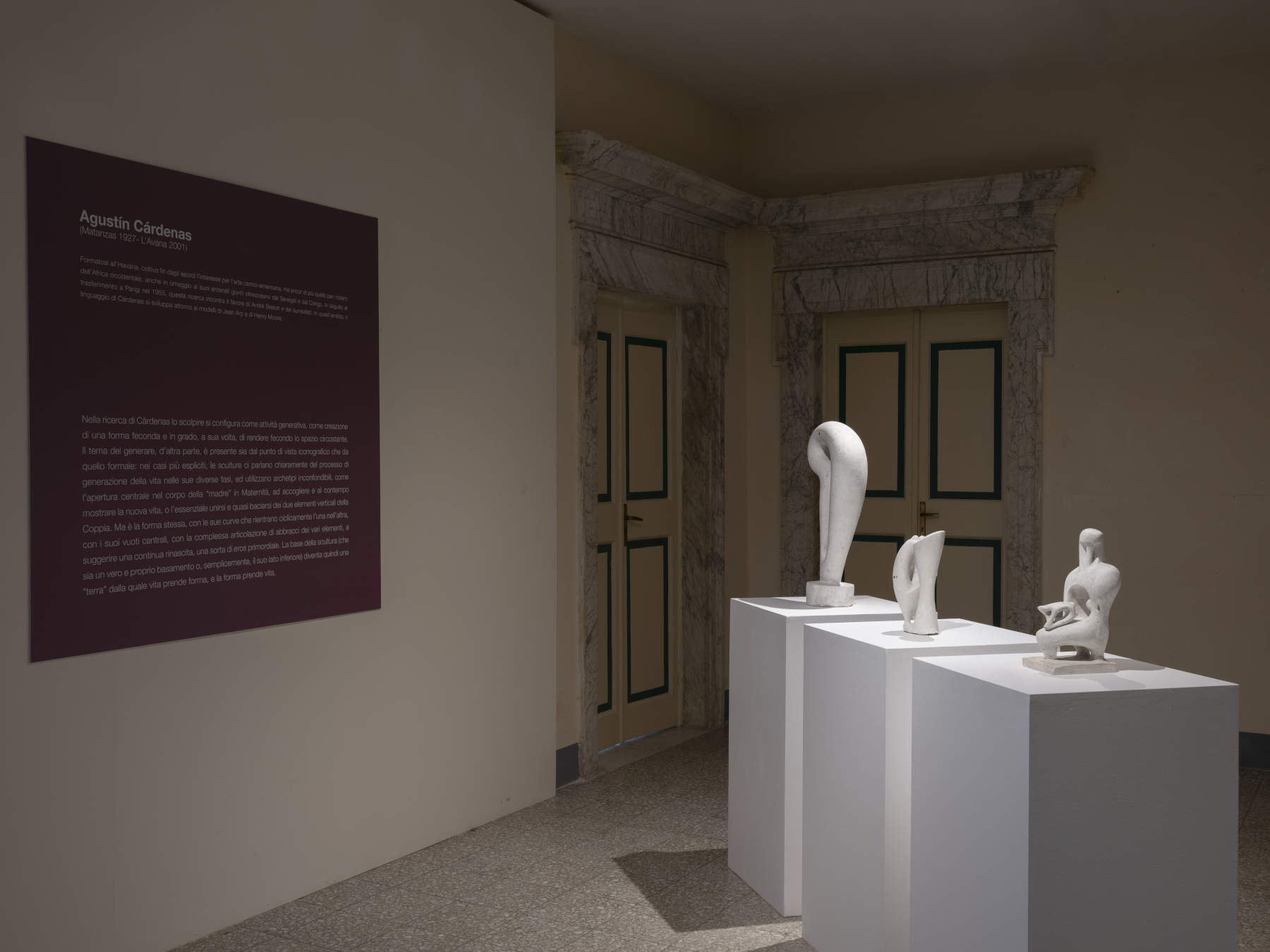
The exhibition concludes with Agustín Cárdenas, whose artistic exploration takes the theme of the organic into a more archaic and symbolic dimension. Trained in Havana and active in Paris since the mid-1950s, the artist translates bodies, totemic symbols, and natural memories into essential forms characterized by slender profiles, openings, and cavities. The plaster casts on view, including a previously unexhibited sketch, offer a glimpse into the initial phase of the creative process prior to the final realization in marble, bronze, or wood.
“With ‘Astratto Organico,’ we continue the path that the municipal administration has chosen to pursue to strengthen the role of the Gigi Guadagnucci Museum and Villa Rinchiostra as central hubs of the city’s cultural life—but with a much broader appeal,” states the Mayor of Massa, Francesco Persiani. “Following last year’s exhibition, we reaffirm our commitment to developing a high-quality program capable of bringing internationally significant projects to Massa while simultaneously highlighting the deep artistic heritage of our region. The museum is not merely a space for conservation, but a living place, open to citizens, schools, and visitors, capable of generating knowledge, participation, and new opportunities for cultural growth.”
“Twentieth-century sculpture does not progress solely through formal breaks, but through a slow transformation of the very concept of the figure,” explains curator Mirco Taddeucci. “Following the crisis of the monument and mimetic representation, the body, nature, and the object do not disappear: they are reduced to plastic nuclei, to primary structures, to presences suspended between abstraction and recognizability.* Abstract r Organic* explores this transition through the works of Henry Moore, Agustín Cárdenas, Alicia Penalba, Antoine Poncet, Alberto Viani, and Maria Papa Rostkowska. The title brings together two seemingly opposing forces: the departure from the figure and the persistence of the living. It is precisely from this tension that a decisive part of the sculpture we see in the exhibition arises: not from mimesis, but from the ability to recognize in the human body, in the animal and plant worlds, in bones, wings, seeds, shells, or human profiles, a source of formal energy. Abstraction does not deny reality: it concentrates it, bringing it to a more essential threshold. The stone thus retains the rhythm of a curve, the opening of a cavity, the weight of a mass that becomes an organism—an active memory of the living within the form.”
 |
| Henry Moore and 20th-Century Organic Sculpture on Display at the Gigi Guadagnucci Museum in Massa |

Warning: the translation into English of the original Italian article was created using automatic tools. We undertake to review all articles, but we do not guarantee the total absence of inaccuracies in the translation due to the program. You can find the original by clicking on the ITA button. If you find any mistake,please contact us.























 IT
IT FR
FR DE
DE ES
ES CN
CN


