





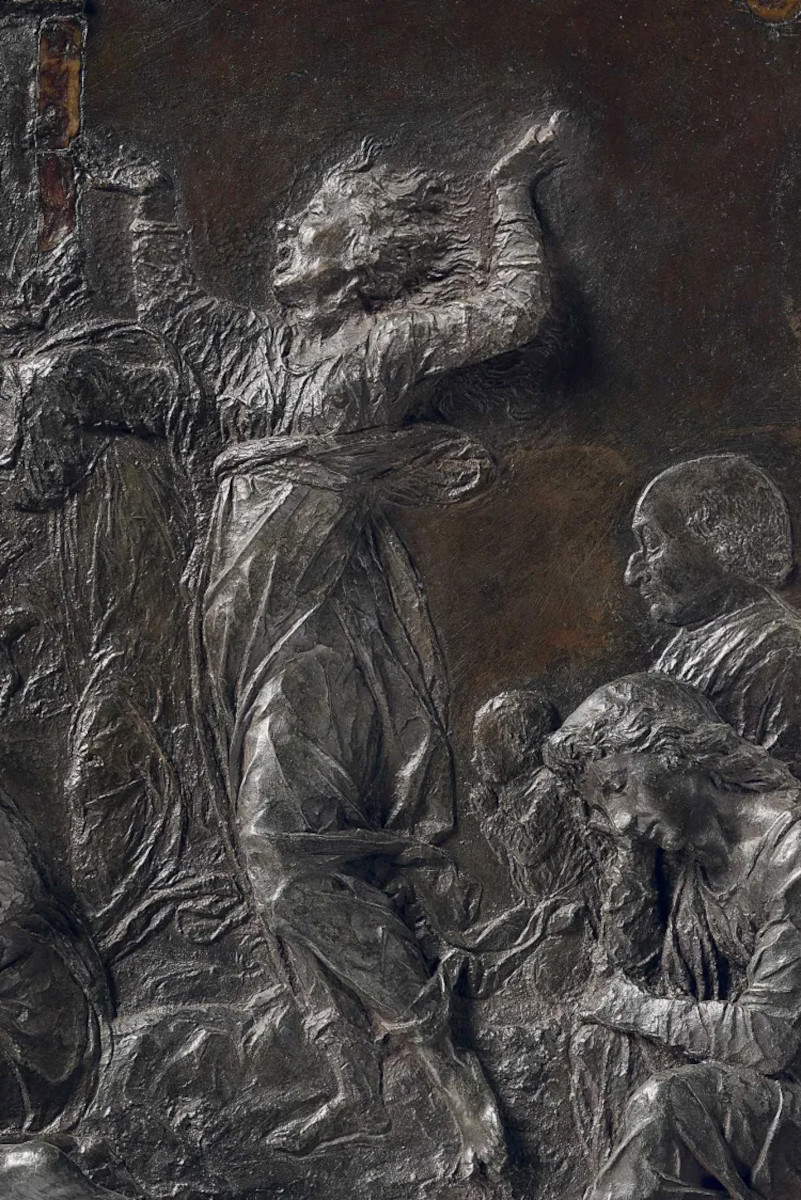
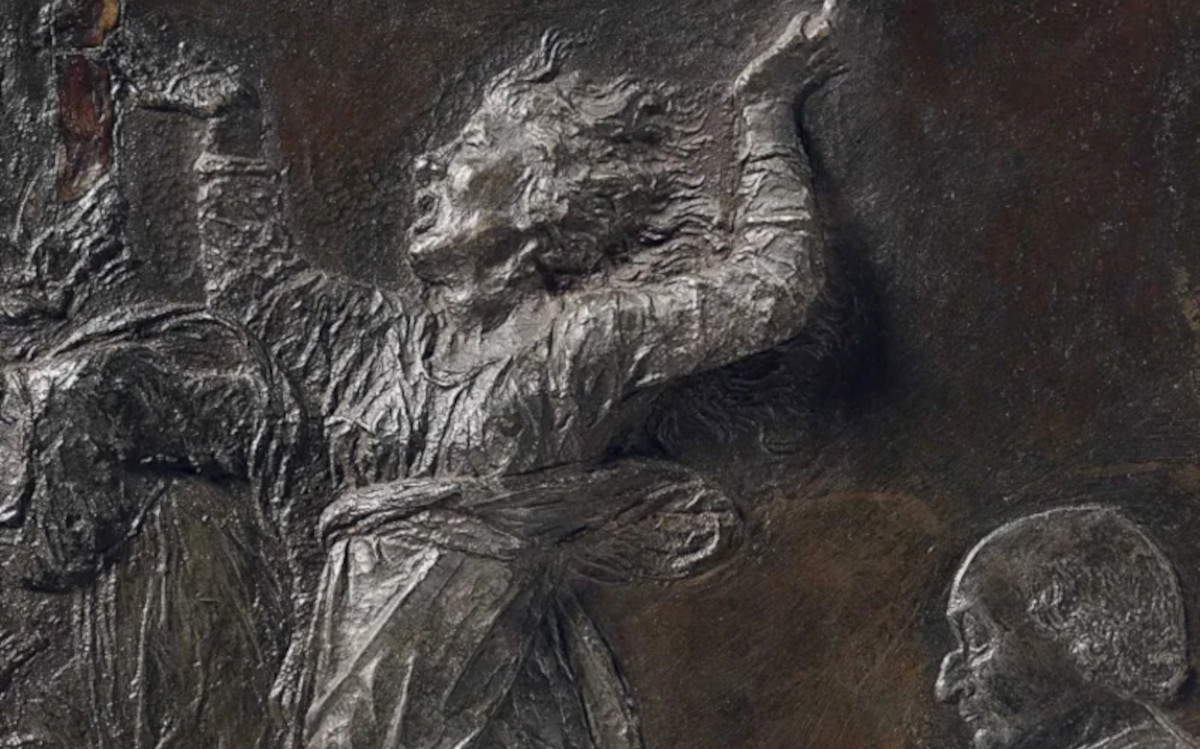
From October 15, 2026, to January 18, 2027, the Frick Collection in New York will host the first exhibition entirely dedicated to Siena’s role as a center of artistic excellence and technical innovation in Italian Renaissance bronze sculpture. Titled “Siena: The Art of Bronze, 1450–1500,” the exhibition will bring together nearly 40 works, including statues, reliefs, candelabra, medals, and other artifacts created by the leading figures of 15th-century Sienese sculpture.
Works by Donatello, Vecchietta, and Francesco di Giorgio—artists who contributed significantly to the development of bronze casting in Renaissance Siena—will be on display. Many of the works on view, due to their size, rarity, and importance, have never left Tuscany and will be presented in the United States for the first time.
The exhibition aims to restore Siena’s leading role in the Italian art scene of the 15th century, moving beyond the traditional view of the city as a place tied exclusively to its medieval heritage. Siena was an important cultural and commercial crossroads: the presence of travelers, patrons, and artists fostered the exchange of ideas and techniques, contributing to the extraordinary development of the arts in the second half of the fifteenth century. After its defeat by Florence in the mid-16th century, the city gradually lost its political and cultural influence to its rival. The exhibition at the Frick Collection now offers a new perspective, focusing on the extraordinary achievements of Sienese sculptors in bronze casting.
Through an exhibition layout featuring small-scale works, highly complex reliefs, and monumental sculptures, the exhibition aims to highlight the extraordinary variety of forms explored by Sienese artists.
Donatello, a central figure of the Italian Renaissance, also had a decisive influence on the Sienese artistic scene. Alongside his works will be presented pieces by Vecchietta and Francesco di Giorgio, leading figures in the city’s artistic culture and masters of a distinctive sensibility in bronze casting. The works allow visitors to appreciate not only the aesthetic quality of the sculptures but also the technical complexity of casting and metalworking.
The exhibition was made possible thanks to the collaboration of major Italian and international museums and collections. Among the Italian lenders are the Bargello National Museum in Florence, the Capodimonte Museum and Royal Park in Naples, the National Gallery of Umbria in Perugia, the Albani Diocesan Museum in Urbino, and the Civic Museum of Siena. The project also involves the National Gallery of Art in Washington, the British Museum, and the Victoria and Albert Museum in London, as well as major collections in Berlin, Dresden, and Vienna.
The exhibition is curated by Giulio Dalvit, associate curator of the Frick Collection, who also coordinated the production of the scholarly catalog together with an international group of scholars. The exhibition will be complemented by a comprehensive scholarly catalog. The volume aims to provide a comprehensive overview of bronze art in Siena between 1450 and 1500, accompanied by essays dedicated to the various types of works and in-depth entries on the individual artifacts on display. The publication also includes new photographs of nearly all known 15th-century Sienese bronzes, recently discovered archival documents, and a series of scientific analyses coordinated by Victoria Schussler, associate curator of the Frick Collection.
The catalog is edited by Dalvit and enriched by contributions from international scholars: Machtelt Brüggen Israëls, of the University of Amsterdam and the Rijksmuseum; Giampaolo Ermini, an independent scholar; Gabriele Fattorini, of the University of Florence; Laura Goldenbaum, of the Humboldt Forum in Berlin; Scott Nethersole, of Radboud University in Nijmegen; Alison Wright, of University College London; and Giulia Zaccariotto, of the Accademia Carrara in Bergamo.
On the occasion of this exhibition, for which Louis Vuitton is the main cultural sponsor, the Frick Collection is bringing to New York an unprecedented selection of works from the Sienese bronze tradition, offering an international audience the opportunity to rediscover a pivotal period of the Italian Renaissance.
“Between 1450 and 1500, in almost no other place in Italy did local artistic traditions rely so heavily on a single medium as those of Siena, which turned to bronze,” said curator Giulio Dalvit. “Yet the Tuscan city has been celebrated primarily for its paintings, as demonstrated by the landmark exhibition *Siena: The Rise of Painting, 1300–1350*, presented at the Metropolitan Museum of Art and the National Gallery in London in 2024–2025. Now, we are thrilled to finally turn our attention to Sienese bronze sculpture, exploring the often-underestimated importance of both the medium and the city in the history of Renaissance art. Bringing together some forty masterpieces in one place for the first time, this exhibition highlights the extraordinary achievements of Sienese artists, which constitute a true golden age of bronze sculpture.”
 |
| Siena and the Art of Bronze: A Major Exhibition on Sienese Renaissance Sculpture at the Frick Collection |

Warning: the translation into English of the original Italian article was created using automatic tools. We undertake to review all articles, but we do not guarantee the total absence of inaccuracies in the translation due to the program. You can find the original by clicking on the ITA button. If you find any mistake,please contact us.






















 IT
IT FR
FR DE
DE ES
ES CN
CN


