





From October 2 to 4, 2026, Cremona Musica Expo & Festival will dedicate an exhibition to the history of the 19th-century guitar, tracing its evolution through historical instruments from Italy and France. The exhibition, titled *The 19th-Century Guitar: Turin, Mirecourt, Paris and curated by Fausto Cacciatori of the Cremona Violin Museum, will be held at CremonaFiere and the Ala Ponzone Civic Museum, bringing together for the first time some thirty examples that document the birth of the modern guitar.
Among the most important pieces is an Aubry-Maire guitar made around 1860 in Mirecourt, a French town considered in the 19th century to be the leading European center for mass-produced stringed instruments. The instrument is the same one depicted by Edgar Degas in his 1871 painting, in which the artist’s father is listening to the Spanish singer Lorenzo Pagans.
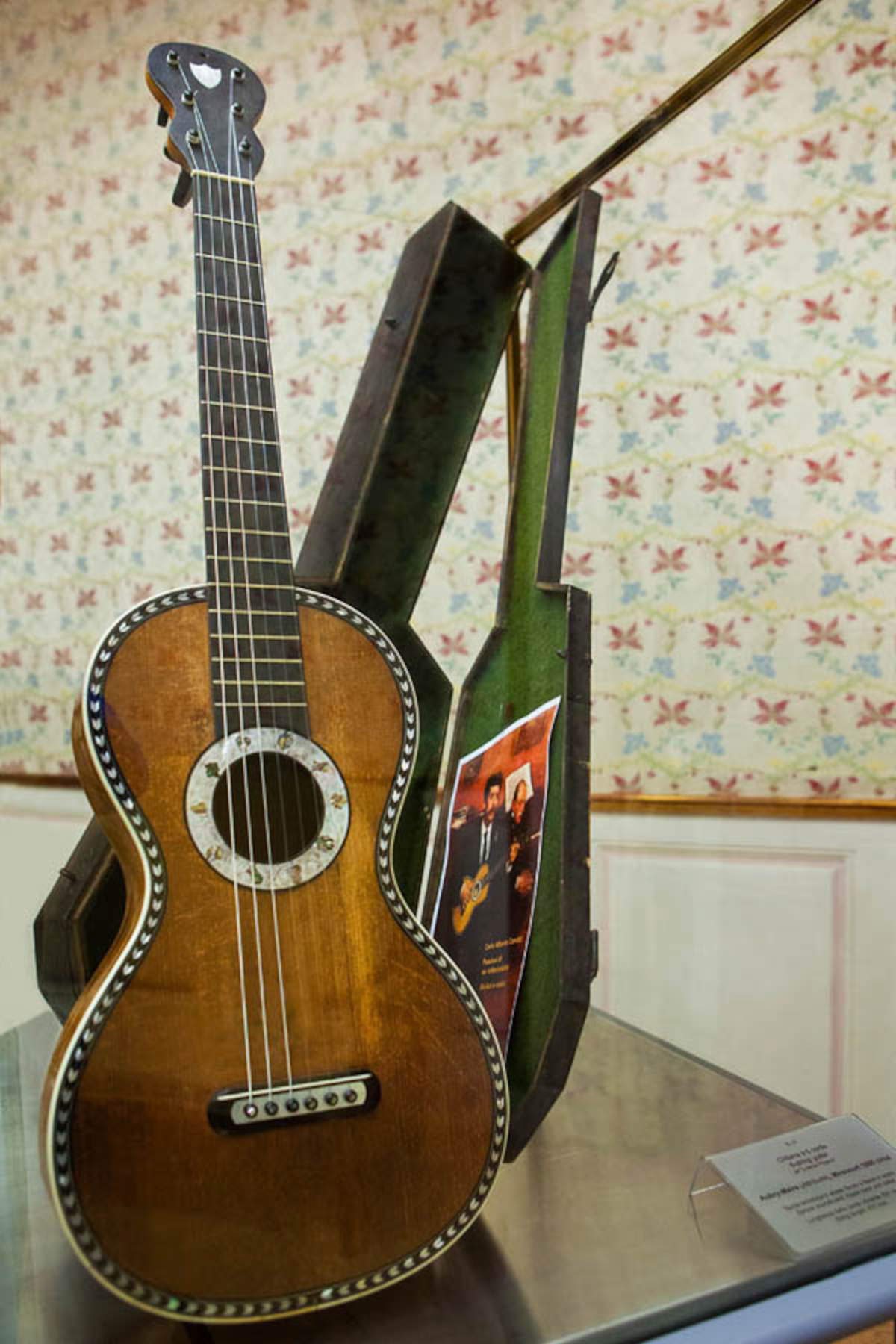
The exhibition is divided between two venues. In Pavilion 1 of the Acoustic Guitar Village, eleven instruments by Carlo Guadagnini, Gaetano II Guadagnini, René Lacôte, Enrico Marchetti, and Nicolao Denis will be on display, along with a rare lyre-guitar by Pons fils from 1807. In the Music Rooms of the Ala Ponzone Civic Museum, another sixteen instruments from the Carlo Alberto Carutti historical collection will be on display, some attributed to the leading masters of the period.
The exhibition traces the transition from the ancient five-string guitar to the modern six-string guitar, which took place in the 19th century thanks to exchanges between Piedmontese and French luthiers and the work of Italian musicians such as Carulli, Molino, and Gragnani, who were active primarily in Paris. The annexation of Piedmont by France in 1802, in fact, fostered the circulation of techniques and models that also involved Mirecourt, contributing to the spread of the Romantic guitar throughout Europe.
On October 3, the Acoustic Guitar Village will host a study day with Françoise de Ridder, Daniel Sinier, Lorenzo Frignani, Bob Van de Kerckhove, Jacopo Uberti, and Francesco Molmenti, dedicated to the relationships between luthier schools, restoration, and repertoire. At 7:00 p.m., in the Music Rooms of the Civic Museum, Molmenti and Massimiliano Filippini will perform a concert on two historical instruments—the Aubry-Maire depicted by Degas and an 1812 Carlo Guadagnini—bringing their sound back to life in the very rooms that house them. The exhibition is part of the program for Cremona Musica Expo & Festival 2026, an event dedicated to violin making, musical instruments, and music technology.
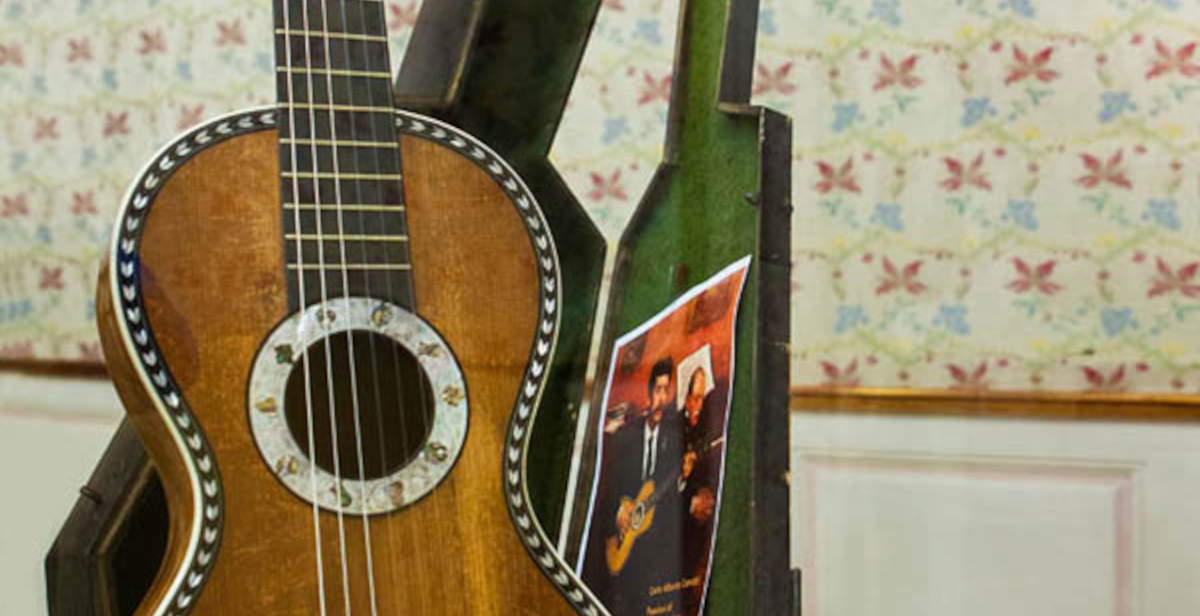 |
| The guitar painted by Degas is on display in Cremona alongside thirty 19th-century instruments |

Warning: the translation into English of the original Italian article was created using automatic tools. We undertake to review all articles, but we do not guarantee the total absence of inaccuracies in the translation due to the program. You can find the original by clicking on the ITA button. If you find any mistake,please contact us.

























 IT
IT FR
FR DE
DE ES
ES CN
CN


