



by Redazione 04/11/2026


Categories: Exhibitions / Disclaimer
From November 25, 2026, to March 21, 2027, the Milan Civic Aquarium and Natural History Museum will host an exhibition dedicated to water scarcity. Sculptures, paintings, drawings, and a large installation explore the theme through Sandro Gorra’s ironic style.

From the gradual depletion of water resources to collective responsibility for water conservation: this is the central theme of *L’ultima goccia* (The Last Drop), Sandro Gorra’s exhibition scheduled from November 25, 2026, to March 21, 2027, atthe Civic Aquarium and the Natural History Museum in Milan. Sponsored by the City of Milan and curated by Matteo Pacini, with critical commentary by Luca Mercalli, president of the Italian Meteorological Society, the exhibition addresses one of the most pressing environmental issues through sculptures, paintings, drawings, and installations, drawing on irony and paradox.


One of the best-known creatives and advertising campaign creators, Gorra has dedicated himself to “Daily Art”—which he defines as “the art of the moment”—since 2015. In his works, he explores humanity’s contradictions and fragility through sarcasm, subverting our perception of reality. In these two Milanese museums, this artistic language becomes a tool for examining the relationship between humans and nature, highlighting the consequences of resource exploitation.
The exhibition is part of the CLIMA program, the second of four thematic areas of the four-year multidisciplinary project promoted by the Scientific Institutes of the City of Milan, which bring together the Natural History Museum, the Civic Aquarium, and the Planetarium. The initiative aims to foster a dialogue between art and science, inviting visitors to observe environmental transformations, examine the consequences of resource exploitation, and reflect on possibilities for regeneration.



The Works at the Civic Aquarium
At the Civic Aquarium, the exhibition features nine sculptures, eight paintings, two panels, and drawings. The works compose a narrative universe populated by figures and characters that, with at times surreal touches, convey the contradictions in the relationship between humans and water.
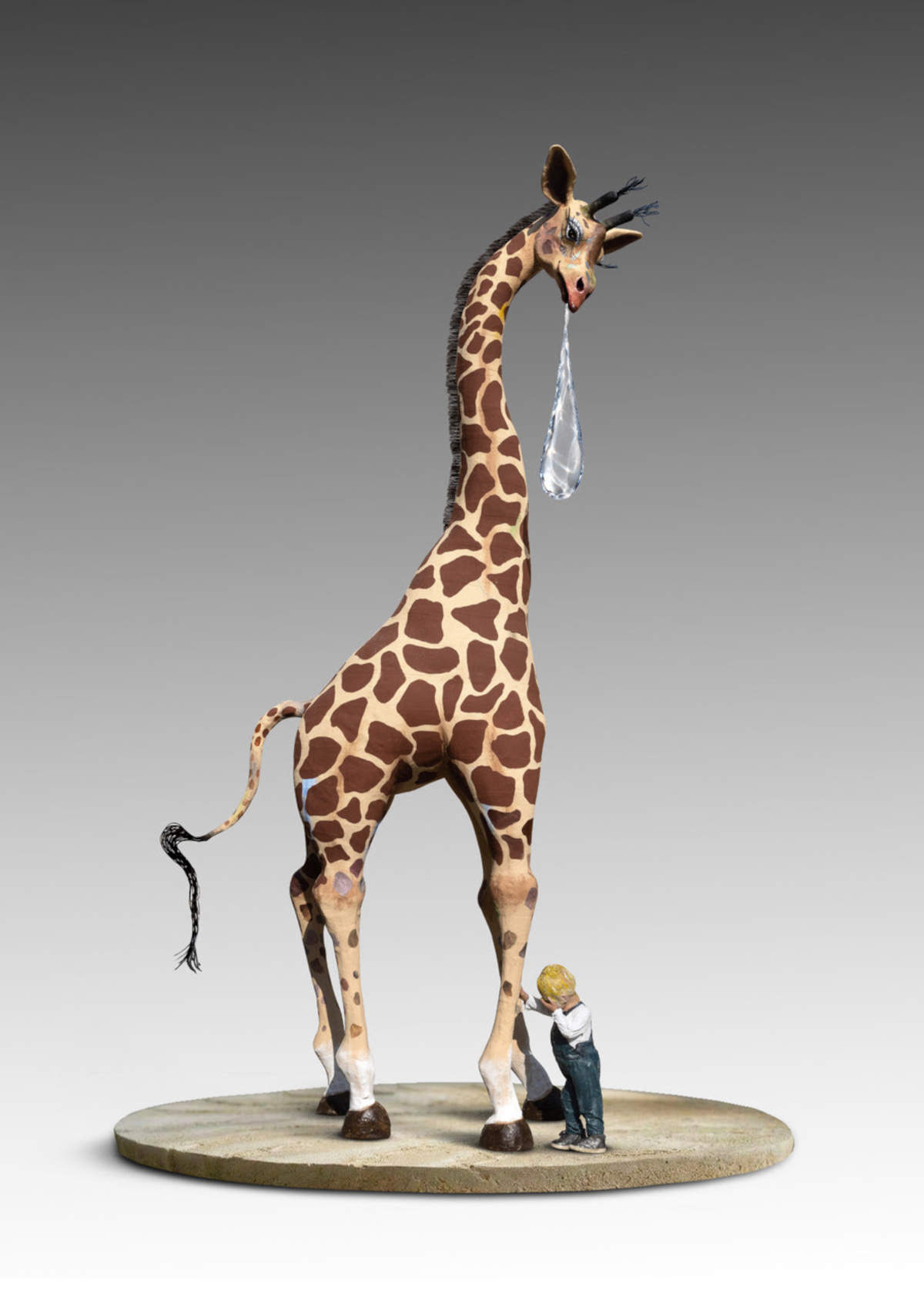
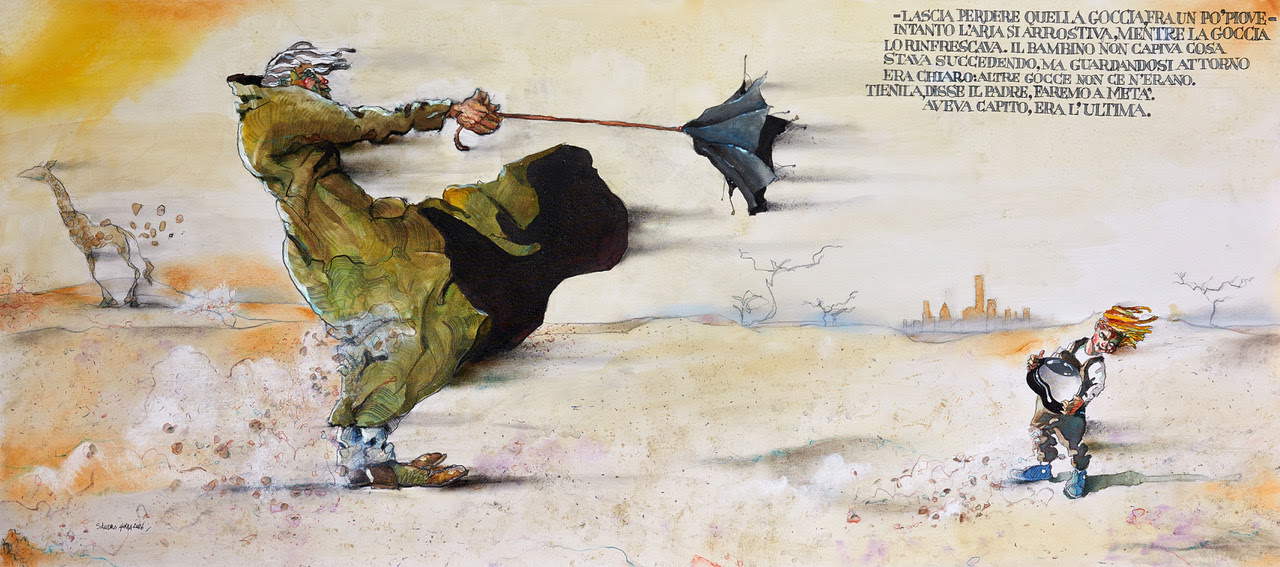
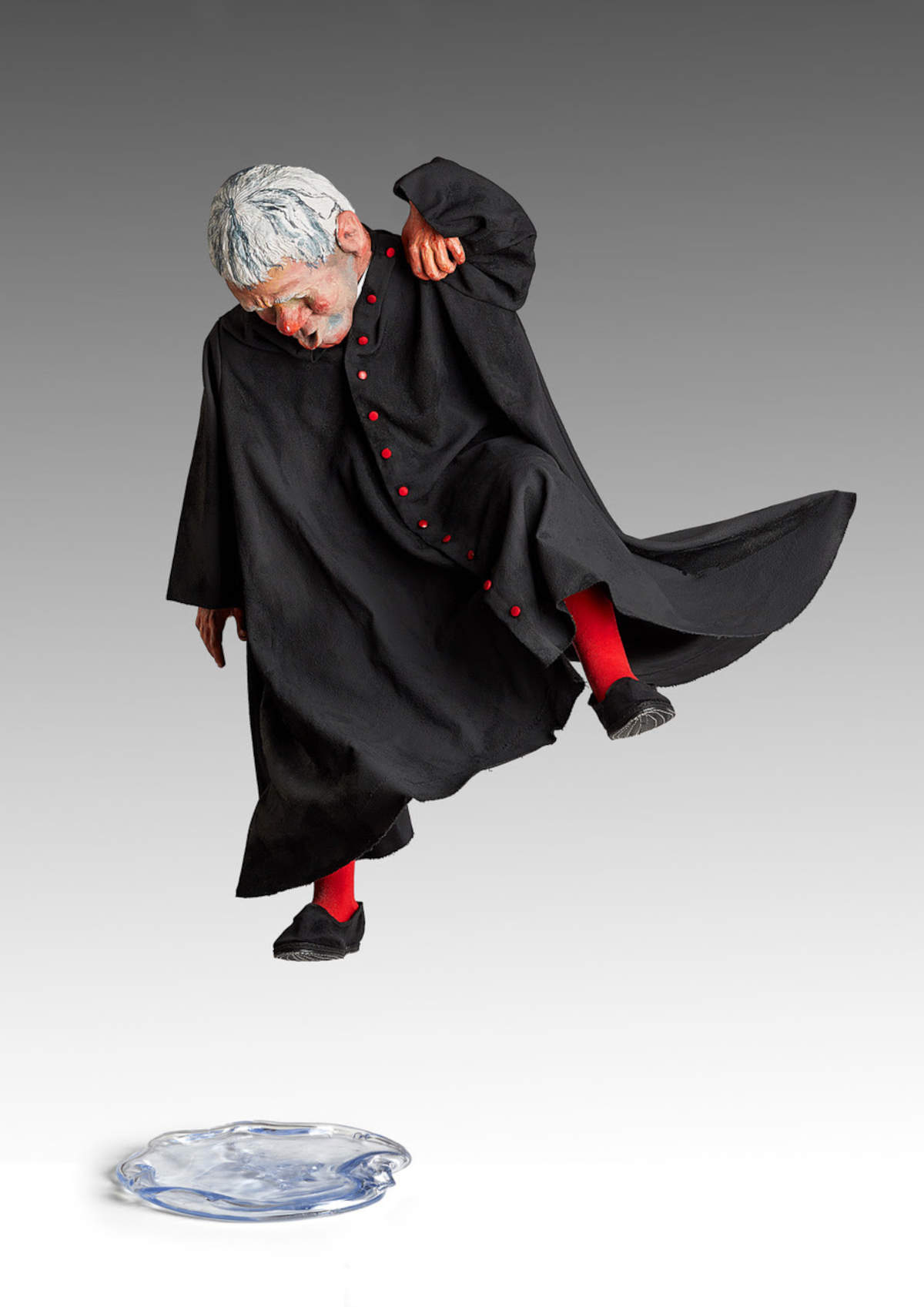
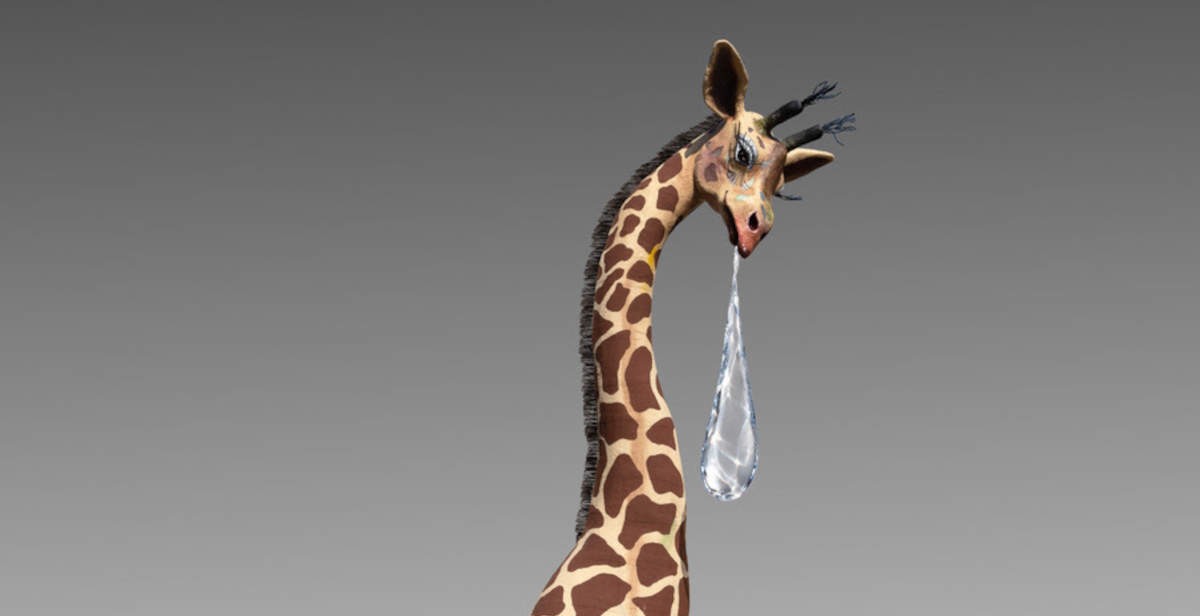
Among the sculptures, *The Accident* transforms a fall caused by a drop of water into a paradoxical sign of hope: its presence demonstrates that water has not yet completely disappeared. Also featured are Dr. Lupini, with his incendiary ideas, and Tom the giraffe, the protagonist of an unexpected romantic encounter with a drop of water. In the paintings, *La danza della pioggia* (The Rain Dance) transposes an ancient propitiatory rite into the urban space, transforming it into a spectacular vision, while *Il Cristo che piange* (The Weeping Christ ) entrusts to a drop of water the paradoxical announcement of the return of rain.
The Installation at the Natural History Museum
At the Natural History Museum, the centerpiece of the exhibition is *Anna and the Child*, a five-meter-tall installation depicting a giraffe next to a child. The encounter between the two figures reverses the usual roles: the giraffe, having found a drop of water it wishes to share, does not understand its value, while the child, aware that it is the last one remaining, surrenders to it with a gesture of weariness and despair. The exchange thus becomes a representation of the relationship between unawareness and awareness in the face of the fragility of natural resources.
The giraffe, a recurring subject in Gorra’s work, takes on in this context the symbolic significance of humanity in contemporary society. Following its run in Milan, the exhibition will continue in the spring of 2027 in Genoa, at the Santa Maria di Castello Monumental Complex.
The CLIMA Program
CLIMA constitutes the second chapter of the four-year project that translates the new vision of the City of Milan’s Scientific Institutes into a shared and evolving program. The initiative involves the Natural History Museum, the Civic Aquarium, and the Planetarium, and is organized into four conceptual themes: TRACES, CLIMATE STORIES, CODES, and THRESHOLDS. Over the years, these four areas will host art installations, exhibitions, educational programs, meetings, conferences, and opportunities for collaborative research.
The program addresses climate change as a phenomenon that affects people, cities, habits, environments, ecosystems, biodiversity, and technologies. The goal is to observe the ongoing transformations from different perspectives, weaving together scientific and artistic languages and transforming the environmental issue into a narrative capable of fostering awareness and opportunities for action.
Statements
“Something dramatic is happening out there: the water is truly running out,” says Sandro Gorra. “Soon, the planet will find our glass of water halved. The language I use to paint and write is irony—a bitter twist of the mouth and a message as clear as it is frightening: if we don’t conserve water, water won’t spare us.”
“In the exhibition, each work on display has its own name,” explains Matteo Pacini, the exhibition’s curator. “In this way, Gorra declares that the true subject of the exhibition is not water itself, but we human beings and the now widely acknowledged short-sightedness that has long plagued us regarding environmental issues—exacerbated by a species-wide vanity that believes itself eternal until its water supply is cut off.”
“Sandro Gorra’s giraffe has distilled many drops of wisdom: if we heed them, we may save ourselves from thirst by joining together in a modern, lively, profound, and joyful ‘Rain Dance,’” writes Luca Mercalli in his critical essay. “And be very careful that the precious water that finally returns, falling from the sky, does not get hurt…”
 |
| The Last Drop: Sandro Gorra Chronicles Milan’s Water Crisis with Irony and Paradoxes |
Warning: the translation into English of the original Italian article was created using automatic tools. We undertake to review all articles, but we do not guarantee the total absence of inaccuracies in the translation due to the program. You can find the original by clicking on the ITA button. If you find any mistake,please contact us.