



by Redazione 06/11/2026


Categories: Modern Art / Disclaimer
A masterpiece by Francesco Hayez that was believed to be lost—*Venus Leading Helen to Paris*, painted in 1831 and previously documented only by an engraving—has been acquired by the Caritro Foundation, which is returning it to Trento, the city where the original patron lived. The work will undergo restoration and be symbolically reunited with another painting by Hayez created


For over forty years, art historian Fernando Mazzocca searched for a painting by Francesco Hayez (Venice, 1791 – Milan, 1882) that he had come to fear had been destroyed. The composition of the work was known thanks to an engraving published in 1831, but the canvas had disappeared and there had been no further news of it. Now *Venus Leading Helen to Paris* has resurfaced and can return to Trento to the collection of the Caritro Foundation, which acquired it through the Dorotheum auction house. In 2025, the Viennese auction house had requested an export license for the painting, which was subsequently denied, preventing the work from leaving the country. And so today, the painting returns, in a sense, to the region for which it was commissioned—Trentino—allowing for the reunification of a group of works created by Hayez for the same patron.


The history of the painting begins with Girolamo Malfatti, a count from Trentino, who commissioned two mythological paintings from the Venetian artist. *Venus Leading Helen to Paris* is the second of the two: the other, the famous *Venus Playful with Two Doves*, was painted the previous year and already belongs to the Caritro Foundation (it is currently on loan to the Mart in Rovereto). With this new acquisition, the two paintings are once again regarded as parts of an original pair, thus offering new opportunities for the study and appreciation of the collection.


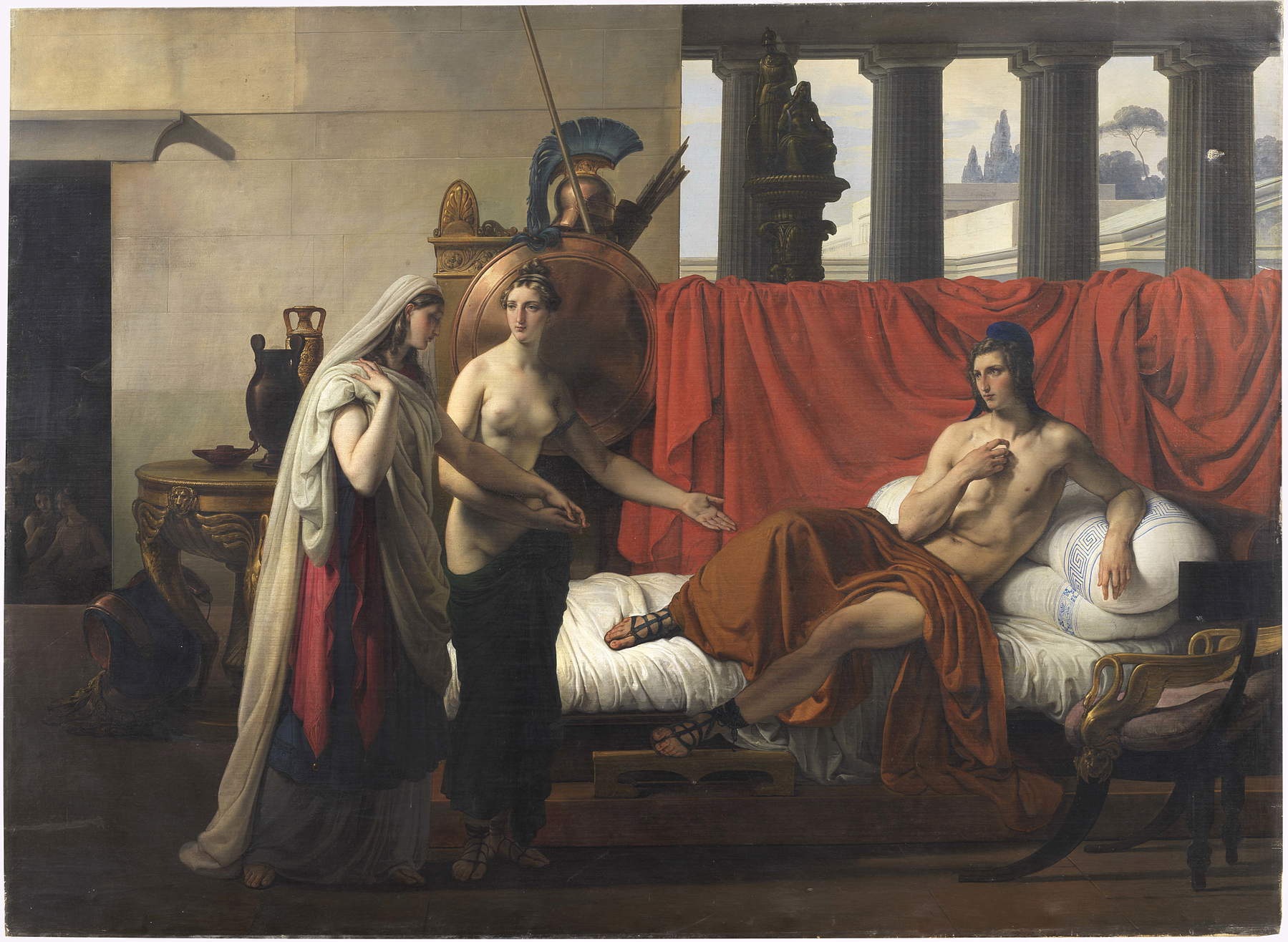
Until now, our knowledge of *Venus Leading Helen to Paris* had been based primarily on Carlo Della Rocca’s engraving, published in the almanac of the 1831 Brera Academy exhibition, the year in which the painting was exhibited. That was the only time the painting was shown publicly. The work measures 149.8 by 203.8 centimeters and is part of Hayez’s mythological oeuvre, created at a time when the painter was moving between residual Neoclassical tastes and a fully developed Romantic sensibility.


The rediscovery holds special significance for Mazzocca, one of the leading scholars of Hayez, who for decades has been engaged in the philological recovery of the painter’s body of work, bringing to light forgotten pieces stored in the Brera Academy’s vaults and in the collections of his patrons’ heirs. “I’ve been searching for this painting since the Hayez exhibition in 1983 at Palazzo Reale and Brera—so, you could say, for a lifetime. By then, I thought it was impossible to track it down, that it had been destroyed,” says the art historian. The reappearance of the canvas stirred strong emotions in him: when he traveled to Rome, where the work was housed, to view it, he says he was “immediately enchanted by its extraordinary quality.” The painting was officially registered in 2025, and Mazzocca, in his technical-scientific report dated February 2025—in which he advocated for its preservation and compulsory acquisition by the Pinacoteca di Brera—described it as a “magnificent, previously unseen painting,” to be identified “with absolute certainty” as the painting by Hayez that had been believed lost. Instead, it had always remained in the possession of Girolamo Malfatti’s descendants, passing to the last owner by inheritance.
Mazzocca also identifies a connection between the rediscovered painting and another mythological composition by Hayez, *Hector Rebuking Paris Seated in the Gynaeceum*, painted between 1828 and 1830 for the Venetian banker Giacomo Treves, a prominent collector. According to the scholar, the two works attest to the artist’s return to the mythological themes he had explored in his youth, now revisited with a different spirit, at the height of the Romantic era. Ancient myth is thus reinterpreted through a contemporary sensibility.
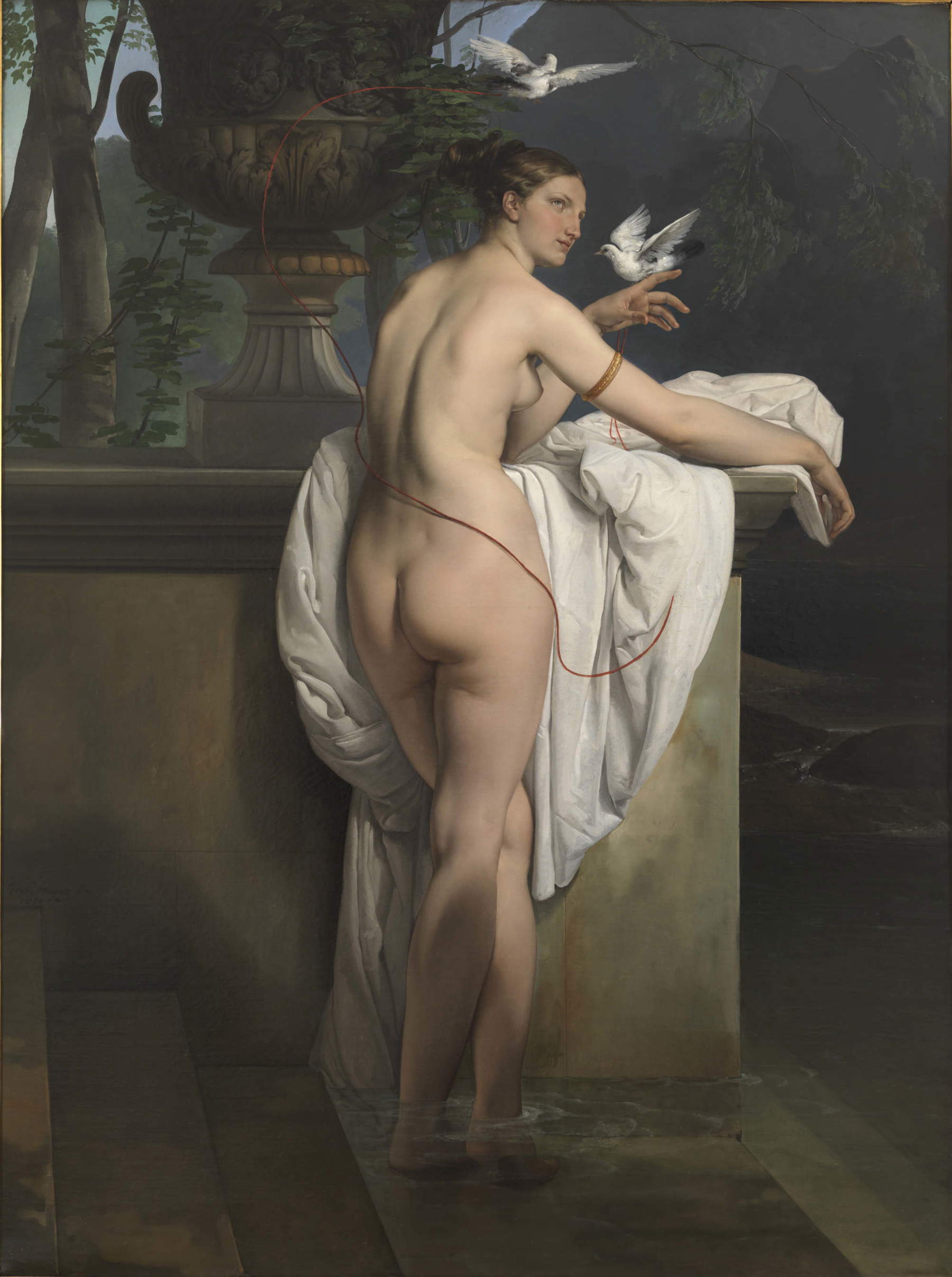
The presence of Venus, Helen, and Paris also evokes the artist’s connection to Antonio Canova, who served as Hayez’s mentor during his formative years in Rome. Mazzocca observes how these figures refer to the universal conception of beauty developed by the Neoclassical sculptor, who had transformed mythological figures into emblems of timeless beauty. This dimension, according to the art historian, also characterizes the newly rediscovered painting.
The acquisition was made possible by the Dorotheum auction house, which had been following the work’s journey prior to its entry into the Trentino collection. Maria Cristina Paoluzzi, director of the auction house’s Rome office, described the transaction as a significant achievement for Italy’s cultural heritage: “Considering that the Caritro Foundation’s purchase allows this exquisite painting by Francesco Hayez to return home, to the very place where it was commissioned by Count Girolamo Malfatti of Trento. This acquisition restores the work to the public domain.”
Before being presented to the public, the painting will undergo restoration. The canvas is in good overall condition, but the Foundation has decided to undertake a process of conservation and restoration to enhance the work’s legibility, particularly given its age and historical and artistic value.
Initial investigations were conducted through numerous non-destructive analyses, which provided information on both Hayez’s painting technique and the work’s state of preservation. Restorer Carlotta Beccaria explained that the painting is still on its original canvas, a fact that preserves an important material record of its history. “The painting, still on its original canvas, underwent preliminary investigation through numerous non-destructive analyses to obtain useful information on both the painter’s modus operandi and the state of preservation,” she stated.
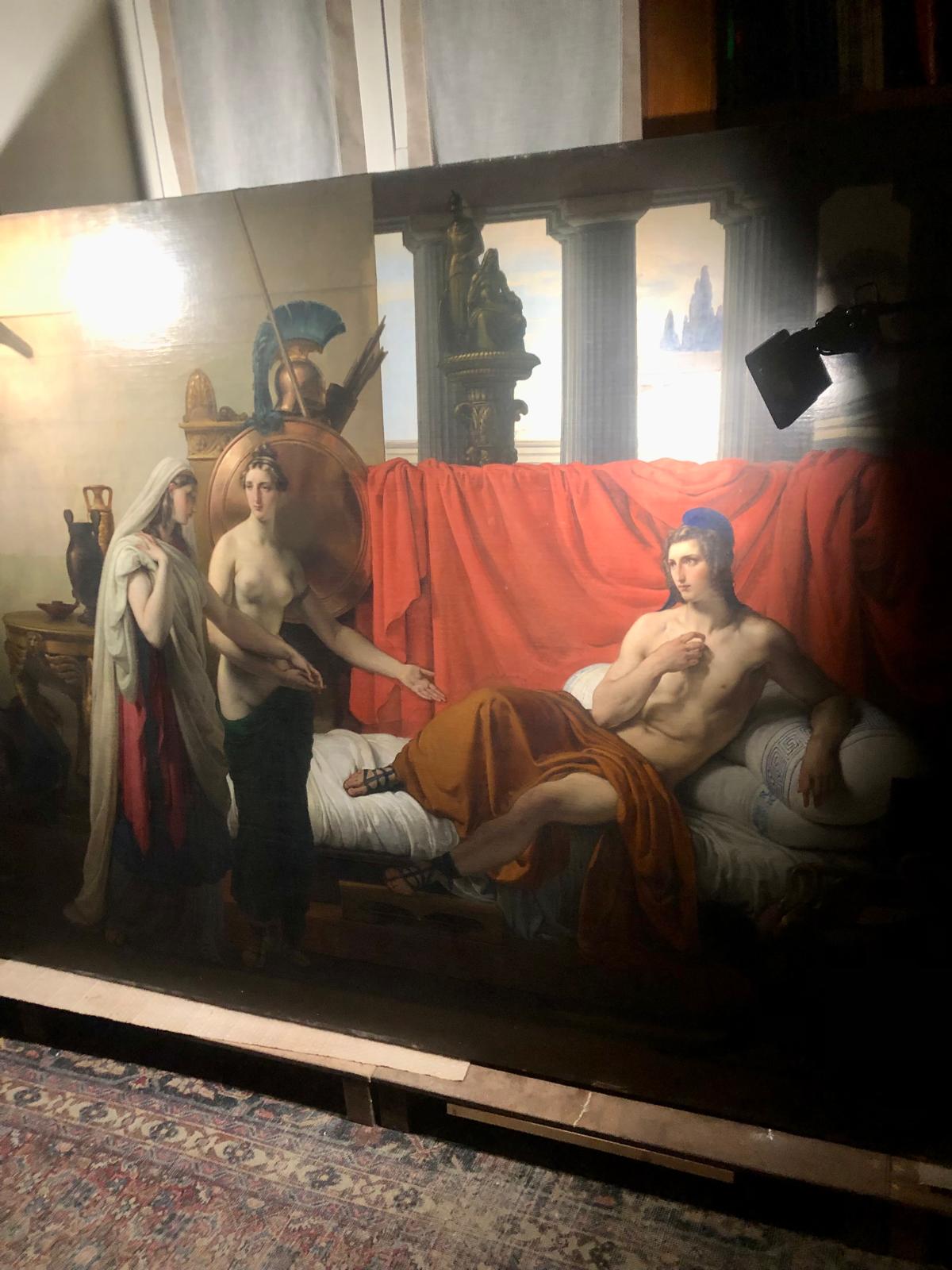
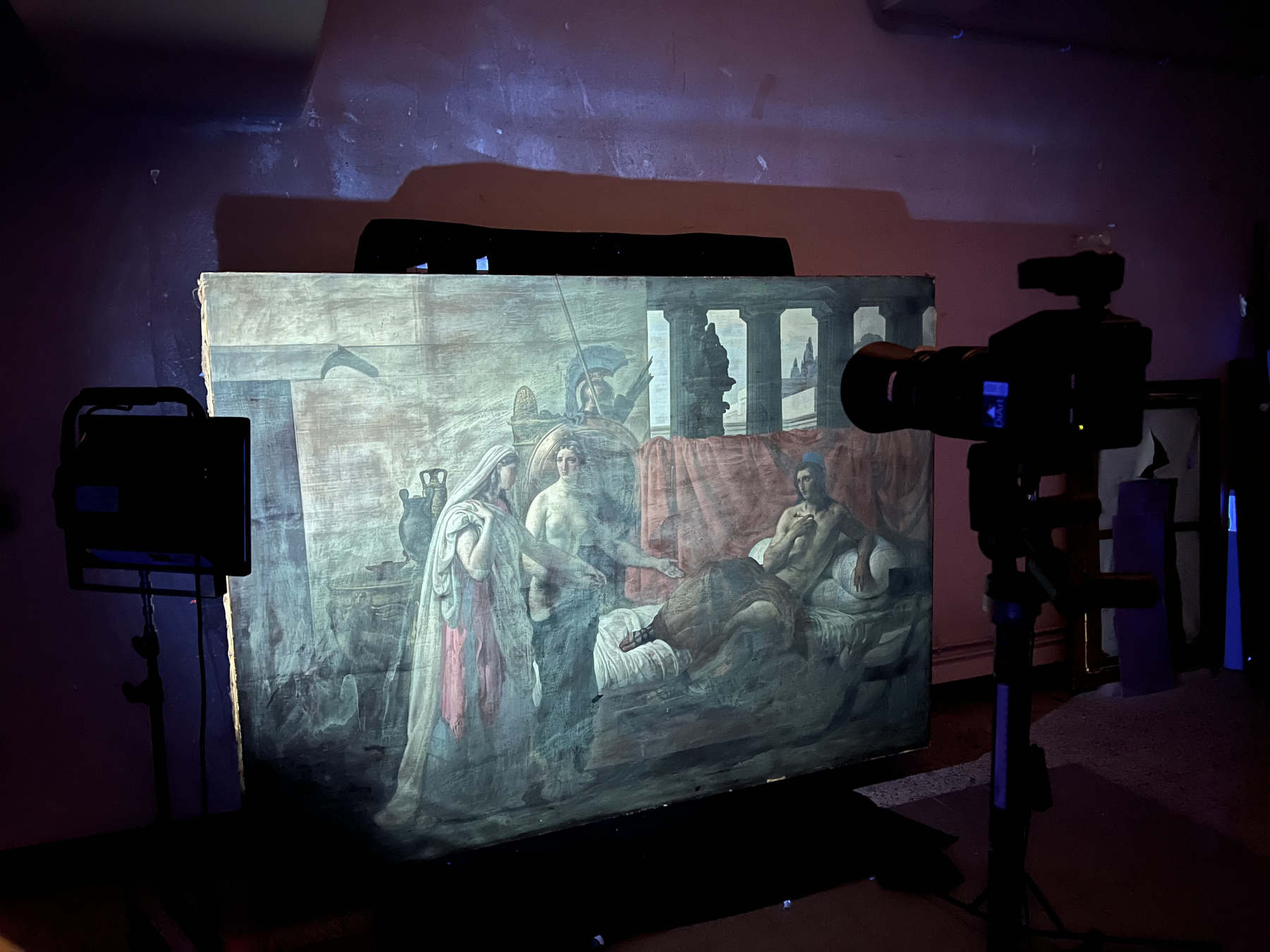
The restoration work planned for the coming months will address both conservation and aesthetic aspects. The stretcher will be consolidated to restore the correct tension to the canvas; the surface will be cleaned of atmospheric particulate matter; and the varnish—which was applied unevenly in the past and is characterized by numerous drips— will be solubilized. The restoration will be carried out in collaboration with the Superintendency.
The painting’s addition to the Caritro Collection is part of a long-standing initiative by the Foundation to acquire, preserve, and promote the artistic heritage. The core of the collection derives largely from works inherited from the Cassa di Risparmio di Trento e Rovereto and has been gradually expanded. The collection has also been documented in a catalog published in 2022 and now includes over 300 works, featuring artists such as Hayez, Umberto Moggioli, and Giovanni Segantini, alongside numerous lesser-known artists who are connected to the Trentino region by birth or biographical circumstances.
Since 2024, the collection has also been the focus of DISPLAY, a project through which the Foundation brings its works to various locations throughout Trentino, engaging the public in interactive activities that invite them to observe, explore, and reinterpret the artistic content. This initiative complements collaborations with museums and the Foundation’s policy of lending works, with the goal of making this cultural heritage accessible even outside the Foundation’s own spaces.
The Chair of the Board of Directors, Patrizia Galvagni, emphasized the significance of the acquisition for the history of the collection and for the Foundation’s relationship with the local community: “With this acquisition, we are reconstituting a historic core linked to Trentino patronage and strengthening the value and identity of our collection. Our task is to care for this heritage and create the conditions for the community to learn about and appreciate it.”
Galvagni also noted that the restoration is the first step in a broader project to be developed in collaboration with the Mart, the Superintendency, and other local cultural institutions, through educational and public engagement initiatives aimed at diverse audiences, with a particular focus on younger generations. The stated goal is to ensure that the painting does not remain merely a work acquired by the Foundation, but becomes a shared cultural heritage.
With the return of *Venus Leading Helen to Paris* to the Caritro collection, a chapter of the collection’s history linked to a 19th-century Trentino patron is thus restored; but above all, a piece of Hayez’s oeuvre that had remained outside the reconstruction of his career for decades reemerges: Following its rediscovery, restoration, and future research initiatives will help further clarify the material and artistic history of a painting that, for a long time, had been known only through its engraved image.
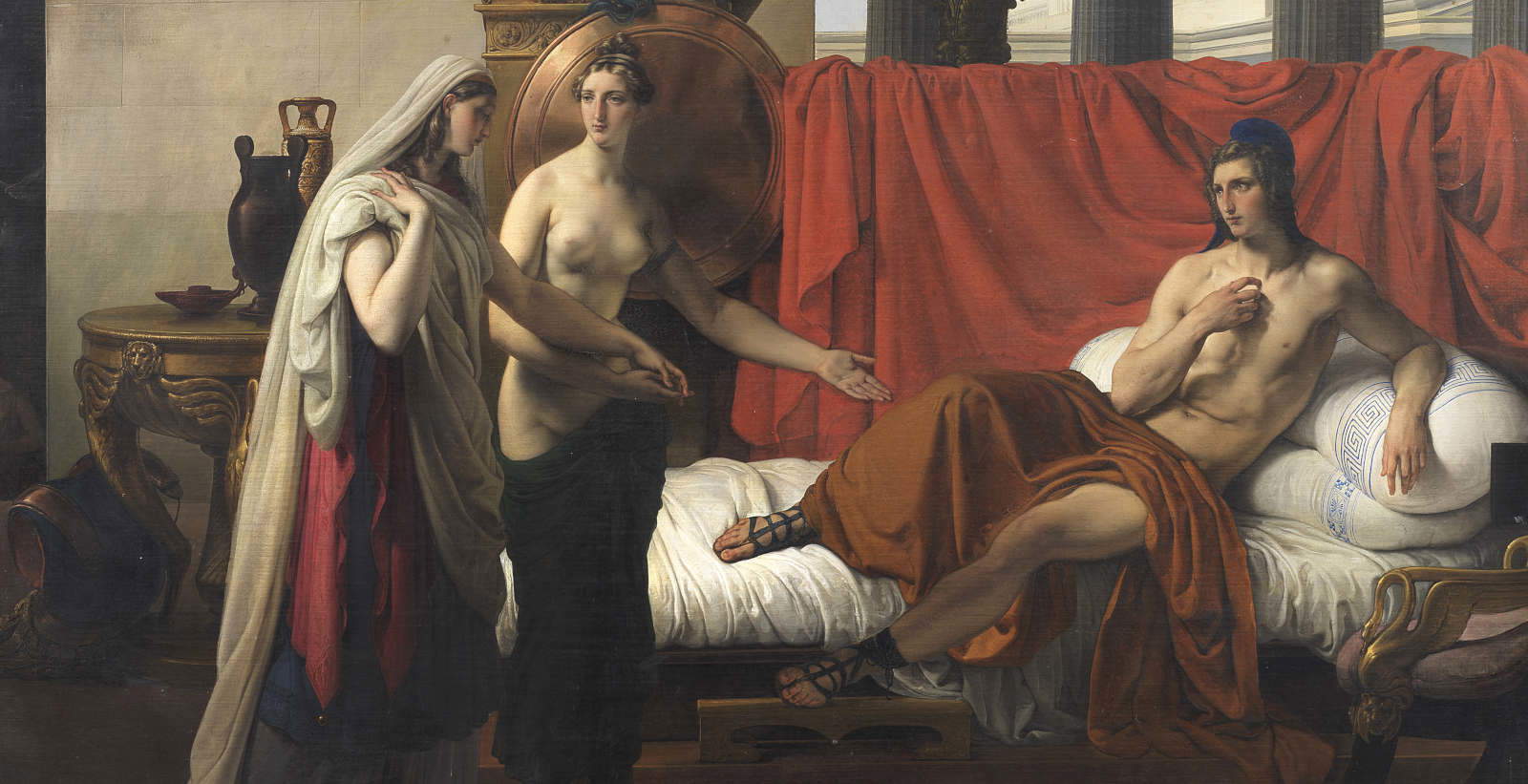 |
| A Hayez masterpiece believed to be lost has resurfaced: the Caritro Foundation brings it back to Trento |
Warning: the translation into English of the original Italian article was created using automatic tools. We undertake to review all articles, but we do not guarantee the total absence of inaccuracies in the translation due to the program. You can find the original by clicking on the ITA button. If you find any mistake,please contact us.