




by Redazione 18/10/2026



Categories: News Focus / Disclaimer
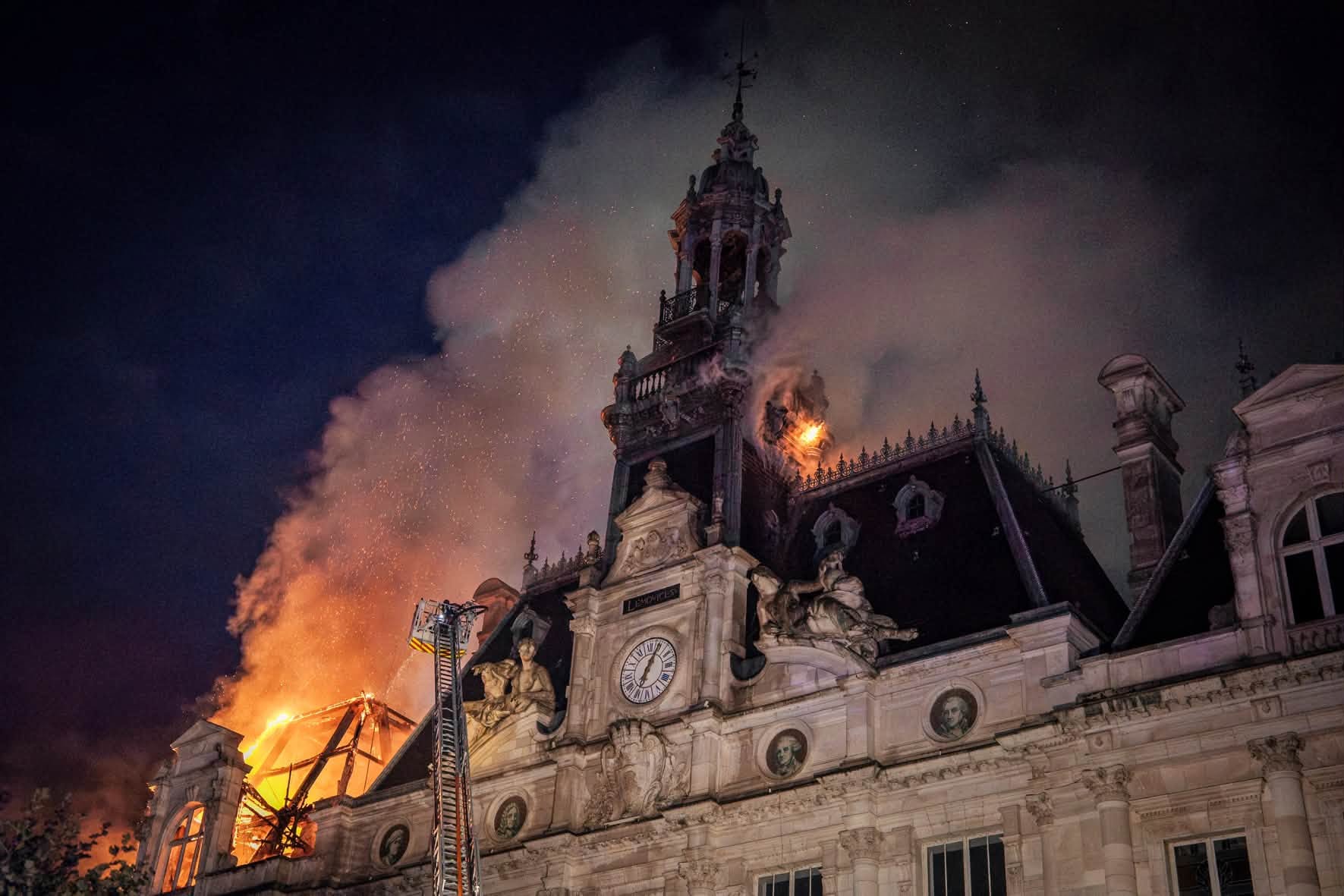
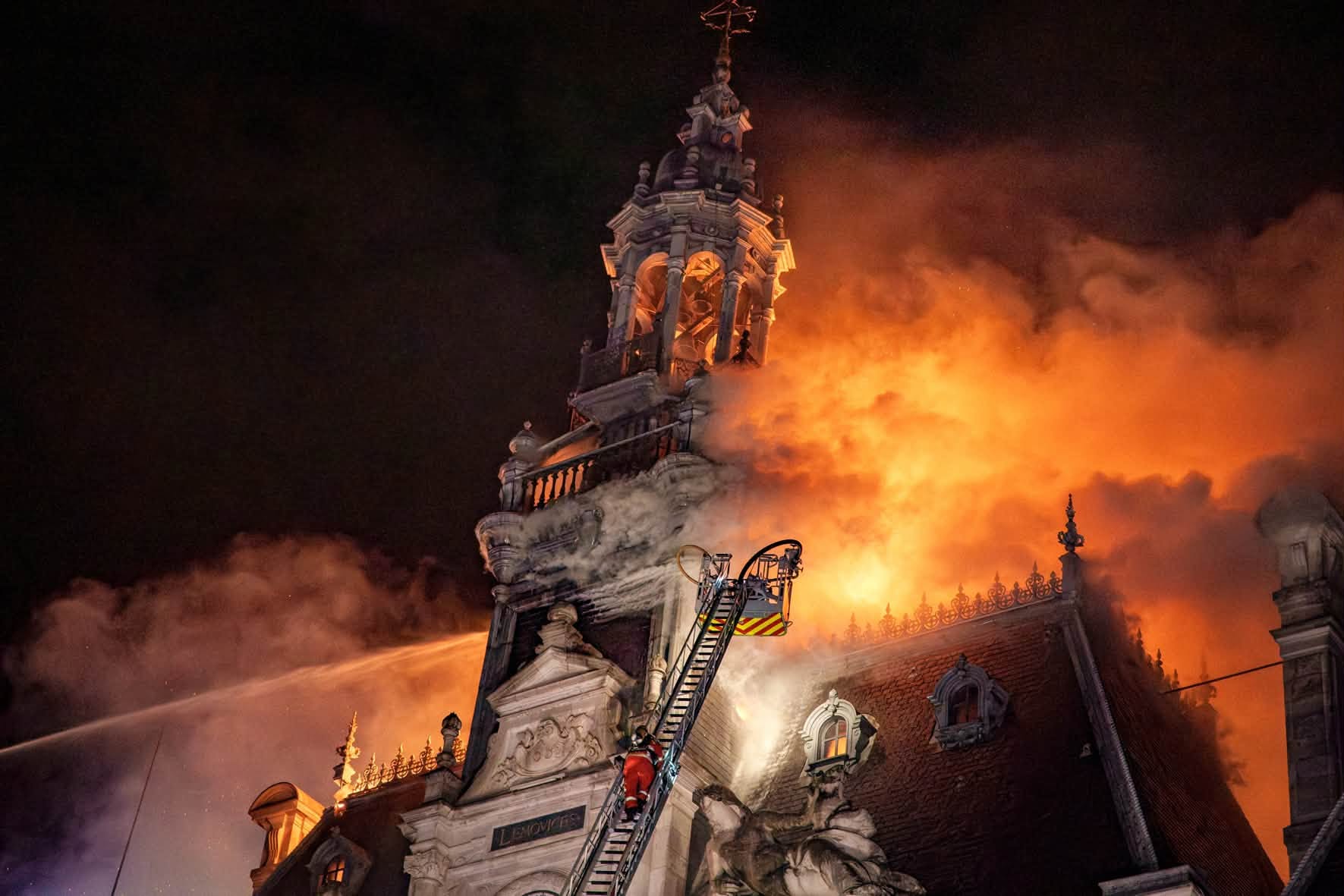
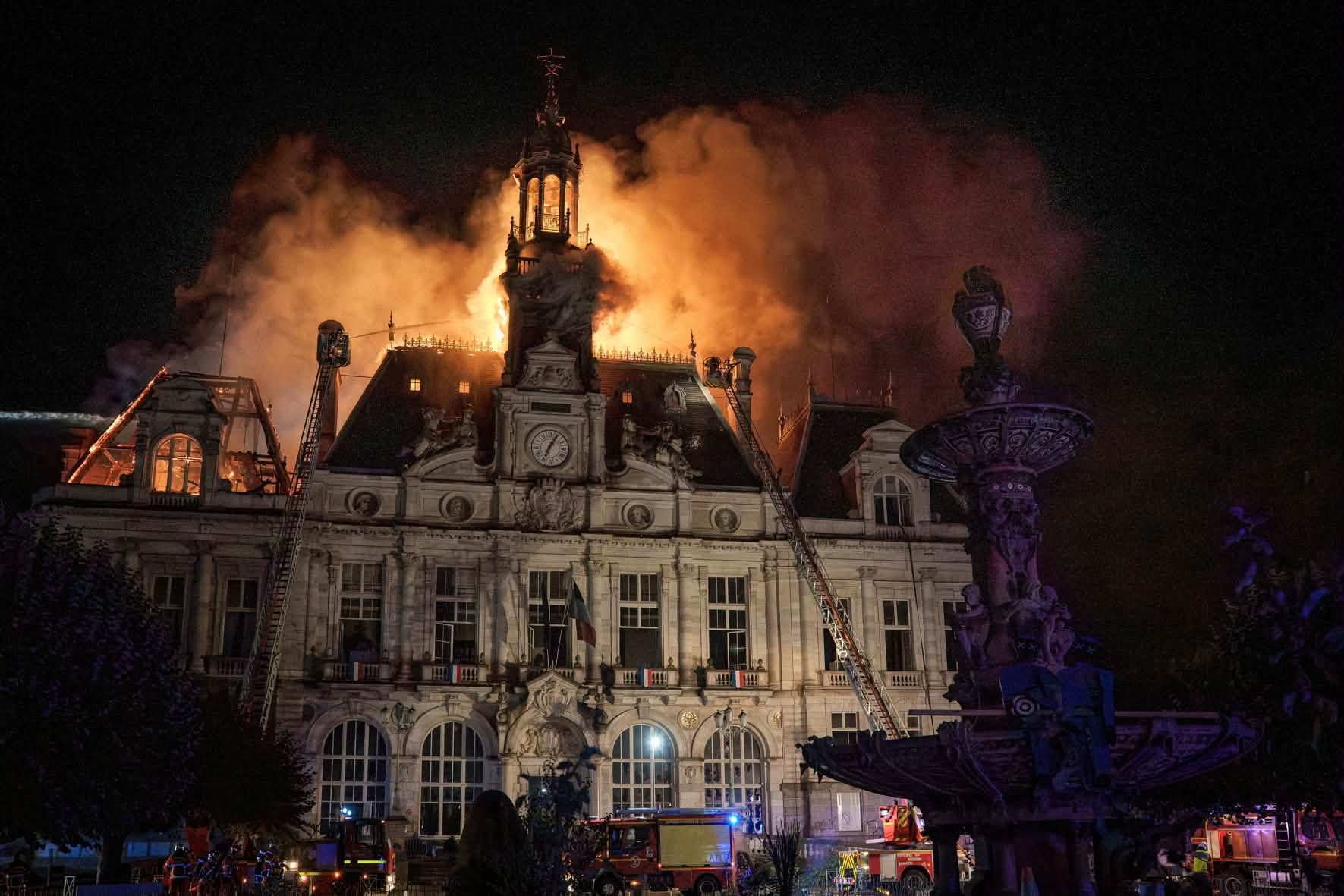
Flames ravaged Limoges City Hall, a building inaugurated in 1883 and designated a historic monument since 1975: the Hôtel de Ville was set ablaze by rioters on the fringes of yesterday’s demonstrations. The bell tower collapsed and the roof was destroyed; the extent of the damage has yet to be determined, but it appears to be severe.


The bell tower is gone, the roof has been consumed by flames, and in the center of the facade—where the clock had stood just a few hours earlier—there is now a gaping hole through which the sky is visible. This is the current state ofthe Hôtel de Ville in Limoges, the historic city hall of this French city, in the aftermathof the fire that broke out in the late afternoon of Saturday, October 17, 2026, during the violence that accompanied the protests against the high cost of living. The fire devastated a significant portion of the building, causing the bell tower to collapse and destroying the roof. The financial toll has not yet been quantified, but Mayor Guillaume Guérin has already spoken of considerable damage and potentially very high reconstruction costs.


The gravity of the incident extends beyond the loss of an administrative building. The city hall is, in fact, a historic building inaugurated in 1883 and listed as a French historic monument since January 15, 1975. Its façade, bell tower, decorations, and the works of art housed within its interiors are part of an architectural complex that also bears witness to Limoges’ connection to its artistic tradition, from ceramics to enamelwork. Based on what is known so far, the Hôtel de Ville has suffered extensive damage, but it is not yet possible to determine precisely which decorative elements and works of art have been lost or damaged. Responsibility has not yet been determined, but as early as last night, the mayor attributed the fire to a group of organized rioters who were not part of the demonstration.


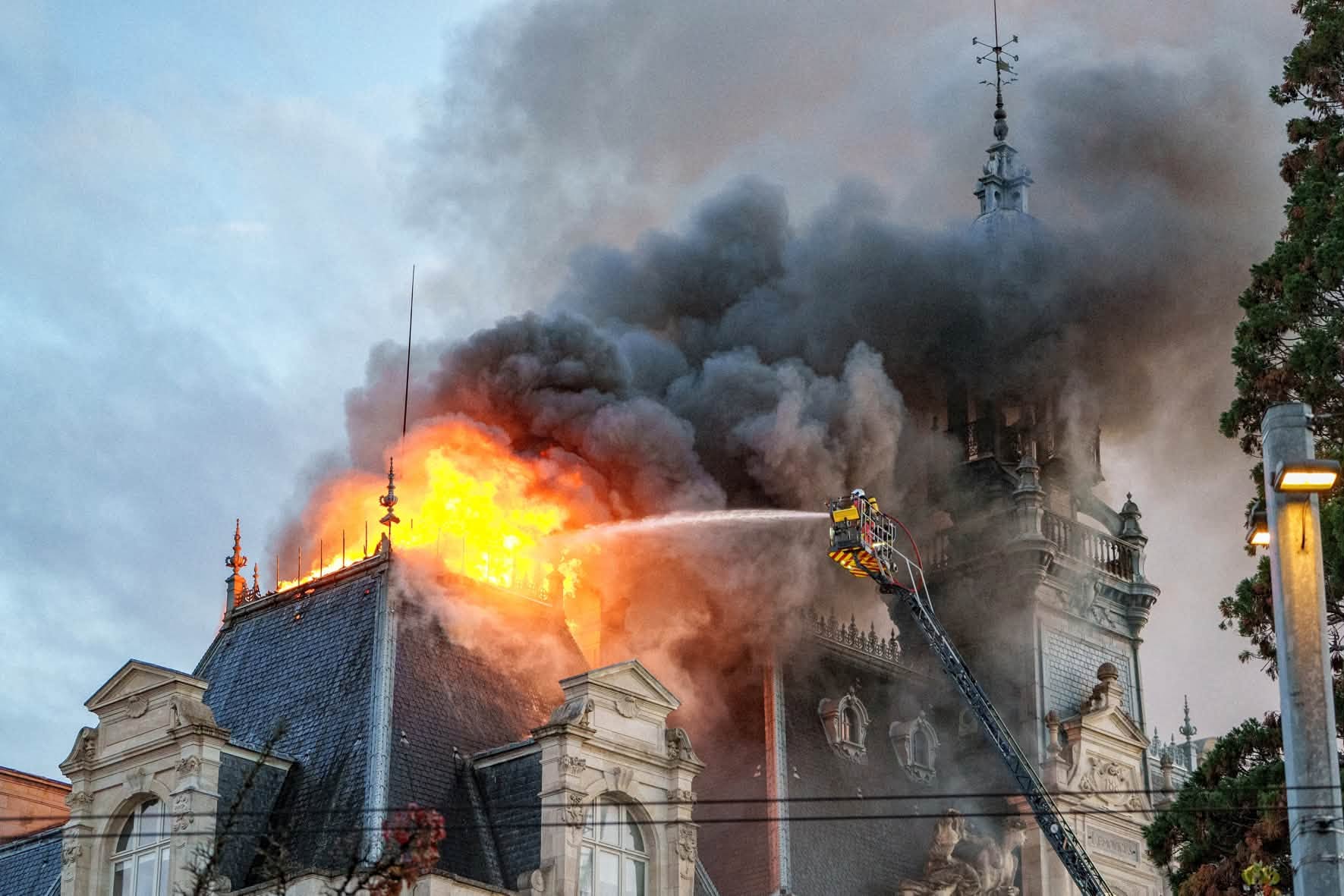
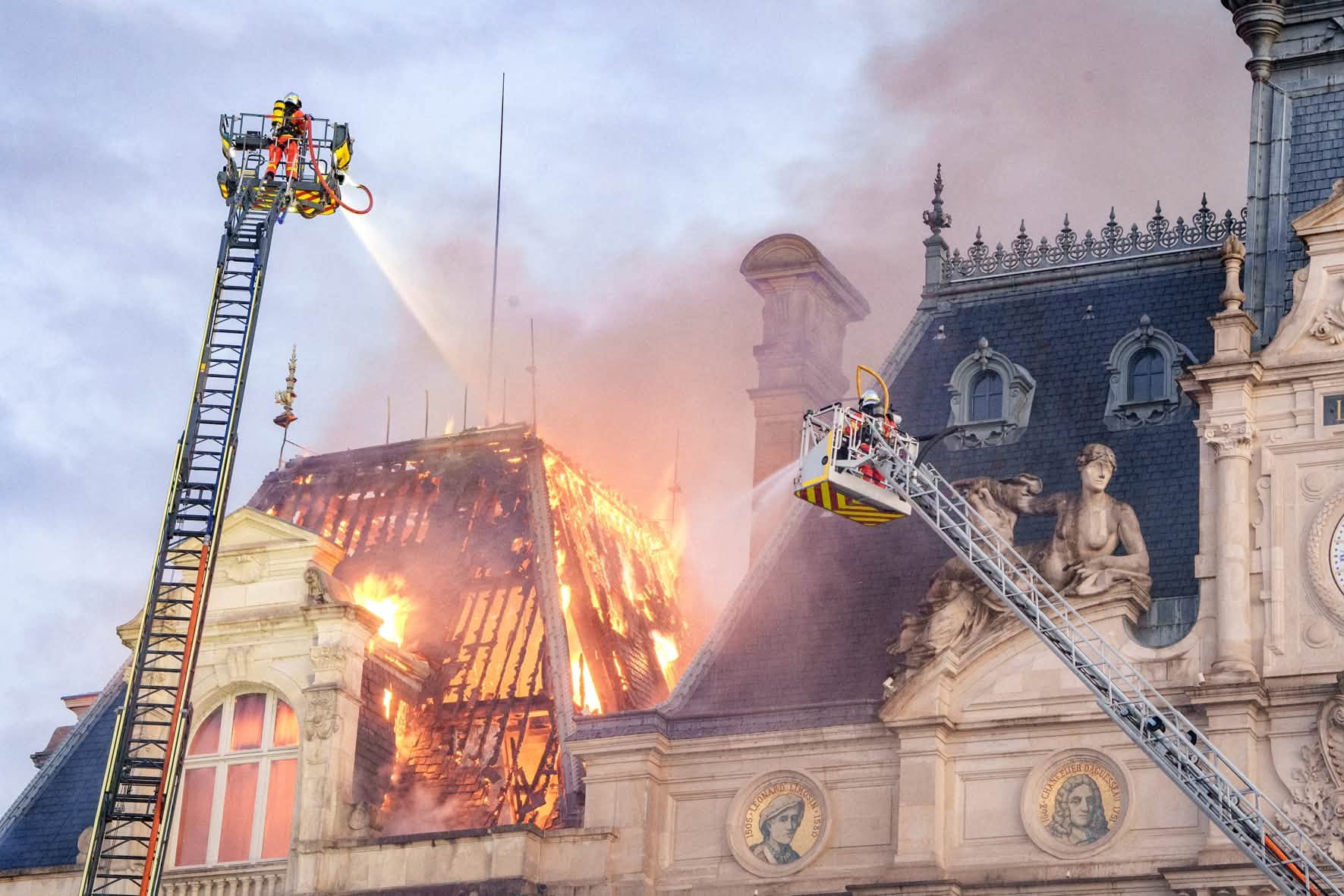
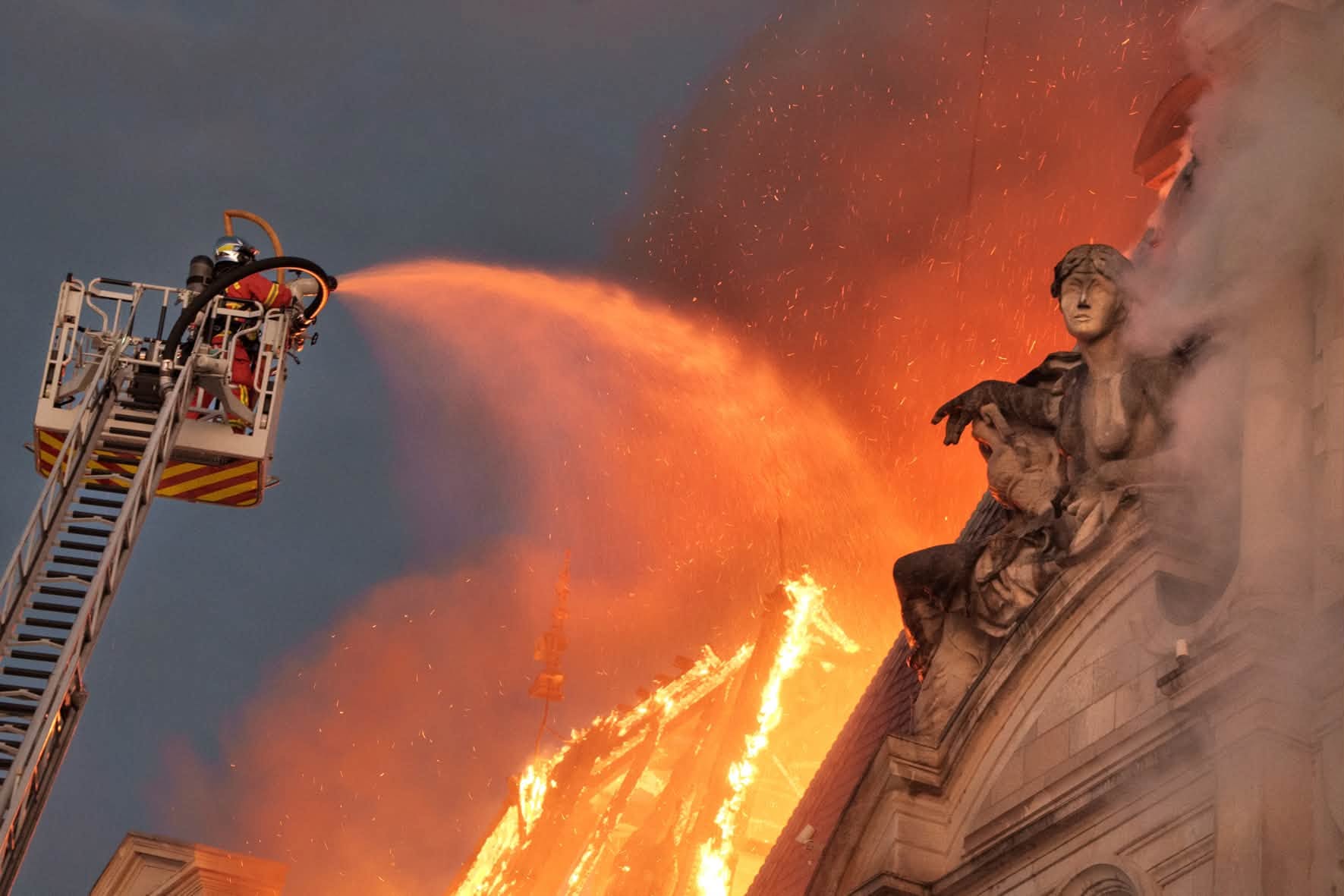
The collapsed bell tower and the destroyed roof
The fire broke out on the afternoon of Saturday, October 17. Around 6 p.m., according to reports in the French press, dozens of people forced their way into City Hall, setting the ground floor ablaze, and the flames spread rapidly upward. Then, around 7 p.m., the first roof tiles were already burning, and the risk of the bell tower collapsing had become very real; shortly before 9 p.m., the structure collapsed. Footage recorded from above during the firefighting operations shows flames rising above the monument and captures the moment the bell tower collapses under the force of the fire: Firefighters from the Haute-Vienne department also used a drone to monitor the fire’s progress and film the building from above.


This morning, while the last embers were still under control and firefighters continued their efforts to extinguish the blaze, the structure appeared to be severely compromised. The roof had collapsed, exposing the charred wooden framework and the two skeletal-like side gables, while at the center of the facade, the bell tower that once soared above the building no longer exists (amateur footage circulating online as early as last night captured the exact moment of the collapse). The fire was contained during the morning, but flames were still visible inside the building at dawn. The surrounding area remained cordoned off by law enforcement as rescue efforts continued.
Mayor Guérin described the city hall as a “largely lost” building as early as last night, and in an interview with the French broadcaster RTL this morning, Guérin highlighted the extent of the damage and the potential cost of reconstruction. The necessary funds, he warned, could reach “astronomical” figures, he said. However, no official financial estimate has been provided: the extent of the material and financial losses remains to be determined.
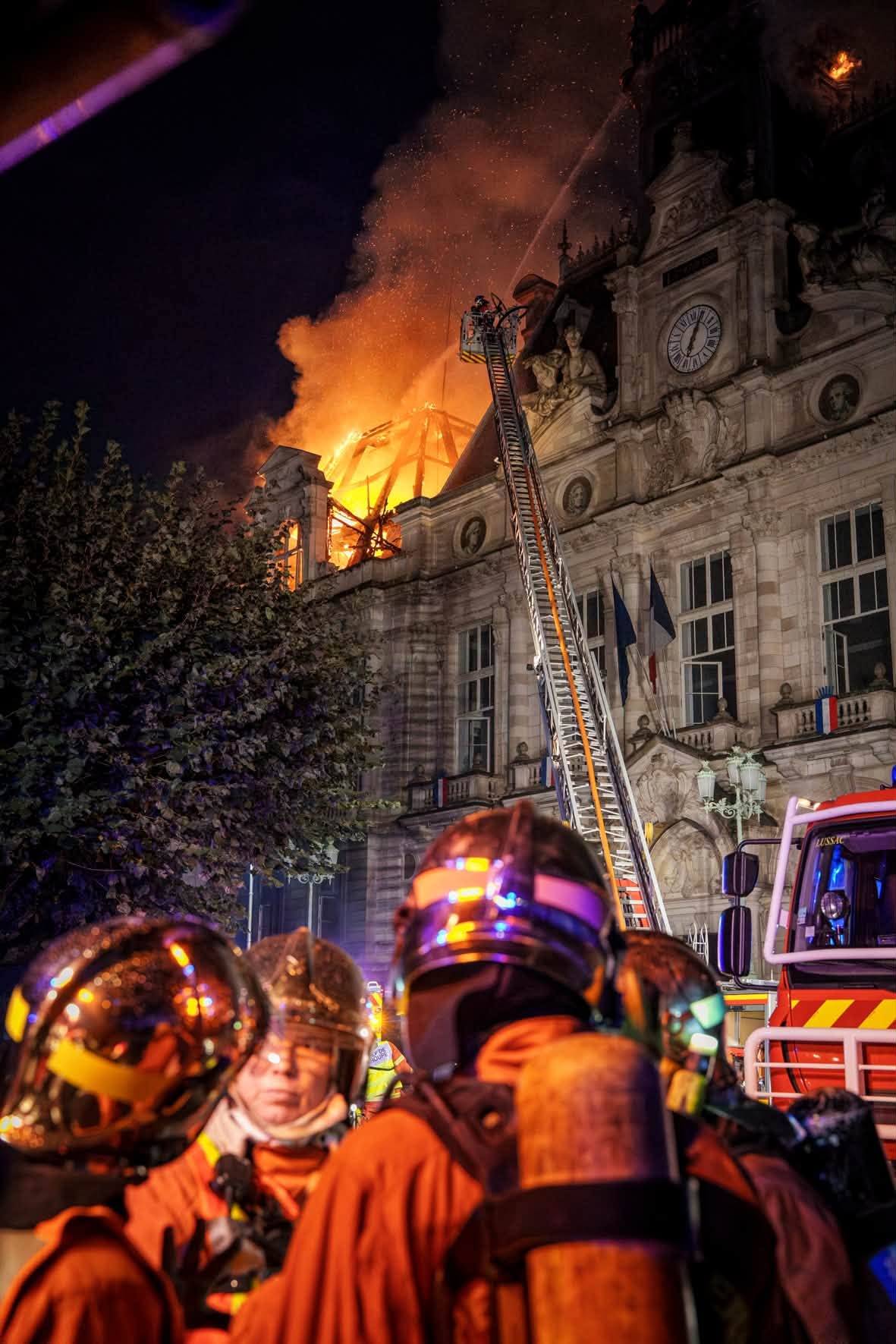
A 19th-century city hall built on the site of the ancient forum
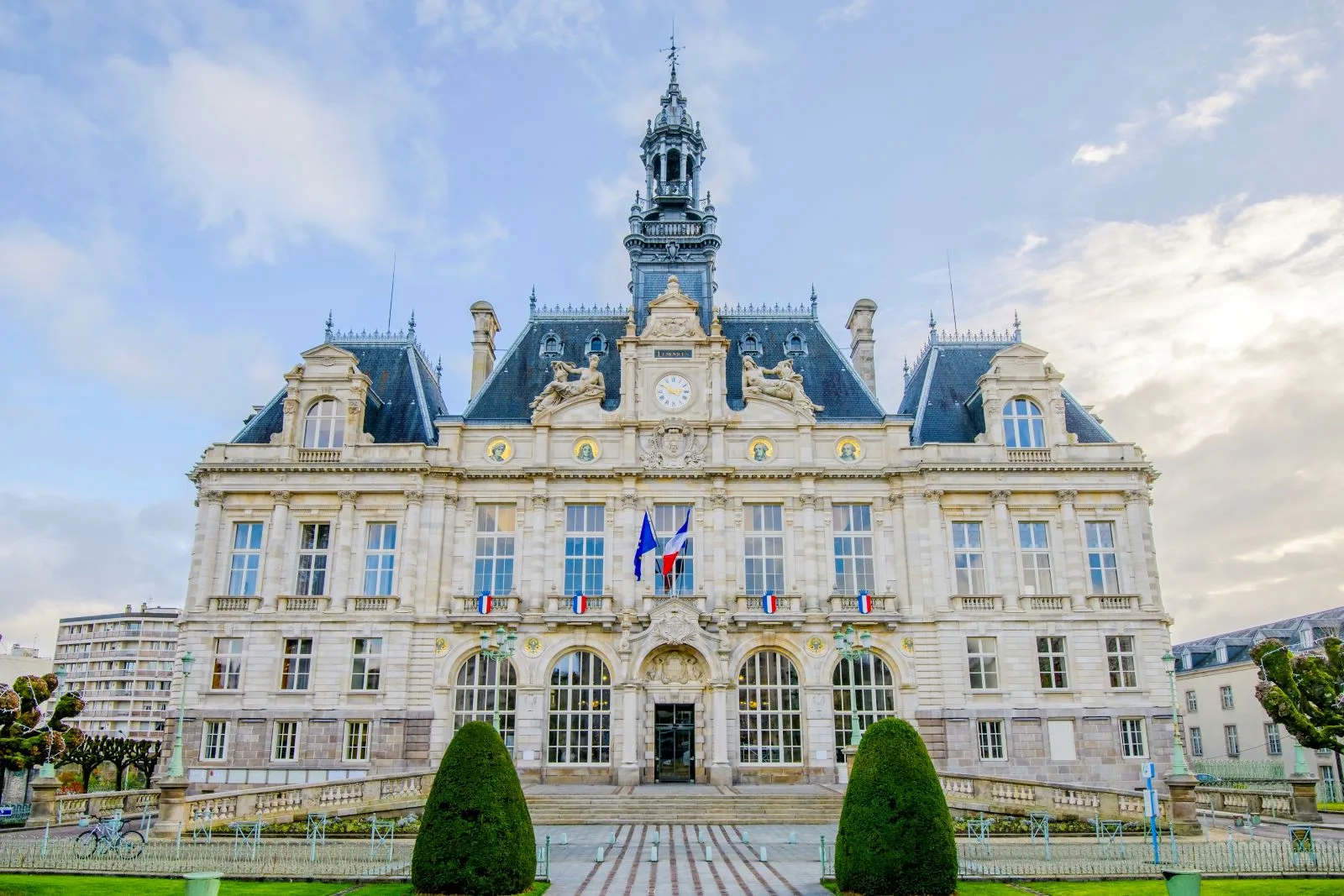
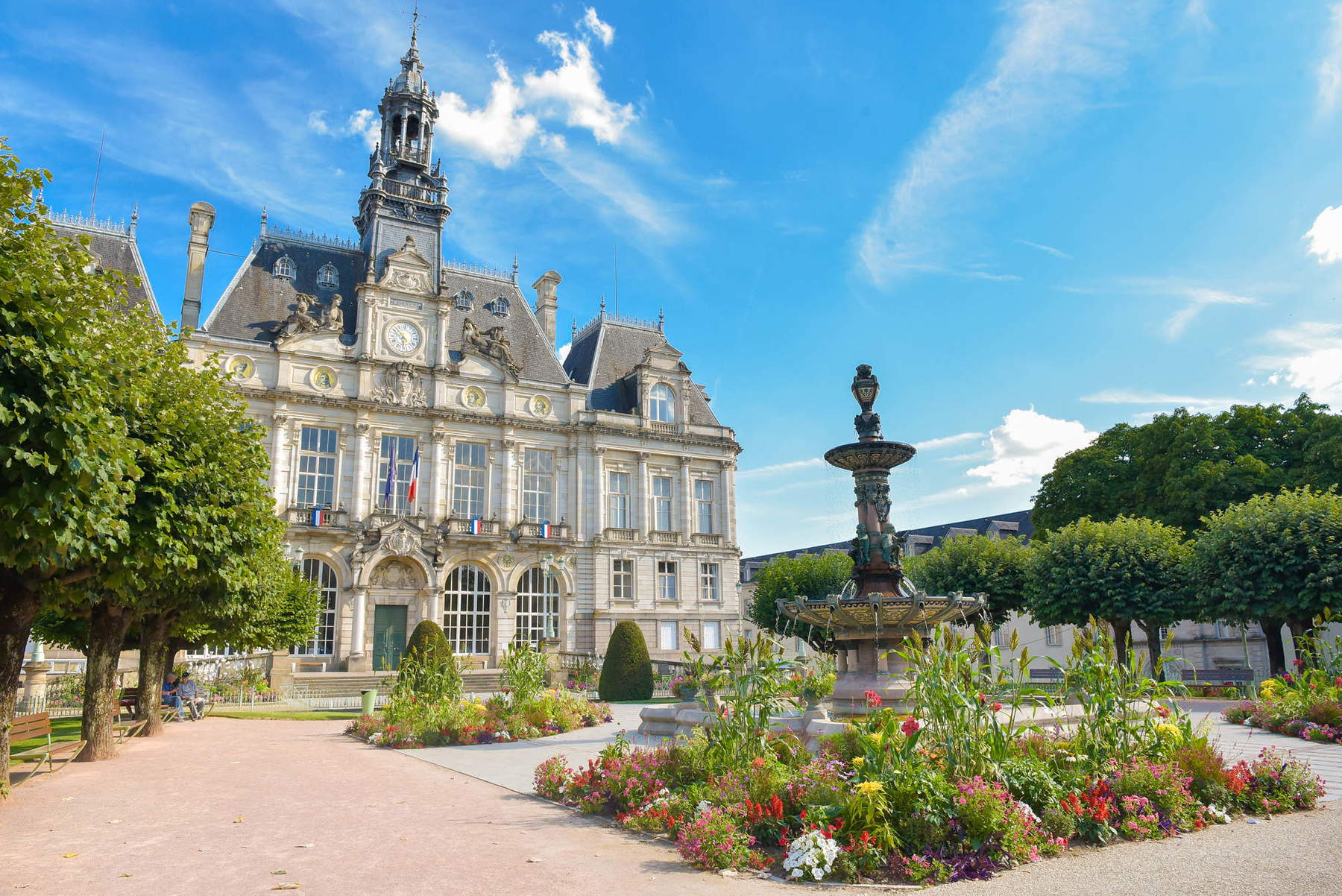
The building engulfed in flames, located in the heart of the city, holds a significant place in Limoges’ urban history. The current city hall stands on the site of the ancient Roman forum and was built thanks to a bequest from Alfred Fournier, a wealthy Limoges landowner who died without heirs on July 24, 1875 (prior to its inauguration, the municipal offices had been temporarily relocated to the Hôtel de la Bastide on Rue Turgot). The building’s design was entrusted to architect Charles-Alfred Leclerc, winner of the Prix de Rome and an architect associated with the palaces of Versailles and the Trianon. The new Hôtel de Ville was inaugurated on July 14, 1883, after four years of construction, and the date of its inauguration is also important for understanding the building’s historical significance: its construction dates back nearly a century and a half and predates its designation as a protected monument by many decades.
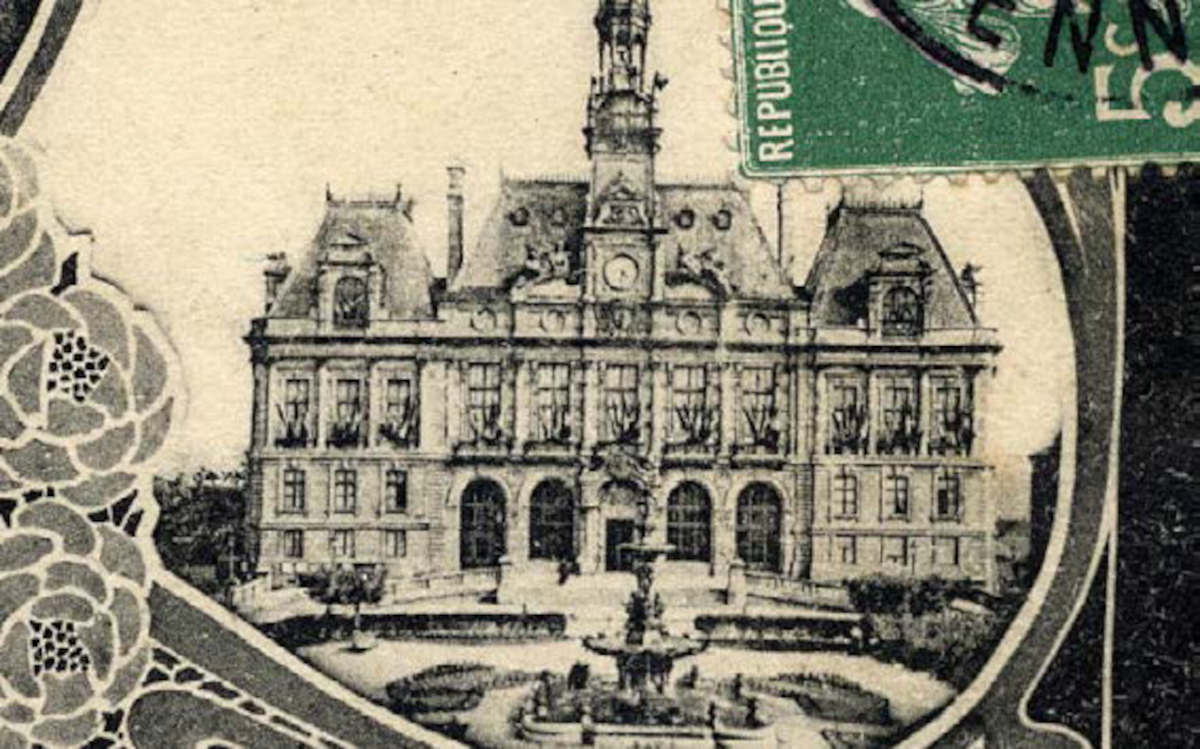
The architecture combines Neo-Renaissance elements and the Louis XIII style, with a main façade largely inspired by that of the more famous Hôtel de Ville in Paris. The complex consists of three buildings, characterized by slate roofs and dominated by the bell tower—the belfry, to be precise, a term referring to a bell tower that also serves as a civic tower. It was precisely this bell tower—which has since collapsed—that constituted one of the most recognizable elements of the architectural composition.
The main façade combines architectural elements, sculptures, and ceramic decorations, some of which are directly linked to the city’s artistic history, and flanking the clock are two large pediments featuring allegories of goldsmithing and enameling, created by Tony Noël. On either side of the city’s coat of arms are four ceramic medallions featuring portraits of four figures linked to the history of Limoges: Léonard Limosin, Henri François d’Aguesseau, Pierre Victurnien Vergniaud, and Jean-Baptiste Jourdan. The medallions are the work of Giandomenico Facchina, an Italian artist who also worked on the decoration of buildings and monuments such as the Petit Palais, the Basilica of the Sacred Heart, and the Basilica of Lourdes. The presence of ceramics on the facade is one of the elements linking the city’s architecture to the artistic expertise for which Limoges is renowned, particularly in the fields of enamels and the decorative arts. At this time, no information is available regarding any damage sustained by the facade’s decorations, nor is it possible to know whether these works have been destroyed.
The loss of the bell tower and the roof radically alters the building’s silhouette. Images from the following day show a facade that remained standing but was stripped of its roof and the vertical structure that marked its central section. The survival of the visible sections of masonry alone does not allow us to determine which parts can be salvaged or to what extent it is possible to reconstruct the destroyed elements. Even the clock, which before the fire occupied the central part of the facade, is missing from the images taken the following day, in which the circular opening offers a glimpse of the sky: however, the information released does not specify whether the mechanism was destroyed, fell during the collapse of the structures, or can be recovered. The architectural damage is therefore evident, while the assessment of the individual artistic elements remains incomplete.
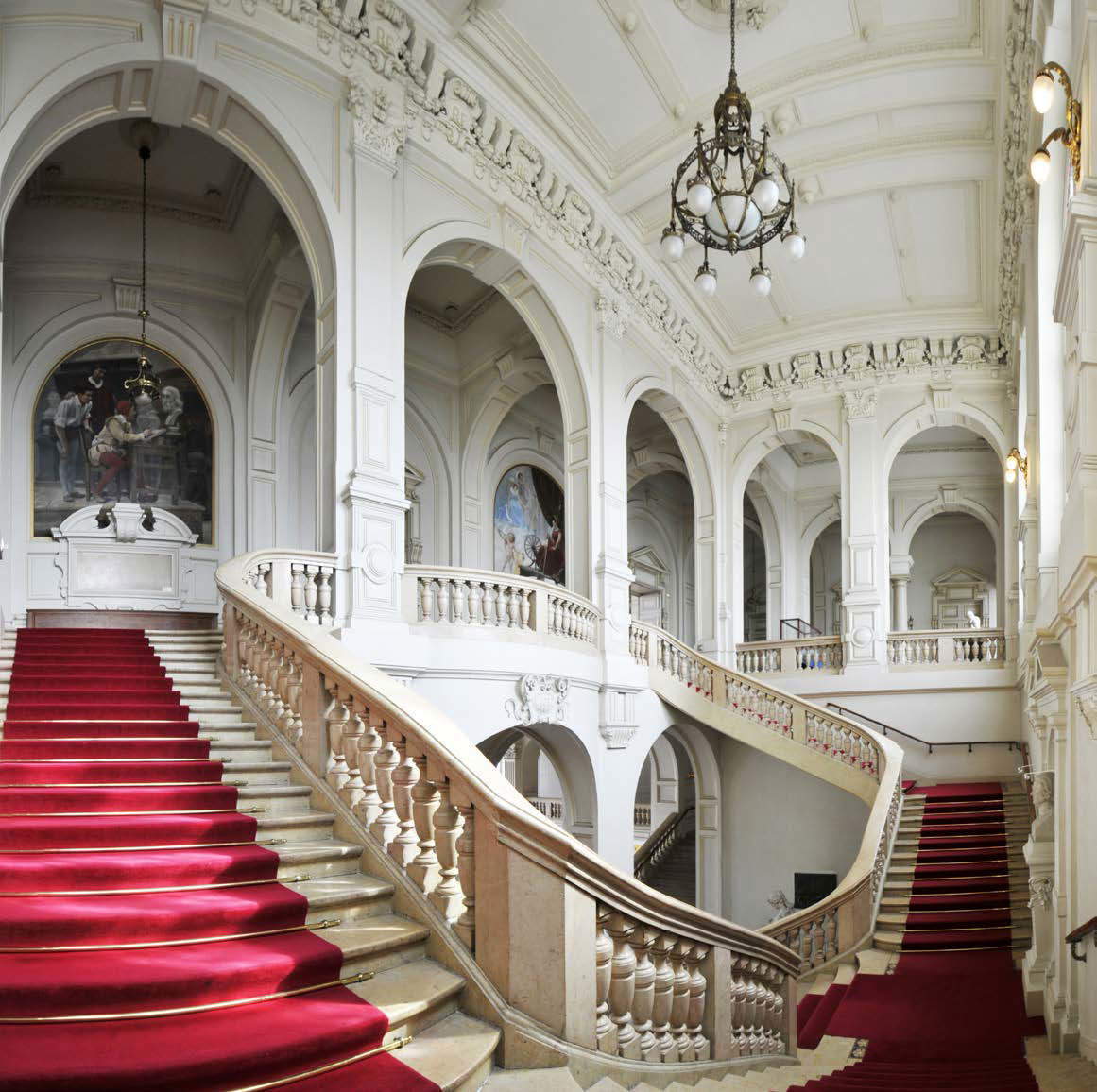
The town hall did not only feature decorative elements on its facade. On the first floor, on the landing of the grand staircase, there were two oil paintings on marouflaged canvas, created by the French history painter Henri-Paul Motte (1846–1922). The first work, titled *Passé et Présent: union du Limousin à la France par Henri IV*, was exhibited at the 1884 Salon. The second, created in 1885 and conceived as a pendant to the first, is *L’Atelier de Léonard Limosin*. Both were part of the interior decoration of City Hall and were integrated into the artistic program of the 19th-century building. The current condition of these works is also unknown.
Damage in the City and the Residents’ Reaction
The fire at City Hall occurred during an evening of violence that also affected several businesses in the downtown area. After the police and fire department arrived, those responsible for the fire moved toward the city center, where stores belonging to large chains and smaller businesses were vandalized. Among the damaged businesses were Fnac, BHV, Lacoste, and retail outlets operated by Orange and Bouygues Telecom, as well as a pharmacy and other stores. On Sunday morning, several streets were still littered with broken glass and merchandise that had been taken from the stores and left on the ground. Some residents spontaneously began picking up the debris. Meanwhile, this morning, in the area in front of City Hall, numerous citizens stopped to look at what remained of the building. France 3 Régions gathered testimonies from people moved by the sight of the devastated landmark. “It makes me want to cry,” said a woman who lives in an apartment overlooking City Hall. On the city’s social media accounts, the Limoges coat of arms appears draped in mourning, colored black.
In a statement released after the fire, Mayor Guillaume Guérin emphasized the building’s civic function, calling it “la maison commune”—the common house—and the place where the Republic is most tangibly present for citizens. He also expressed solidarity with the city employees who were present during the events, who, according to his statement, were threatened and deeply shaken by the violence.
“The urban violence that took place today is unacceptable,” the mayor stated. “Our city hall is not just a building: it is the common home, the beating heart of our city, and the face of the Republic. I extend my most sincere condolences to the municipal officials who were present during these events. They were threatened and are deeply shocked by the violence they were subjected to. I offer them my full solidarity, my complete support, and my deep gratitude. They should not have to endure such situations in the course of their duties. I also commend the courage of the firefighters and law enforcement officers, who intervened under extremely difficult conditions. We will do everything possible to ensure that the perpetrators of these acts—whether linked to the far left or manipulated by it—are identified and held accountable before the law. There can be no tolerance. The protection of public servants, respect for institutions, and the safeguarding of public property are non-negotiable. Our responsibility is now twofold: to support our hard-pressed staff and to ensure, despite the extensive damage, the continuity of public services. Starting tomorrow, we will take all necessary measures to ensure that citizens can continue to carry out their business. The damage is immense. My heart is filled with sadness. But our resolve remains unshakeable. Limoges has weathered many trials, always rising again, united and proud. It will be the same this time. Nothing will deter us from our duty: to protect our employees, serve the residents of Limoges, and defend republican values. Violence and intimidation will never impose their rule on our city.”
? Is the Limoges City Hall collapsing? #17octobre https://t.co/ZSGxXGcll2
— Chris (@APchris06) October 17, 2026
The Investigation and Consequences for the City
The Limoges Public Prosecutor’s Office has opened an investigation into the destruction of property by dangerous means as part of an organized crime ring, assigning the case to the city’s organized crime division. The prosecutor’s office’s statement, released on Sunday, October 18, also reports that during the events, some people were assaulted, in some cases violently.
On the administrative front, the city’s stated priority is to ensure the continuity of services despite the damage. In his statement, Guérin announced that measures would be taken to allow residents to continue carrying out their daily activities starting the following day. The mayor also thanked the administrators of Limoges Métropole, Haute-Vienne, and other regions for the messages of support received.
The crisis has also taken on a political dimension: Guérin threatened to resign within 24 hours, along with the entire city council, if a specific aid plan for the city was not put in place. President Emmanuel Macron is also scheduled to address the nation on television on the evening of Sunday, October 18, while the government will convene an interministerial crisis task force.
It remains to be seen what the total cost of restoring City Hall will be and what portion of its architectural and artistic heritage can be saved. At this time, we reiterate, no definitive damage assessment has been released, and no precise evaluations are available regarding the works preserved inside the building, the facade’s decorations, or the fountain in front of it.
The most obvious loss is that of the bell tower, which collapsed on Saturday evening, along with the roof destroyed by the flames. But the extent of the fire must also be assessed in light of the building’s history: inaugurated in 1883, built on the site of the ancient forum, and adorned with decorations linked to the artistic tradition of Limoges, the town hall has been a protected historic complex for over fifty years. Only structural assessments and inspections of the building’s components will clarify how much can be salvaged and which elements will require reconstruction. In the meantime, images of the roofless facade and the vanished bell tower already bear witness to a deep wound in the city’s architectural heritage.
Warning: the translation into English of the original Italian article was created using automatic tools. We undertake to review all articles, but we do not guarantee the total absence of inaccuracies in the translation due to the program. You can find the original by clicking on the ITA button. If you find any mistake,please contact us.