



by Redazione 20/08/2026



Categories: News / Disclaimer
In Germany, the DSD, the German Foundation for the Preservation of Historical Monuments, has published the second edition of its Black Book: 1,077 historic buildings were lost in 2024 and 2025, and numerous other monuments are now at risk. The report condemns neglect, economic pressures, technical errors, and political failures.


Germany lost at least 1,077 historic buildings in 2024 and 2025. This is the most alarming figure contained in the second edition of the *Schwarzbuch der Denkmalpflege – Ein Verzeichnis verlorener Geschichte* ( “Black Book of Monument Preservation — A Register of Lost History”), the report by the Deutsche Stiftung Denkmalschutz (DSD, German Foundation for Monument Protection) dedicated to the state of preservation of Germany’s historical and architectural heritage. Published one year after the first edition, the new version of the volume documents, across 324 pages, the monuments that have been lost and those currently facing a real threat, highlighting trends that, according to the foundation, are emerging in numerous areas of the country. The book can be downloaded for free from the DSD website, and a printed copy can also be ordered free of charge.


This publication, the only one of its kind nationwide, does not merely record these losses but seeks to reconstruct their causes and contexts. Among the factors identified by the DSD are the general neglect of historic buildings, economic and local pressures, technical decisions deemed inappropriate, political inaction, andthe insufficient implementation of existing preservation measures.


The second edition also introduces several new features compared to the first Black Book. One of the new sections is dedicated to “fehlende Fachlichkeit”—that is, a lack of specialized expertise—an issue the foundation considers particularly relevant, especially in light of current political and legislative debates. Another new chapter, titled “Nachgeschaut” (Analysis), revisits cases already published in the first edition to assess what has happened in the meantime: which buildings have been saved, which situations have worsened, and which political or legal decisions have been made.


For the first time, the report also includes several cases reported through the Black Book’s reporting portal, which has been active online since August 2025 and has so far collected over 400 reports from across Germany. According to the foundation, the figure of 1,077 lost monuments in just two years confirms that the gradual disappearance of historic architectural heritage has not come to a halt. Many of the lost properties were of significant cultural, urban, or identity-defining importance, yet their disappearance has often gone largely unnoticed.
The book organizes the cases into different sections. “Für immer verloren,” meaning “Lost Forever,” compiles the stories of numerous monuments that have disappeared permanently over the past two years. For each case, the history and context of the loss are reconstructed, accompanied by an expert assessment from the DSD. The cases are also subdivided by theme to highlight different patterns and causes of loss.
The “Gefährdet” section, dedicated to endangered monuments, examines numerous buildings and complexes facing a real risk of demolition or further deterioration. Here, too, the foundation views individual cases as representative of broader structural problems. The report emphasizes in particular that the loss of a monument rarely occurs suddenly: in most cases, it is the result of processes that develop over the course of years, stemming from neglect, lack of maintenance, absence of investment, or conflicts between conservation needs and economic expectations.
This section is complemented by “Gerettet” (“Saved”), which is dedicated to cases where efforts to preserve monuments have been successful. Some monuments were saved even though demolition permits had already been issued. For the DSD, these cases demonstrate that a commitment to preservation can still yield concrete results.
The new chapter “Nachgeschaut,” on the other hand, introduces a different temporal perspective. Monuments that already appeared in the first edition are reexamined to understand what became of them. The report examines which buildings have been restored, where the situation has deteriorated, and what political or legal decisions have been made. The foundation uses these cases to emphasize that preservation is not a static condition, but an ongoing process in which public attention can bring about both positive and negative changes.
However, the Schwarzbuch is not limited to individual cases. The new edition also contains several articles dedicated to some of the main themes of contemporary preservation, starting with infrastructure and heritage policies. Particular attention is paid to the consequences that infrastructure policies and the so-called “Sondervermögen”—the special fund earmarked for public investments—may have on historic monuments.
The DSD also highlights the evolution of the political and legislative landscape in various states as a cause for particular concern. According to the foundation, new laws, reforms to building codes, and administrative reorganizations risk weakening heritage protection in several regions. In this process, the DSD warns, technical standards are being lowered, political influence is increasing, and harmful interventions on historic buildings are becoming easier, leading to losses that in many cases would be irreversible.
Among the topics addressed in the report are the specific roles of public administrations and that of Deutsche Bahn, the German railway company. Finally, the report includes an index listing all cases of loss or risk to monuments identified by the foundation to date.
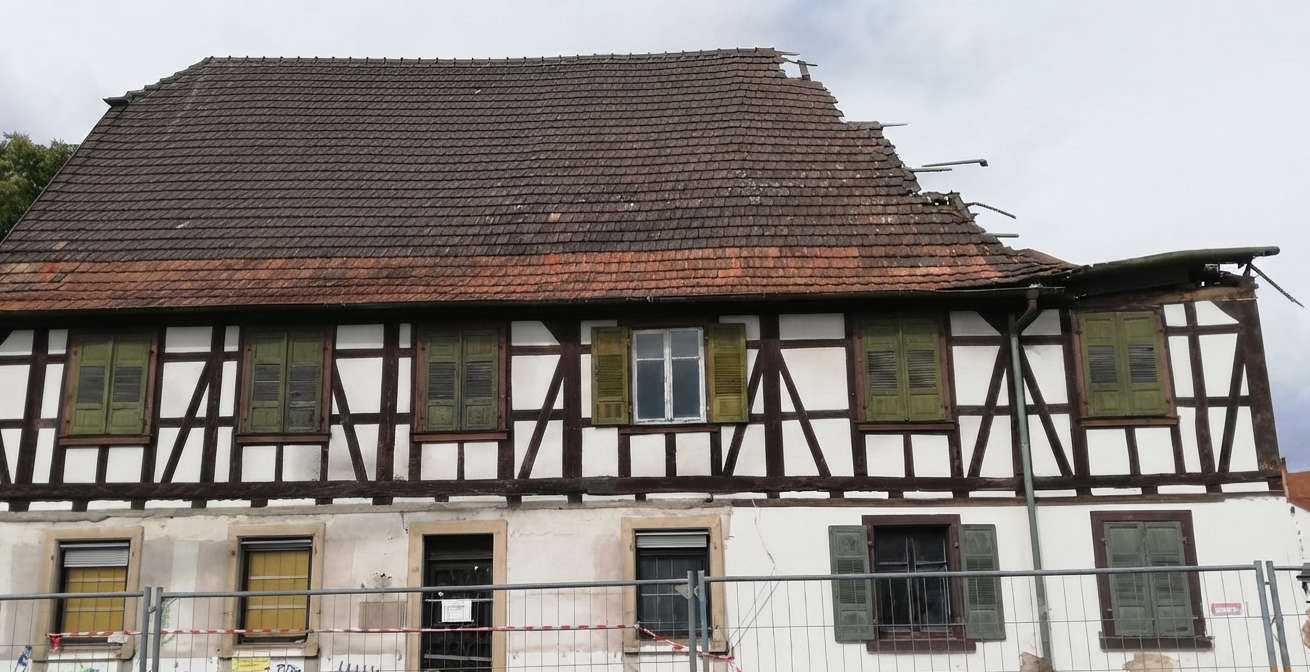
The variety of cases documented reveals a widespread geographic scope of the crisis. In Baden-Württemberg, these include, among others, the Gasthaus Untere Linde in Oberkirch (a 17th-century building that has been demolished), the historic town hall in Schömberg and the former residence known as the “Akademiegebäude” in Schwäbisch Hall, as well as the “Zum Rad” wine bar in Metzingen and the Technisches Rathaus in Pforzheim—the latter, a modernist building from the 1950s, is listed as a monument at risk. In Bavaria, the list includes a half-timbered building in Winkelhaid, demolished without authorization; the 19th-century “Alte Schule” (old school) in Ballingshausen; and the former “Gasthaus Zum weißen Schwanen” in Thurnau, both of which are at risk.
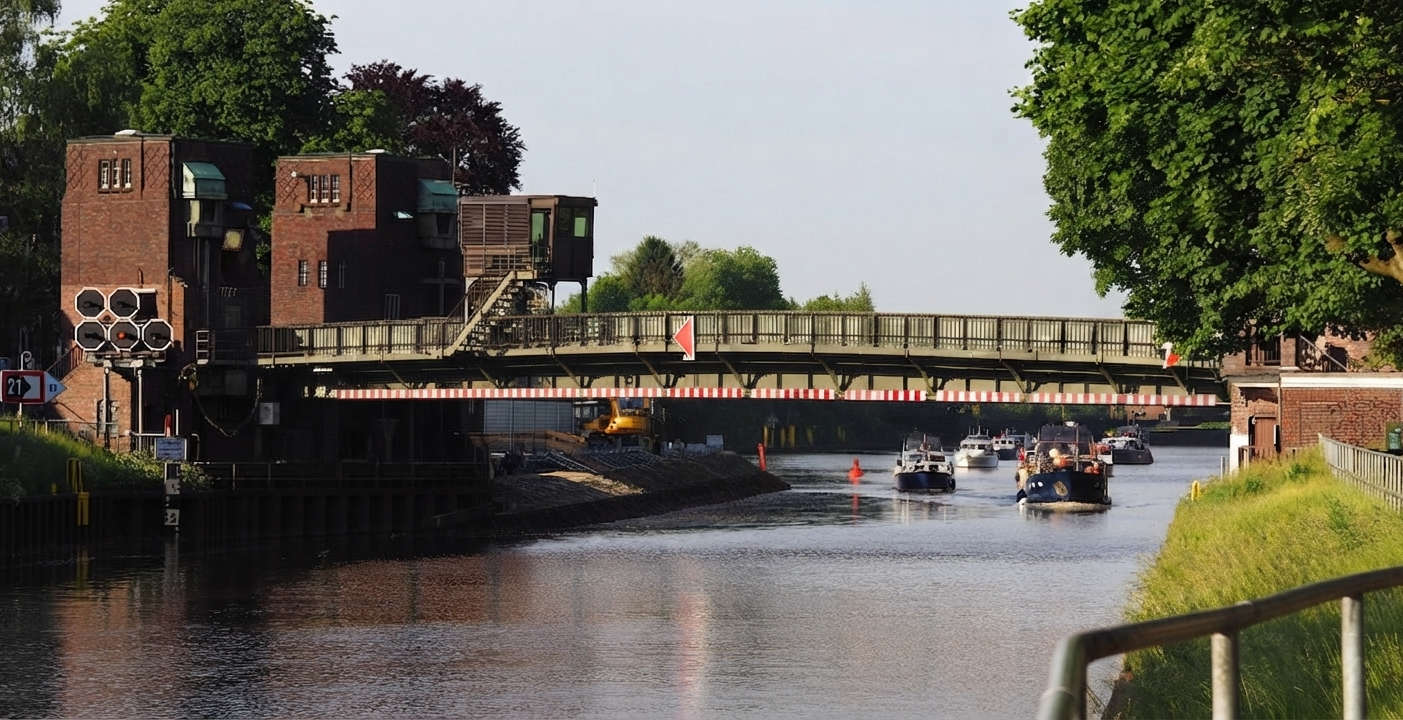
In Berlin, the report examines the Zweifamilienhaus Kern in Zehlendorf (an Expressionist-style house from the 1920s, now lost), while in Brandenburg, the report mentions the Kunst- und Handelsgärtnerei in Prenzlau—listed as a loss under the category of property ownership responsibility—and the Wasserschloss Mühlberg, a castle currently at risk. In Hesse, the report includes the “Haus mit der Friedenstaube” in Frankfurt (a Classicist-style building from 1861), also classified as a loss due to property-related issues, and the Opelrennbahn in Rüsselsheim (Opel’s old racetrack, built in 1919), listed as a monument at risk. In Mecklenburg-Western Pomerania, the situation regarding the Haus Demmin is highlighted. In Lower Saxony, the report includes the Cäcilienbrücke in Oldenburg, a historic drawbridge from 1927 that was lost despite local efforts, the former Ackerbürgerhaus in Burgdorf, a half-timbered building from 1809 that was lost and is listed in the new category related to a lack of specialized expertise.
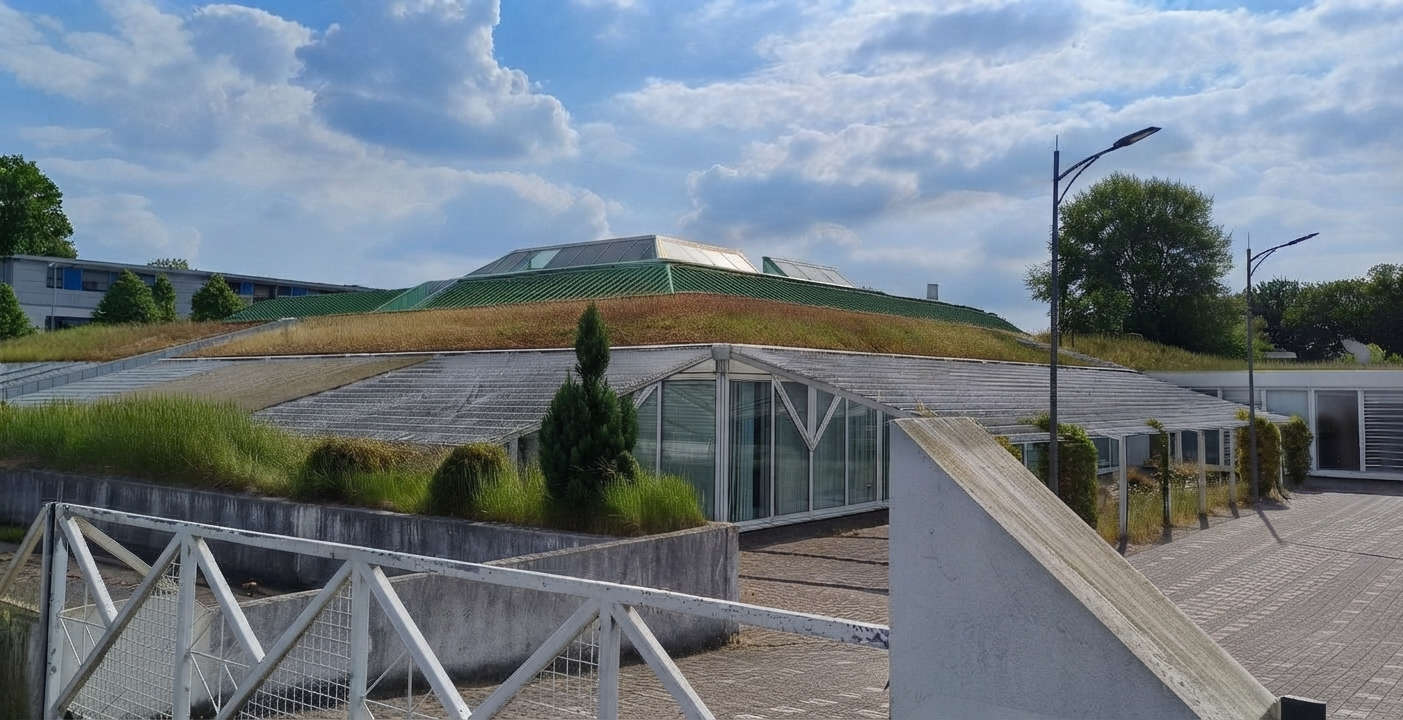
A particularly large number of cases have been documented in North Rhine-Westphalia. Among these are the Krusenhof in Anröchte (a building dating from 1800), the Scarabaeus-Pyramide or Mack-Pyramide in Monheim (a postmodern pyramid built between 1987 and 1990), and the Altes Hotel in Rosendahl, all of which were demolished without authorization. Four railway bridges in Cologne are listed as being at risk, as well as the Alte Schule in Köln-Roggendorf and a half-timbered building in Ottmarsbocholt-Senden.
In Saarland, the Church of St. Mauritius in Saarbrücken is listed as a monument at risk, while in Saxony, the report cites the Ulrich Villa in Glauchau, an eclectic building from 1899 that was lost despite local efforts to preserve it. In Saxony-Anhalt, the list includes the Renaissance-Haus in Halle—which faces the risk of demolition due to real estate speculation—and the Reuterhaus in Bitterfeld, which was lost due to the property owner’s negligence.
Schleswig-Holstein also has several cases. The report cites the expedition ship “Feuerland” in Büsum, a vessel from 1927 that has been lost, the Brodersen-Haus in Neumünster, a building from 1780 that is at risk of demolition due to real estate speculation, and the Hotel Kaiserhof in Eckernförde, which was lost due to a lack of specialized expertise. Also listed as at risk are the Citastrom Building in Elmshorn, a 19th-century example of industrial archaeology, and the former “Hein Mück” restaurant in Lübeck-Travemünde, an inn dating back to 1898. Finally, in Thuringia, the list includes the former women’s shelter in Dermbach, which was lost due to the property owner’s negligence, and the former Hohe Sonne hunting lodge in Eisenach, a Baroque hunting lodge that was lost for financial reasons.
For the DSD, the value of the Black Book thus goes beyond the simple documentation of buildings that have disappeared or are under threat. The publication aims to serve as a tool to fuel public debate on how Germany approaches the preservation of its cultural heritage, highlighting critical issues, calling for greater transparency, and urging a stronger commitment from both policymakers and society.
|
| Germany: More Than 1,000 Historic Buildings Have Been Lost in Two Years |
Warning: the translation into English of the original Italian article was created using automatic tools. We undertake to review all articles, but we do not guarantee the total absence of inaccuracies in the translation due to the program. You can find the original by clicking on the ITA button. If you find any mistake,please contact us.