


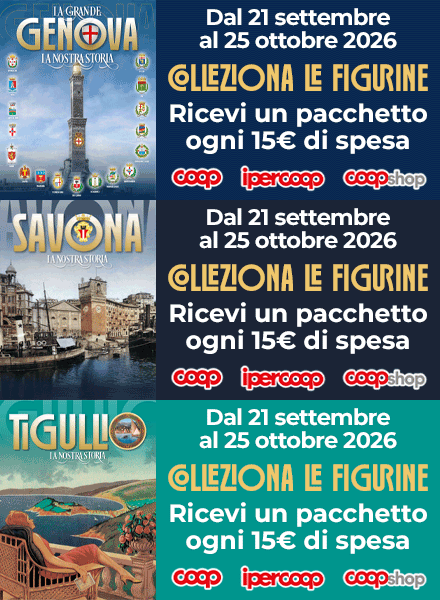


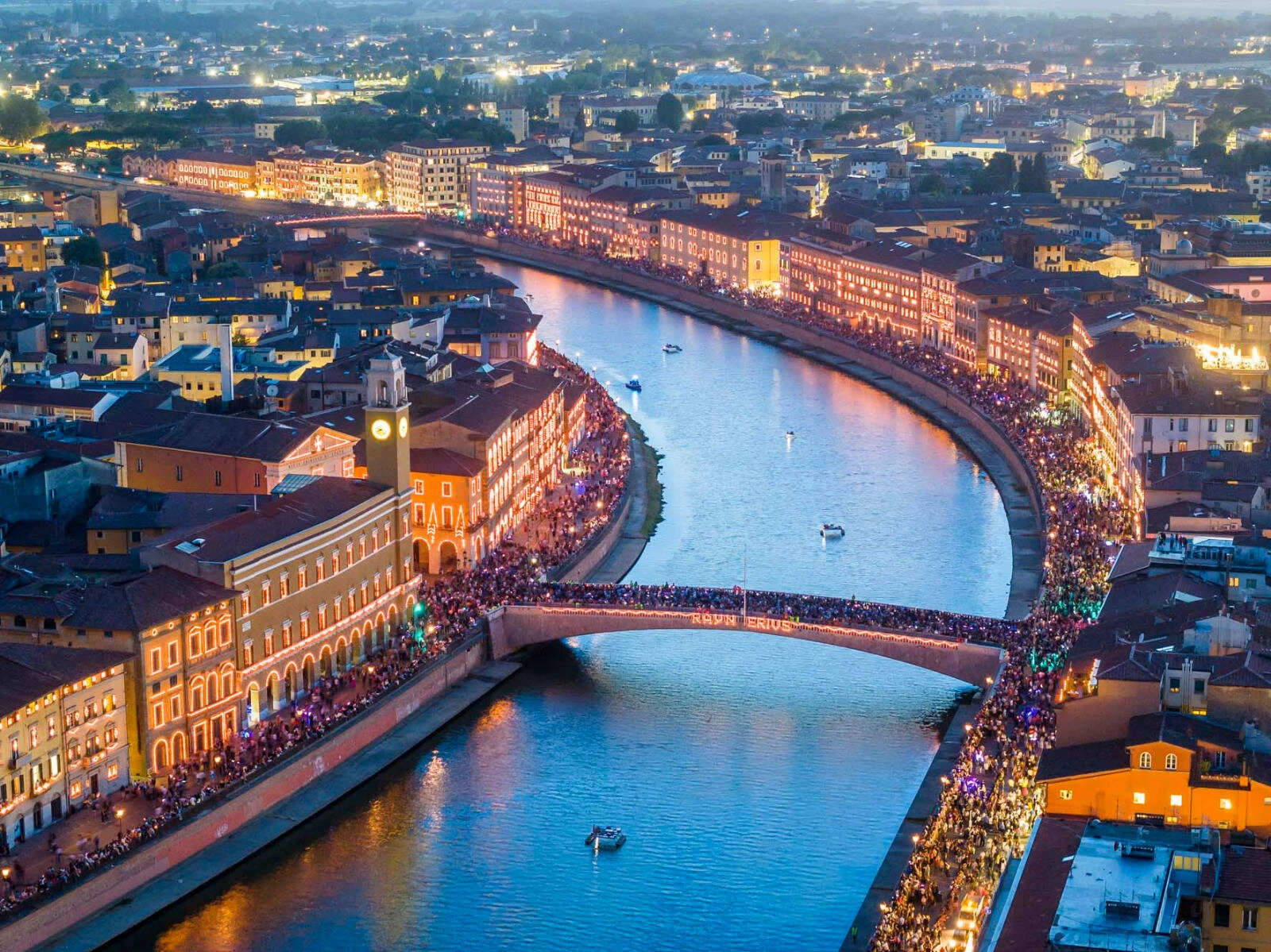
Pisa is preparing to introduce a single ticket for access to the city’s main museums and monuments. The City Council has approved the draft agreement that will establish the “Pisa Card for Museums and Monuments, ” a tool designed to simplify visits to the city’s cultural heritage and enhance Pisa’s appeal to tourists through an integrated offering. The initiative is one of the actions outlined in the City of Pisa’s Tourism Development Plan and is part of a strategy aimed at improving the city’s competitiveness as a cultural destination. The launch of the card is also among the activities planned by the Destination Management Organization (DMO), for which the City of Pisa serves as coordinator.
“The ‘Museum Card,’” explains Tourism Councilor Paolo Pesciatini, “is the ideal tool for the integrated promotion of Pisa’s museum system—an initiative we have intended to pursue ever since we established the DMO together with all public and private entities involved in tourism. I would therefore like to thank everyone who has worked hard to achieve this important result, including Pisamo, which ensured the success of this initiative. This will enable us to make a significant leap forward in the quality of what we offer to the millions of tourists who visit Pisa each year, allowing them to explore and experience the city’s art and culture in much greater depth. And to the citizens of Pisa as well. We are convinced that with the Card, we will be able to foster the integration of museum offerings, promote and highlight the many attractions, but also distribute visitor flows more evenly among the various venues and, finally, help extend the average length of stay for tourists within the city limits, thereby generating positive economic benefits for the entire tourism sector and the city’s economy.”
With the approval of the draft agreement, the operational phase is now underway, leading to the signing of the agreement among the various parties involved. The signing of the agreement is scheduled for this coming September and will involve the city’s major cultural institutions and the agencies responsible for managing the services. Among the entities that will join the agreement are the Palazzo Blu Foundation, the National Museums of Pisa, the University Museum System, CoopCulture—as the concessionaire for the management of the Medieval Walls—and Pisamo Srl, which will assume the role of administrator for the new card.
Federalberghi Pisa will also participate in the initiative, collaborating during the project’s implementation phase by monitoring and coordinating information and promotional activities at local lodging facilities. The goal is to promote the card among visitors staying in the city, making it easier for them to discover Pisa’s cultural offerings. The Pisa Card will be available in both electronic and paper formats. Both versions will have the same features and will grant access to participating museums and monuments through a validation system based on scanning a QR code at the entrance to each site.
The card’s validity period will vary depending on the type of user. For tourists, it will be valid for one week; at the time of purchase, the period of use must be specified, from which the card’s validity will begin. For residents, however, the card will be valid for one year from the date of purchase.
Use of the Pisa Card will grant one admission to each of the museums and cultural sites participating in the initiative: these include Palazzo Blu(limited to the permanent collection—excluding temporary exhibitions), the Medieval Walls, the Museum of Ancient Ships, the National Museum of Palazzo Reale, the National Museum of San Matteo, the Certosa di Calci Monumental Complex,the Botanical Garden and Museum of the University Museum System, the “Edda Bresciani” Egyptological Collections, and the Museum of Graphic Arts—all of which also belong to the University of Pisa Museum System.
The initiative is not limited to access to cultural sites. In fact, the card will also include an additional service dedicated to sustainable mobility, offering one hour of free use of bicycles from the Ciclopi bike-sharing service. During this time, users will be able to temporarily pause their rental at docking stations without losing their right to the remaining usage time. From a technological standpoint, the card will be validated using special QR code readers installed at the entrances of participating museums and monuments, enabling access monitoring and unified management of visits.
The Pisa Card will be sold online through the dedicated portal managed by Pisamo. The price has been set at 24 euros. Exemptions are provided for children under the age of eight and for people with disabilities, who will be able to use the card free of charge.
However, the new card will not replace the current ticketing system. Individual museums will continue to offer their own standard tickets, which will remain valid and be sold at rates set independently by the respective institutions. The Pisa Card will therefore complement the existing offerings as an integrated solution intended primarily for those who wish to visit multiple cultural sites during the same stay.
Pisamo Srl will play a central role, having been designated as the card’s managing entity. The company will be responsible for organizing the service and will support the installation and management of the digital tools necessary for the sale, validation, and monitoring of the cards. Planned activities also include the implementation of any plugins and software necessary for the system’s operation and for collecting usage data. With the upcoming signing of the agreement, scheduled for September, Pisa will thus take another step toward building an integrated cultural offering, connecting museums, monuments, and services to simplify access to the city’s heritage and encourage visitors to stay longer in the area.
 |
| Introducing the Pisa Card: a single ticket for museums and monuments in Pisa |

Warning: the translation into English of the original Italian article was created using automatic tools. We undertake to review all articles, but we do not guarantee the total absence of inaccuracies in the translation due to the program. You can find the original by clicking on the ITA button. If you find any mistake,please contact us.

























 IT
IT FR
FR DE
DE ES
ES CN
CN


