By Francesca Anita Gigli | 07/09/2026 21:21
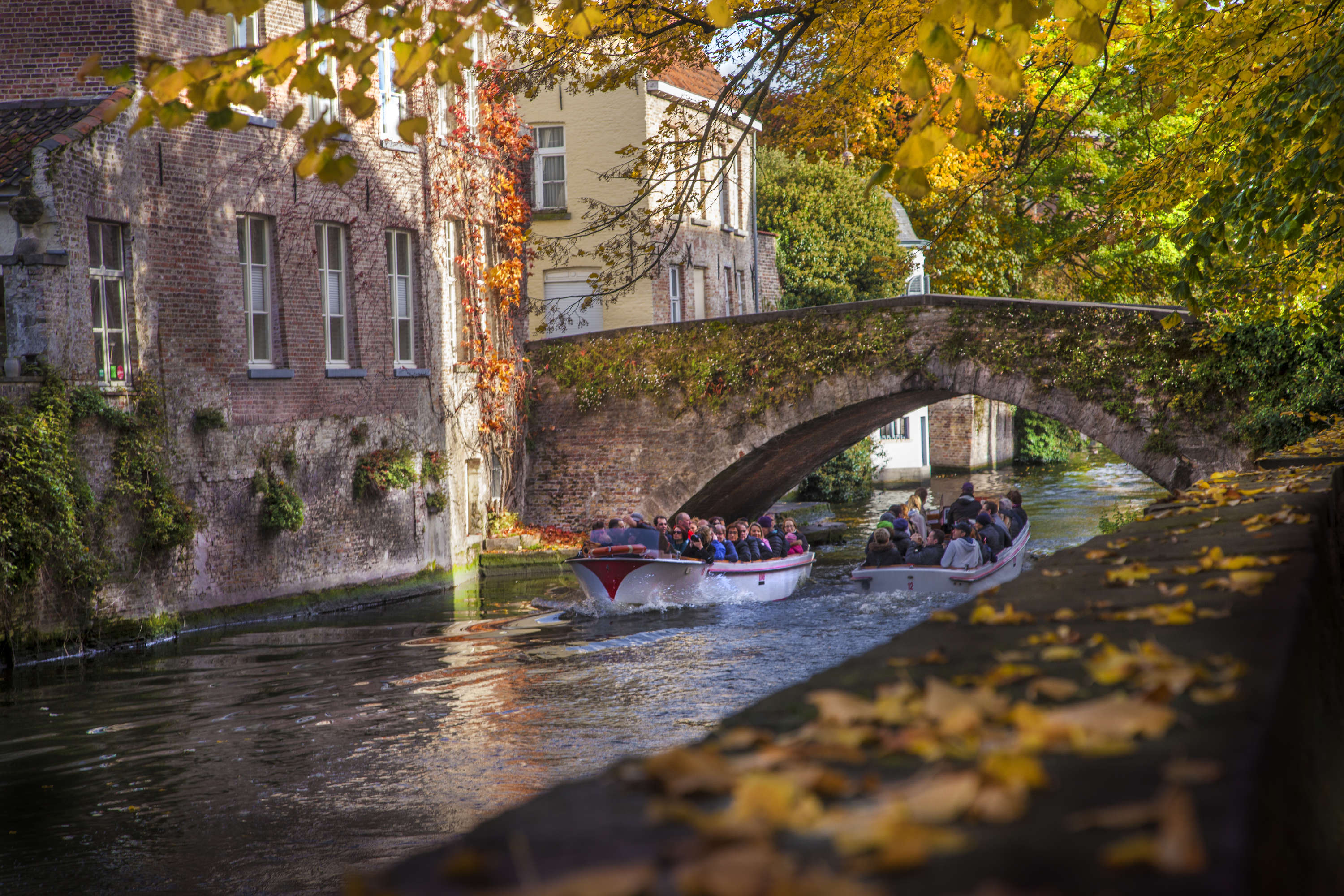
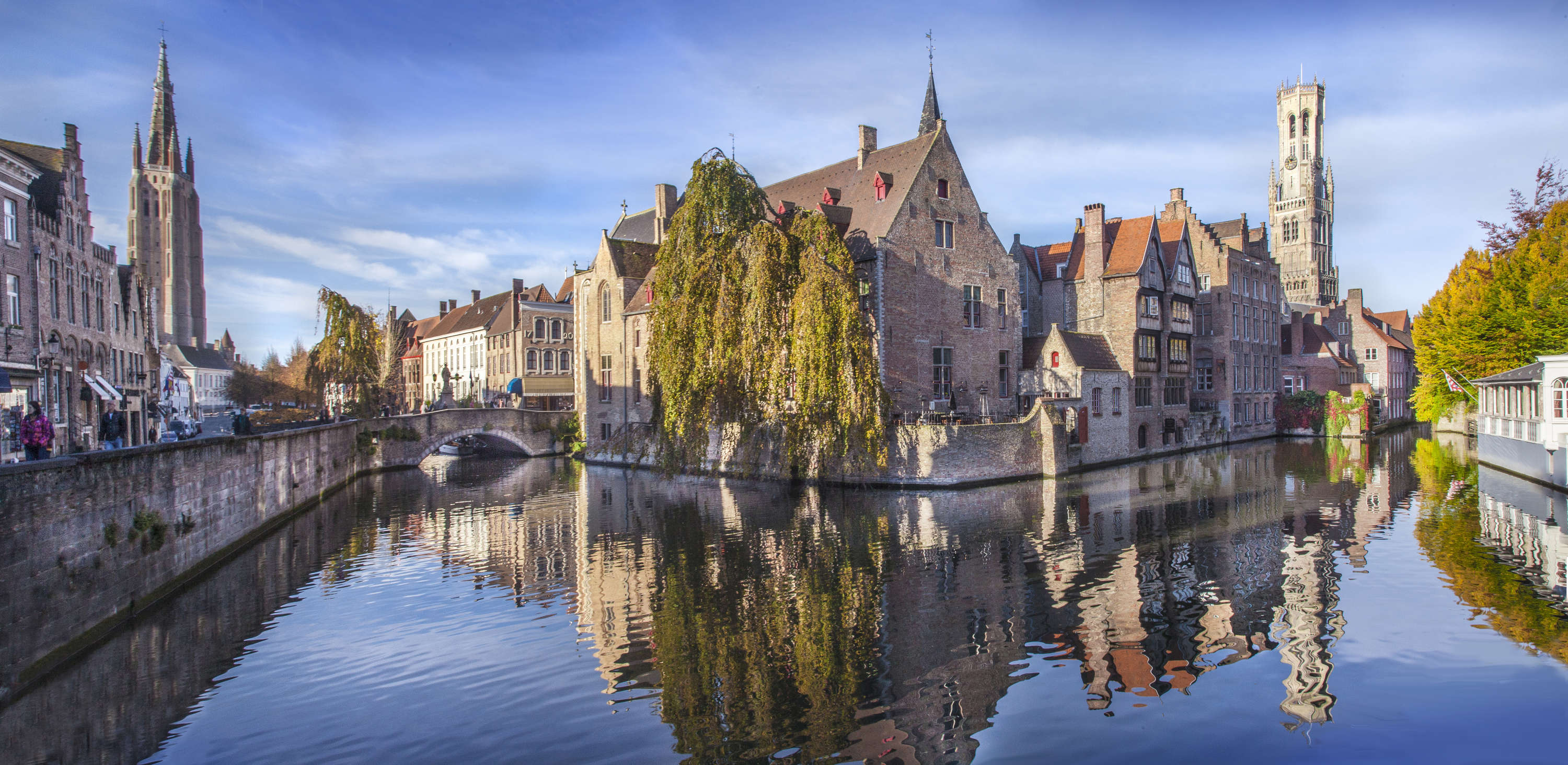
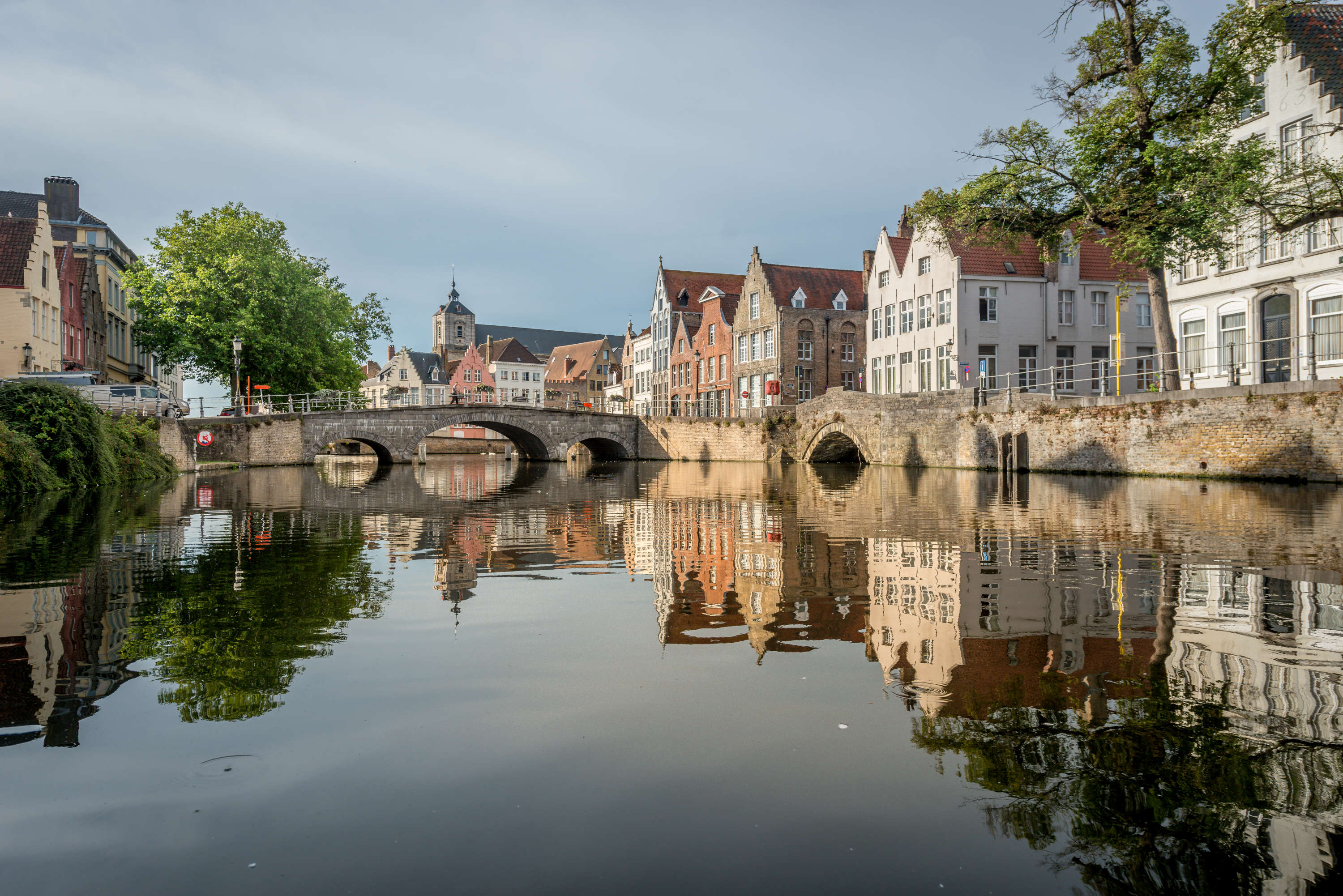
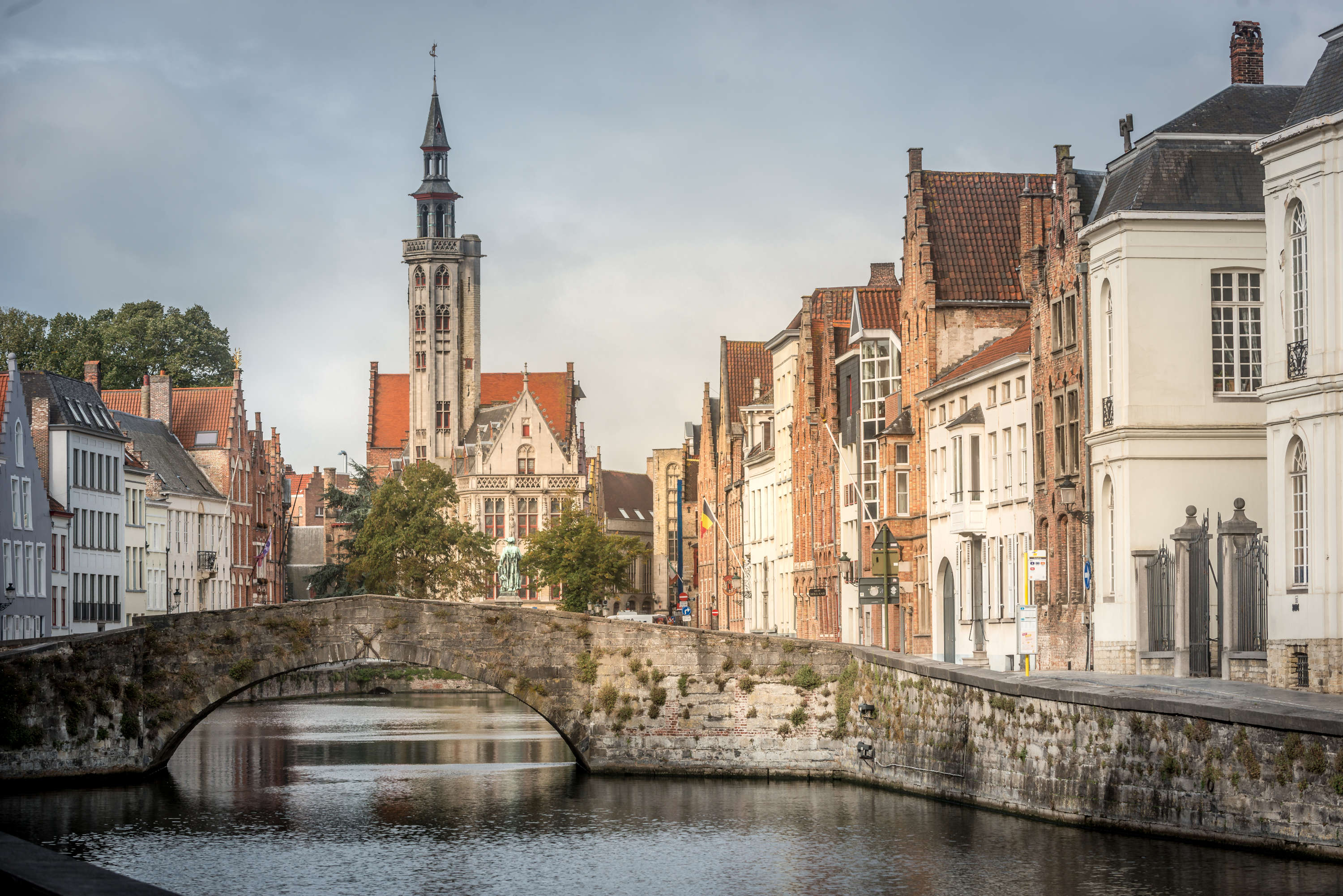
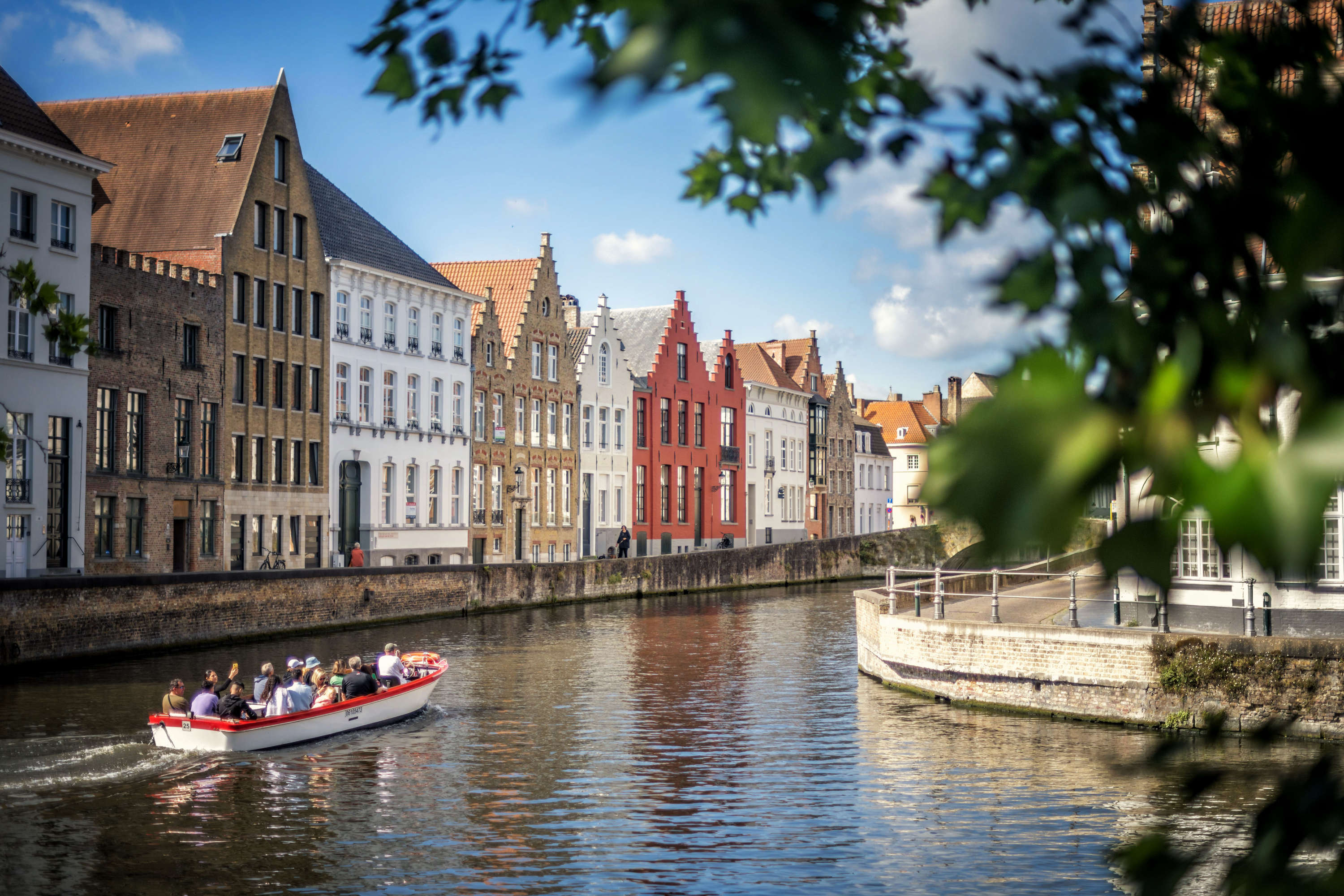
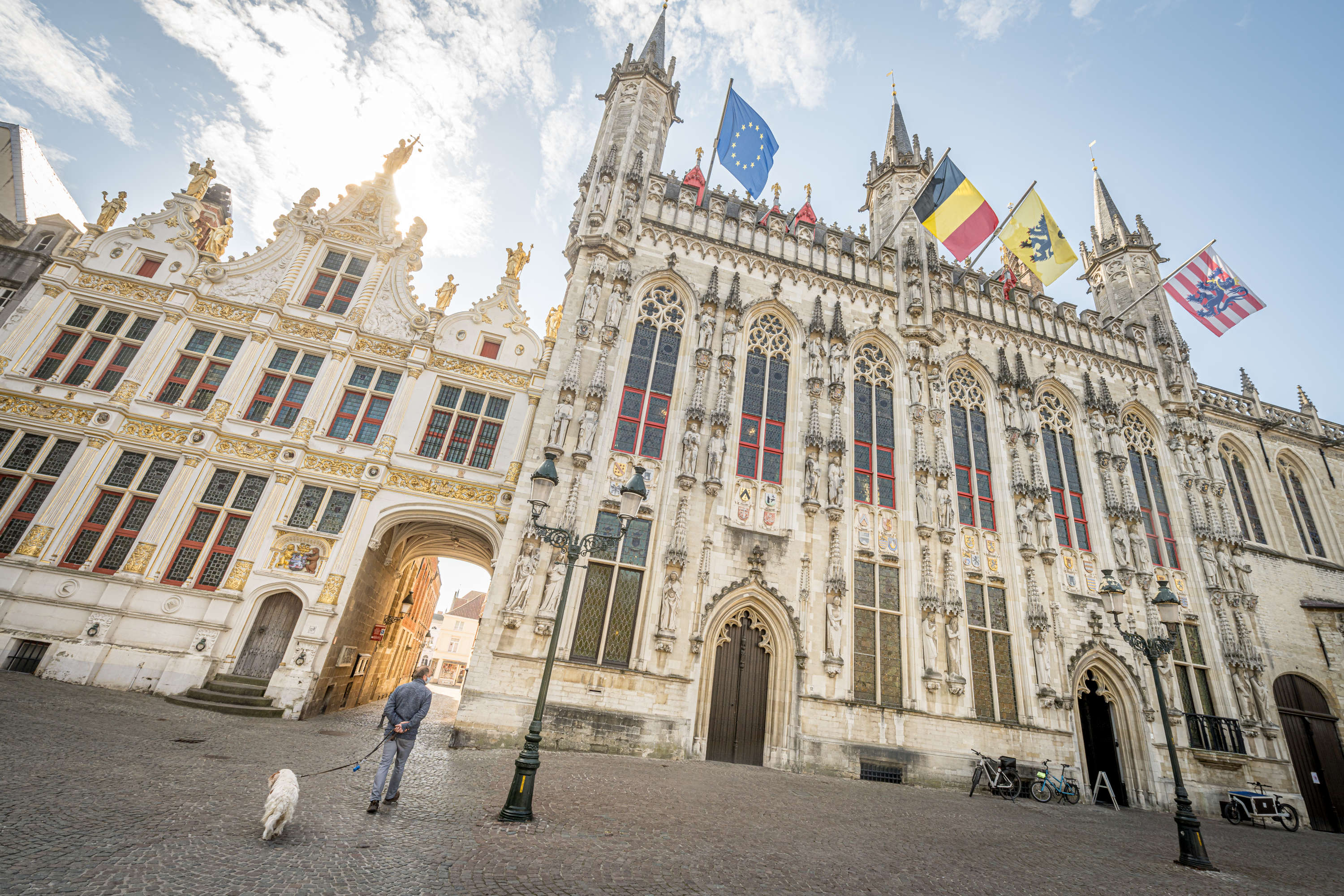
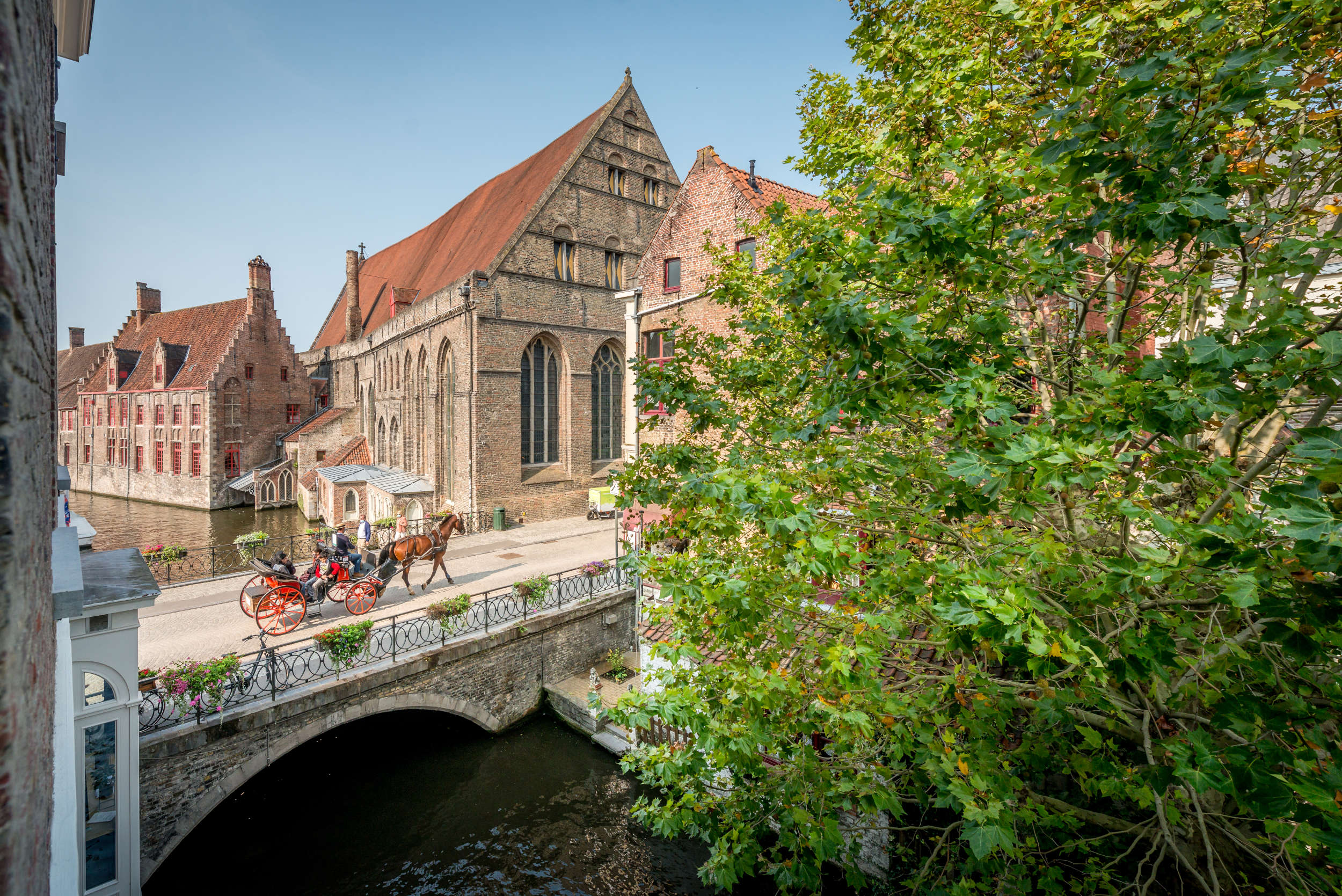
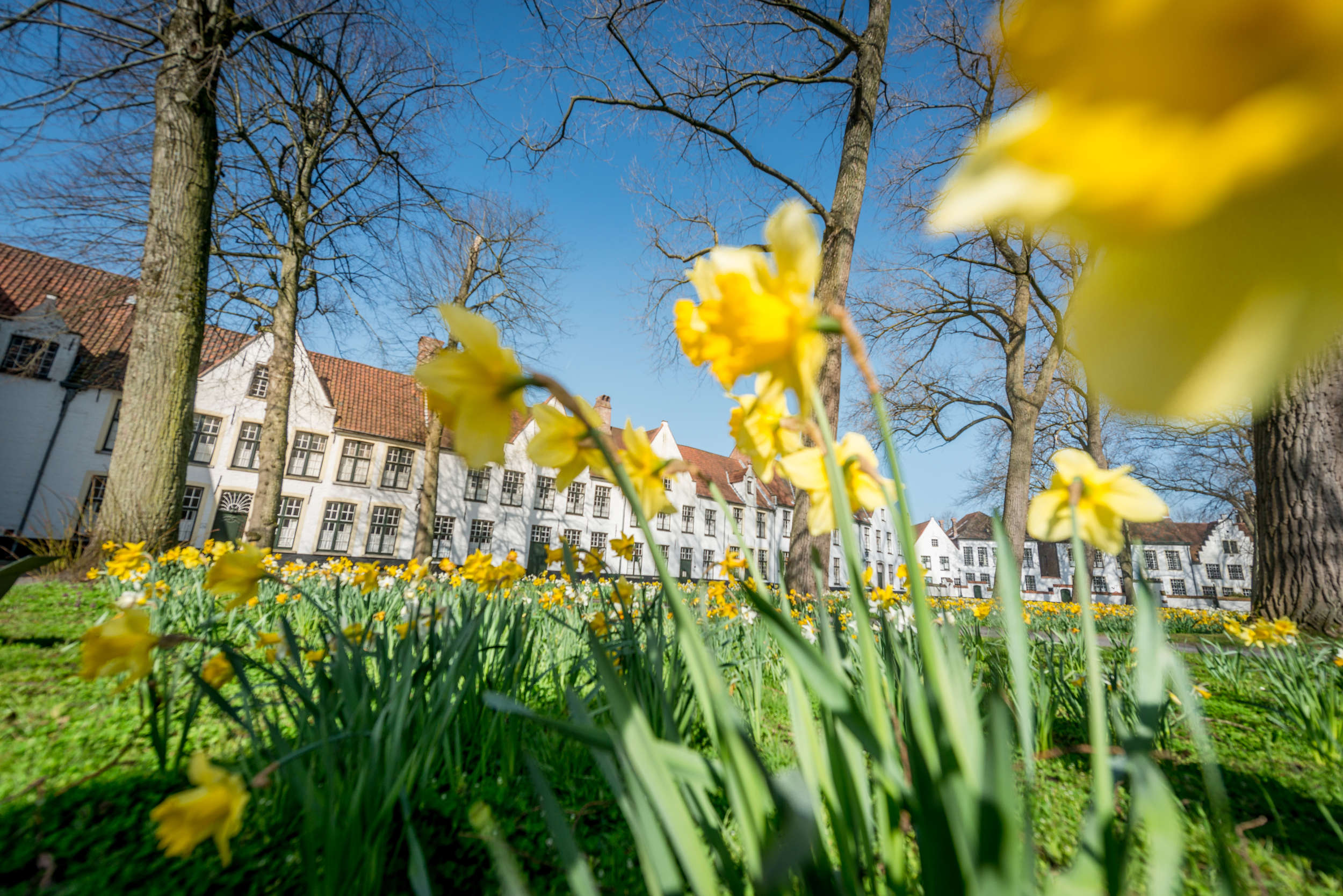
Bruges is so beautiful that, at some point, you almost feel like ruining it. You feel the urge to run a fingernail across the polished surface of its facades, to smudge the reflection in the canals, to take that obscene precision with which every brick seems to have settled into its place centuries ago and finally force it to bleed. Just a little. Just enough to figure out whether there’s still something pulsing beneath the city’s smooth skin, or whether what we continue to gaze upon is now merely the magnificently preserved corpse of its own image. Because Bruges possesses this cruel beauty, and its problem lies precisely in the ease with which it reveals itself even before one has truly visited it—because you arrive and already have a crystal-clear memory of what you have yet to encounter: the pointed roofs, the dark water beneath the bridges, the facades rising narrowly toward a sky that’s always too vast, the brick that the North has fired for centuries in the cold and damp until it took on that somber color, like blood when it has ceased to be deep red a few hours ago. Everything appears exactly where it’s supposed to be. Everything seems to have received precise instructions on how to pose for a photograph. It is this perfection, in the long run, that becomes suspicious.
A city can survive its own past with such discipline that it ends up being devoured by it, allowing history to grow over it until distinguishing what is alive from what is preserved becomes an extremely difficult task. Bruges has also experienced this particular form of violence—the gentle kind inflicted on the things we love too much to allow them to change, because every stone must continue to look ancient in the exact way we expect it to be—and here, in Bruges, even an accident risks seeming staged, conveniently placed a few meters outside the frame. And so the more the city is protected, photographed, and desired, the more it runs the risk of disappearing behind its own obviousness. For postcards, after all, possess this grim talent for preserving everything while simultaneously killing what they preserve. They flatten the sound of shoes on wet cobblestones, the greasy smell wafting from a kitchen left open, an abandoned bicycle leaning against a fifteenth-century wall, the mold in the lowest corners of the houses, the water that, under a certain light, turns brown and, for a few seconds, ceases to blend perfectly into the landscape.
And yet, in Bruges, someone continues to wrinkle their nose; a stony face appears among the streets, one that seems to have noticed something before we did—a face contorted into that involuntary grimace that precedes any rational thought, when the body picks up a scent and decides on its own that it would be better to be somewhere else. And so the nose recoils, the mouth twists slightly, and the eyes narrow. It is a basic reaction—even rude—set in the middle of a city that for centuries has treated the order of its streets as a matter far more serious than it might seem. For in the North Sea region, cleanliness has a singularly obsessive history. In the seventeenth century, travelers passing through the Netherlands wrote about the houses with a sense of wonder that, after a few pages, began to border on exasperation, because here cleanliness was a matter of days and routines. It was a secular ritual.
The week progressed to the rhythm of the brooms: according to historical accounts, on Monday and Tuesday, the rooms where guests were received and those where people slept were tidied up; on Wednesdays, cleaning extended to the rest of the house; on Thursdays, the floors were tackled; on Fridays, it was the kitchen’s and the cellar’s turn; while Saturday brought the “schoonmaken,” the most intense cleaning, during which the house was scrubbed with collective fervor. Open doors, buckets, water splashed about violently, brooms dragged across the pavement, women bent over the doorways. And while inside they washed furniture and floors, outside they cleaned the entrance, the steps, and even the stretch of street in front of the house, so that the boundary between home and city ended up becoming much thinner than we are accustomed to thinking. An English traveler described those sections of the street as being as clean as the floor of a room. But this obsessive focus on hygiene had extremely ancient roots: as early as 1498, the magistrate of Amsterdam had decreed that maids were to be responsible for cleaning the thresholds of their masters’ homes; in 1517, the secretary of an Italian cardinal traveling through the Netherlands noted the custom of washing floors and wiping one’s feet before entering, and later travelers would recount the slippers offered to guests and the maids who would simply prevententry to anyone who might bring in mud and dirt. Although this may seem like normal behavior today, at the time it was viewed as an oddity, so much so that Sir William Temple, an English diplomat in the 17th century, even recounts a story that circulated mostly in Amsterdam and which—whether true or not—says a great deal about the reputation for cleanliness that Northern Europe had earned by then. A magistrate is said to have arrived at the door of a house with his shoes caked in mud; the maid, upon seeing them, reportedly picked him up without further ado, hoisted him onto her back, and carried him through two rooms just to prevent him from touching the floor. Upon reaching the stairs, she removed his shoes, slipped a pair of slippers onto his feet, and only then allowed him to join the lady of the house. The story was so popular that it survived for centuries, becoming slightly distorted each time it was retold. The magistrate became a mayor, then a husband, a foreign traveler, even the King of Prussia. Perhaps no maid ever actually crossed a house with a public official on her back, but someone, evidently, found it perfectly plausible that a Dutch woman would rather compromise a man’s dignity than compromise the cleanliness of her own floor.
Historians Bas van Bavel and Oscar Gelderblom traced the origin of this reputation far back to the production of milk, butter, and cheese, which for centuries had occupied a considerable part of the domestic economy of Northern Europe. Curd is a delicate substance. So is butter. It doesn’t take much for something to go bad, and so utensils and work areas were washed; and when that production slowly began to move out of the homes, the habit remained. People continued to scrub with the same precision, with that stern and melancholic care that survives even when no one remembers anymore what it was meant to protect against. The hands kept moving. The water flowed. The thresholds were washed once more, and then again, as if insisting enough on the surface were enough to prevent something from spoiling beneath it. Necessity had slowly taken the form of a habit. Then the habit had become a moral standard, a sign of decorum, silent proof of a well-kept home and a life that knew how to remain composed. Dirt ended up resembling a fault that had been imprudent enough to reveal itself. The smell was worse. The smell gave it away. It revealed that something was fermenting, rotting, sweating—still living by less civilized rules. And perhaps that is why, centuries later, that wrinkled nose evokes a sadness that is hard to explain.
It seems like the remnant of an ancient gesture, frozen in the city’s landscape.
Bruges has polished its image so thoroughly that today it’s almost hard to believe that these very same streets, before they learned to pose, were once described for the stench that lingered among the houses. Since then, it has guarded its image with meticulous, almost mournful patience, ultimately making it impervious to anything that might mar its composure—even if it were merely a lingering scent among the stones. Something that reminds us, quite simply, that being alive also means beginning to fall apart.
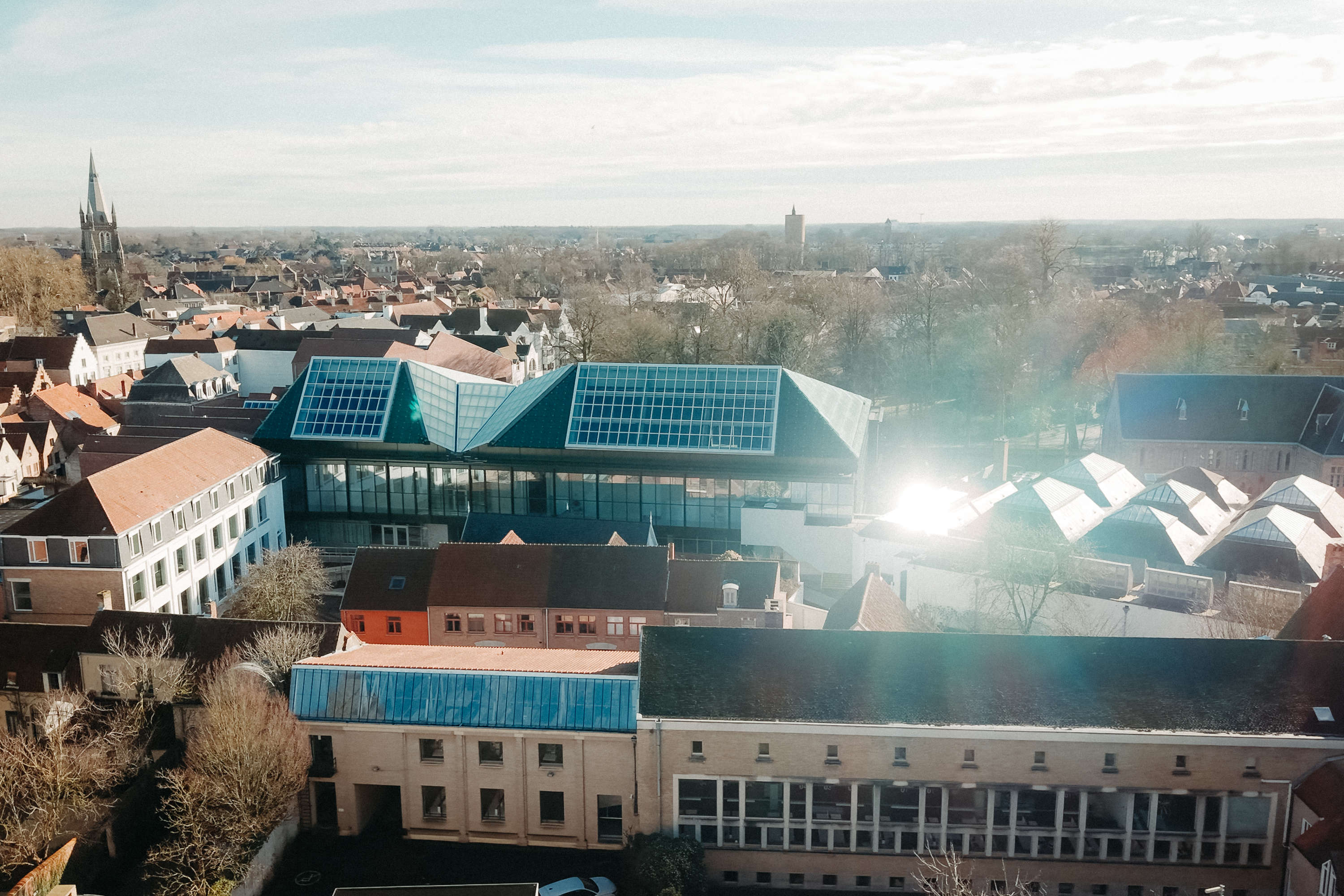
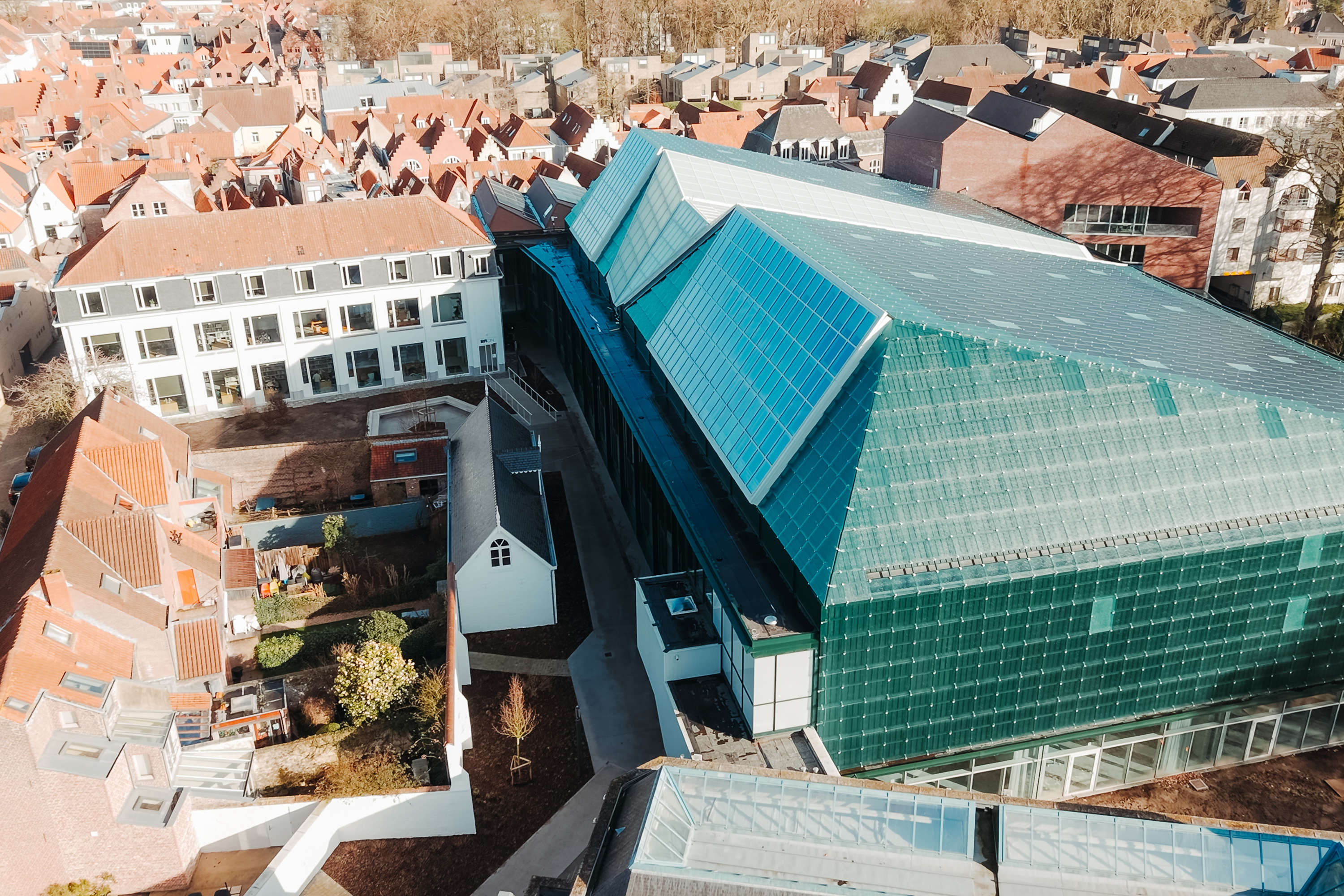
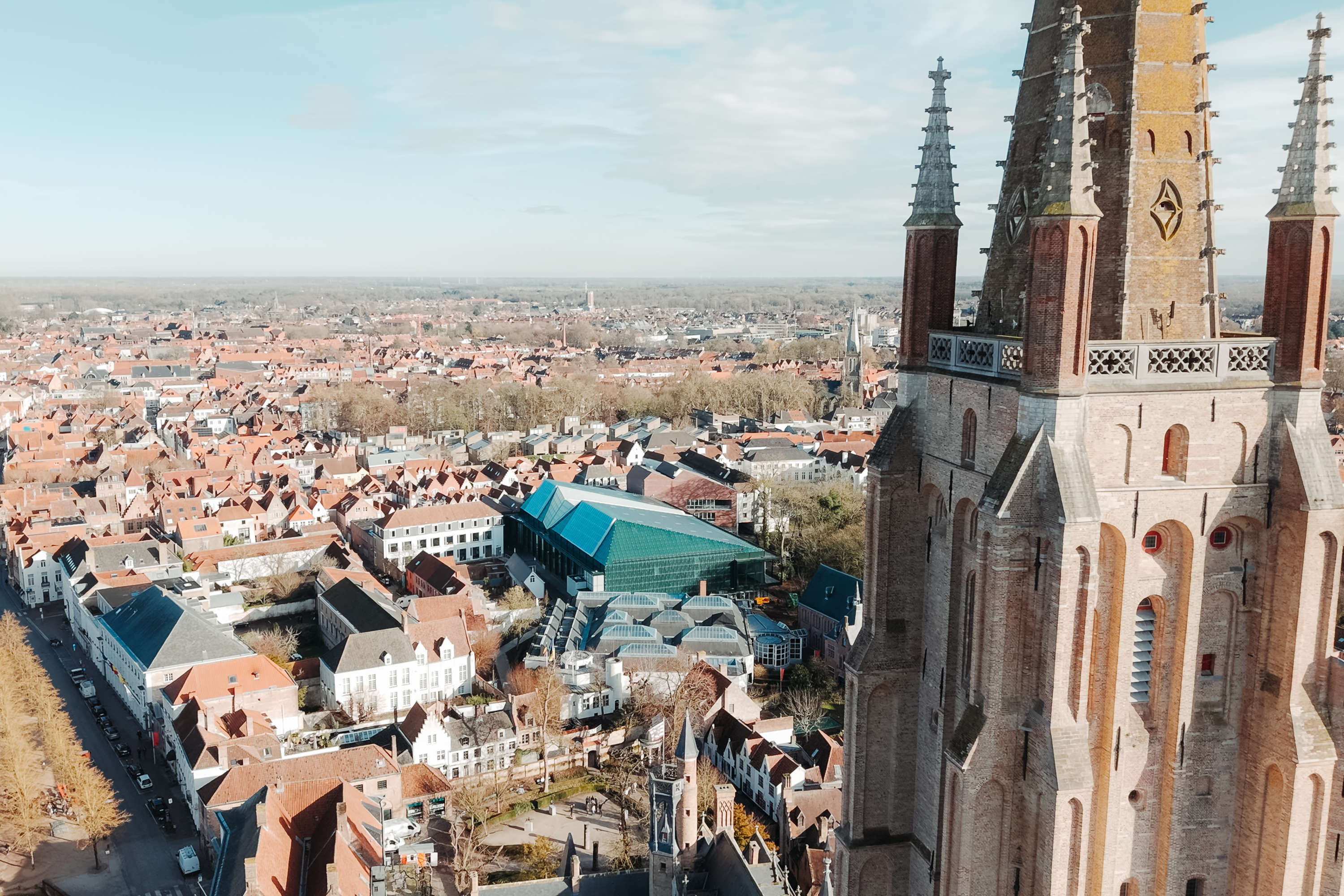
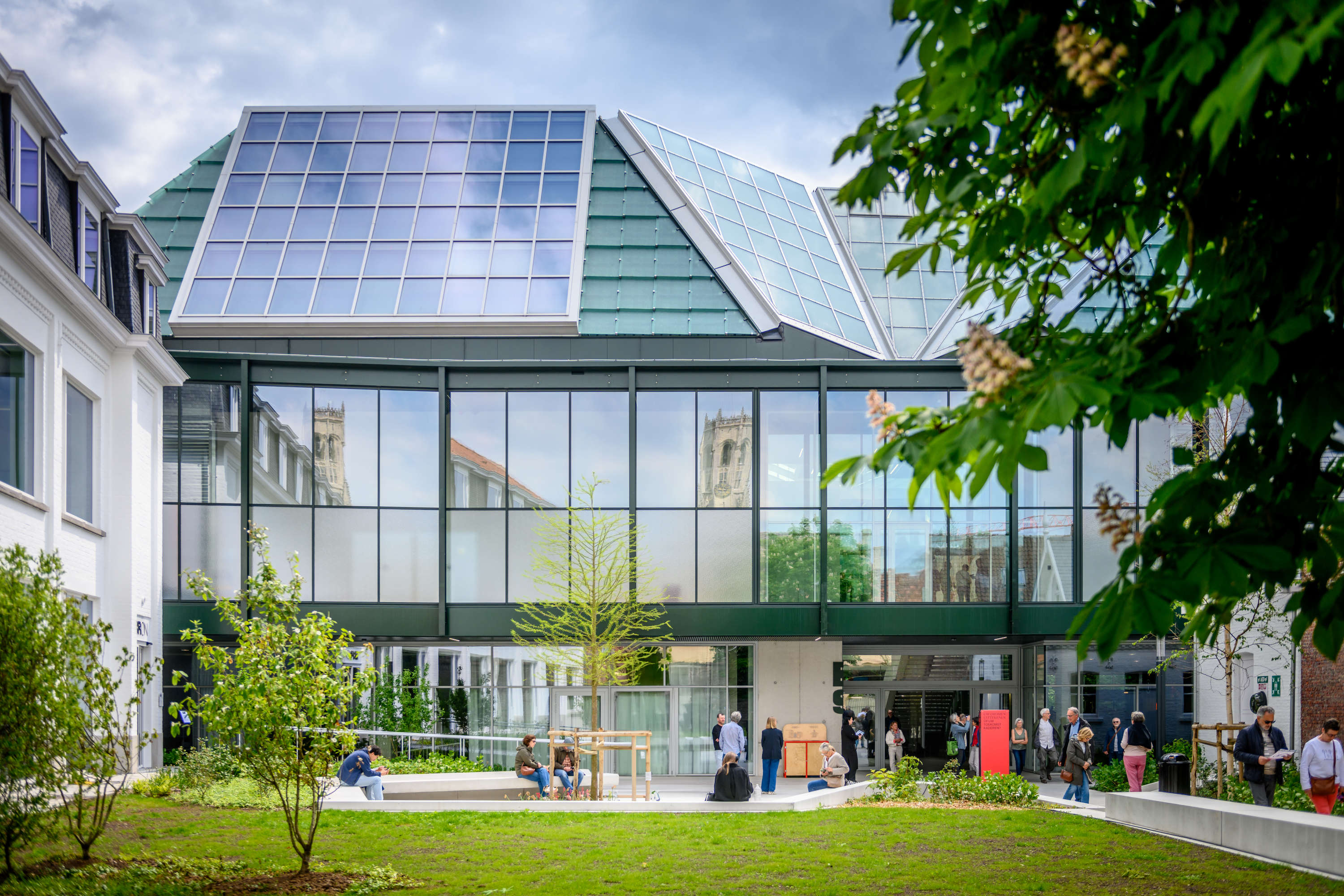
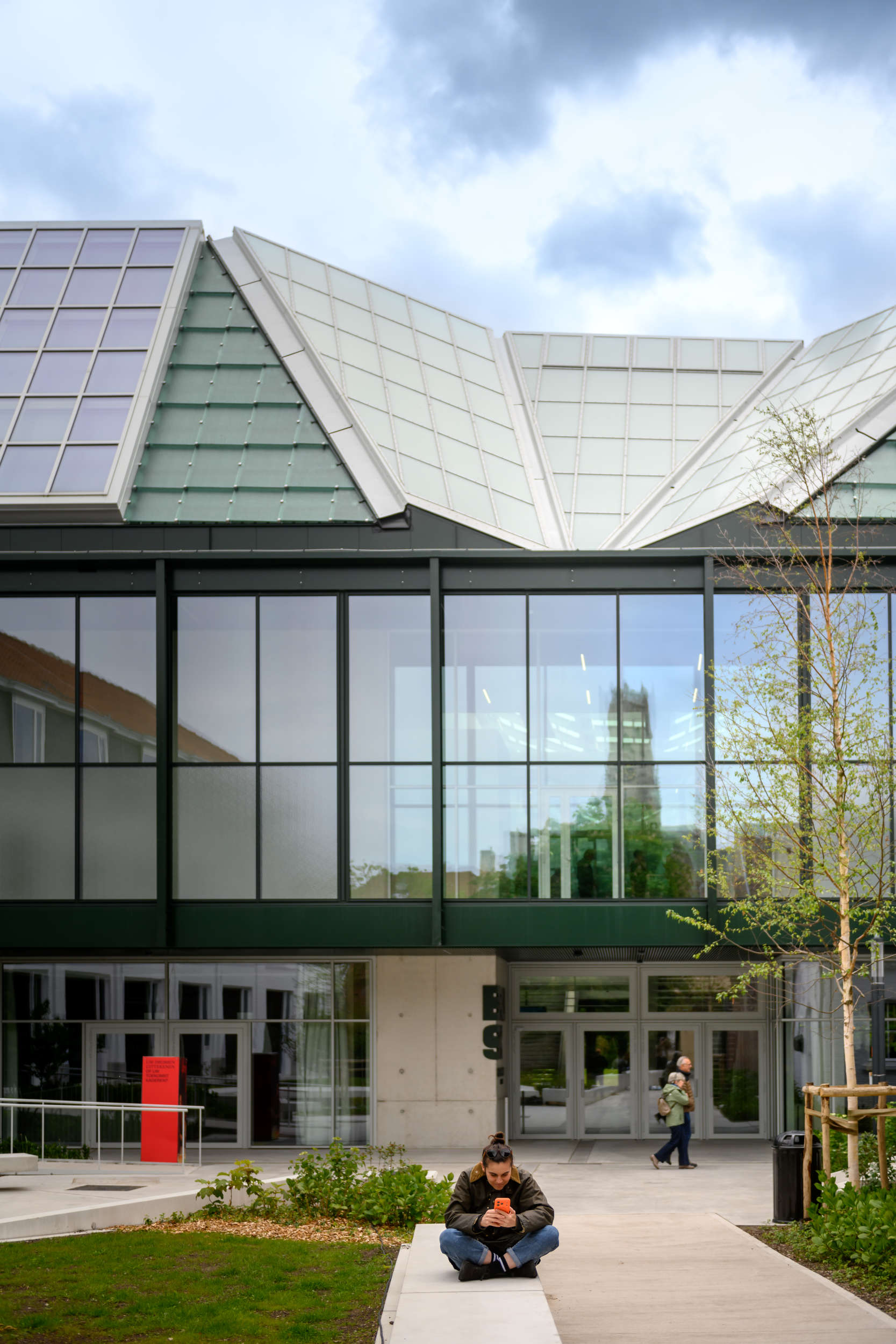
And it is precisely within this city—so well preserved that it seems, at times, to have been stripped even of the right to age— within this Bruges that has learned to protect its own skin with religious discipline and to offer visitors a polished facade—constantly reaffirmed by the repetition of the same images—that BRUSK, the city’s new exhibition center, appears. And its presence, even before being architectural, is a sort of inconvenience. Because it arrives in the medieval center with no intention of appearing ancient, without seeking that reassuring continuity that might have allowed it to slip docilely into the city, polite and invisible; instead, it takes its place still bearing the mark of its own time, with surfaces that haven’t had centuries to darken, with volumes that bring a contemporary grammar into an urban fabric that has made permanence almost a moral discipline—and for this reason, it creates a strange, persistently irritating, like modern slang mistakenly slipped into a very ancient prayer.
The project by Robbrecht & Daem with Olivier Salens seems to play precisely on this tension, deliberately leaving it exposed: on the ground floor, the building opens up and renounces the haughty compactness of the museum as a separate entity, offering itself to the street with a transparency that unsettles a city accustomed to preservation; higher up, however, the halls rise to a height of thirteen and a half meters, borrowing from churches and cathedrals their verticality, their disproportionate scale, that sensation of a body forced, for a few fleeting moments, to feel infinitely smaller than the space that contains it.
BRUSK draws on the city’s memory without bowing down to it, but takes it, gently forcing it, allows it to enter the new material, and compels it to coexist with something that has not yet had time to settle, to lose its sharp edges through that very slow process of taming that time performs on things until they are finally acceptable. The light comes from the north, as in nineteenth-century and early twentieth-century studios, and yet what it illuminates stubbornly belongs to the present; the proportions recall sacred architecture, but do not demand sacredness; the past is summoned inside and then left there, exposed, forced to grapple with a language it does not yet know.
A city accustomed to being recognized even before being seen suddenly finds itself faced with something that does not yet have a definitive image, that does not have a ready-made postcard, that cannot take refuge in the certainty of the ancient because it is too young and still exposed to error, to criticism, and—why not?—even to the possibility of bad taste, or even to the wonderful risk of growing old.
BRUSK slips precisely into the small crack between what Bruges preserves and what Bruges might still become, and for a few moments, that city—groomed with mortuary care, motionless in its beauty—once again takes on an air of the unresolved on the surface. Something that moves. Something that can still go wrong.
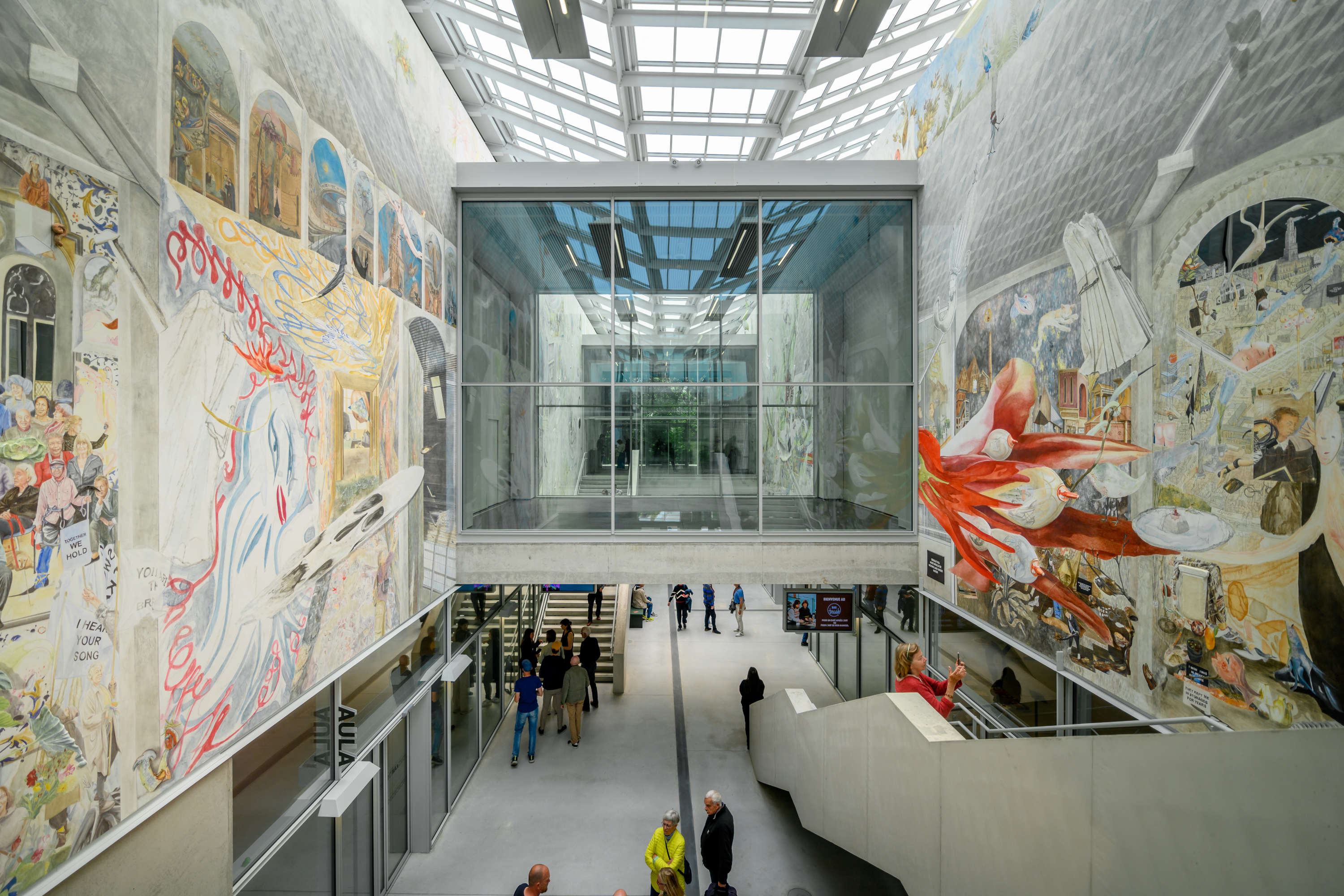

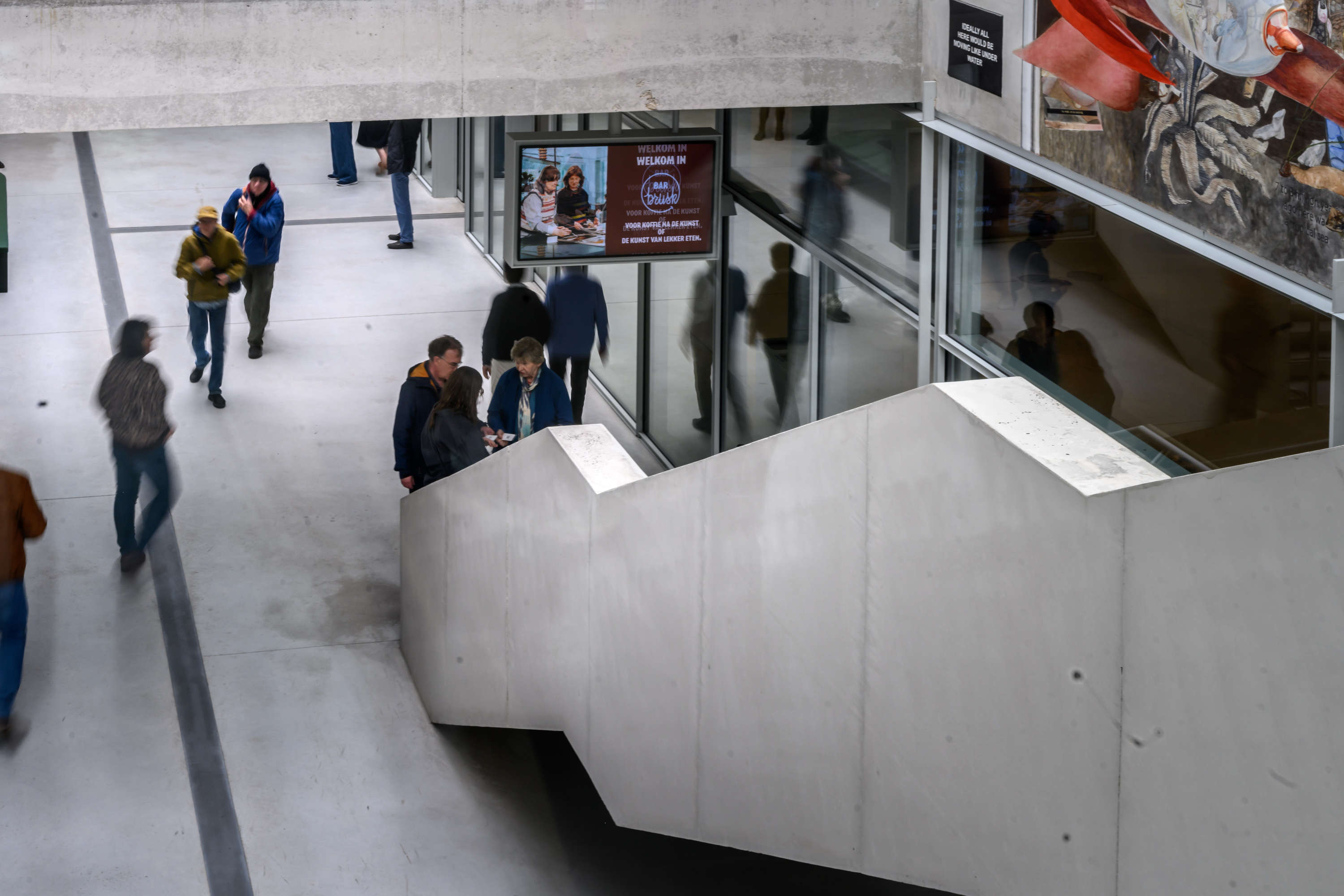
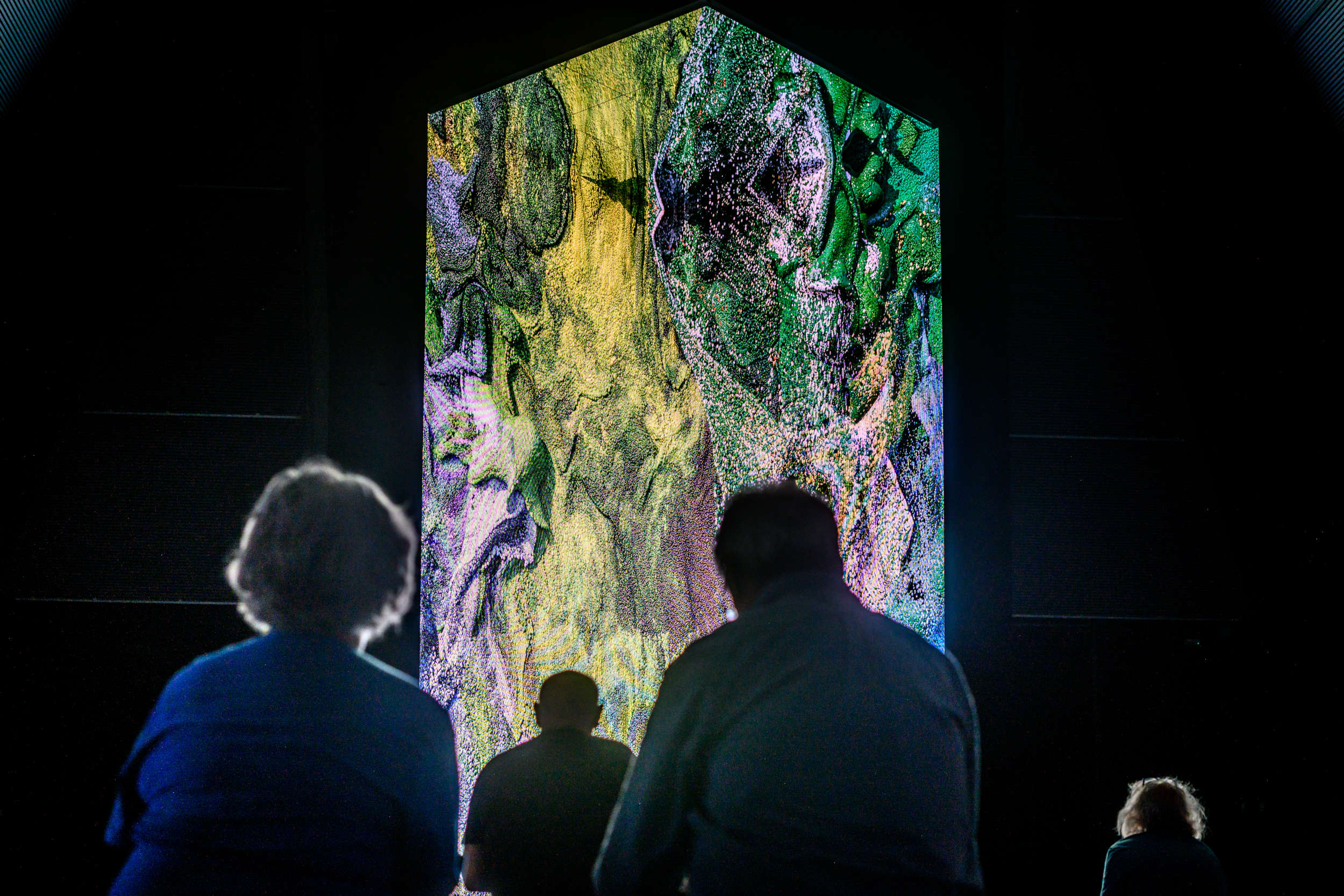
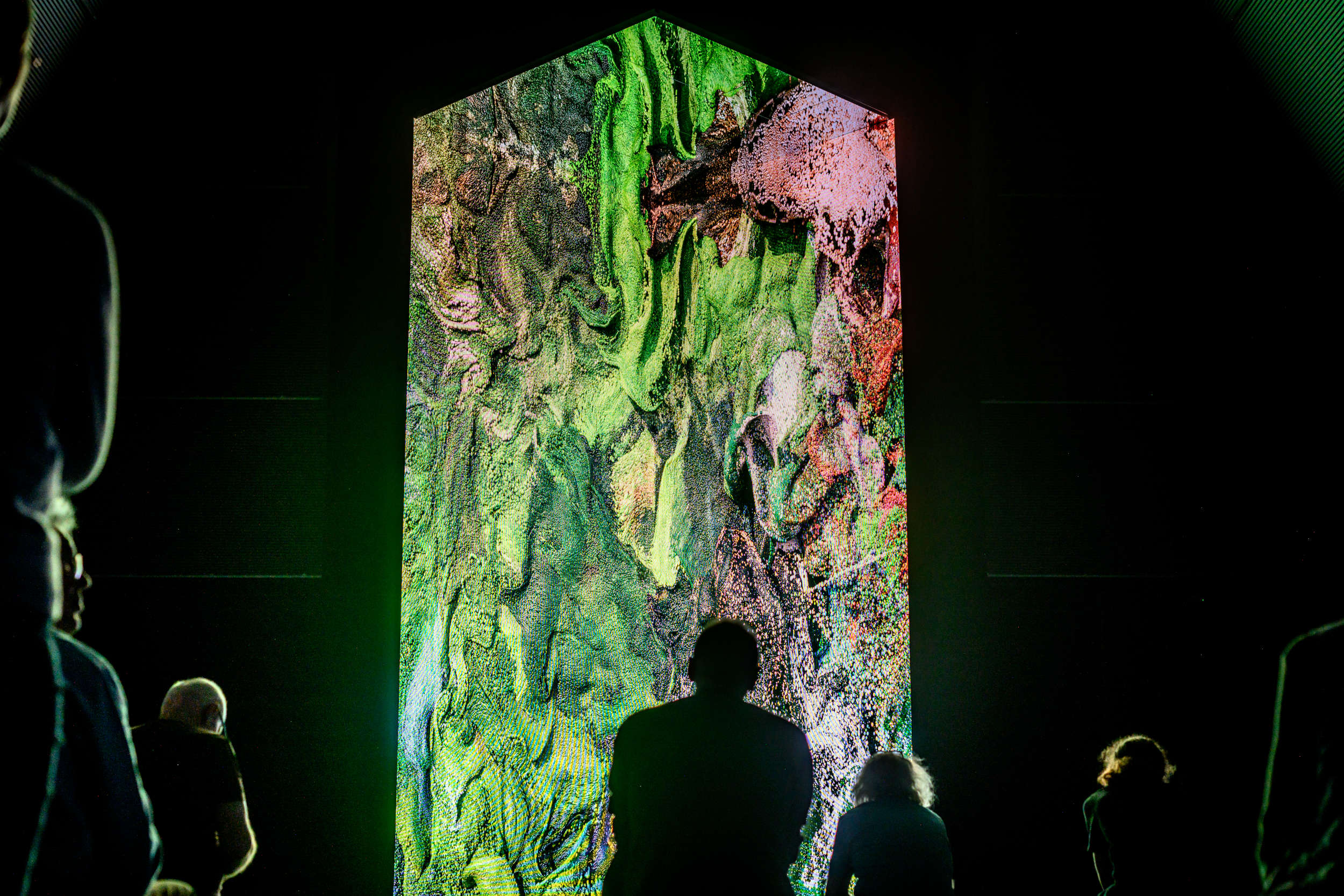
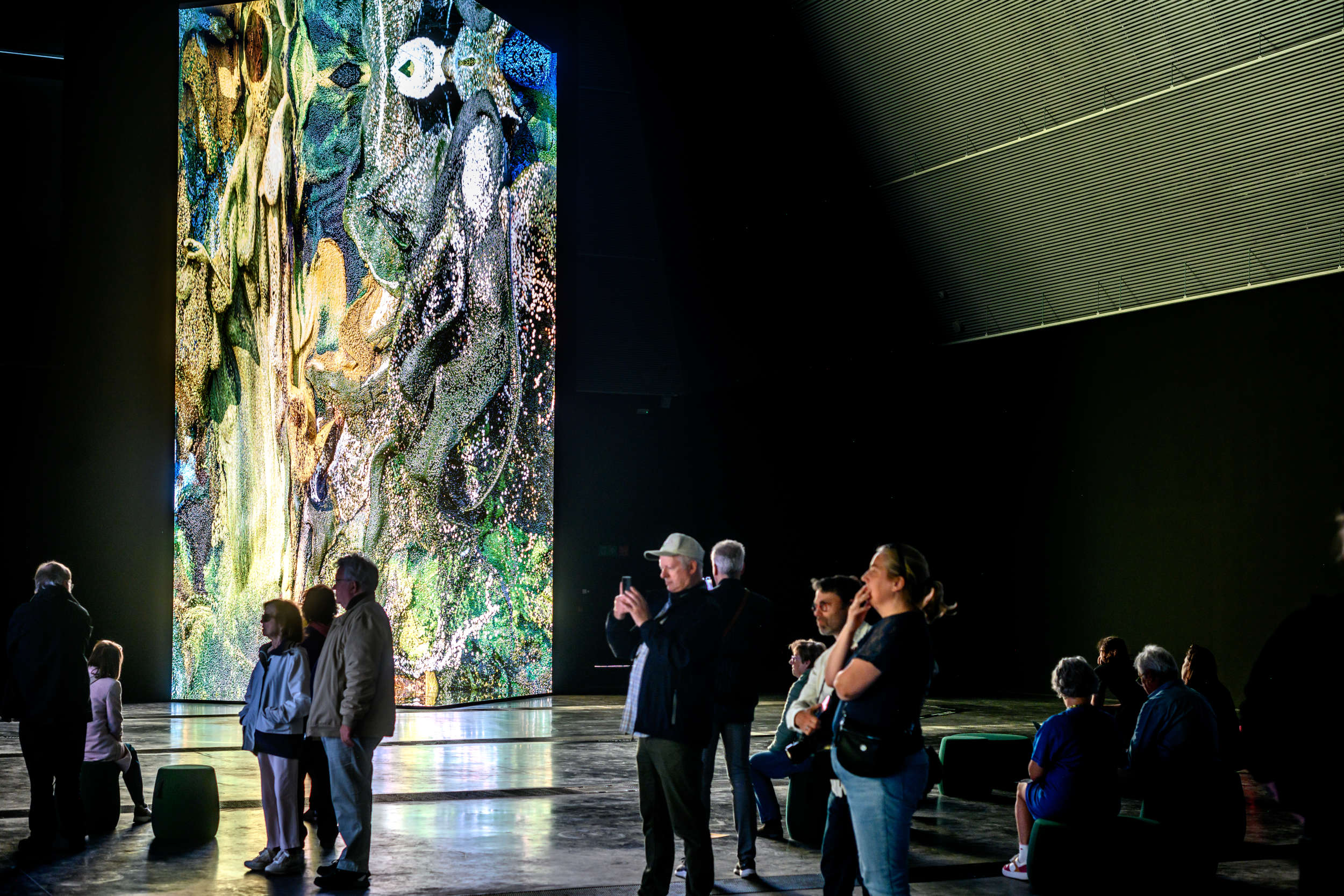
But it is the curation—even more so than the building itself—that reveals what BRUSK intends to do with all that space, because as you cross the glass bridge separating the two large halls, you move from the medieval Bruges of “Bigger Picture” to the dematerialized city of Refik Anadol, as if eight centuries had been compressed into just a few steps and the museum, rather than bridging the gap, had decided to leave it deliberately open. “Latent City,” the Turkish-American artist’s first solo exhibition in Belgium, will remain on view through November 8, 2026, and stems from an obsession with data. For ten years, Anadol’s studio has trained its models on over five million urban images; in Bruges, it has added the medieval streets, the architecture, the museum collections, and the daily rhythms that pulse through a city. From this invisible material emerges a ten-meter-tall form, generated in real time, continuously breaking apart and reassembling before our eyes, surrounded by digital paintings dedicated to Stockholm, Berlin, Seoul, New York, and Portland.
Outside, the city maintains its form with a stony discipline, and inside, Anadol subjects it to a luminous, hallucinatory process in which facades lose their substance, streets melt away, and everything that seemed stable is translated into data, then forced to change before the eye can even hold onto it. It took Bruges centuries to learn to look exactly like Bruges, yet it takes the machine only a few seconds to forget it and start all over again.
This willingness to take risks will continue in the coming months. From October 30, 2026, to March 14, 2027, “High Tide. Of Humanity and the Sea, Through Fashion and Art will bring together in the same space garments by Iris van Herpen, Alexander McQueen, Dries Van Noten, Chanel, Gianni Versace, and Jean Paul Gaultier alongside works by Bill Viola, Wangechi Mutu, Martin Parr, Otobong Nkanga, and Dominique White, entrusting water with the task of holding together the allure of the surface with everything that, beneath that surface, drowns, migrates, wears away, or returns to shore. Starting March 12, 2027, while the Groeningemuseum is closed, BRUSK will host the core elements of its collection for four years. The Flemish Primitives will be removed from the galleries where we have come to expect them and placed within a still-young architectural space, one incapable of protecting them through the comfort of habit. Shortly thereafter, the Bruges Triennial will also arrive, running from April 24 to September 5, 2027, with *After Birth. Structures of Togetherness*. Here’s the thing: BRUSK seems to want to continually expose itself to the possibility of shedding its skin, accepting that a space built for the present has yet to understand what it might contain.
Yet the exhibition that best explains the building is the one that appears, at least on the surface, to be furthest removed from this contemporary unease. *Bigger Picture. Connected Worlds of Bruges 900–1550*, which closed yesterday, brought together more than 250 works and objects from 90 collections, arranged them across five chapters, and sought to rescue the Middle Ages from that long, dark, provincial night in which we continue to confine it for the sake of convenience, revealing a Bruges traversed by Scandinavian merchants, pilgrims bound for Jerusalem, scholars of the Islamic world, and sailors who carried with them coins, fabrics, relics, maps, and an incredible array of fears.
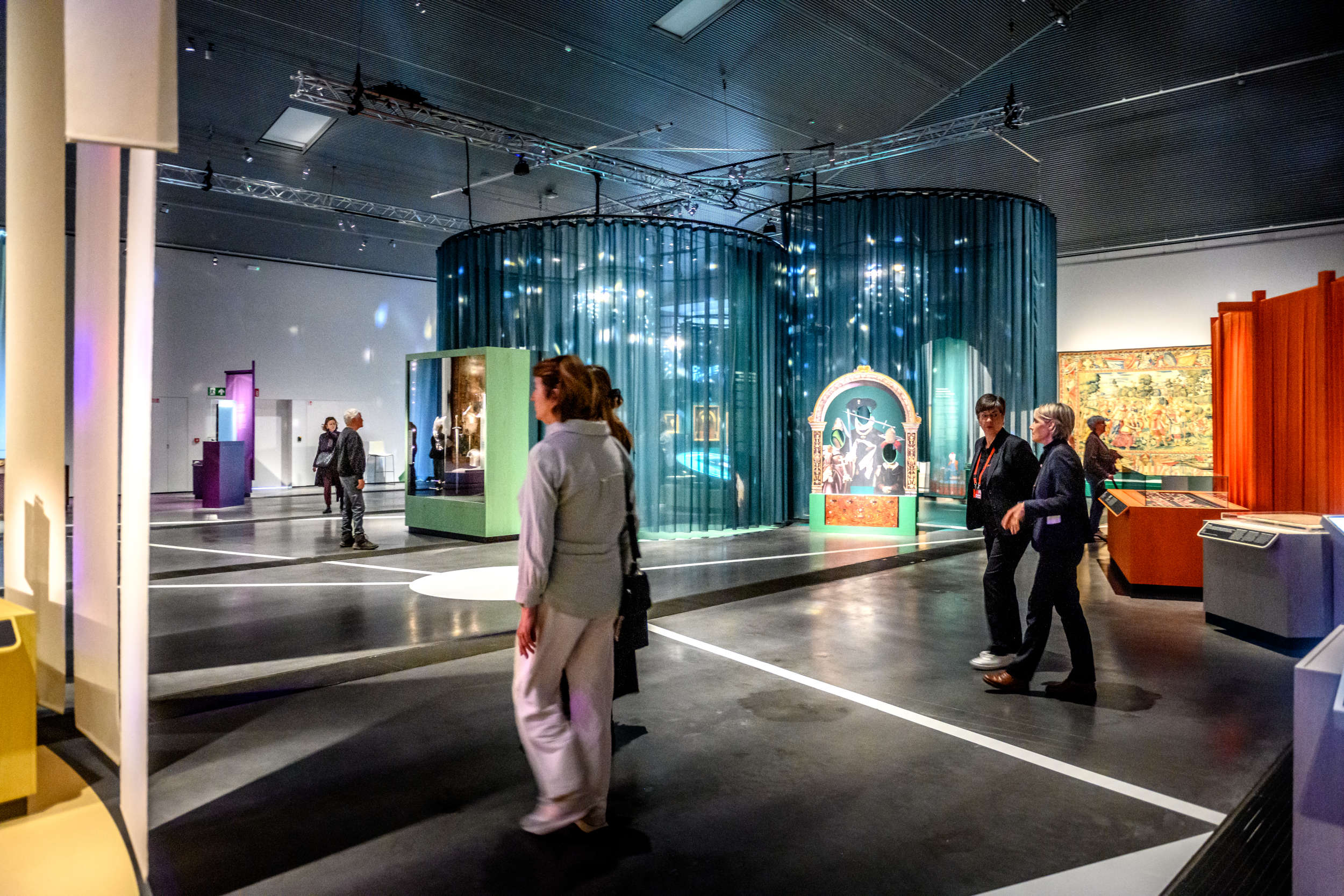
The exhibition occupied a single, vast space, yet the installation designed by Tinker Imagineers divided it into a succession of open areas—small fabric structures resembling temporary pavilions, tents hoisted along a route that someone will soon have to retrace. The world of the North Sea was crisscrossed by triangular panels resembling sails. The Mediterranean world gathered beneath a canopy reminiscent of a campsite. Further on, the color, the music, and even the scent changed, so that each space seemed to exert a different kind of pressure on the body. You could hear bells, birds, squeaking wheels, and strings plucked with a domestic delicacy; from afar, the sounds mingled and became slightly muddled, just as they must have in ports, where incomprehensible languages and foreign prayers ended up sharing the same air.
Most of the objects remained protected behind glass cases. This could be the beginning of an irreparable distance, especially when faced with minute, immobile artifacts, separated from us by glass and captions, yet the exhibition design created an atmosphere around them, allowing the sound of the sea or the scent of a place to seep into one’s memory even before the mind had finished reading a date.
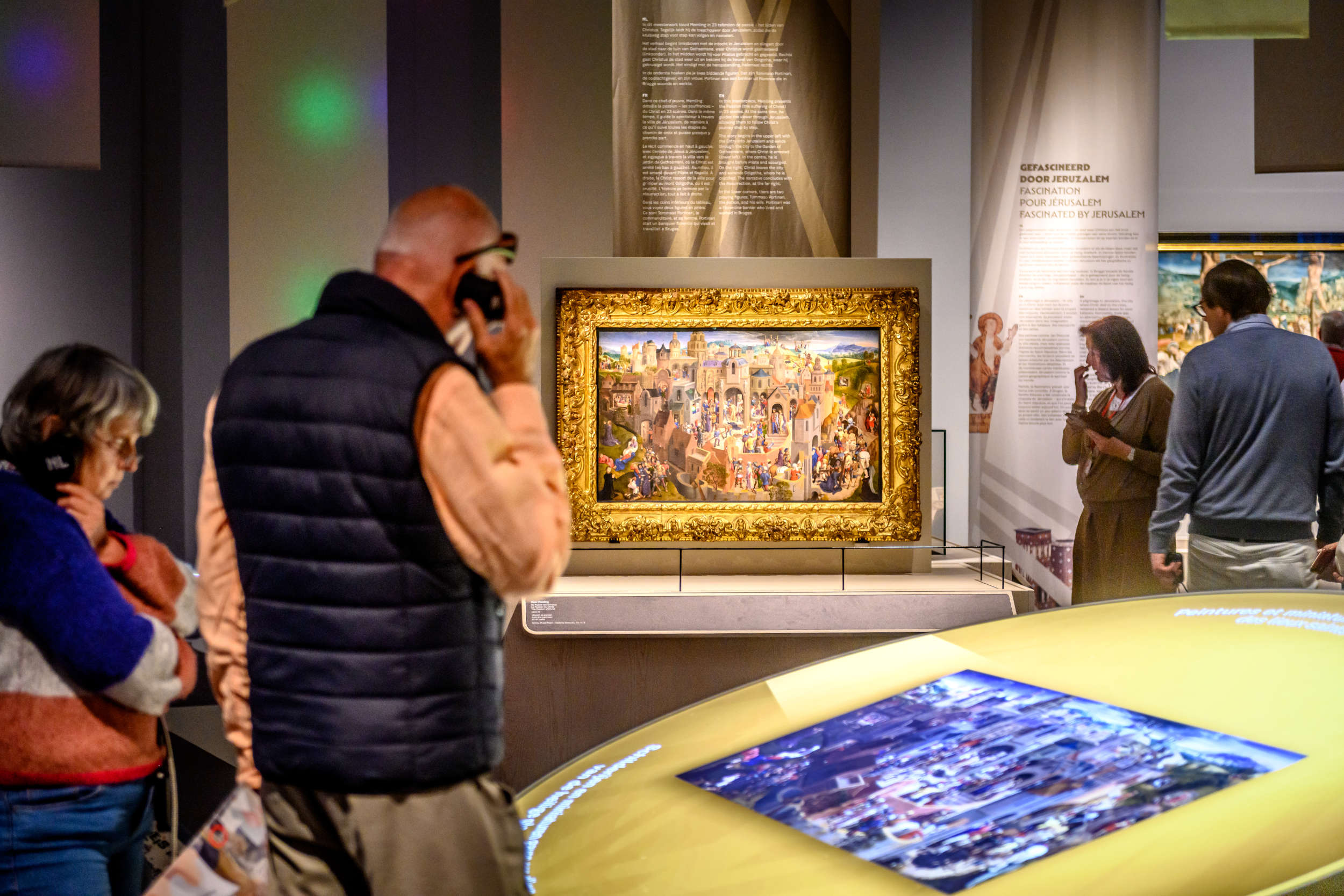
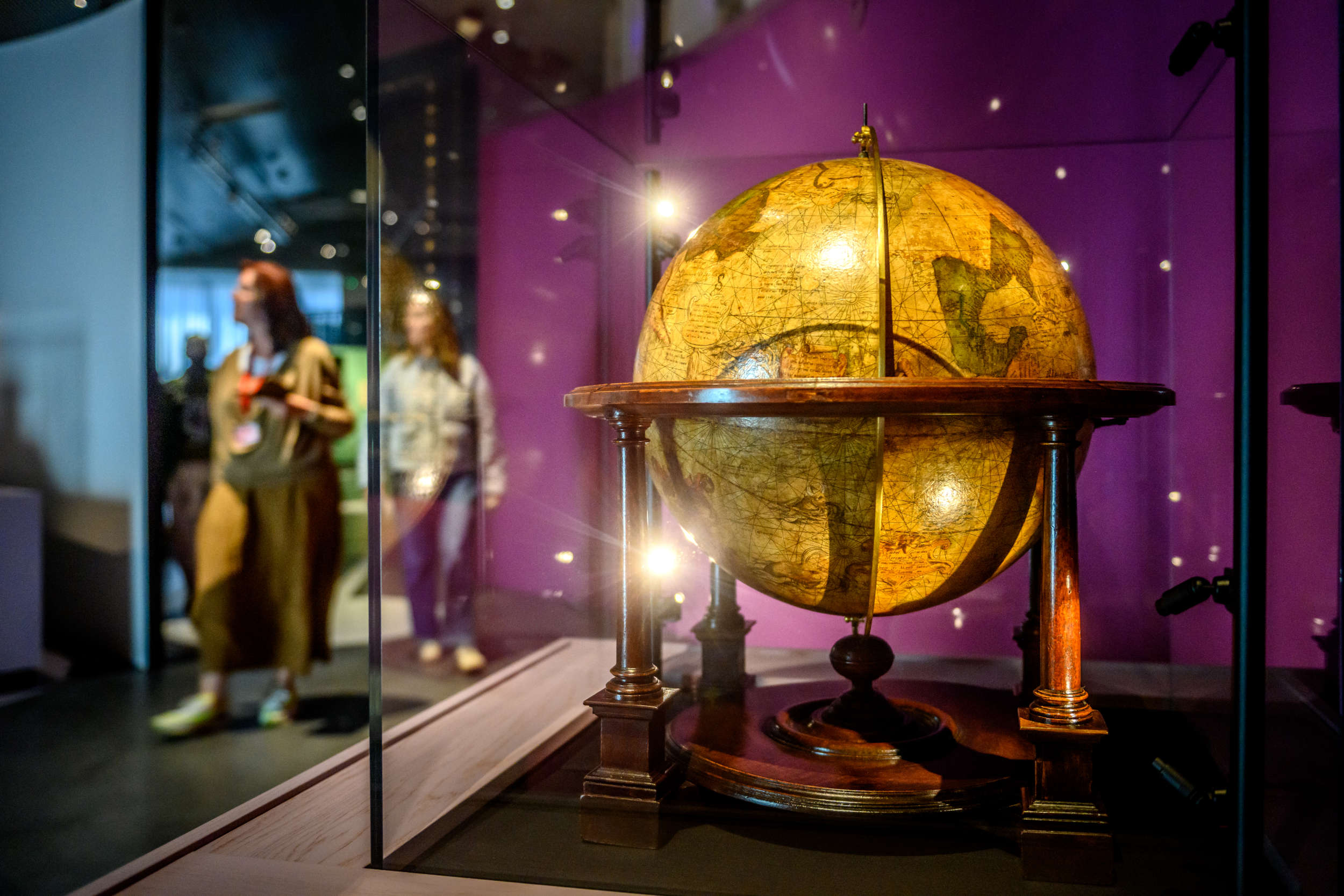
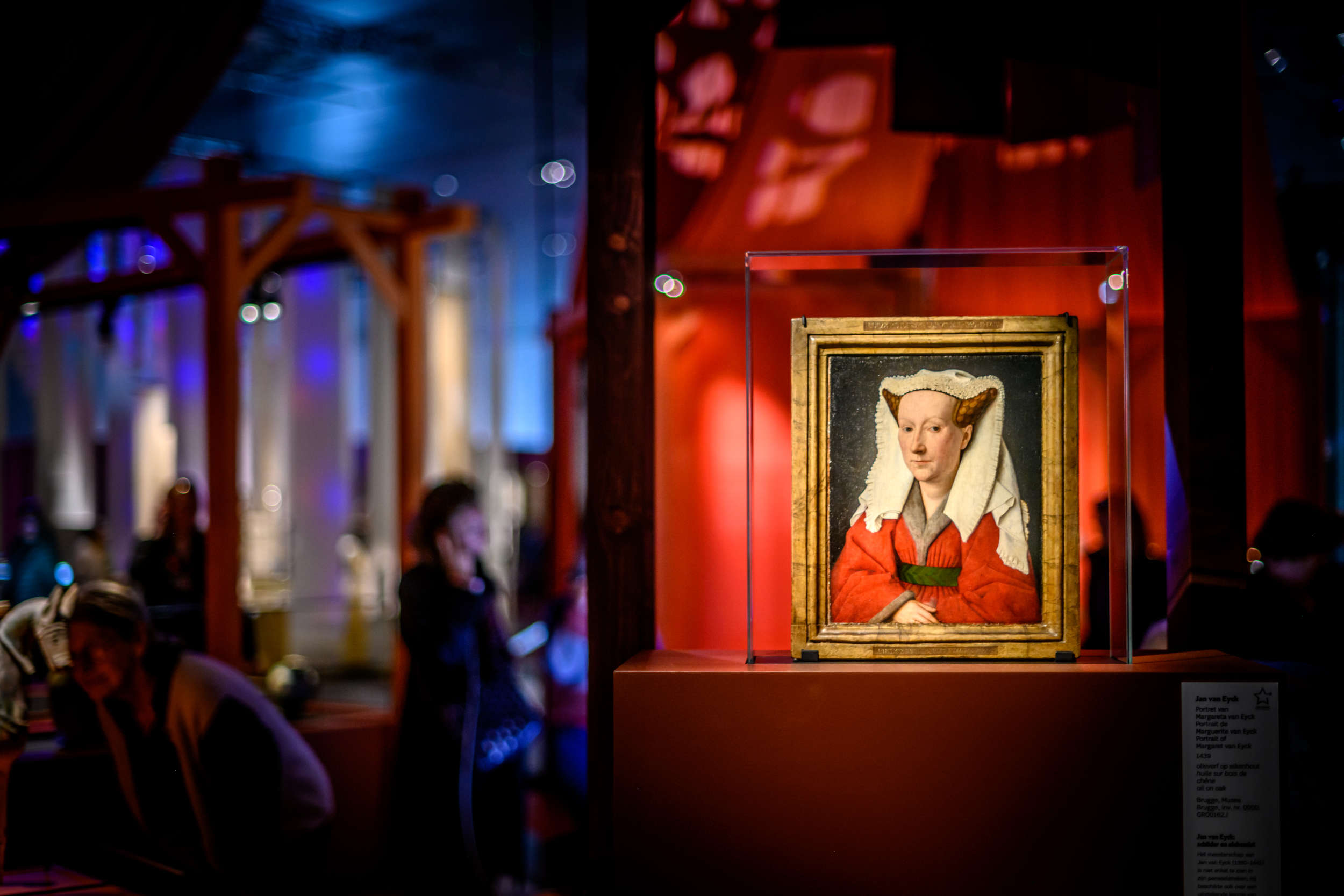
Thus, a coin minted under Charlemagne, a brooch ending in a bird’s head, a Merovingian sword, and a Renaissance purse with eight compartments ceased for a moment to appear as artifacts that had survived the deaths of their owners and became, once again, simply objects that someone had held between their fingers, hidden beneath a garment, and dragged through the mud. Bruges already appeared to fit into a network linking the North Sea to the Mediterranean, Africa to Asia, and the Flemish courts to the markets where goods and knowledge often traveled in the same baggage.
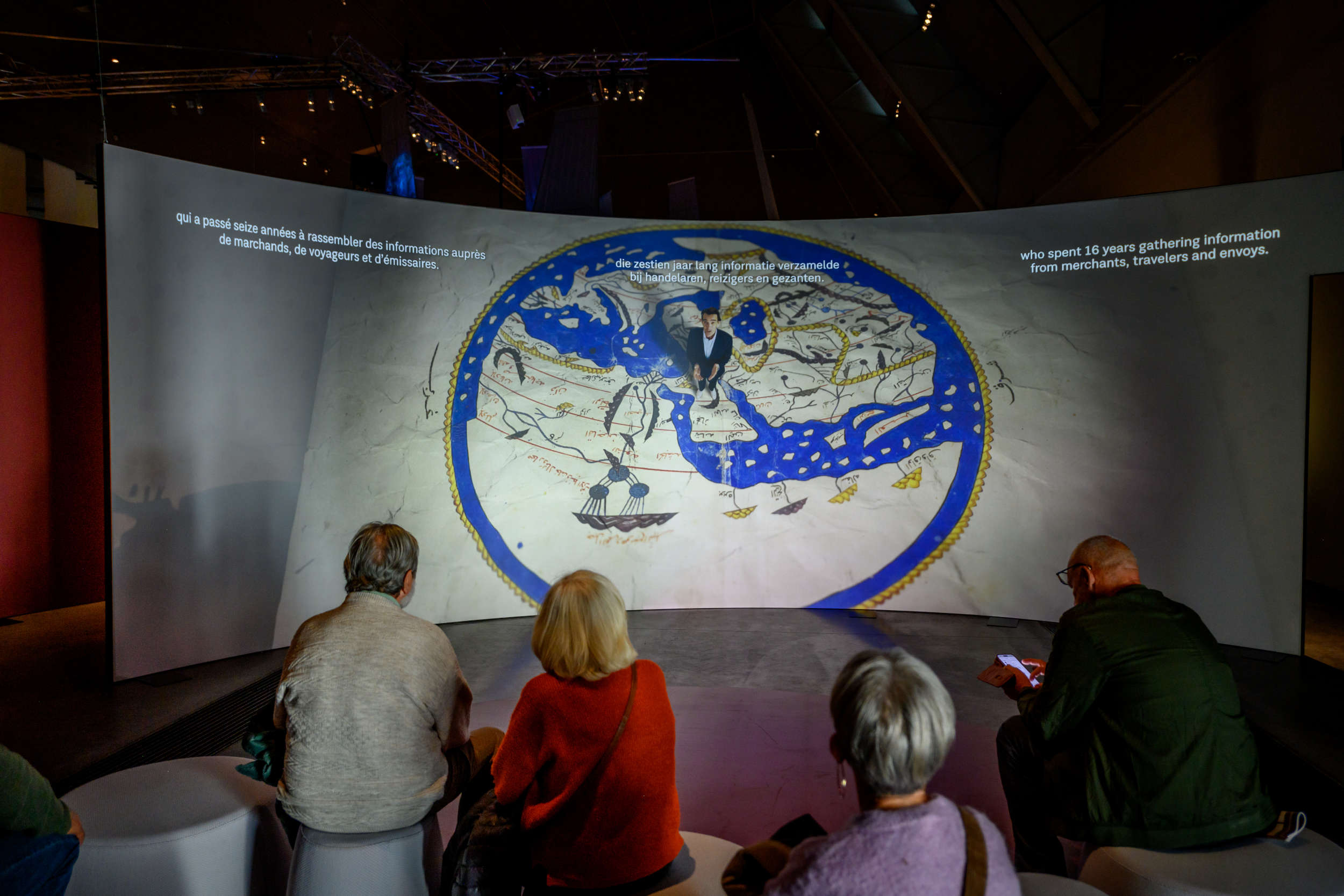
Then there was the Tabula Rogeriana—or rather, the manuscript of *Nuzhat al-mushtāq fī ikhtirāq al-āfāq* housed at the Bodleian Library in Oxford—the geographical work composed in the 12th century by Muhammad al-Idrisi at the Sicilian court of Roger II. The world appears upside down compared to what we’re used to, with the South at the top, and for a few seconds one wonders how many of our certainties depend solely on the direction in which we’ve learned to unfold a map. Next to this Arabic atlas was the Catalan Atlas from 1375, created by the Majorcan Jewish workshop of Cresques Abraham and presented as a digital reproduction. Two worlds that the word “medieval” has come to render distant and almost silent are once again engaging with one another before the eyes of those walking through the hall.
And at BRUSK (a detail that is anything but minor), those eyes are often found much lower down. The attention given to children, in fact, permeates the entire Musea Brugge system and takes on, just a few minutes from here, a very sweet and at times moving form. At the Museum Sint-Janshospitaal, one of Europe’s best-preserved medieval hospitals, a small Kinderhospitaal has been created where children can put on a white coat, visit dolls and puppets, bandage wounds, and make diagnoses by examining X-rays. They enter a place that for centuries has welcomed the sick and learn the history of care through the basic, deeply serious act of caring for someone.
BRUSK was conceived within the very same museum concept, so much so that the building features spaces dedicated to children’s workshops, and Bigger Picture entrusts the children with an independent exploration, “Travel with the Monsters,” built around a group of sea creatures that have escaped from a book and are scattered throughout the exhibition. To find them, you have to use your eyes, ears, fingers, and nose, following the scents that change from one exhibit to the next and listening to the sounds mingling in the hall. Seen from their height, history thus becomes something to touch, while we adults continue to gaze at the display cases with our hands cautiously folded, as if knowing meant, above all, maintaining the right distance.
And perhaps that is why *Bigger Picture* was such a clever choice for the opening exhibition. Here, trade routes crossed and goods changed hands; and along with the goods traveled forms, techniques, diseases, desires, and tales of places that almost no one will ever see. For a few hours, then, Bruges ceased to be the magnificently preserved corpse of its own image. It began to smell of the sea again. And it is beautiful right there, at the point where the postcard finally begins to get wet.