




by Andrea Bruciati 17/10/2026



Categories: Works and artists / Disclaimer
Starting in the 1960s, a story unfolded on the Romagna Riviera that transformed nightclubs into visionary laboratories of architecture, music, and design. Today, these buildings—most of which have been abandoned or have disappeared—tell the story of a cultural revolution that remains largely unrecognized. An article by Andrea Bruciati.


Even before changing the architecture, the nightclub changed people’s desires. By the late 1960s, the Romagna Riviera already boasted a highly developed entertainment infrastructure: hotels, guesthouses, dance halls, restaurants, swimming pools, ballrooms, and beach resorts had transformed the coast into a destination dedicated to leisure. The new disco culture intervened within this system, altering its rules. Dancing gradually ceased to be a social practice governed by recognizable customs and became a ritual that lasted until dawn, fueled by nonstop music, louder volumes, and an increasingly complex use of lighting.


The Riviera was one of the places where this transformation reached its peak. Here, mass tourism already provided the audience, the network of clubs ensured the continuity of the experience, and a generation of young people began to seek in the night something that traditional forms of entertainment could no longer offer. The discotheque emerged from this transformation and imposed a new experience on architecture: a space permeated by music, light, and a constantly moving crowd.


Music That Transforms Space
Music was the first thing to change. In the old dance halls, the orchestra still structured the evening according to a recognizable sequence of songs, pauses, and live performances; in the disco, however, the music could become a continuous flow, freed from the duration of individual songs and entrusted to the DJ’s selection. On the Riviera, this transition had a profound impact because the music arrived from outside with a speed that often outpaced the venues capable of accommodating it. Soul, funk, rhythm and blues, American disco, and productions from Philadelphia and New York found their way into DJs’ sets alongside hard-to-find records and versions destined to circulate almost clandestinely among the regulars.


It was precisely in this context that, between 1975 and 1977, the arrival of Bob Day and Tom Sison at the Baia degli Angeli introduced a culture of mixing that was still unfamiliar to most Italian clubs. Tracks like “Love for the Sake of Love” by Claudja Barry, “Take Me” by Cerrone, or “The Latin Hustle” by Eddie Drennon & B.B.S. Unlimited belonged to a musical landscape that by then had little to do with that of traditional dance halls.
The DJ thus began to shape the night in a different way: without breaks, without a fixed center, with the dance floor swept by constant shifts in rhythm, intensity, and energy. Even listening became a physical experience. Music no longer merely accompanied the space: it set its tempo, regulated the crowd on the dance floor, and altered the perception of its dimensions. The dance hall therefore had to become part of the musical sequence, following its rhythm and variations.
The Riviera as a Laboratory
The seaside resort system built in the postwar period had created a concentration of people, infrastructure, and opportunities for consumption that allowed venues to function as nodes within a single nightlife landscape. Between the late 1960s and the mid-1970s, venues opened that were destined to mark a turning point: La Mecca, La Baia degli Angeli, andL’Altro Mondo in Rimini, each capable of accommodating up to about two thousand people.
These were not isolated incidents. They were part of a landscape in which moving from one venue to another—often after a day at the beach or in a hotel—became part of the fun itself. Daniele Baldelli recalled how in Cattolica alone in the early 1970s—a town that at the time had just over 16,000 residents—as many as ten or fifteen dance clubs could be found during the summer, while the seasonal population swelled to tens of thousands.
Demand immediately generated supply, and supply, in turn, began to shape demand. More clubs meant a more mobile crowd, longer hours, more specialized music, and growing competition over image and the quality of the experience. Within a few years, nightlife became one of the Riviera’s main attractions. For a few hours, the nightclub took on the dimensions of a temporary city: thousands of people entered, moving between dance floors, bars, and terraces, creating a form of social interaction separate from the city’s ordinary rhythms.
Architectures Without a Definitive Form
It was within this transformation that some architects recognized in the nightclub an opportunity that ordinary buildings systematically denied: to design a space whose configuration could adapt to the music, technology, and behavior of the audience. Even before it became the great nightlife district, the Riviera had already begun to develop its own vision of architecture for entertainment.
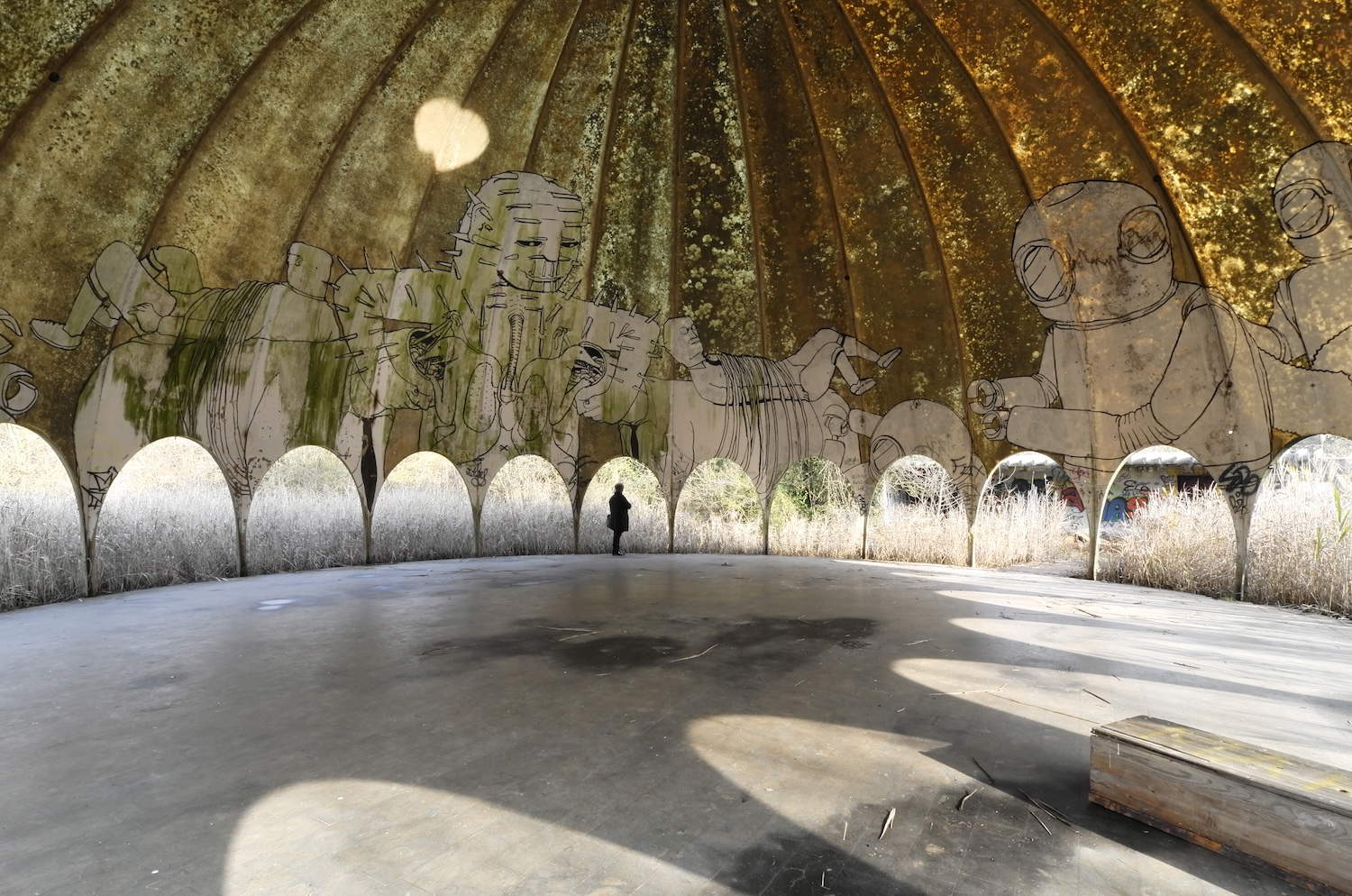
In Milano Marittima, between 1966 and 1969, Filippo Monti designed the Woodpecker, starting from an almost childlike idea—“let’s make a circle, let’s bring water to the surface, and let’s put crocodiles in it”—which resulted in one of the coast’s most unique architectural creations: a ring dug into the ground, surrounded by pools of water and walkways, with a dance floor at its center covered by a translucent dome composed of twenty-three fiberglass elements. To build it, it was necessary to enlist a company specializing in boat construction.
The building, open to the outside through large arches, resembled a structural research pavilion more than a nightclub. Its form already belonged to a future in which entertainment could become a field of technical experimentation. The structure then lay abandoned for decades, an almost alien presence in the landscape that surrounded it, before undergoing a recent and definitive restoration.
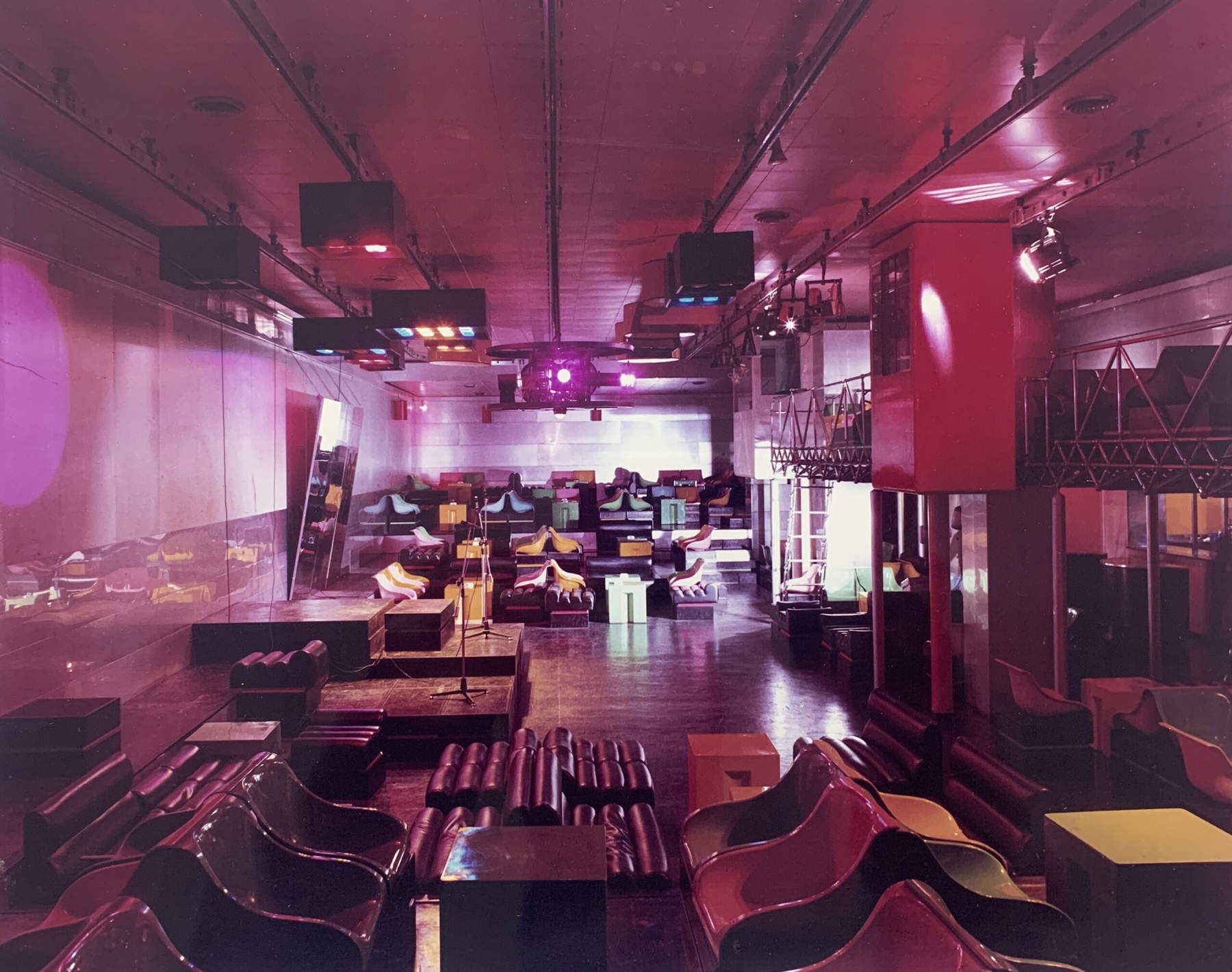
Experimentation directly influenced the spatial organization in the design of Turin’s Piper as well, conceived in 1966 by Pietro Derossi, Giorgio Ceretti, and Riccardo Rosso. The floor consisted of movable elements that could be shifted and rearranged, while five tracks ran along the ceiling to adjust the position of microphones, speakers, lights, and projectors. In the center, Bruno Munari’s “light machine” transformed light into yet another element of the environment. Even the movement of visitors could produce sound effects: the hall functioned like a machine to be set in motion, a space that came to life through the audience.
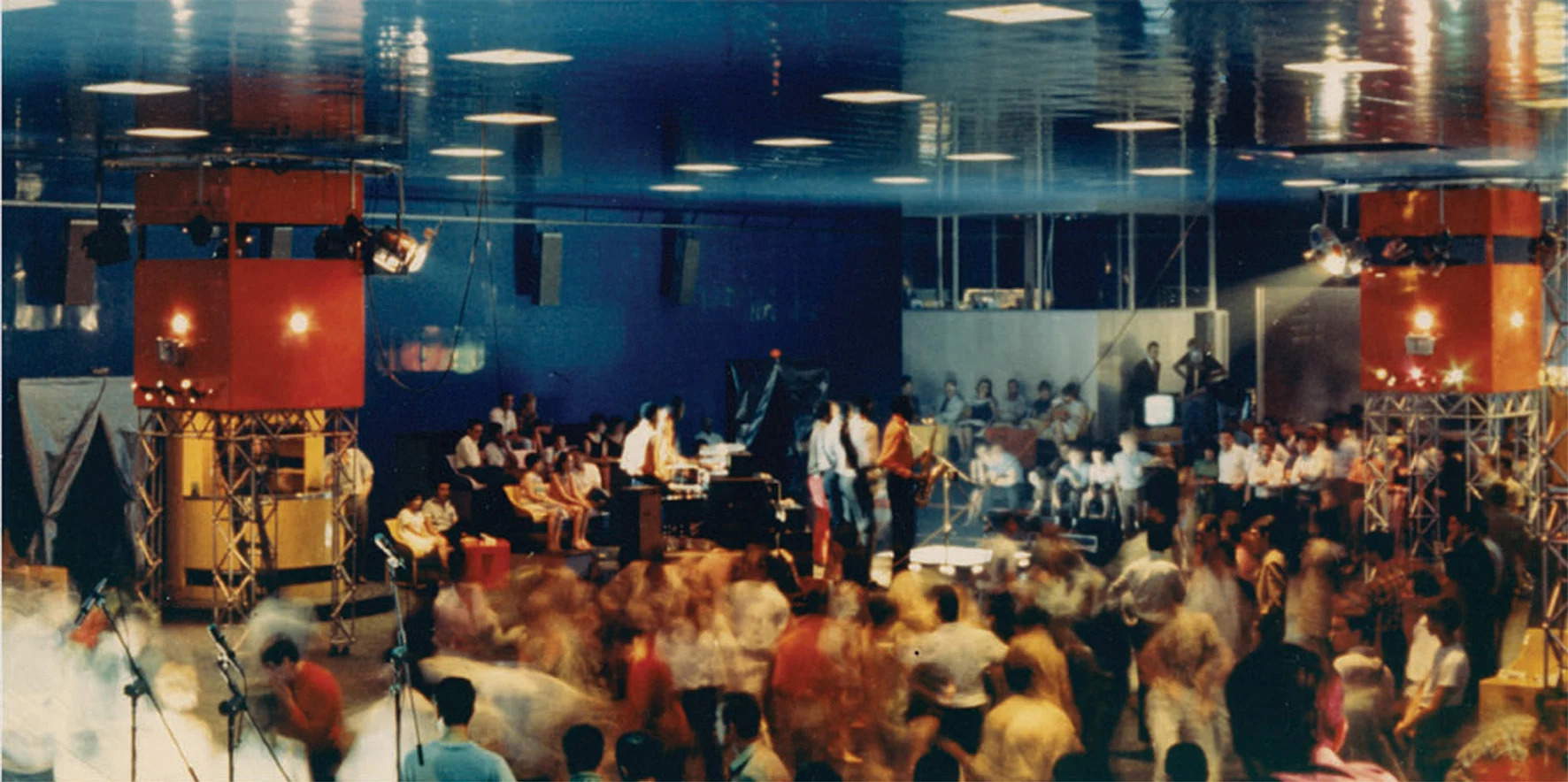
The same principle guided *L’Altro Mondo* in Rimini, created in 1967: a large space equipped with lighting, power, sound, and projections, in which elements of varying complexity could be combined and reconfigured for different purposes. In these projects, the architectural form remained open to a variety of configurations. The final layout depended on the performances, the available technology, and the movement of the crowd.
Baia degli Angeli: The Building Becomes Music
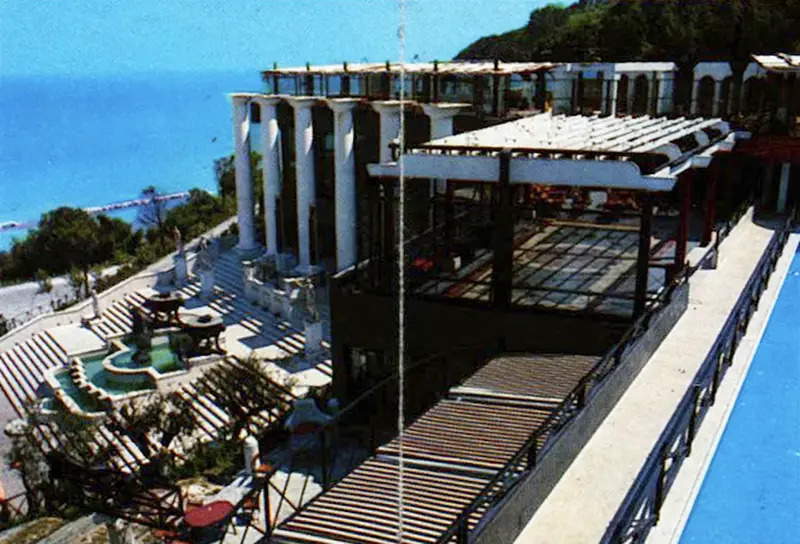
The culmination of this interplay between sound and concrete took shape on the hill in Gabicce in 1975, with the opening of Baia degli Angeli. The venue featured a structure capable of transforming the crowd’s movement into a spatial sequence: a white building overlooking the Adriatic, organized across three staggered and interconnected floors, with terraces, pools, and dance floors distributed at different levels.
The DJ booth was located in a glass-walled elevator that could move up and down throughout the evening, offering the DJ a different view of the dance floors and making his own movement part of the show. Tom Sison and Bob Day, American DJs who contributed to the technical evolution of DJing in Italy and directly influenced Daniele Baldelli, came to La Baia.
In 1977, Baldelli and Claudio Rispoli—known by his stage name Mozart—took their place at the DJ booth. The music could flow without the traditional breaks between tracks, and the club kept the night going until six in the morning. The DJ was the one who set the rhythm and atmosphere, even altering the very perception of the space. At La Baia, as the DJ booth rose and fell and dancers moved through the different levels of the building, the music became one of the forces that organized the space.
From Cosmic to Slego: When Desire Changes
It was toward the end of the decade that musical curiosity ended up breaking down genre barriers, challenging the canonical definition of dance music. When Daniele Baldelli arrived at the Cosmic in Lazise in 1979, he brought with him the musical heritage he had built up at La Baia—disco, funk, the Philadelphia sound—but within a year he began mixing it with material from theoretically incompatible worlds: electronic music, jazz, African and Brazilian music, reggae, krautrock, and new wave.
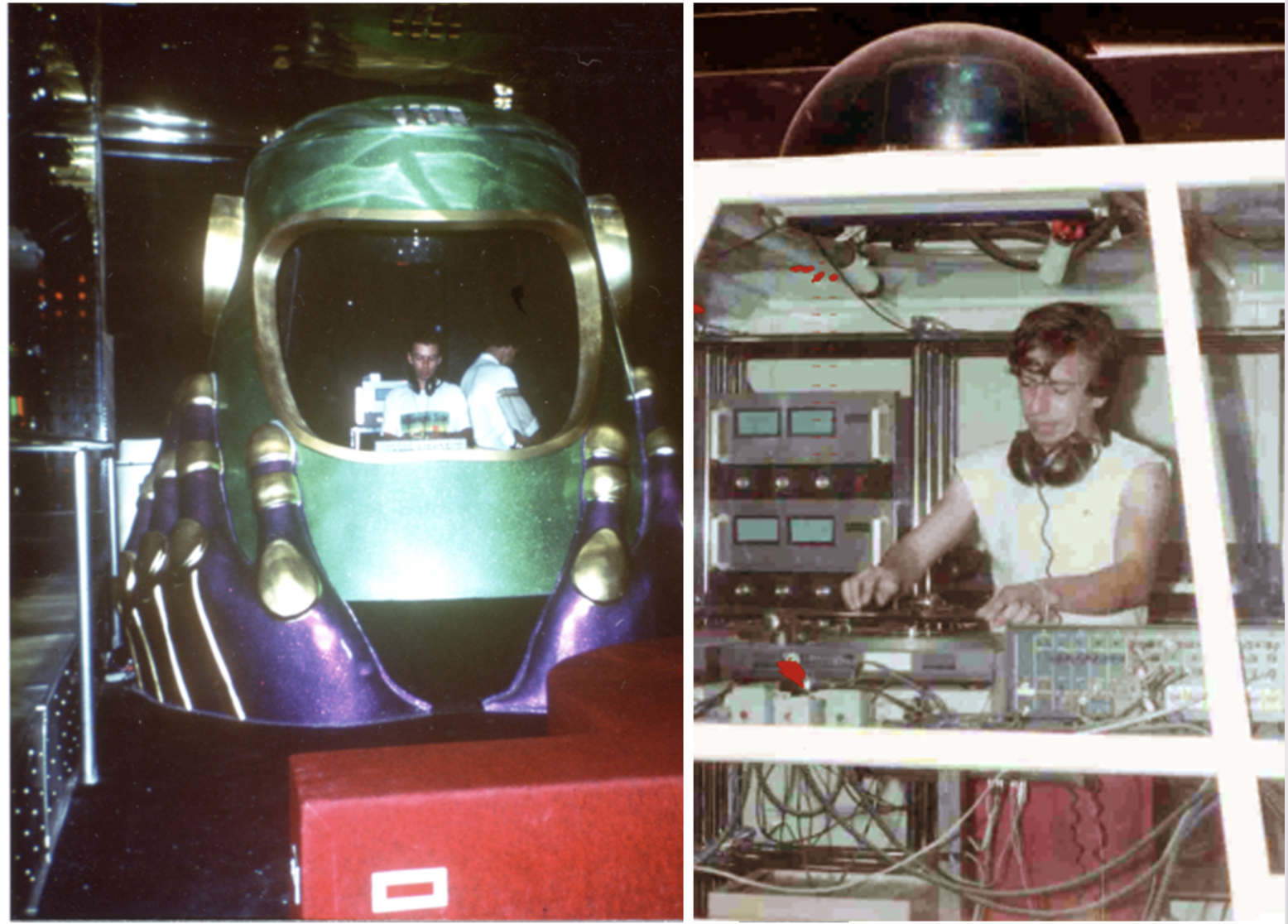
The change affected the very way the DJ set was conceived. Musical genre lost importance in favor of rhythm, texture, and the possibility of juxtaposing vastly different elements. Kraftwerk, Fela Kuti, Manu Dibango, and other sounds from electronic, African, and experimental music could all flow together. Baldelli would call this practice “Cosmic Sound,” emphasizing that it was not a musical genre but a way of DJing. Cosmic, too, seemed designed to accommodate this new concept of experience: no seating, no alcohol, a dance floor occupying nearly eighty percent of the space, columns covered in light bulbs, and a DJ booth designed to resemble a space helmet, later transformed into a spaceship.
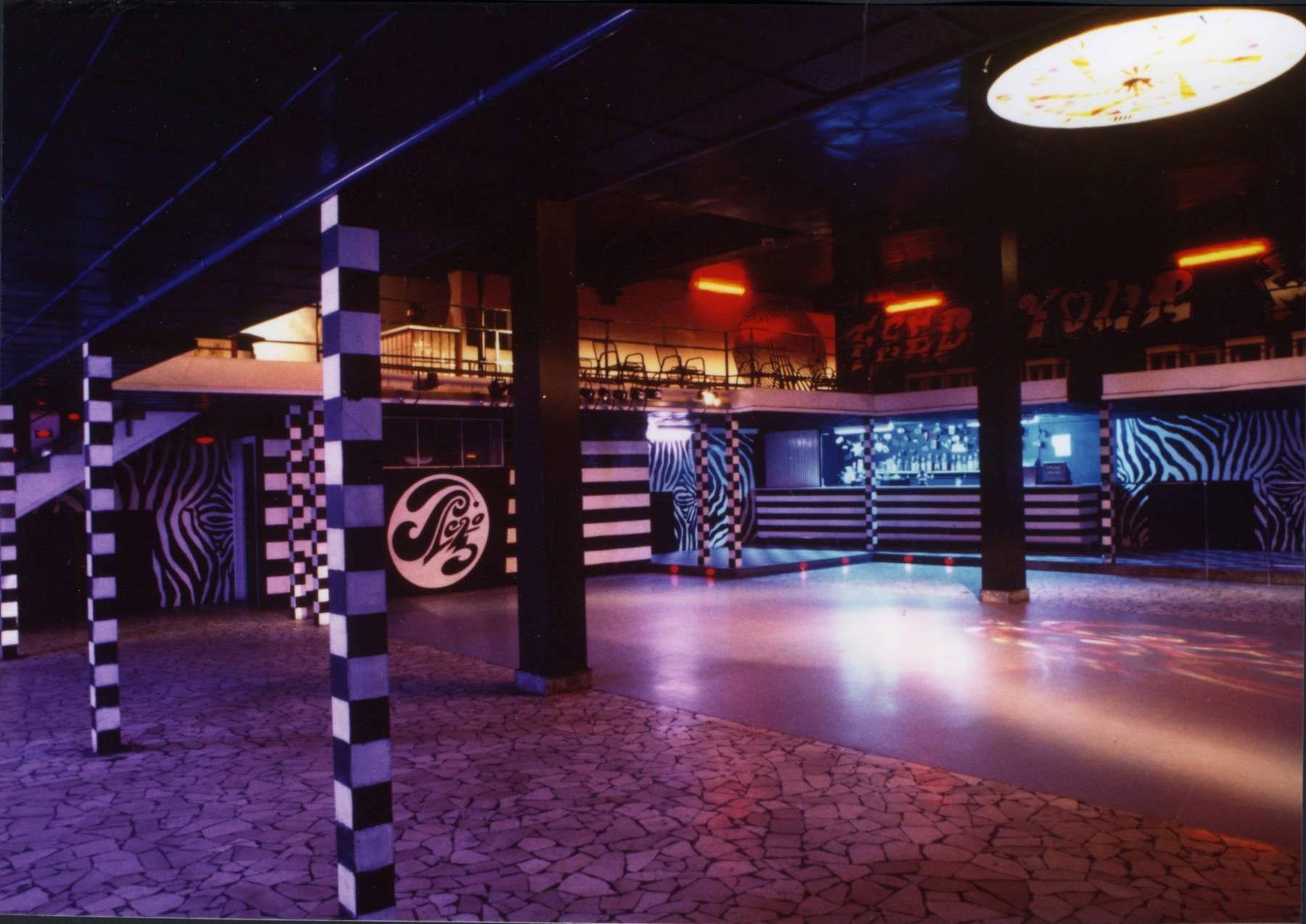
This avant-garde exploration, however, could take a more underground and minimalist turn. On November 23, 1980, a group of young people from Rimini transformed an old dance hall into the Slego, creating a venue dedicated to new wave and punk. Giovanni Tommaso Garattoni, one of the founders, would serve as its artistic director until 1988, designing graphics, furnishings, and set designs. The venue operated with far more limited materials and resources: basements, repurposed old ballrooms, raw guitars, photocopied fanzines, and installations put together with minimal means.
The Night Becomes an Image
In the 1980s, the Riviera entered a new phase. The number of clubs continued to grow, and nightclubs became increasingly central to the coast’s tourism economy, while experimental architecture gradually gave way to a more precise construction of the club’s identity. The club had to be recognizable even before you stepped inside. It had to have a form, a name, and an image capable of resonating beyond the night.
A generation of designers and artists formed around Slego who understood just how integral graphic design could be to nightlife culture. Garattoni, an architect and designer, worked on interiors, installations, and visual identities; in 1982 he founded Complotto Grafico, and in 1986 he helped launch Bolidismo, bringing into club culture that same blend of design, imagery, and technology that characterized the new postmodern sensibility.
The nightclub became a visual as well as a spatial entity. Graphics, interiors, signage, clothing, and communication all contributed to making it recognizable, and the patrons’ attire was just as important as the sound system. The experience began before entering the club and continued outside it, in photographs, posters, and stories.
From the Experimental Venue to the Megastructure
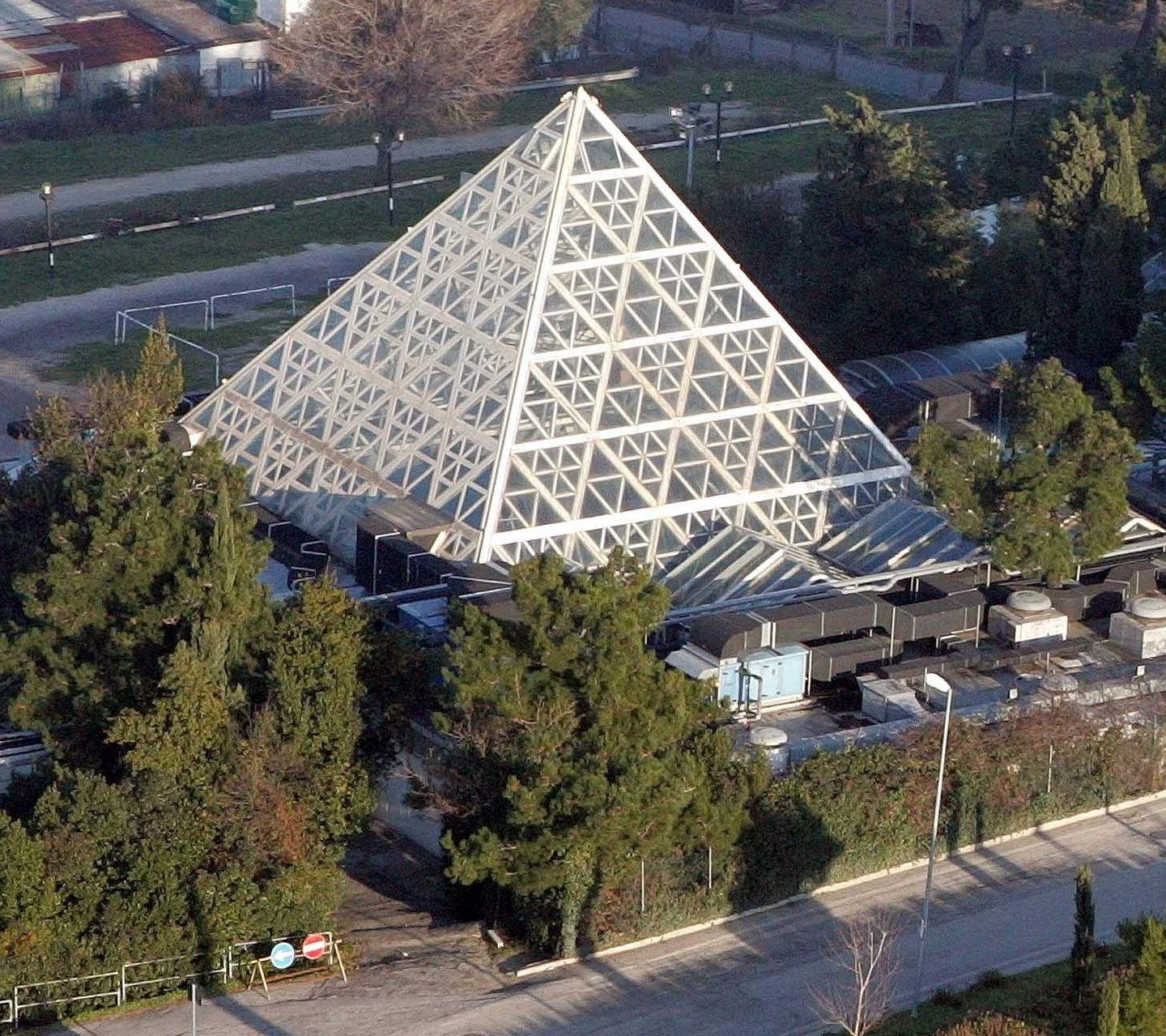
By the late 1980s, the spatial experimentation of the early clubs had shifted to a new scale. Genux, which opened in 1989, already belonged to this new era of grand leisure architecture. Dance floors, bars, distinct areas, set designs, and large-scale lighting systems were all designed for an audience of thousands.
This trend would explode in the 1990s, when clubs likethe Ultimo Impero and, on the Riviera, the Cocoricò would take this concept to the level of megastructures and nocturnal landmarks. The insights of the previous generation—from domes to mobile stages to reconfigurable spaces—were now being integrated into an entertainment machine on a much grander scale.
The Problem of Oblivion
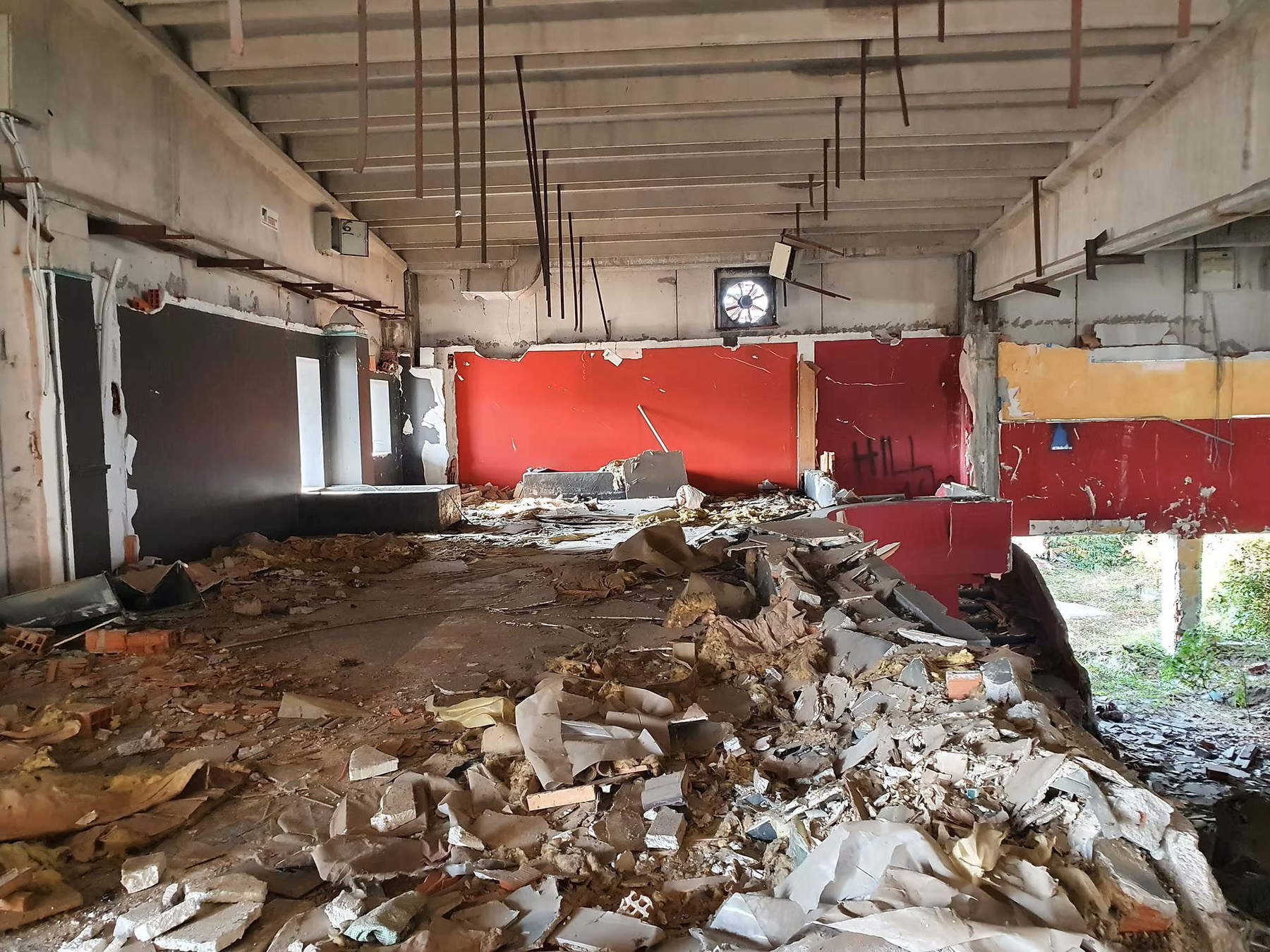
However, the very temporary nature of these places would make their preservation difficult. Venues created for a specific generation and a particular vision of nightlife regularly collapsed as their audiences, music, economies, and regulations changed. The Cosmic closed in 1984 and remained abandoned until its demolition in 2018; the Woodpecker, closed due to a fire in 1975, remained an abandoned structure until 2023; the Slego, closed in 2000, lost its building.
This phenomenon is not limited to the most famous clubs. For decades, Italian nightclubs have produced an enormous quantity of hybrid architectural structures, often lacking any obvious alternative function: buildings too large to be reused, too distinctive to be repurposed without losing their identity, and too closely tied to a specific cultural imagery to be separated from the culture that gave rise to them.
Their fragility was inherent in their very conception. They were buildings designed for a collective experience limited in time, and many of their features—dance floors, sound systems, pathways, and set designs—lost their meaning along with that experience. Once the trend that had made them necessary had passed, those concrete and fiberglass behemoths found themselves without a use capable of preserving their original identity.
What Remains of the Night
Today, the empty shell of the Woodpecker or the ruins of the Cosmic are not monuments to nostalgia. They are the physical trace of a radical idea: designing architecture in relation to change, music, light, and those who passed through it.
For about twenty-five years, boat builders, architects, designers, artists, and DJs worked—often without belonging to the same circles or sharing a common vision—around a single intuition. Music could become a material of design, the audience a force capable of shaping it, light a structural element, and the night an architectural dimension. The Romagna Riviera was the place where this alliance reached an unparalleled scale, transforming a stretch of the Italian countryside into an avant-garde laboratory for European entertainment.
What remains are the songs, the DJs’ names, the photographs, and the stories of those who arrived on the Riviera by car or on night buses. There are also buildings that show just how much that musical culture shaped the design of the space. Their legacy lies in the relationship between the building and the experience: these were places conceived for a night destined to end and, precisely for this reason, capable of producing a different form of space.
For a few hours, music became space, movement became architecture, and the audience became part of the design. When the night ended, a building remained. Its form, however, still bore the mark of what had taken place there.
Warning: the translation into English of the original Italian article was created using automatic tools. We undertake to review all articles, but we do not guarantee the total absence of inaccuracies in the translation due to the program. You can find the original by clicking on the ITA button. If you find any mistake,please contact us.