Correggio felt and understood every human emotion and expression, from the joy of childhood to physical and familial love, to the vast cultural richness of his era, and finally to the mystical and miraculous impulses of sacred history, which he truly embraced. This is the theme that the major exhibition in Dresden dedicated to him now explores in depth. An article by Giuseppe Adani.
The title of the major Allegri exhibition in Dresden is surprising; it certainly stands apart from any other current designation for an art event, particularly one focusing on historical art. There is no doubt that, over the generations, certain intimate or evocative painters have worked, whose art sought to convey reflections, appeals, or moral messages; yet this emphasis on the depth of the broad spectrum of human emotions—now applied to Correggio—is entirely new, yet it is thoroughly justified and vivid. The reasons lie in the extraordinary and highly insightful research of Professor Andreas Plackinger, who has grasped the artist’s heart and wisdom, and who now offers us this insight: Correggio “berührend menschlich”—touchingly human.
At first glance, the title might seem inapplicable when read in the context of the exhibition’s masterpieces—the four marvelous altarpieces from the Gemäldegalerie—and many other works that clearly display their sacred character. We are struck by such an unexpected reference, which arouses our curiosity in the classical sense of the term, as it compels us to seek its reason—that is, those characteristics that the exhibition curators have undoubtedly identified. Thus, what emerges above all from this distinguished master of the Italian Renaissance is his enduring human complexity: Antonio Allegri lived a life of existential fulfillment that enriched him with all manner of experiences and knowledge with a continuity and breadth that are truly rare.
His native land, nestled quietly in the vast Po Valley and uninfluenced by major academic institutions, allowed him to project—in every way and at every moment—that attention to the visible and the tangible that presented itself to him in everything: all types of people, starting with children and their bodies; all the trades of the fields and workshops; the vast plant and animal world that he always perceived and made his own; and even every single change in nature and light. But, alongside all this, Correggio felt and understood every human emotion and expression: from joyful childhood to physical and familial loves, to the vast cultural intensity of his era, and finally to the mystical and miraculous impulses of sacred history, which he truly embraced.
The Young Correggio
As examples of the young Correggio’s early work, we have selected a few compositions that are revealing even at first glance.
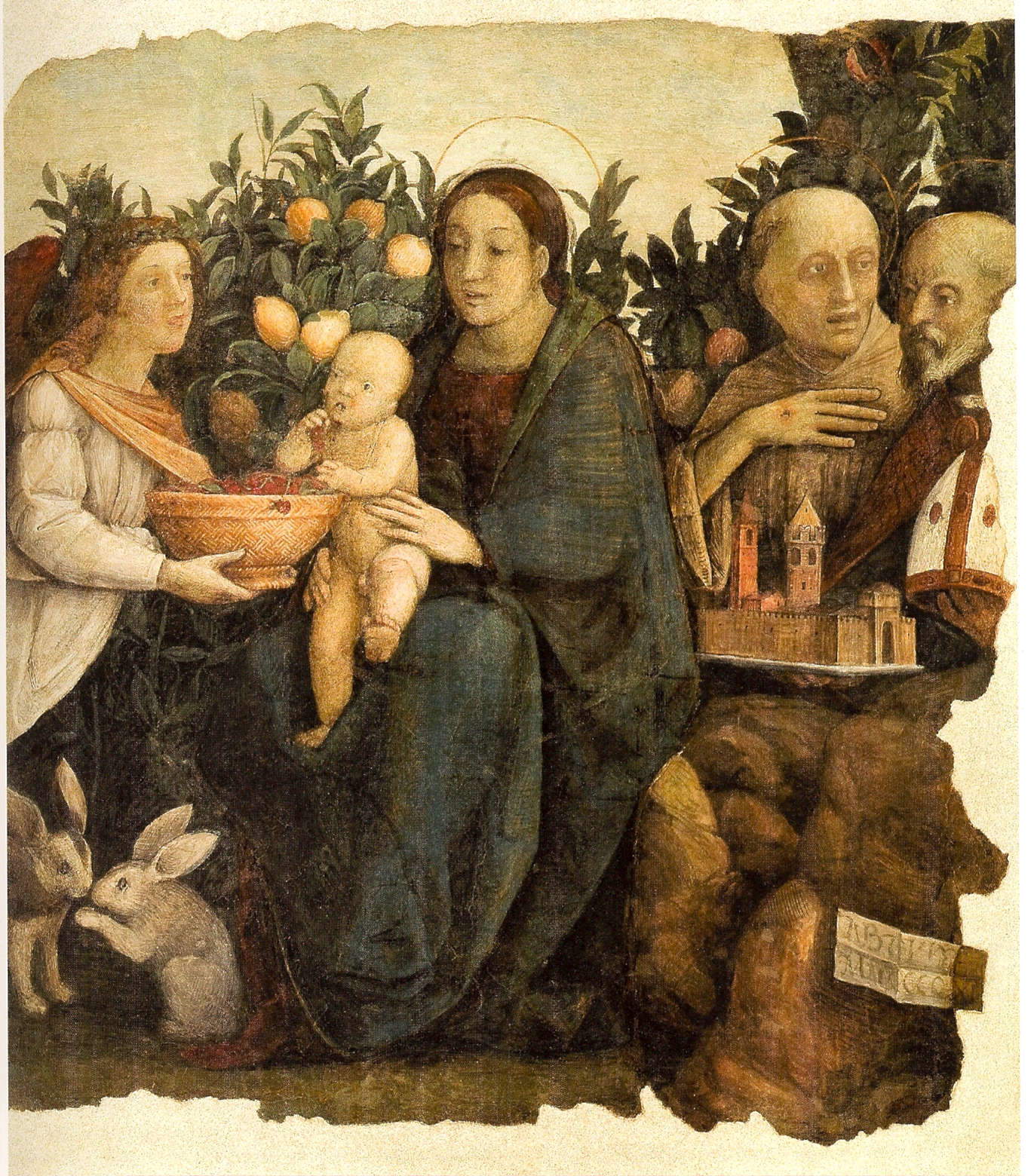
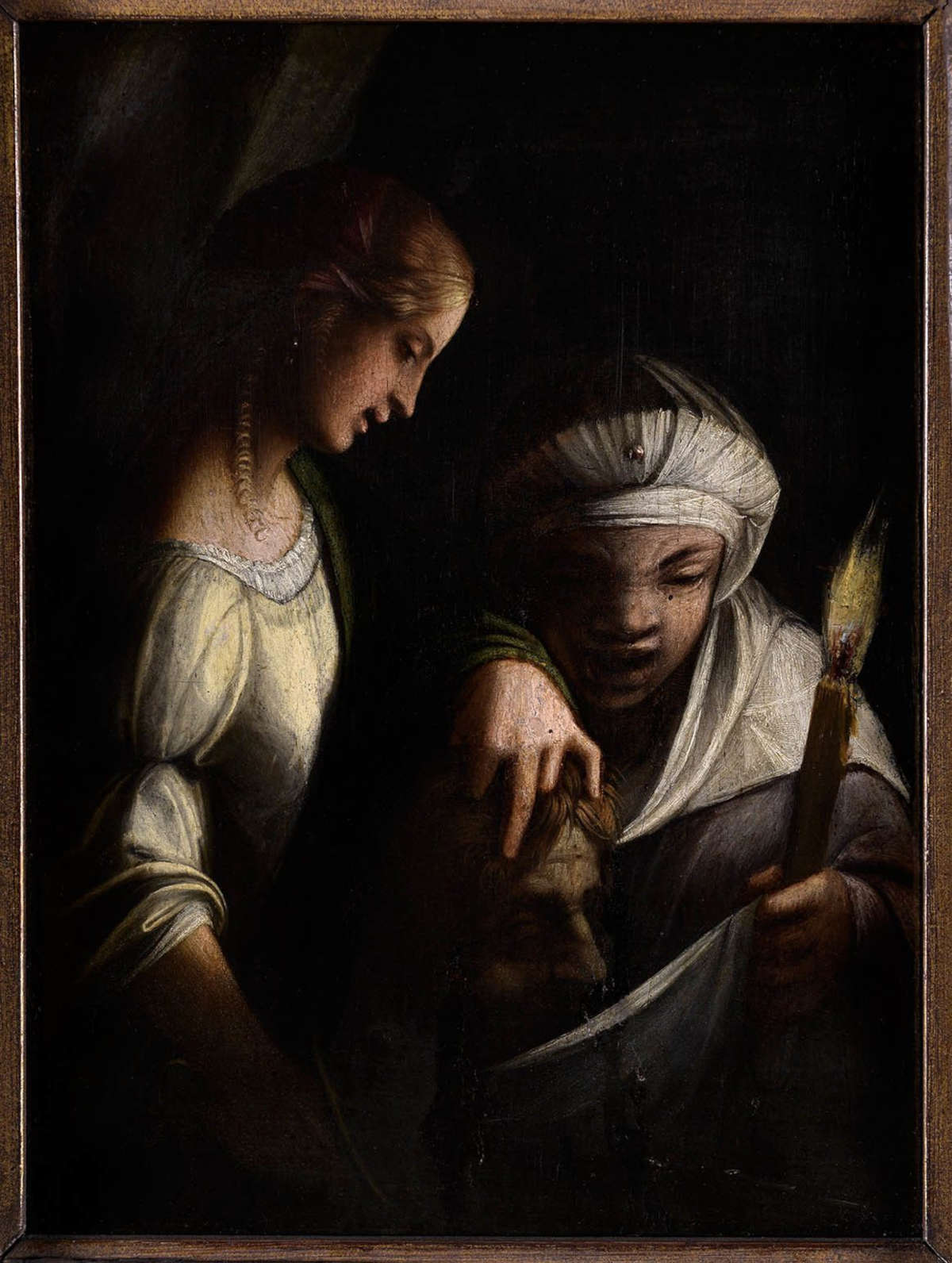
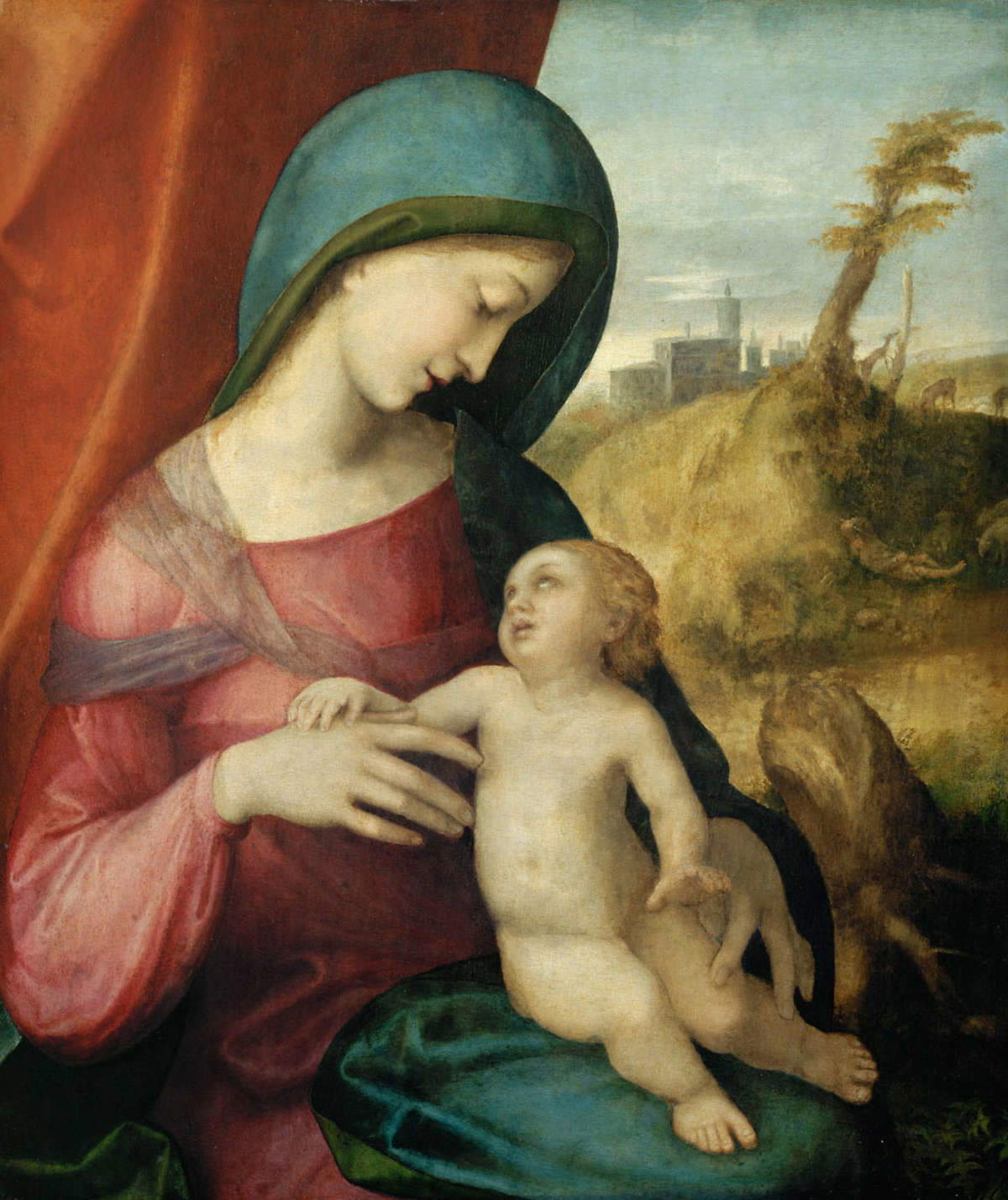
Madonna of the Lemons, First Early Fresco (c. 1506; Modena, Galleria Estense). In the early “Madonna of the Lemons,” likely frescoed on the Porta Santa Maria in Correggio, we note how the invocation of the city’s patron saints takes place in a very free-spirited village gathering against the city walls, where angels and saints accompany the welcoming of the Madonna and Child with a spontaneity that feels entirely familiar, and where – behind the auspicious expanse of lemons – the spontaneous exchange between Saint Francis and Saint Quirinus is mirrored by the incredible interaction of the two rabbits. Here we already see a painter of great freshness, free from the constraints of academic conventions.The small dome of the Mantegna Chapel (1507). Fresco in Sant’Andrea in Mantua. In the chapel of Mantegna (1507), who had died the previous year, Correggio depicts the ascent to heaven on intertwined ribs that also bear lemons (fruits with the compelling symbolism of wisdom, life, and strength), with the precise, complementary addition of carnations and lilies, which are in turn emblems of intelligence and grace. It always requires our full attention to understand a work by Correggio, and we must know that with this artist, nothing—absolutely nothing—is ever done “by chance.”The Mystical Marriage of Saint Catherine (1510) at the National Gallery of Art in Washington The “Mystical Marriage of Saint Catherine,” so admired by David Alan Brown, powerfully draws us into the young Correggio’s reflections on human types, facial expressions, compositional details derived from the subjects’ natural gestures, and thus on figurative elements that are fluid, authentic, and informal.Judith and Her Maidservant with the Head of Holofernes (1510–1511), an extraordinary pictorial foray into the night. Strasbourg, Musée des Beaux-Arts. The surprising panel depicting “Judith and Her Maidservant” is an extremely early example of the artist’s attention to the range of light in every moment of life—light that can have very different sources but can also plunge into complete darkness, as was common in Correggio’s time. Here, then, is an internal source of light that our painter masters with genius and authentic results. A thoroughly human expression, extremely rare in Italian painting of the early 16th century.Madonna, known as the “Vienna Madonna” (1513), housed at the Kunsthistorisches Museum. In the “Vienna Madonna,” symbolism is pervasive and takes center stage: deciphering it requires a trained and persistent mind. We must bear in mind that Allegri’s entire body of work contains symbolic sources and expressions of great depth. In this small work, we notice the focus on the facial expressions of Mary (a profile almost never seen in Correggio’s works) and on the challenging yet spontaneous pose of the Infant Jesus; but also on the entire rendering of the landscape, which is extremely precise yet rich in meaning.
Early Maturity. 1515–1522
That fullness we must call human—Antonio Allegri experienced and painted it beginning in 1515, when he created the Madonna of St. Francis and made it a broad emblem of his pictorial canticle, almost a poem that would accompany him through increasingly rich and beloved themes. After other works of great interest, he went on to fresco the entire Camera di San Paolo in the Benedictine convent of the same name in Parma.
At the height of his intense and exceptionally rich artistic career, Correggio embraced the allegorical theme and that of the hypostatic encounter between divinity and humanity, in which the latter acts as the joyful protagonist of a divine plan. In this endeavor—which transcends normal intellectual, conceptual, and technical capabilities—Correggio surpasses any previous pictorial creation, and it can be said that he becomes a full participant—both emotionally and actively—in the acts he depicts in his figures.
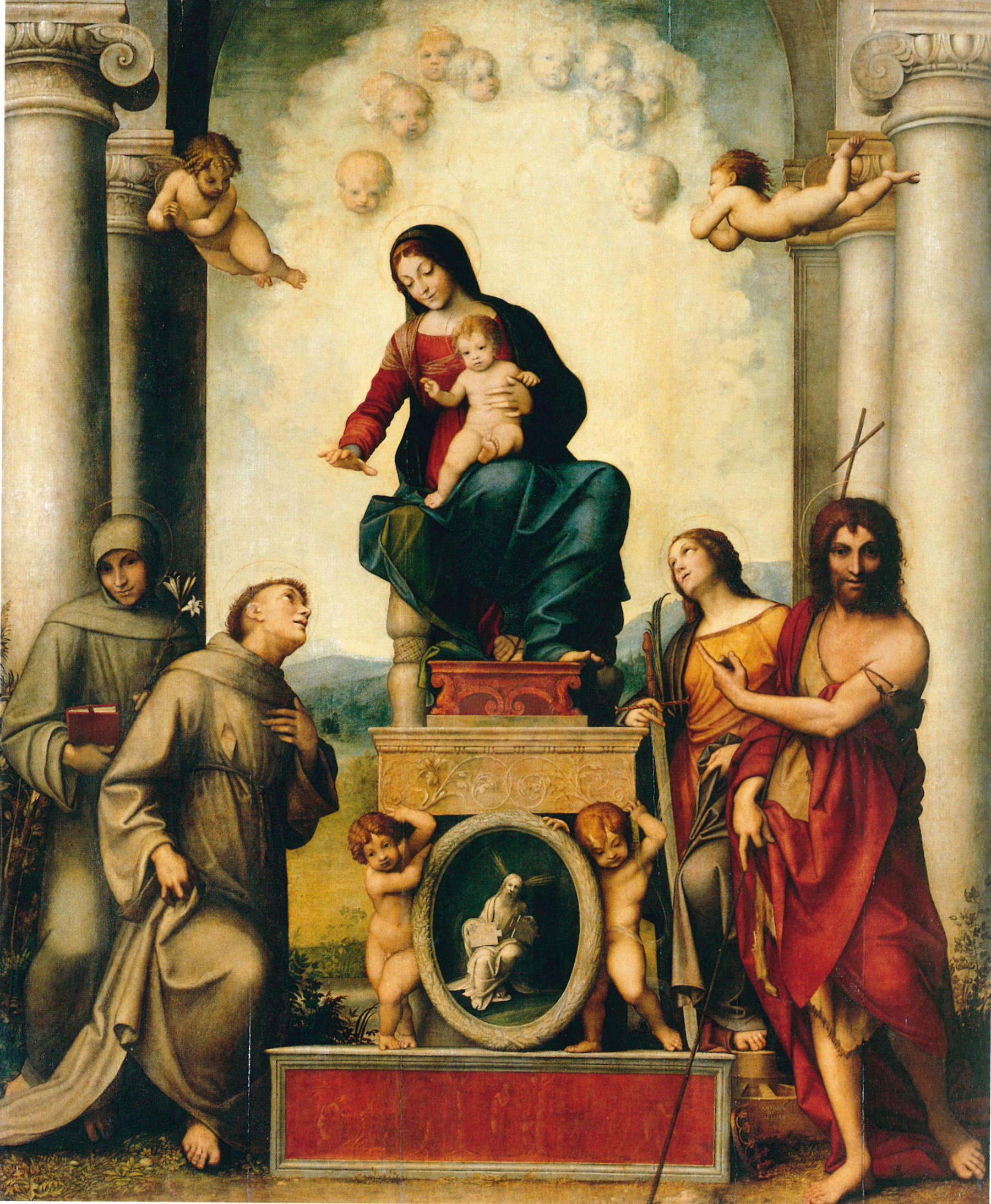
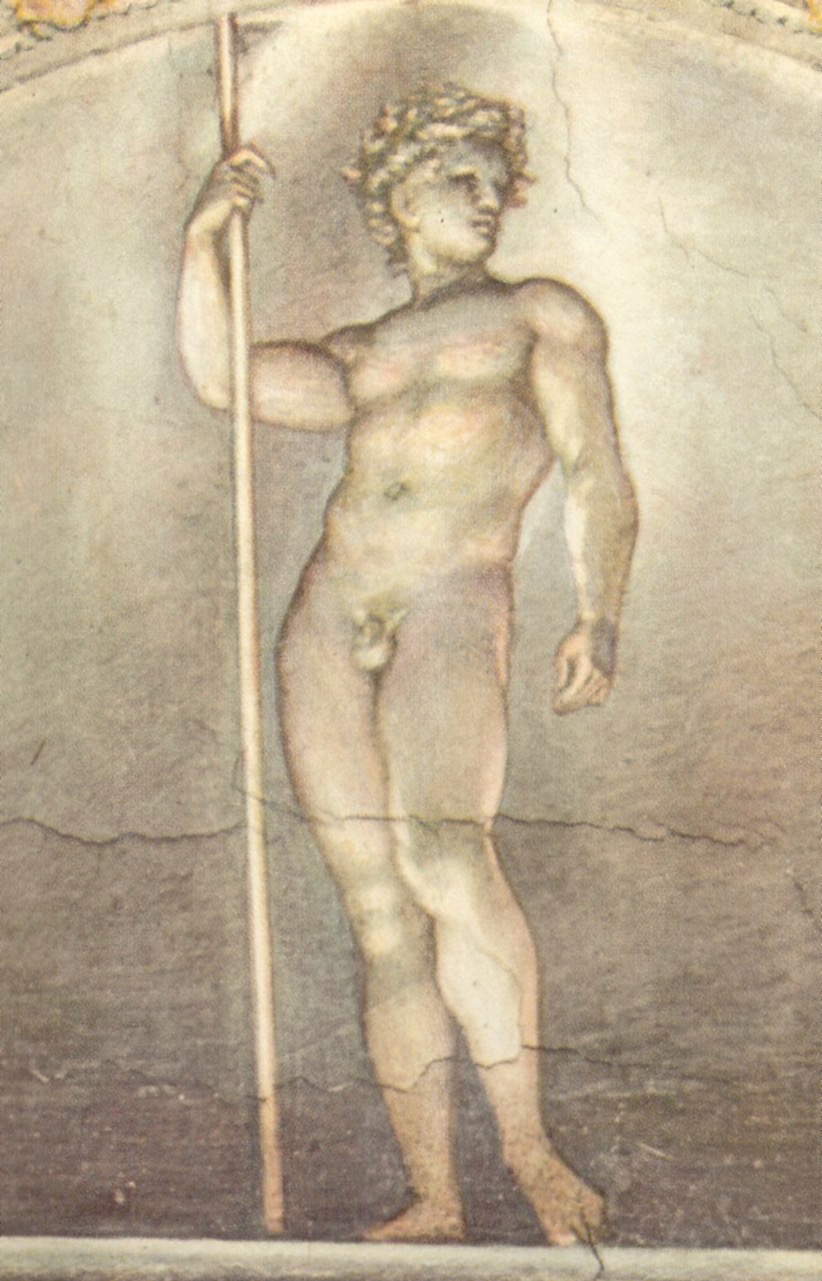
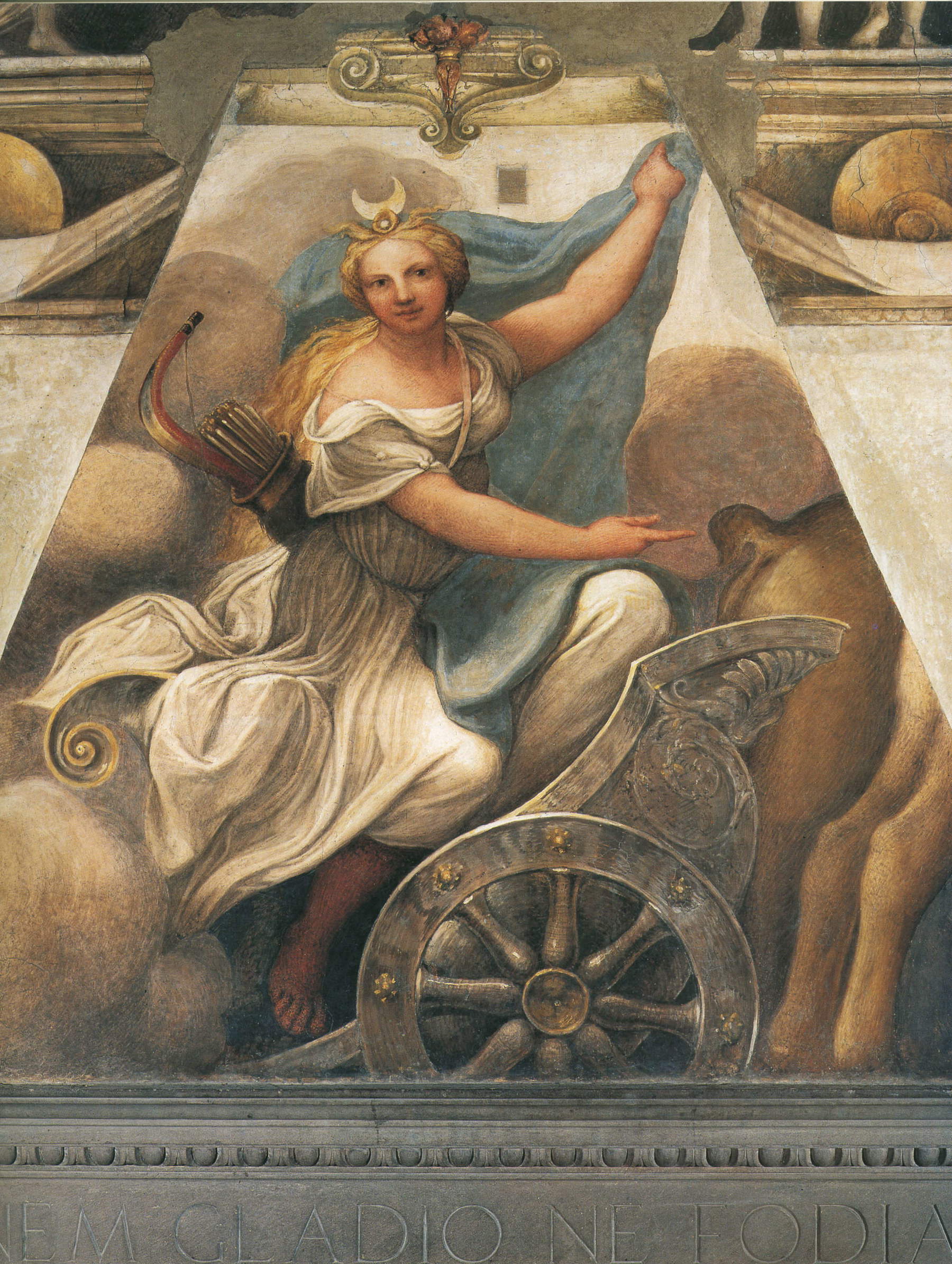
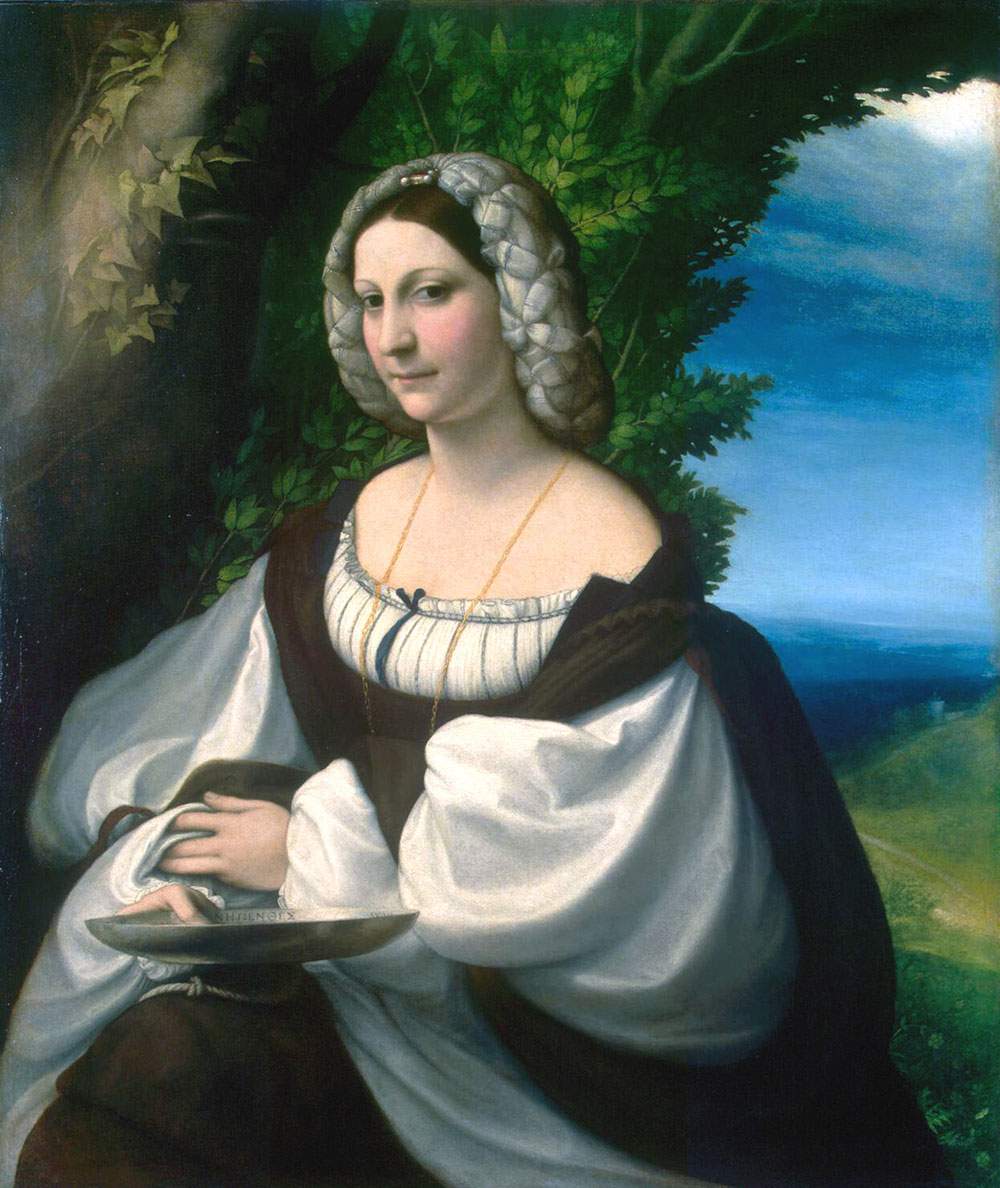
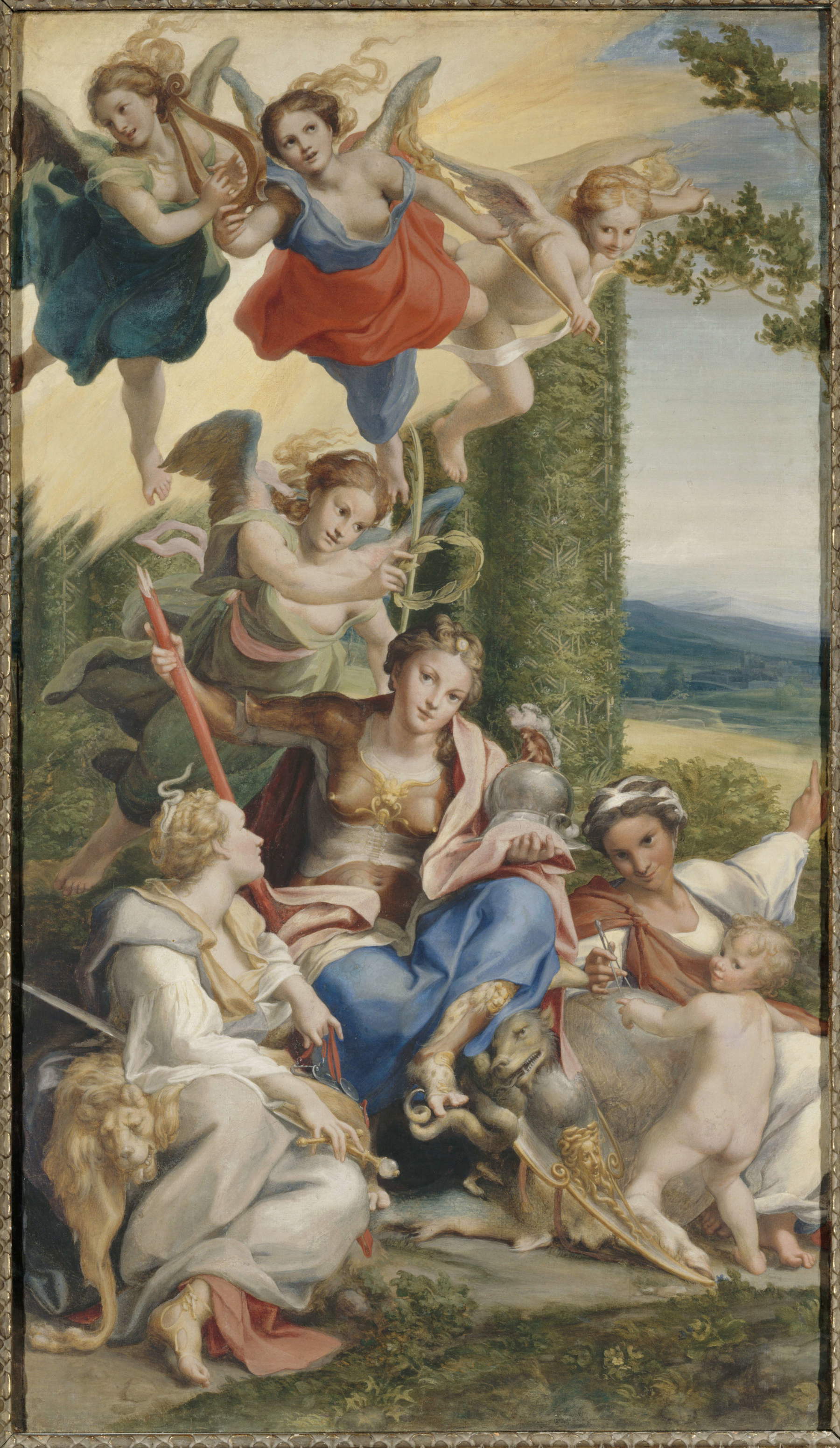
Madonna of St. Francis (oil on panel, 299 x 245 cm), formerly in the titular church in Correggio. Dresden, Gemäldegalerie. The spatial flow moves from the land of Israel, bathed by the waters of the Jordan, rising to the “present-day” landscape of the Po Valley’s plains and hills, and plunges into that sky that has opened up, strewn with cherubim, from which Mary and the Child descend. Everything is immediate, accessible, and every figure engages the viewer, both within and beyond the space of the painting. The gigantic columns remain graceful in the honor they bestow, and solemnly flank the biblical composition upon which the sacred figures stand. The heavens descend into human depth.The Hero Crowned with an Oak Wreath, detail from a fresco (1518) in the Camera di San Paolo in Parma. In this superb work, marked by monumental grandeur, Correggio concentrates an explicitly heroic “energheia”—the human strength entrusted with the divine task of governing the earth—with the resolute and determined dedication of a conscious role.Diana the Guide (1518). Fresco above the fireplace in the Camera di San Paolo. This figure is a curiously splendid synthesis of the human values that must accompany every act of a life striving toward eternity. And it is our Antonio—who had a profoundly Benedictine upbringing—who creates, through imagery, an ancient, even mythological wisdom embodied in the person of a goddess, and makes her the emblem of a choice that will be irreversible in its orientation toward heaven.Portrait of Veronica Gàmbara, Countess of Correggio (1521–1522). St. Petersburg, Hermitage Museum. In this figure, Allegri concentrates wisdom, poetry, the ability to govern, gentleness of character, and that acceptance of destiny which is also a spiritual quality residing in the depths of the soul.The Allegory of Wisdom or Virtue, oil tempera on canvas (1522). Paris, Musée du Louvre. This painting (paired with the one titled “Vice”) engaged Correggio in a profound and deeply rooted reflection that fits well with the theme of the exhibition. The lower portion features the symbols of the Cardinal Virtues, bestowed by heaven to guide human life. Here, certainly, the Lady in a light-colored gown seated at the lower left dominates them all through the symbols she holds: the serpent = prudence, the sword = justice, the bit = temperance, the lion’s skin = fortitude. To our right, meanwhile, sits the scholar of geography and the cosmos. Wisdom reigns, overcoming every sinful deviation with the signs of victory: the broken spear and the deposed crest. She is the meeting point between the human and the divine: indeed, a crown is placed upon her, and the two great diagonals of the painting intersect precisely at her mouth. Above, in a marvelous stroke of artistic genius, the Three Theological Virtues soar: Faith in white, Hope in green, and triumphant Charity in red.
Domes and Large Religious or Secular Paintings
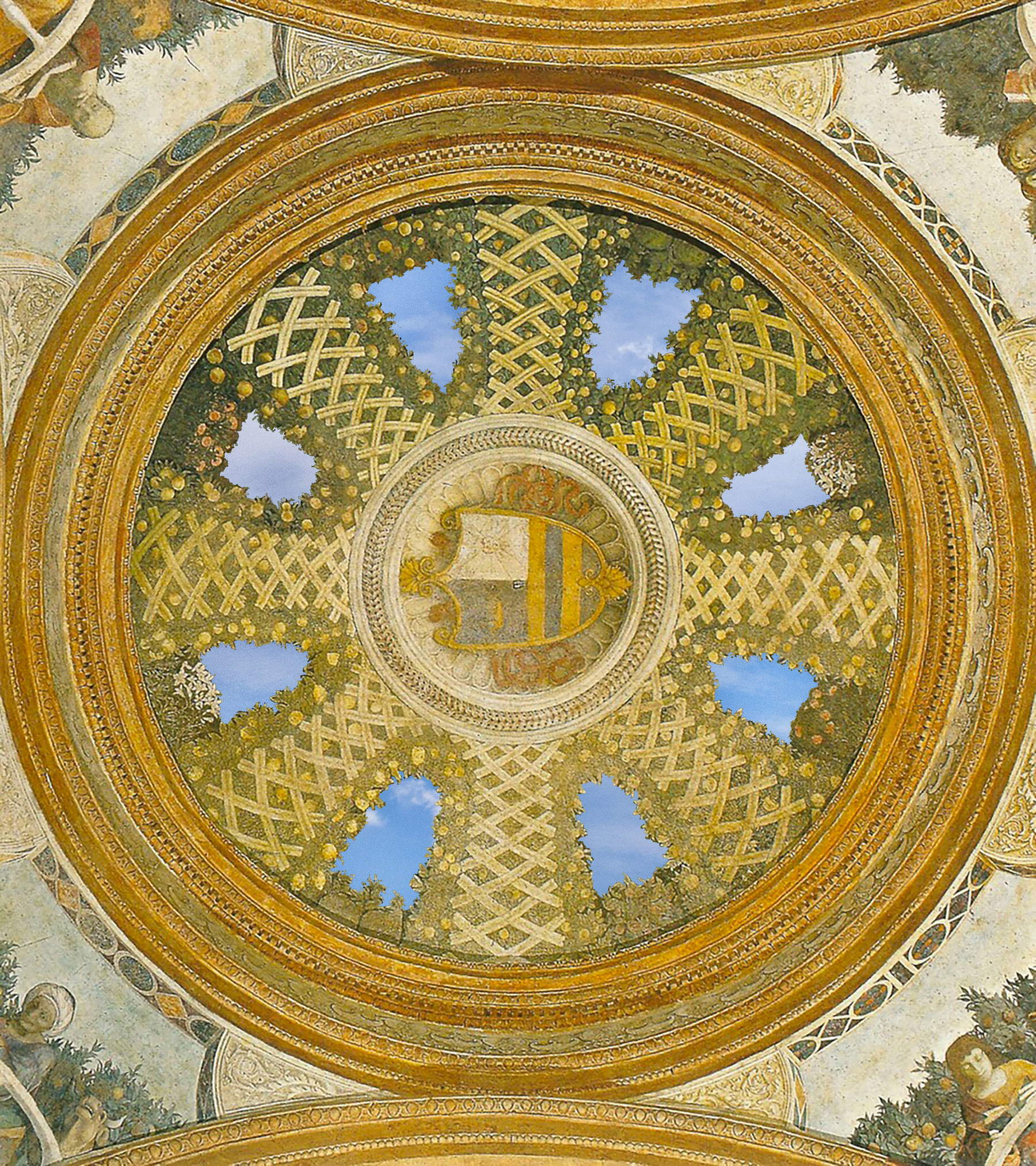
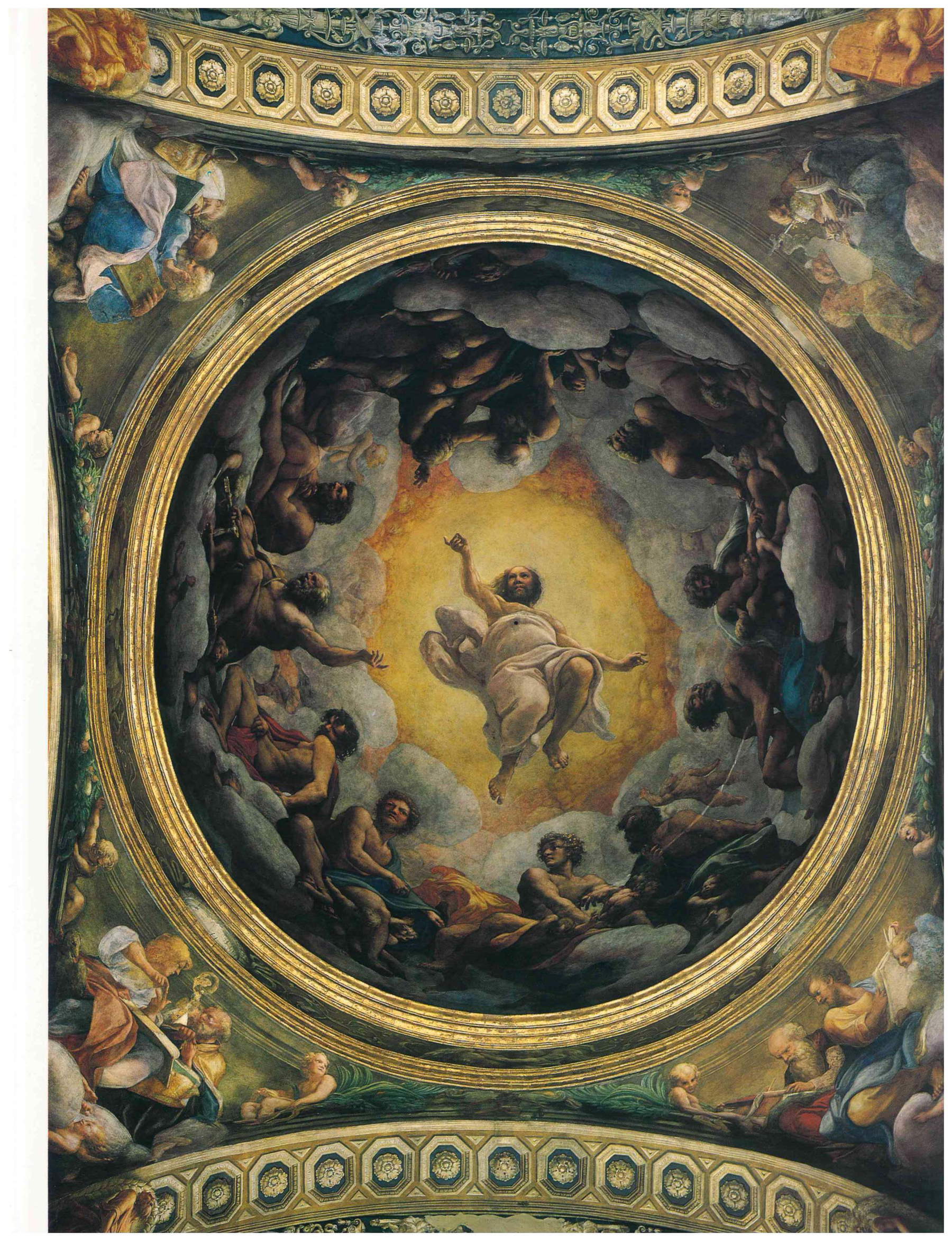
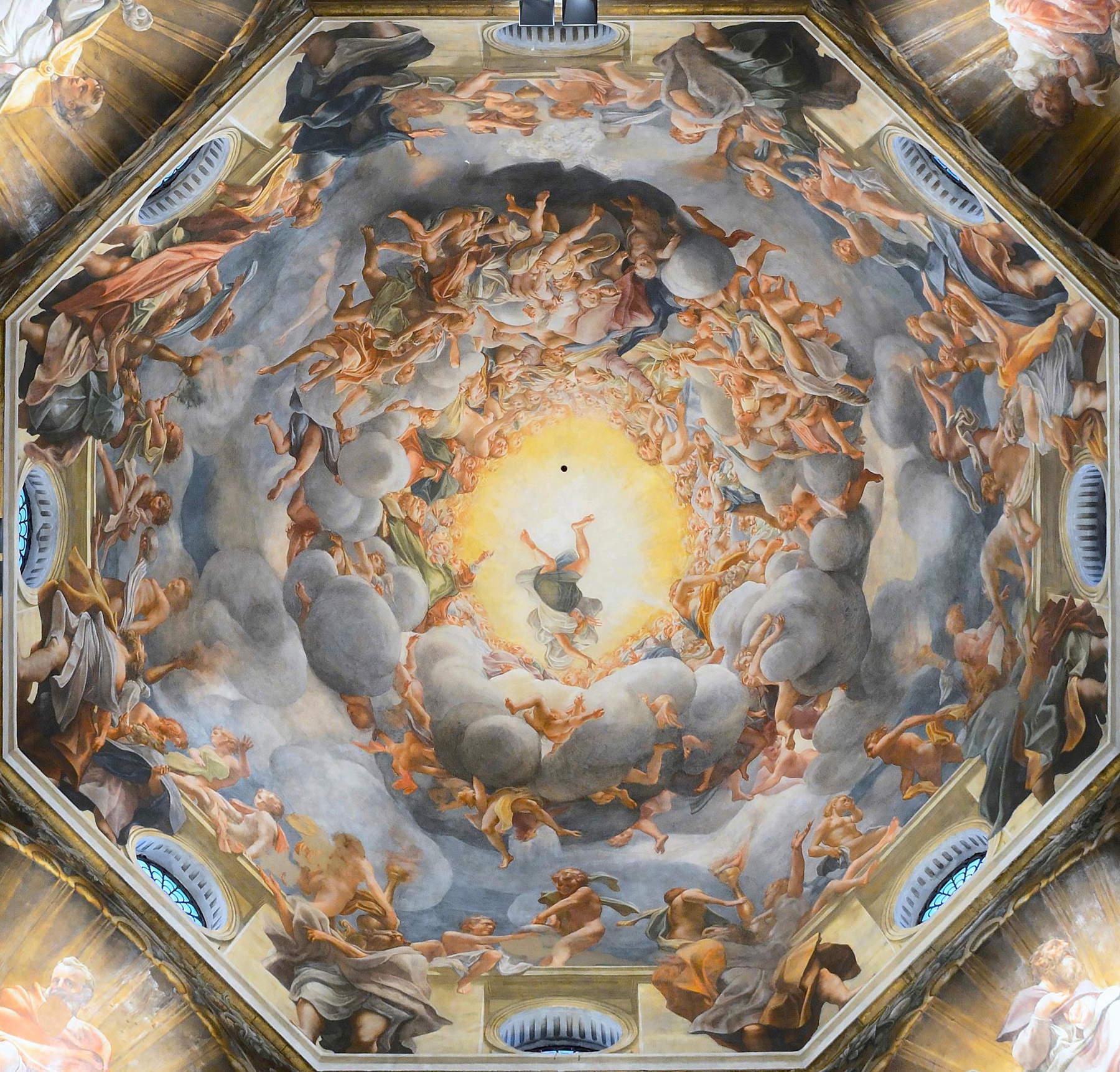
Here, by way of a simple example, we present two images relating to the two most famous frescoed domes of the entire Renaissance. They are two incomparable “hapax” works whose interpretation is possible only through immersive visits and equally numerous and highly detailed specific studies. On the occasion of the Dresden exhibition, a sort of reconstruction of Correggio’s frescoes for the spandrels and dome of Parma Cathedral has been announced
I am grateful to Prof. Andreas Plackinger for his artistic correspondence and his kind words; above all, for bringing us this exhibition, which truly reveals Correggio’s great spirit. I also extend my heartfelt thanks to Dr. Paulin Schwarze.
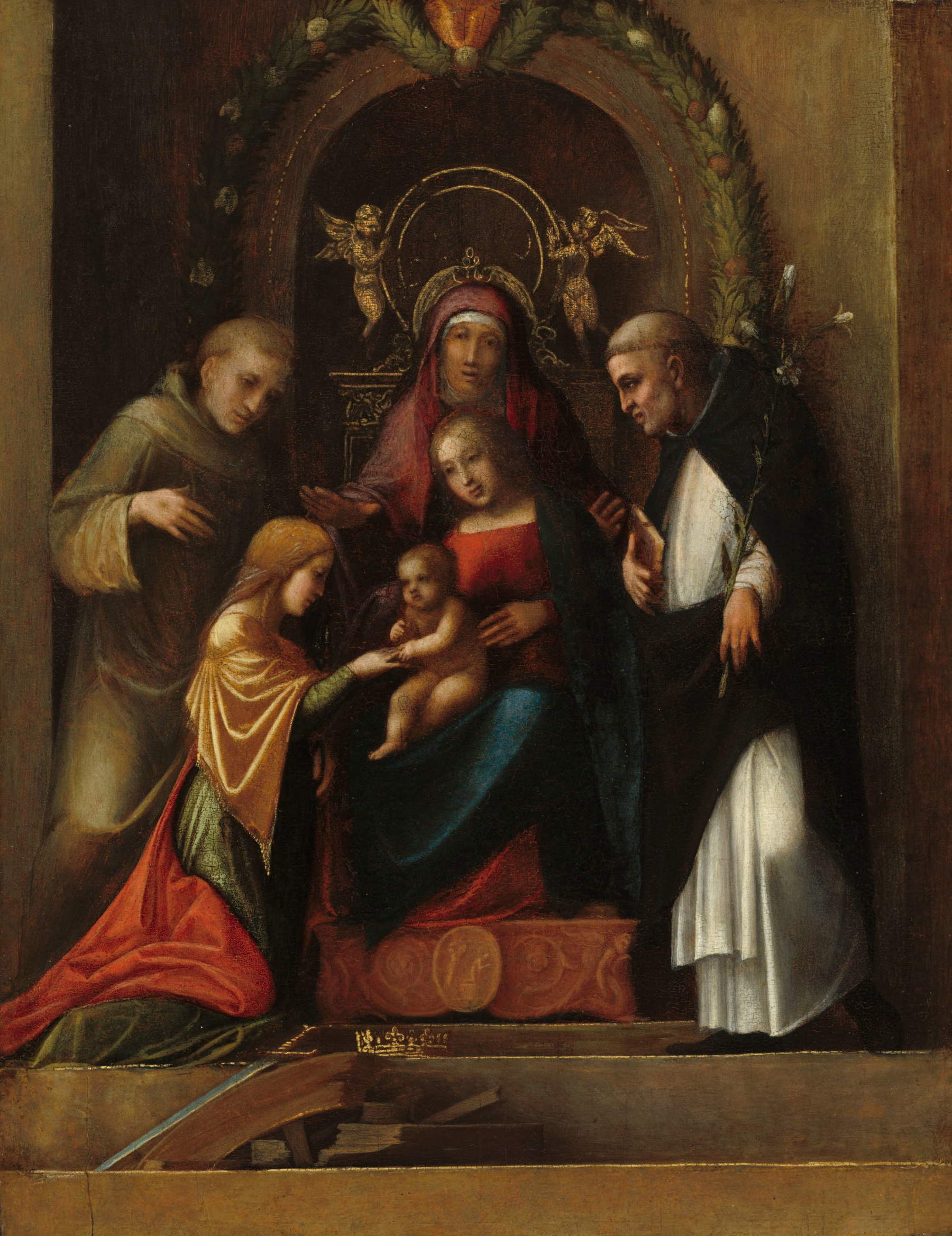
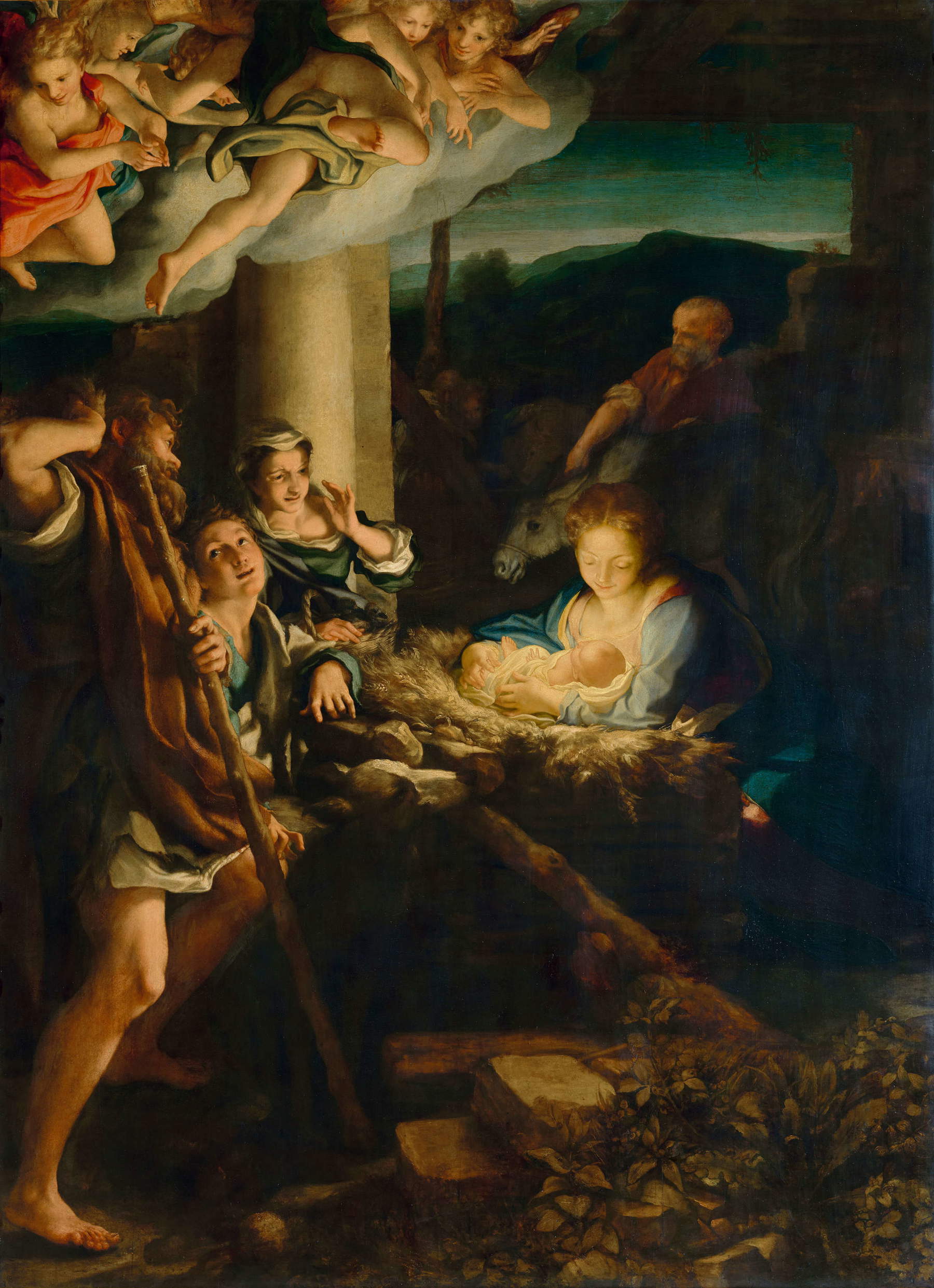
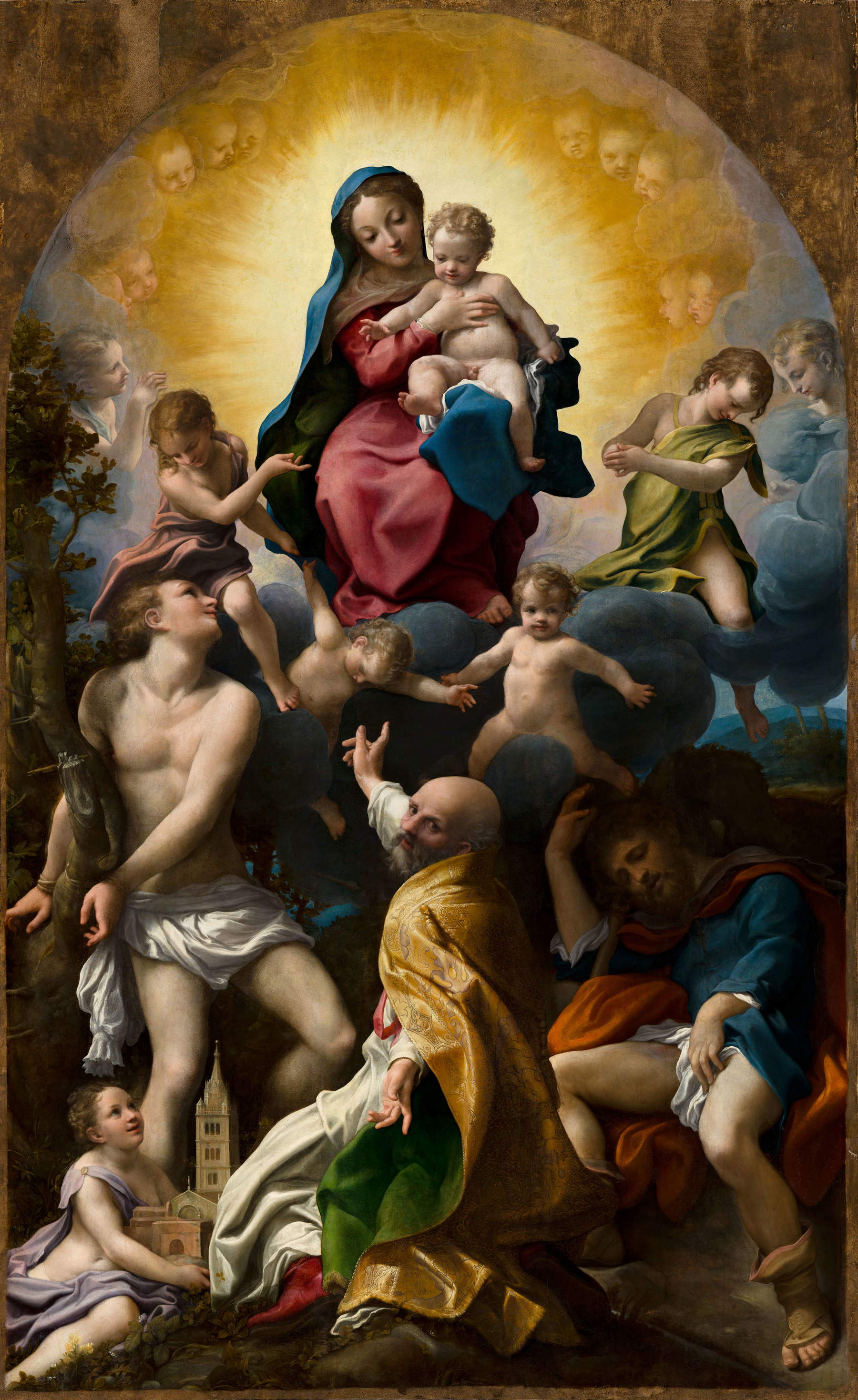
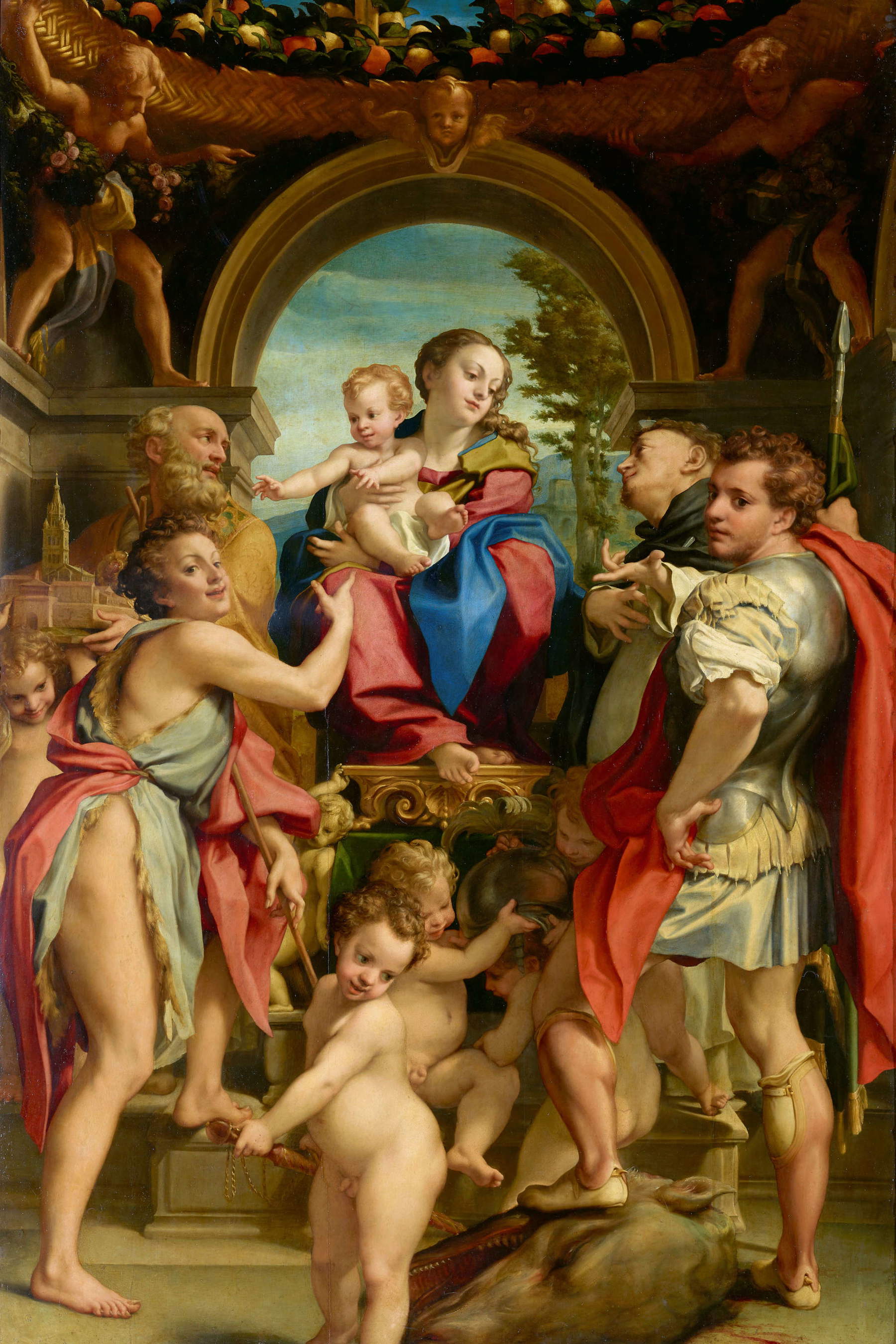
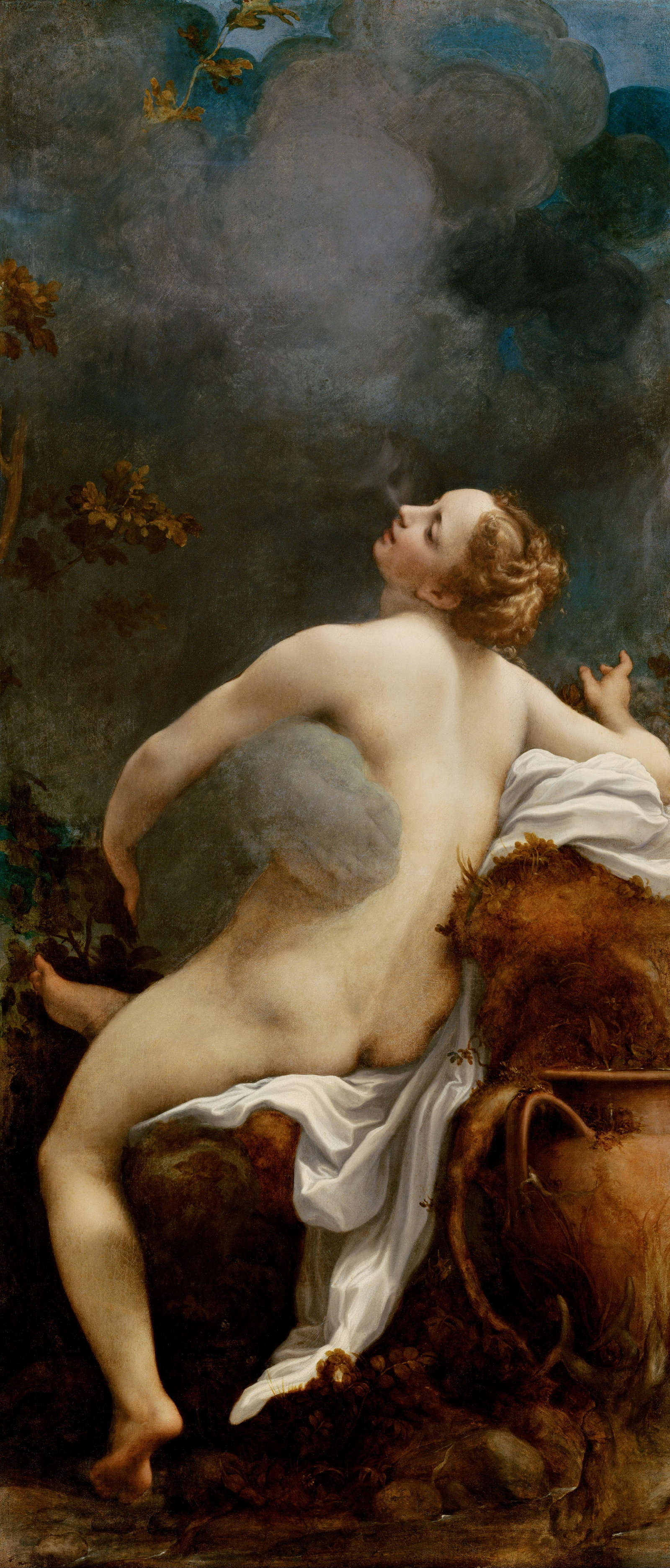
Basilica of St. John the Evangelist in Parma. Fresco inside the dome, 1520. Here one can admire Jesus himself descending from the “heaven of heavens” among the Apostles to call the dying St. John to himself. In this sacred and intoxicating creation, we sense the truly paradisiacal tenderness of God, wonderfully rendered in full visible truth by Correggio’s deeply human and moving spirit.Cathedral Church, or the Duomo of Parma. A vast fresco extending from the spandrels to the drum and across the entire magnificent interior of the dome. 1530–1533. Here we offer only a general overview of the work that marks the artistic pinnacle and reflects every thought—both human and transcendent—of Correggio. “The most beautiful dome that has ever been and will ever be painted” (Anton Raphael Mengs).The Adoration of the Shepherds, known as “The Night,” oil on panel (1522–1530). Dresden, Gemäldegalerie. A painting deeply cherished by Correggio and executed with all his heart. Here, human depth is embodied in a full embrace. Jesus is born of a virgin and radiates that light which will forever be spiritual, yet which Antonio—a painter of immediate genius—makes shine authentically upon the bodies and faces of his humble first visitors, while celestial spirits hover in the sky. It is one of the most famous paintings in the world, and in this regard we can say that the artist is truly deeply—albeit mystically—human.The Madonna of Saint Sebastian, oil on arched panel (1524–1525). Dresden, Gemäldegalerie. Gathered between the meadow and the clouds, the three main saints stand below: Saint Sebastian and Saint Roch on either side affirm that a severe plague had struck Modena, while Bishop Saint Geminian, the city’s patron, bears witness to the grace received in the form of the end of that contagion. A tumultuous, highly dynamic composition, suspended between earth and heaven through the mediation of two little angels—who are truly chubby children—whom Correggio chooses to invite the viewer into the marvelous, radiant vision of the Madonna descending to look down while carrying the Infant Jesus, the true bestower of grace. The heavenly arch is teeming with little angelic heads, as in the recent dome of San Giovanni, but the invitations to a connection between earth and heaven come from the marvelous angels flanking Mary. And down below, an innocent human figure gives thanks by offering the symbol of the city: it is Correggio’s famous “Modanina,” which the painter created as a sign of his own heart and that of an entire people.The Madonna of San Giorgio, oil on panel (1528–1532). Madonna and Child with Saints John the Baptist, Geminiano, George, and Dominic. Dresden, Gemäldegalerie. It is a massive altarpiece, conceived for the joyful prayer of the entire city of Modena. Here, Correggio—who had already soared through the sublime and ineffable spaces beneath the dome of Parma Cathedral—truly sought to leave behind a hymn of pure joy. The setting is that of an oratory opening onto the hills; the composition is symmetrical and tiered, and here too the space traversed by the saints and cherubs extends ideally toward us, just as the gaze of Saint John and Saint George reaches us. The festive atmosphere is conveyed by the flowers and the supporting angels, but even more so by the complete serenity of the sacred conversation taking place, and by the incredible antics of the cherubs playing with weapons and darting in and out among the legs of the major saints. Here lies the very soul of Correggio.Jupiter and the Nymph Io, oil on canvas (1530–1532). Vienna, Kunsthistorisches Museum. This total love—longed for, desired, and now finally possessed by the river nymph—is rendered by Correggio as a pictorially marvelous vision that is far more intimate than tangible. It is a love that culminates in the fullness of the body’s and soul’s rapture, in which the painter himself seems to participate with his own heart.
The author of this article: Giuseppe Adani
Membro dell’Accademia Clementina, monografista del Correggio.
Warning: the translation into English of the original Italian article was created using automatic tools.
We undertake to review all articles, but we do not guarantee the total absence of inaccuracies in the translation due to the program. You can
find the original by clicking on the ITA button. If you find any mistake,please contact us.




































 IT
IT FR
FR DE
DE ES
ES CN
CN


