




by Anna de Fazio Siciliano 16/10/2026



Categories: Works and artists / Disclaimer
The roundup of October 16, 1943, and the looting of the Jewish Community Library left their mark on Rome during the Nazi occupation. And it was precisely at that moment that Palma Bucarelli braved the dangers of war to save these masterpieces from destruction. Anna De Fazio Siciliano recounts this story.


“When the last shipment from the Marche region arrived in Rome, some of the most notable works were unpacked from their crates in a hall at Palazzo Venezia so that their condition could be assessed before they were transported to the Vatican. I’m not one for rhetoric, but I must say we were moved. We looked at the works—finally safe after so much anxiety—as if they were even more our own, the very essence of who we are […]. At that moment, a telegram arrived from the Ministry in Padua, the sender extremely irritated: it deplored the fact that officials ‘not on duty’ had ‘arbitrarily’ transported works of art to Rome and reminded them of the grave responsibility they had assumed. We looked at each other and smiled: it was the finest medal that could be pinned to the chests of the rescuers. The works were there; the rest didn’t matter. We continued making the transports as long as we could, until the liberation of Rome.” This fragment of anxious words, extrapolated from hundreds of passionate notes, was written by a woman.


The year was 1944. The declaration of Rome as an “Open City” had proven to be a lie in practice. Rome, the beating heart of our cultural heritage, should have been defended and preserved. Instead, it was violated, bombed, and plundered.


How much courage, then, did it take to defy that fate? How much determination did Palma Bucarelli need to navigate those ruins while braving the bombs? What stirred the soul of the director of Rome’s National Gallery of Modern Art as she recorded the chronicle of her work in her notebooks? A profession and a role often considered sheltered within the walls of a museum had suddenly turned into a battlefield.


Let’s rewind. A year earlier, in Rome, all hell had already broken loose. It wasn’t just the disastrous bombing of the historic San Lorenzo neighborhood. It was October 16 of that same year: terror laid siege to the Jewish Ghetto. Between the Portico di Ottavia and the Fountain of the Turtles, shortly before dawn, the SS rounded up Jewish families in their sleep. It was a ruthless operation: 1,259 people were arrested. Two days later, 1,022 Jews (including 200 children), crammed into freight cars at Tiburtina Station, departed for Auschwitz-Birkenau. Only 16 would return from there: fifteen men and a single woman, Settimia Spizzichino.
At the same time, a special Nazi unit ransacked the Library of the Jewish Community, stealing over 10,000 rare volumes, incunabula, and illuminated manuscripts. A precious heritage shipped to Germany and never returned. Rome, thus, was violated twice: first through the massacre of human lives, then through the theft of its memory.
While families were being rounded up, the Nazis sought out the library’s books not out of mere greed, but with the systematic intent of erasing its history. In the atmosphere of siege that enveloped the capital—amid roundups, searches, and bombings—the museums became veritable trenches. The “Rome, Open City” immortalized by Roberto Rossellini (in that masterpiece filmed not at Cinecittà—which had been transformed into a refugee camp at the time—but at the old Capitani Theater behind Via del Tritone) was the portrait of a wounded and suffering body.
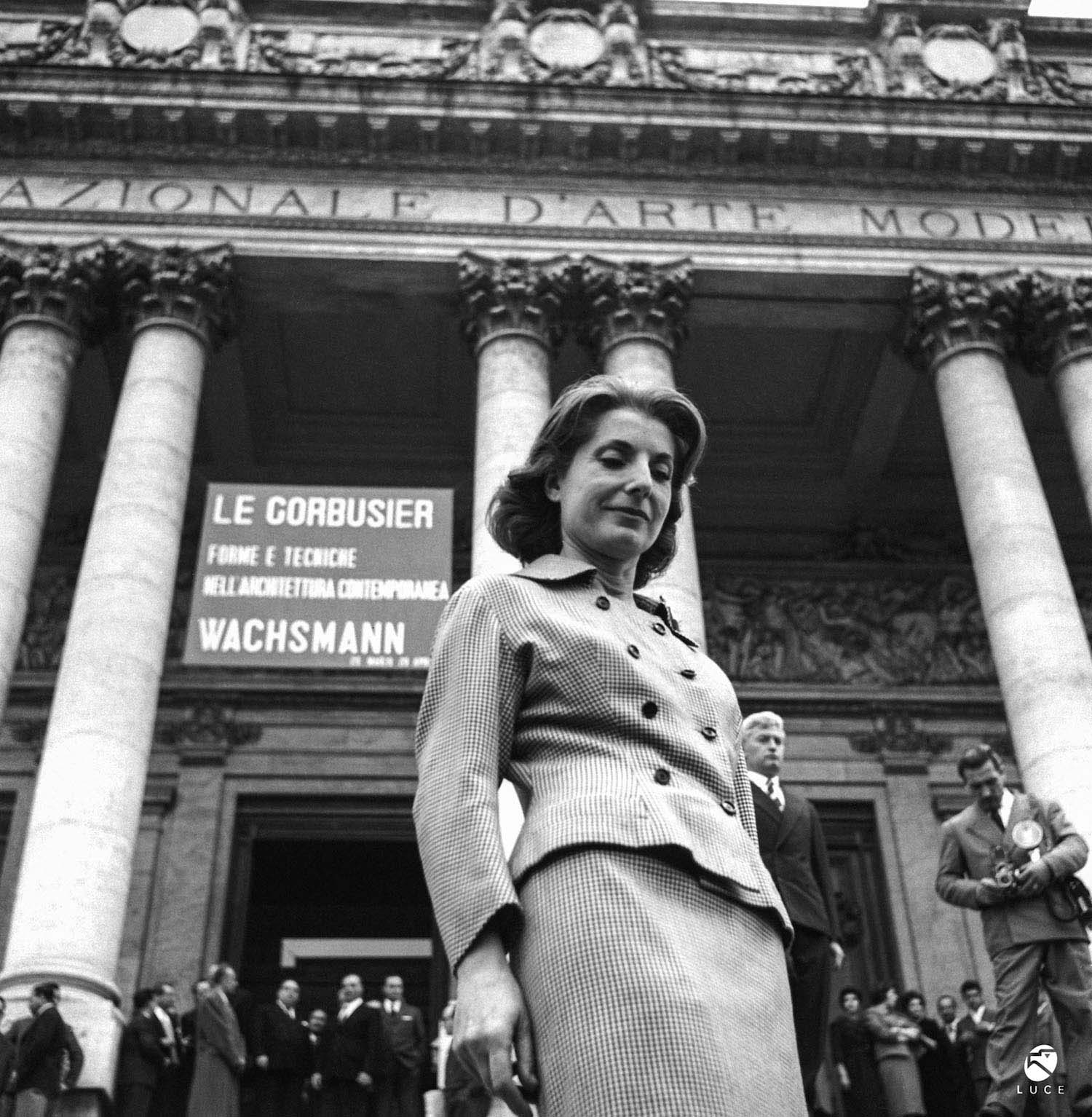
It is against this dramatic backdrop that the figure of Palma Bucarelli emerges. A native of Rome and director of the GNAM since 1939, she did not hesitate to risk her own life by organizing the clandestine transfer of 672 paintings and 63 sculptures to Palazzo Farnese in Caprarola, personally escorting the convoys. But her fearless love for art did not stop there: in April 1941, defying Minister Bottai, she decided to reopen the Gallery to the public. In a country exhausted by war, offering a semblance of normalcy meant much more than simply displaying paintings: it was a political gesture, a way to preserve a glimmer of hope for humanity. Between September 1941 and February 1942, on twenty-two trips aboard makeshift trucks or her little Topolino, she transported hundreds of works. At times, she stayed overnight inside the museum to watch over the works that remained in the city.
After September 8, 1943, when even the refuge in Caprarola became unsafe, Bucarelli changed her strategy. The government’s order was to transfer the works to the North. She disobeyed. Having secured the protection of Pope Pius XII, she brought the paintings back to Rome, hiding them in Castel Sant’Angelo.
Eugenio Pacelli supported that operation. The pontificate of Pius XII remains to this day at the center of heated historical debates: while, on the one hand, his diplomatic prudence prevented him from openly condemning the Holocaust (a caution motivated by the fear of triggering even more brutal reprisals in the occupied territories), on the other hand, recent studies have brought to light a complex underground network of refuge that he coordinated. According to these documents, the pope opened the doors of convents, parishes, and Vatican palaces not only to masterpieces of art but also to persecuted people on the run.
Palma Bucarelli was not alone in this battle. Heroic figures emerged throughout Italy: from Pasquale Rotondi, who brought the treasures of Veneto and the Marche to safety in the fortresses of Montefeltro, to Fernanda Wittgens in Milan, and on to Rodolfo Siviero and Augusto Campana. In her notebooks, Bucarelli lucidly recorded the drama of those hours: “Every day could be the decisive one. There was no time to wait for orders that would never have come anyway; we had to act, taking on the personal risk of every single move, because those paintings were our history and could not be left at the mercy of barbarism. We navigated countless obstacles, using whatever makeshift means we could procure, defying checkpoints and the fear of bombings. But we knew that every canvas we saved was a fragment of the future we were snatching from destruction.”
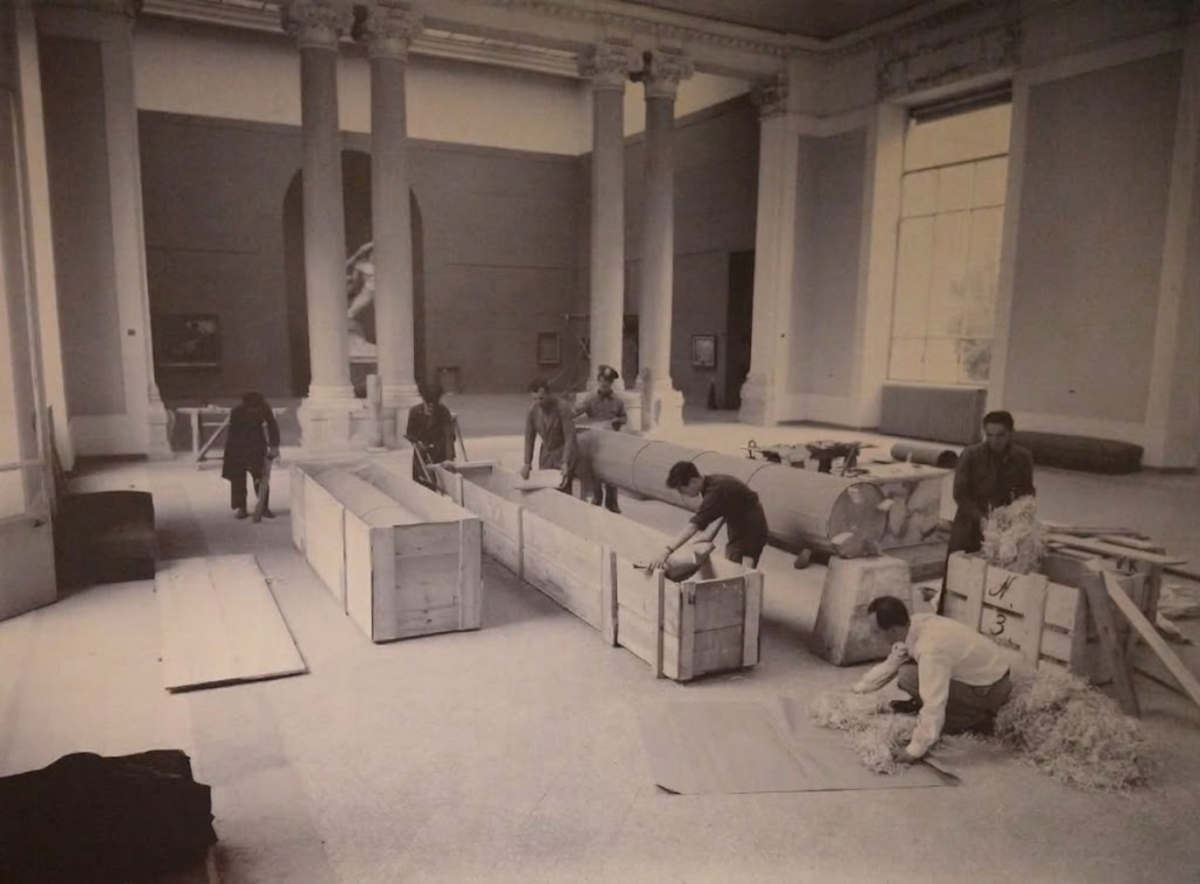
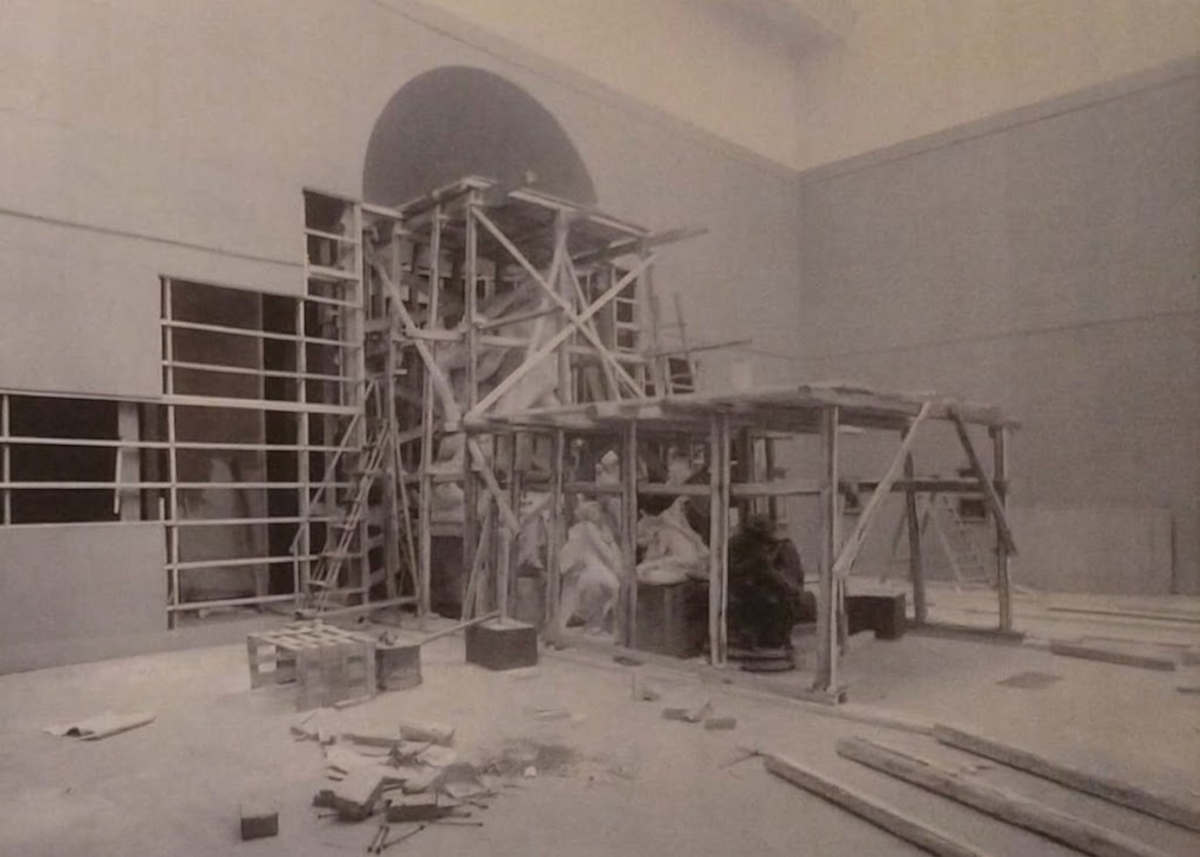
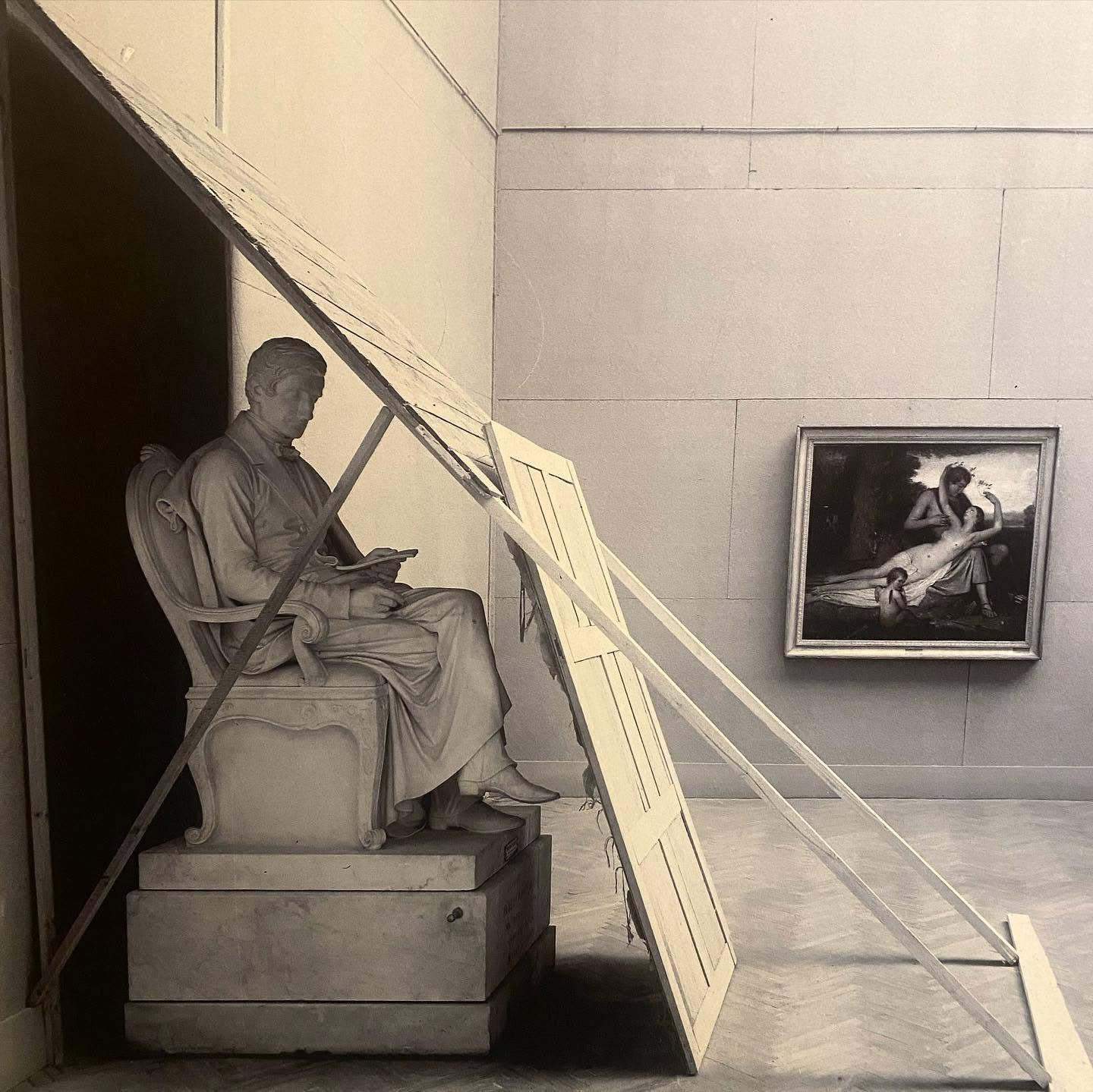
Today, just as then, history repeats itself. War correspondents continue to risk their lives in the field to document the tragedy of our present. And just as Bucarelli entrusted her thoughts to her notebooks, today there are those who photograph, film, and collect testimonies. Because war does not merely slaughter people: it strikes straight at the heart of nations. How, then, can we preserve the memory of October 16, 1943, in the face of the rubble of the present, without slipping into exploitative polemics and while upholding the rigor and “truth” of history? Recalling the roundup and looting of the Rome Ghetto does not necessarily mean drawing a parallel with current events. Confusing the horror of the extermination of the Jews with the contemporary scene risks reducing memory to a mere slogan. What, then, do Palma Bucarelli’s diaries and her unwavering determination still convey to us today? For the first woman appointed to direct a major state museum, protecting that heritage was not merely an official duty, but an act of love and resistance. It meant opposing the very same destructive logic that, today as then, unleashes wars, generates violence, and annihilates peoples by stealing not only their territories but also their memory.
This is also how one attempts to erase a community: by depriving it of the right to exist. A harm that is certainly not comparable to the loss of human lives, but which remains a vicious attempt to erase visual heritage—a people’s gaze upon its own past and future. Preserving and saving a trace—whether it be a painting, a sculpture, a book, or a stumbling stone (as Palma Bucarelli did)—is always a revolutionary act. And it reminds us that cultural heritage does not belong to a political party or a territory: it belongs to all of humanity.
The UNESCO Charter is founded on this principle; since 1980, it has protected Rome’s historic center, its monuments, and its neighborhoods, including the Jewish Ghetto with the Portico of Octavia. Born from the rubble of World War II, between 1945 and 1946, UNESCO established the idea that protecting beauty is a duty toward future generations. How, then, can we fail to acknowledge that the endeavor undertaken with unwavering courage by Palma Bucarelli—during the darkest years of the 20th century—anticipated a principle that would only take institutional form after her time?
Warning: the translation into English of the original Italian article was created using automatic tools. We undertake to review all articles, but we do not guarantee the total absence of inaccuracies in the translation due to the program. You can find the original by clicking on the ITA button. If you find any mistake,please contact us.