





From July 20 to 24, 2026, the Galleria Nazionale delle Marche in Urbino hosted a major campaign of non-invasive diagnostic tests focused on two of Piero della Francesca’s most famous masterpieces: *The Flagellation of Christ* and *The Madonna of Senigallia*. This initiative represents a crucial step in the research process leading up to the exhibition dedicated to the artist, scheduled to take place at the National Gallery in London from October 2, 2027, to January 30, 2028.
The goal of the research is to deepen our understanding of Piero della Francesca’s painting technique by analyzing materials, pigments, execution methods, and possible preparatory drawings. The findings will contribute both to the creation of the exhibition’s scholarly catalog and to the future conservation of the two works.
The diagnostic campaign was coordinated by David Buti of the CNR – Institute of Cultural Heritage Sciences (ISPC) and is the result of a collaboration between the National Gallery of the Marche, the CNR ISPC, the CNR – “Giulio Natta” Institute of Chemical Sciences and Technologies (SCITEC), and the SMAArt Center of Excellence at the University of Perugia, with support from the National Gallery in London and E-RIHS.it, the Italian node of the European research infrastructure E-RIHS (European Research Infrastructure for Heritage Science).
The initiative involved researchers specializing in the diagnostics of cultural heritage, bringing together expertise from various Italian laboratories that are permanent members of E-RIHS. Representing CNR ISPC were David Buti, Emanuela Grifoni, and Cristiano Riminesi from the Heritage Material Science Lab at the Florence campus, and Claudia Caliri and Michela Botticelli from the XRAYlab at the Catania campus. Also participating in the activities were Letizia Monico from CNR SCITEC in Perugia and Catia Clementi from the SMAArt Center of Excellence at the University of Perugia. The campaign was carried out in close collaboration with the National Gallery of the Marche, directed by Luigi Gallo. Curator Marta Manfredi played a central role in organizing the activities, coordinating all phases of the campaign and facilitating interaction between the scientific team and the museum. Scientific and curatorial coordination was handled by Giovanni Russo, an art historian at the Gallery and one of the curators of the exhibition catalog for the National Gallery in London. Also contributing to the activities were Giulia Papini, whose input was essential for planning the activities, ensuring the safe handling of the works, and integrating the investigations with the study and promotion of the two paintings, and intern Rebecca Righi from the Santa Paola Institutes in Mantua.
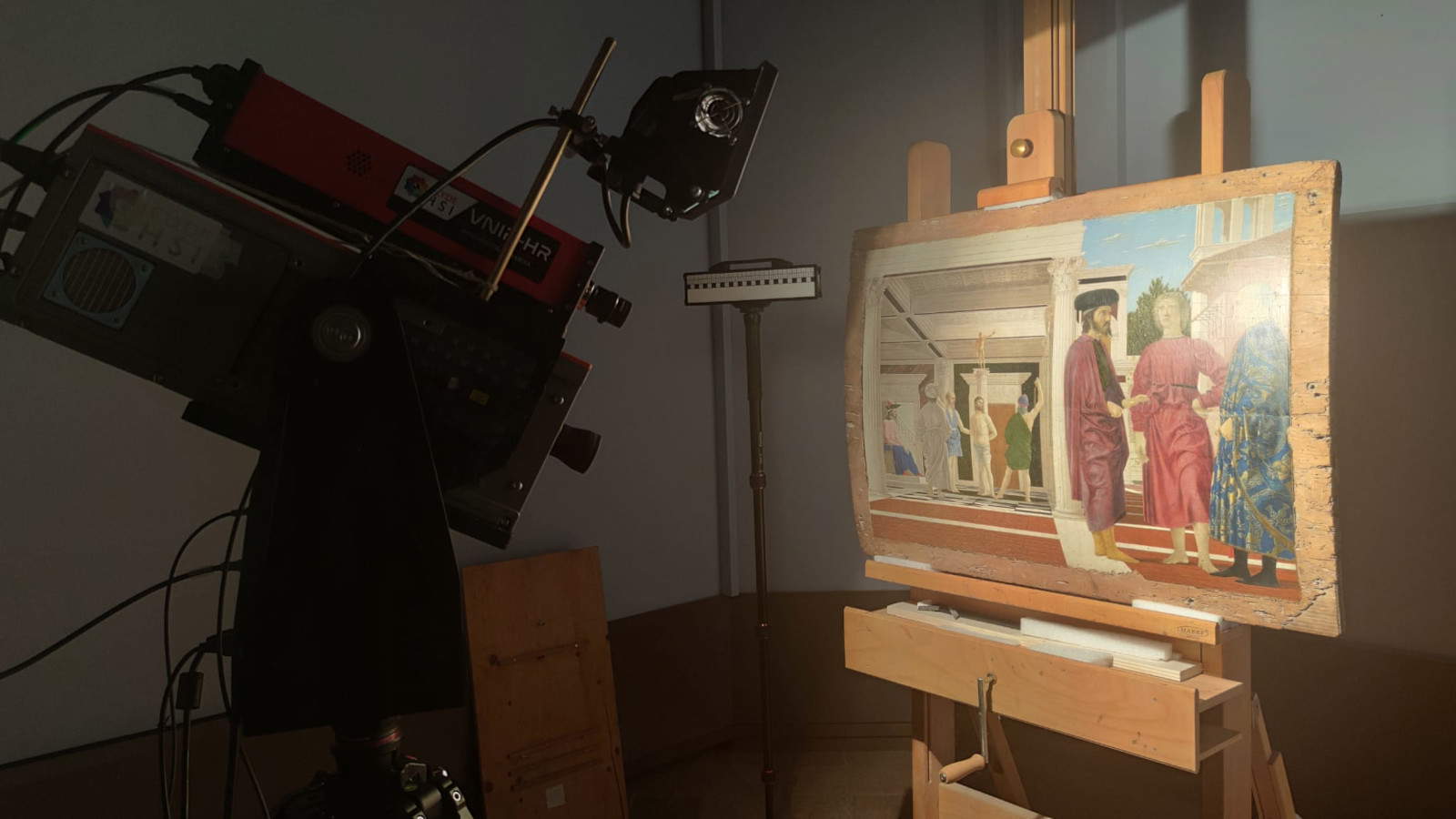
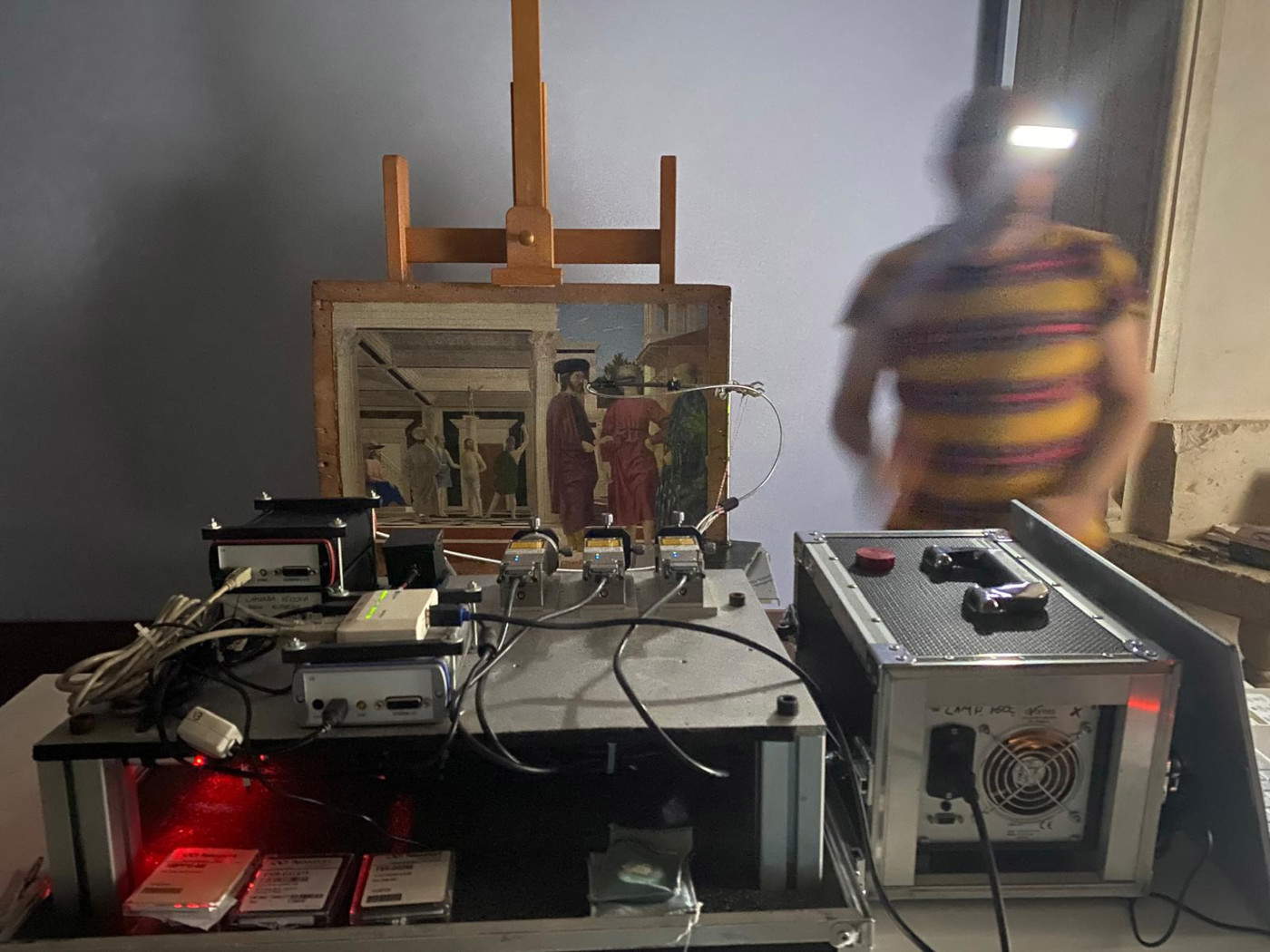
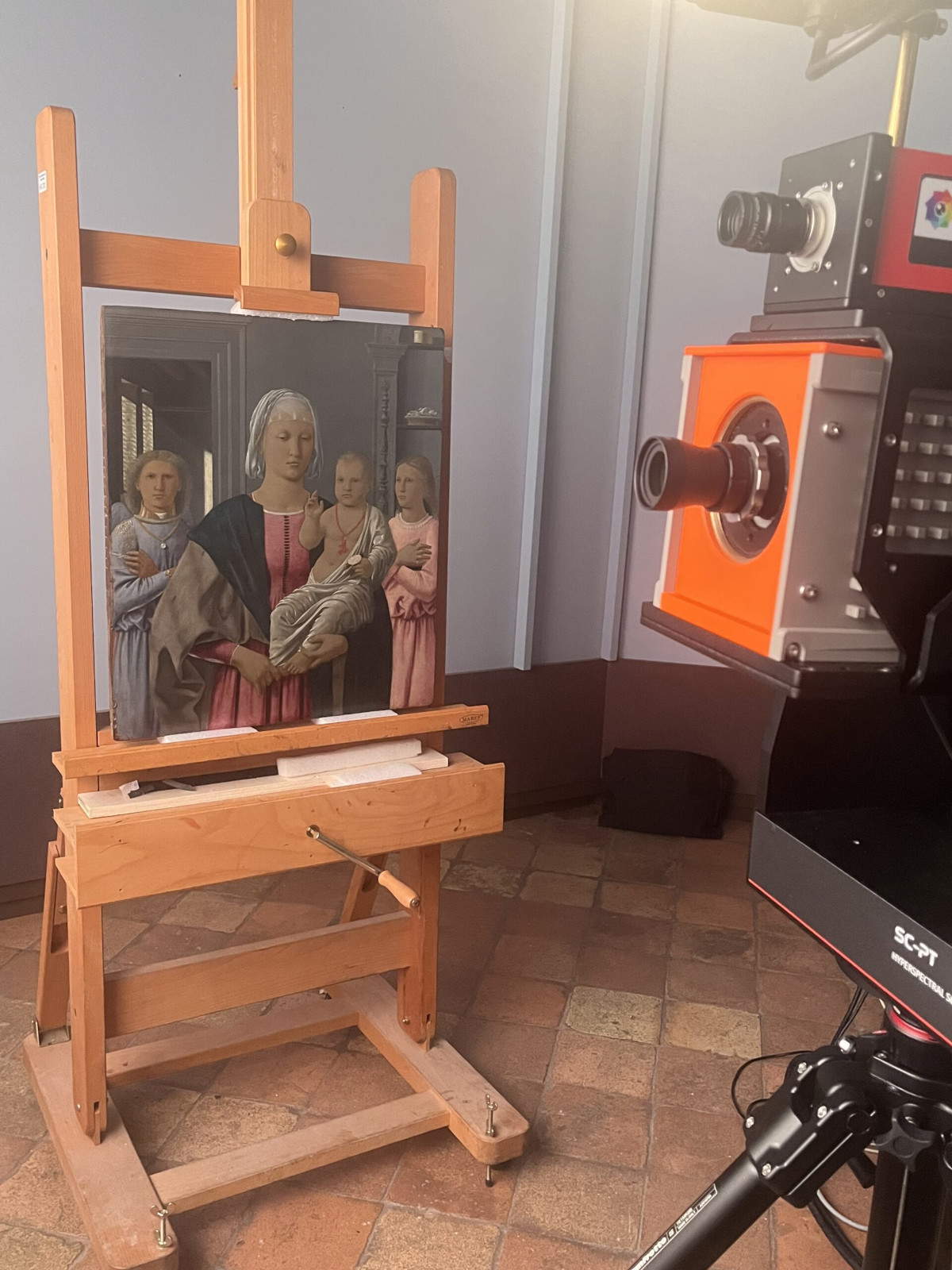
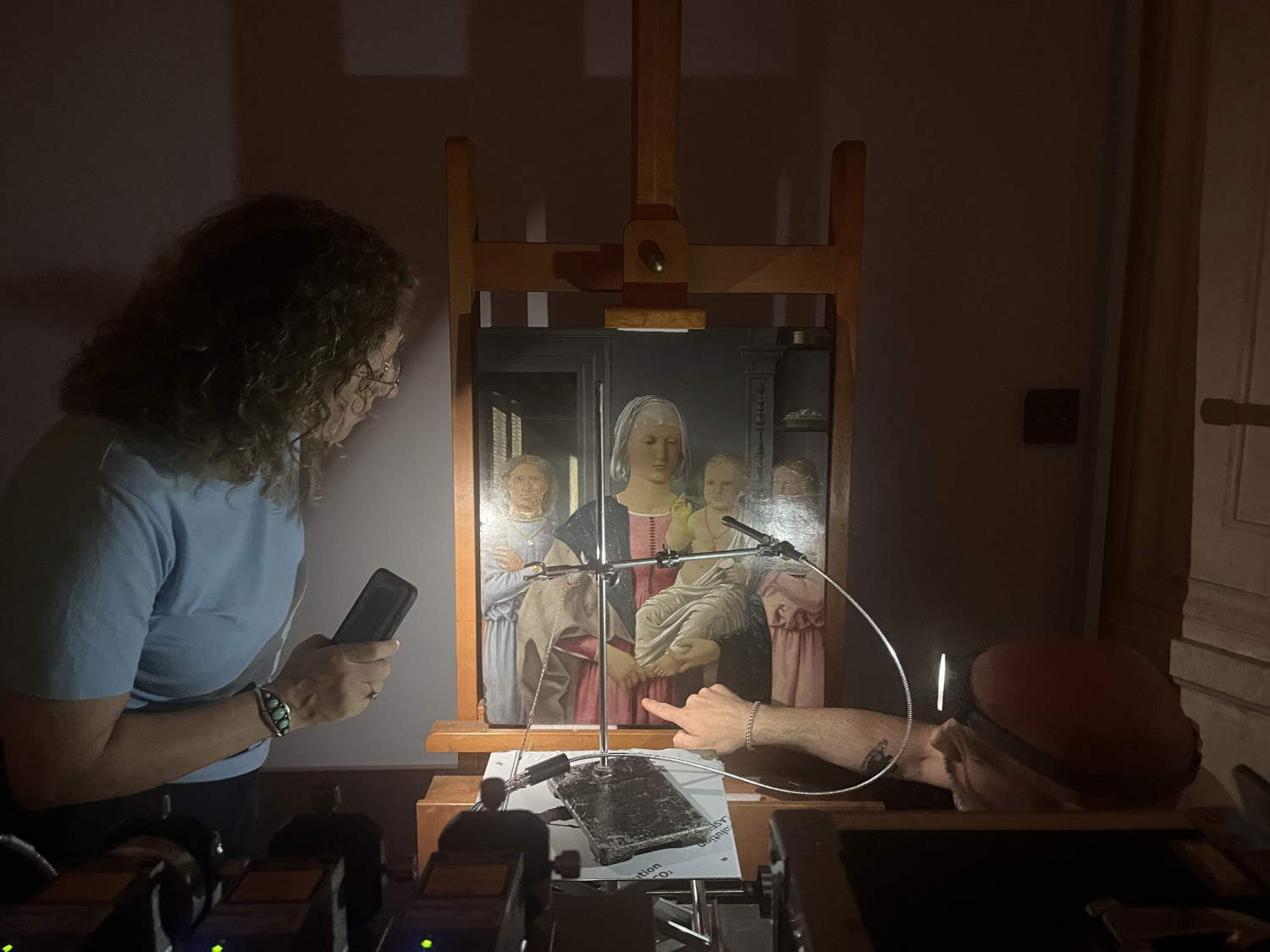
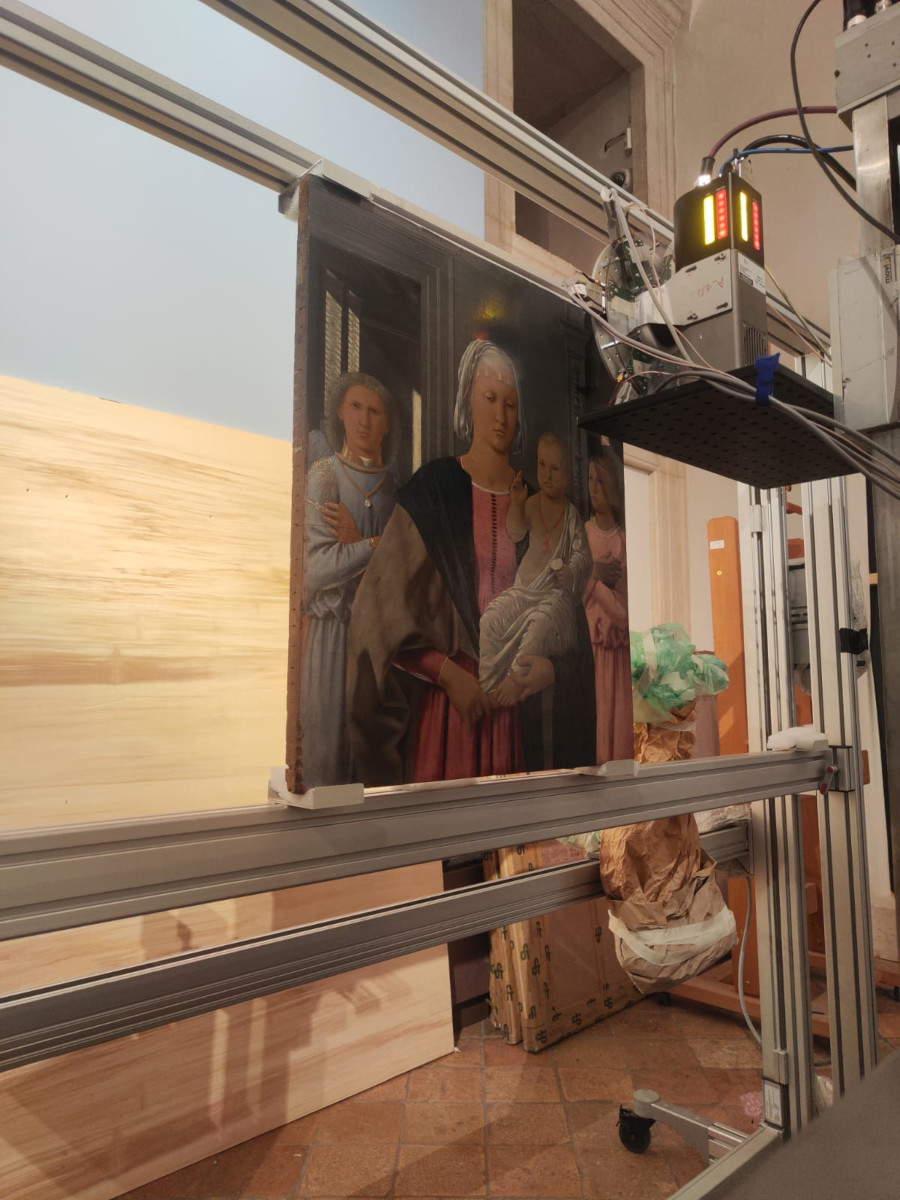
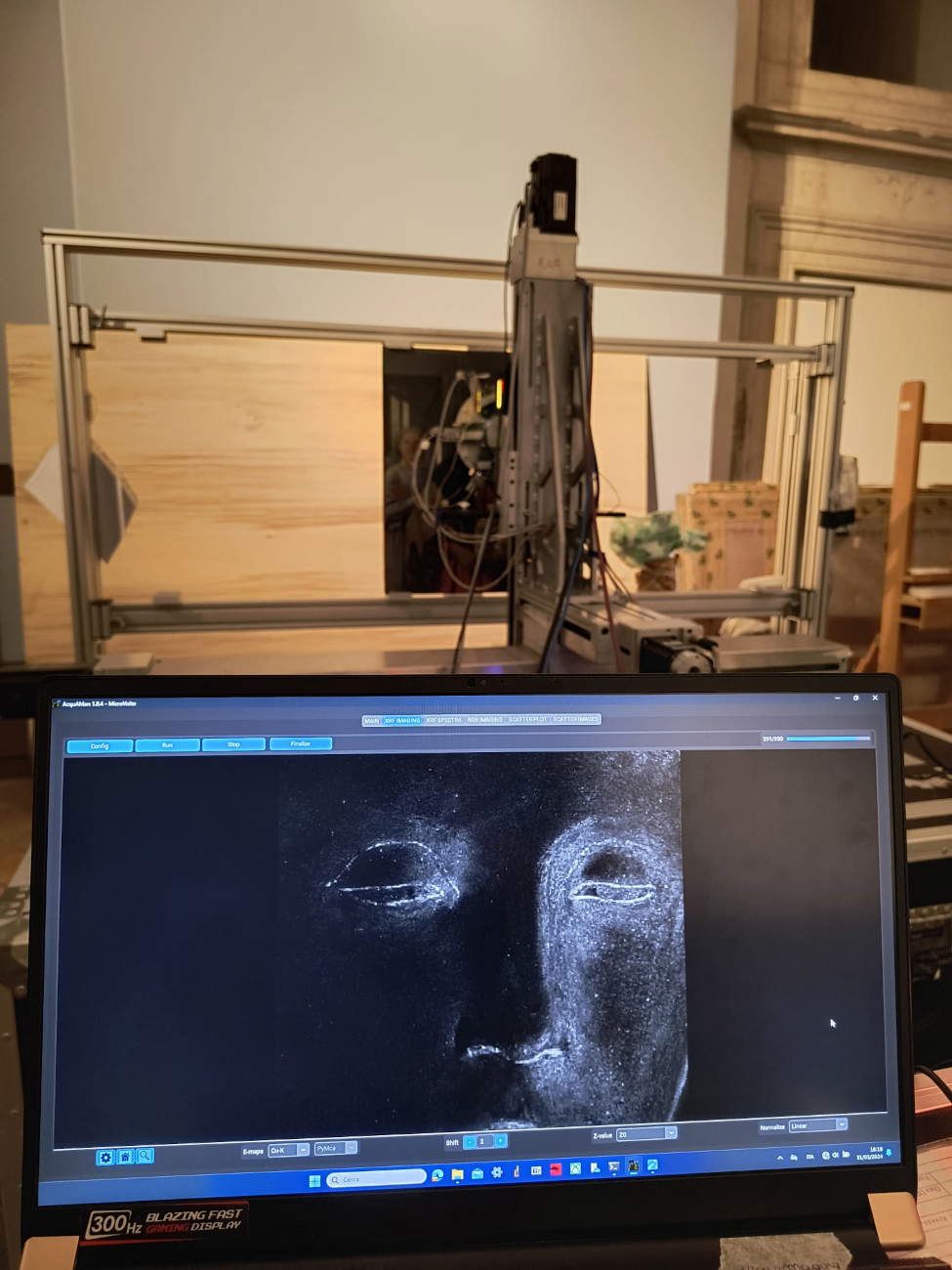
The investigations have brought together, in a single research campaign, some of the most advanced technologies currently available in the field of art diagnostics. Thanks to the use of high-resolution multimodal imaging techniques, combined with sophisticated molecular and atomic spectroscopic analyses, it will be possible to obtain unprecedented scientific documentation of the two works.
The examinations will make it possible to reconstruct the distribution of chemical elements present in the paintings, identify pigments and organic materials, detect any preparatory drawings, the artist’s pentimenti, and both historical and modern restorations, as well as reconstruct with greater precision the techniques employed by Piero della Francesca.
This campaign represents a significant example of collaboration between museums, research institutions, and European scientific infrastructures, demonstrating how the integration of multidisciplinary expertise can expand our understanding of works of art without resorting to invasive interventions. The information gathered during this campaign will help enrich the scientific documentation of *The Flagellation of Christ* and *The Madonna of Senigallia*, providing new tools for understanding Piero della Francesca’s creative process.
|
| Ahead of the Piero della Francesca exhibition in London, new scientific studies on the masterpieces from Urbino |

Warning: the translation into English of the original Italian article was created using automatic tools. We undertake to review all articles, but we do not guarantee the total absence of inaccuracies in the translation due to the program. You can find the original by clicking on the ITA button. If you find any mistake,please contact us.























 IT
IT FR
FR DE
DE ES
ES CN
CN


