



by Redazione 03/11/2026


Categories: Ancient art / Disclaimer
In Rome, just a stone's throw from Largo Argentina, beneath the Church of the Sacred Stigmata of St. Francis, a crypt features walls decorated with human bones arranged in geometric and floral patterns. Following a restoration funded by the PNRR, which cost 2.1 million euros, the crypt has reopened to visitors free of charge.

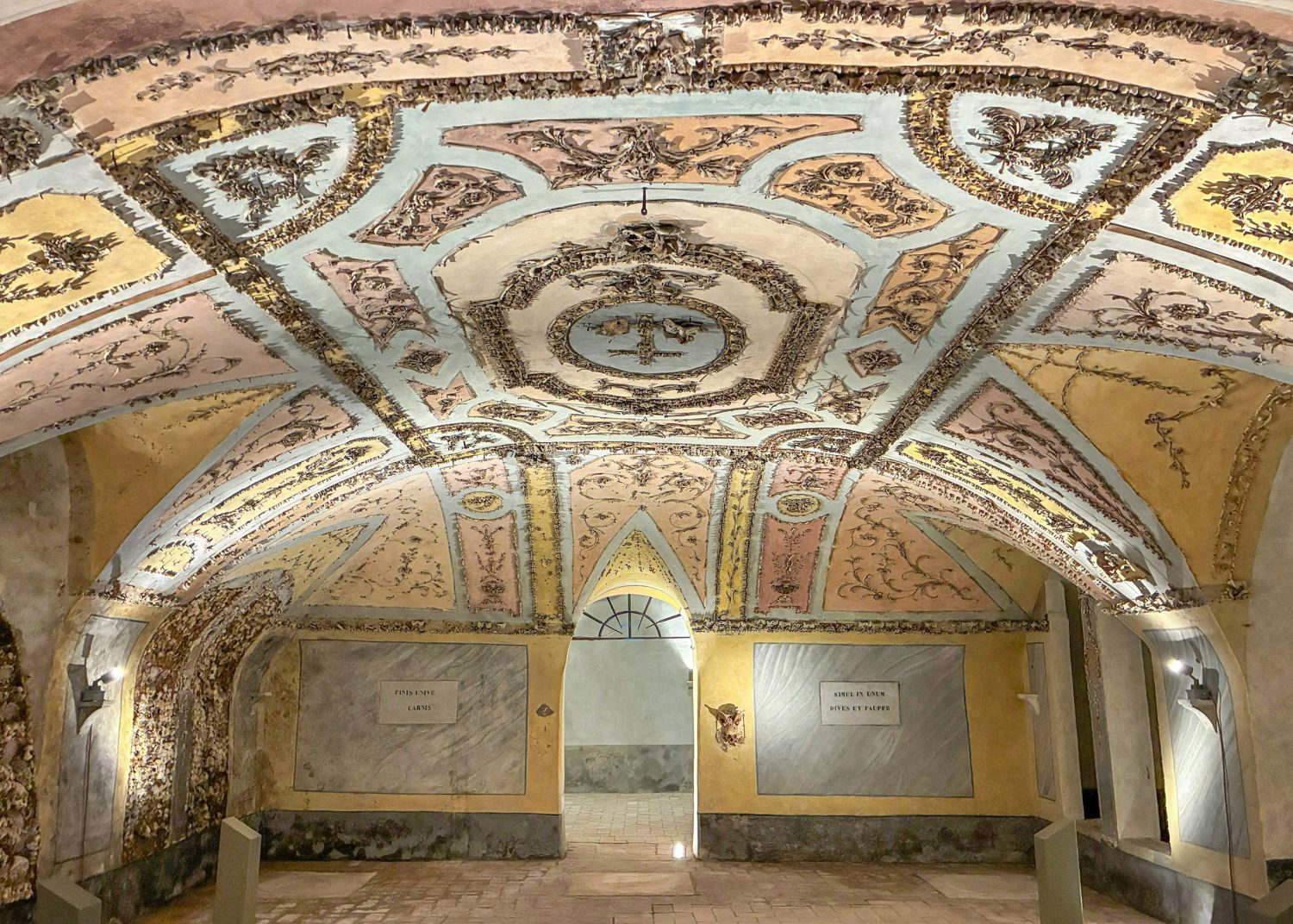
Human bones arranged in geometric and floral patterns line the walls of a small underground chapel in the center of Rome. And even deeper below, beneath the floor, lie the remains of Roman walls that may have belonged to the building where, in ancient Rome, votes were counted. All of this is located just a few steps from Largo Argentina, in the crypt of the Church of the Sacred Stigmata of St. Francis, a space that the Special Superintendency of Rome has just restored and which is now open to the public once again.


The church is located at Largo delle Stimmate 1, within the Pigna neighborhood, bounded by Corso Vittorio Emanuele II, Via del Gesù, Piazza and Via della Pigna, and Via dei Cestari. It is an area with a rich, layered history. In ancient times, it was part of the Campus Martius, an area originally covered in marshes near the Tiber that, following land reclamation efforts during the Augustan era, became dotted with important monuments. In the 13th century, when the neighborhood was already known as Pigna, a place of worship dedicated to the Forty Martyrs of Sebaste stood there; in the 16th century, it passed to the Archconfraternity of the Sacred Stigmata of St. Francis. In the early 18th century, at the behest of Pope Clement XI, the church was rebuilt by the architect Giovan Battista Contini and entrusted to the Confraternity; it was consecrated in 1719. Inside, among other works, are a wooden crucifix by Alessandro Algardi and a painting by Francesco Trevisani depicting Saint Francis receiving the stigmata. In addition to the church, the complex includes the oratory, the sacristy, and the cemetery.


A cemetery beneath the church
It is precisely the cemetery, located beneath the church floor, that holds the most surprising feature. The crypt has existed since at least 1710 and was originally intended as a burial site: according to the Superintendency, it likely dates back to the church’s earliest phase, and the Archconfraternity, once established, continued to use it for its members at least until the 17th century. The underground space, which the Superintendency dates to the 17th century, is organized into two rooms whose current layout dates from the 18th century.


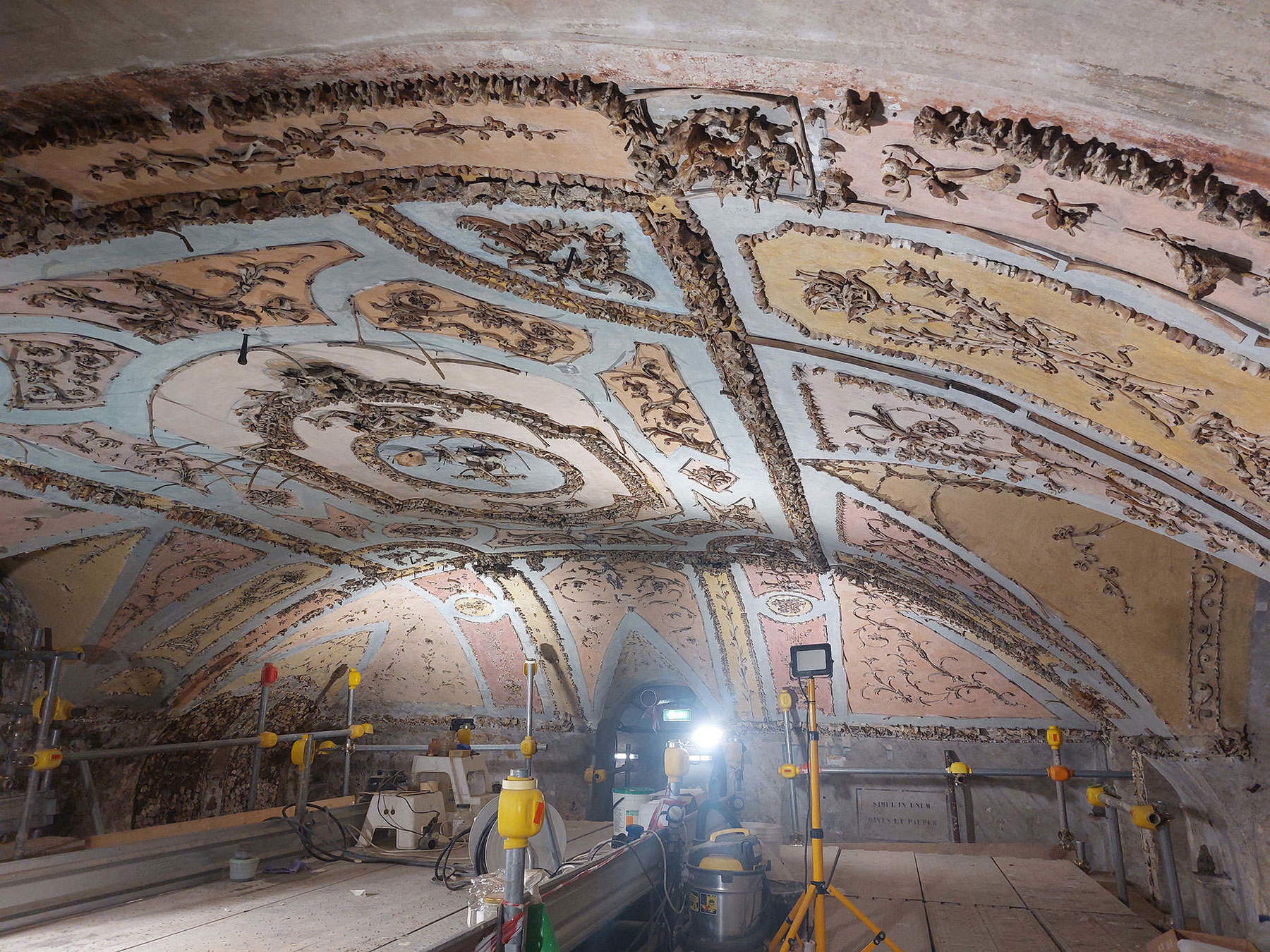
The main chamber is a chapel with an altar, partially lined with decorative bone elements taken from the ossuary and walls painted to resemble marble, which soften the composition of bones. The secondary room is the ossuary proper, with simpler decorations and a fresco depicting the Deposition, which had been severely damaged by moisture. According to the Superintendency, this is a rare example of a decorated ossuary, an ornamental complex with few parallels.
Beneath the floors, ancient Rome emerges: Roman-era walls likely dating back to the Diribitorium, the building where the counting of votes cast in the nearby Saepta Iulia—built by Julius Caesar—took place.
What the Restoration Involved
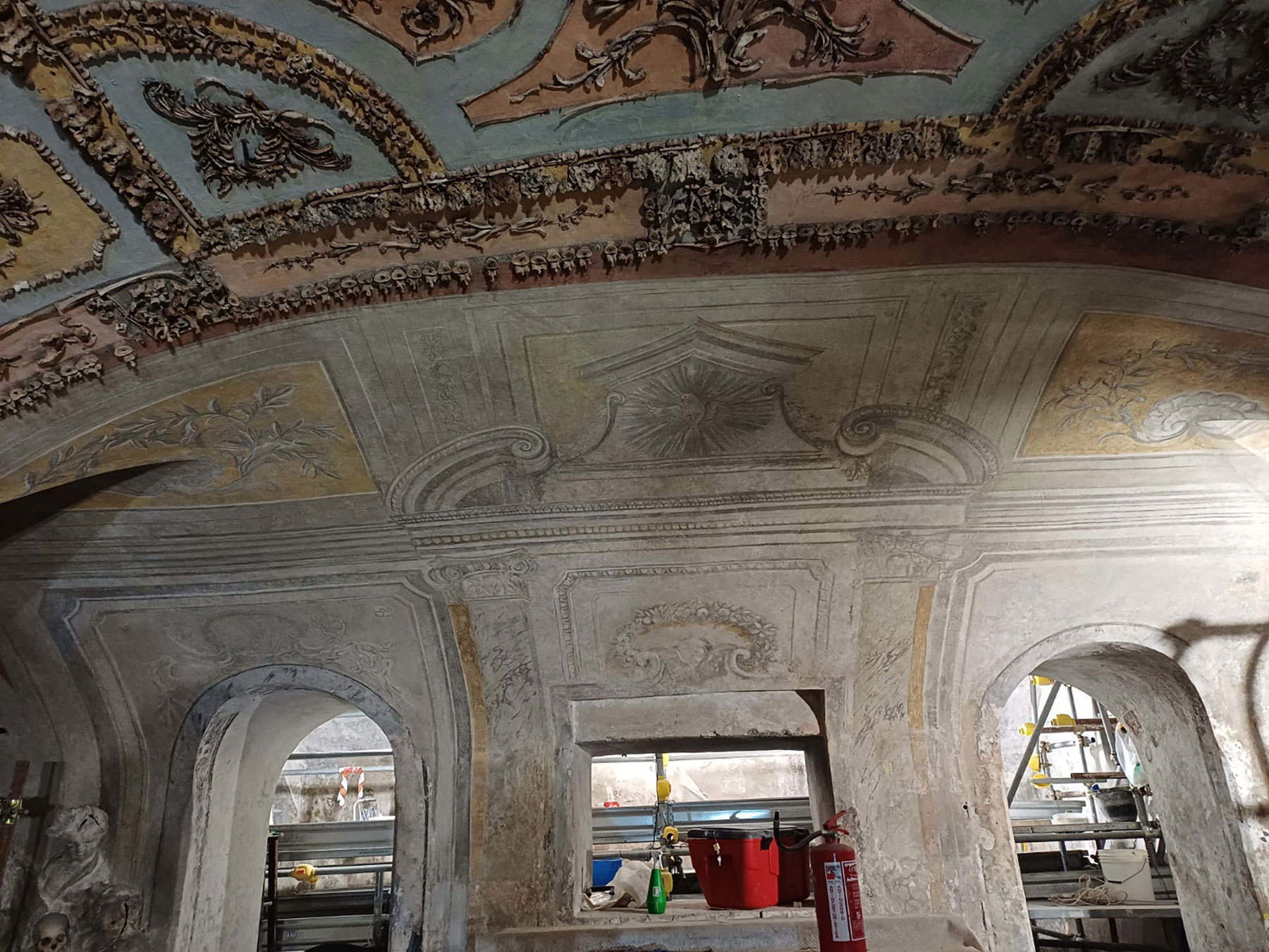
Before the work began, the crypt was in critical condition: rising damp, salt deposits, and biological damage had compromised the surfaces and decorations. The project, funded with 2,100,000 euros from the PNRR Caput Mundi funds and overseen by the Special Superintendence of Rome, focused on both conservation and making the site accessible to visitors.
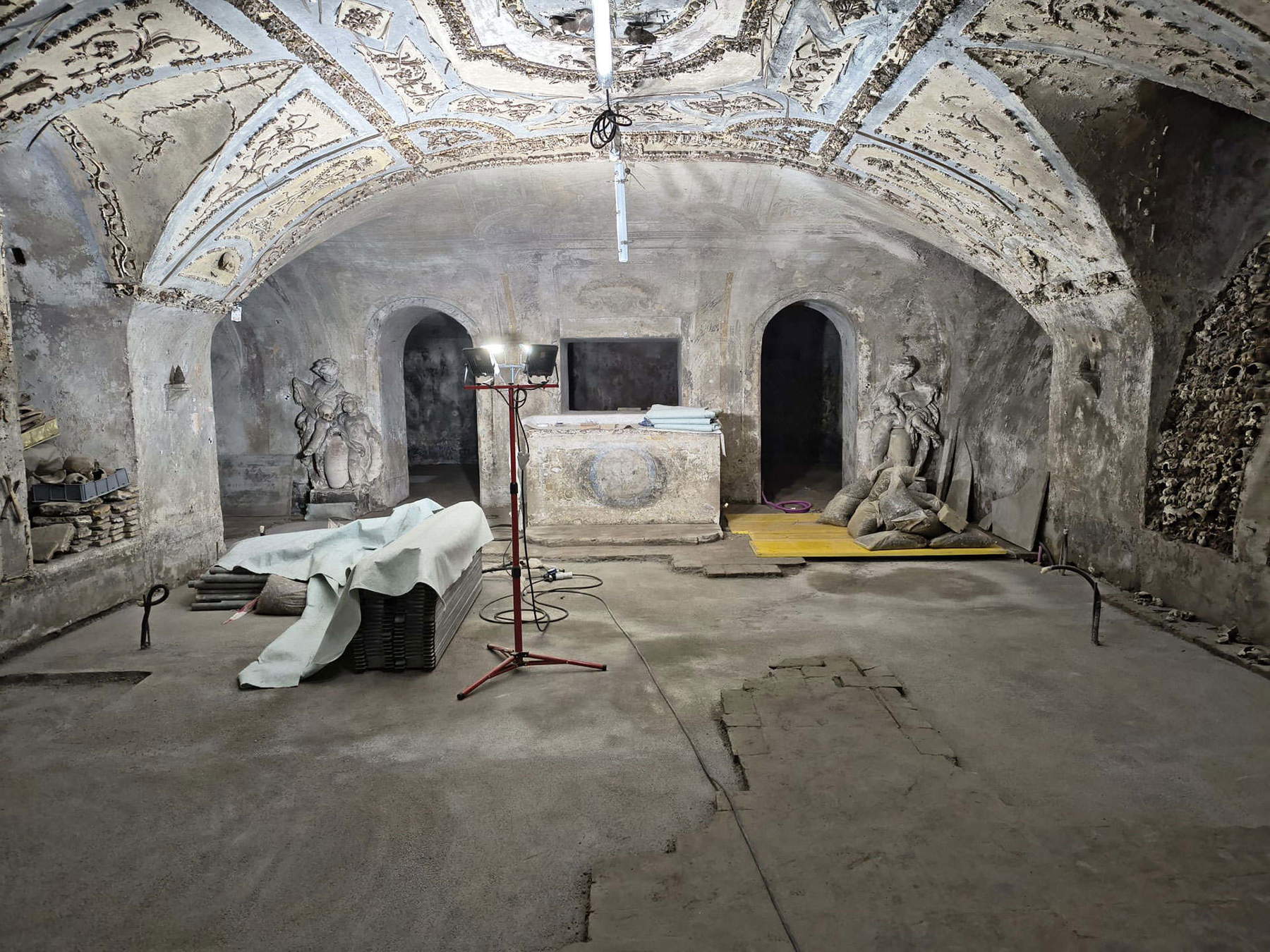
In the two rooms, the bone decorations, the faux-marble frescoed walls, and the Deposition were consolidated and cleaned. The metal anchors supporting the bone elements were inspected and replaced with suitable components, and missing sections were restored using recognizable techniques. Archaeological excavations were completed, the floor was reconstructed on new subfloors using compatible materials, and the tombstones were returned to their original locations. To make the underground area accessible, a walkway and a new centrally controlled LED lighting system were installed, and the historic entrance to the crypt was reopened. The project is rounded out by environmental control systems, emergency procedures commensurate with the low fire risk classification, and a plan for periodic monitoring and maintenance. As a result, the crypt can once again host both religious services and visitors. A program of scientific and public outreach is also planned.
“We approached the crypt as a unified whole,” explains Marta Baumgartner, an archaeologist with the Superintendency and curator of the project, “in which architecture, decorative elements, and pre-existing archaeological features—thanks to a new visitor route—tell the story of the site. Every decision was made in accordance with the principles of minimal intervention and reversibility, with the goal of making these spaces accessible once again without altering their identity and, at the same time, allowing for a comprehensive understanding of them.”
Precisely to respect the characteristics of the underground environment and its historical and archaeological value, no devices to overcome architectural barriers were installed: the project includes an exception to vertical accessibility requirements, and to reach the crypt, visitors must descend a few steps.
“The city preserves, even in its least visible places, a heritage of great value—testimonies that have overlapped and transformed over the centuries,” comments Rome’s Special Superintendent, Daniela Porro. “The Crypt of the Sacred Stigmata is a precious example of this: thanks to funding from the National Recovery and Resilience Plan (PNRR), we can restore it for the public and open it to visitors, broadening our perspective on Rome’s history and complexity.”
How to Visit
The reopening of the crypt is part of the fall schedule of special openings and guided tours through which the Special Superintendence of Rome aims to raise awareness of the city’s lesser-known archaeological sites and cultural landmarks. The schedule lists the first two guided tours on November 5 and 12 from 3:00 p.m. to 7:00 p.m.; thereafter, the site will be open every Thursday through December 10, from 3:00 p.m. to 8:00 p.m. Admission is free and no reservation is required, with access limited to small, pre-determined groups.
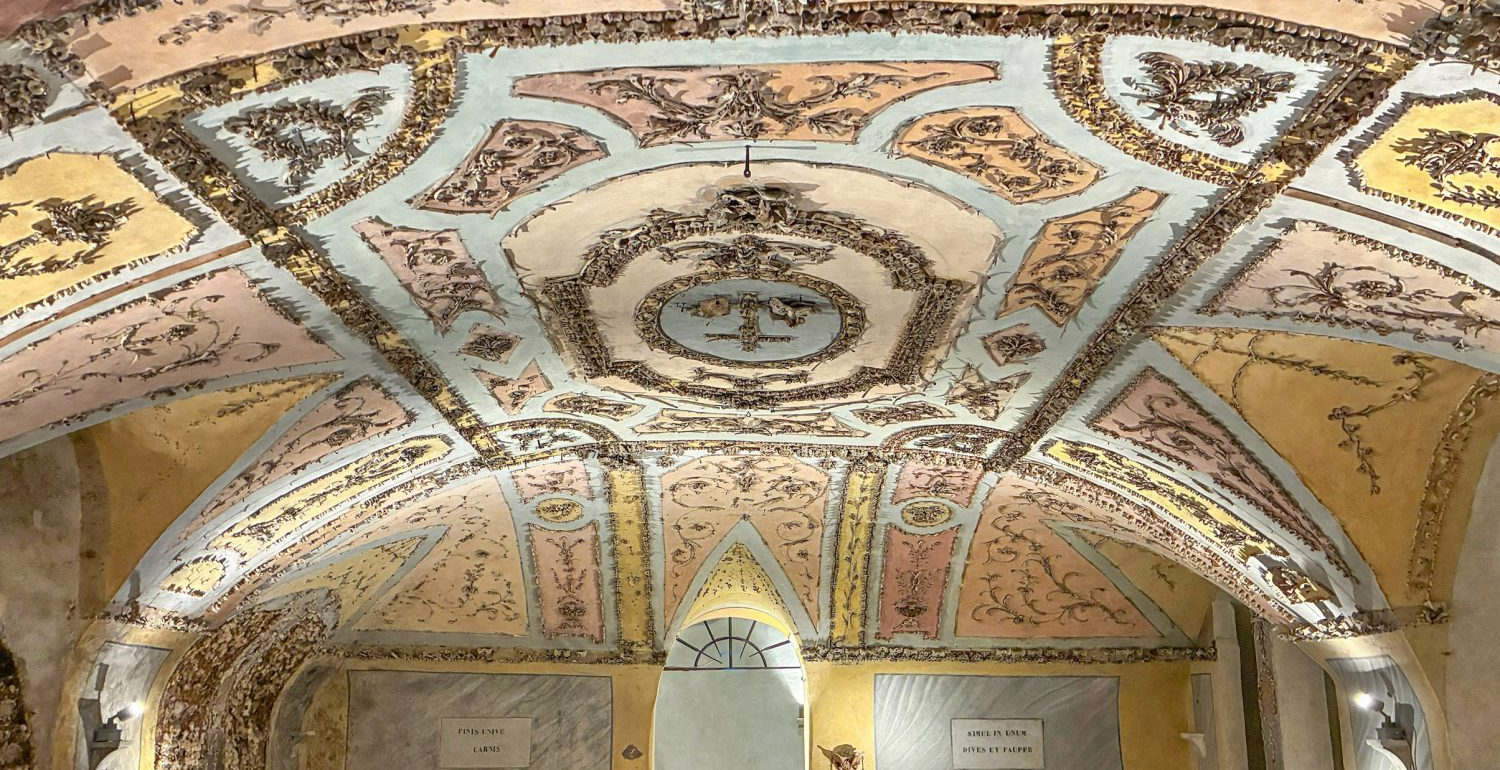 |
| In Rome, there is a crypt decorated with human bones that has just been restored and is open to visitors |
Warning: the translation into English of the original Italian article was created using automatic tools. We undertake to review all articles, but we do not guarantee the total absence of inaccuracies in the translation due to the program. You can find the original by clicking on the ITA button. If you find any mistake,please contact us.