




by Redazione 29/08/2026



Categories: Ancient art / Disclaimer
The British government has imposed a temporary export ban on the Portrait of Catrina Hooghsaet, a late work by Rembrandt that has been in the country since the mid-18th century, to give museums and institutions the opportunity to raise the funds needed to purchase it. The painting has been valued at over 71 million pounds, or approximately 83 million euros.


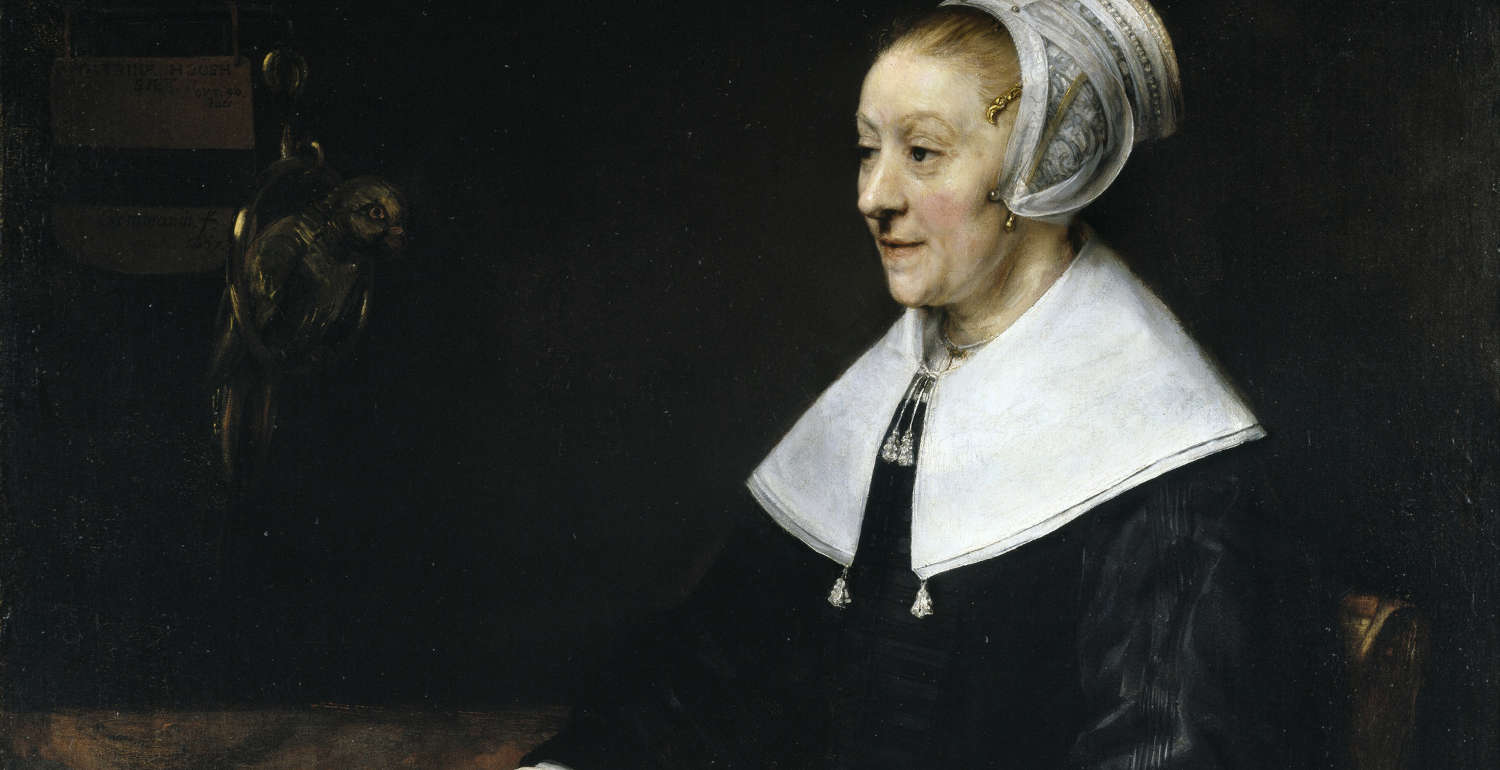
The United Kingdom government has imposed a temporary ban on the permanent export of a painting by Rembrandt (Rembrandt Harmenszoon van Rijn; Leiden, 1606 – Amsterdam, 1669), in the hope that a British museum or institution will be able to raise the necessary funds to purchase it and keep it in the country. The work in question is the Portrait of Catrina Hooghsaet, painted by Rembrandt in 1657 and considered one of the most exceptional works from the final phase of his career. The painting has been on display in the United Kingdom since the mid-18th century and has been valued at 71 million pounds (approximately 83 million euros), a figure that makes it the most expensive object ever to be designated a British national treasure. It is an oil on canvas from 1657, measuring 126 by 98.5 centimeters, inscribed and signed on the shield in the upper left corner with the words “CATRINA HOOGH/SÆT./OVT.50./Jaer” and bearing the signature “Rembrandt.f./1657.”

The decision to impose a temporary export ban on the portrait is intended to give museums and institutions the time needed to raise the funds required for its acquisition, with the aim of keeping a work of great importance in the United Kingdom and ensuring its public display. According to the relevant authorities, the portrait is of exceptional importance to Britain’s shared history and national life: the work enriches our understanding of Rembrandt and his artistic output, while also offering significant insights into social relations, gender, religion, and identity in the Republic of the United Provinces of that era, into Rembrandt’s place in British collections, and, more broadly, into the history of portraiture.


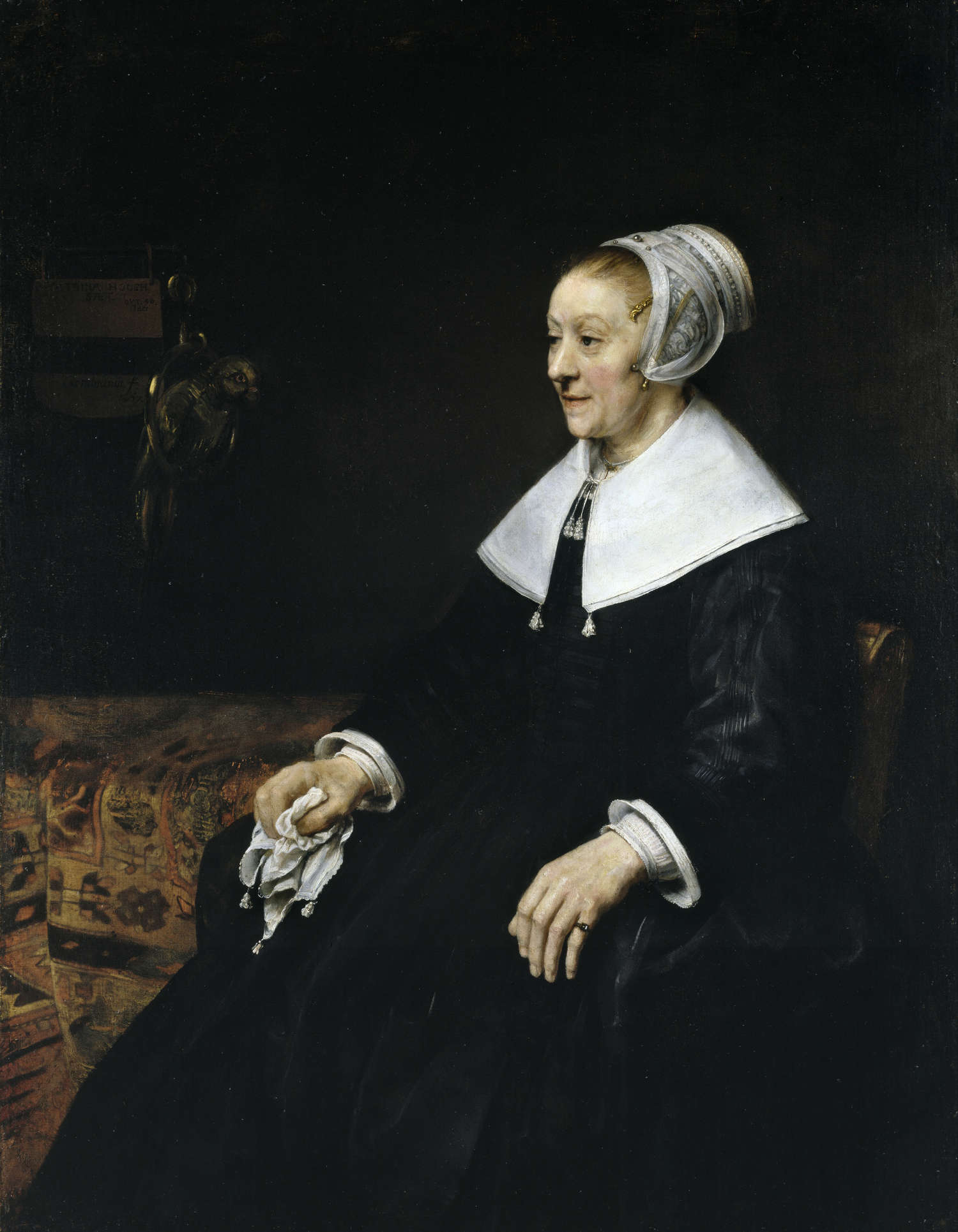
The painting depicts Catrina Hoogshaet, a wealthy woman belonging to Amsterdam’s Mennonite community, whose domestic life deviated from the conventions of the time: she was, in fact, living apart from her husband. Rembrandt’s portrayal clearly brings out both the character and the individuality of the woman depicted, attesting to the artist’s universally recognized ability to convey the inner life of his subjects. The history of the painting’s ownership, reconstructed in detail by experts, begins with Catrina Hooghsaet herself, who lived in Amsterdam between 1607 and 1685, and then passes to her third husband, Jan Schildt, who died in 1686, also in Amsterdam. The work then likely came into the possession of John Fane, Lord Le Despencer and 7th Earl of Westmorland, who lived from 1685 to 1762, at Mereworth House in Kent by 1752. The painting subsequently passed to Sir Francis Dashwood, second baronet and Lord Le Despencer, who lived from 1708 to 1781. After remaining in the same family for fifty years, following the death of the last Dashwood descendant in 1831, the painting was sold at auction in 1831 and subsequently purchased by a certain Peacock, likely identifiable as the London art dealer Michael Peacock. The work then became part of the collection of Edmund Higginson (born Barneby) at Saltmarshe Castle in Herefordshire by 1836. The painting was then auctioned by Christie’s in London between June 4 and 6, 1846, as lot number 221, for 798 pounds, although it was repurchased by the same seller, and was auctioned again, once more by Christie’s in London, between June 4 and 6, 1860, as lot number 43, this time for 740 guineas, and was purchased by the London art dealer Henry Farrer. The work subsequently entered the collection of Colonel Edward Douglas-Pennant, 1st Baron Penrhyn of Llandegai, and later passed to his descendants. The painting was eventually sold privately in 2015, when it was acquired by a private collector, and subsequently sold privately through Christie’s in 2025, at which time it was acquired by its current owner.


Minister for the Arts Ruth Mackenzie stated that “the significance, beauty, and history of this masterpiece make it a priority for cultural partners, funders, philanthropists, and enthusiasts of Rembrandt’s work, who are called upon to contribute so that the painting may retain its historic place in the country”.
Andrew Hochhauser, chair of the committee tasked with evaluating the export application, explained that the portrait of Catrina Hooghsaet, painted during the final phase of the artist’s career, “ranks among his finest achievements.” The work belongs to a small group of large-format portraits depicting subjects in three-quarter profile and stands out for its delicacy, refinement, and the extraordinary quality of its finish. Thanks to his sensitivity and profound capacity for psychological introspection, Rembrandt transforms the woman’s relatively ordinary features into an extraordinary image of beauty. Catrina Hooghsaet’s unusually well-documented life allows us to study her portrait alongside a wealth of historical documentation, offering rare insights into social relations, gender, religion, and identity in the Republic of the United Provinces. This is a painting of extraordinary aesthetic importance and of fundamental significance for our cultural history. It is also of exceptional importance for the study of the history of portraiture, Rembrandt’s work, and the history of collecting his works in Great Britain. This painting of enormous importance should be preserved for the nation and exhibited to the public in this country.”
The committee recommended applying the export ban because the work meets all three Waverley criteria—the standards used to determine whether an object is of such national importance that its removal from the United Kingdom would constitute a significant loss. In this specific case, the painting was recognized for its strong connection to British history and national life, for its exceptional aesthetic quality, and for its importance to the study of Rembrandt’s work.
The final decision on the export license application will be deferred until December 26, 2026, inclusive, during which time the British authorities will accept expressions of interest from potential eligible buyers interested in acquiring the work. At the end of this initial suspension period, the painting’s current owners will have a fifteen-business-day cooling-off period to evaluate any purchase offers made at the recommended price of 71,696,324.90 pounds (83.7 million euros), plus VAT of 754,698.15 pounds (881,000 euros). A second suspension period will begin after the signing of an option agreement between the parties and will last nine months.
The mechanism underlying the British government’s decision provides that, when someone submits a request to permanently export a cultural object of significance from the United Kingdom, the government may temporarily suspend the export if the object is deemed a national treasure, in order to give a British museum or another eligible purchaser the time needed to raise the funds required to keep the work in the country.
 |
| The British government blocks the export of a Rembrandt valued at 71 million pounds |
Warning: the translation into English of the original Italian article was created using automatic tools. We undertake to review all articles, but we do not guarantee the total absence of inaccuracies in the translation due to the program. You can find the original by clicking on the ITA button. If you find any mistake,please contact us.