




by Redazione 17/10/2026



Categories: Archaeology / Disclaimer
Excavations by Ca’ Foscari University have uncovered an early Christian church in Altino (Venice) measuring approximately 30 by 20 meters, which had been documented in ancient sources but had never been located until now. The bishop’s residence likely stood nearby; the complex was dismantled when the episcopal see was moved to Torcello.


For centuries, written sources have attested to the existence of a large episcopal church in the ancient city of Altino, in Veneto, linked to the history of the early Christians in the Venetian lagoon area. However, there was no definitive archaeological identification of the site where it stood. Now, excavations conductedby Ca’ Foscari University of Venice in the Altino Archaeological Park ( Quarto d’Altino, Venice) have yielded a possible answer: a church measuring approximately 30 by 20 meters, built between the late 4th and the first half of the 5th century, flanked by a large porticoed building that may have been the bishop’s palace. The discovery, the result of the 2026 excavation campaign and a comparison with data collected in 2025, gives tangible form to one of the least-known phases in the history of the ancient city.


The complex occupied a considerable portion ofan insula—that is, a city block in the Roman city—which was subsequently reorganized during the early Christian period. The church consists of a rectangular nave without an apse, oriented toward the east and offset from the Roman street grid. To the east lies a second building, also featuring a portico, characterized by a complex floor plan with internal subdivisions and adjoining rooms. Its interpretation as a bishop’s residence is currently a hypothesis, supported by the size and solidity of the foundations, but further investigation will be necessary to determine its function with certainty. What makes this discovery particularly significant is the connection between the structures and the written records that already documented the presence of an organized Christian community in Altino: among these are the letters of St. Jerome to Heliodorus—considered the city’s first bishop—and to his nephew Nepotian. In particular, in Epistle 60, dated 396 A.D., Jerome describes the care Nepoziano devoted to the church: the altar, the walls, the floors, the doors fitted with curtains, and the sacred vessels. These are the same decades in which, according to the dating proposed by archaeologists, the newly identified church is believed to have been founded.


The discovery is not merely the identification of a religious building. The possibility that the bishop’s palace also stood next to the church opens up a broader perspective on the role played by the episcopal see in urban life: the foundations of the structures are largely made of trachyte paving stones—the blocks that once paved Roman roads—reused upside down. Archaeologists interpret this reuse as a possible indication of the influence the bishop had come to wield in the city’s administration: roads were public infrastructure, protected by late Roman legislation, and their dismantling to recover building materials required significant authority to intervene.


The excavation campaign is directed by Diego Calaon, professor of Landscape Archaeology and Ancient Topography at Ca’ Foscari University of Venice, and co-directed by Elisa Possenti of the University of Trento, in collaboration with Luigi Sperti of Ca’ Foscari University. The research is supported by Ca’ Foscari funds allocated to support archaeological research and is being conducted in collaboration with the Altino Archaeological Park, part of the National Archaeological Museums of Venice and the Lagoon. The hypothesis regarding the church’s identification arose from a review of archaeological data relating to the Roman and Late Antique periods, conducted by those in charge of fieldwork: Jacopo Paiano, a subject specialist and currently a doctoral student at the University of Trento, and Eleonora Delpozzo, a subject specialist, both of whom were trained at Ca’ Foscari. Undergraduate and graduate students from the University of Venice are participating in the excavation work. The study of the anthropological remains is being supervised by Barbara Bramanti and Jessica Mongillo of the University of Ferrara, while the analysis of the ceramic materials is being conducted by Francesca Mombelli of the University of Salento.
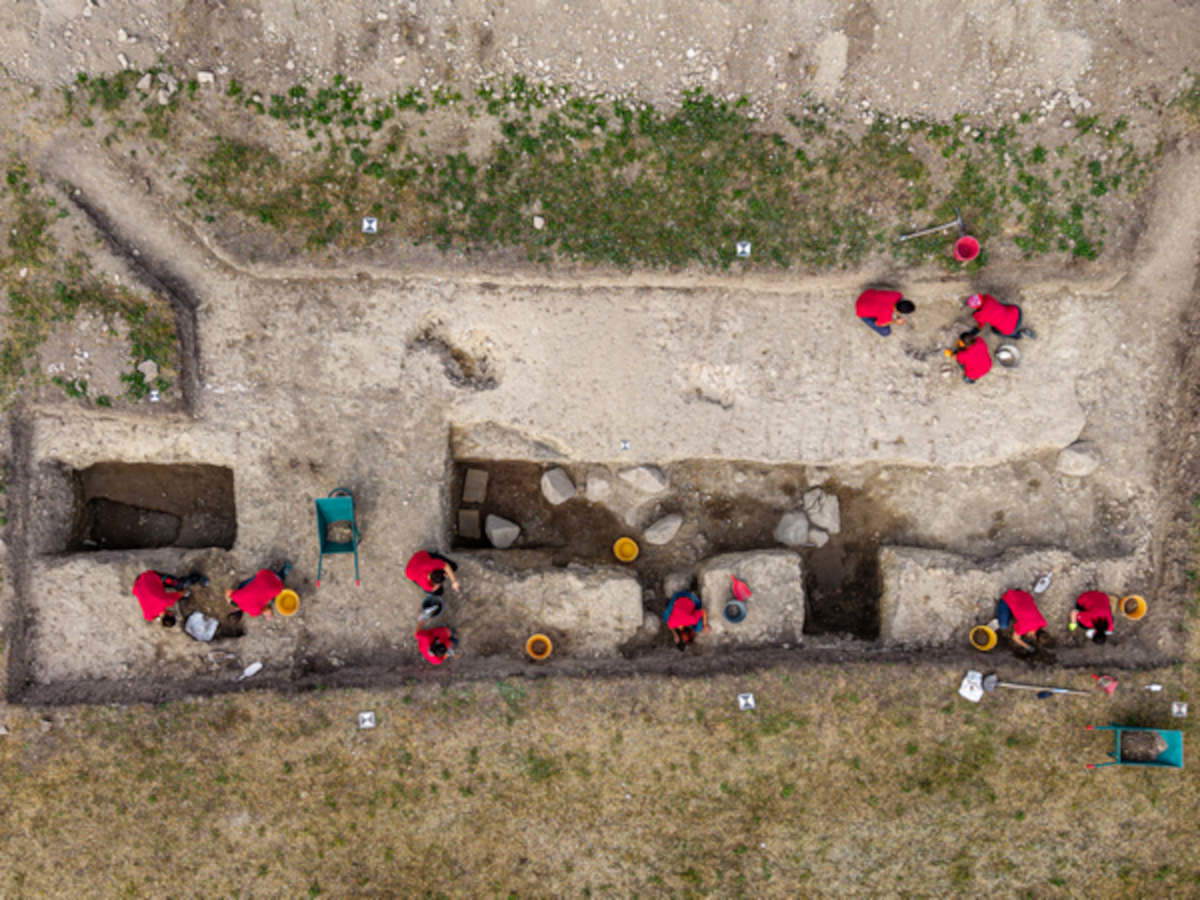
Research at Altino
The difficulty in identifying early Christian buildings at Altino also stems from the site’s subsequent history: the late antique phases were compromised first by agricultural activities and land reclamation—which removed the most superficial layers—and then by the systematic recovery of bricks and stones for use in new constructions. In fact, a significant portion of the materials from the ancient city was reused on construction sites in Torcello and Venice.
As a result, archaeologists do not always find walls and foundations preserved in their original form. Often, what remains are the so-called “plundering pits”—that is, trenches dug to extract stones, bricks, and other building materials. These voids, interpreted through stratigraphic analysis, make it possible to reconstruct the shape of the vanished buildings and to identify the various phases of their demolition. It was precisely the study of these traces—compared with the results of earlier excavations and the documentation preserved in the Archaeological Park’s archives—that made it possible to reconstruct the site plan of the complex.
The church is located almost directly across from the old Altino Museum—now AltinoLab—along Via Sant’Eliodoro, near the ancient path leading to the harbor gate and the Sioncello Canal. Provincial Road 41, which coincides with Via Sant’Eliodoro in this section, cuts through the building exactly in the middle—a circumstance that helps explain why interpreting the structure as a whole proved so complex.
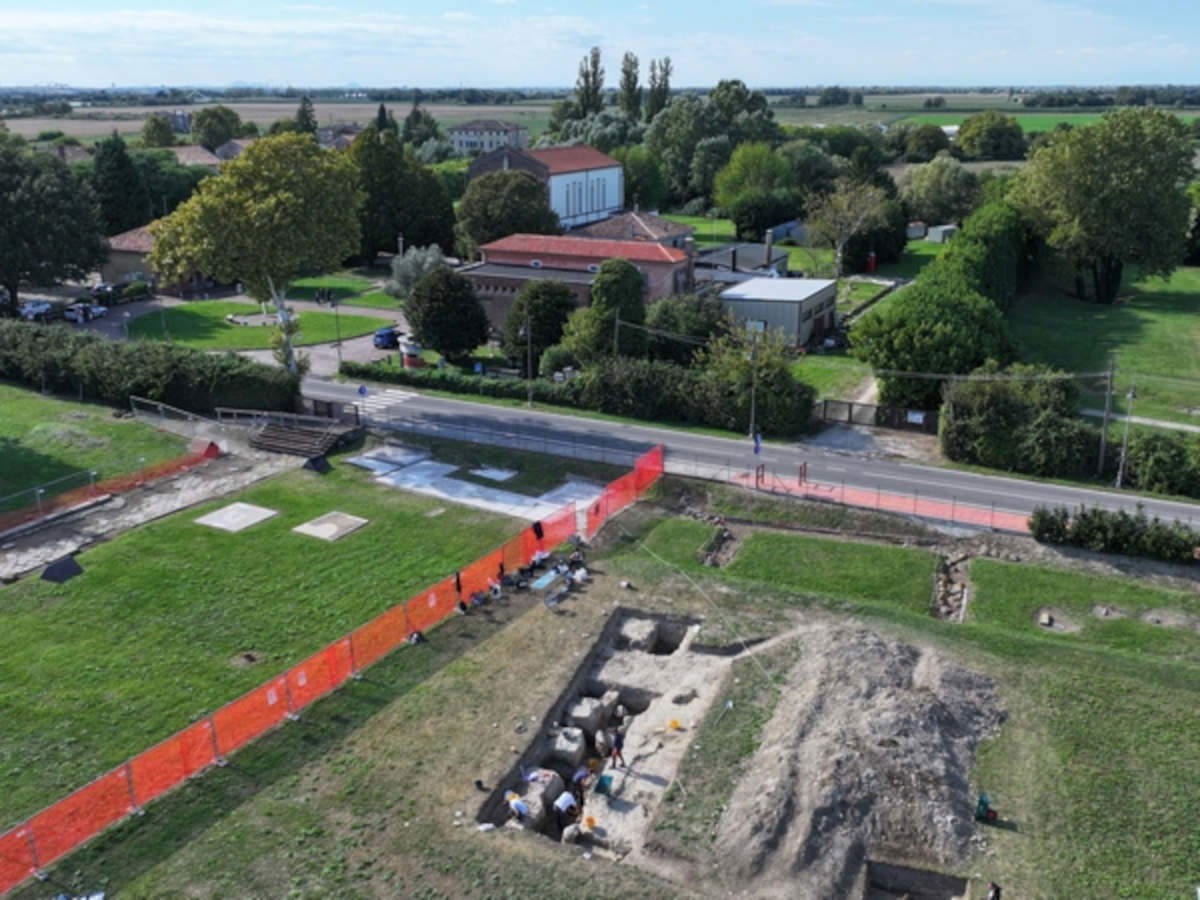
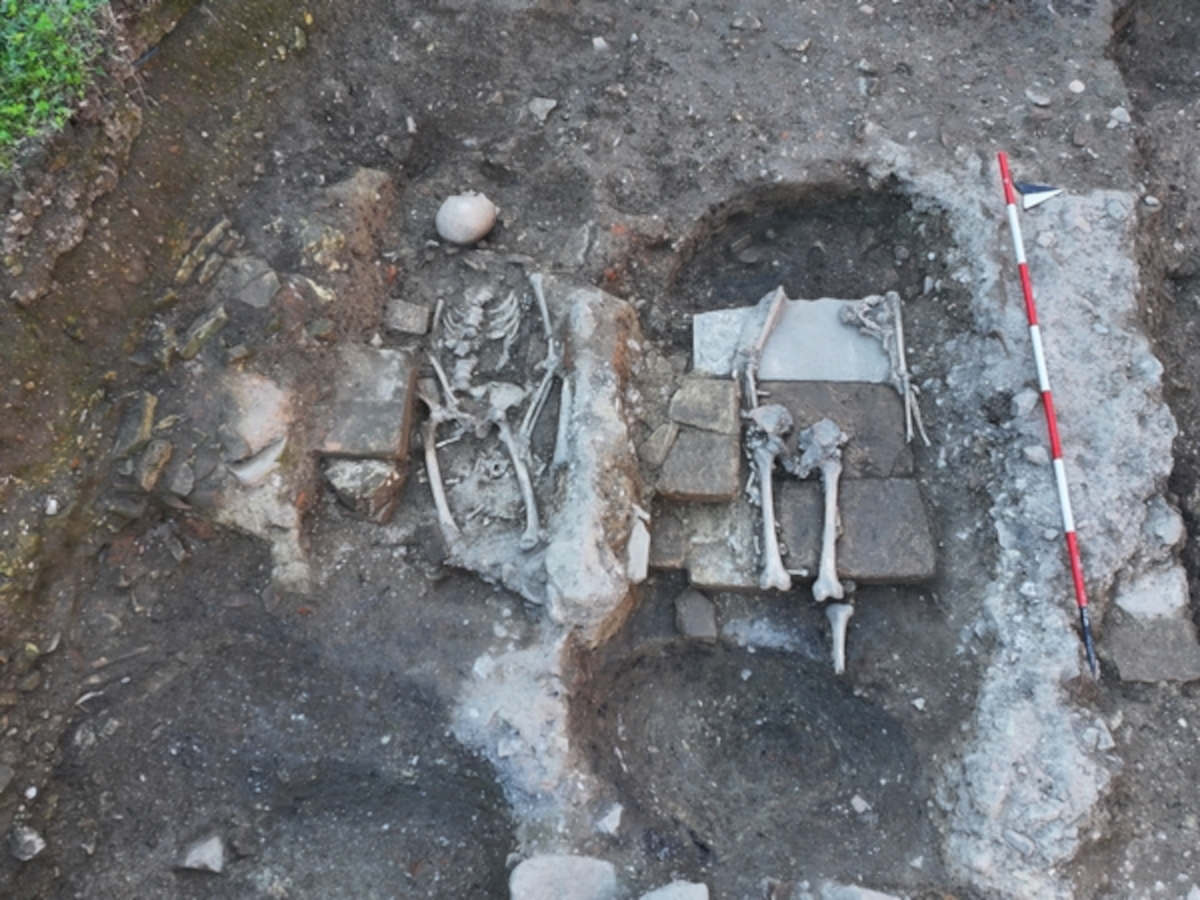
What Was Discovered
An initial clue had already emerged in the summer of 2025, when a roughly two-month excavation identified the building’s southwestern corner, with foundations constructed using road paving stones. The 2026 excavation campaign, which began between September and October, made it possible to expand the investigation and connect the previously known remains with new sections of the structures. The Archaeological Park made all accessible areas available for excavation, allowing researchers to verify on-site the hypotheses formulated through a review of the documentation.
The rectangular hall, which lacks an apse and faces east, exhibits characteristics that archaeologists consider consistent with an episcopal function (its dimensions, layout, and offset from the Roman roads all support this identification). The plan without an apse also finds parallels in the Upper Adriatic architectural tradition, particularly in Aquileia. The dating of the first construction phase, between the late 4th and the first half of the 5th century, is based on the analysis of materials found during the excavations—especially those recovered from the plunder pits—and on a comprehensive assessment of the neighborhood’s transformations.
The surrounding area provides further evidence for reconstructing the life of the religious complex. Between the 6th and 7th centuries, a portico and a cemetery were constructed in front of the church’s façade; it is precisely here that brick-built coffin tombs have been identified, currently the subject of a study in collaboration with the University of Ferrara, with Barbara Bramanti overseeing the anthropological aspects. The burials, however, were also affected by the recovery of building materials. The bricks from the burial chambers were removed for reuse, causing the skeletal remains to be disturbed. This situation, which at first glance might seem like an obstacle to research, is in fact a source of information regarding the methods and timing of the area’s abandonment. Now, the anthropological study of the remains and the radiocarbon analyses—which have already been scheduled—should help determine how many individuals were buried, what the various phases of interment were, and when the cemetery and the surrounding buildings were dismantled. Among the materials recovered are also religious artifacts, including a small container decorated with a cross. This find, together with the architecture and the burials, supports the interpretation of the area as a religious complex.
The 2026 excavation campaign also revealed a second new finding: the church was not a standalone building. On the eastern side, a large porticoed structure was identified, with a complex floor plan divided into various rooms and annexes. The sturdiness of the foundations suggests that it may have extended over two stories, and archaeologists propose identifying it as the episcopal palace, with a possible division of functions between the levels: the clergy’s residence on the upper floors and, on the ground floor, rooms perhaps intended for the privileged burials of bishops or notables. The remains of late antique mosaics have been cited in support of this latter hypothesis, although the function of the rooms will need to be verified through further excavations and the analysis of materials. Another important element of the complex also remains to be located: the baptistery. It may be located in a portionof the insula that has not yet been investigated, which is precisely why upcoming research will also include geophysical surveys of the available areas.
The possible identification of the bishop’s palace is based on a reconstruction that required connecting clues that emerged at different times. Part of the building had already been identified during the excavations of the 1980s and in earlier test pits, some of which are now visible in the archaeological area. However, it was only by studying the foundations and sub-foundations at various points—using a rigorous stratigraphic method—that it became possible to correlate the traces and recognize the continuity of the structures. The investigations are therefore not limited to unearthing individual wall remains: they reconstruct an entire sector of the city and also serve to transform fragmentary elements into a legible site plan. It is this step that now allows us to identify, with a high degree of probability, the location where the episcopal church once stood and to hypothesize that the large adjacent building was the bishop’s residence.
The historical significance of the discovery becomes particularly clear when considering the relationship between Altino and Torcello: Tradition has often portrayed the migration of Altino’s inhabitants to the lagoon as a flight from barbarian invasions, yet research conducted on Torcello by Ca’ Foscari University has instead shown that the island served as Altino’s port and that a new religious building was constructed there in the 7th century.
The relocation of the episcopal see therefore appears, in light of the available data, to have been a deliberate choice, linked primarily to demographic and environmental factors, rather than the result of a sudden abandonment. The decommissioning of the church in Altino also appears to have been organized: the building was likely dismantled gradually, piece by piece, by the first half of the 7th century. This chronology is consistent with the Torcello inscription dated 639 and with the findings from excavations of the island’s baptistery. After its abandonment, Altino gradually became a source of building materials. The stones and bricks from the ancient buildings were salvaged and transported to construction sites throughout the lagoon, while the demographic center of gravity of the region shifted toward new settlements. The discovery of the episcopal complex thus offers new insights into the transition from the Roman and late-antique city to the formation of the Venetian archipelago.
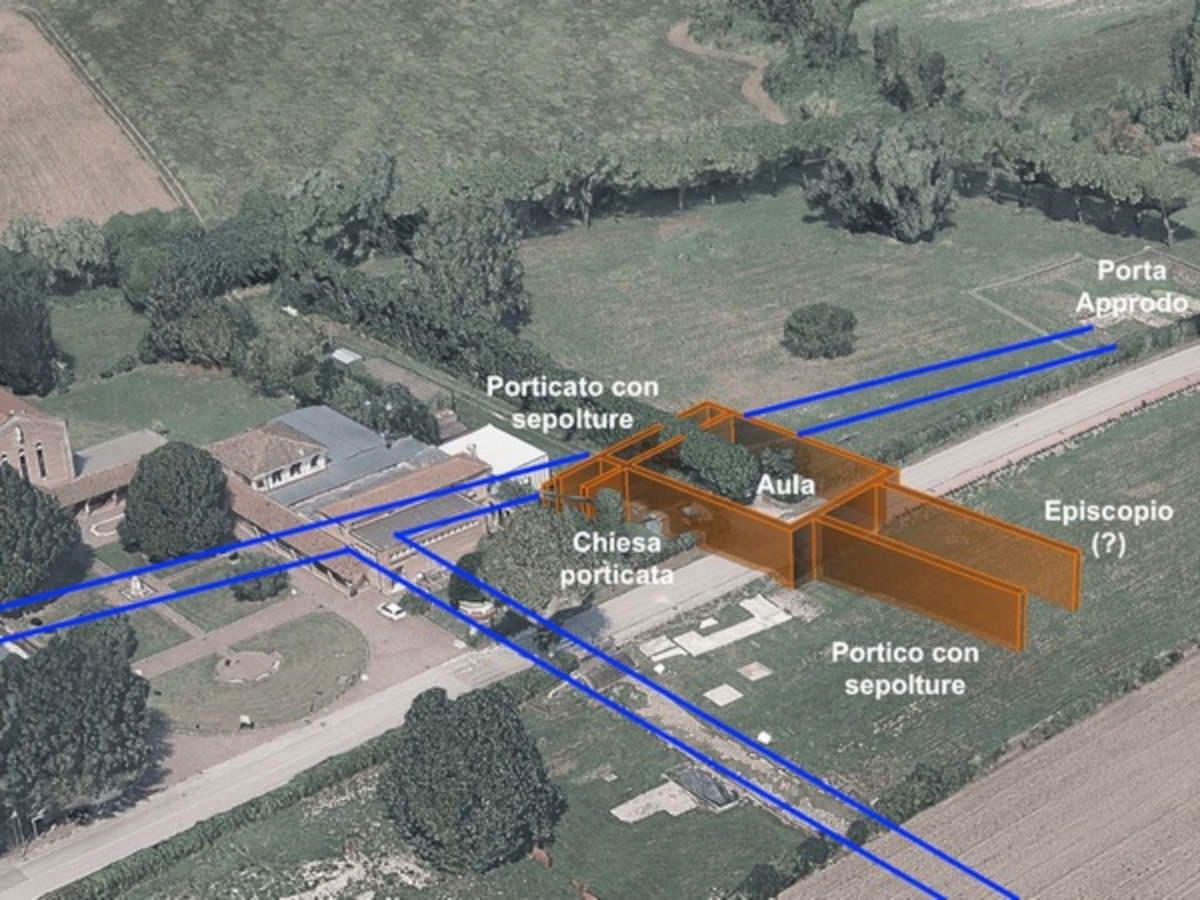
Statements
“For the first time, we can say with a high degree of certainty where the church and the bishop’s palace of Altino were located. The sources told us they must have existed; now we have the archaeological evidence,” says Diego Calaon, director of the excavation. “This analysis allows us to recount the transition from Altino to Torcello and Venice in a new light: not a sudden flight, but a long and controlled transformation, in which the ancient city and its inhabitants became drivers of economic and political decisions, while the spaces of ancient Altino served as a source of materials from which a new way of inhabiting the lagoon emerged.”
Elisa Possenti, co-director of the research for the University of Trento, also emphasizes the significance of the discovery for the history of northeastern Italy: “The ongoing research is writing a new chapter in the history of the city of Altino, which, thanks to these new discoveries, now stands alongside other important episcopal centers of late-antique northeastern Italy. What we could only imagine from the descriptions in written sources is finally taking on a tangible form that will help us reinterpret with fresh eyes the figures of Altino’s first bishops, whose stories are mostly shrouded in legend.”
Marianna Bressan, director of the National Archaeological Museums of Venice and the Lagoon, places the excavation campaign within the Archaeological Park’s research program: “The collaboration with Ca’ Foscari University of Venice is part of the Altino Archaeological Park’s overall research project, which involves granting excavation permits to research institutes to facilitate the coordinated advancement of knowledge about the ancient city. Furthermore, the University’s presence in the field adds educational value—for training new generations of archaeologists—to the scientific value of the work. The ongoing excavations are particularly significant because they focus on the post-antique historical phases—which are more elusive due to 19th- and 20th-century land reclamation projects—and because they are uncovering important data, previously unknown, regarding the ecclesiastical buildings of Altino in late antiquity and the early Middle Ages. For the National Archaeological Museums of Venice and the Lagoon, the research in Altino allows the city’s history to be placed within a broader perspective, one capable of recounting the transformations of the Venetian territory from antiquity to the formation of the lagoon as we know it today.”
The next phases of the research will involve the systematic study of the artifacts and human remains, radiocarbon dating, and geophysical surveys of the still-unexplored portions of the insula. The goal is to further verify the reconstruction of the complex, clarify the function of the identified spaces, and locate the baptistery, which could complete the picture of Altino’s episcopal center.
|
| Altino: The Lost Cathedral Has Been Rediscovered; Remains of What Is Likely the Bishop's Palace Have Also Come to Light |
Warning: the translation into English of the original Italian article was created using automatic tools. We undertake to review all articles, but we do not guarantee the total absence of inaccuracies in the translation due to the program. You can find the original by clicking on the ITA button. If you find any mistake,please contact us.