



by Redazione 21/07/2026



Categories: Archaeology / Disclaimer
Major archaeological discovery in Egypt: Three tombs featuring decorations and hieroglyphs have been uncovered in the Babashtiyon quarry, at the Saqqara necropolis. The inscriptions and scenes on the walls provide new insights into the administration, society, and international relations of New Kingdom Egypt.

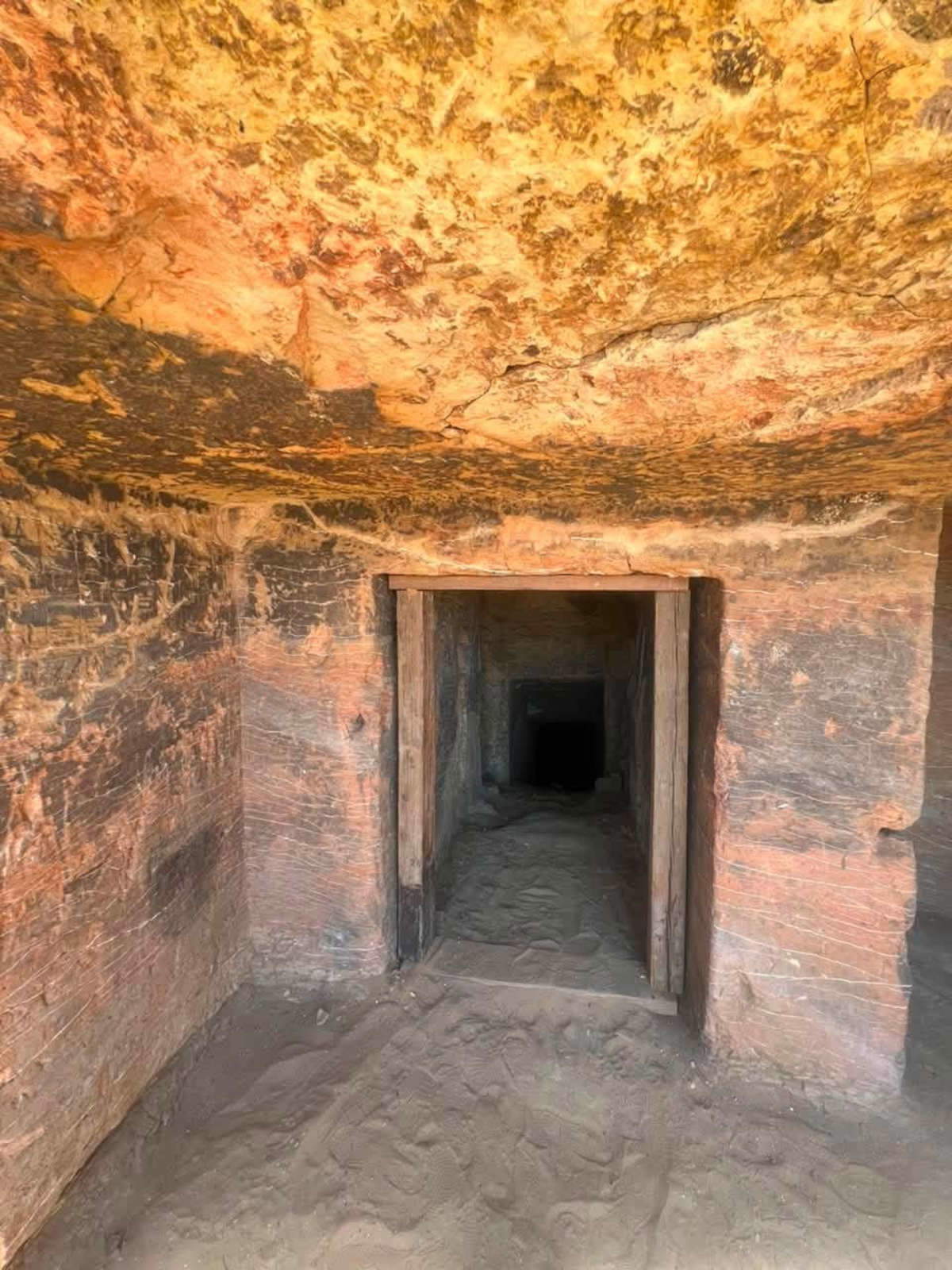
In Egypt, a new archaeological discovery is expanding our knowledge of the Saqqara necropolis, which has already been the site of numerous significant finds in recent years. The Egyptian archaeological mission working at the Babashtiyon quarry has unearthed three rock-cut tombs dating to the New Kingdom period ( 1550–1069 B.C.), discovered during the scientific excavation campaign conducted in the eastern sector of the site’s cliff face. The discovery includes hieroglyphic inscriptions, figurative decorations, and numerous archaeological artifacts that help expand our understanding of the history of the ancient necropolis of Memphis and the roles played by certain important officials of the Egyptian state. As mentioned, this discovery is part of a long series of finds in recent years in the Saqqara area, one of Egypt’s most important archaeological complexes and a UNESCO World Heritage Site. According to the Ministry of Tourism and Antiquities, the new tombs provide further insights into the administrative structure, society, and religious life during the New Kingdom, one of the most significant periods in the history of ancient Egypt.
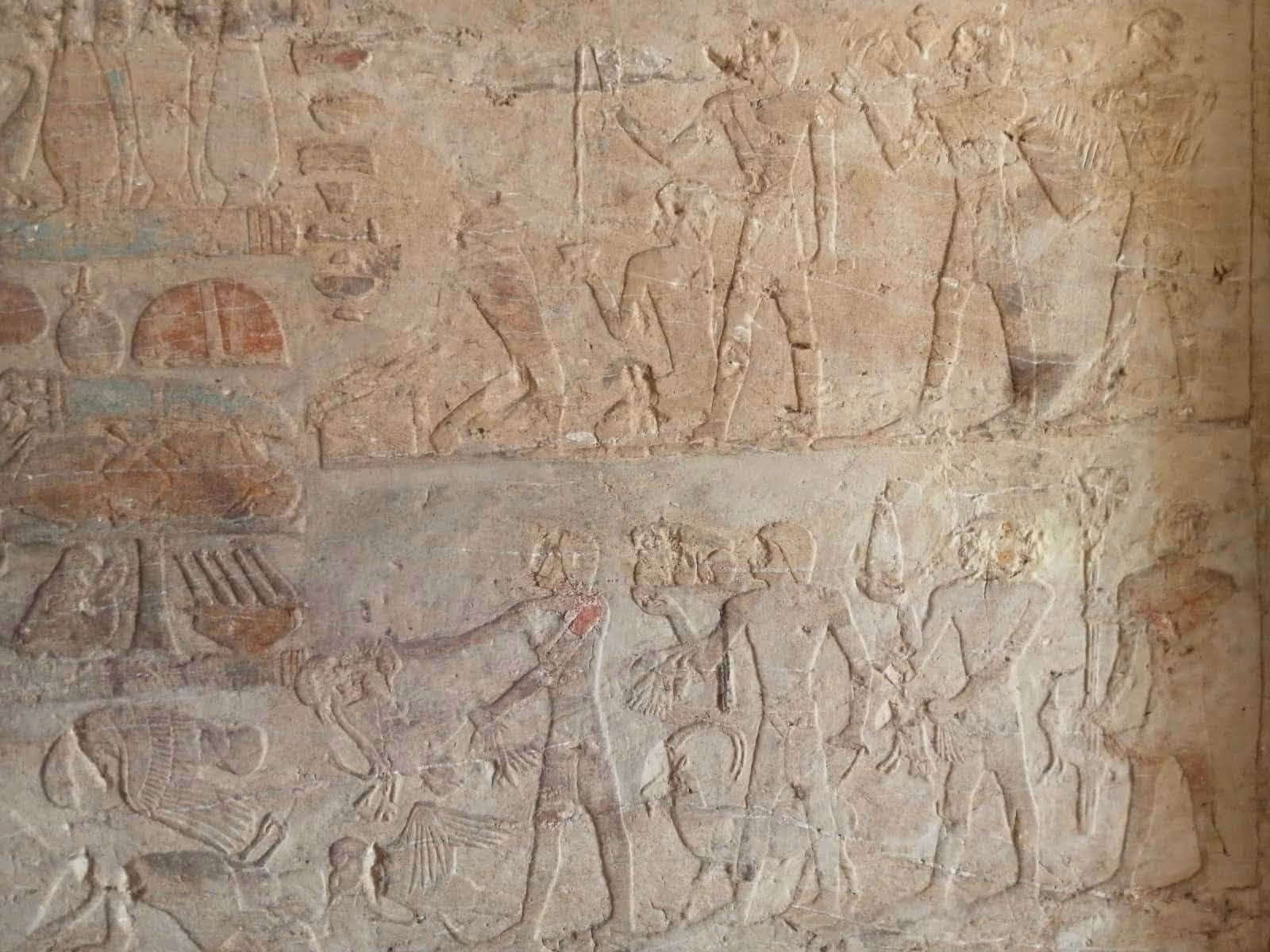
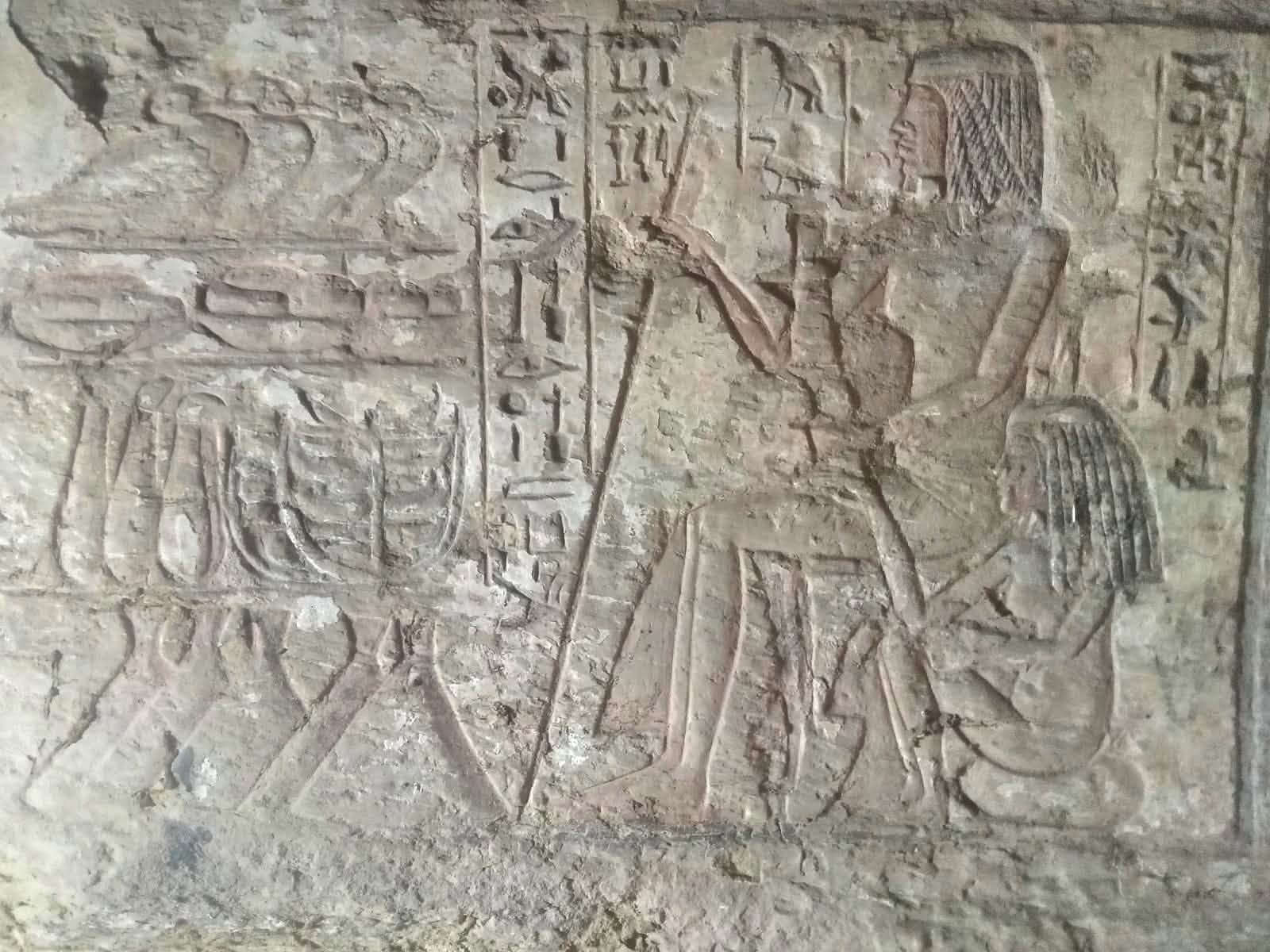
The first of the three tombs belongs to a figure named Mentoubet. The northern walls feature an elaborate decorative program characterized by scenes of caravans, hunting scenes, and a large depiction of the tomb’s owner seated next to his mother, Ihhabet. According to archaeologists, the composition reflects the family’s high social status and offers valuable insights into how the administrative elite of the time portrayed themselves. The inscriptions in the tomb also list a long series of titles that help define the role Mentoubet held within the state apparatus. Among the offices listed are those of crown prince, mayor, representative of the sovereign, governor, superintendent of foreign lands, and commander of the army of the city of Khashit. These positions indicate that the tomb’s owner was one of the highest-ranking civil and military officials of the early New Kingdom. The burial site also includes a burial shaft, the excavation of which has not yet been completed. Research will resume during the next archaeological season, and scholars believe it may provide new information about the identity of Mentoubet’s mother, the family’s history, and the role the family played in the administration of ancient Egypt.


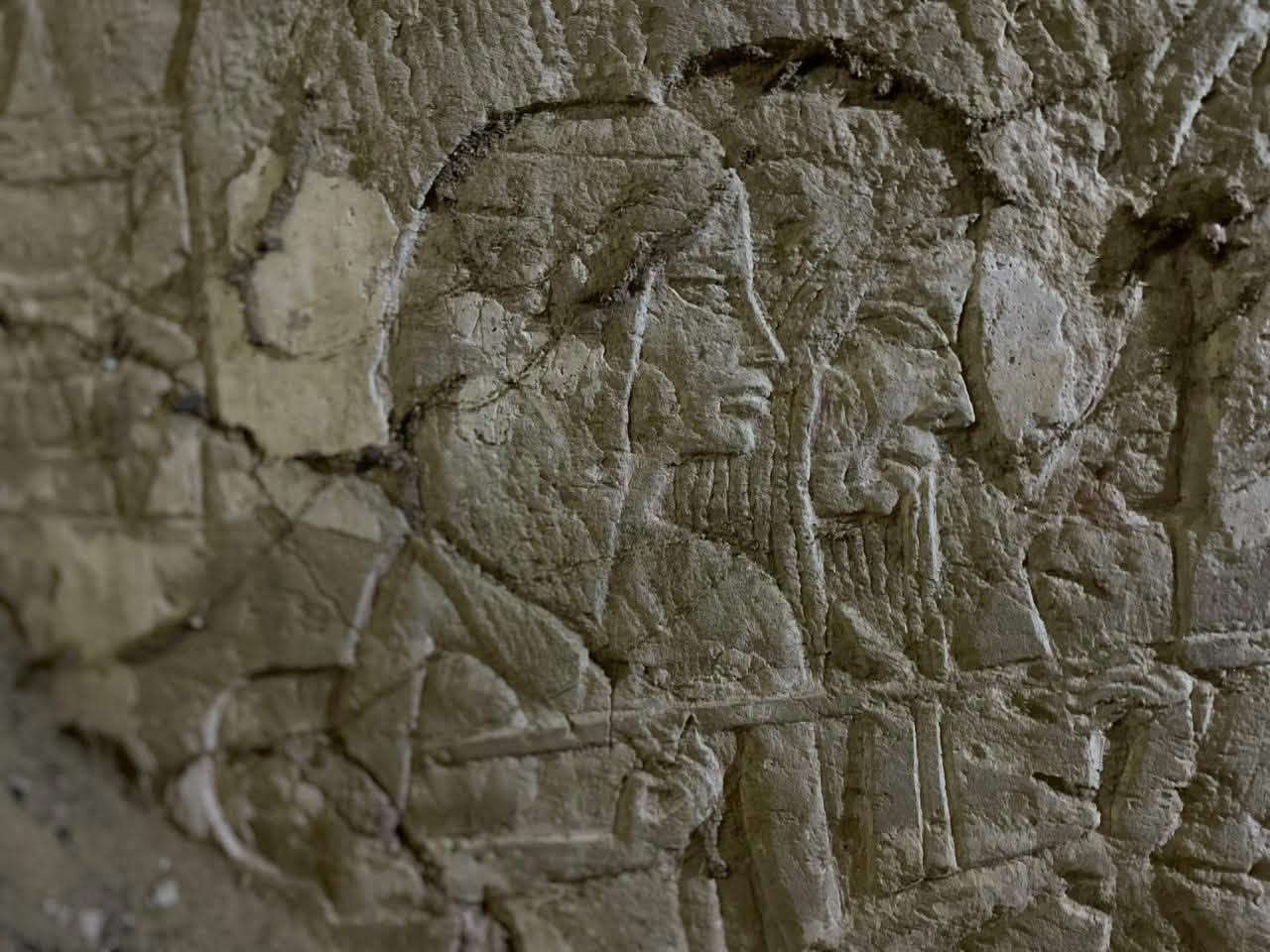
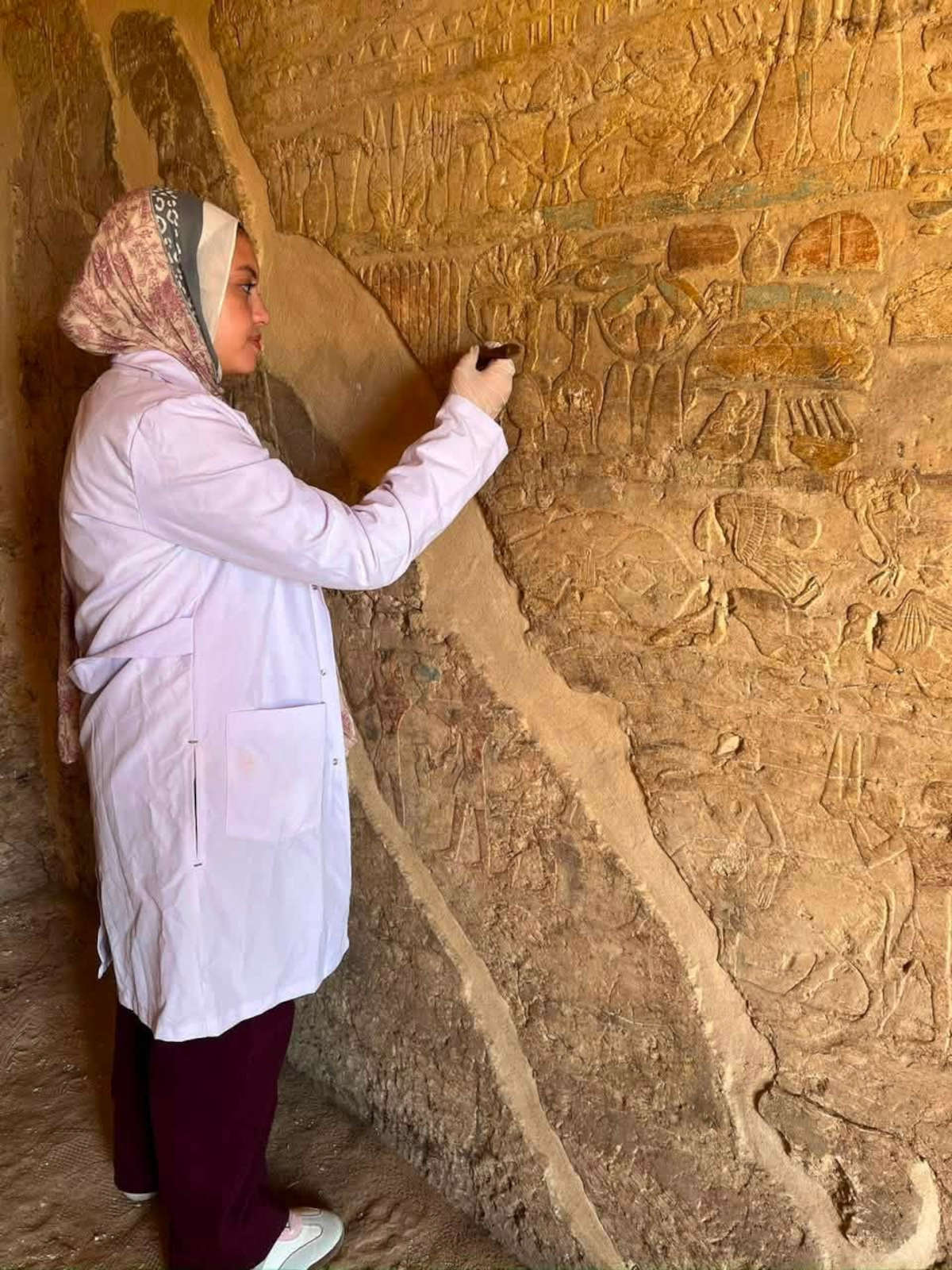
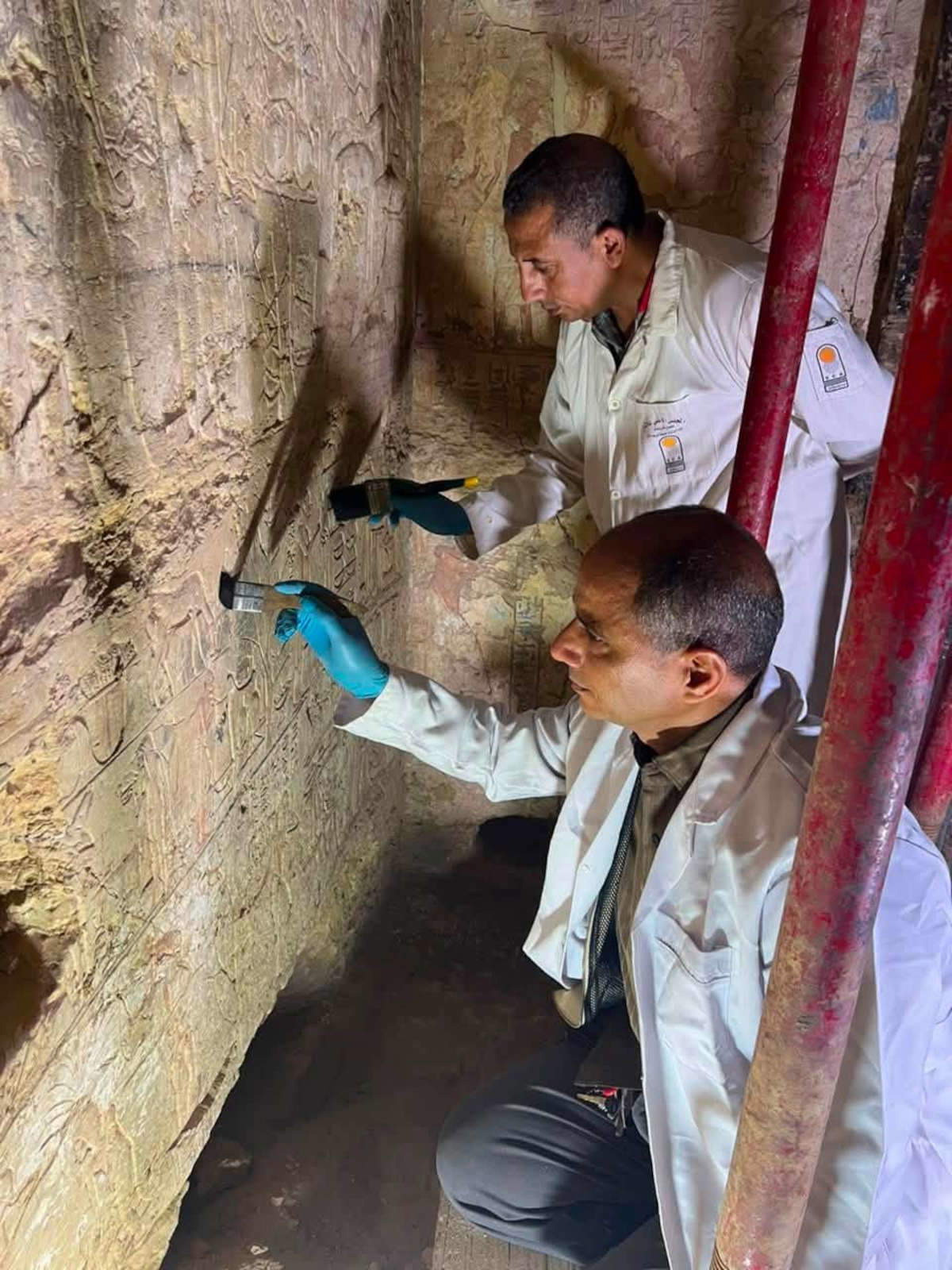
The second tomb, on the other hand, belongs to Bar’ Im Wai—also known as Samut—who held the title of “Great Merchant of Beit Batah.” Archaeologists describe this burial as a sort of family archive, as it preserves numerous inscriptions documenting the members of the owner’s family. The inscriptions mention his wife Tui, referred to by the title “Lady of the House,” and his mother Atbiu, who held the religious office of revered singer of the god Amun. The names of the couple’s four children are also recorded, a body of information that offers a particularly rare glimpse into the domestic and family life of one of the New Kingdom’s prominent figures.
The third tomb is attributed to a man named Nahsi. Although the monument has survived in rather poor condition, the surviving inscriptions are nonetheless of considerable historical interest. In fact, it is still possible to read the owner’s name and his title as overseer of the household, as well as the name of his wife, Nafro Batah, who is also referred to by the title “Lady of the House.” Among the most significant elements of the burial is a column on which a hieroglyphic text of particular historical interest is engraved. The inscription recounts the return of one of the Egyptian commanders from the land of the Eupetes, in the area of northern Syria. According to scholars, this text holds significance that goes beyond the simple chronological identification of the tomb. The inscription confirms that the burial dates to the New Kingdom and provides new evidence of Egypt’s relations with the regions of the Near East during that period. Military campaigns, diplomatic missions, and trade with the territories of Syria and the Levant were, in fact, one of the fundamental aspects of the foreign policy of the New Kingdom pharaohs. The evidence discovered in Nahsi’s tomb thus adds a new document to the reconstruction of relations between Egypt and the peoples of the ancient Middle East.
Together, the three tombs also offer a detailed picture of Egyptian society at the time. The administrative, military, and religious titles documented in the inscriptions paint a picture of an elite composed of officials, commanders, merchants, and priestesses, highlighting the role played by families in the organization of the pharaonic state.
The recurring presence of female figures in the funerary inscriptions is also particularly significant. Mothers and wives are commemorated by name and with the official titles that defined their social and religious rank, providing valuable insights into the study of women’s roles in New Kingdom Egypt.
The Minister of Tourism and Antiquities, Sherif Fathi, emphasized that the new discovery confirms that Saqqara continues to hold a heritage that is still partly unexplored. In his view, the ongoing archaeological discoveries attest to the site’s exceptional cultural value and demonstrate that the area is still capable of yielding evidence that is fundamental to the reconstruction of Pharaonic civilization. The minister also highlighted the role played by Egyptian and international archaeological missions operating in the country, emphasizing how their scientific work contributes decisively to expanding our knowledge of ancient Egypt. Each new discovery, he noted, represents another piece in the puzzle of reconstructing the history of one of humanity’s most important civilizations.
The Secretary-General of the Supreme Council of Antiquities, Hisham Al-Lithi, also emphasized the value of the discovery, noting that its significance lies not only in the identification of new burials. In fact, the discovery makes it possible to reconstruct the lives of their owners, bringing to light aspects of their existence that had remained buried for millennia beneath the sands of the necropolis. According to Al-Lithi, every new discovery therefore takes on not only historical but also human significance, offering new insights into the study of Egyptian society during the New Kingdom.
Mohamed Abdul Badi, head of the Egyptian Antiquities Sector of the Supreme Council of Antiquities, explained that the excavations are part of the archaeological research project dedicated to the Babashtiyon necropolis. He noted that the investigation is set to continue in future excavation campaigns, particularly within the burial shafts and areas that have not yet been explored. In his view, continuing the investigations could yield further historical and archaeological information, helping to complete the picture regarding the tomb owners and, more generally, the Babashtiyon necropolis, considered one of the most important and richest sites in the entire Saqqara complex.
The new discovery once again confirms the importance of the Saqqara necropolis as a prime site for archaeological research. Used for over three thousand years as the burial ground of Memphis, the ancient capital of Egypt, the vast necropolis continues to yield evidence that allows for a deeper understanding of aspects of Pharaonic civilization that are still poorly understood.
|
| Egypt, Major Discovery in Saqqara: Three Tombs with Decorations and Hieroglyphs Unearthed |
Warning: the translation into English of the original Italian article was created using automatic tools. We undertake to review all articles, but we do not guarantee the total absence of inaccuracies in the translation due to the program. You can find the original by clicking on the ITA button. If you find any mistake,please contact us.