





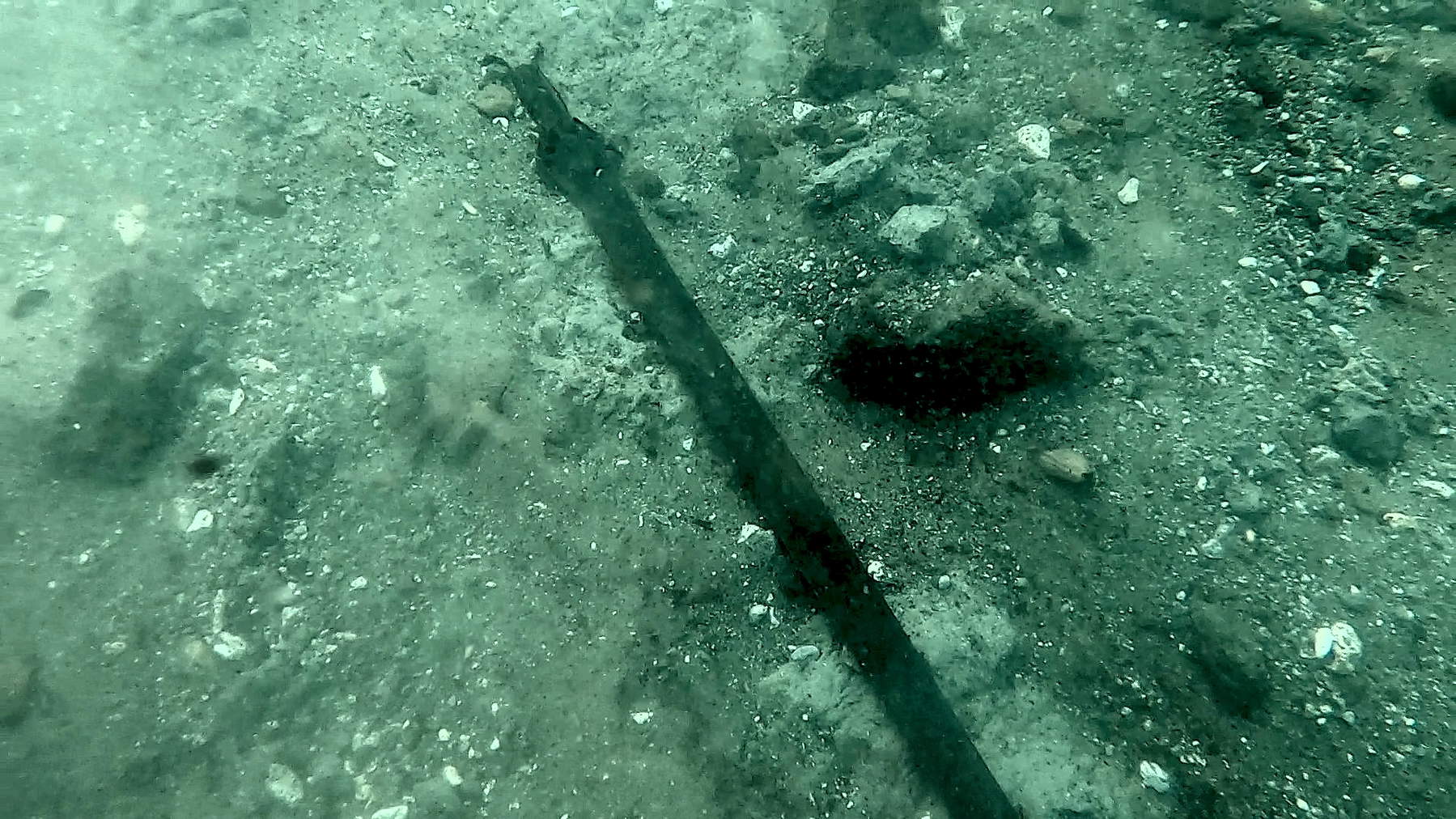
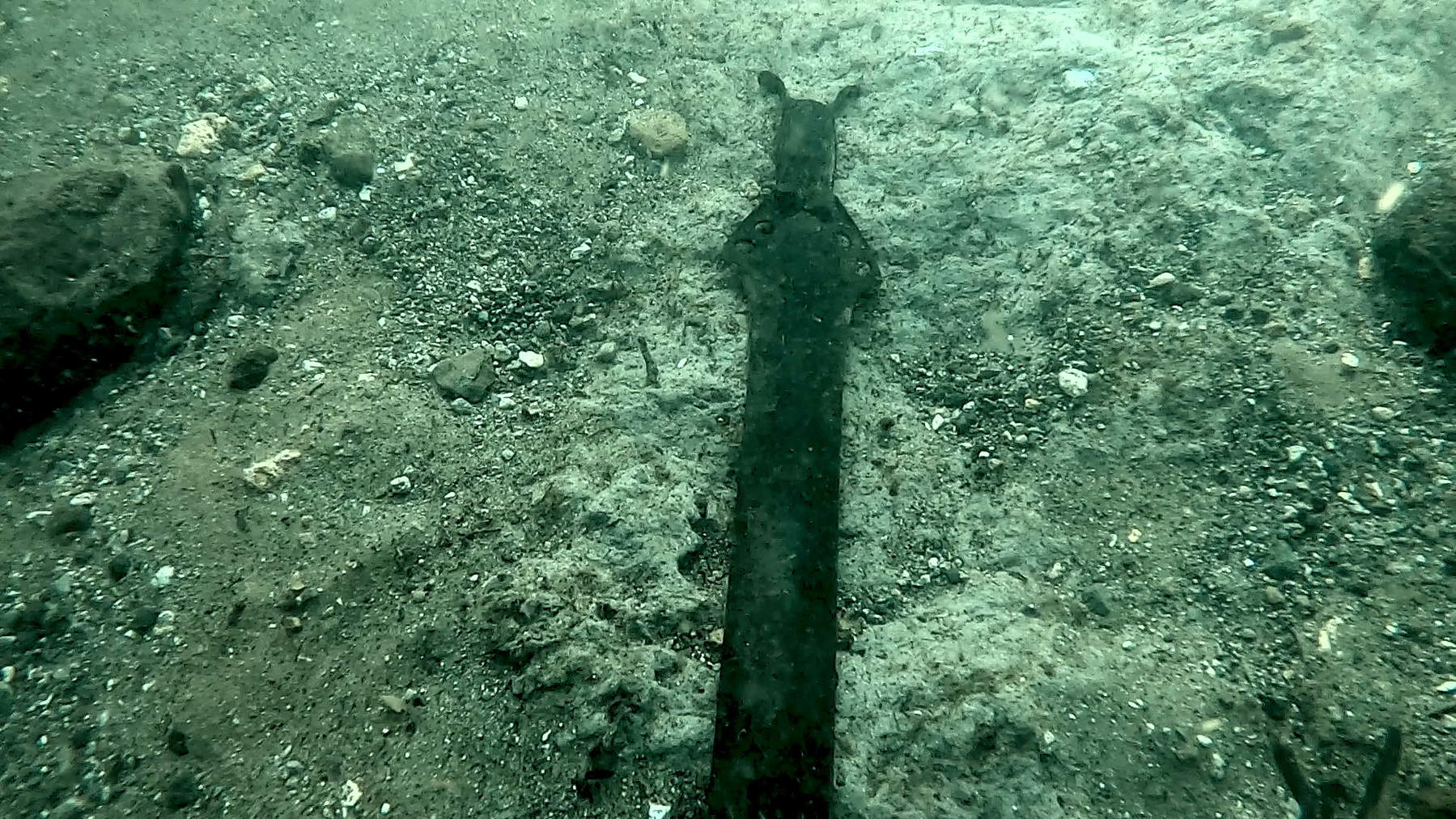
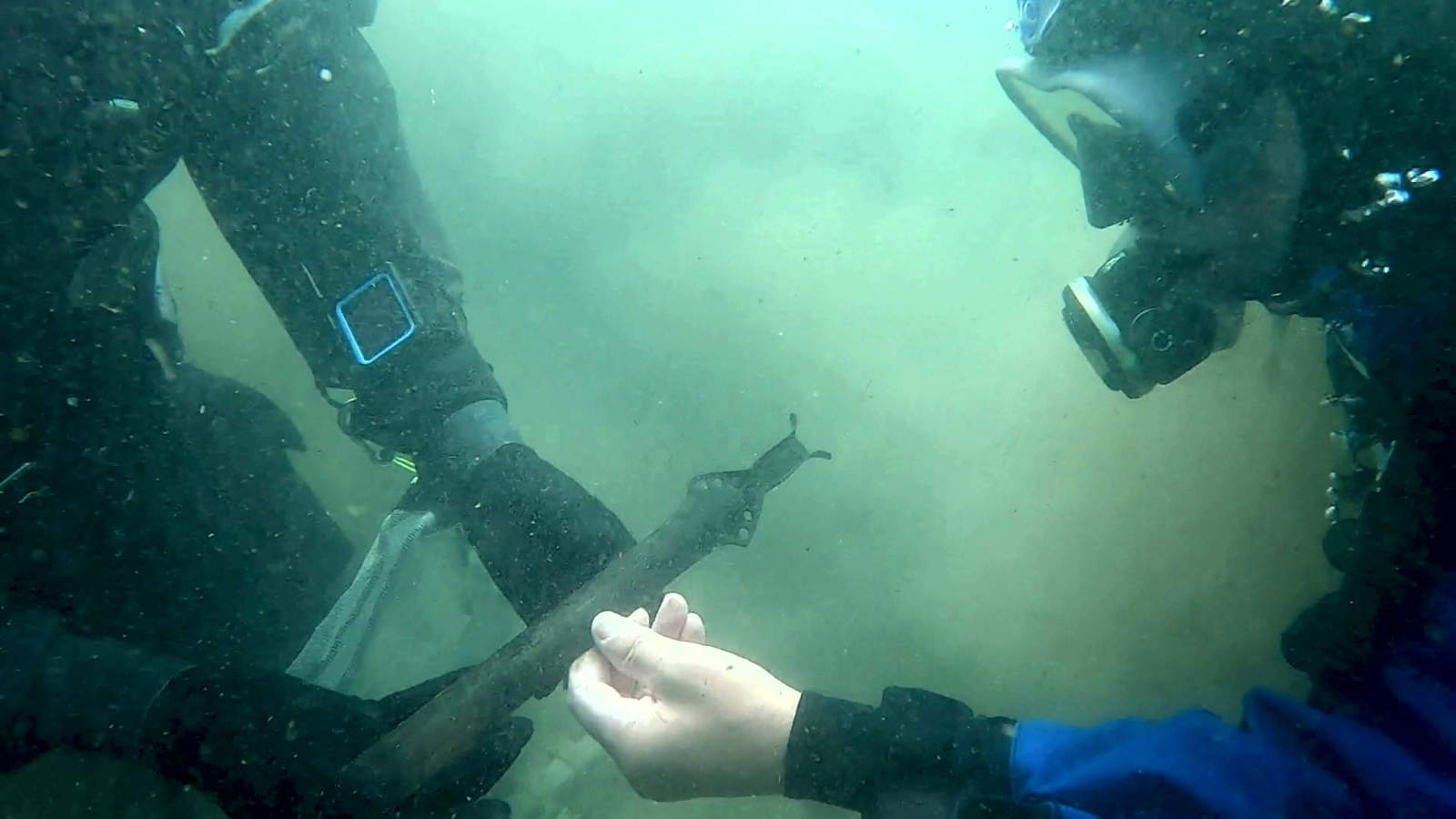
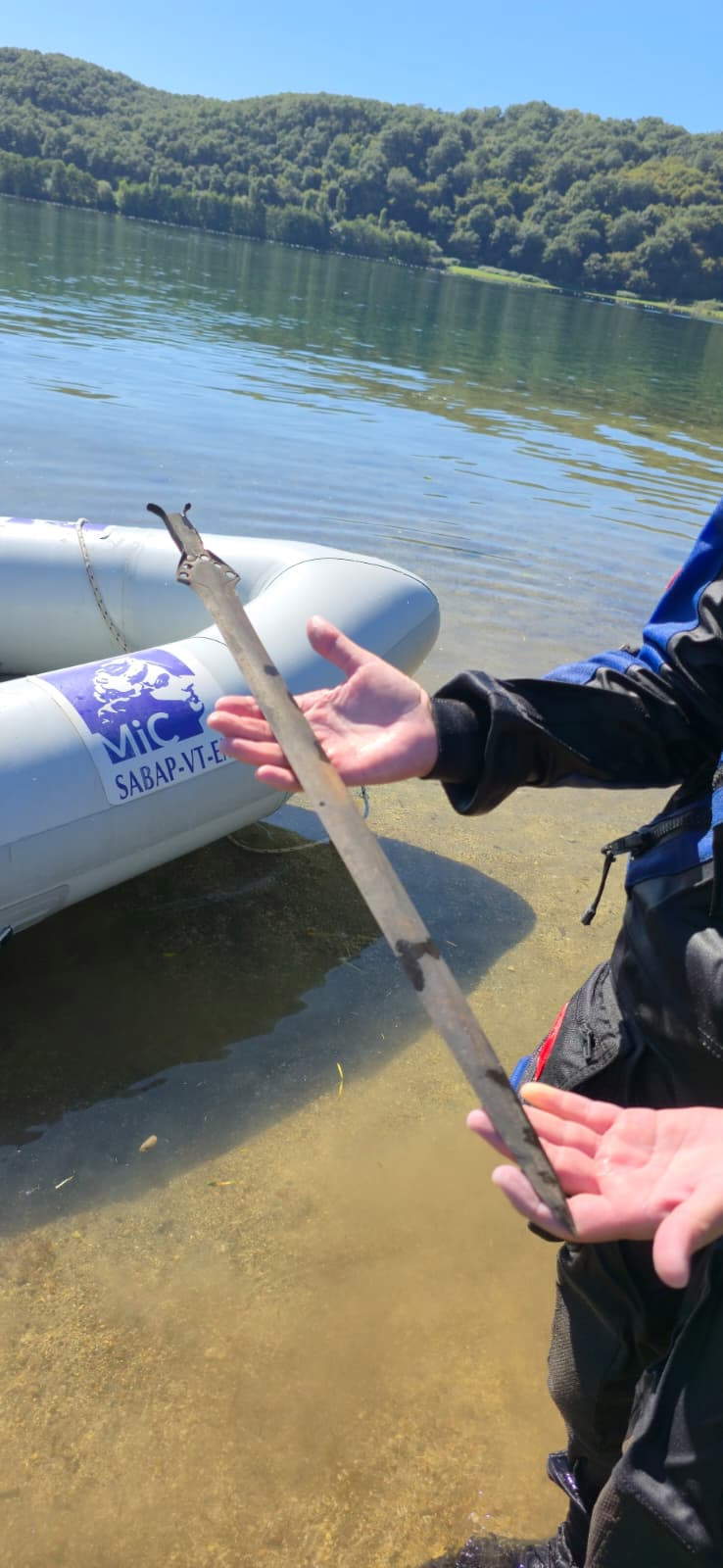
A sword over 3,000 years old, still so well-preserved that the edge of the blade remains sharp, has resurfaced from the waters of Lake Mezzano in Tuscia. The artifact, dating to the 13th century B.C., was discovered during the final stages of the research campaign conducted atthe ancient pile-dwelling settlement and represents one of the most significant findings of recent underwater archaeological investigations. The discovery was made by the Superintendence of Archaeology, Fine Arts, and Landscape for the province of Viterbo and Southern Etruria, led by Margherita Eichberg, through the Underwater Archaeology Service, as part of the three-year Public Works program. The Carabinieri from the Rome Diving Unit also participated in the activities, assisting with survey and documentation operations and ensuring safety during underwater operations.
The discovery was made along the southern shore of the lake, an area that had previously been only marginally explored. The sword dates to the Late Bronze Age and is the third sword discovered at the Mezzano site since the 1970s, confirming the exceptional archaeological value of the site. Its state of preservation is particularly significant: despite having been submerged for thousands of years, the blade still retains its sharp edge. Based on its typological and chronological characteristics, the artifact fits squarely within the metallurgical production of central Italy during the Late Bronze Age and attests to the high level of specialization achieved by protohistoric communities. The sword also provides new insights into how the Mezzano basin was inhabited and utilized over three thousand years ago. In fact, during the same excavation campaign, numerous intact vases and various bronze artifacts were recovered, including axes, arrowheads, daggers, spearheads, pins, and a razor.
Lake Mezzano, which occupies the crater of an ancient volcano, is one of the most important archaeological and paleoenvironmental sites in Tuscia. Research conducted over the past few decades has uncovered traces of a vast Bronze Age pile-dwelling settlement, inhabited as early as the beginning of the 2nd millennium B.C. The site’s location, set within a particularly favorable environment, contributed to the development of productive activities, trade, and complex forms of social organization. The new discoveries thus reinforce the hypothesis that Mezzano played a central role in the cultural dynamics that shaped central Italy during protohistory.
The sword dates to a period between the 13th and 12th centuries B.C., when the communities of central Italy were part of a dense network of contacts linking various areas of the peninsula and the Mediterranean. In this context, bronze weapons were not merely tools for combat but could also symbolize status, prestige, identity, and power.
The presence of weapons and metal objects in lake-dwelling contexts is documented at numerous European Bronze Age sites. In several cases, these finds have been interpreted as the result of intentional deposits linked to ritual and cult practices associated with water. At Mezzano, the proximity of the new sword to a bronze razor is of particular interest; this association has already been documented in other protohistoric contexts and is sometimes linked to high-ranking individuals, likely members of the warrior elite. The position of the artifacts within the submerged deposit may also provide important insights. The depths at which the metal artifacts were found show remarkable consistency across various sectors of the investigated area. This data may contribute to reconstructing the deposition processes and verifying the scientific models developed by archaeologists.
Future underwater stratigraphic excavation campaigns, supported by the use of advanced technologies for documentation and spatial analysis, will allow for a more detailed study of the distribution of the artifacts and the processes through which the archaeological deposit formed. Underwater conservators from CSR Restauro Beni Culturali, who specialize in the conservation of materials from submerged contexts, played a fundamental role in the delicate recovery operations. Their immediate intervention ensures that the newly unearthed artifacts are secured and that the necessary conservation procedures are swiftly initiated.
The new sword, along with the other recovered artifacts, thus expands the body of evidence regarding the communities that inhabited Tuscia more than three thousand years ago, offering new perspectives for the study of their economic, social, and cultural structures during an era preceding the rise of Etruscan civilization. Research on Lake Mezzano does not end with the recently concluded campaign. Investigations will continue in the coming years to deepen our understanding of the pile-dwelling settlement and the territory in which it developed.
The upcoming exhibition dedicated to the Mezzano bronzes will also contribute to the promotion of this extraordinary heritage; it will showcase to the public the artifacts recovered from the lake’s waters. This will be an opportunity to bring these artifacts from protohistory out of their underwater context and, through the objects themselves, tell the story of the communities that lived in Tuscia long before the Etruscans. The collaboration with the Valentano Municipal Administration also serves as an important foundation for developing new strategies for the protection, research, and promotion of the site. Lake Mezzano thus reaffirms its status not only as an exceptional archive of the past but also as a place still capable of yielding new insights into the earliest history of central Italy.
|
| Lake Mezzano: A Bronze Age sword in excellent condition has been discovered—it is the third one found at the site |

Warning: the translation into English of the original Italian article was created using automatic tools. We undertake to review all articles, but we do not guarantee the total absence of inaccuracies in the translation due to the program. You can find the original by clicking on the ITA button. If you find any mistake,please contact us.


























 IT
IT FR
FR DE
DE ES
ES CN
CN


