


by Maurizio Cecchetti 31/10/2026


Categories: Works and artists / Disclaimer
Rothko’s paintings explore the trauma of the Holocaust, God’s silence, and the impossibility of making sense of suffering. His use of color reflects a search for truth that offers no consolation. An article by Maurizio Cecchetti.
Thinking through pain means demanding that philosophy and writing take on the burden of that which resists all synthesis. In *Negative Dialectics*, Adorno asserts that physical suffering is the criterion of all truth, because it leads to change. After Auschwitz, the historiographical and philosophical model of “grand narratives” entered a crisis. Totalizing systems were swept away by a disintegration of human compassion. The Holocaust—a cataclysm—threw open the gates of hell onto Western culture. Speaking of this totalizing and failed claim—beginning with the Hegelian system—Adorno defines it in *Negative Dialectics* as the “totem of the totum”(the totem of the whole). He deconstructs a philosophical idol—the one upheld by idealism—which does violence to reality by subordinating the particular to the universal. The world, in all its changeability, can no longer be understood on the basis of a single supreme principle. To escape this reduction, both Adorno—and, before him, Walter Benjamin—appeal to the culture of the fragment and even turn it into a style of essay writing (the latter, in particular). The fragment is also an attempt to freeze the fears that dominate our lives, under the illusion of blunting the sting of death, as another thinker of Jewish origin, Franz Rosenzweig, argued. It is an exorcism that drives the thinking individual, and it is—as some accounts attest—one of the themes that Mark Rothko himself sought to address in his painting: primal terror. He maintained, in fact, that at the origin of his painting lay a concentration of violence: “behind the color lies the cataclysm.” To paraphrase Adorno, one might therefore say that Rothko’s painting is a wager on “painting with pain.”


Maurice Blanchot, the other contemporary author who has addressed this issue, is perhaps the one who, indirectly, has come closest to Rothko’s inner state when he argues that writing (that is, painting) does not redeem suffering, but rather confronts its emptiness and silence— two realities that the American painter placed at the center of his entire body of work. Thinking—that is, painting—strikes us from within, shatters us, and brings about our deconstruction: it is a permanent condition, in which even the process of mourning never leads to full reconciliation. In *The Writing of Disaster*, Blanchot offers insights that can also be seen as the foundation of the mourning process through which Rothko exorcises the trauma caused by the Holocaust—one of the traumas that led him to lose faith in humanity. The impossibility of making sense of what happened—the abnormal—creates a void around itself, like an atomic explosion; it raises a dense cloud that renders the silence after the catastrophe eerie, a sort of cosmic enigma without solutions: From Auschwitz—even if one has never been interned there—one does not return except as a survivor (this is the effect it had on me, nearly half a century ago, when, as a visitor to the camp, I found myself reflecting on the absurd functionality of that organization where everything—even the inmates’ excrement— was “processed” by a machine devoid of any sense of humanity, any emotion—only flawless functionality and rationality, much like the aesthetic Hermann Muthesius was accused of practicing when he designed neighborhoods that resembled clusters of shacks). Faced with extermination, the mind is unable to process grief adequately. It lacks certain grounds, certain basic tools, so to speak. If etymologically “disaster” means a departure from the stars, the loss of a guiding principle, the end of a rational cosmic order, the first to lose its luminosity was man himself, Western man, for whom technological modernity goes hand in hand with the absurdity and irrationality of the meaning of things—a meaning that cannot be devoid of a certain empathy. Despite this, Blanchot asserts: “The dark disaster brings light.”


Rothko, too, grapples with a dazzling light that rises from the darkness of the abyss, and his glazes absorb and cover it, layering themselves one upon the other like a shroud. If literature is an art that saves nothing, painting, too, comes up against this wall, before which the painting merely composes and makes evident the void left by tragedy. The silence one “breathes” in Rothko’s painting is that of an atmosphere where the rules of physics and the world are nullified; Blanchot would say that this place is the “neutral”—it contains neither affirmations nor negations. There are no consoling formulas for those who feel a burning silence in their very flesh.

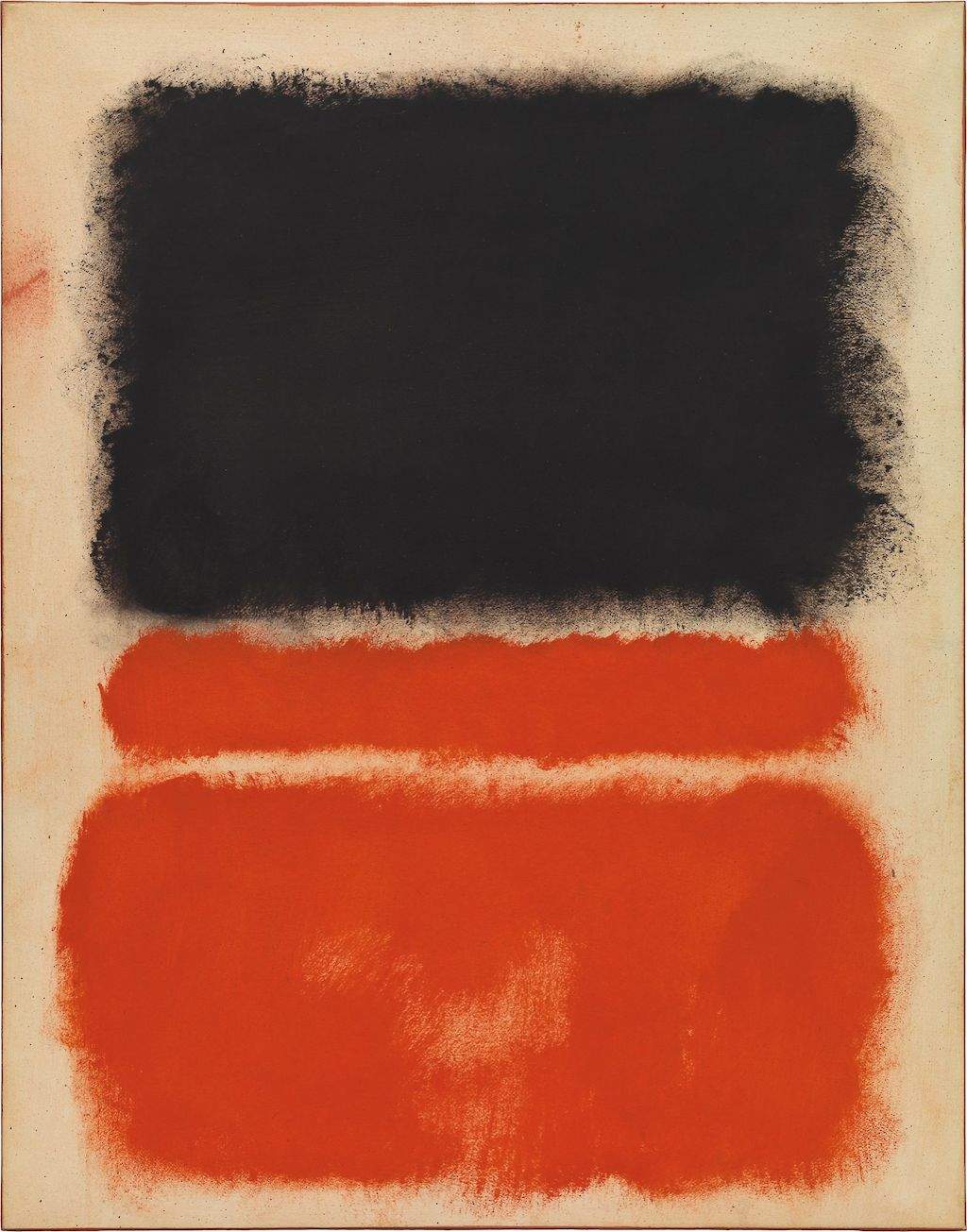
Rothko’s religion is light and the ineffable, which made him resistant to the very concept of abstraction. Dorfles observed that in the Murals, that “cosmic exaltation”—which had revealed itself in the previous decade through the vivid reds, yellows, and oranges that made the canvases resemble spaces drawing the viewer into the work—had faded. Over the years, Rothko’s painting has come to resemble embers that, even as they die out, retain their fire beneath the ashes for a long time.
An “avant-garde Jew.” This is the title Annie Cohen-Solal gives to a chapter in her biography of the painter, the original edition of which dates back to 2013 and was translated a few months ago by Einaudi. It is worth noting a change from the book’s original title, which was simply *Mark Rothko* (and remained so in the French translation by Gallimard, which reprinted the Actes Sud edition published in 2013). In the Italian translation, however, the cover features a subtitle that emphasizes the author’s central interpretive theme: “Repairing the World” (Tikkun olam). One wonders whether someone at Via Biancamano might have sought to capitalize on the critical popularity of this “precept” among contemporary Jews—an expression that appears in the text only a few times, at the beginning and end of the book. Upon arriving in America, Mark almost immediately developed a problematic and distant relationship with religious Judaism, which raises the question of how appropriate this emphasis is—even if dictated by book marketing.
The book reminded me of a technique in Japanese ornamental art, Kintsugi, which dates back to the 15th century and is intended to repair ceramic pieces that have shattered. Gold or silver is used, as well as lacquer mixed with metallic powders. In its own way, given the symbolic meanings inherent in Japanese ceramic art, this technique can also be understood as a means of “repairing the world,” but the result generally refines what had been reduced to shards, and for this reason, it certainly has little to do with restoration as such (this “restoration,” in fact, produces something new); rather, at the end of the restoration process, what is visible on the surface is a precious web that alters the meaning of the original work. With a little imagination, one might think that at the root of Rothko’s painting lies an idea of perfecting reality through a work that reflects both the artist’s vision and a critical interpretation of the adjective “abstract,” starting from the implicit reference to the Aristotelian and Scholastic concept that underpins philosophical realism: *adaequatio rei et intellectus* (the mutual correspondence between the intellect and reality), which is also a definition of truth. Rothko, in fact, had an intellectual bent, and sometimes did not hesitate to set painting aside for a while to devote himself to study (in the 1930s he had also written a manual, a sort of philosophy of art, which he did not, however, publish and which was released posthumously; the Italian translation was published in 2007 by Skira: *L’artista e la sua realtà*).
Mark pursued a truth that preceded the very question of beauty, thereby establishing a different hierarchy of the absolutes to which art aspires: truth, before beauty, and then justice, distancing himself from aesthetics itself, at times with a polemical vigor that linked his criticism to a primary commitment to “social justice.” His nature, therefore, was more akin to that of a primitive—the man who paints on cave walls without any cultural prejudice, perhaps attributing a sacred meaning to the forms, or simply to bring a piece of reality onto a cave wall so that its presence and importance would not be lost in the expression of solidarity and reciprocity among living beings—which is the foundation of human survival.
When Rothko attended Talmud school in Latvia, he studied the Jewish commandments, the mitzvot —613 precepts, both positive (“you must do this”) and negative (“you must not do this”). Despite his recognized intelligence and thirst for knowledge, his move to America at the age of ten interrupted this educational journey, becoming a significant identity crisis for the young Mark. This is another reason why Annie Cohen-Solal’s thesis—that the artist’s tormented quest reflects the “difficult and complex construction of identity of the avant-garde Jew named Mark Rothko”—is not very convincing. The author goes much further when she argues that the Seagram Murals contain “echoes of the Talmud Torah” (thus seemingly alluding to the fact that the memory of Talmudic precepts played a role in Mark’s painting as a prescriptive framework that later led him to refuse to deliver the works he had created so as not to pander to that society of “wealthy bourgeois” which conflicted with his vision of “social justice”). If the social milieu of the Four Seasons—the restaurant for which he had been commissioned to paint that series—did indeed conflict with his spiritual convictions, one might wonder why he accepted the commission in the first place, given that he was well aware of the clientele that would frequent that establishment.
As the accounts tell us, the painter’s soul was bouleversée—upset and irritated—by his encounter with American culture, in which there were more things that irritated him than those he appreciated: he was angered—to the point of total contempt for the system—by the “idolatrous” display of money and the consumerist regime of advertising, which is the defining model of society itself, even within architecture; he could not stand the commercialized image of the American world and, specifically, of art dealers; He described the restaurant in the Seagram Building—for which he had designed eleven major works that he later refused to install—as “a place where the richest bastards in New York will come to eat and strut around.” Architect Philip Johnson had divided the space into two main areas: The Grill Room—with walnut-paneled walls and a bar area—and The Pool Room—a billiards room arranged around a Carrara marble water feature. Given this opulence bordering on kitsch, it’s easy to understand why Rothko had such a grudge against the “bastards of New York.” Ten years ago, the restaurant—which Henry Kissinger called “an institution” —closed its historic location, while the Rothko paintings that were supposed to adorn the public dining rooms were exhibited as early as 1961 at MoMA, marking a major victory for the painter over the architect and the American world he so despised. But if he had agreed to see it through to the end by installing the works, perhaps he would have achieved what seemed to be his greatest desire during the last ten years of his life: to strike the viewer with a punch to the gut. To make them feel all the pain behind his painting. If he did not do so, evidently something had upset his equilibrium, and perhaps the greatest burden was maintaining his relationship with the architect Philip Johnson—a situation he was forced to relive when working on the Houston Chapel, though this time he made life so difficult for the architect that the latter eventually withdrew from the project.
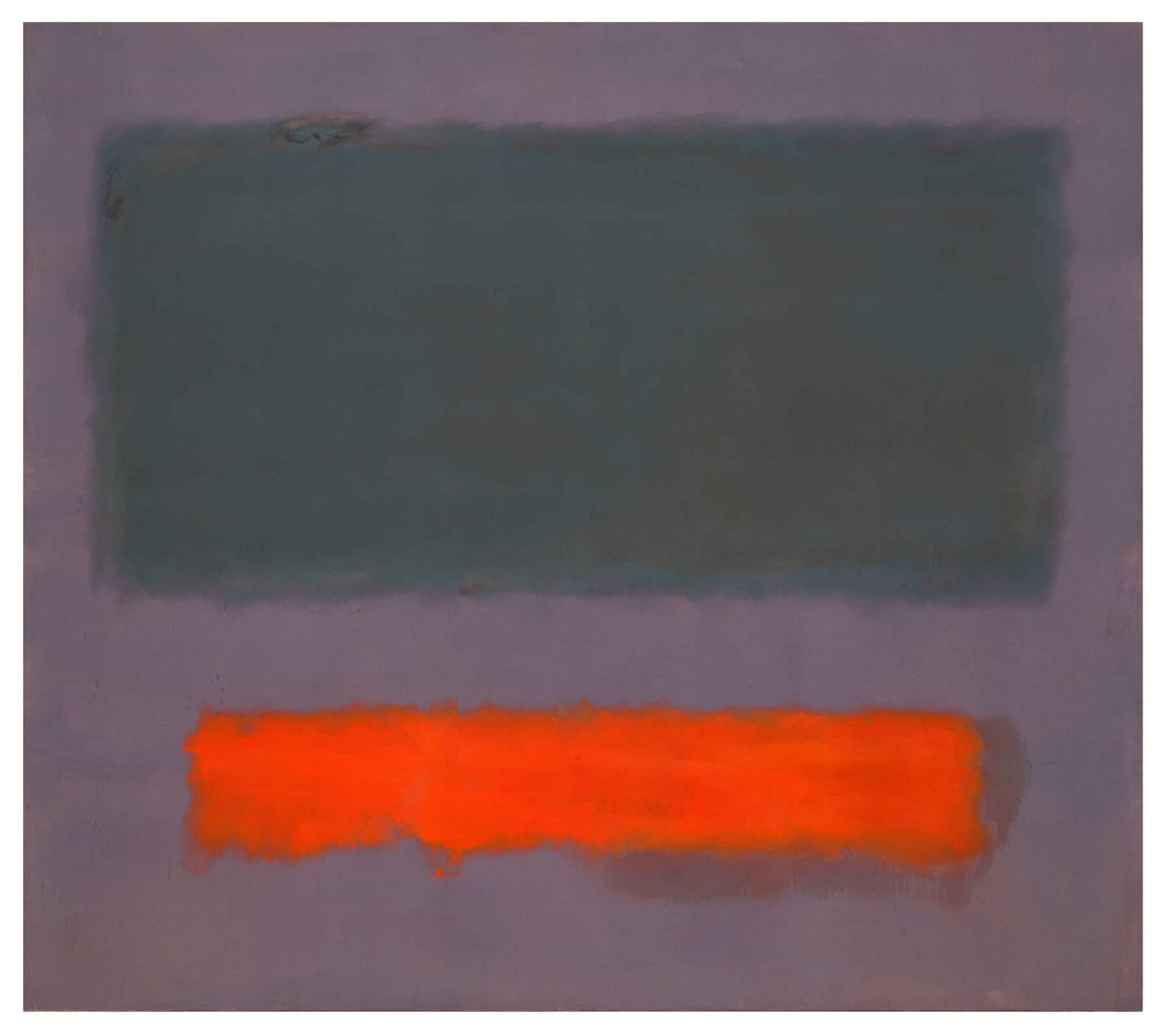
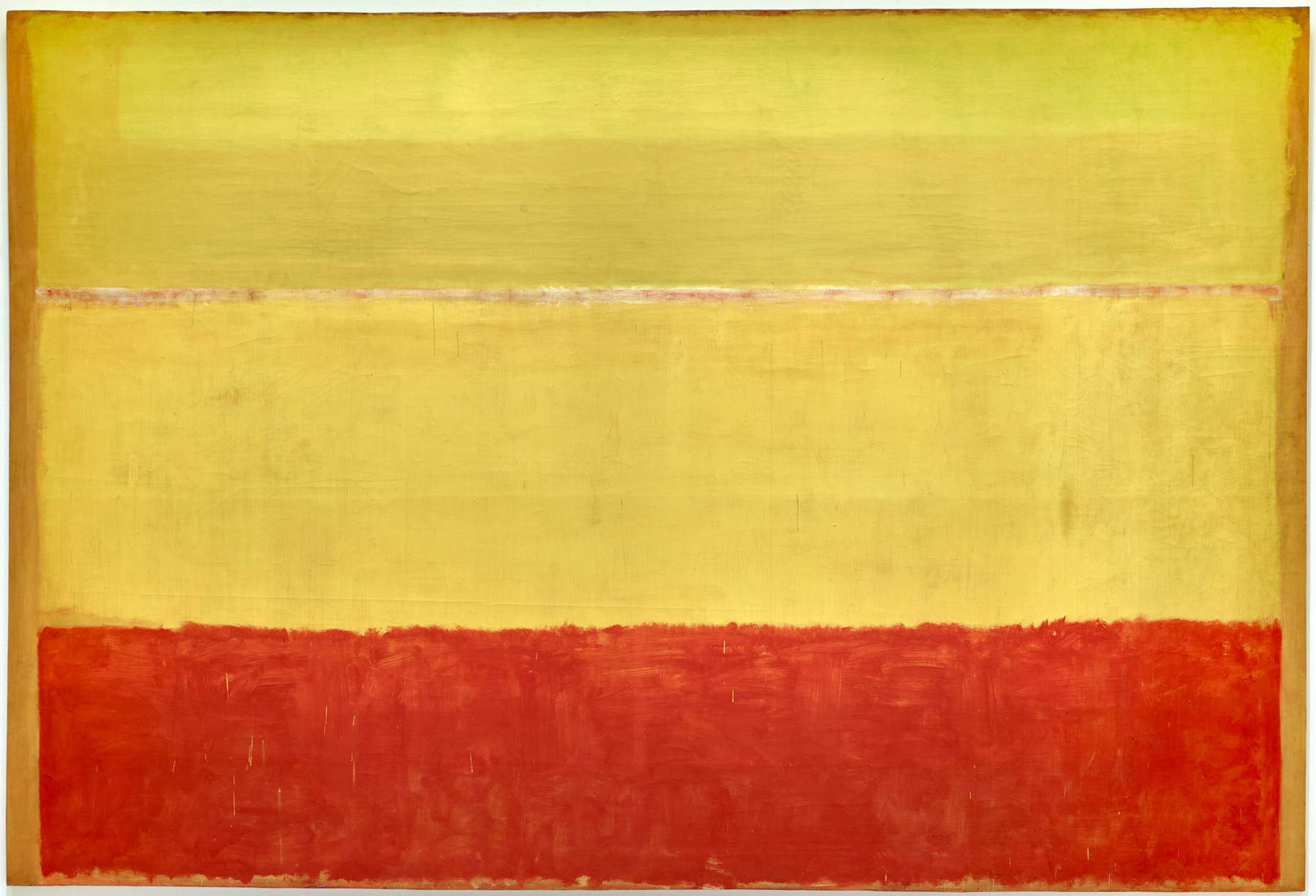
The distinction within the divine condition between two types of light was made by the orientalist and philosopher Henry Corbin: “There is a light that comes from God and a light that is God Himself. This second light is black.” As Marco Dotti observed in an important essay on this second light, as early as the beginning of the 20th century—starting from the idea that it was possible to identify a “reverse side of light” and that black represented anything but the absence of color—a host of artists, writers, theater practitioners, and scientists set to work to explore what seemed to be one of the most enigmatic mysteries of matter and its metamorphoses. Among these visionaries of black light was Antonin Artaud, who, regarding his concept of cruelty—often misunderstood by many readers of his work—wrote that it should be understood “in its Gnostic meaning as a whirlwind of life that pierces the darkness, in the sense of that pain without whose inescapable necessity life could not exist.” Dotti further observed that Artaud cultivated a dangerous “passion for light,” which corresponded to the “idea that in the darkest recesses of corporeality lies a form of knowledge that cannot be reduced to discursive reason.” Artaud, too—like other seekers of that light, from Swedenborg to his contemporaries Daumal, Breton, and Dalí—touches upon the very same limits of the unspeakable that lay at the origin of Rothko’s pictorial thought.
A rejection of the idol and a search for the inaccessible transcendent—which becomes a form of the limit—the gaze that opens onto the vision of nothingness and emptiness: Rothko experiences his painting as an open wound, and seeks a truth in it akin to a mystical cloud, a dew on the retina, which, as it dissipates, exposes him to the ineffable. It is to this black light that the painter turns to seal it, in a sense, within a transcendental density of color. A light that seems to re-emerge from the origin of the cosmos, as suggested by the magnetic waves that the Hubble telescope detected, tracing back as far as thirteen billion years ago. It is a long way from here to assuming a religious commitment that Rothko never explicitly articulated. As some have also noted, at best his Jewish identity was the cultural superstructure of an “atheistic agnostic”—that is, a secularized Jew. Adolph Gottleib was very clear on this: “Rothko wanted to be considered a great artist, on par with a Rembrandt, not a Jewish artist.” Perhaps Mark could not stand the attempts by some members of the New York Jewish community to bring him back into the synagogue: he had abandoned his religious background immediately after arriving in America, following his father’s death in 1914. He was about eleven years old, and for several months Mark went every day to the cemetery synagogue to recite the Kaddish, the prayer through which the relatives of the deceased process their grief (the Kaddish, which literally means “sanctification,” serves above all to publicly reaffirm faith and praise God even in times of grief). Having fulfilled those obligations, the boy decided never to set foot in the synagogue cemetery again. Perhaps the religious observance had become a source of resentment, as if it reawakened in him the pain caused by the loss of his father: his detachment from religious affiliation was called into question by a grief that had left him hollow, leading him to abandon the faith of his forefathers. Faced with the irreparable tragedy of death from a young age, he challenged himself by practicing “critical thinking” grounded in universal values such as those of the Enlightenment, without ever severing ties with certain Jewish cultural institutions, such as the Brooklyn Jewish Center in New York, where he taught art to preteens for over twenty years. However, as an artist, he had no qualms about stating that he would never work for a synagogue, if anything, for a Catholic church (and that is what he did when Dominique de Menil asked him to design the Houston Chapel, initially conceived as a Catholic place of worship, and inaugurated as an interfaith chapel after Rothko’s death).
To test Rothko’s painting against the lens of Judaism, one must better understand the meaning of that expression, Tikkun olam, “repairing the world,” which, as someone has written, has become over the last thirty or forty years the panacea for many ills in the Jewish world—a sort of theological and ethical “parsley” that inspires so many Jews, especially in America. It has been observed that if, in the 19th century, a Jew in Poland, Iraq, or even New York had been asked what Tikkun olam was, he would likely have shrugged and said he didn’t know much about it: “It was a rather obscure term,” explained Jonathan Krasner, a scholar of contemporary Judaism and editor-in-chief of the *Journal of Jewish Education*, while “today, Tikkun Olam is ubiquitous.” Many American Jews consider it a pillar of their Jewish identity and experience it primarily as a social and political imperative—a call to ethical behavior. This is not the place to address this issue in detail; however, ever since Tikkun became central to the political vision of Zionism, it has also come to encompass the return to Palestine and the establishment of the State of Israel (as Theodor Herzl theorized in the early 20th century): in short, that concept is viewed as an active instrument for the redemption of the Jewish people (Krasner, however, has also written about internal divisions among Jewish students regarding the conflict between Israel and Gaza). The most common criticism raised by observant Judaism is that Tikkun has become a Trojan horse for those in today’s America who seek to build a bridge to liberalism, using it as a starting point to redefine Jewish identity in a secular sense. In essence, Tikkun is often seen as concrete action to correct inequalities, combat poverty or racism, or as a commitment to environmental causes or economic justice; but on an individual level, it is viewed as the path to healing one’s soul through kindness and simplicity. For an artist, Tikkun can also be the reconstruction—through sculptural and painterly materials—of the plan that guided Creation. “Repairing the world” is what God asks of humankind, calling it to a commitment that makes it an active participant in redemption (This interpretation of Tikkun represents, for many Jews, a leap in consciousness in the thinking shaped by the Holocaust, as explained by the Jewish thinker Emil Fackenheim in his essay *Tiqqun: Repairing the World—The Foundations of Jewish Thought after the Holocaust*, Milan, 2010). And speaking of art, in the eyes of some viewers, even a work such as that by the German artist Anselm Kiefer, titled *The Seven Heavenly Palaces*, inspired by the *Sefer Hechalot* (“Book of Palaces”), a text of Jewish mysticism from the 5th–6th centuries CE that describes the soul’s initiatory journey through seven celestial levels to draw near to the presence of God. Kiefer’s connection to Judaism stems from the “sense of guilt” of a son of that Germany in which Nazism flourished and for which the artist “atones,” so to speak, his own origins, because in the case of the Holocaust, the principle that the sins of the fathers are visited upon the children admits of no exception. Kiefer also bears witness to this through his special relationship with Paul Celan and, in particular, his staging of one of Celan’s most harrowing poems, written in 1945: *Todesfuge*(*Fugue of Death*), in which two female figures stand face to face: Margarethe, the golden-haired Aryan, who evokes Goethe’s *Faust*, and Sulamith, the beloved from the *Song of Songs*, with ash-colored hair, a symbol of the Jewish people (but also of the Church in the interpretation of the early Christian Fathers). The ambivalence of ascending toward heaven—via Ezekiel’s Chariot, with which one ascends to the Throne of God to contemplate His greatness—or descending into the abyss that looms over our horizon: “This coincidence of two opposing directions,” Kiefer explained, “is already found in Goethe’s *Faust *. When Faust descends from the mothers, he says, ‘Ascending, ascending, you descend.’”
While there is a contemporary, distinctly ethical version of Tikkun olam, we must not forget that its origins lie in the mystical conception developed by the Kabbalist and rabbi Isaac Luria (born in Jerusalem in 1534 and died in Safed, in northern Palestine in 1572, whose reputation for holiness was vast and who left behind eighteen books of admonitions and theological doctrines compiled by his disciples), who, troubled by the problem of evil in the world (how can God’s creation contain evil?), placed particular emphasis on Tikkun olam through the doctrine of Tzimtzum, according to which God withdrew, contracting His infinite light, until He created a void from within Himself to make room for creation. According to this Kabbalistic doctrine, divine light was sent into the world through special vessels—those of knowledge—which, however, were shattered by the power of that light (Shevirat Ha-Kelim), so that the divine sparks (Netzotzot) remained trapped in the various scattered shards. Restoring the original order—by removing the divine sparks present in the shards from the evil and imperfection of the world and returning them to God—this is the Tikkun olam that the believing Jew must practice through good deeds, prayers, and study.

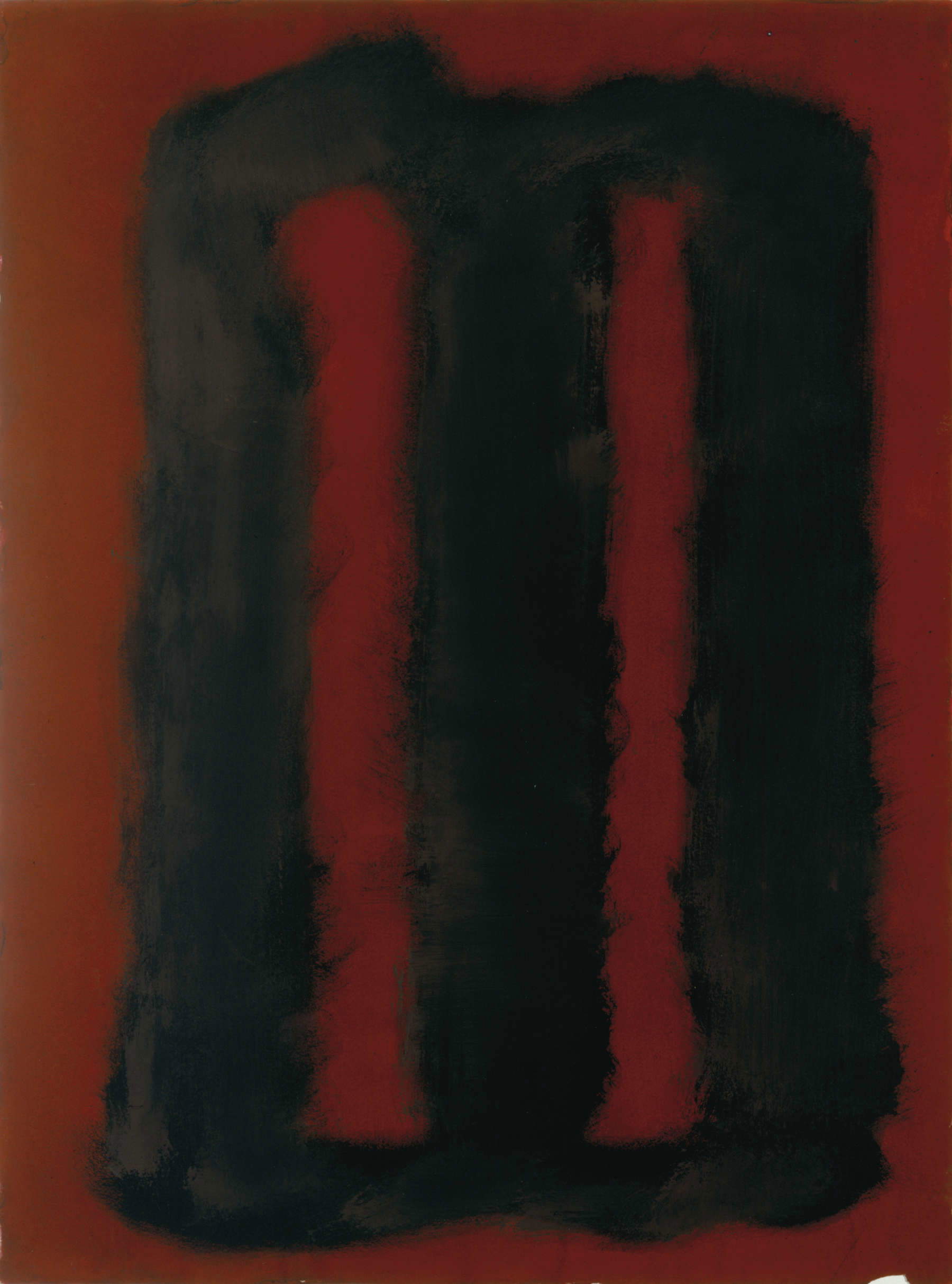
Mark Rothko was deeply committed to improving people’s lives through educational initiatives; specifically, as we have already seen, he devoted himself to the young people at the Brooklyn Jewish Center in New York—not to turn them into professional artists, but to help them express their personalities and manage their emotions: it was not, therefore, a traditional teacher-student relationship, because he saw himself as a mentor whose role was to help them develop self-esteem. His critical spirit toward reality and the world, and his desire to preserve that light in painting, can also be interpreted as a legacy of his Talmudic education (after all, light is the dominant theme of art over the last two centuries, and it is one of the universal concepts closest to the divine, but also a theme of Enlightenment mythologies). In this way, painting as well—and Rothko’s in particular—can be viewed according to the precepts of Tikkun, that is, as a contribution to the sacred restoration of the world; but would this interpretation—which is the core of Cohen-Solal’s book—be sufficient to bring Mark back into the fold of Judaism into which he was born and which, after his youth, he had almost forgotten, going so far as to embrace agnosticism? As we have seen, the Holocaust represented a cataclysm that forced even Jews to rethink their own relationship with God, and some of them turned away from the confessional dimension. Rothko experienced the ferocity of Russian anti-Semitism in Latvia, and as early as his teenage years he was touched by what Hannah Arendt called the “banality of evil”—a term she applied to Nazism—a concept that today can be extended to encompass the great tragedies of all totalitarian regimes.
Banality and frustration—two states of mind experienced by those forced to exist in a stalemate devoid of meaning and depth, such that “the circular thought that grasps the totality of horror never manages to comprehend it, but is limited to confronting it in a surprise filled with horror, or in a horror filled with surprise”: with these words, Emil Fackenheim touches upon a truth that is also present in Rothko’s painting, particularly in the Murals created for the Houston Chapel: “A horror filled with surprise, or a surprise filled with horror.” It is with this bipolar awareness of the primordial evil buried deep within the human heart that Rothko penetrates with his whole being, even without an explicit direct connection to the mystery of the Holocaust. After Auschwitz, God seems to have fallen silent, making the silence so extreme as to transform the biblical paradox into a true aporia of twentieth-century thought. But the Deus tacitus —whom humanity awaits—evokes the Latin River Lethe, which flows ever calmly, slowly, and peacefully, without making any sound or murmur. This silence is the shell of the divine presence, which also carries with it the modern tragic irony of Kafka and Beckett. Godot never arrives because, so to speak, the absurd is the face of God when He does not wish to be recognized. And his silence, one might say, carries here a weight proportional to the horror that gave rise to it.
The Houston Chapel, which condenses into a single space the full meaning of Rothko’s eschatological exploration of the eloquent form of silence, was originally intended to be affiliated with the University of St. Thomas (a Catholic institution in Houston); those were years marked by a fervent climate of ecumenical openness fueled by the Second Vatican Council, which would later lead the De Menils (though they were devout Catholics) to make it an interfaith and non-denominational building—that is, open to anyone, whether atheist or agnostic, who felt the need to pray and meditate on universal values, but also as a place where representatives of various religions could gather for conferences and lectures. The patrons gradually came to understand that Mark Rothko’s abstract and ascetic art (devoid of images, crosses, or confessional symbols) required a space not bound to a single faith. The De Menils’ initial intention, however, had been to use that building and Rothko’s works to honor the memory of art historian and museum curator Jermayne (Jerry) MacAgy, who died prematurely in 1964. And when they approached Rothko, he immediately sensed that this was his great opportunity to create a series of artworks in which the architecture would finally enhance his paintings—and not the other way around— as had been the case with previous commissions that had left the artist deeply frustrated (in particular, the one for the Four Seasons). The painter worked to ensure that an octagonal floor plan—such as those found in early Byzantine churches—would be adopted, a space that would strive for unity of form without becoming a hierarchical space. As he told Dominique de Menil in 1964, Rothko had been deeply moved upon seeing the mosaic of the Last Judgment above the altar of the Byzantine church of Santa Maria Assunta in Torcello, near Venice, and thus reiterated to his patron that, in the Chapel’s paintings, he would recreate a similar tension between “tragedy and hope.” During the building’s dedication ceremony, held in 1971—exactly one year after Rothko’s death—Dominique de Menil spoke of the Chapel’s fourteen paintings as follows: “They are intimate and timeless. They embrace us without confining us. Their dark surfaces do not hold the gaze... We can look through these purplish browns, look into infinity.”
Rothko’s final ten years were a time of a slow “descent into the underworld.” A metamorphosis—particularly evident in the Murals—that went hand in hand with existential struggles, which he would bring to an end by taking his own life; as a critic, Dorfles notes that the oil paints Rothko used in the 1950s, and the tempera on paper, had a particular luminosity, and that by introducing acrylics (according to Willem de Kooning, the painter did not particularly favor oil as a painting technique, whereas the luminosity of the egg tempera used by the 15th-century Florentine painters seems to have deeply moved him), his painting had become impoverished, rendering it “less spiritual.” This is a bold assessment on Dorfles’s part, given that the three cycles of Murals that occupied Rothko from the late 1950s until his death in 1970 were, in the artist’s intentions, expressed on “metaphysical” and spiritual levels: the various layers of color—subtle glazes building upon one another—captured, through their chromatic frequency, that light which was the goddess to whom Rothko turned in order to achieve the “perfect” form in his paintings. His painting—even when he was still using vibrant colors in the 1950s—was that of a man tormented by an awareness of his own origins and by his inability to integrate into and embrace the values of American society. That final phase of his artistic exploration would be his definitive “process of mourning,” which began when he left Latvia as a child.
Warning: the translation into English of the original Italian article was created using automatic tools. We undertake to review all articles, but we do not guarantee the total absence of inaccuracies in the translation due to the program. You can find the original by clicking on the ITA button. If you find any mistake,please contact us.