



by Redazione 22/10/2026


Categories: Archaeology / Disclaimer
In the waters of the Portofino Marine Protected Area, the Carabinieri Diving Unit discovered nine Roman amphorae, reopening an archaeological case first documented in 1959 by Duilio Marcante and verified in 1960 by Nino Lamboglia. The issue of protecting the site now arises.


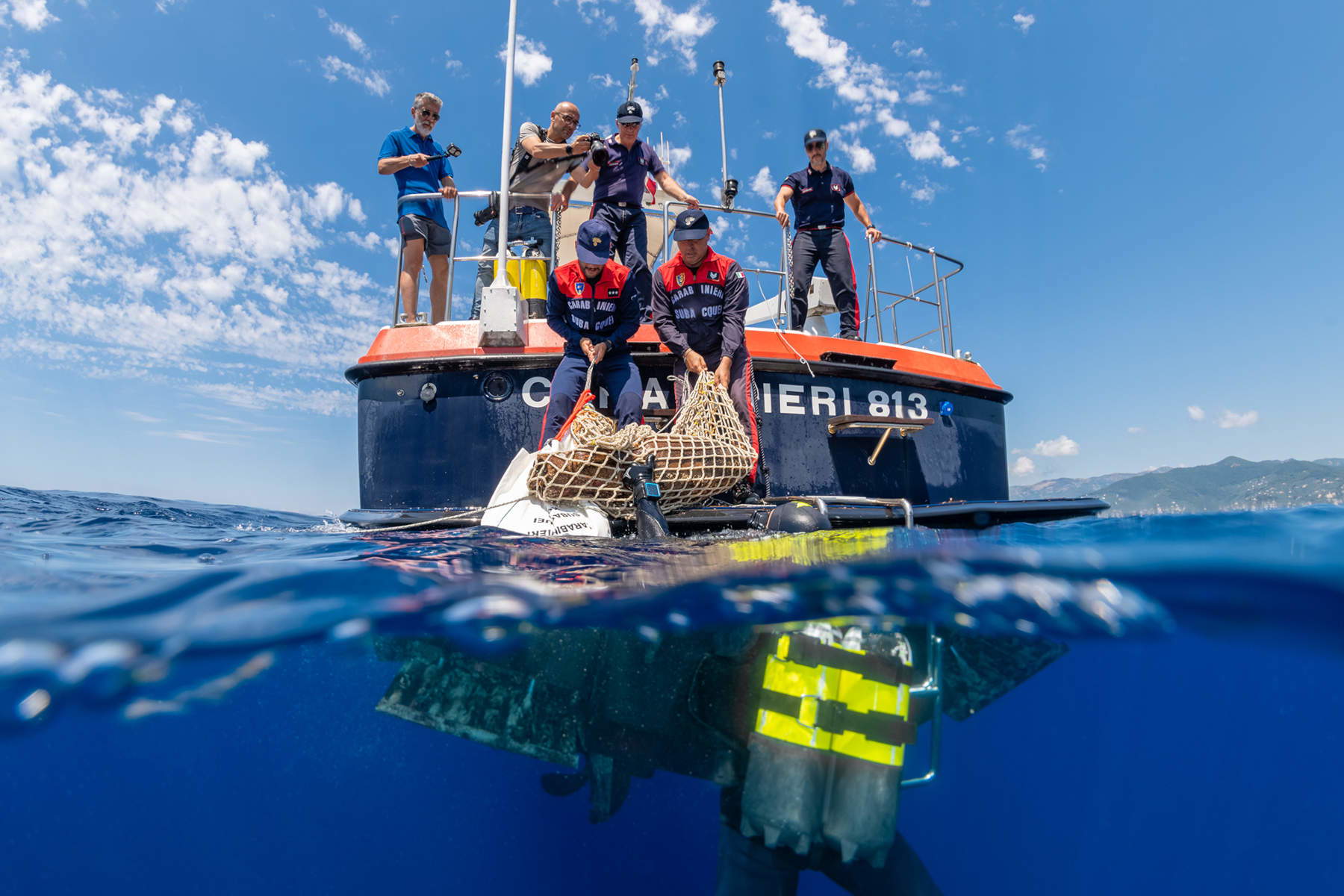
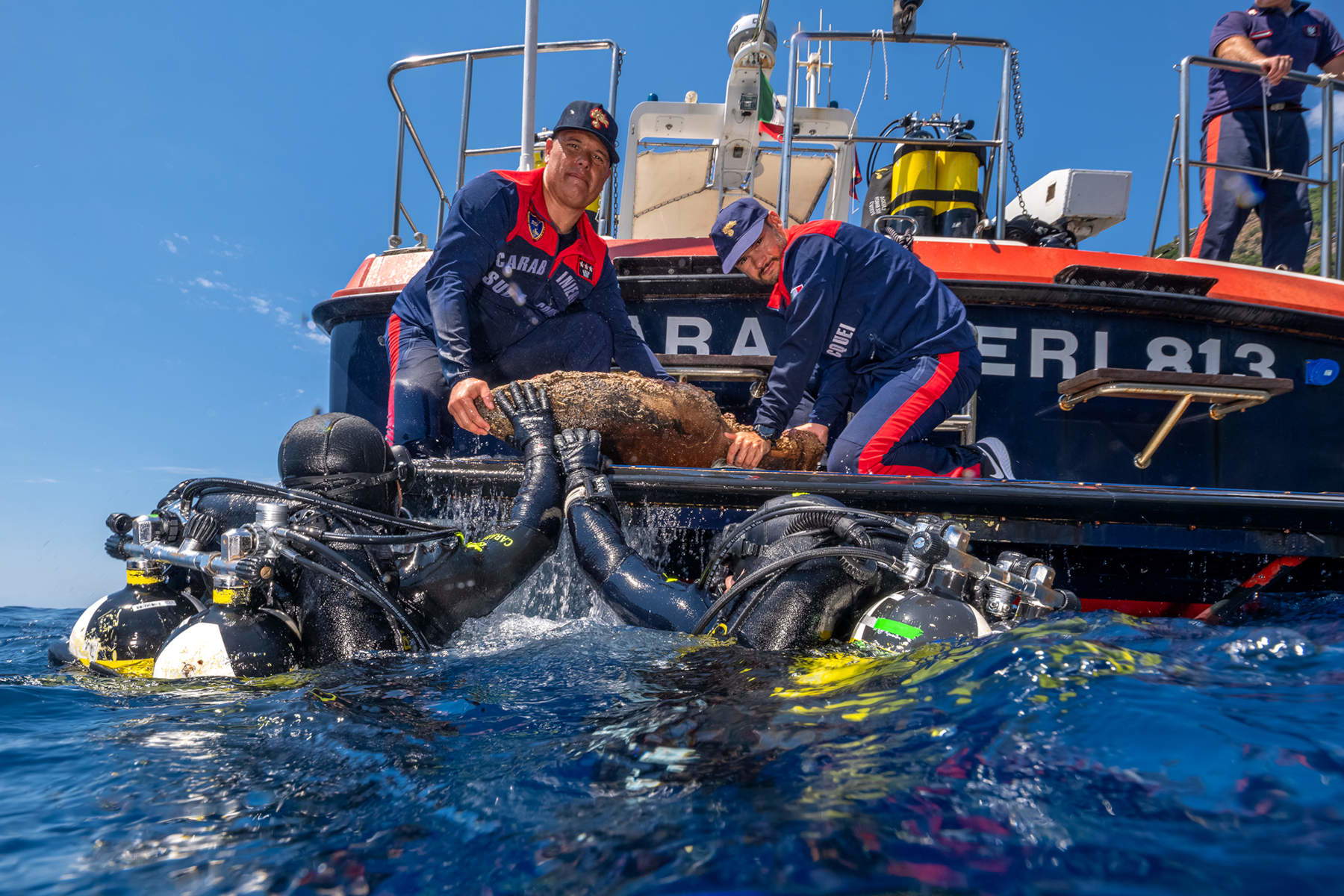
A long-lost Roman shipwreck has been rediscovered in the waters off Punta Chiappa, in Camogli (Genoa),within the Portofino Marine Protected Area. During a training exercise, the Carabinieri of the Genoa Diving Unit discovered an intact Roman Dressel 1-type amphora at a depth of over forty meters. Subsequent collaboration with the Superintendence of Archaeology, Fine Arts, and Landscape for Liguria and its Technical Service for Underwater Archaeology (S.T.A.S.) made it possible to identify a concentration of artifacts consistent with the presence of a shipwreck.

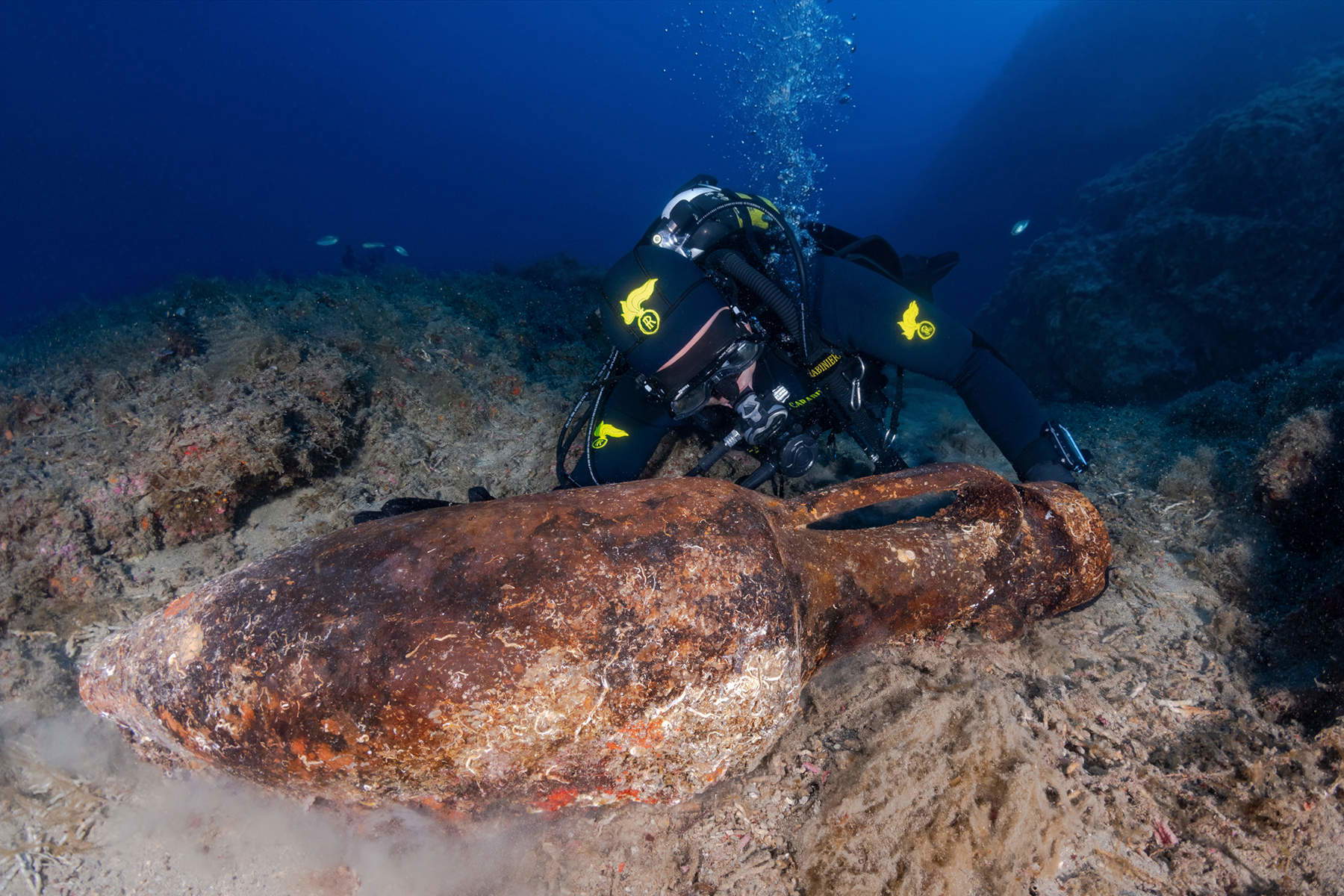
The initial survey identified nine amphorae, distributed within a confined space along the crevices of the cliff face. The identification process was made difficult by the position of the artifacts, which were firmly embedded in the rocky seabed and covered by substantial coral-like concretions. Two amphorae, considered to be at greater risk of theft due to the high volume of divers in the area, were recovered.


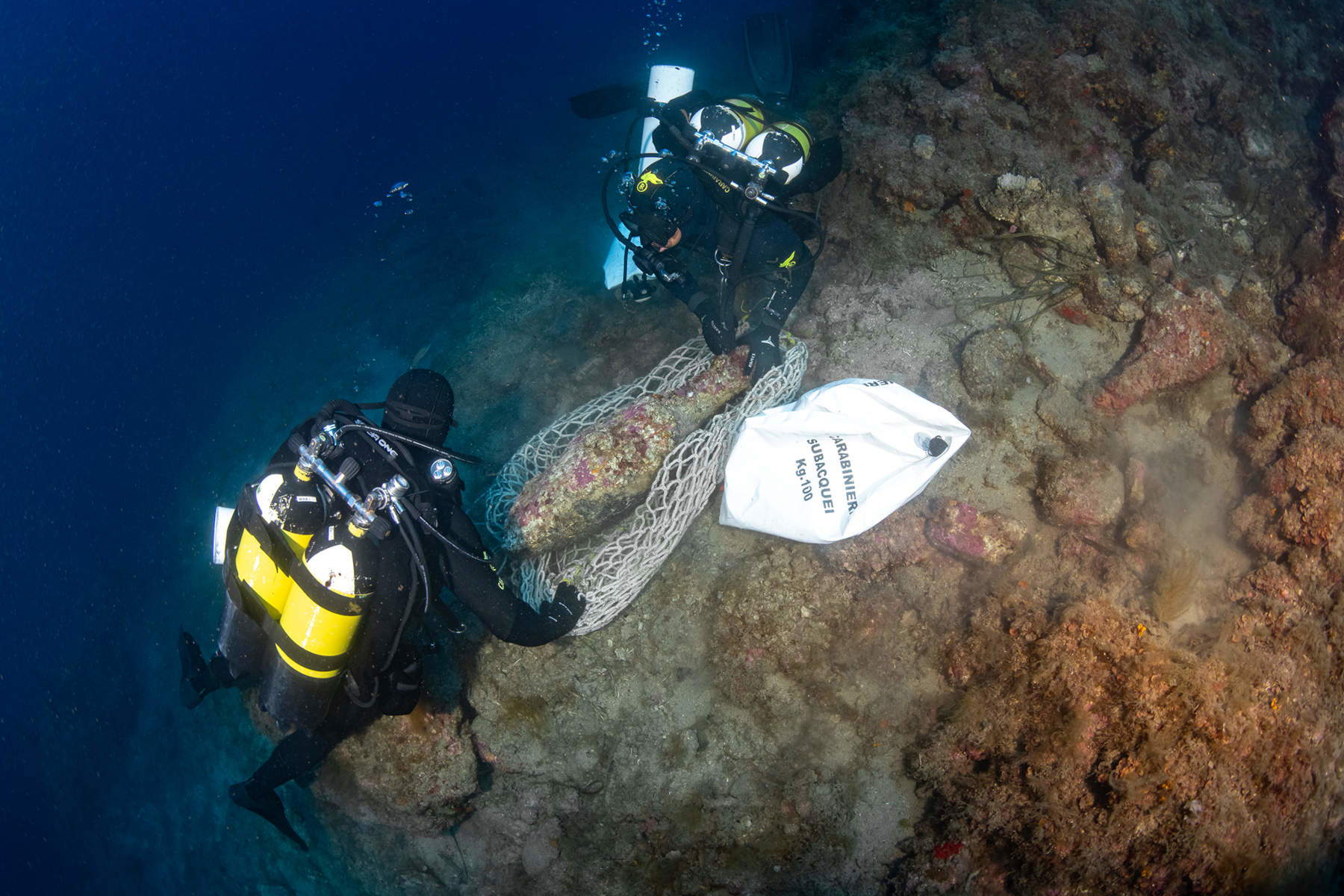
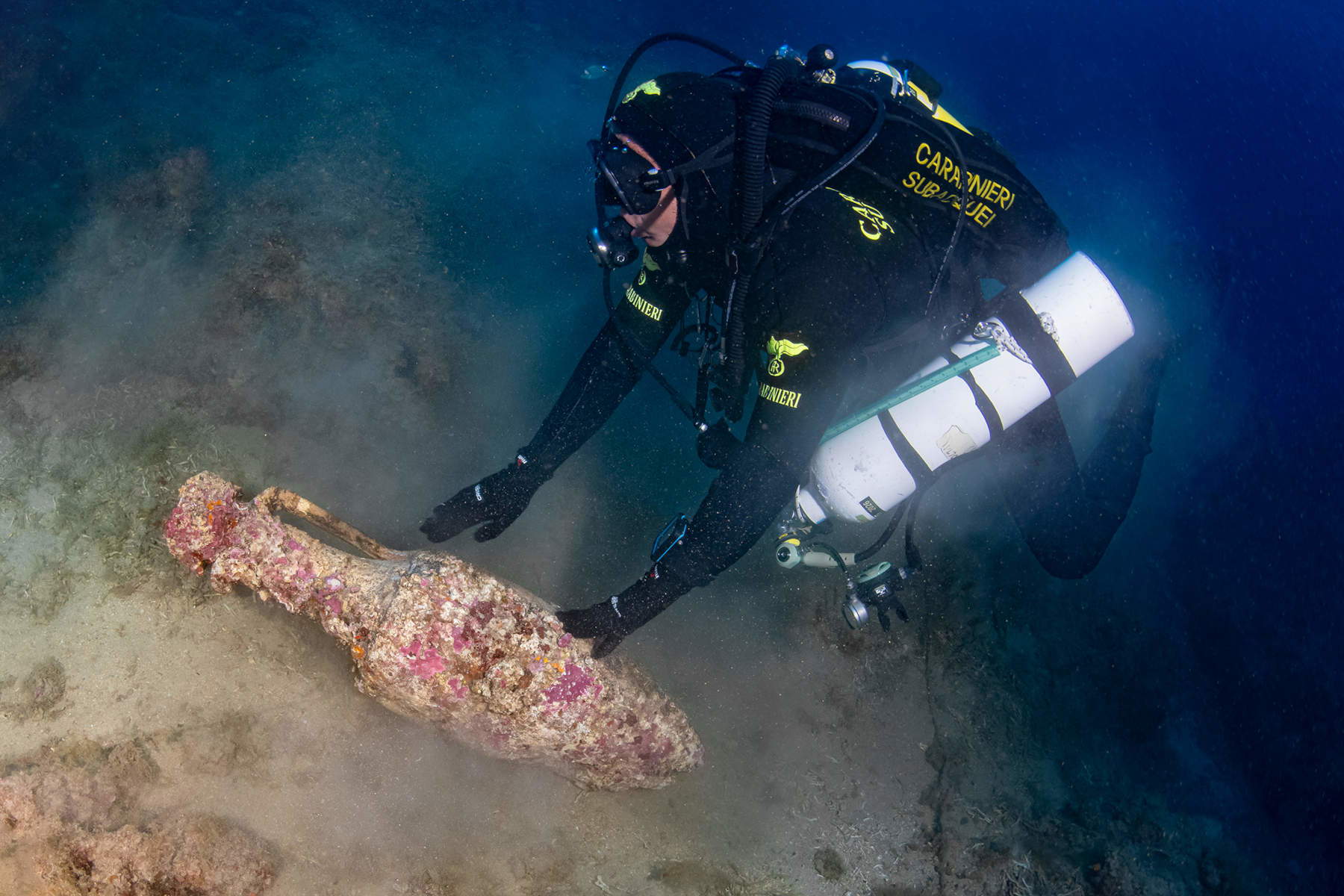
The discovery reopens a story that has been documented since 1959. On November 10 of that year, Duilio Marcante (1914–1985), a pioneer of Italian scuba diving, reported to the Superintendence of Antiquities of Liguria and the Experimental Center for Underwater Archaeology in Albenga the presence of amphorae “wedged between the rocks and fused to them by substantial masses of madreporas and calcareous algae.” During a dive conducted with the Carabinieri Diving Unit, Marcante had in fact located the two amphorae. A survey of the area had also revealed other amphorae and a possible pile at the base of the cliff, hidden by muddy sediments.
On November 9, following the first dive on the 7th, the team returned to the site and recovered two intact amphorae to prevent possible theft. On May 8 and 9, 1960, Gianni Roghi, a collaborator at the Albenga Center directed by Nino Lamboglia (1912–1977), had dived again with Marcante and the Carabinieri to inspect the site. However, no trace of the alleged pile remained. An amphora tied with a thin rope—likely prepared for theft—and three fragmentary amphorae embedded in the concretions were found.
The incident was documented by Lamboglia—considered the father of Italian underwater archaeology—in the proceedings of the Third International Conference on Underwater Archaeology, held in Barcelona in September 1961.
“In November 1959,” Lamboglia summarized, “Mr. Duilio Marcante, Director of the Mediterranean Diving Center and the School of Underwater Fishing in Genoa, an experienced diver and an active participant in the first 1958 research campaign on the Roman Ship of Spargi (Sardinia), reported the discovery of a field of Roman amphorae at a depth of 45 meters at the tip of Punta Chiappa. The difficulties of the season prevented an immediate continuation of the research, but the considerable depth and steepness of the seabed made the use of the vessel Daino—then in its first year of operation—inadvisable, and the project was postponed indefinitely. It is likely that, in the meantime, the site was not spared from illegal looters.”
An article published by *Il Secolo XIX* on November 18 also attests to the interest of the Provincial Tourism Board, which even then recognized underwater cultural tourism as a resource worth promoting. Since then, however, the wreck had disappeared from surveys. The new discovery now brings the conservation of the site to the forefront. Despite the depth and the encrusted condition of the artifacts, the Superintendency considers it necessary to implement constant monitoring and regulate diving activities to protect this submerged archaeological heritage, which is exposed to visitor traffic and potential illegal removal.
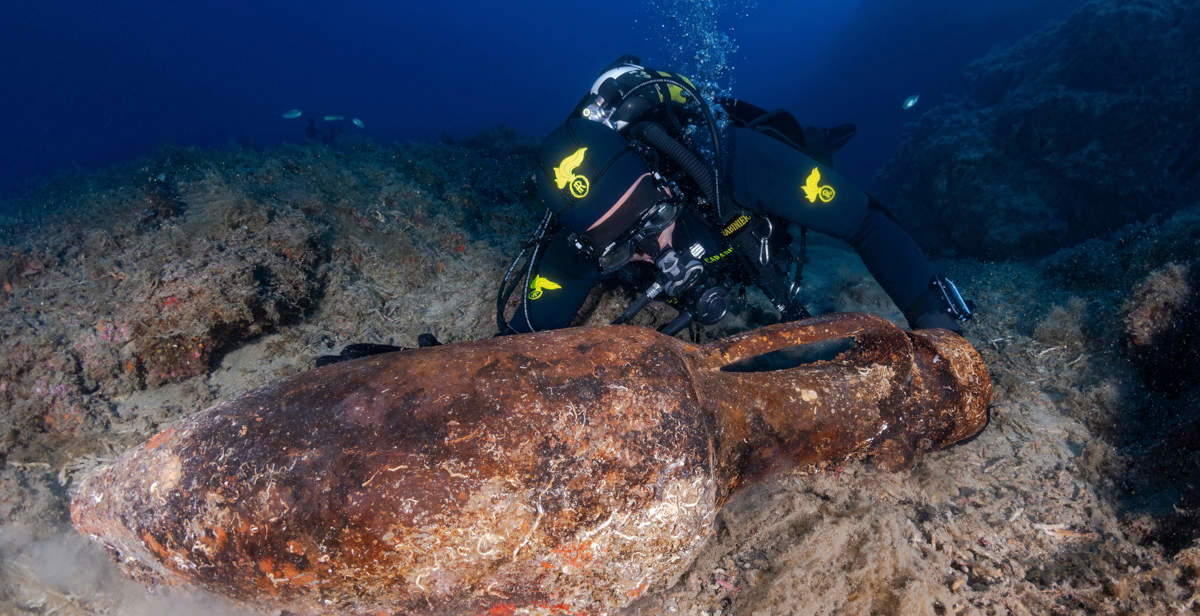 |
| Nine amphorae on the seabed: a long-lost Roman shipwreck resurfaces in Camogli (Genoa) |
Warning: the translation into English of the original Italian article was created using automatic tools. We undertake to review all articles, but we do not guarantee the total absence of inaccuracies in the translation due to the program. You can find the original by clicking on the ITA button. If you find any mistake,please contact us.