



by Redazione 21/11/2026


Categories: Contemporary art / Disclaimer
A great artist connects an Australian museum to a Spanish desert: the artwork in Sydney changes with the wind and the climate of Almería. There are floating fish, a piano that plays on its own, images of a luminous cuttlefish, and an eleven-hour film. It’s *5 Moons*, the new exhibition by Philippe Parreno, who is showing in Australia for the first time.


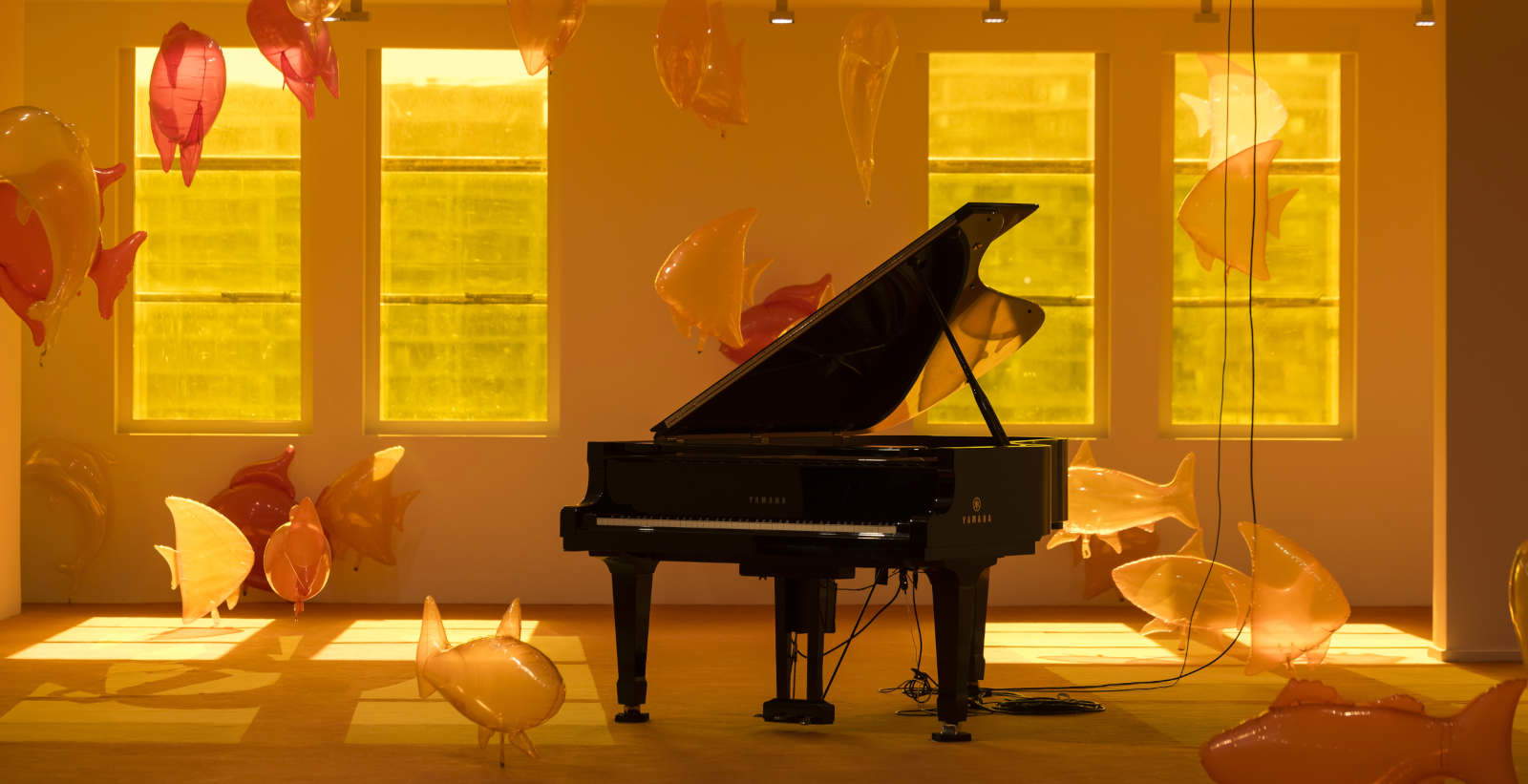
When a gust of wind sweeps across the hills of Almería, in southern Spain, and in Sydney, Australia, the light changes. Or all it takes is for an animal to pass among the abandoned almond trees, or for the air to become more humid, for the sound and atmosphere in the galleries of the Museum of Contemporary Art Australia to shift. Connecting these two places—separated by about 17,000 kilometers and located in two different hemispheres—is Philippe Parreno ( Orano, 1964) with his exhibition *Philippe Parreno: 5 Moons, the French artist’s first major exhibition in Australia, running from November 21, 2026, to April 26, 2027. The exhibition features floating fish, a piano that plays by itself, images of a luminous cuttlefish, and an eleven-hour film—all elements of a single organism in which no work exists in isolation. But the heart of the project lies elsewhere: a distant landscape that, in real time, determines how the works are presented to the public.

The starting point is El Almendral, an abandoned almond farm on the edge of the Tabernas Desert. It is a landscape familiar to cinema, as European Westerns have used it for decades to depict the American West. That past finds its way into the film: as Parreno himself explains, among the images captured by the camera are traces of abandoned Westerns. In the center of the farm, Parreno has installed a weather tower. Together with a network of sensors and microphones scattered across the ground and embedded in the soil, the tower has transformed the estate into an observatory that records wind, light, heat, humidity, rain, and the slightest vibrations of the ground day and night.


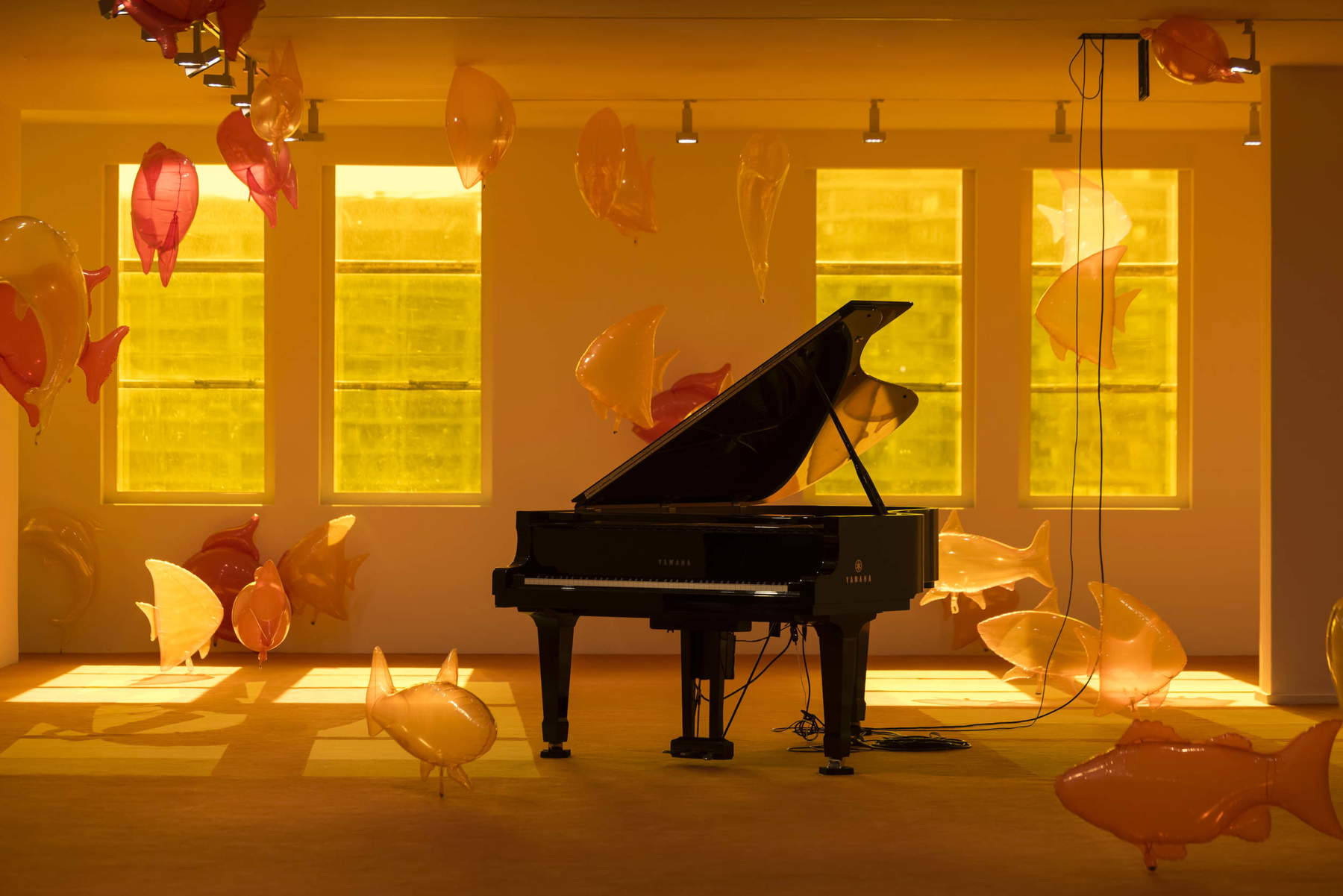
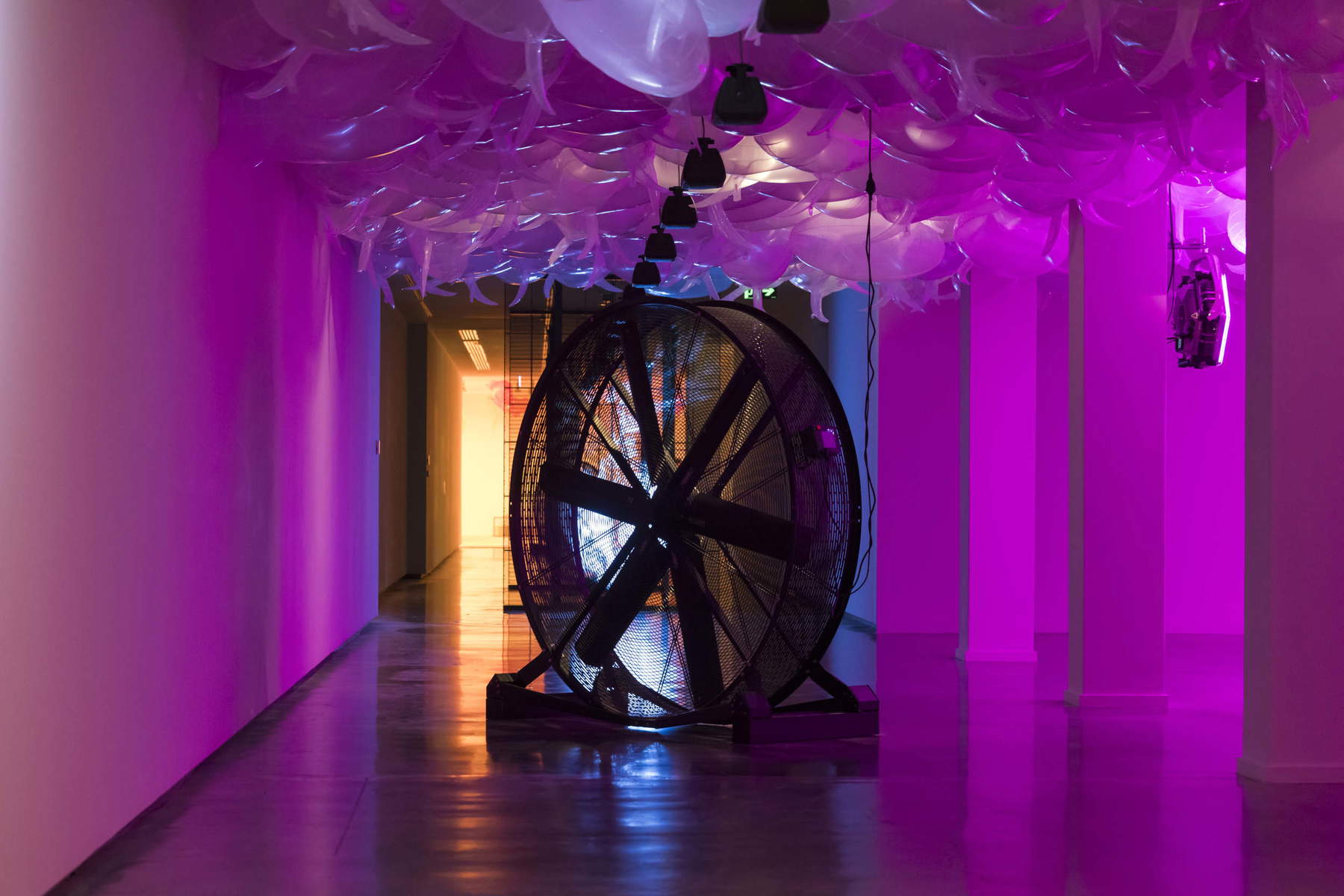
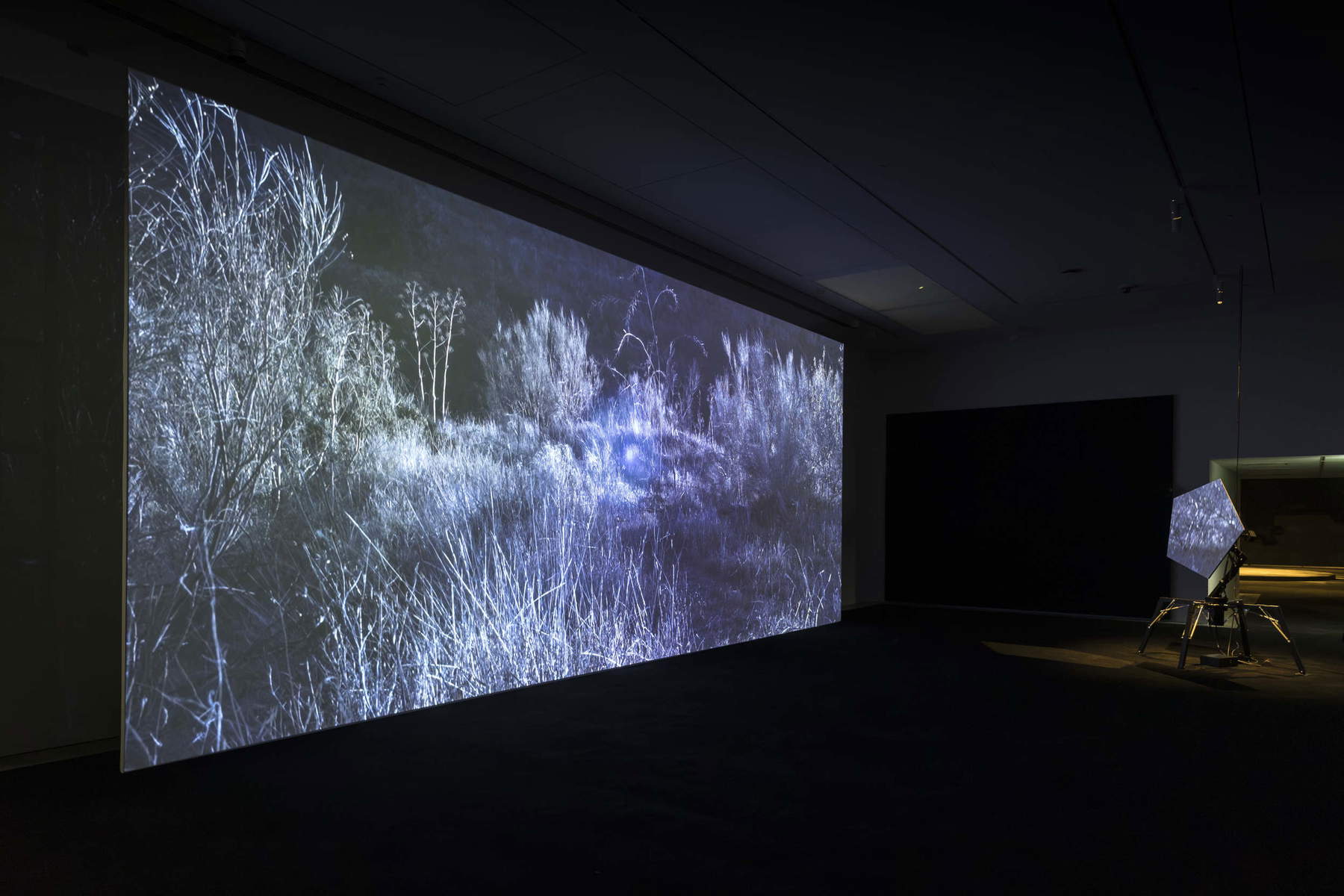
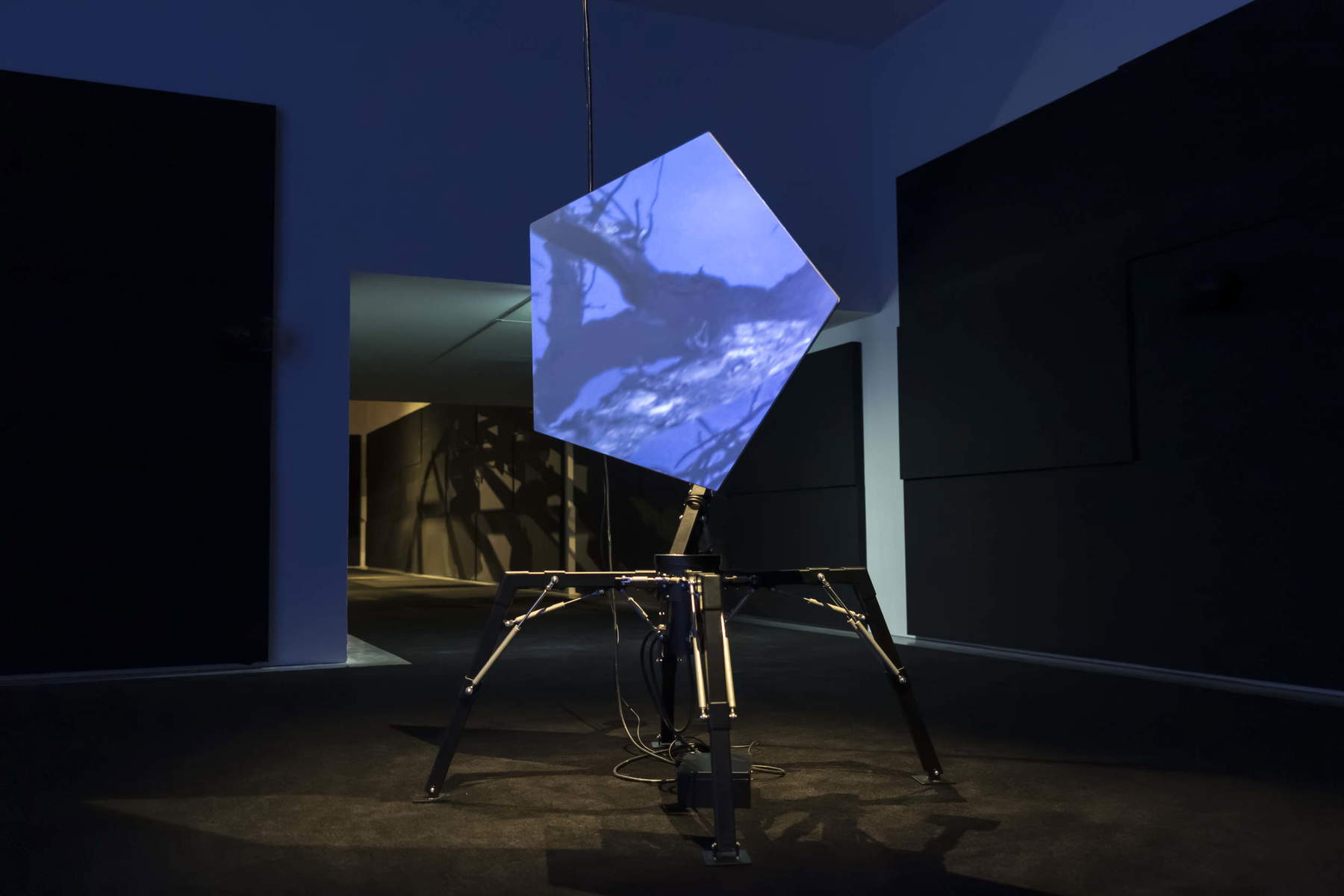
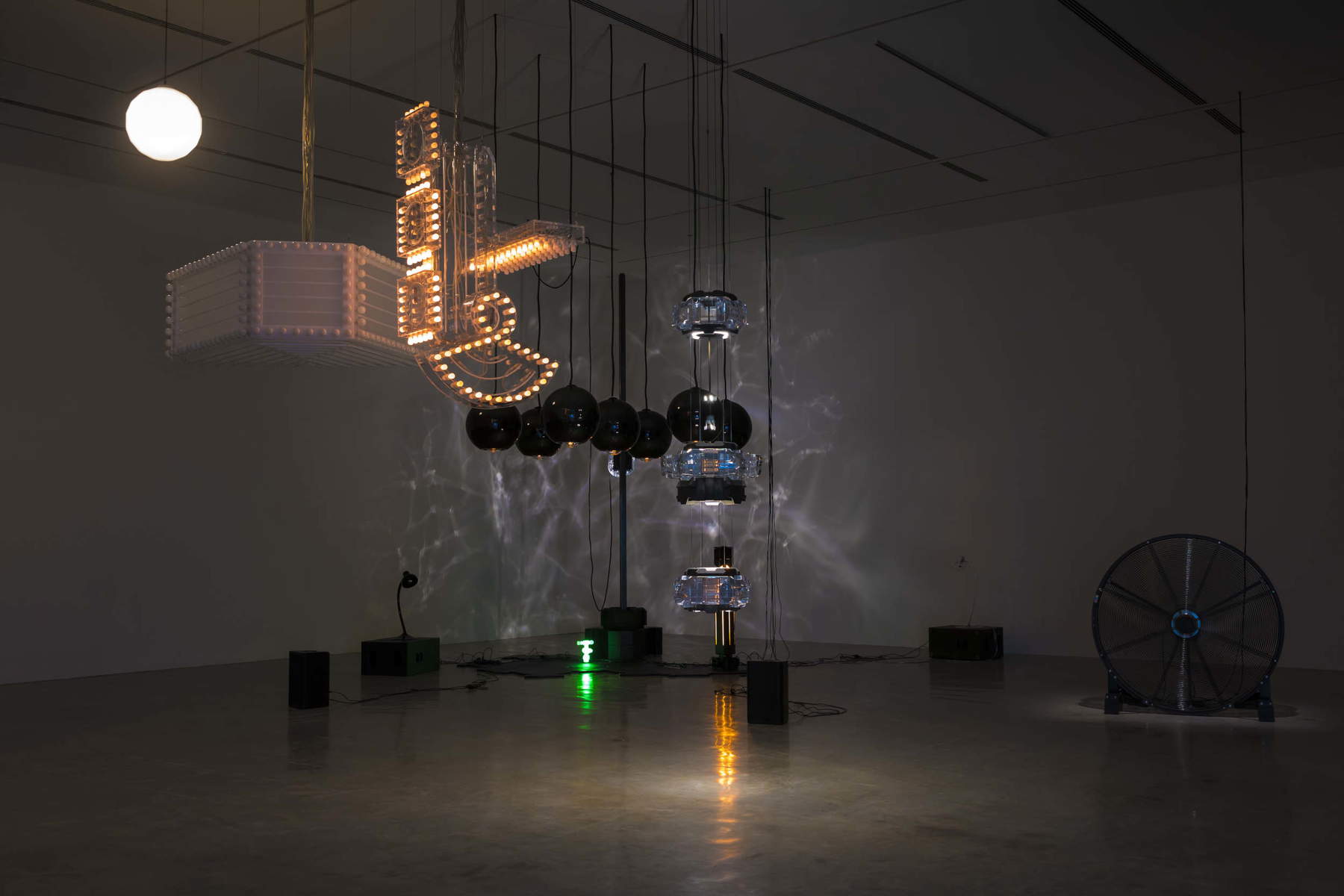
This data is transmitted live to Sydney. When the observatory detects a change, it sends signals that modify the lights, sounds, and atmosphere throughout the exhibition in real time. The footage shot in Spain is static, but the conditions under which it appears depend on what is happening in the desert at that moment. For five months—that is, five lunar cycles, hence the exhibition’s title—an orchard in Almería becomes a landscape overlooking Warrane, Sydney’s harbor. The film was shot once and for all, but the way it presents itself to the viewer changes with the weather in a distant place—a place the visitor cannot see but whose effects they feel: the weather in southern Spain becomes part of the exhibition.


At the heart of the exhibition is *5 Moons*, a new nighttime film shot in El Almendral and co-produced with the Australian museum. It is the film that provides the score for the entire exhibition, a sort of script that governs everything else. “Tabernas arrives in Sydney not as a film set, but as a climatic condition: a migration of light, sand, heat, and silence,” explains Parreno. “What is filmed there—the arid hills, the mineral folds, the traces of abandoned Westerns, the scorched grasses, the shadowless roads—settles here, as if the desert had changed hemispheres. It is not a representation of the desert, but its transposition: an almond grove in Almería becomes a landscape in Sydney. The film pours into the city like a hot wind from another time.”
To understand the project, one must look at the way Parreno—born in Algeria in 1964—has always worked. He is known for expanding the possibilities of the exhibition format, transforming entire museums into staged environments where a series of events unfolds. In Sydney, too, the true material of the work is the exhibition itself, and its construction is part of the work. The museum describes 5 Moons not as a set but as an active “environment,” spread across all three floors of the MCA, in which each element interacts with the others. Films, sculptures, sounds, and lights—drawn from a career spanning over thirty years—echo one another and react to what is happening on the other side of the world. There is no single starting point nor a hierarchy among the works: a few simple rules, applied locally, produce configurations that no one can fully predict. Parreno creates the conditions for something to come to life, then lets that life unfold without him.
“Philippe Parreno has radically changed the way we think about art,” says Suzanne Cotter, director of MCA Australia and curator of the exhibition alongside Anna Davis and Tim Riley Walsh. “Instead of presenting artworks as static objects, he creates living environments in which sound, light, architecture, moving images, and people become part of an experience that changes over time. We are delighted to present his first major Australian exhibition at MCA Australia and to share such significant work by this visionary artist with the public as part of the Sydney International Art Series.”
Among the most recent works on display is *Otherwhence (Ineluctable Modality of the Visible)*, screened in the museum’s Lecture Theater. In this film, the camera is focused on a cuttlefish, and the experience is reversed: we are the ones exposed to its gaze and attention. The animal constantly changes color and shape and never stops looking at us. This choice is no accident. Among the themes explored in the exhibition catalog is precisely the cuttlefish’s cognition, along with poetic resistance and the philosophy of “decreation.”
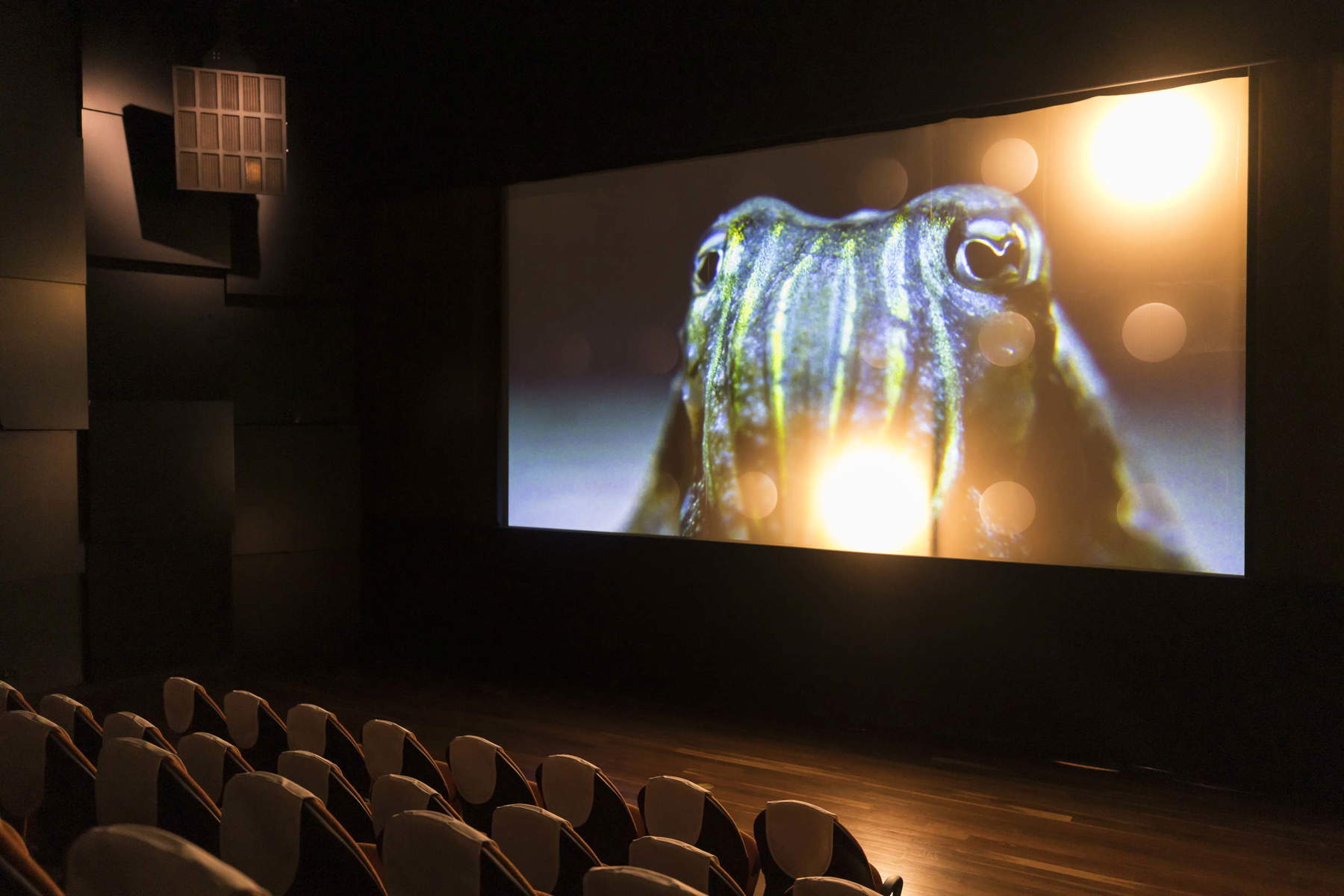
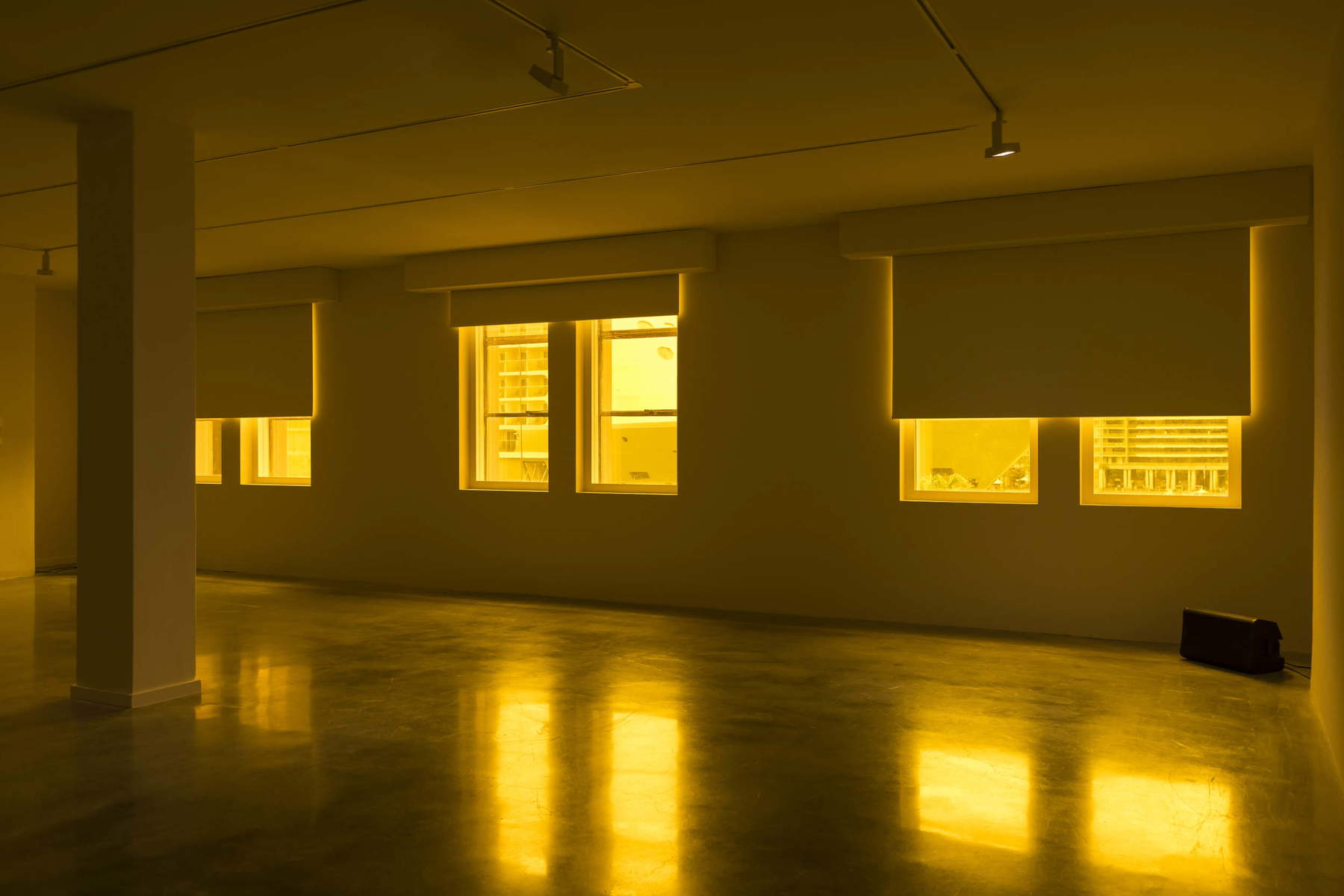
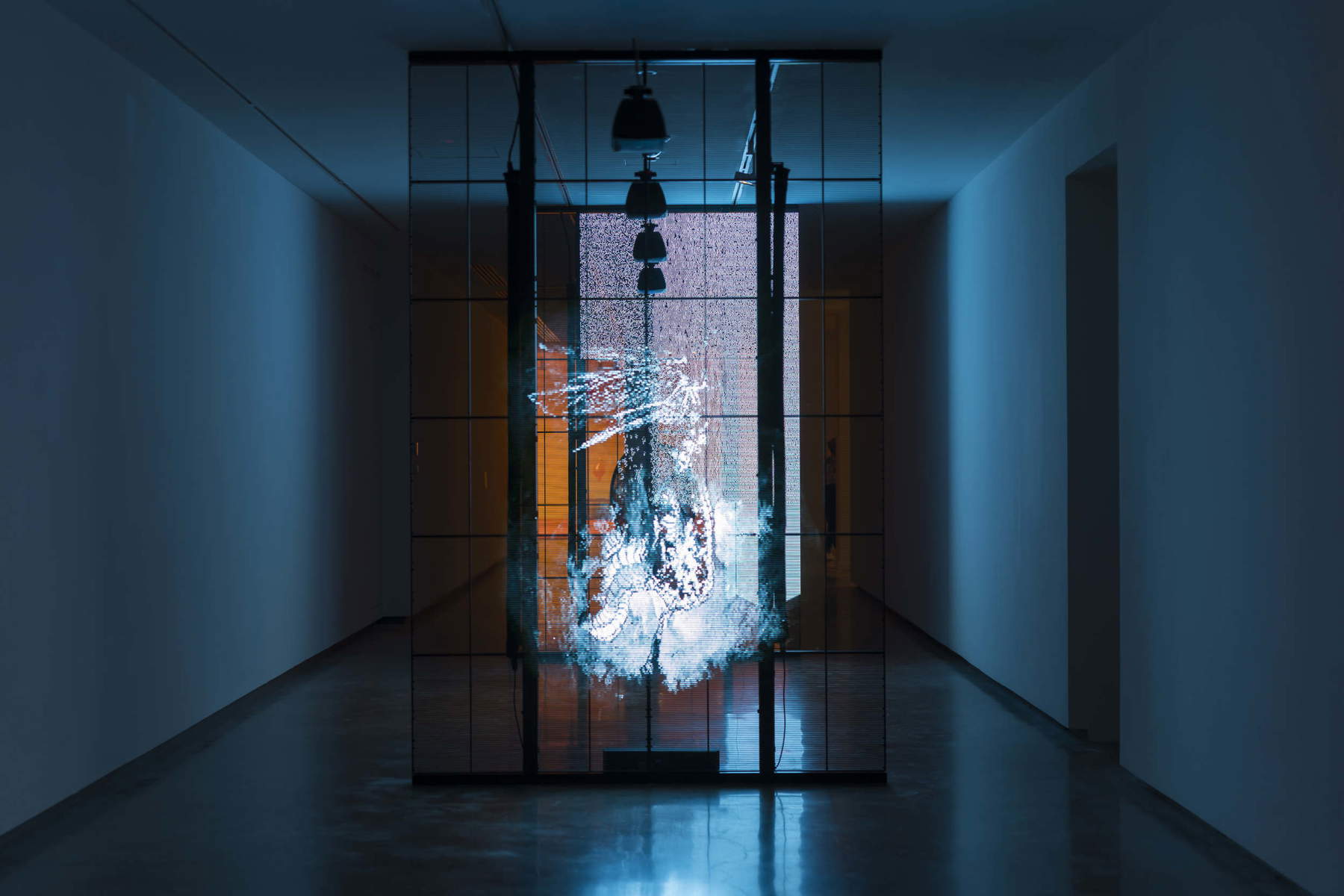
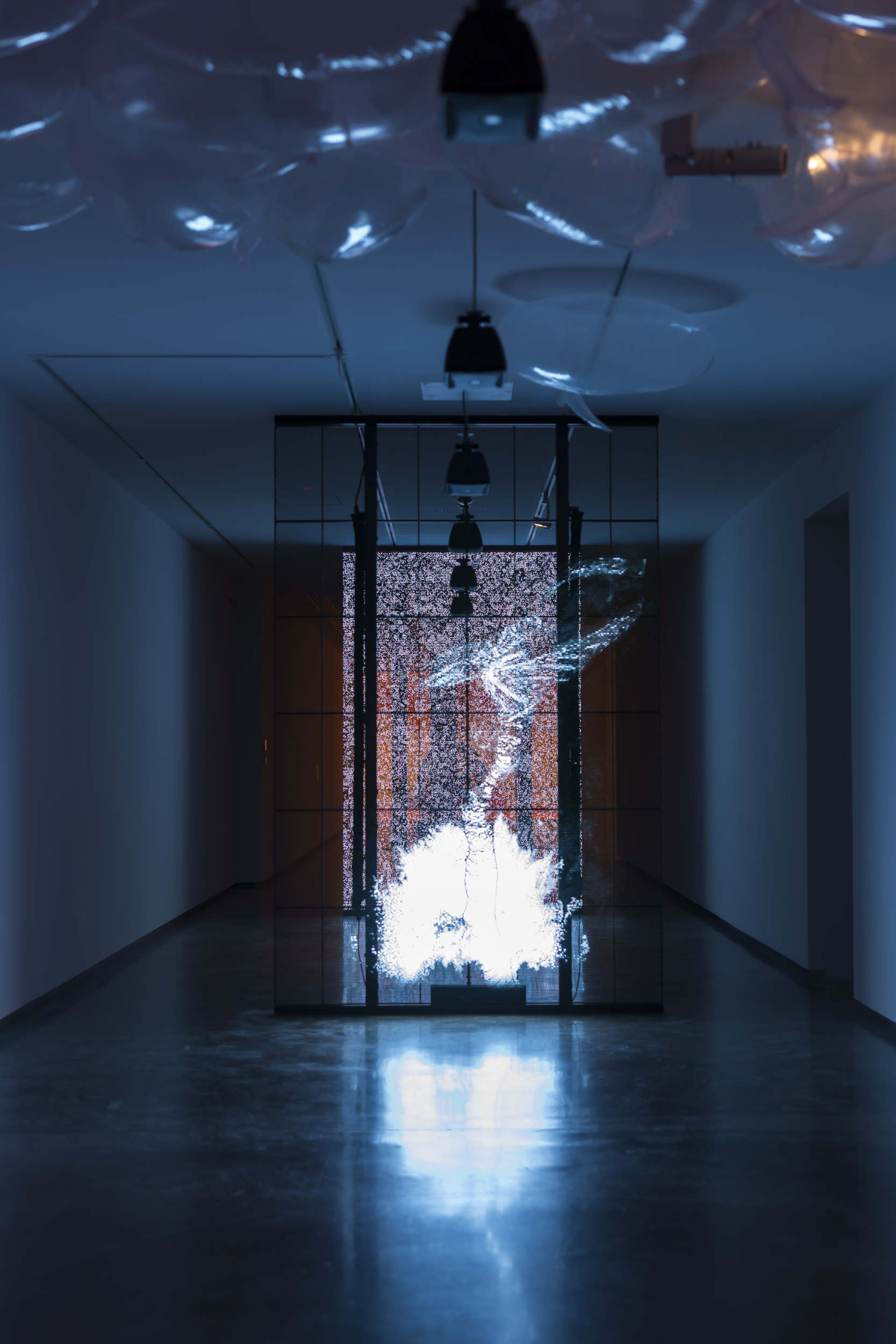
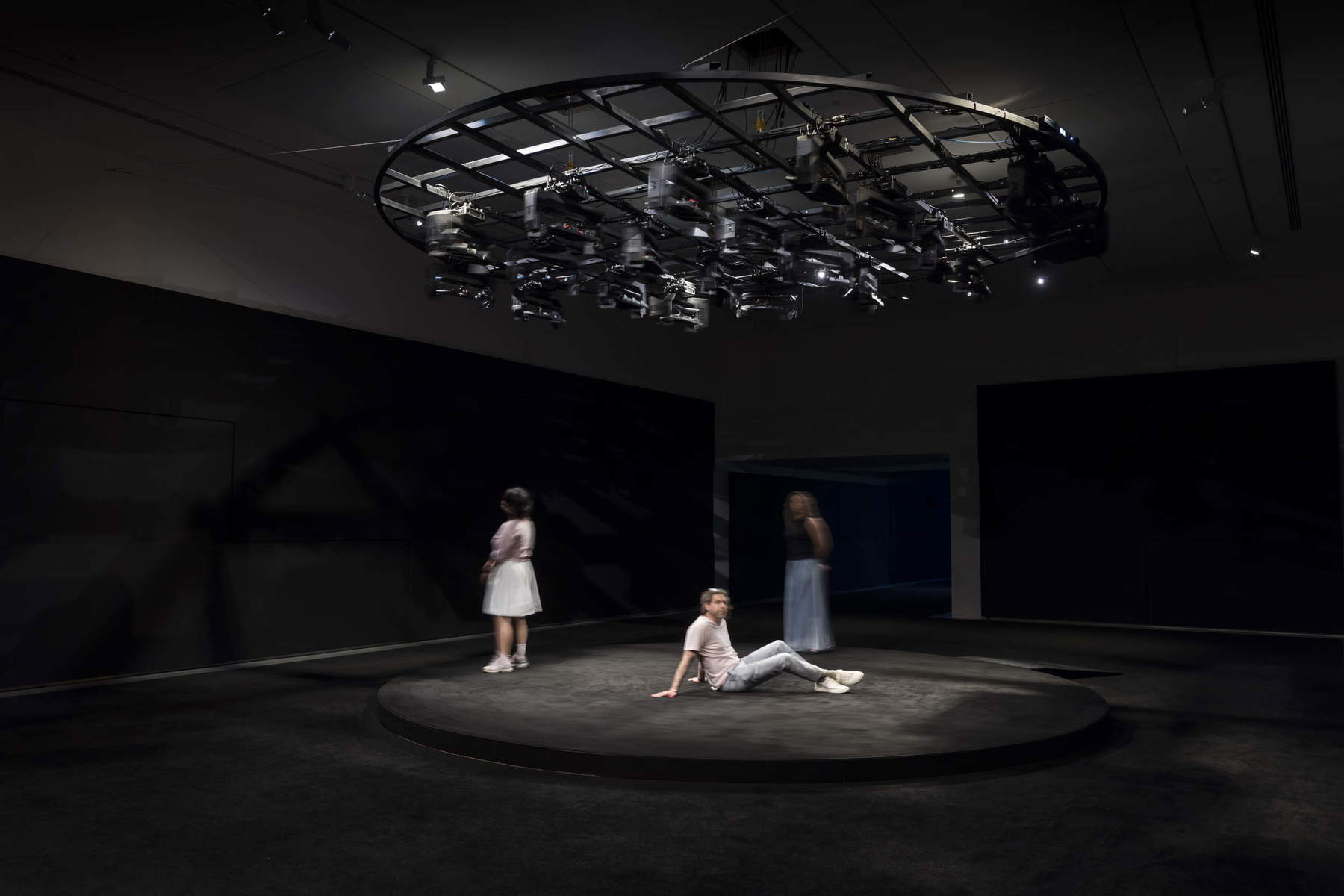
The exhibition spans the Macgregor Gallery on the first floor, the Lecture Theater on the second floor, and the International Galleries on the third floor. At specific times, other areas of the museum that do not normally host exhibitions are also activated. Much of the exhibition was installed on-site by lighting, sound, and IT engineers from Parreno’s Paris studio, who worked alongside the MCA team.
The catalog, *Philippe Parreno: 5 Moons*, also follows a unique logic. It was conceived as a preview—almost a “prophecy”—of the exhibition, which did not yet exist when the book was produced. The 120-page paperback volume contains cinematic simulations of the exhibition and texts by Suzanne Cotter, philosopher of science Peter Godfrey-Smith, art historian Mathilde Roman, and the artist himself. In a new essay, Parreno describes the complex workings of 5 Moons. For those encountering his work for the first time, an extensive interview details his methods and design process. The catalog was designed by the studio A Practice for Everyday Life and is available for purchase at the museum’s bookshop and online for $49.95.
The exhibition is part of the Sydney International Art Series, now in its 17th edition. Organized by the Government of New South Wales through the tourism and major events agency Destination NSW, the initiative brings the work of internationally renowned artists exclusively to Sydney every summer. Over the years, the MCA has presented thematic exhibitions such as *Data Dreams: Art and AI* and solo exhibitions by Doug Aitken, Tacita Dean, Anish Kapoor, Julie Mehretu, Tatsuo Miyajima, Yoko Ono, Cornelia Parker, Grayson Perry, Pipilotti Rist, and Do Ho Suh. For this edition, running from December 5, 2026, to July 18, 2027, the Art Gallery of New South Wales will present Takashi Murakami. State Minister for Labor and Tourism Steve Kamper describes Parreno’s exhibition as “bold and innovative” and emphasizes that, by bringing one of the world’s most celebrated contemporary artists to Sydney, the museum not only enriches the state’s cultural life but also attracts visitors from across the country and abroad. “Major exhibitions like this play an important role in supporting businesses and jobs that depend on tourism year-round, while also showcasing New South Wales as Australia’s premier destination for world-class cultural experiences.”
“Philippe Parreno: 5 Moons,” curated by Suzanne Cotter, Anna Davis, and Tim Riley Walsh and supported by the Government of New South Wales through Destination NSW, is on view at the Museum of Contemporary Art Australia in Sydney through April 26, 2027—for five months and five moons.
 |
| A work of art in Sydney is powered by a Spanish desert 17,000 kilometers away |
Warning: the translation into English of the original Italian article was created using automatic tools. We undertake to review all articles, but we do not guarantee the total absence of inaccuracies in the translation due to the program. You can find the original by clicking on the ITA button. If you find any mistake,please contact us.