


by Redazione 22/10/2026


Categories: Contemporary art / Disclaimer
At the Fondation Cartier in Paris, Ghanaian artist Ibrahim Mahama reconstructs a disused bottle factory in Ghana using the original materials. His work reflects on the unfulfilled promises of independence, colonial memory, and the possibility of transforming ruins into places of creation.


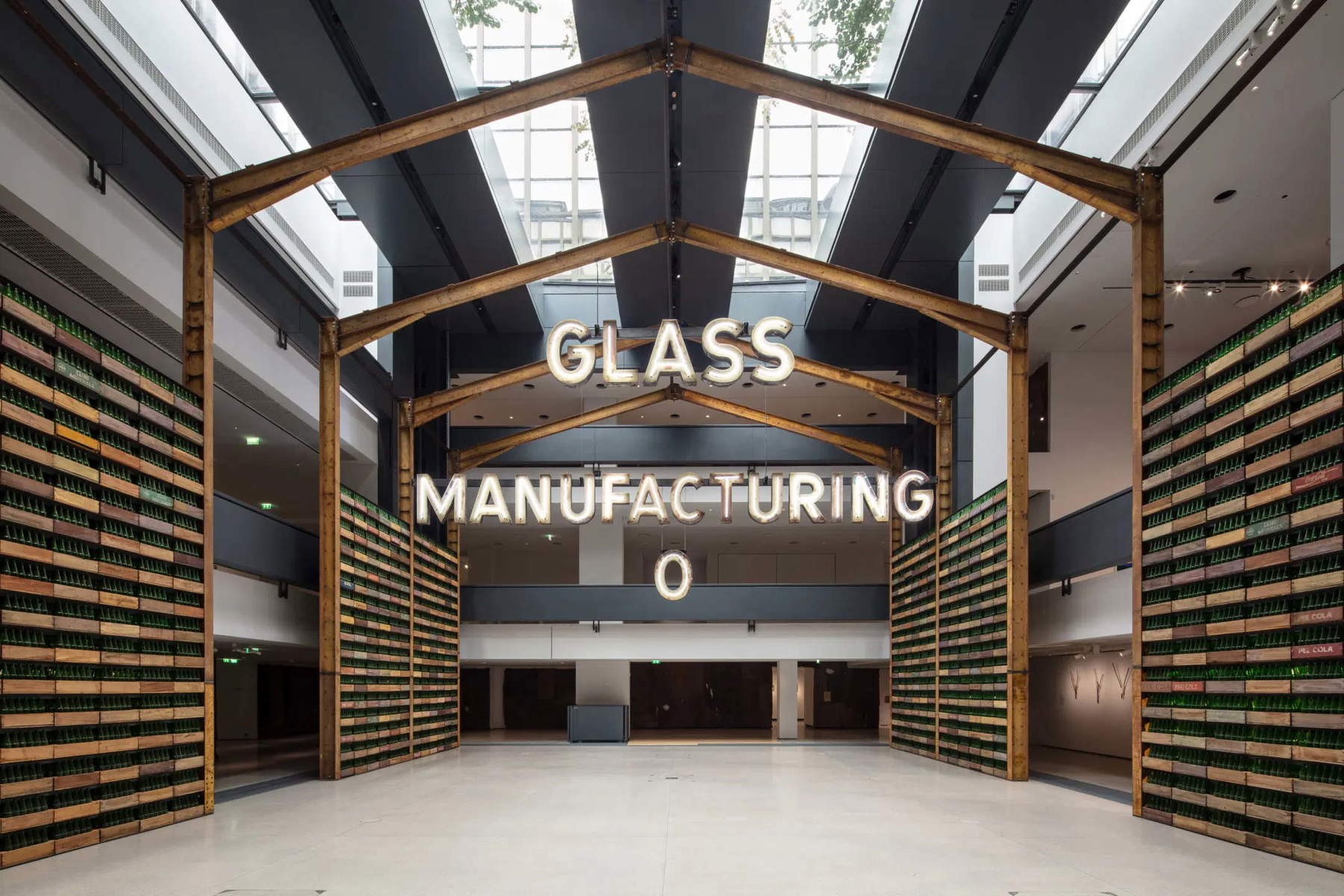
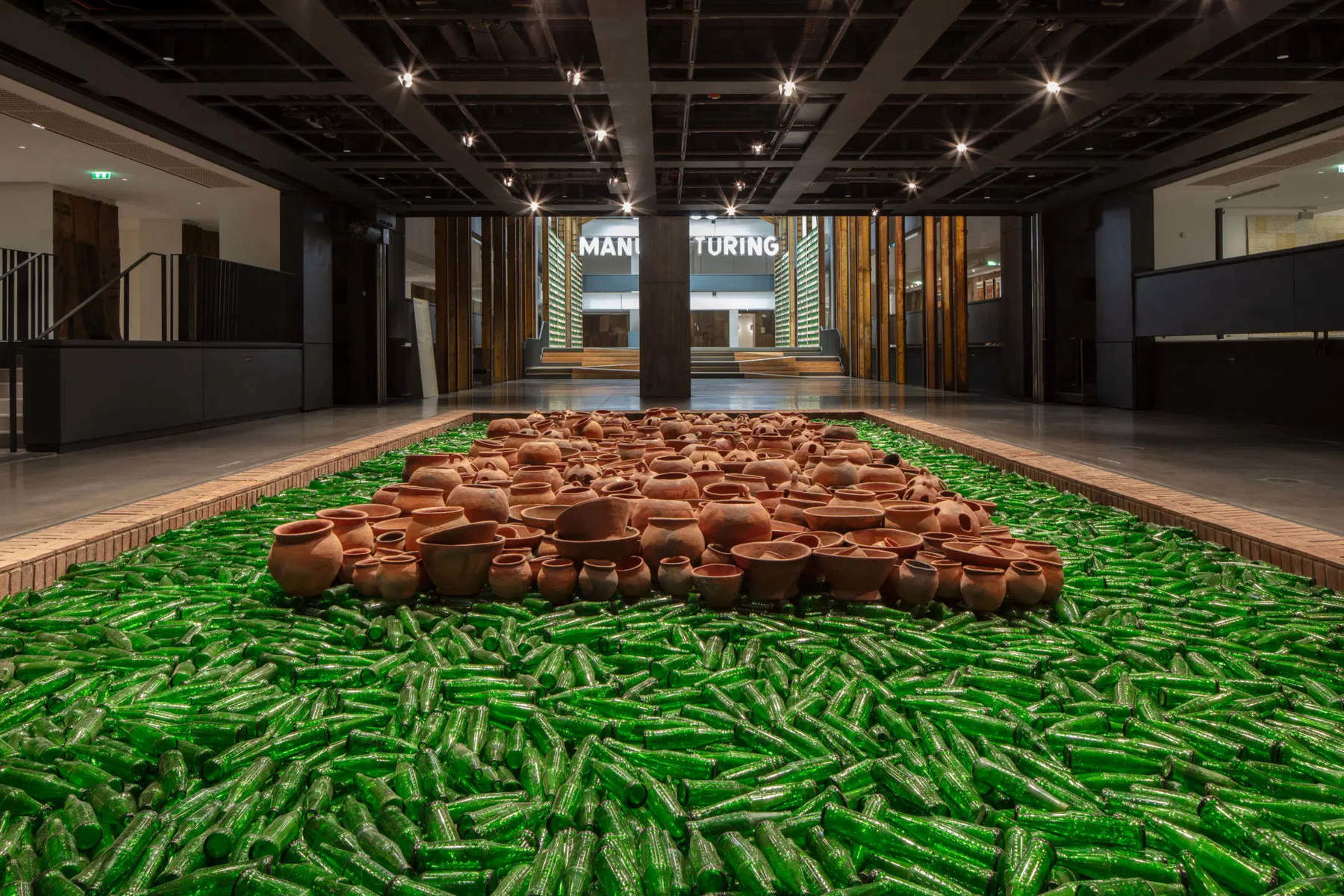
A glass bottle factory built in Ghana in 1966, abandoned after decades of attempts at renovation and privatization, is dismantled and rebuilt as a work of art. The metal structures, the molds, the bottles, and the glass fragments from the original building become the elements of a new installation, titled *Things Fall Apart*, through which the Ghanaian artist Ibrahim Mahama reflects on the unfulfilled promises of his country’s independence and on the possibility of transforming the traces of the past into tools for imagining the future. The work is one of the focal points of *The Harvest Season*, the exhibition that the Fondation Cartier pour l’art contemporain is dedicating to Mahama in the fall of 2026 at its Paris location, from October 22 to February 28, 2027. Born in 1987 in Tamale, in northern Ghana, the artist presents a project conceived specifically for the foundation’s new spaces, alongside nine artists and collectives with whom he has collaborated over the years. The exhibition features new installations, previously unseen versions of well-known works, and interventions that explore the connections between industrial heritage, historical memory, and collective artistic practices.

Mahama’s starting point is a national history marked by the end of colonial rule, independence in 1957, and the political and economic transformations that followed. Ghana was led by its first president, Kwame Nkrumah, the driving force behind a modernization project that placed great emphasis on infrastructure and industrial development. In 1966, however, a coup d’état brought his government to an end: sixty years after that turning point, Mahama revisits the ambitions of that period through abandoned buildings, salvaged materials, and archives, questioning what remains of those aspirations and which possibilities might still be revived.


Things Fall Apart: Rebuilding from the Ruins
The factory at the heart of *Things Fall Apart* is located in Aboso, in southwestern Ghana. Opened in 1966, it was one of the last major industrial decentralization projects launched under Nkrumah’s presidency before his fall from power that same year. After several attempts at restructuring and privatization, the plant was abandoned. In 2024, Mahama purchased the site, beginning the dismantling of the structure and the transfer of materials to the Red Clay Art Center, which the artist founded in Tamale.
The installation reconstructs the building using its original elements; however, the aim is neither to restore the factory to its productive function nor to reconstruct an idealized image of Ghana’s industrial past. Instead, Mahama reassembles the materials into a new configuration, transforming the salvaged structure into both a work of art and a space for learning; in his vision, the industrial heritage is thus rescued from a state of unused ruin and incorporated into a narrative oriented toward the future. The title echoes that of the novel *Things Fall Apart*, published in 1958 by the Nigerian writer Chinua Achebe: the reference is part of a broader reflection on how new generations of African artists can reclaim a political and cultural history of which, in many cases, only material fragments remain. In Mahama’s work, memory does not equate to regret for what has been lost but aims to become a resource for reconstruction.
The artist defines this approach through the idea of “active ruin”—that is, a condition in which what has been abandoned is not considered definitively exhausted but can take on new functions and meanings. The transformation of the factory is therefore, in his view, also a way to challenge a conception of progress based on replacing the old with the new—in the sense that worn-out buildings, objects, and materials are not necessarily obstacles to be removed: they may contain knowledge, traces of labor, and possibilities yet to be developed. This focus on recovery runs through Mahama’s entire body of work; for over a decade, she has been working with collected materials, archives, and fragments of Ghana’s industrial heritage, assembling them into large-scale installations.
Among the recurring materials are jute sacks used to transport cocoa and coal, which have now become a permanent fixture in her practice: salvaged and transformed into textile works, they retain traces of wear and manual labor, as well as those of international economic exchange. The material is not rendered anonymous through a process that erases all previous marks: its original characteristics remain legible and become part of the artwork. In this sense, according to Mahama, repairing means restoring an object’s potential for use without erasing its history. In the essay “Repair as Artistic Method,” taken from the exhibition catalog, Mahama describes repair as a practice that is both material and social, capable of confronting the traces of violence, deprivation, loss, and displacement: a repaired object, in fact, preserves what it has endured and, precisely for this reason, can enter a new phase of its existence.
The process often involves artisans, mechanics, and members of local communities. However, this collective effort serves not only to restore the functionality of a damaged item but also represents a form of shared responsibility toward cultural and material heritage. When there is a lack of spaces where these skills can be passed on, the artist also intervenes by restoring and repurposing abandoned buildings, transforming them into spaces dedicated to artistic production and education.
Parliament of Ghosts, a parliament without representatives
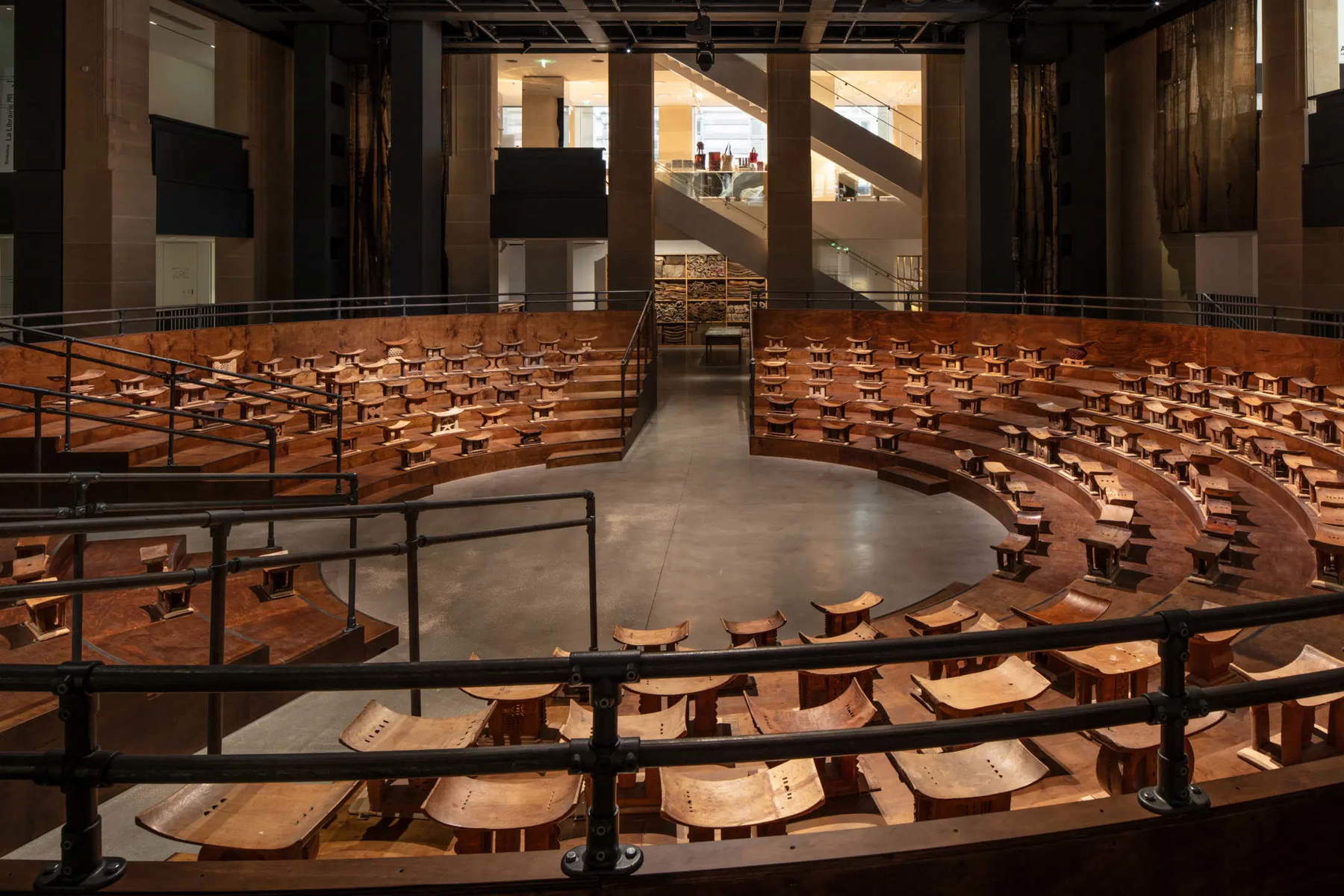
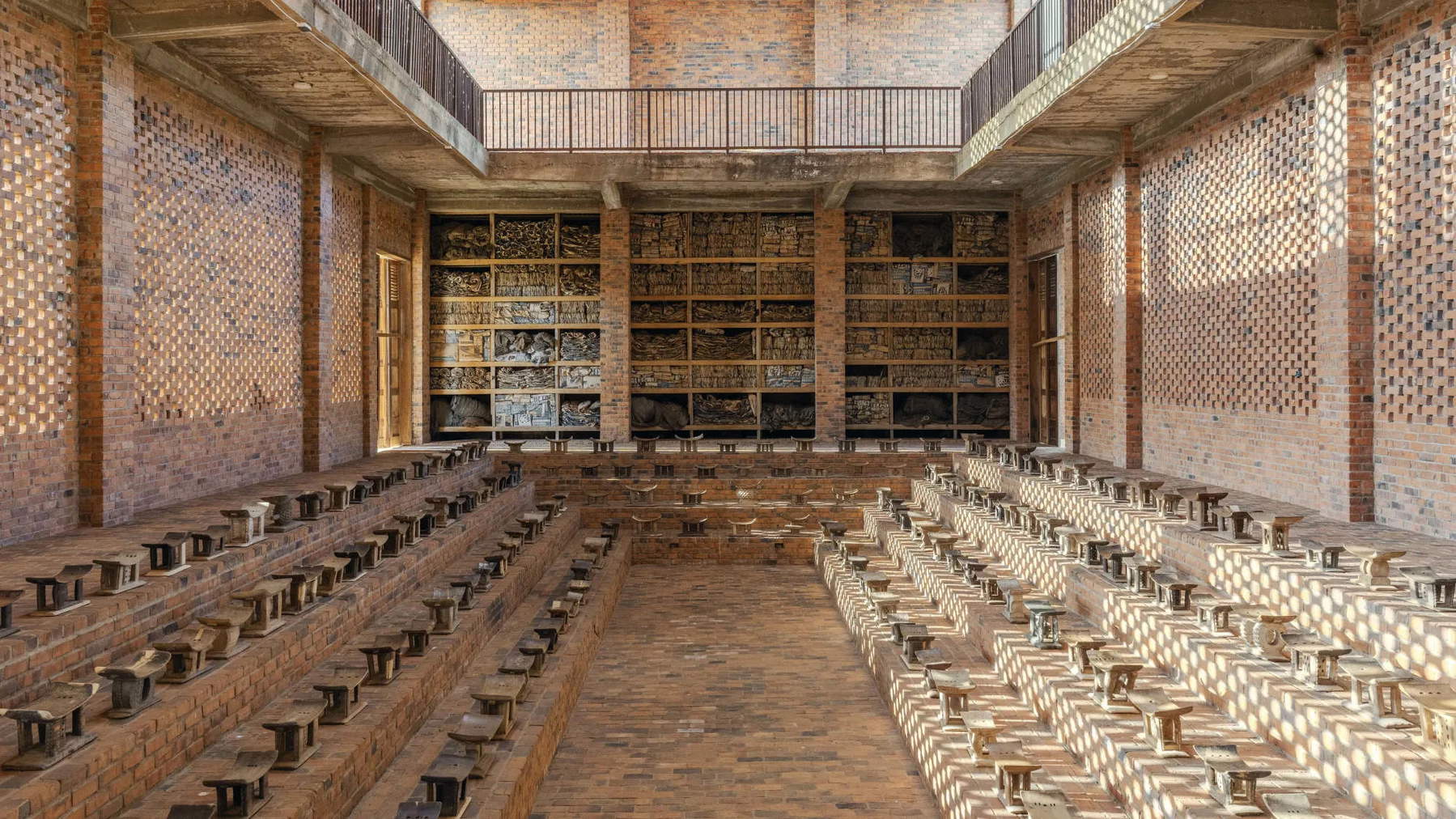
Alongside the factory reconstruction, the exhibition presents a new version of *Parliament of Ghosts*, an installation that Mahama has been developing since 2019 and which is now on permanent display at the Red Clay Center in Tamale. The work takes the form of a parliamentary chamber composed of traditional wooden stools of the Ashanti people, native to central Ghana, on which visitors can sit. The stools, purchased or exchanged by the artist in Ghana, are also objects linked to the history of the Ashanti Kingdom, as their meanings evoke the colonial plundering campaigns that took place during the conflicts between the kingdom and the British Empire, fought between 1824 and 1901. Gathered within a structure evoking a parliament, the objects become part of a reflection on political history and institutions.
The title, “Parliament of Ghosts,” alludes to an assembly devoid of its representatives. The installation is a metaphor for failed democracy and refers to the 1966 coup d’état and the dissolution of the Ghanaian government. The absence of representatives, however, does not create a meaningless void: it reveals the institutions that have failed and those that never managed to come into being, opening up a space to imagine alternative forms of political participation. For this version created for the Fondation Cartier, Mahama has arranged the Asante stools in a configuration specifically designed for the foundation’s spaces. The work is also inspired by the notion of a “parliament of forms” developed by the Nigerian curator Okwui Enwezor (1963–2019), a term used to describe installations in which memory, history, and collective action intersect.
During the exhibition, *Parliament of Ghosts* will not merely be a space to walk through or observe. The structure will serve as a circular stage for a program of live music, performances, talks, and debates, as well as for lectures and seminars organized in collaboration with art schools. The participatory dimension of the work thus extends to the accompanying activities, transforming the installation into a space for dialogue.
Nine Artists and Collectives Surrounding Mahama
In addition to Mahama,*The Harvest Season* brings together nine artists and collectives with whom the artist has established relationships of collaboration, research, and exchange. Their practices address—from different perspectives—historical memory, cultural identities, infrastructure, and forms of knowledge transmission.
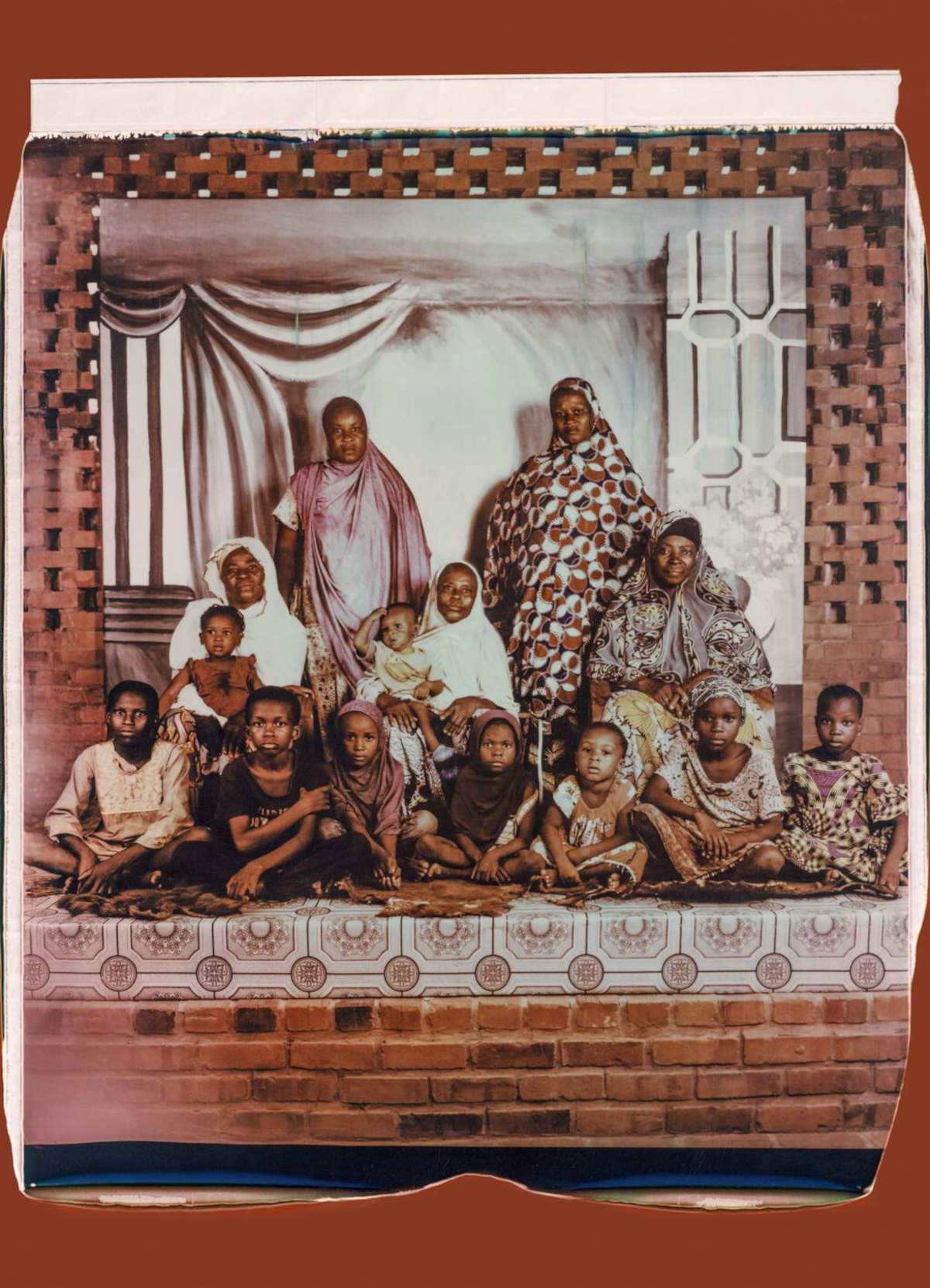
Photographer James Barnor, a leading figure in West African photography, documented the early years of Ghana’s independence. Dorothy Akpene Amenuke, a textile artist and the first woman to become a professor at Kwame Nkrumah University of Science and Technology in Kumasi, works primarily with jute. Gideon Appah, a painter, draws on Ghanaian visual archives to create dreamlike compositions. Architect Courage Dzidula Kpodo and the Postbox Ghana collective develop works related to the country’s architectural archives. Zohra Opoku, a German-Ghanaian artist, explores the construction of identity through textiles. The Congolese collective Cercle d’Art des Travailleurs de Plantation Congolaise (CATPC) views art as a tool for economic and political emancipation. Rounding out the group are Slovenian artist Tjaša Rener, who studies the ties between Ghana and Yugoslavia during the Cold War, and Feda Wardak, a Franco-Afghan artist and architect, who addresses the consequences of extractivism on agricultural infrastructure.
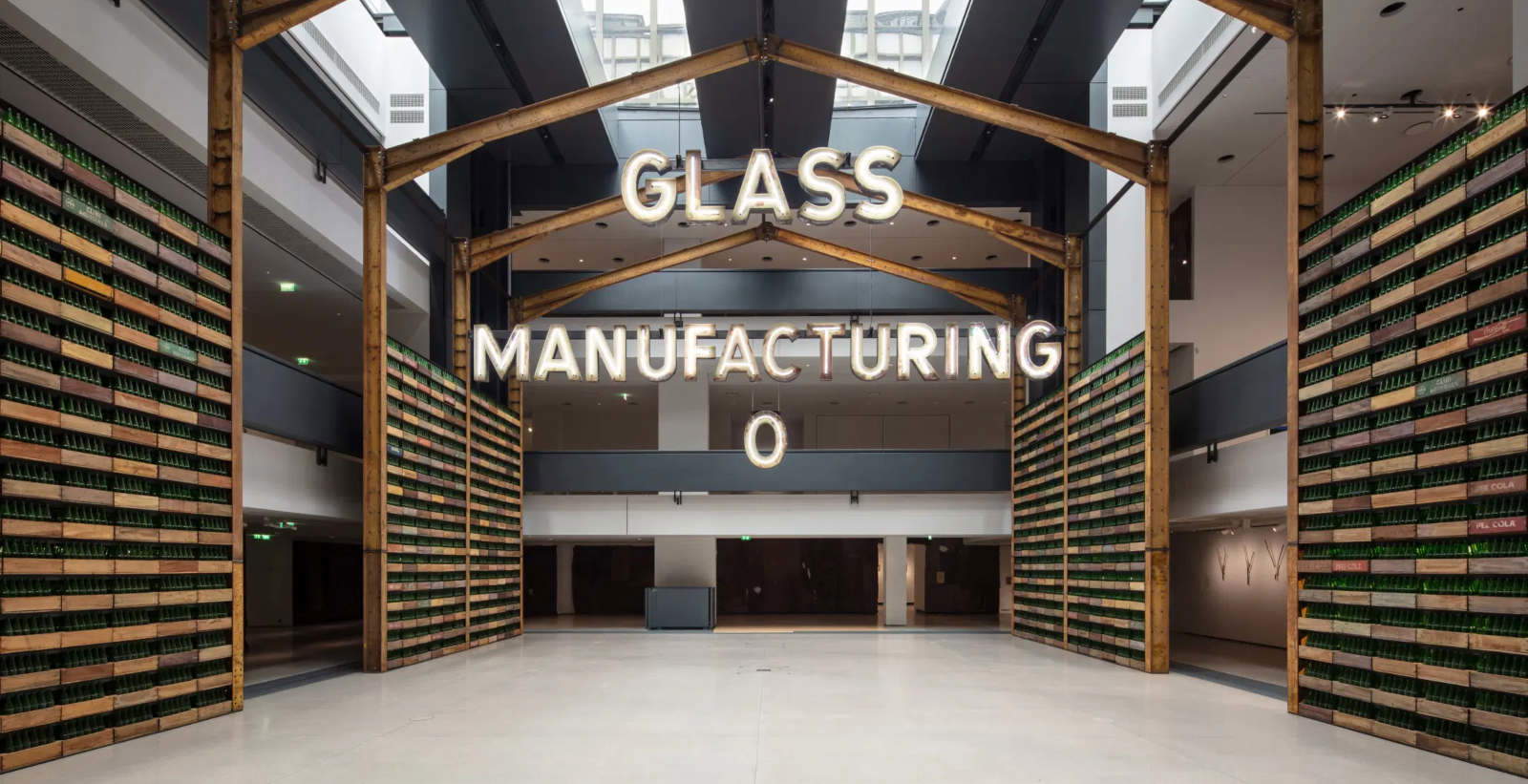 |
| An abandoned factory in Ghana is transformed into a work of art at the Fondation Cartier in Paris |
Warning: the translation into English of the original Italian article was created using automatic tools. We undertake to review all articles, but we do not guarantee the total absence of inaccuracies in the translation due to the program. You can find the original by clicking on the ITA button. If you find any mistake,please contact us.