




by Redazione 13/10/2026


Categories: Contemporary art / Disclaimer
The Italian-Senegalese artist has won the first edition of the award sponsored by the MA*GA Museum in Gallarate and the company FIAMMA. The installation explores the themes of memory, the earth, resilience, and diasporic identities.
Binta Diaw is the winner of the first edition of the Fiamma Award: Collecting the Future, a project dedicated to supporting emerging Italian art, promoted by the MA*GA Museum in Gallarate (Varese) and FIAMMA, an Italian company active in the production and development of products and accessories for recreational vehicles, including RVs, travel trailers, and vans. The artist’s work, *Sankofa, Asase Ye Duru, Wawa Aba*, is on display at the museum starting today and will become part of its permanent collection.
The award supports contemporary artistic creation through the production of new works that engage with FIAMMA’s values, with a particular focus on travel and the ecological dimension of the natural environment. Diaw was selected by a committee composed of representatives from the museum and the company, along with Alice Ronchi and Serena Vestrucci, for the originality of her research, the quality of her design, and her ability to engage with contemporary social, cultural, and material themes.
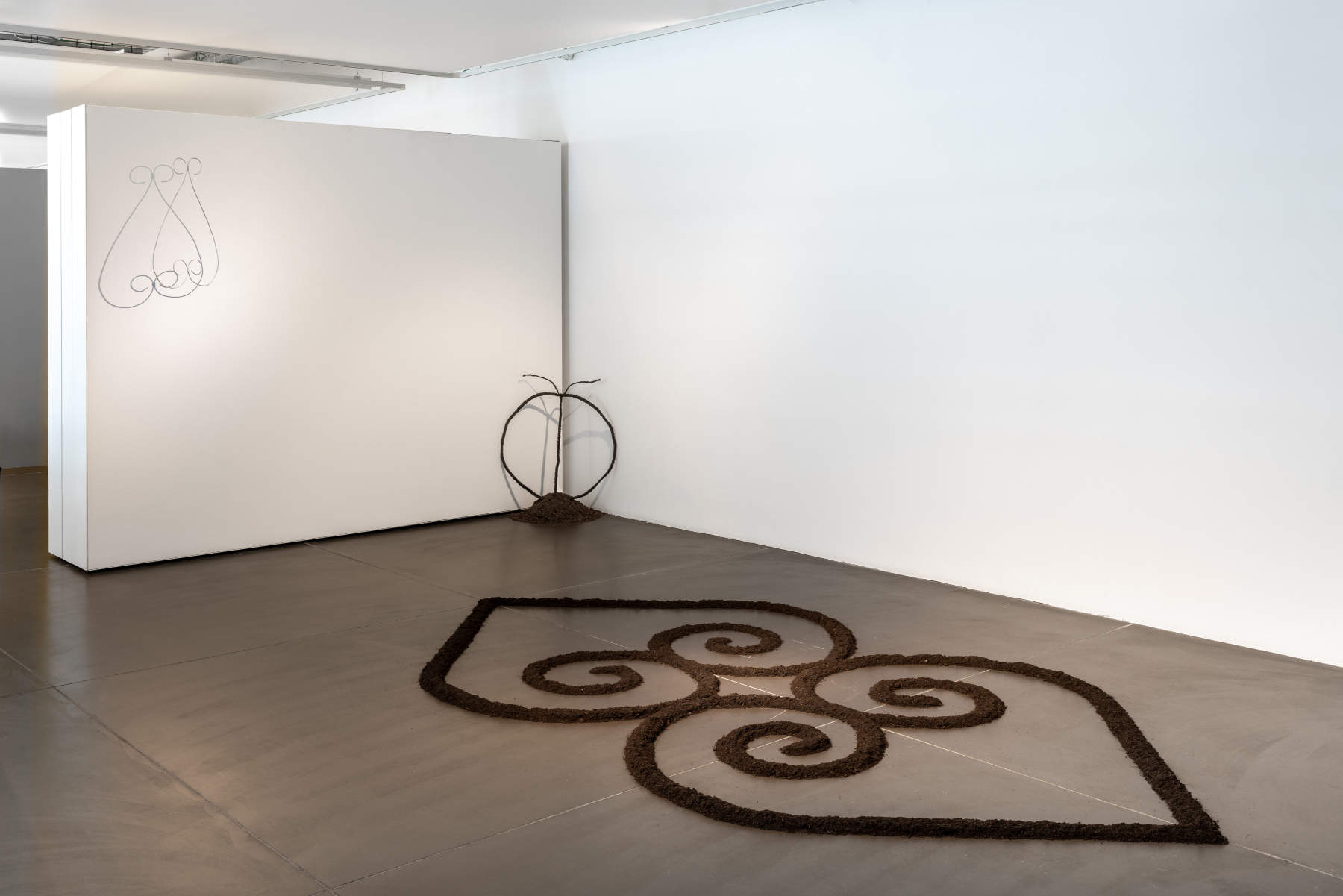
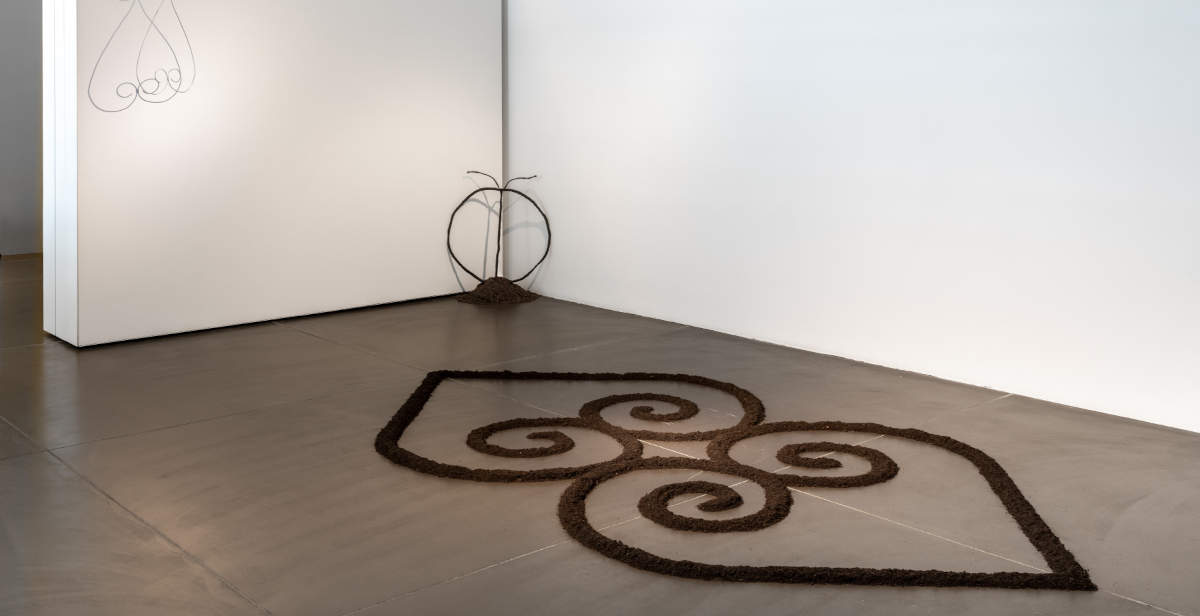
The environmental installation combines earth, aluminum, and braided hair—a distinctive element of the Italian-Senegalese artist’s work. The work reinterprets the Adinkra alphabet, composed of ancient symbols originating in Ghana and associated in particular with the Akan people, the country’s main ethnolinguistic group. Through abstract forms, these symbols express philosophical and existential reflections on the meaning of places and on individual and collective memory.


As the title suggests, the work consists of three elements. The first, Sankofa, is suspended from the ceiling and depicts a bird picking up an egg from its own tail. The symbol means “go back and look,” and echoes a Ghanaian proverb stating that it is not wrong to go back to retrieve what has been forgotten. The second, Asase Ye Duru, is made entirely of clay and represents the “weight of the earth,” referring to the Mother Earth deity. The third, Wawa Aba, is a circle of braided hair resting on the ground, inspired by the seed of the Wawa tree and associated with strength, resilience, and perseverance. Taken together, the three elements explore the Akan people’s relationship with memory, the earth, and resilience, extending this reflection to conditions of marginalization, diasporic movements, and the connections between earth-based cults, femininity, and identity in the present.
Statements
“The FIAMMA Prize. Collecting the Future,” says Mario Lainati, President of the MA*GA Museum, “is a concrete example of how dialogue between cultural institutions and businesses can generate value for the entire region. The collaboration with FIAMMA demonstrates how business support for culture can translate into an investment in contemporary artistic research and our shared cultural heritage. Thanks to this project, the MA*GA Museum is enriching its permanent collection with a work by Binta Diaw, offering the public new opportunities to engage with the languages and reflections of today’s art. “We strongly believe in this synergy between art and business, which combines cultural vision, social responsibility, and a focus on new generations of artists, creating lasting opportunities for the community’s cultural growth.”
“The FIAMMA Award,” states Claudia Mazzetti, Councilor for Educational Activities for the City of Gallarate (VA), “is a wonderful example of how relationships forged around culture can evolve into concrete collaborations capable of leaving a lasting mark. The dialogue between FIAMMA and the MA*GA Museum began precisely during the organization of last year’s summer concert: a meeting that has now evolved into a project of great artistic and cultural value. This is one of the most valuable aspects of our city: the ability to forge connections between institutions, culture, and the business world, giving rise to new opportunities. I would like to thank FIAMMA for the sensitivity and generosity it has shown, the MA*GA Museum for its ability to build relationships and promote new talent, and to congratulate Binta Diaw on a work that invites reflection on deeply relevant themes, such as memory, identity, and our relationship with the land. “This artistic legacy will remain available to the community and will enrich Gallarate’s artistic identity.”
“We are proud to present today, together with the MA*GA Museum, the winner of the first Fiamma Prize,” concludes Charles Pozzi, CEO of FIAMMA. “For us, this initiative holds deep personal significance. The Award pays tribute to the memory of Norma Pozzi, founder of Fiamma and my grandmother, who always had a deep appreciation for culture and art and was a staunch supporter of local initiatives. Contributing today to the creation of a work destined for the MA*GA’s permanent collection—and making it accessible to everyone—is therefore an achievement of which we are particularly proud. The winning artist, Binta Diaw, has been able to interpret, through the language of art, certain values that we feel are deeply our own. In her work, we see the care and attention to detail that have always characterized Fiamma and our understanding of “Made in Italy.” It is precisely this meeting of different sensibilities—which are nonetheless capable of engaging in dialogue—that makes the Fiamma Award so special to us.”
 |
| Binta Diaw Wins the Fiamma Prize: Her Work Joins the MA*GA Collection |
Warning: the translation into English of the original Italian article was created using automatic tools. We undertake to review all articles, but we do not guarantee the total absence of inaccuracies in the translation due to the program. You can find the original by clicking on the ITA button. If you find any mistake,please contact us.