



by Redazione 31/08/2026



Categories: Events / Disclaimer
From September 4 to 6, 2026, the state museums in Arezzo and Anghiari will offer a rich program of events, including talks, guided tours, activities, and performances. The weekend will also celebrate the 50th anniversary of the Palazzo Taglieschi Museum in Anghiari.
It will be a weekend packed with events at the state museums in Arezzo and Anghiari from Friday, September 4, through Sunday, September 6, 2026. Talks, guided tours, activities promoting inclusion, performances, and new tools designed to help the public discover cultural heritage will bring these cultural venues in both cities to life.
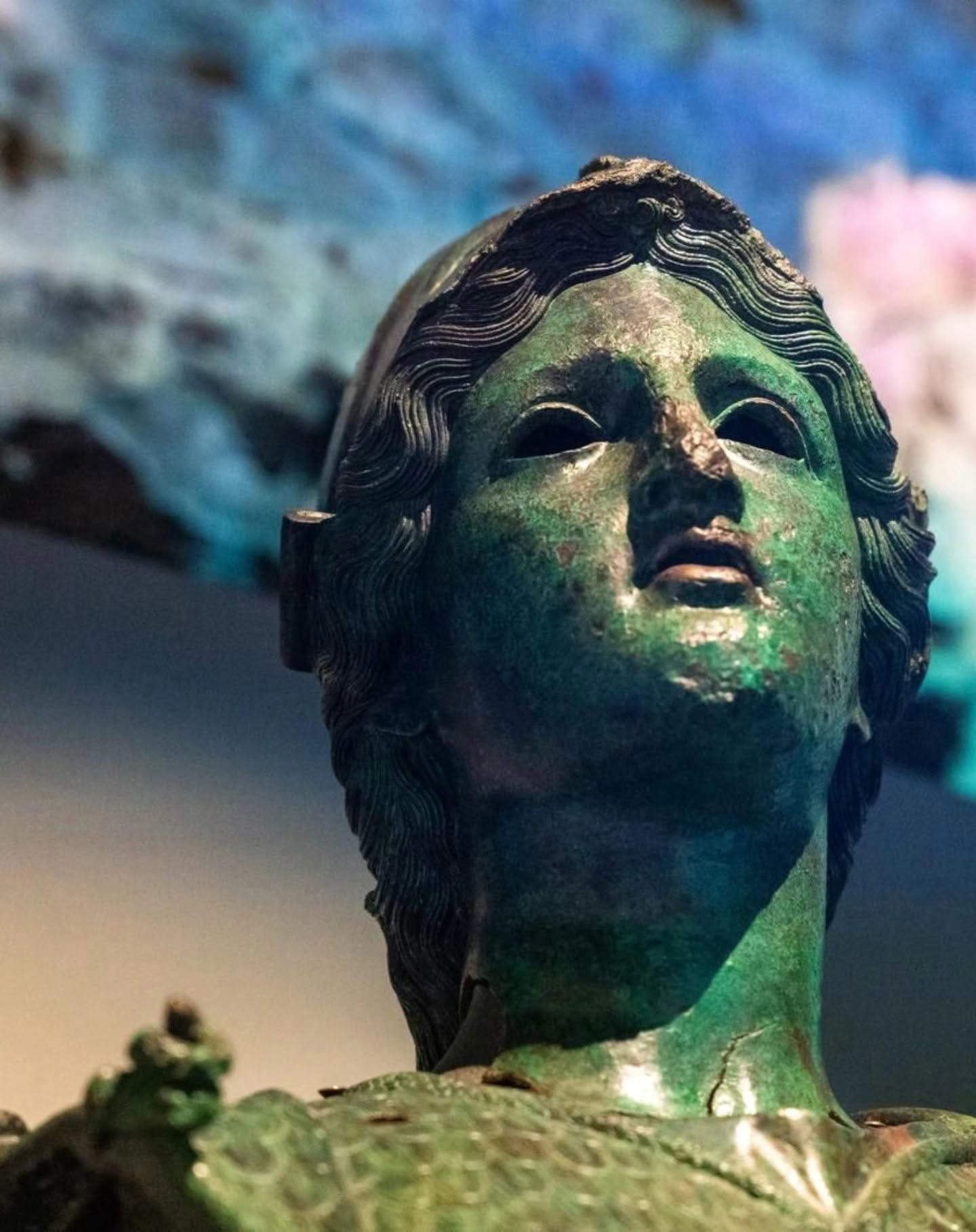
The weekend will also be an opportunity to celebrate two important anniversaries: in Anghiari, the 50th anniversary of the opening of the Palazzo Taglieschi Museum, while in Arezzo, the exhibition *The Minerva of Arezzo: A Story of a Rediscovered Community* will come to a close ; it remains open to the public through Sunday, September 6.
The first event is scheduled for Friday, September 4, at 5:30 p.m. in the Ceramics Hall of the “Gaio Cilnio Mecenate” National Archaeological Museum in Arezzo. The Regional Directorate of National Museums of Tuscany, in collaboration with the Petrarch Academy of Letters, Arts, and Sciences, is organizing the event “Minerva and Bacchus. Or on the Symbolic-Political Hermeneutics of the Work of Art, dedicated to the presentation of Antimo Cesaro’s book, *Theatrum et imago mundi. Hermeneutics, Symbolism, and Political Languages*, published by Artetetra in 2025.


Gianluca Dioni of the University of Naples Federico II will engage in a dialogue with the author, a professor at the University of Campania “Luigi Vanvitelli.” The event will offer a reflection on the work of art considered not only from an aesthetic and historical-archaeological perspective, but also as a complex system of signs through which a society narrates itself, expresses values and identity, and represents concepts such as authority, order, and power. Central to the book is also the theme of the representation of the body in the Greek world. The analysis compares Late Geometric art—with particular reference to the Athenian Master of Dipylon— and the subsequent classical depiction of the body, up to the anatomical precision achieved in the figures of the Euphronios Krater, currently on loan to the Acropolis Museum in Athens for the international exhibition “Inspirations.” Ancient Greek art preserved in Italy, in addition to other works held in the collections of the Arezzo museum. The discussion will also serve as a tribute to the Minerva of Arezzo, one of the most important bronzes of antiquity, which has temporarily returned to the city where it was discovered in 1541 as part of the “Seeds of Community – Olivetti Plan for Culture” project. The comparison between Minerva and Bacchus—that is, Athena and Dionysus—will thus provide an opportunity to explore the relationship between rationality and imagination, the symbolic dimension of art, and the role of culture as the foundation of democracy. Admission to the event is free.
Also at the “Gaio Cilnio Mecenate” National Archaeological Museum, on Friday, September 4, and Saturday, September 5, from 3:00 p.m. to 6:00 p.m., the final guided tours of the exhibition *The Minerva of Arezzo: A Story of a Rediscovered Community* will be held, subject to availability. Reservations are recommended.
Saturday, September 5, will be dedicated to a program designed to engage diverse audiences. At 9:00 a.m., there will be an inclusive guided tour organized by ToscanABILE APS. At 11 a.m.,the Roman Amphitheater will host a performance by the Arezzo Flag-Wavers. Admission to the performance will be free via Via Crispi, until maximum capacity is reached. These events mark the final days of the exhibition dedicated to the Minerva of Arezzo.
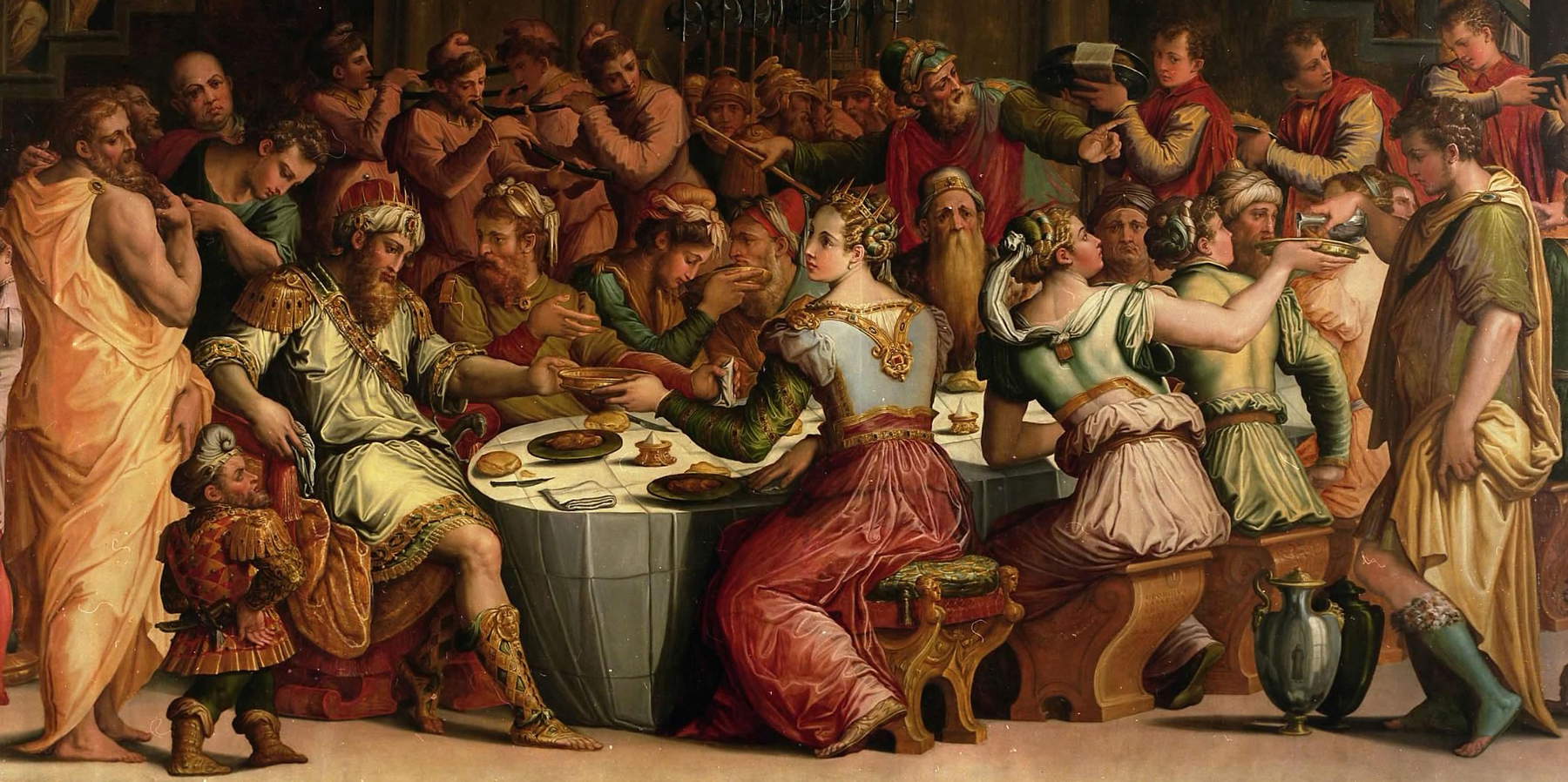
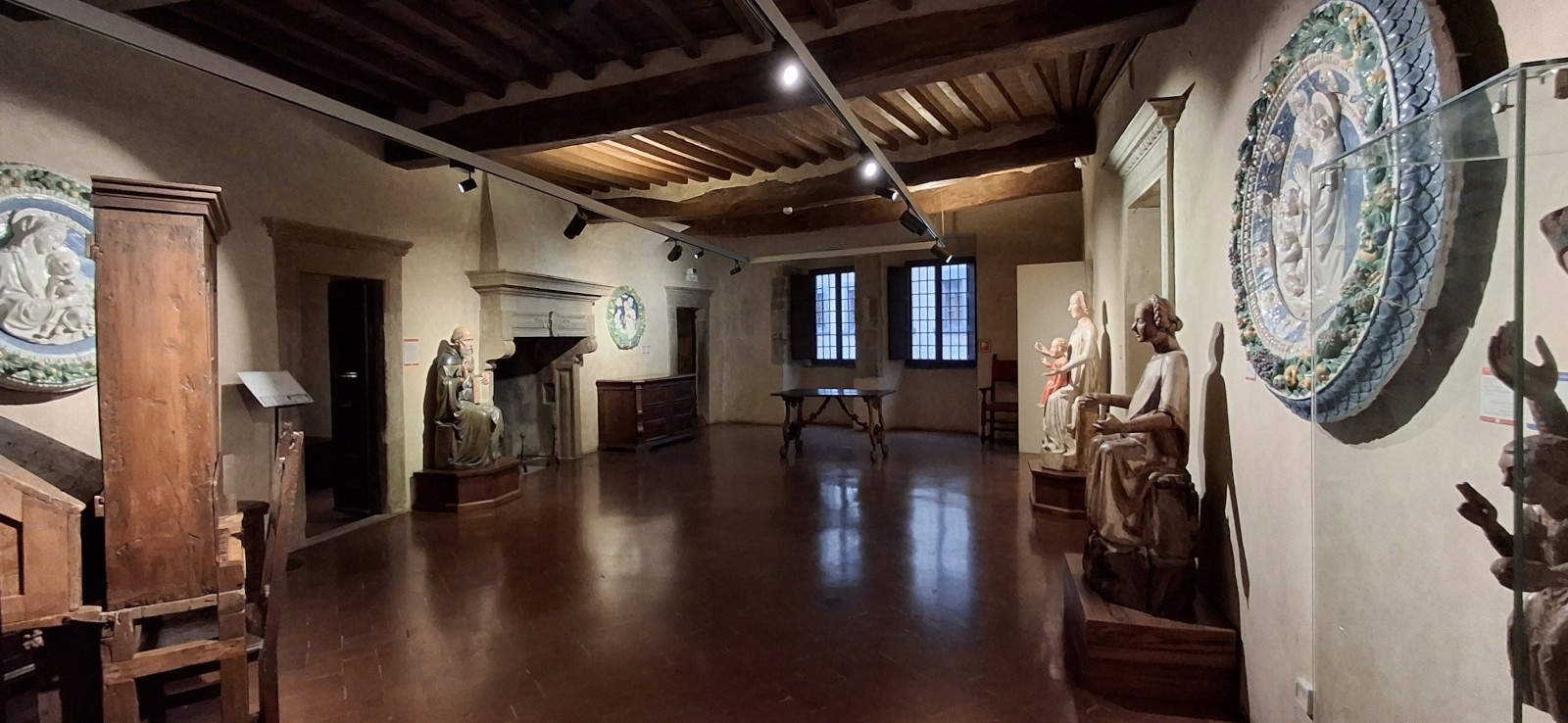
Anghiari will also take center stage this weekend with events organized to mark the 50th anniversary of the opening of the Palazzo Taglieschi Museum, an important center for the preservation and promotion of the region’s history and traditions. On Saturday, September 5, the museum will be open for a special evening from 8:00 p.m. to 11:00 p.m., with regular admission. At 9:00 p.m., a talk with Simone Quilici—who will become director of the Colosseum Archaeological Park in 2025—is scheduled. Following opening remarks by Carlotta Paola Brovadan, Regional Director of National Museums of Tuscany, Quilici will deliver a lecture titled “The Colosseum Park: From Yesterday to Tomorrow.” Admission to the event is free, though reservations are recommended.
The anniversary marks September 6, 1975, when the museum was inaugurated by Minister Giovanni Spadolini inside Palazzo Taglieschi. The opening was made possible by the visionary decision of Don Nilo Conti, who in 1959 had donated the historic Renaissance building to the state. It was one of the first public acts of the newly established Ministry of Cultural Heritage and a crucial step toward preserving the material heritage and collective memory of the communities of the Valtiberina region. Fifty years after that inauguration, the presence of the director of the Colosseum Archaeological Park offers an opportunity to strengthen the historical and cultural bond between the various communities along the Tiber River, recognized as an element capable of connecting territories and memories.
The weekend will conclude on Sunday, September 6, with “Sunday at the Museum,” an initiative of the Ministry of Culture that offers free admission to participating state-run museums and cultural sites. In Arezzo, this event takes on special significance because it coincides with the final day of the exhibition *The Minerva of Arezzo: A Story of a Rediscovered Community*. Visitors will therefore be able to access the exhibition free of charge and see the great ancient bronze statue one last time during its temporary return to the city where it was discovered.
Among the day’s highlights is the new dramatized audio tour of Casa Vasari, titled *To Leave a Legacy and Delight the Mind: Casa Vasari as Told by Its Protagonists*, available free of charge to visitors. The project guides visitors on a journey of discovery through the Arezzo residence via the voices of some of its key figures: Giorgio Vasari, portrayed by Rosario Ruggiero Terrone; his wife Niccolosa Bacci, portrayed by Maria Iside Friscia; and his friend Don Vincenzo Borghini, portrayed by Emanuele Baglioni. The tour stems from a simple yet fundamental question: What was the house like in Giorgio Vasari’s time, and who brought its rooms to life? Through six audio tracks—one for each room—the project offers a more everyday and personal perspective on the house, providing an experience that complements the educational resources already available. The title draws on a verse by Vasari preserved in the Riccardian manuscript 2948 and evokes the significance of the house’s iconography, considered a sort of manifesto of Vasari’s conception of art and life. The audio tracks will be accompanied by images, transcripts, and a brief glossary and can be listened to for free via izi.TRAVEL, including by scanning the QR code available at the start of the tour. The initiative was organized by the Regional Directorate of National Museums of Tuscany as part of the efforts to improve cultural services promoted by the Ministry of Culture, with the aim of making the visit increasingly accessible and engaging.
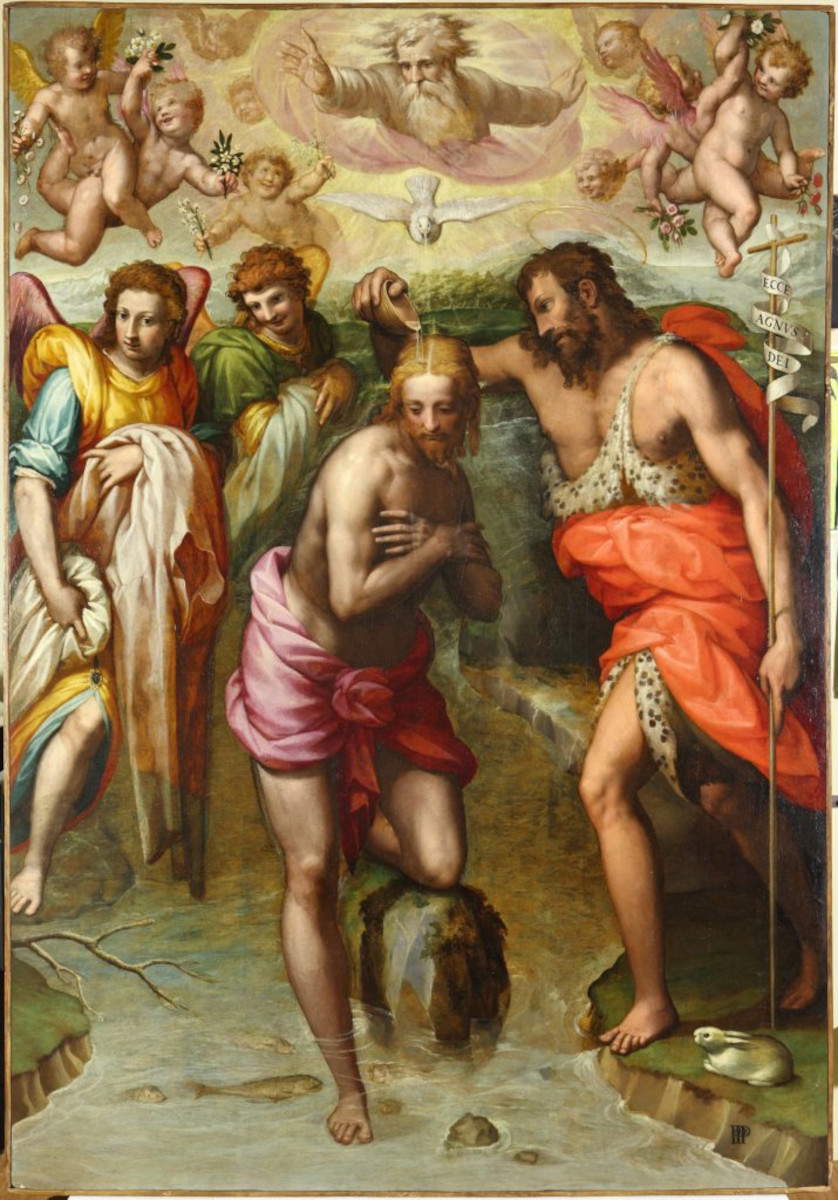
On “Sunday at the Museum,” Casa Vasari will be open from 8:30 a.m. to 1:30 p.m. and from 2:00 p.m. to 6:00 p.m., with a special afternoon opening. Admission is free, and no reservation is required.
The new audio tour joins the other digital resources already available, including the introductory video *Giorgio Vasari Tells His Story: A Portrait of the Arezzo Artist Through the History of His Home* and *QRdreria*, a series of six videos dedicated to six works from the picture gallery.
During “Sunday at the Museum,” visitors will also be able to visit the Museum of Medieval and Modern Art free of charge; it will be open from 8:30 a.m. to 1:30 p.m., with last admission at 12:30 p.m.
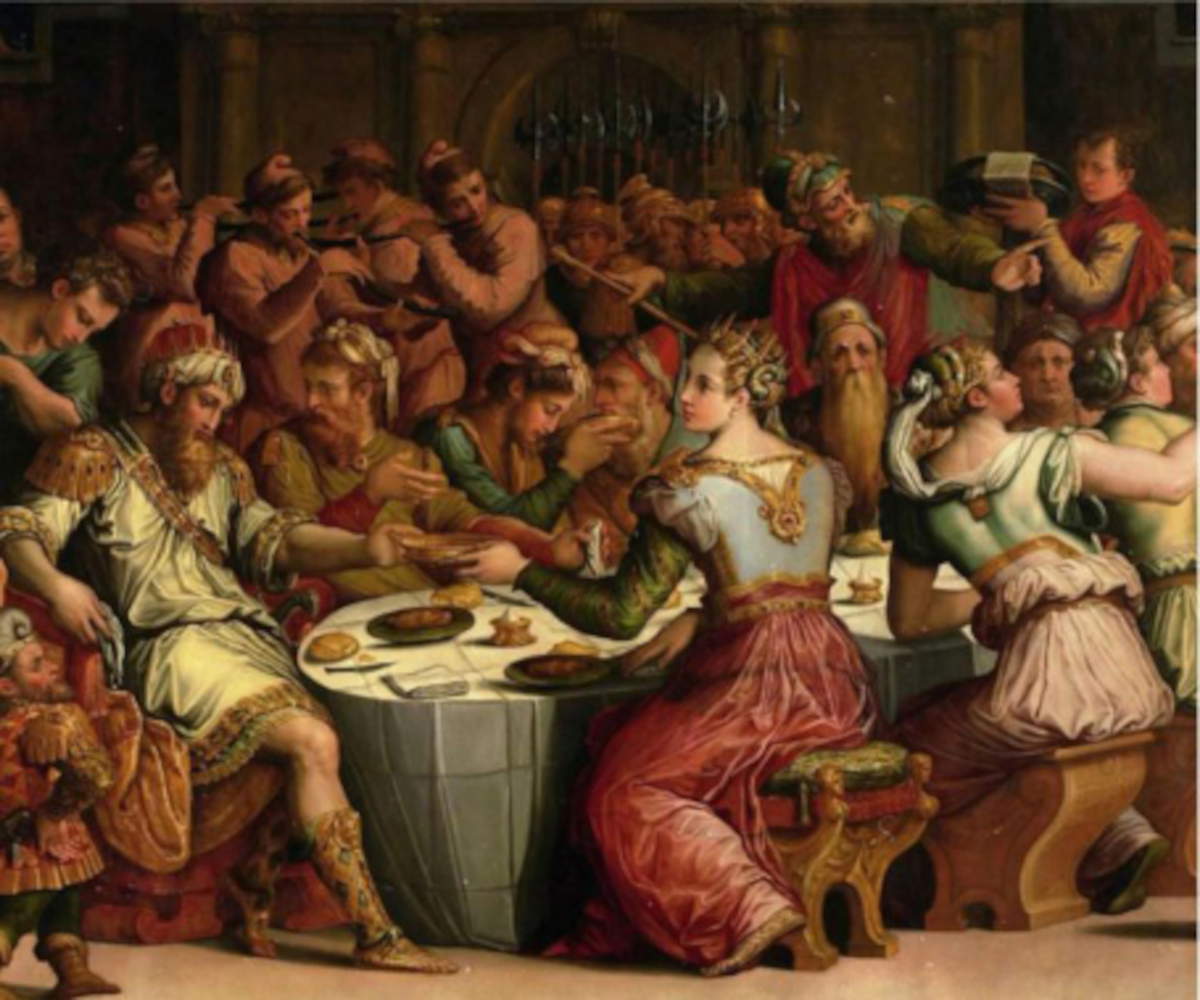
The museum houses a collection that documents the evolution of art from the early Middle Ages to the 19th century, through an exhibition organized across twenty galleries. The building features a monumental courtyard traditionally attributed to Bernardo Rossellino, though it is characterized by a design clearly inspired by Brunelleschi, which has recently undergone a meticulous restoration. Among the most important works are the paintings by Margarito d’Arezzo and Spinello Aretino, as well as the monumental panel painting *The Wedding Feast of Esther and Ahasuerus* by Giorgio Vasari, considered one of the greatest works of the Italian 16th century. Also particularly noteworthy is the collection of historiated majolica—one of the most important in Italy, comprising about 500 pieces—along with terracotta works, Robbia altarpieces, and works by Renaissance masters such as Bartolomeo della Gatta and Luca Signorelli.
The program will also conclude in Anghiari, where on Sunday, September 6, at 5:30 p.m., as part of the celebrations for the 51st anniversary of the Museum of Folk Arts and Traditions of the Upper Tiber Valley, a guided tour of Palazzo Taglieschi and its collections will be offered. Director Marco Musmeci will lead the tour, offering a final opportunity to explore the museum and the historical and anthropological heritage it houses.
 |
| The museums in Arezzo and Anghiari are hosting a weekend packed with events featuring ancient art and archaeology, as well as special initiatives |
Warning: the translation into English of the original Italian article was created using automatic tools. We undertake to review all articles, but we do not guarantee the total absence of inaccuracies in the translation due to the program. You can find the original by clicking on the ITA button. If you find any mistake,please contact us.