



by Maurizio Cecchetti 12/09/2026



Categories: Exhibition reviews / Disclaimer
At Palazzo Fortuny in Venice, Erwin Wurm’s sculptures transform bodies, cars, clothing, and everyday objects into a grotesque theater of consumer society. An ironic and unsettling art form that questions the very meaning of satire and laughter. A review by Maurizio Cecchetti.
Today, overindulgence in food is no longer the joyful Rabelaisian utopia of the “Land of Plenty”; rather, it represents a symptom of inner turmoil, an emotional void, or a pathology linked to consumption and control over the body. Laughing at this excess is a way to settle the score with the power that dominates and governs even the appetites of our stomachs. But when it comes to satire, it must be said that the joke here has a very serious purpose. In *Dying of Laughter*, Riccardo De Benedetti wrote a pamphlet in one sitting following the attack by Islamic extremists on the editorial office of the French satirical newspaper *Charlie Hebdo* in Paris, which had published several cartoons targeting Muhammad: the author sought to show that satire, when it is genuine, is not for frivolous people who laugh carefree—that is, without thinking—for satire usually hurts and can even provoke lethal reactions.
I don’t know why these thoughts came to mind as I reflected on Erwin Wurm’s work after seeing it on display at Palazzo Fortuny in Venice. Wurm, it seems to me, does not joke about religion. His target is consumer society as a dynamic entity, highlighting—so to speak—its compulsive dysfunctions, bourgeois values, selfishness, and the lack of internal equity within the middle class (which is always cross-cutting and transcends all class distinctions), a class that has renounced bothMarxist ideology and democratic theories, leaving the field open to a liberalism that thinks only of enabling profit for the few at the expense of the many, leading them to believe that the wealth of the chosen few is always and in any case a benefit for everyone. There would be no need for satire with such ideas, which are a blatant deception: one usually has to wait for the stock market to ruin the speculators, destroying the spectacular careers of social climbers who, from one day to the next, fall from the heavens to the depths. Is there anything to laugh about? Not much, but the question is whether these mechanisms possess an intrinsic and original humorous logic. This is all that history offers us: justice delayed in the face of evident social and political outrage.


The Stoics refused to laugh because they considered it a sign of weakness. The Cathars, too, laughed little or not at all. As the Greek philosophers maintained, one is permitted to laugh only at one’s enemies or to provoke a foolish hilarity in them. In fact, it is said that the women of Sparta would sometimes expose their private parts to their enemies to distract them, provoking laughter, thereby allowing their brothers, husbands, and lovers to gain the upper hand in battle.
But isn’t laughter today too easy a way to distance ourselves from—or place ourselves above—what we’re laughing at? For the ancients, laughter served to unmask hypocrisy, overturn false truths, and expose human vices. In public speeches and in courtrooms, provoking laughter could serve to demolish an opponent. Democritus (the *philosophus ridens*) laughed at all human vanity but also “at the things that seemed most serious.” Cicero laughed to dismantle his opponent’s arguments and win over the jurors. With the advent of Christianity, laughter was condemned. Since ancient times, mockery has been a way to expose the absurdity of those who believe themselves to be different from what they really are.
From risus to rictus, from a smile to a forced or mocking grimace, it is a short step—and in satire, an even shorter one. The positive aspect of satire lies in its antiphastic claim, in the irony that turns the world upside down and—to take Rabelais again—exalts the principle of the base, material, and corporeal, while condemning all that is lofty, spiritual, ideal, and abstract.
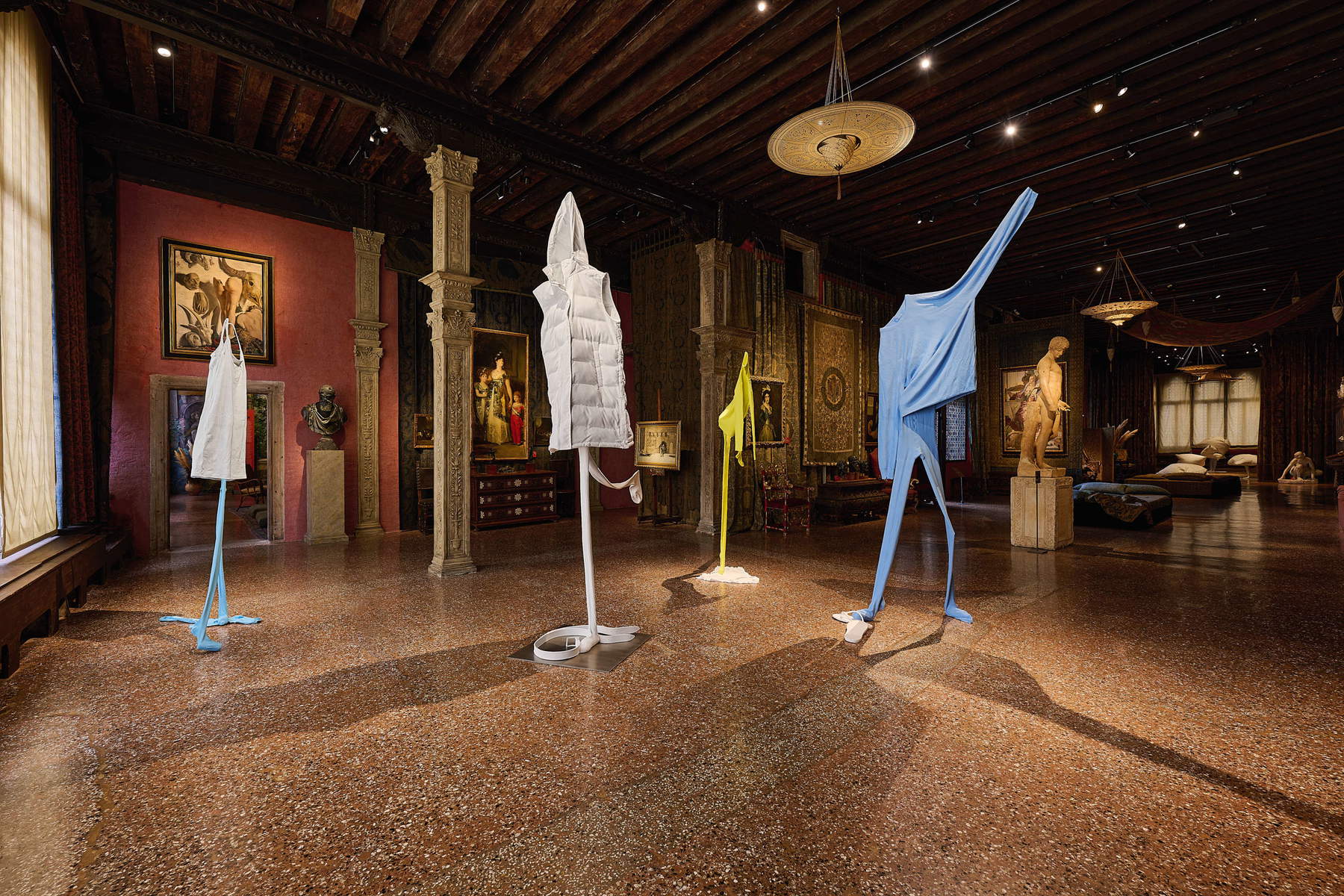
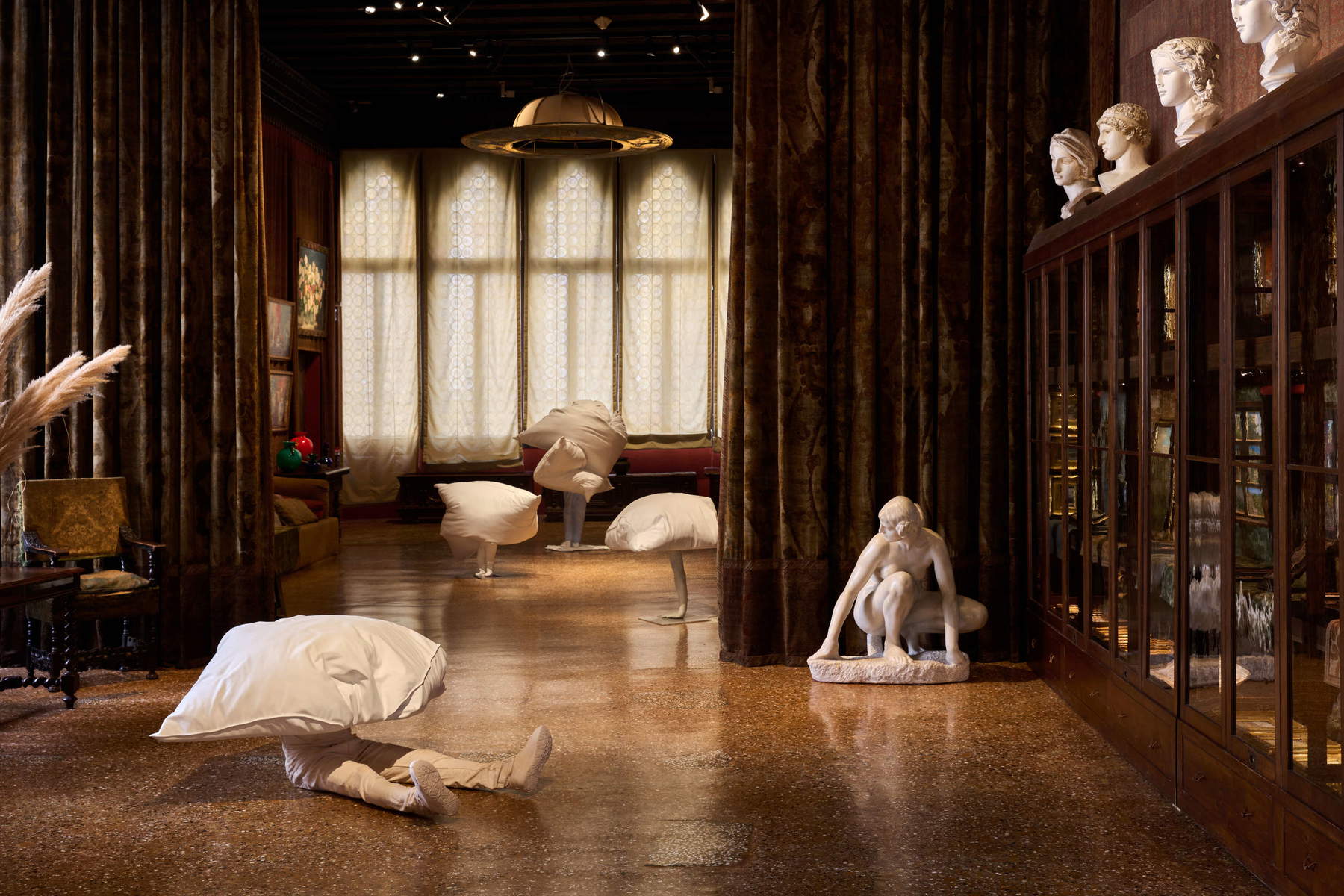
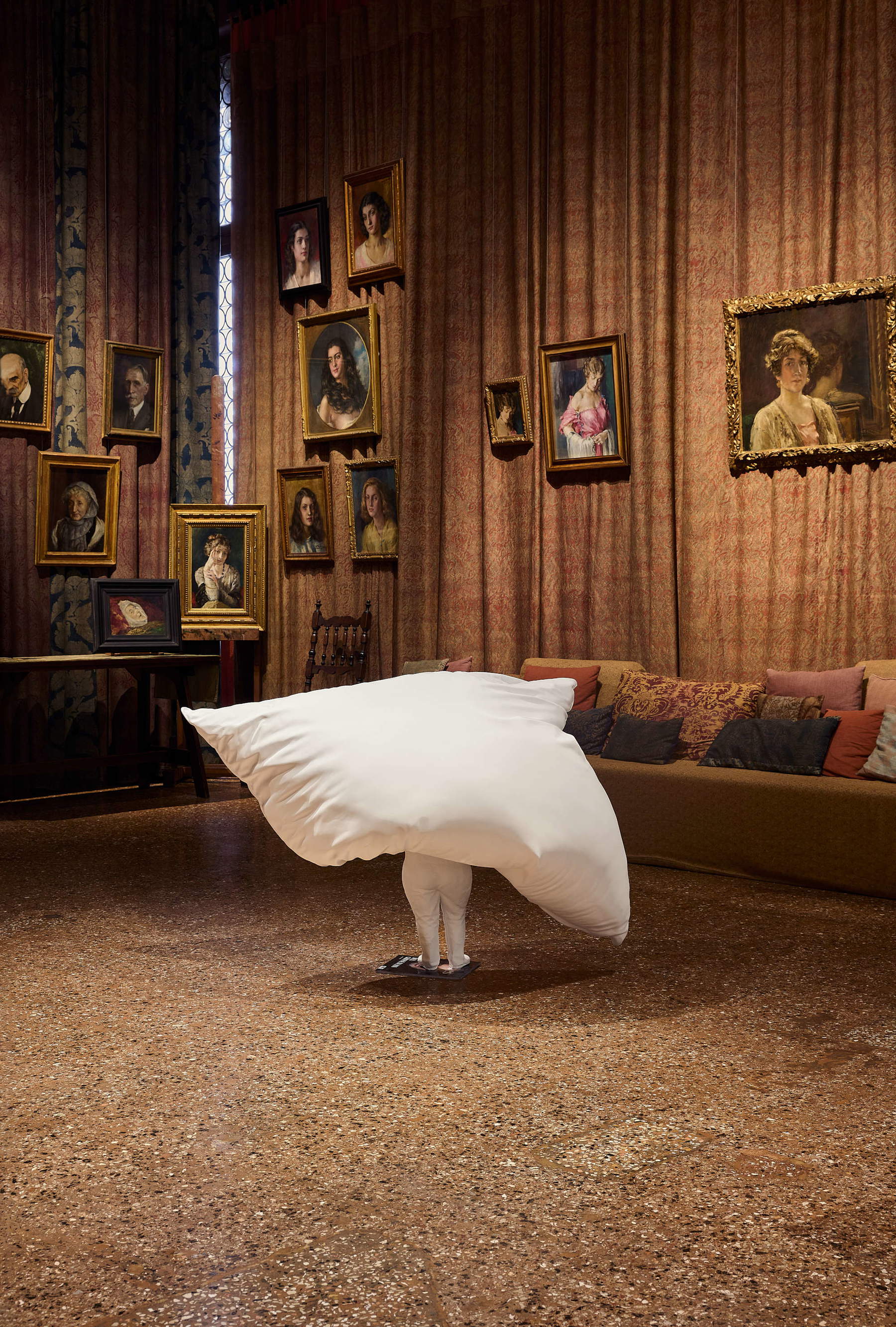
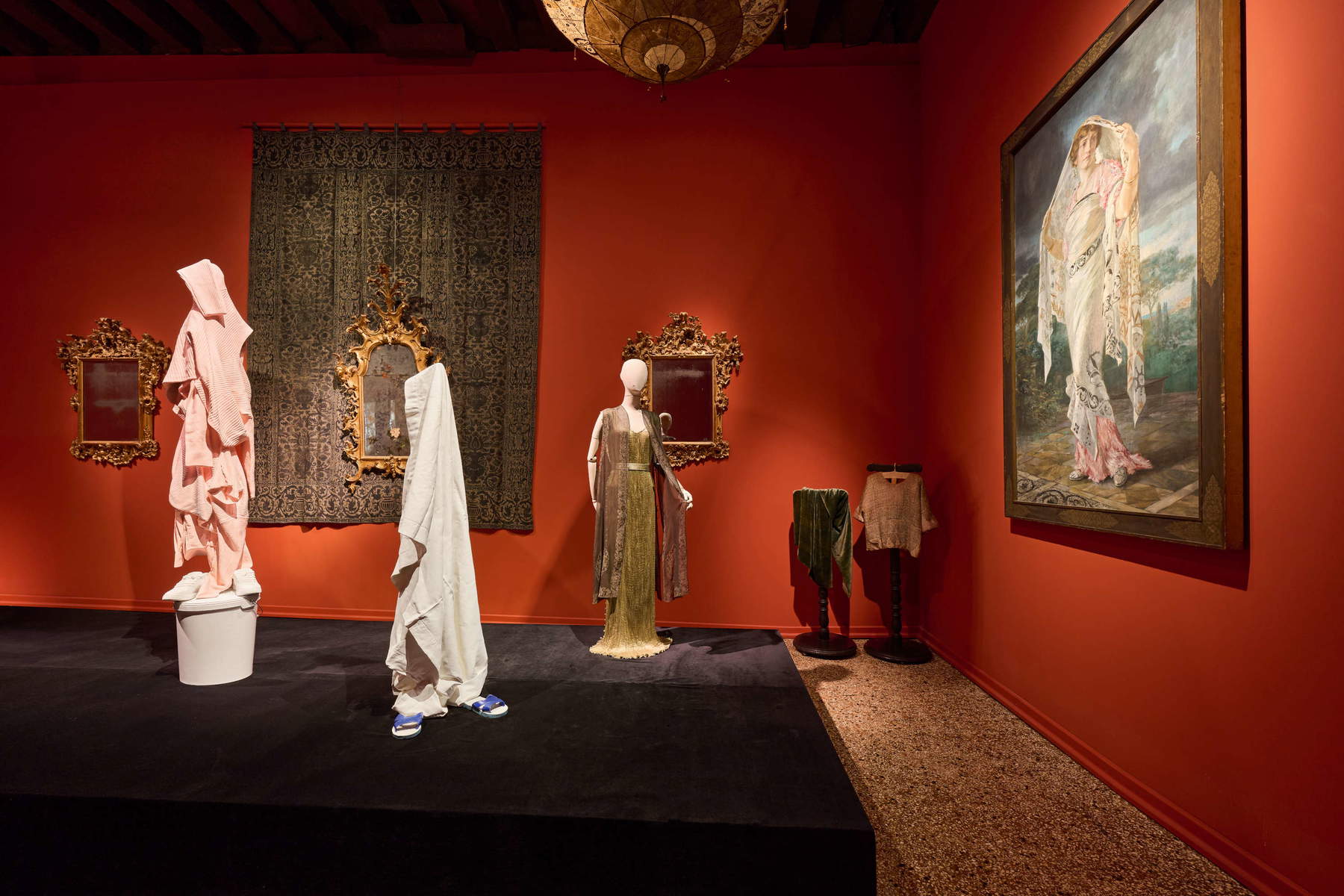
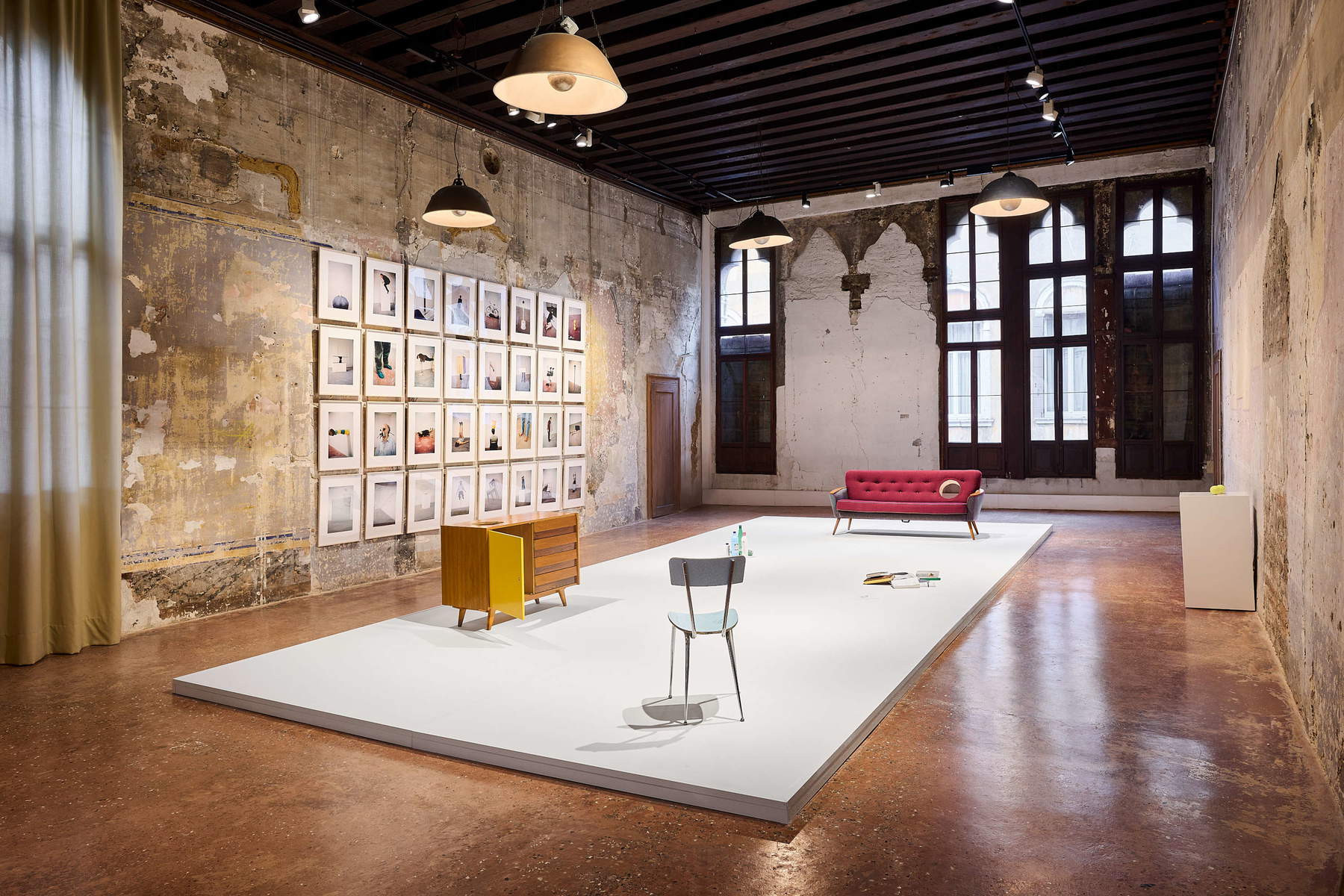
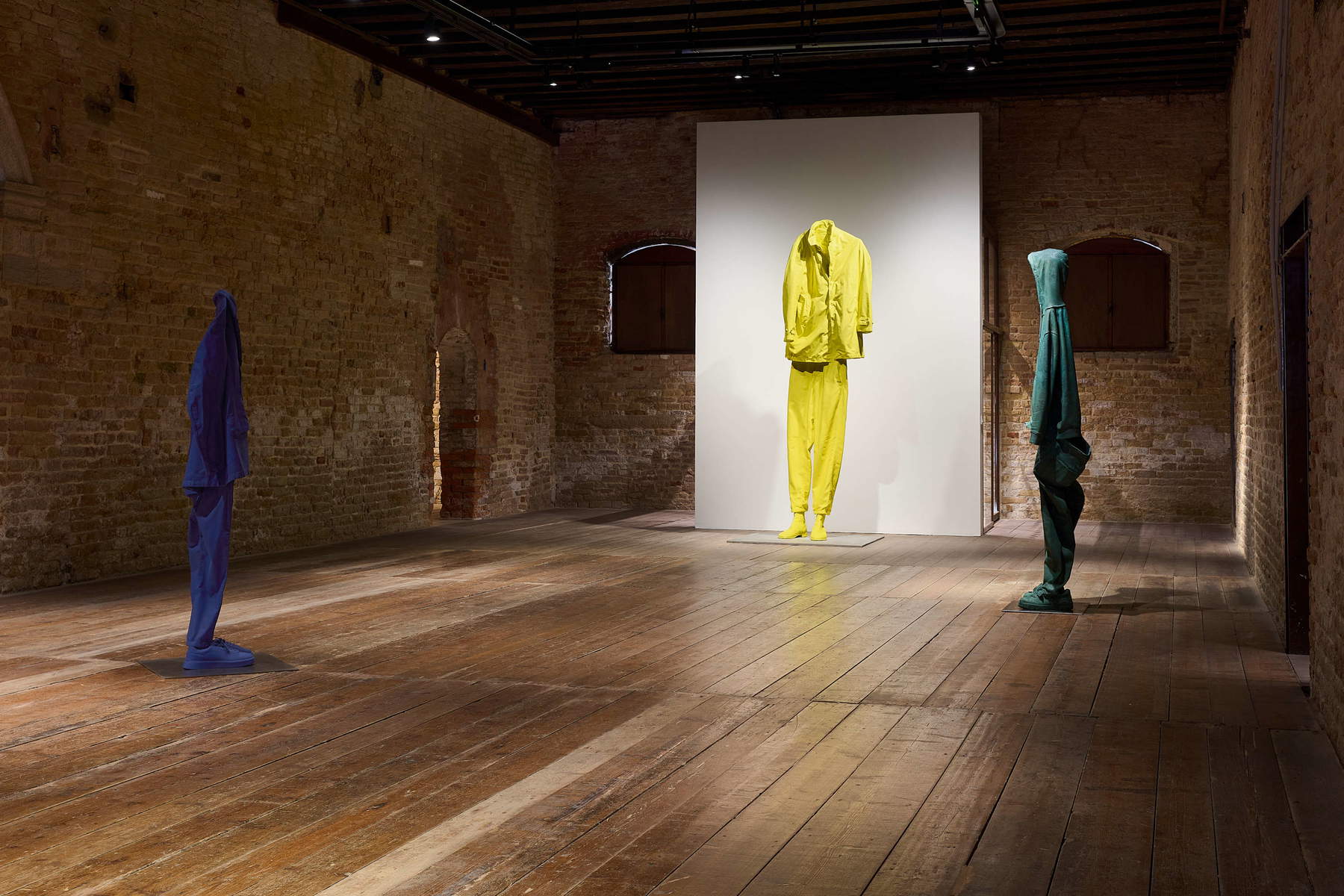
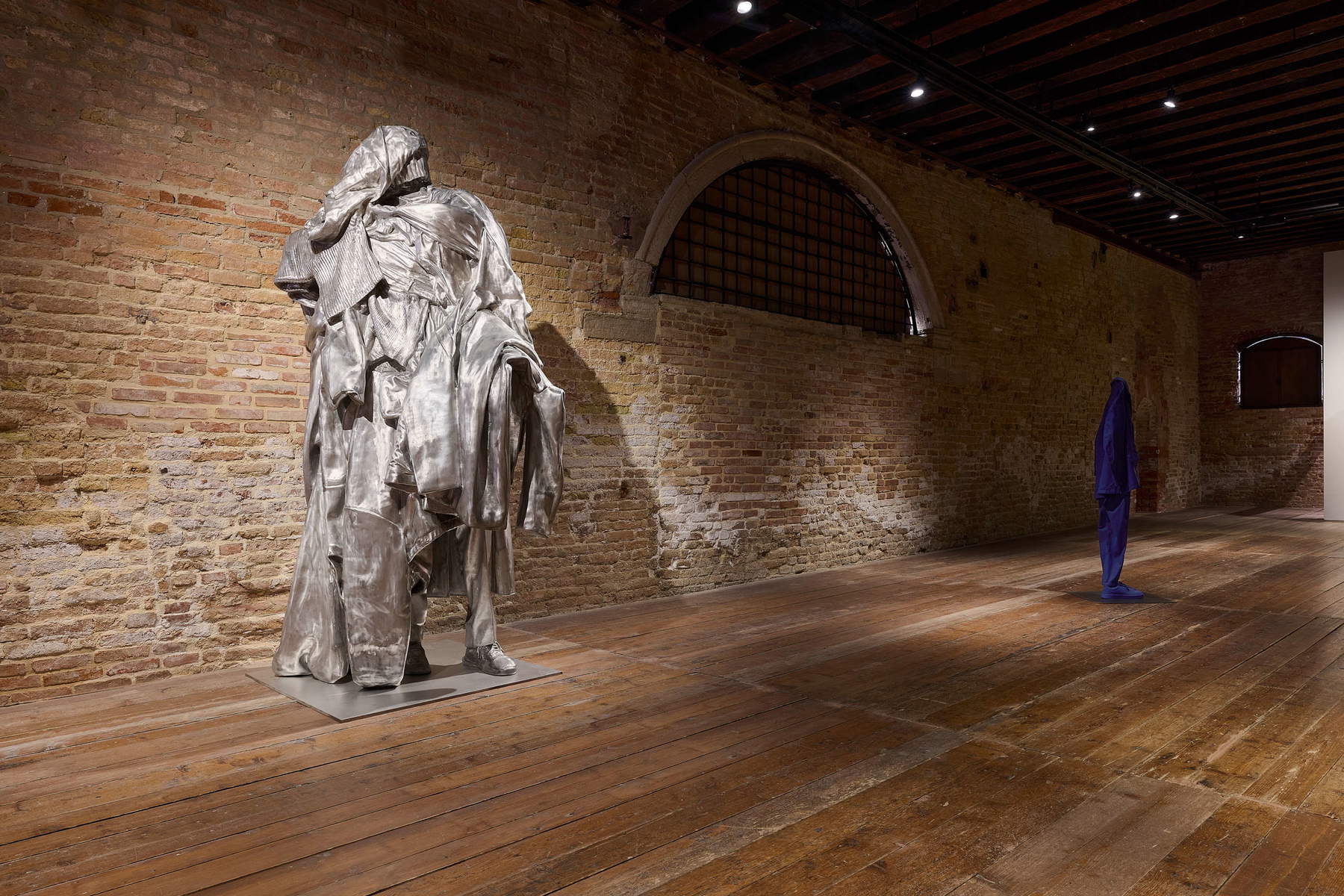
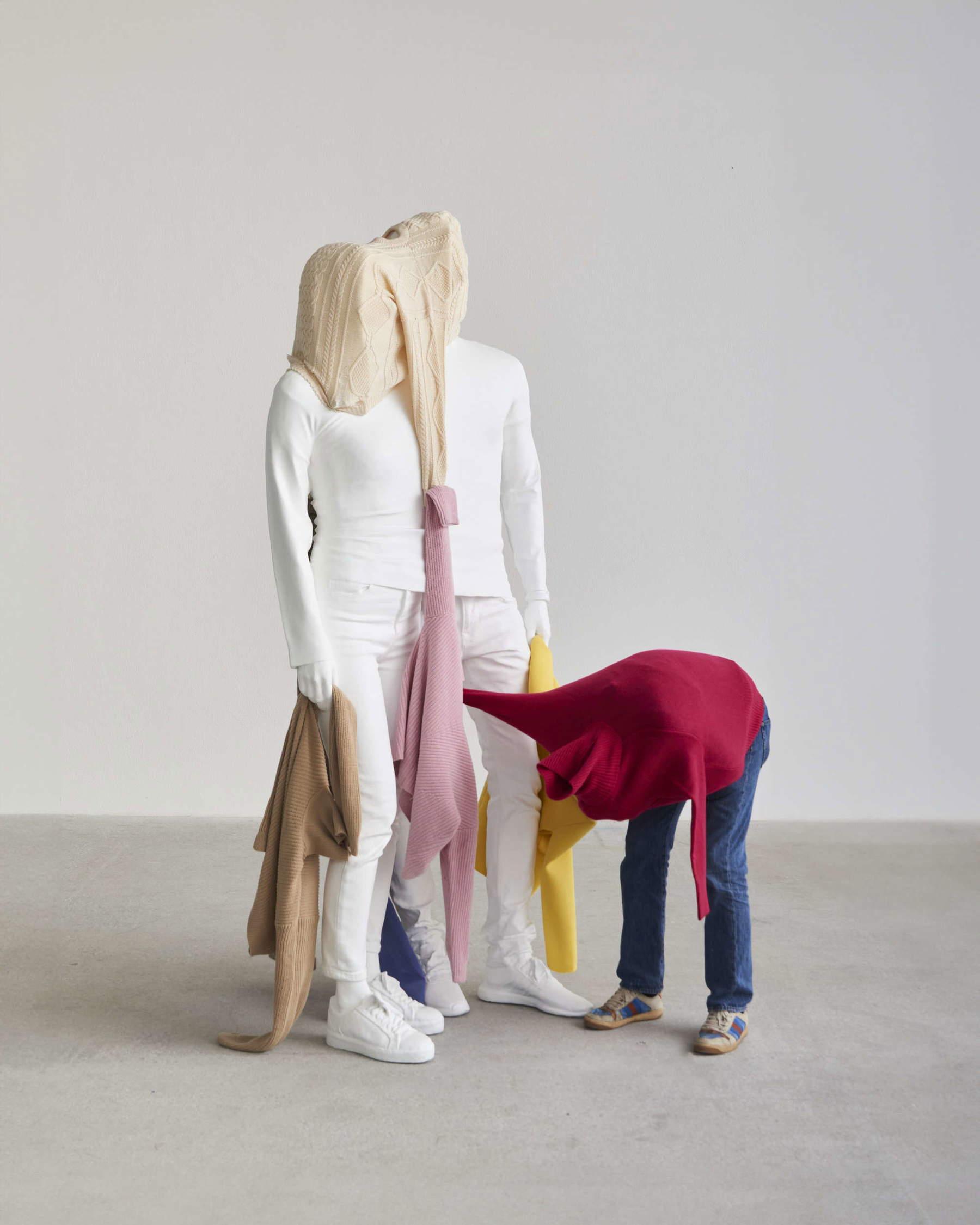
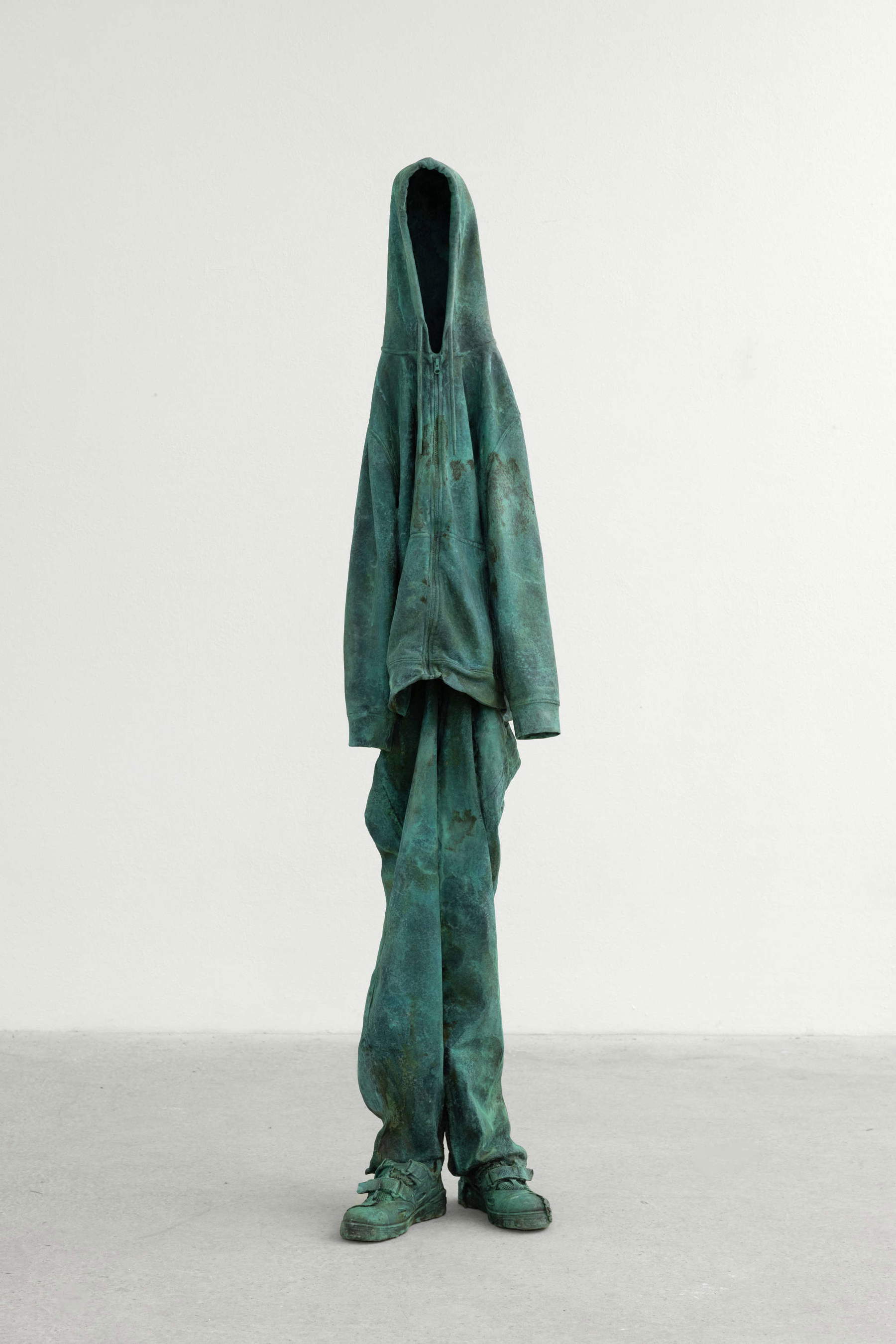
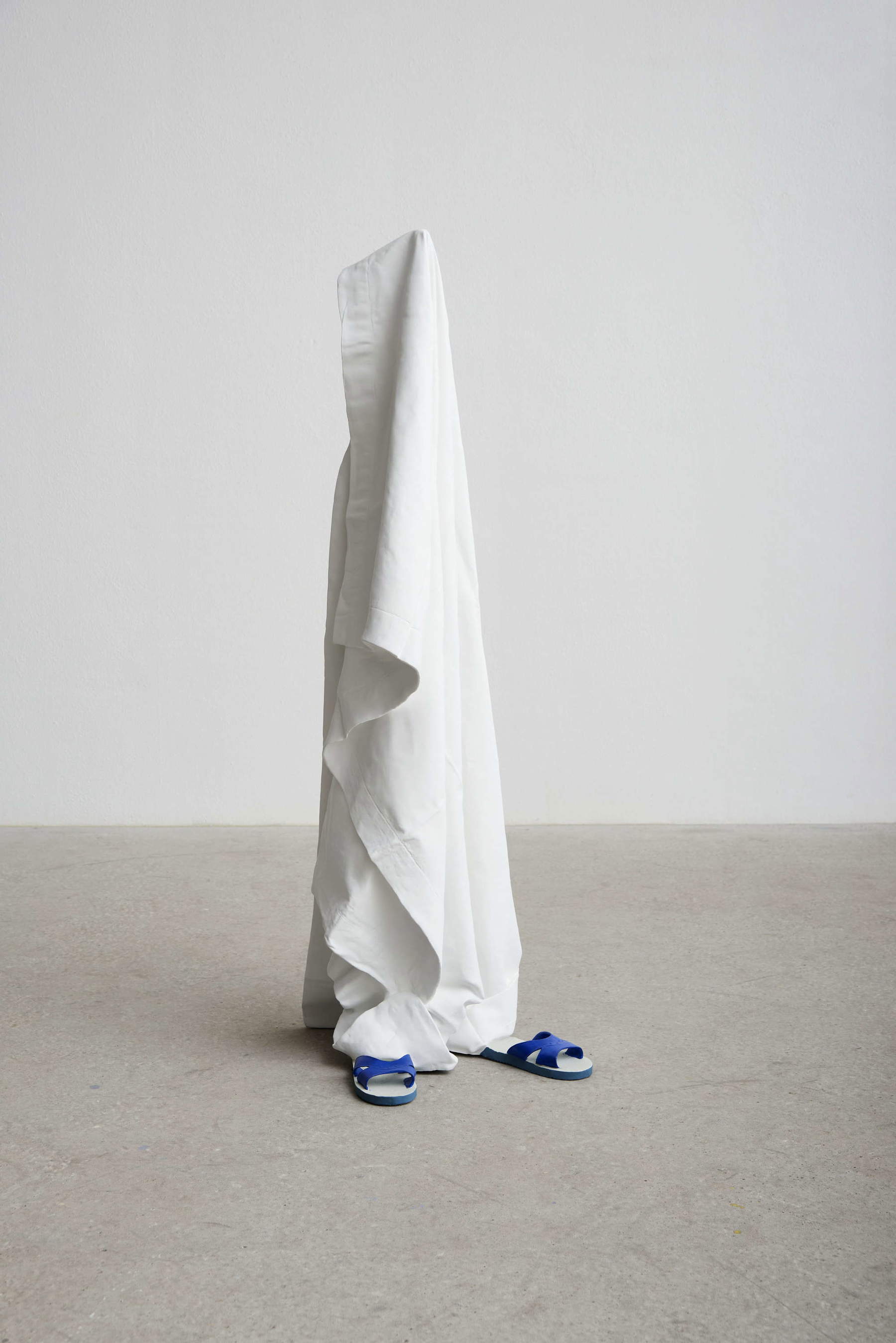
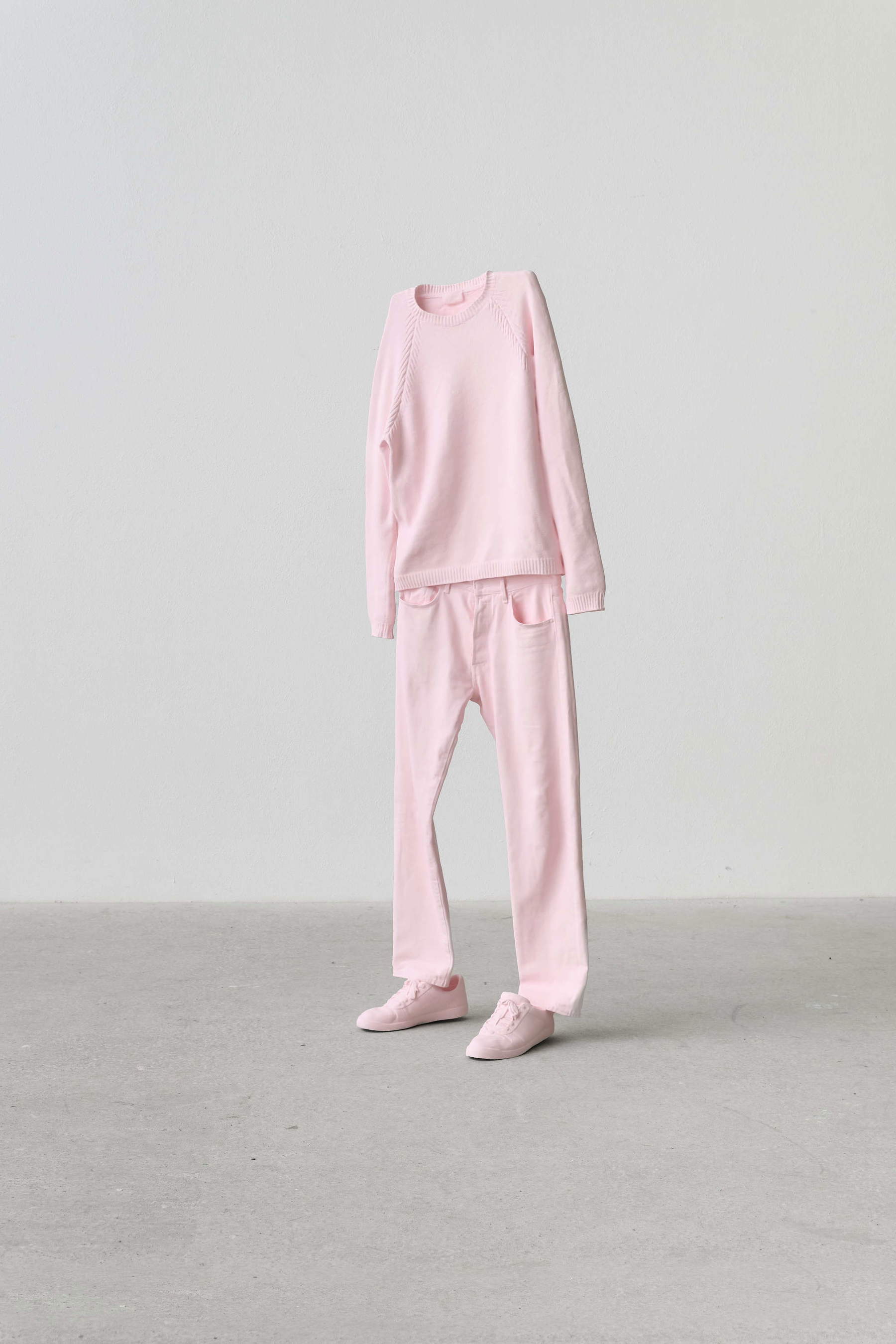
To criticize the world without falling into the trap of the purists who judge by placing themselves above what they castigate, one must accept a necessary truth: to be a great satirist, one must first accept within oneself that one is also imperfect. Erwin Wurm, for example, has the soul of an unrepentant sinner, who sins with relish, so to speak: he enjoys playing by making the things that belong to our everyday lives seem strange. In other times, standing before Wurm’s sculptures, we might have wondered whether the artist was there or just putting on an act; Wurm, in fact, is someone who laughs at the world with a touch of slightly absent-minded malice and sees himself as the court jester who “jokes” with His Majesty (and his consort, the Queen, who in this piece is represented by art). Starting with the catalog of ordinary objects: empty clothes—or rather, clothes that have been emptied—hanging from floor lamps that resemble spindly human legs; or they are pillows, bags, or sacks; but in some cases the sculptures become gherkins or sausages: our Austrian artist is a true lover of grotesque humor in the style of a reimagined and revised luxury society. A bit of postmodernism, a bit of fashion eclecticism. Wurm is having fun—there’s no doubt about that—but his pranks always have a bitter aftertaste, which you begin to sense after a while of observing his sculptures painted in colors that are off-putting and sugary, sterile and symbolic at the same time: pink, fluorescent green, pale blue, and so on.
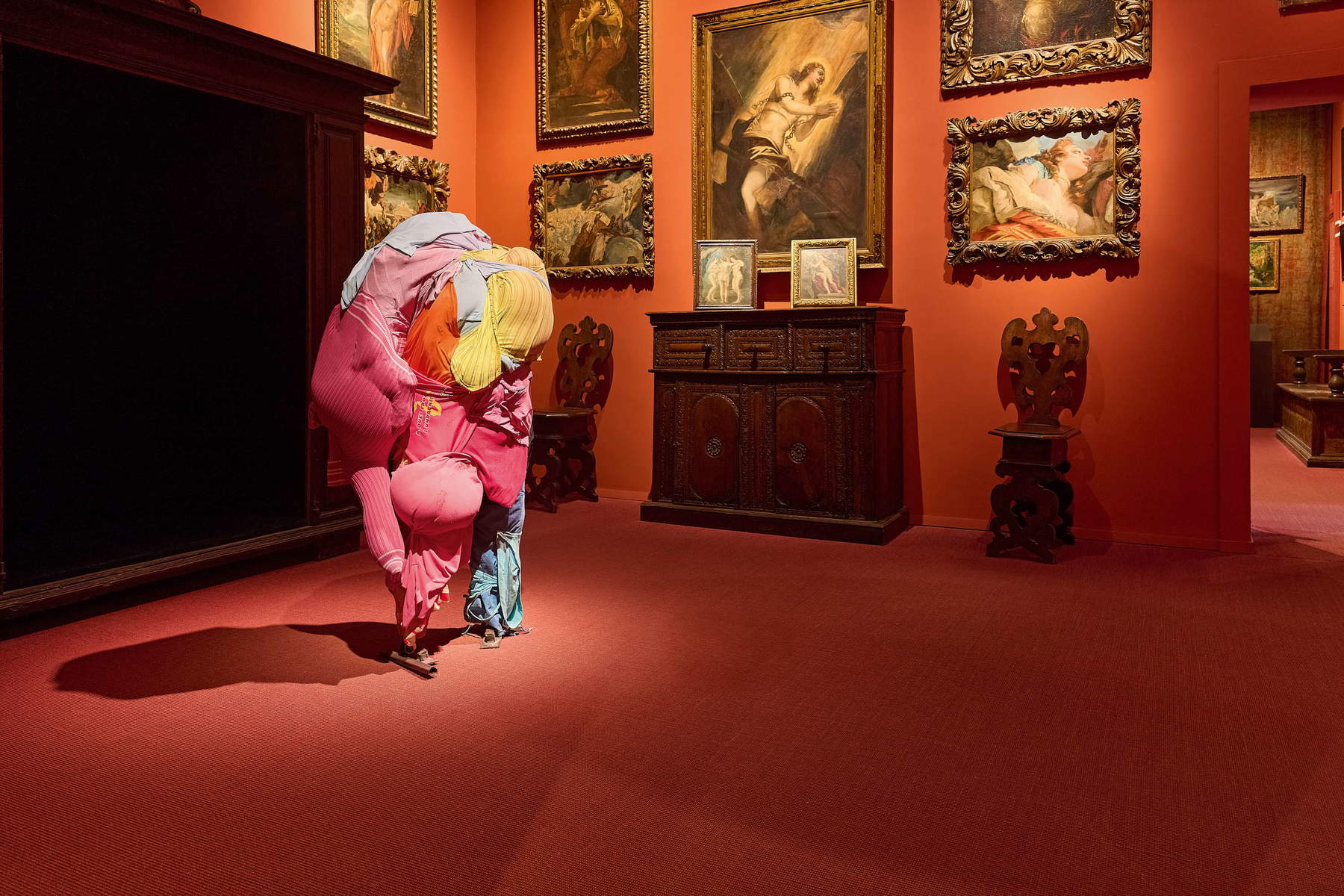
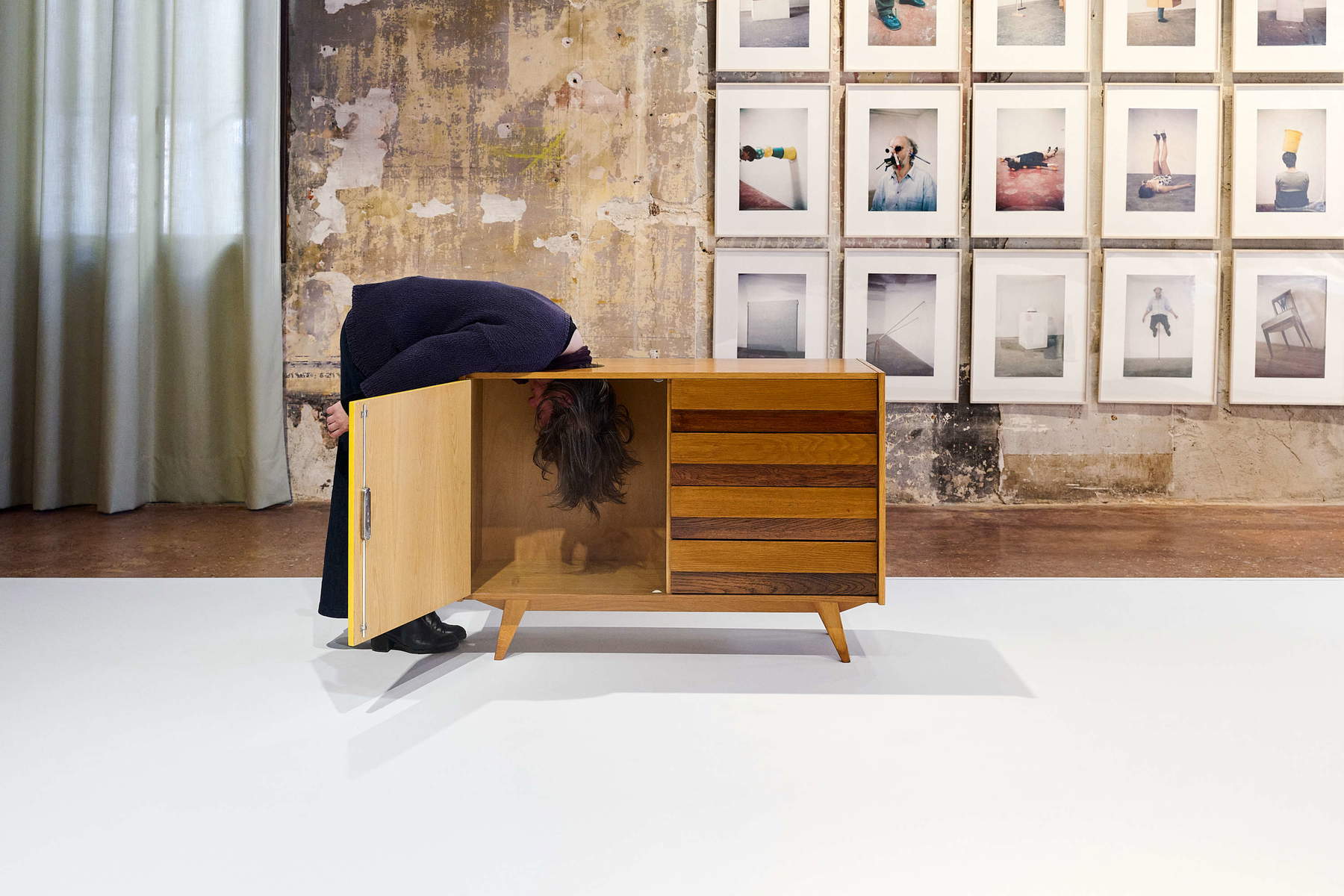
Come to think of it, Wurm is a classical sculptor: while he makes objects and humans fat (those “chubby” cars); or makes them so thin as to negate them, as in the series of bodyless garments—except for the legs, which serve as aesthetic extensions). In reality, he seems to translate the ancient principles of “levare” and “mettere” into narrative forms, working with marble and stone, and contrasting them by shaping plaster and clay. Except that Wurm does so without adhering to classical precepts, such as harmony and anatomical proportion, because he plays with images: while for Michelangelo or Donatello it is the very style in which they think that becomes the form of the sculpture, for Wurm, on the other hand, it is the image that determines a style born as a critical idea directed against the reality in which we live and of which we are a part. For the Austrian artist, gaining weight, losing weight, eating, or holding one’s breath are acts that determine the sculptural creation itself. And in this practice, where sometimes it is the act of adding that dictates the rule, it is not always necessary for Wurm to address bulimia or anorexia; sometimes, as in the “One Minute Sculptures,” it is the viewer who must follow the artist’s instructions by assuming an “alienating” pose in relation to everyday objects such as chairs, bottles, or buckets. They call it “performative sculpture” because the viewer, in turn, becomes a sculpture that exists for one minute. If a butterfly lasts a day, art can be even more ephemeral and exist for just one of the 1,440 minutes of the butterfly’s life. This, too, is irony about fate, or satire on the vanity of believing ourselves to be eternal.
Wurm’s attitude toward the world reminds me of a portrait from a few centuries ago—that of The Laughing Fool, painted by the Dutch artist Jacob Cornelisz van Oostsanen, who, in the early sixteenth century, depicted a court jester who, turning toward us as if in a mirror, laughs, yet at the same time seems to be hiding behind the hand covering his face; peering at us through the gaps between his fingers, as if he were studying us to understand to what extent we are unwitting victims of a deception whose truth he already knows, and our very unawareness elicits from him a wicked and truthful laugh, much like that of Democritus.
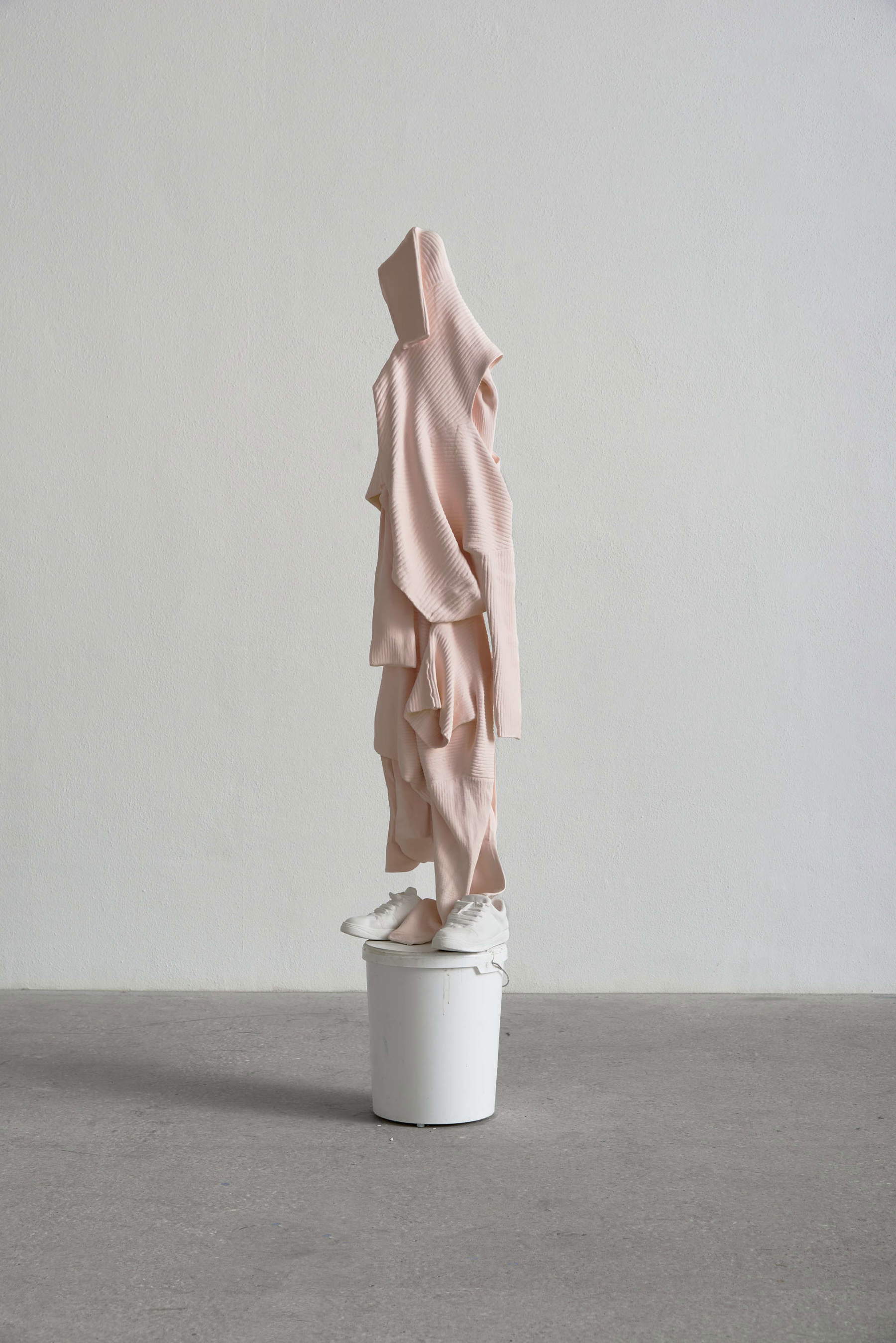
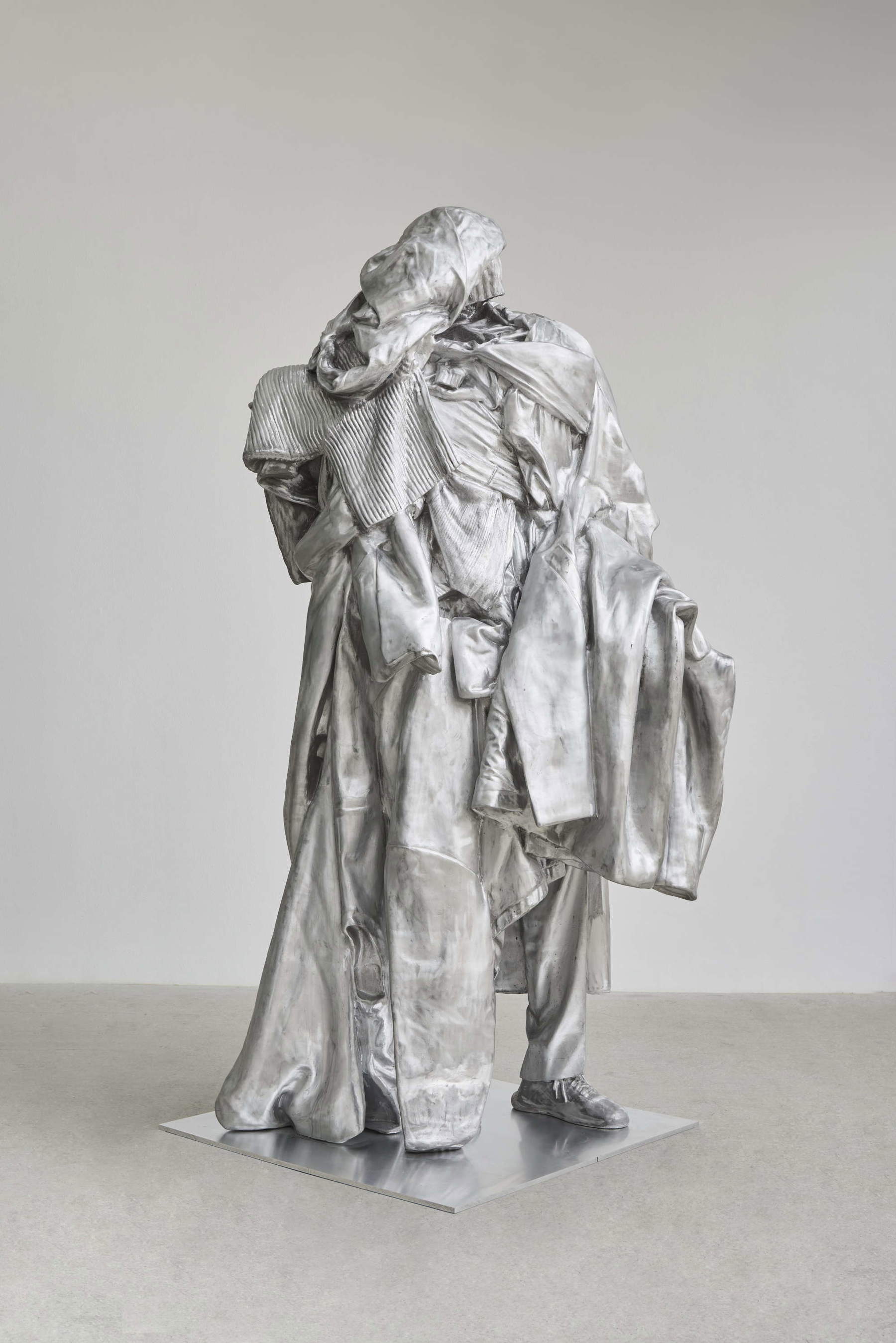
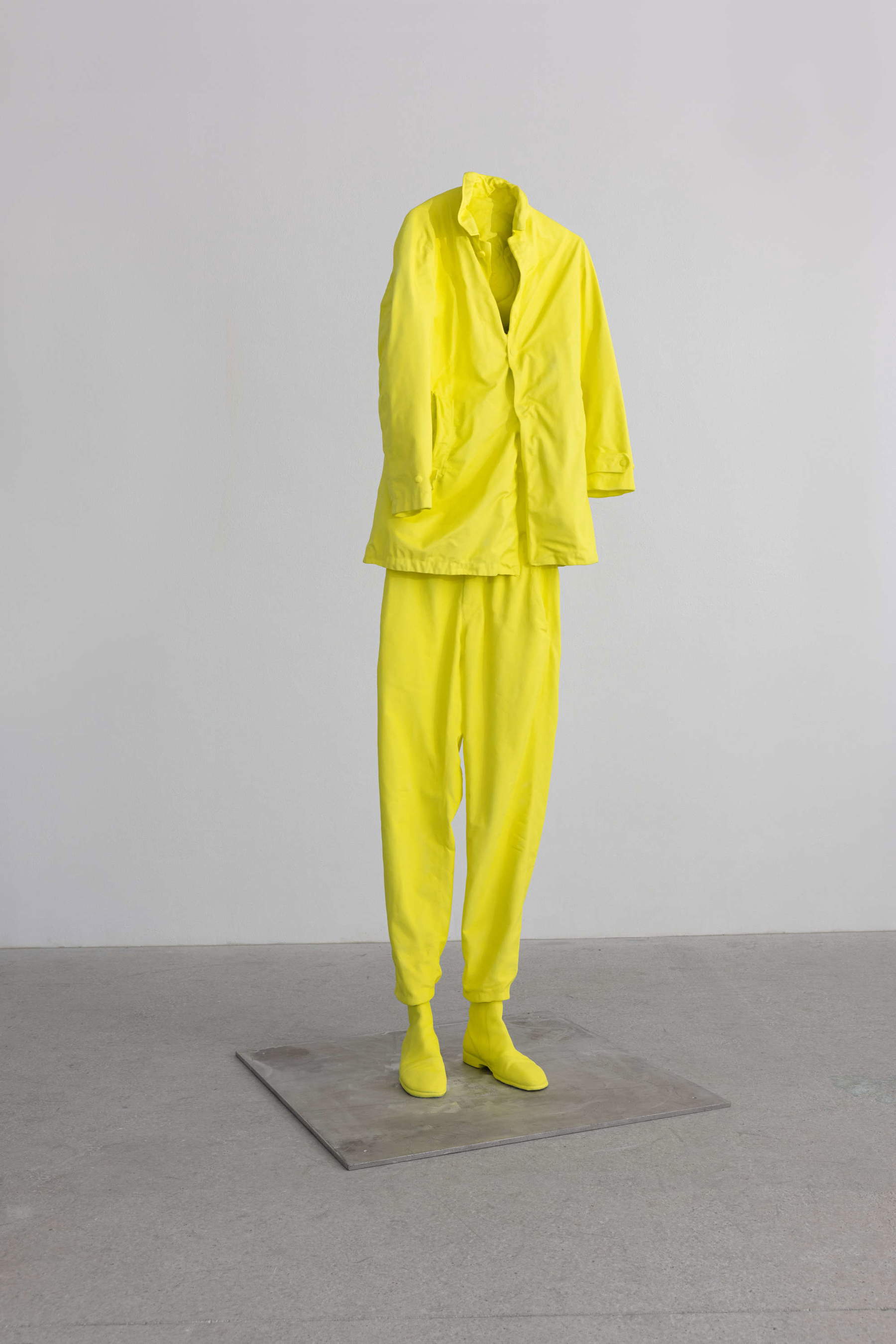
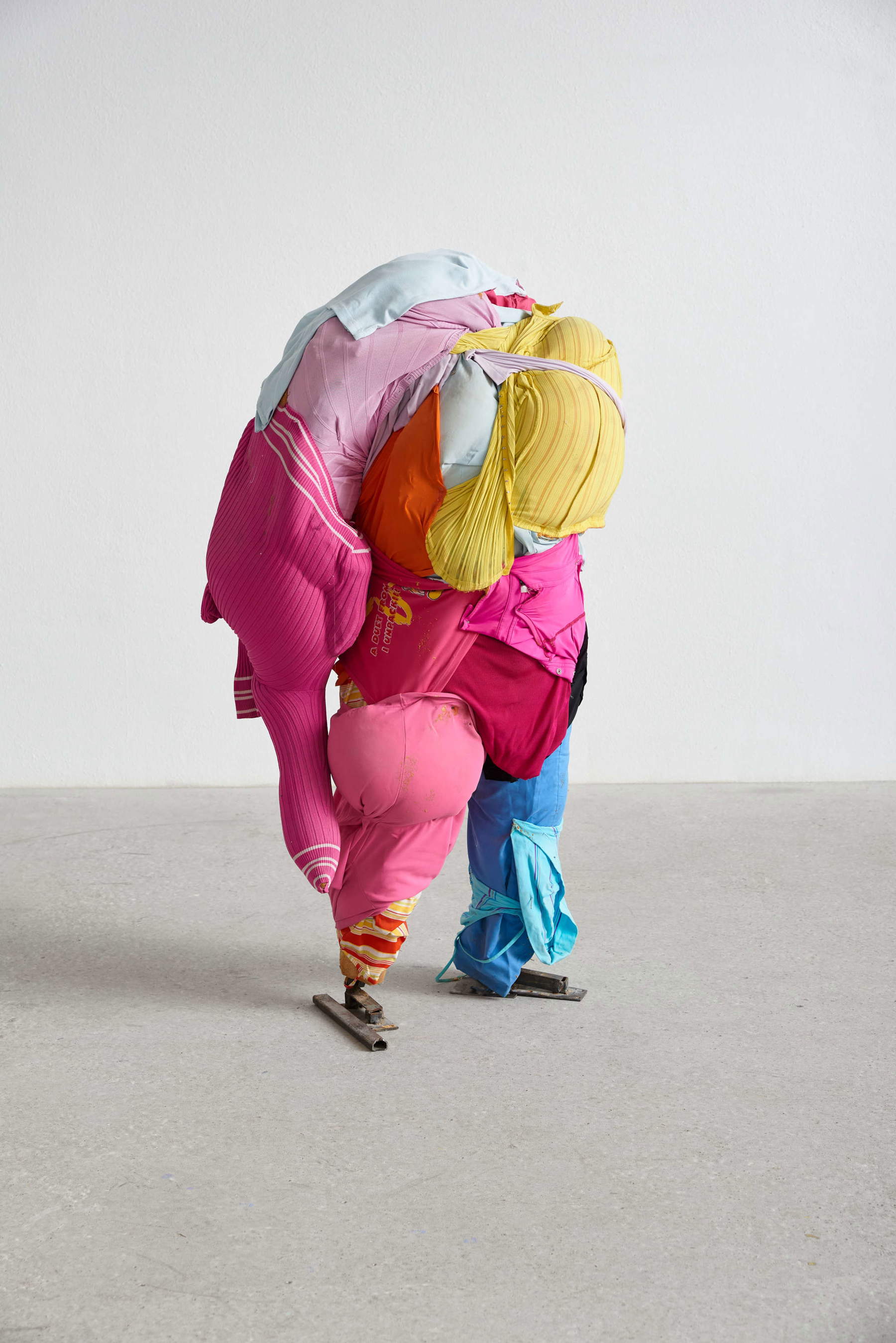
Wurm embodies a classic case: that of someone who, by laughing at others, falls into the sin of pride. Is mocking others a sign of pride? The excess of self-esteem that transforms ironic play into moralizing is a line that, once crossed, makes us similar—if not equal—to the one who is the object of ridicule. Meanwhile, long donkey ears grow on either side of the court jester’s head—not those of Lucignolo, the young, pale rascal who leads Pinocchio astray, but two enormous ears capable of picking up on the hidden truths that we neither know nor wish to discover or hear. Ever since the time of Democritus, those who laugh do so from a wellspring of wisdom, laying bare human power and vanity. But then, with the avant-garde and social criticism, everything can take a different turn: it is a sociological laugh, which strips things of their skin and wears it like a garment that no longer has a body beneath it to conform to. And Wurm becomes its paradoxical tailor: he cuts every garment to fit empty forms, which do not even have a mannequin as a human simulacrum.
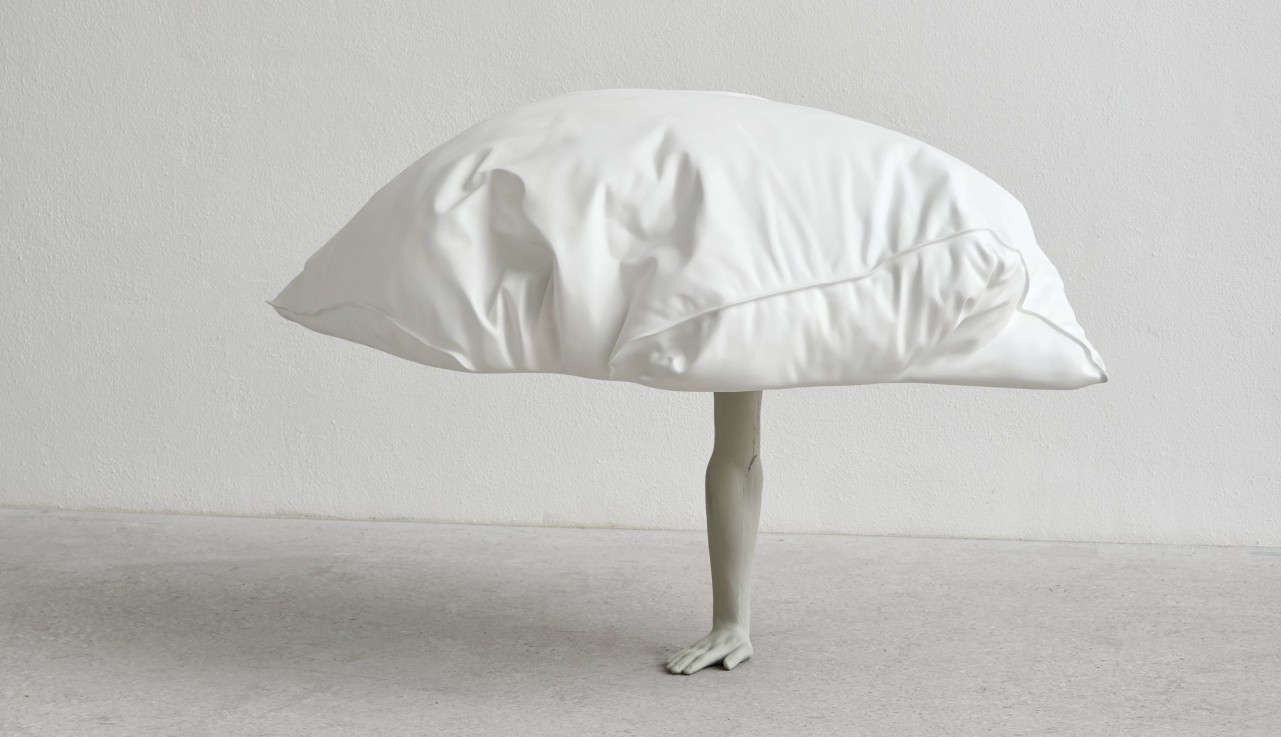
At the Fortuny Museum, the curators of the exhibition dedicated to Wurm have been wanting to laugh themselves silly for weeks now. Instead, they have such sad faces. I confess I understand them a bit: spending all day surrounded by such strange works (collections of clothes stripped of their soul—that is, the body they once covered; as the saying goes, “the habit makes the monk,” but now only the habit remains, and monks are increasingly scarce on the horizon; pillows that walk or fold over a dwarf’s legs, resembling strange animals—turkeys or ostriches—without wings or heads; metallic bubbles or objects like a lady’s handbag, also supported by whimsical lower limbs that retain only the cartoonish silhouette of a human; and then there are certain implicit—very implicit—references: to Balzac’s dressing gown modeled by Rodin, to which Wurm adds forms that evoke the stifling nature of an overly bourgeois life; or, here is the “Maddalena Rosé,” a sort of fashion icon, inspired, however, by the penitent saint whom Donatello depicts as consumed in a desert of atonement, while Wurm sees her as a potential catwalk exhibitionist, a lighthearted and frivolous rebel against martyrdom in a society of pleasure-seekers; or again the hyperbulimic “Uncle Bazooka,” also depicted in military dress in the unlikely bubblegum pink color, and so on), yes, in short, after wandering from one work to another for a while, you risk having your sense of reality shaken, especially since the walls and every corner of Palazzo Fortuny are often adorned with works by its founder—an artist and scholar whose perspective on things was certainly not as jarring as that of his Austrian guest.
At the beginning of this century, Wurm set his sights on the automotive world with his“Fat Car” series, in which he reworked several cars by “inflating” them, that is, by modifying the bodywork with polyurethane foam, which made their forms overflowing and spongy (infinitely “fat,” so to speak). Pop and kitsch fused into a single molecule that seems to grow under the influence of satirical estrogen—see, for example, that satin-silver metallic convertible with an interior in the classic fluorescent green that recurs from time to time in Wurm’s work—a piece presented in 2022 at the Poggiali e Forconi Gallery in Florence as part of the exhibition *Trans Formam*, curated by Helmut Friedel, where Wurm, expanding his installation across Piazza Santa Maria Novella, had also transformed a hot dog preparation and distribution van into a sculpture that engaged the public in a sort of performance. The adipose form as a critical tool: from the status symbol of opulence to the Jessica Rabbit-style supercar.
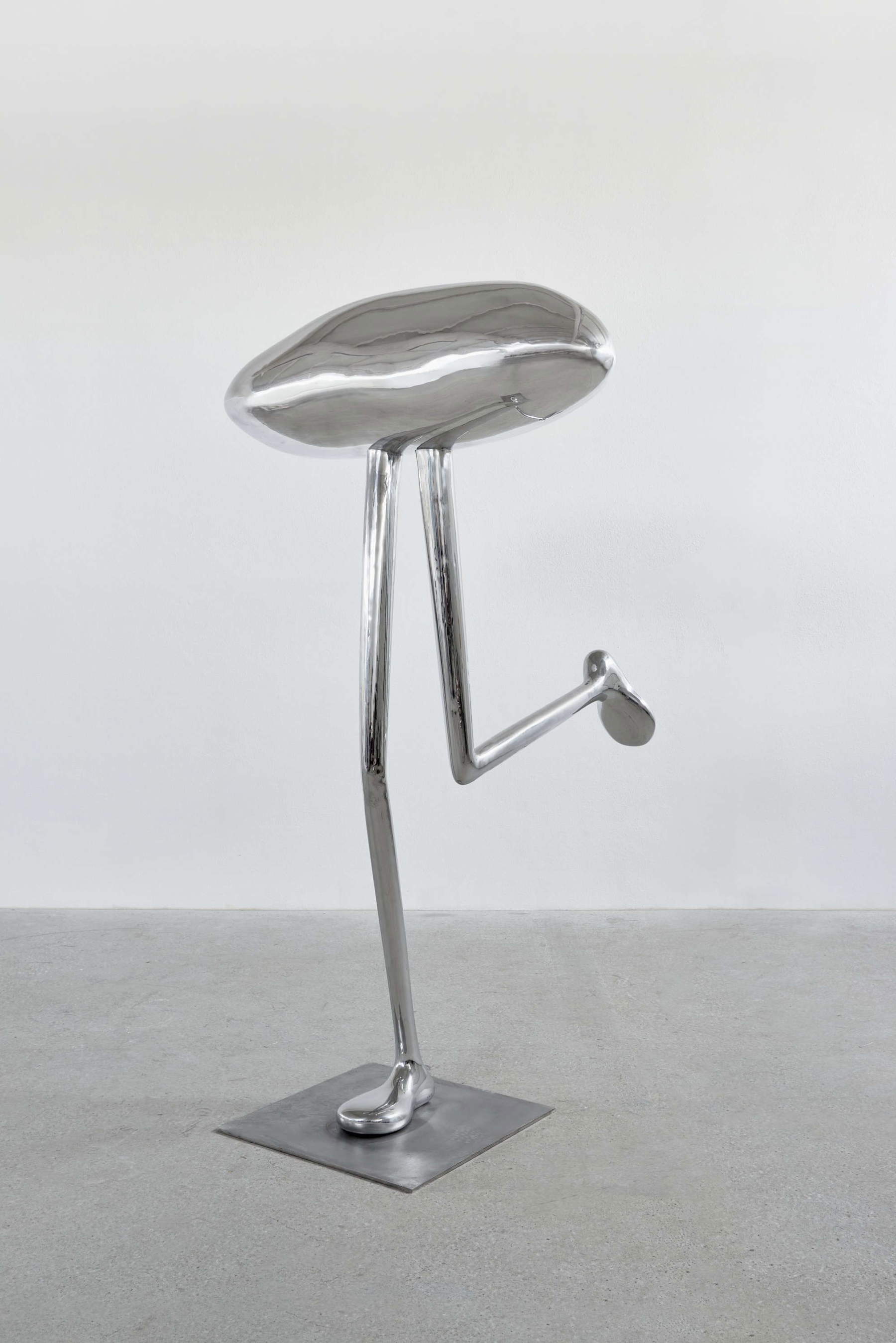
Wurm uses excess fat as a mirror for social criticism, well aware that obesity and bulimia had already been at the center of Pop Art in works such as Supermarket Lady by the American sculptor Duane Hanson (1969), which depicts an overweight woman with curlers in her hair pushing a supermarket cart full of junk food. Over twenty years ago, a Hanson retrospective at the PAC in Milan had highlighted the “belly” effect as satire and a fundamental testament to social “deformity.” Denouncing the excesses and vices of consumer society, yet with a final burst of tragic comedy (the American variety for Hanson, the Western variety for Wurm, who, however, loads his satire with a blank shot: it grabs attention but doesn’t bite the viewer like the former’s hyperrealistic sculpture, because, after all, the Austrian artist is a refined juggler of mental paradoxes).
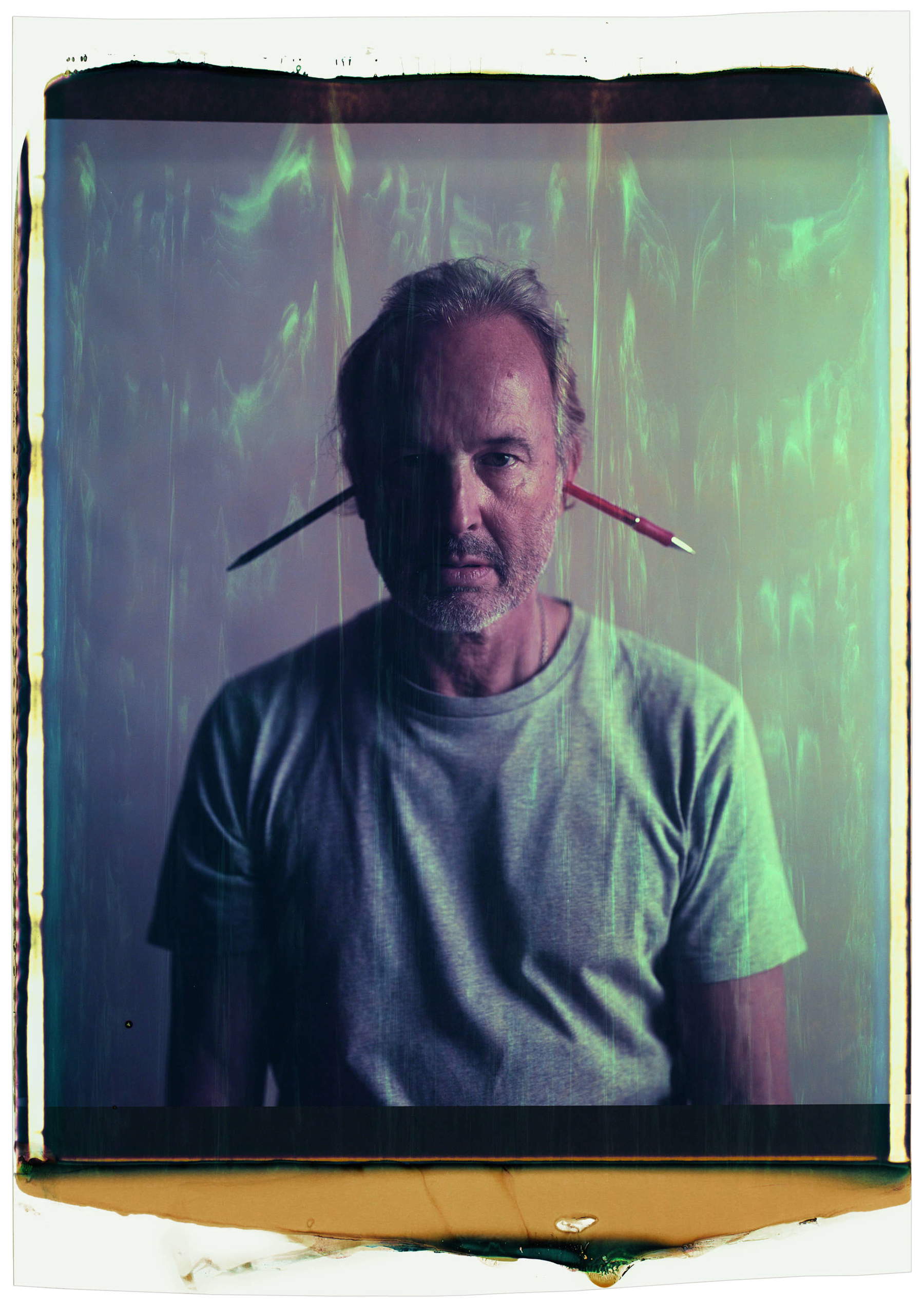
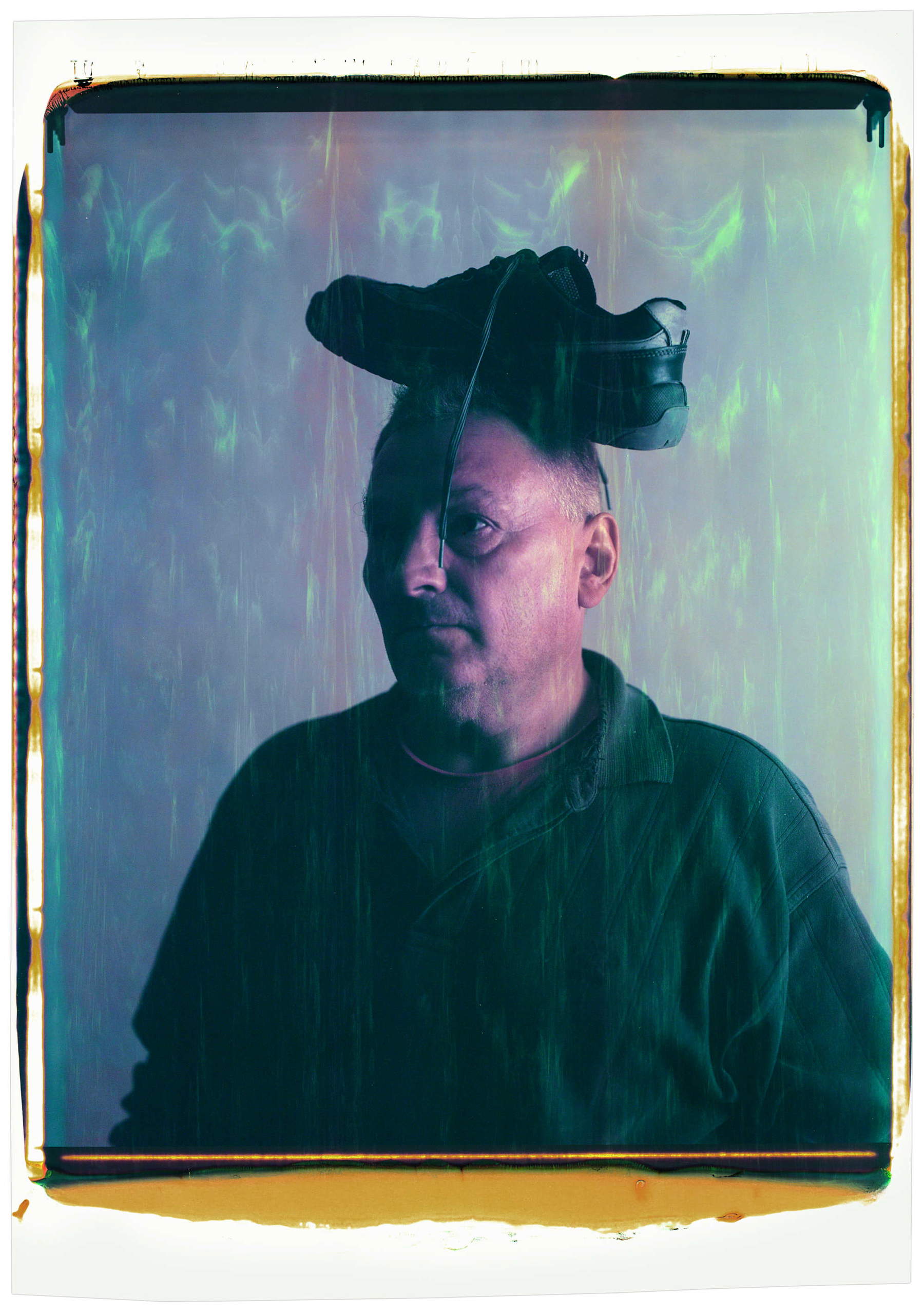
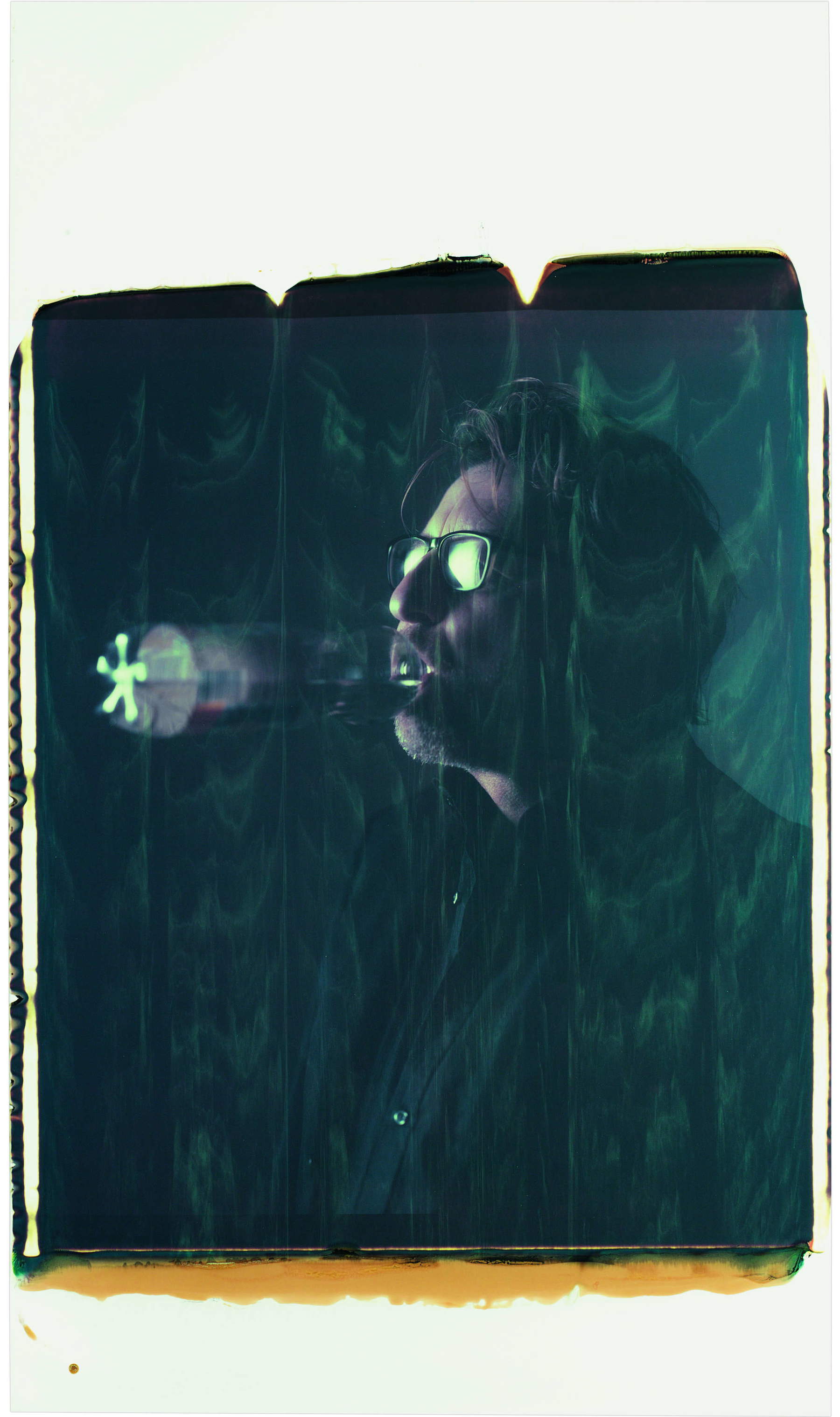
Wurm almost always knows what he wants. Especially when he has his picture taken and poses with a very serious expression (after all, it would be childish for a humorist to laugh prematurely, like certain television clowns today, who can’t manage to hold back their laughter until the moment they deliver their punchline). Rabelais might not have hesitated to label the Austrian an “agelasta” (one who does not laugh), even though, in reality, for the father of Gargantua, the term was synonymous with “misanthrope.” Wurm’s satire is brilliantly ironic, yet it does not laugh brazenly at the forms it manipulates; rather, it displays a principle of formal accumulation that, for example, seems to draw from our rag dumps, as we see in some of the sculptures on display on the ground floor of Palazzo Fortuny. Thus, the memorial dimension of the sculptural monument reminds us that luxury and the excesses of affluence come at the expense of those who lack even the bare necessities and are forced to rummage through trash heaps.
We must take it in stride, as that poet suggested so optimistically when he said: “Would to God that we were what our names imply—you, rich; I, beautiful.” “Set the table for Trimalchio’s feast!” Petronius ordered the renowned firm of Ascilto & Encolpio. There’s always something to learn from the ancient midwives of wisdom. And above all, one becomes receptive enough to grasp that note of wisdom that resonates in every corner of the cosmos: laughter is for hypocrites—that much is clear—because it makes us feel superior by reflecting on the faults of others. But flawed laughter causes gas-filled colic and bursts of gallbladder pain. And it comes back to bite us. So let’s be clear: like Wurm, I am a serious person who, every now and then, takes revenge on the world by laughing at it.
Warning: the translation into English of the original Italian article was created using automatic tools. We undertake to review all articles, but we do not guarantee the total absence of inaccuracies in the translation due to the program. You can find the original by clicking on the ITA button. If you find any mistake,please contact us.