




by Redazione 16/10/2026



Categories: Exhibitions / Disclaimer
From October 15, 2026, to June 15, 2027, the Gabinetto Vieusseux in Florence is celebrating the bicentennial of Carlo Lorenzini’s birth at Palazzo Corsini Suarez with original documents, the first edition of *Pinocchio* from 1883, books that survived the 1966 flood, and works by Vinicio Berti and Venturino Venturi.


Not only the author of *Pinocchio*, but also a journalist engaged in political satire, an ironic writer, and an observer of the contradictions of nineteenth-century society. Two hundred years after the birth of Carlo Lorenzini (1826–1890), known by the pen name Collodi, the G.P. Vieusseux Scientific and Literary Cabinet in Florence is dedicating the exhibition “Once Upon a Time…” to the writer . A King! Carlo Lorenzini, known as “Collodi,” between Satire, Journalism, and Children’s Literature. The exhibition, curated by Elisa Martini and Benedetta Gallerini, is on viewat the “Alessandro Bonsanti” Contemporary Archive in Palazzo Corsini Suarez from October 15, 2026, to June 15, 2027. The project is organized in collaboration with the National Committee for the celebrations of the bicentennial of Carlo Collodi’s birth, the Collodi Foundation, and the Dante Alighieri Society, with the participation of the Collodi Bicentennial Committee 1826–2026, the Vinicio Berti Archive, and the Spadolini Nuova Antologia Foundation.


Through original documents, first editions, period newspapers, rare volumes, and works of art, the exhibition traces Lorenzini’s personal and literary journey, with particular attention to his relationship with Florence and his intellectual activities prior to the international success of the puppet.


One of the most important documents is Carlo Lorenzini’s autograph signature in the Gabinetto Vieusseux Members’ Register, dated June 30, 1865. The document attests to the connection between the writer and the Florentine institution, which began more than twenty years before the publication of *The Adventures of Pinocchio*. During those years, Florence had just been proclaimed the capital of the Kingdom of Italy and was undergoing a period of political and cultural change. Lorenzini frequented the Gabinetto Vieusseux—a gathering place for intellectuals and public figures to exchange ideas—while pursuing his journalistic career.


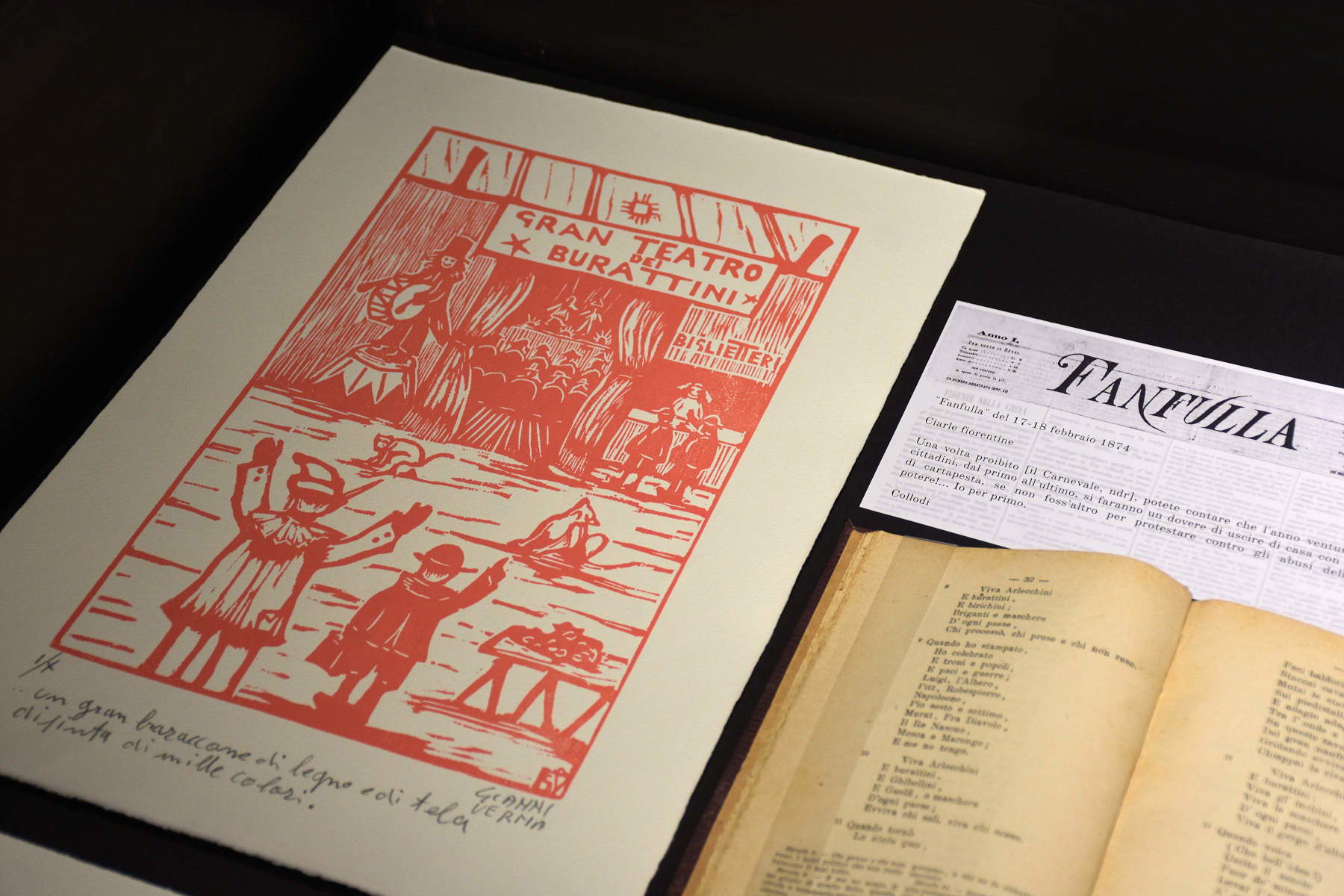
This was the period when he contributed to publications such as *Il Lampione*, *Scaramuccia*, and *Fanfulla*, using satire and irony to depict the customs and contradictions of contemporary society. The exhibition also aims to trace back to this experience a part of the narrative sensibility that would come to characterize the puppet’s adventures, through characters, situations, and observations on the reality of his time.
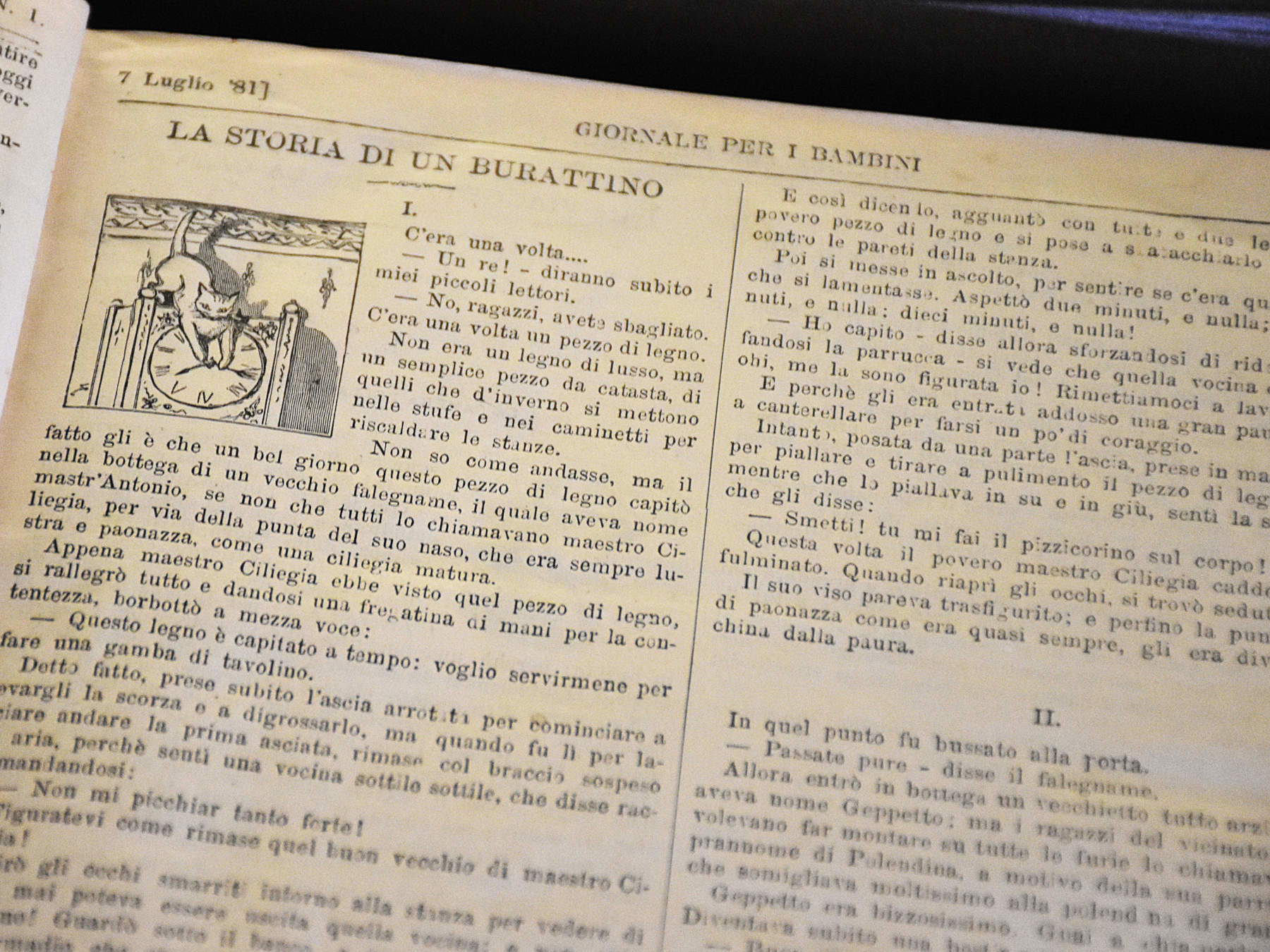
At the heart of the exhibition is, of course, the first edition of *The Adventures of Pinocchio*, published in Florence by the publisher Paggi in 1883. The volume is on loan from the library of the Cavalcanti Middle School in Sesto Fiorentino, which houses a copy of particular historical and bibliographic interest. Displayed alongside the book will be the *Giornale per i bambini* from 1881, on loan from the Spadolini Nuova Antologia Foundation. It was precisely in the pages of this publication that Pinocchio made his first appearance, on July 7, 1881. The story was serialized, with interruptions and resumptions, until January 25, 1883, before being collected in a volume and establishing itself as one of the greatest publishing successes in Italian literature.
The connection between the Gabinetto Vieusseux and Collodi’s work is also evident in the history of its collections. The institution acquired a copy of the first edition of *Pinocchio* immediately after its publication, but that copy is no longer part of the collection. Its absence recalls one of the most dramatic events in the history of Florence’s book heritage: the flood of November 1966, which also severely damaged the Gabinetto’s collections.
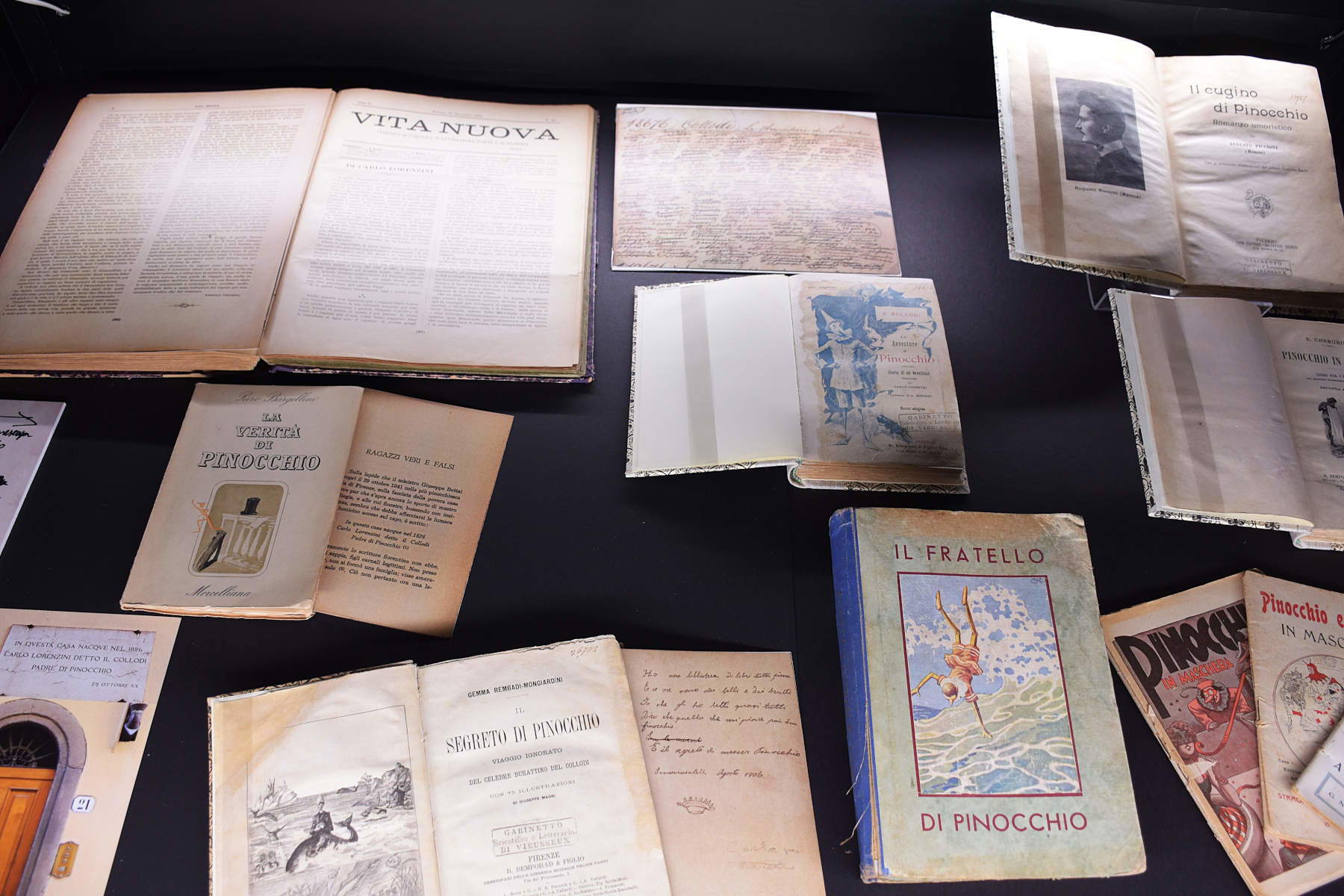
Sixty years after the event, the exhibition documents the consequences of the flood and the work carried out to salvage the water-damaged materials. Among the surviving volumes is the first English edition of *Pinocchio*, published in 1892, a testament to the work’s early international spread. The book will also be on display at the International Book Fair in Mexico, where Italy will be the guest of honor.
Another volume of particular interest is *The Fairy Tales* by Charles Perrault, translated by Carlo Lorenzini, which marked one of the author’s first forays into the world of children’s literature. The book, which was submerged in water during the 1966 flood, was cleaned and restored, but still bears traces of the event. Its inclusion in the exhibition serves to document both the damage caused by the flood and the conservation efforts that made it possible to return materials—otherwise destined for loss—to the public.
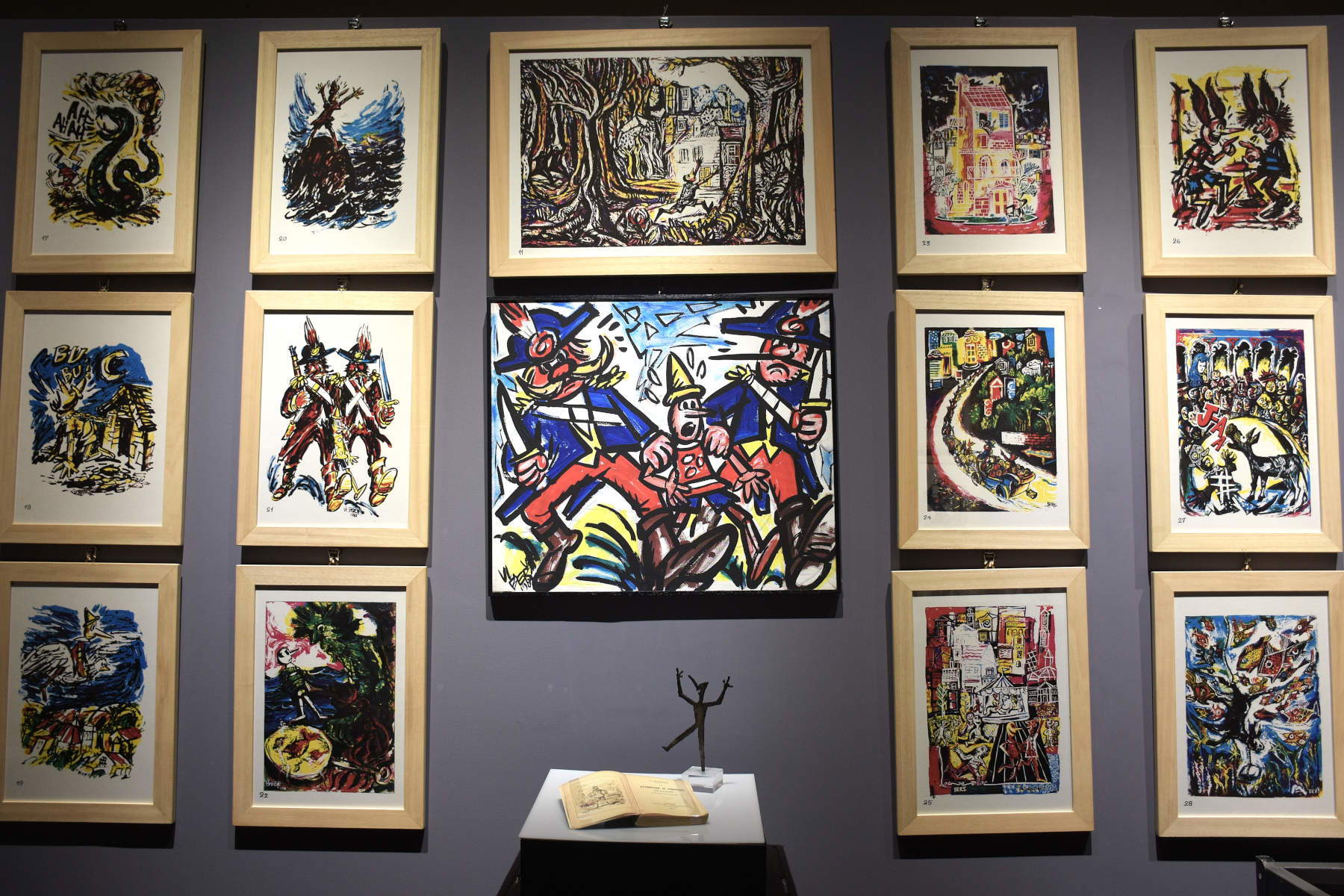
Another section is dedicated to artistic interpretations of the character of Pinocchio. The Vinicio Berti Archive is lending a collection of lithographs, oil paintings, and commentaries created by the artist in connection with the 1981 edition of the book. This collection includes twelve oil paintings being shown in an exhibition for the first time, offering a glimpse into how one of the leading figures of 20th-century Italian art reinterpreted the character.
The exhibition also includes an iron sculpture by Venturino Venturi depicting Pinocchio. This is a preparatory study for the statue later created for the Collodi Park, documenting the creative process through which the literary image of the puppet was translated into a three-dimensional form.
Pinocchio’s popularity, after all, became evident as early as the first few years following the novel’s publication. Between the late nineteenth century and the early decades of the twentieth century, the phenomenon of the so-called “Pinocchiate” spread—stories that revisited the character and continued his adventures, creating sequels and parallel narratives. Numerous writers tried their hand at these works, responding to the demand from a public eager for new stories about the puppet, often set before his transformation into a boy.
Among the best-known titles are *Il segreto di Pinocchio* by Gemma Mongiardini Rembaldi, *Il cugino di Pinocchio* by Momus (the pen name of Augusto Piccioni), and *Pinocchio in Africa* by Eugenio Cherubini. These publications enjoyed some success at the time but have largely faded from readers’ memory today. To mark the bicentennial, the Gabinetto Vieusseux is preparing to republish the three titles as facsimile editions, offering the opportunity to rediscover a little-known era of Italian literature and to explore the character’s influence beyond the original work.
Beginning with the opening line “Once upon a time… there was a king!”, the exhibition thus offers a journey that, while acknowledging Pinocchio’s centrality in Italian literary history, broadens the perspective to include the author and the context in which he was shaped. Documents, books, and works of art help to sketch the profile of Carlo Lorenzini as a journalist, satirist, and translator, as well as a children’s author.
The exhibition is on view at the “Alessandro Bonsanti” Contemporary Archive of the Gabinetto Vieusseux, at Palazzo Corsini Suarez, 42 Via Maggio in Florence. Admission is by guided tour on Thursday afternoons at 3:00 p.m.; reservations are required at prenotazioni@vieusseux.it.
Statements
“Collodi is a writer for adults first and then for children,” says Riccardo Nencini, president of the Gabinetto Vieusseux. “Pinocchio is the quintessential fairy tale about metamorphosis and an exemplary tribute to Florence and all of humanity.”
“Dedicating an exhibition today to Collodi’s masterpiece makes more sense than ever,” says Michele Rossi, director of the Gabinetto Vieusseux. “Not only because it marks the 200th anniversary of Carlo Lorenzini’s birth, but because the message the Florentine writer wanted to convey to the adolescents of Umbertine Italy is startlingly relevant today: if we don’t want to all turn into ‘beautiful donkeys,’ we must learn to be ‘good kids,’ cultivate a love for study and work, and always tell the truth. The puppet must beware of the Cat and the Fox: the two are not the personification of Machiavelli’s Prince, of the lion’s coup that seeks to lift the people out of decadence and degradation through extreme measures, but rather swindlers who want to deceive the naive for their own gain with tricks, fine words, and absurd promises—such as the one to make Pinocchio’s five gold coins grow and multiply in a way that can only seem true to the naive. But are we sure that, with today’s influencers and fake news, such scams are carried out only to the detriment of the unsuspecting? ‘Don’t trust, my boy, those who promise to make you rich overnight. For they’re usually either crazy or swindlers,” advises the Shadow of Jiminy Cricket to the puppet. We’d do well to listen to him....”
“Collodi’s world is a vast space where multiple layers and souls intersect,” explains curator Elisa Martini. “In his masterpiece *Pinocchio*, a true cornerstone of children’s literature, we find, in fact, his entire existence—not only as an author, but also as a journalist and a man. Everything is viewed through a carnivalesque lens (a time of irreverent puppets and masks), where—through the inverted play of Bakhtinian memory —Collodi expresses all his disappointment (already voiced in the pages of *Fanfulla* and *Scaramuccia*) over his betrayed and fallen Risorgimento ideals and over the transformation of his world from ‘comedy’ into a ‘farce—and one that isn’t funny,’ where Florence, no longer the capital and ruined by debt, is relegated to a city of ‘Acchiappacitrulli,’ and Rome is increasingly a ‘Land of Toys’ where donkeys take center stage. And it is in this reality turned upside down in the narrative that one can recognize figures well known even to the Gabinetto Vieusseux.”
“The path to Pinocchio and his adventures was certainly neither easy nor straightforward,” said curator Benedetta Gallerini. “We must remember that Collodi was first and foremost a journalist—above all a satirist—rather than a writer of children’s books. This exhibition aims to highlight how, through his newspaper articles—especially in *Fanfulla* and *Scaramuccia*—Collodi came to engage with Pinocchio and his traveling companions, both the good and pure ones and the deceitful, lying, and devious ones. To simplify things, I’ll mention one person in particular: Girolamo Pagliano, the voracious shark who swallows everything in his path—people, objects, ships. Eugenio Vieusseux describes him as “a card player and stock speculator who made as much money as he possibly could.” Nor does the issue of the illiterate—nearly 17 million of them—escape notice; they prefer to pick up books and fight over them rather than leaf through them or go to school and study. A disenchanted, melancholic reading, then, that reveals another aspect of the metatext that is Pinocchio. It is certainly not a children’s book.”
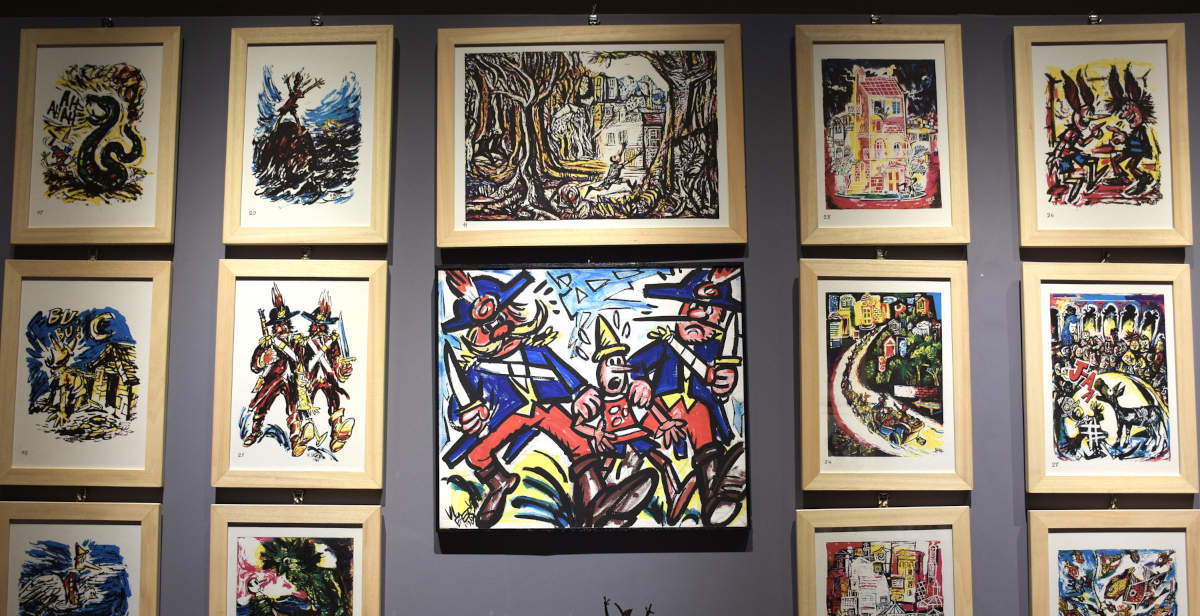 |
| An exhibition in Florence explores Collodi beyond *Pinocchio*: documents, first editions, and works of art |
Warning: the translation into English of the original Italian article was created using automatic tools. We undertake to review all articles, but we do not guarantee the total absence of inaccuracies in the translation due to the program. You can find the original by clicking on the ITA button. If you find any mistake,please contact us.