


by Redazione 29/10/2026


Categories: Exhibitions / Disclaimer
Palazzo da Mosto in Reggio Emilia is hosting a major exhibition dedicated to the Emilian designer Denis Santachiara. A journey through his works, prototypes, and installations traces more than sixty years of experimentation.
Over sixty years of research, experimentation, and inventions that transform everyday objects into surprising experiences: this is the central theme of Denis Santachiara – “Ecstasy of Artifice: Design Since 1966,” the major retrospective exhibition that will be on view from December 12, 2026, to March 14, 2027, at Palazzo da Mosto in Reggio Emilia. The exhibition, dedicated to one of the leading figures in Italian and international design —a native of Campagnola Emilia—presents, for the first time, a comprehensive overview of his long career through a selection of projects, works, products, installations, and prototypes.


Throughout his career, Santachiara developed a personal design language in which technological innovation is combined with a poetic, ironic, and visionary sensibility. His professional journey has its roots in mechanical workshops and his early experiences in car design in Emilia’s “Motor Valley,” before gradually expanding into different fields: from contemporary art to interior design—including for art hotels—from set designs for theater and film to research on robotics and objects capable of coming to life or transforming. Linked to this vision is the creation of Cyrcus, an ecosystem dedicated to designer-led design and the possibilities offered by digital fabrication technologies.


The exhibition project at Palazzo da Mosto is accompanied by a monograph published by Corraini and edited by Chiara Alessi, which explores Santachiara’s intellectual and professional journey in depth. The exhibition and the book constitute two parts of a unified initiative, designed to convey the complexity of a body of work centered on the concept of artifice.


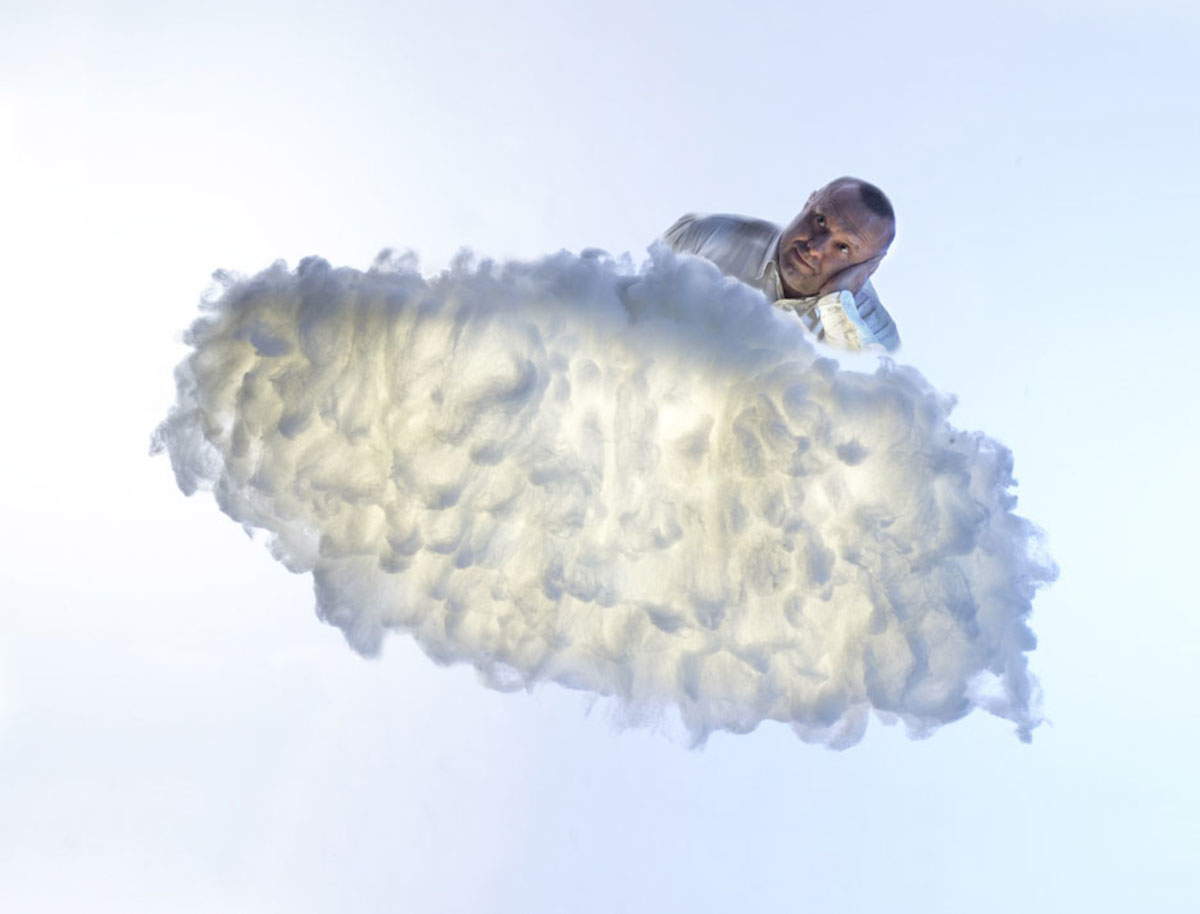
The exhibition not only celebrates the designer’s achievements but also invites the public to discover the mechanisms of his creative thought, following the stages that lead from intuition to realization. The exhibition unfolds through a dynamic sequence of spaces, each dedicated to a fundamental theme of his work. In each room, design ideas and principles are illustrated through objects, studies, prototypes, works, and research materials. What emerges is the rigorous method by which Santachiara develops his intuitions, transforming them into concrete solutions. The works are not presented as independent episodes, but as parts of a coherent reflection, fueled by constant experimentation and an ongoing dialogue between theory and practice.
One of the central themes of the exhibition is the relationship between design, architecture, and art—disciplines that, in Santachiara’s research, intertwine and enrich one another. Underlying this approach is the idea that design should not be considered merely a practice tied to furniture and household objects, but rather a cultural tool capable of interpreting and enhancing everyday life. From this perspective emerges a design practice that transcends the traditional boundaries of furniture design and engages with very diverse fields of contemporary creativity. The interplay of languages, materials, and technologies thus becomes one of the defining elements of a creative journey that successfully combines functionality, aesthetic exploration, and imagination.
Santachiara’s self-taught background also plays an important role. The absence of a traditional academic path has allowed him to develop an independent perspective, guided by his own passions and free from preconceived notions. Starting from his early experiences in Motor Valley and the art world, his creative exploration has gradually expanded, taking on an international and increasingly interdisciplinary dimension.
The exhibition layout on the main floor of Palazzo da Mosto reaches its climax in the final room, entirely dedicated to the immaterial and metaphorical dimension of design. Here, Santachiara’s reflection goes beyond the practical function of the object to explore its symbolic and cultural value. Design is thus interpreted as a language capable of expressing ideas, constructing meanings, and giving form even to abstract concepts, going beyond the mere production of objects. It is the culmination of decades of research that challenges the boundaries between matter and imagination, functionality and artistic expression.
Alongside the main exhibition, Palazzo da Mosto also hosts a special section dedicated to the new generations of designers. The space features works by young designers selected by Santachiara himself, creating a dialogue between his experience and the most recent experiments. This intergenerational dialogue underscores the vitality of contemporary design and the potential to develop new languages through research that remains open to innovation.
|
| An exhibition in Reggio Emilia showcases more than 60 years of Denis Santachiara’s visionary design |
Warning: the translation into English of the original Italian article was created using automatic tools. We undertake to review all articles, but we do not guarantee the total absence of inaccuracies in the translation due to the program. You can find the original by clicking on the ITA button. If you find any mistake,please contact us.