



by Redazione 04/11/2026


Categories: Exhibitions / Disclaimer
Winner of the 2026 Pannaggi/Nuova Generazione Award, Ravenna-born artist Federica Giulianini brings painting and ceramics to the main floor of the Macerata Civic Museums, creating a dialogue with the sacred iconography and allegories of the ancient collection. The exhibition “Neverland” is open from November 27, 2026, to March 29, 2027.

Usually, to understand a distant era, we dig: we unearth fragments and try to reconstruct what has been lost. Federica Giulianini (Ravenna, 1990) says she wants to do the opposite. “The exhibition plays on this paradox,” explains the artist, “rather than digging to reconstruct a lost era, it brings symbolic ‘artifacts’ to the surface and installs them in an authentic setting, offering a contemporary reinterpretation.” The authentic setting is the main floor of the Civic Museums of Palazzo Buonaccorsi in Macerata, where, from November 27, 2026, to March 29, 2027, her paintings and ceramics will engage in a dialogue with the works from the ancient collection.


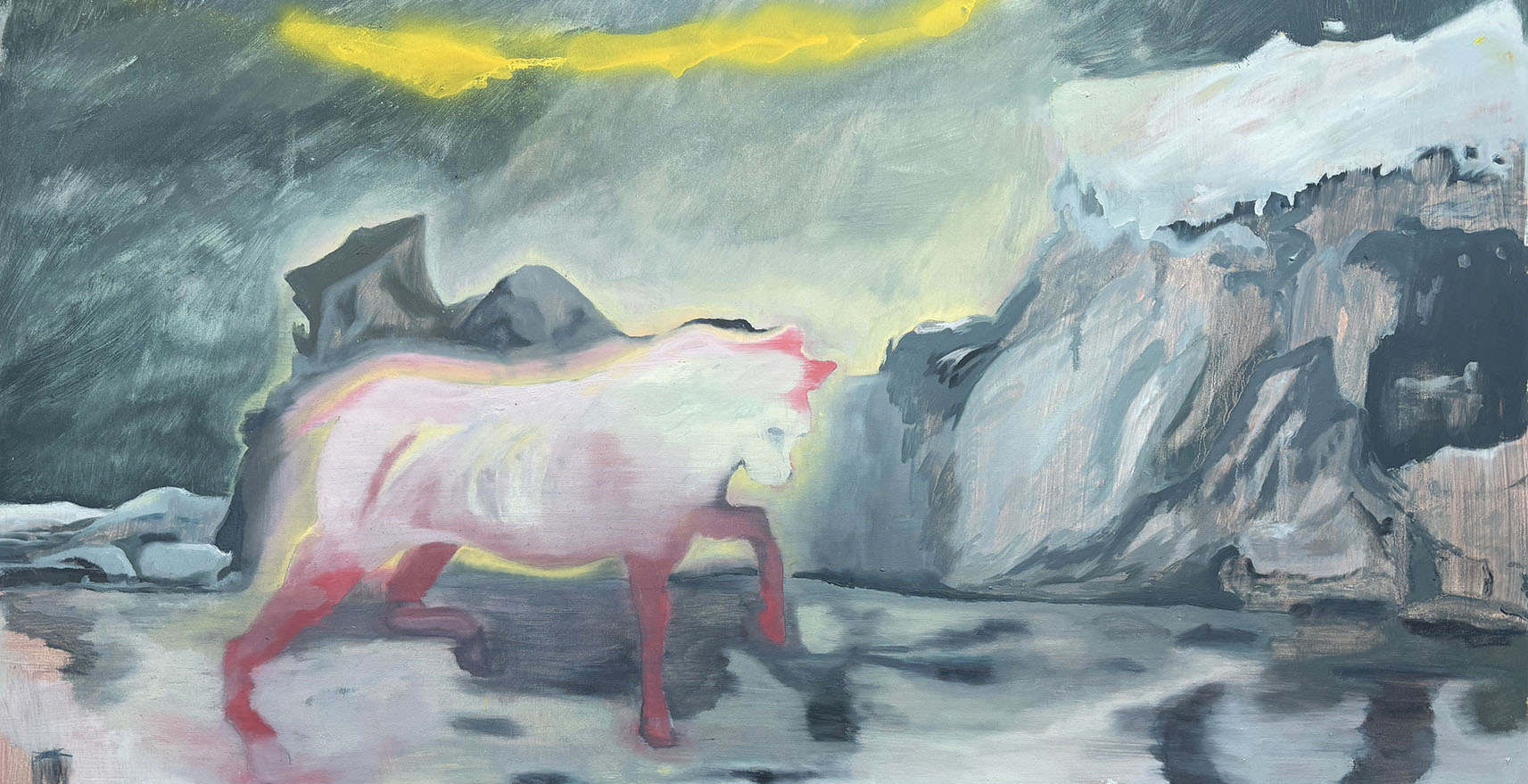
The exhibition is titled Neverland and serves as the award accompanying the 2026 Pannaggi/Nuova Generazione Prize, of which Giulianini is the winner. Curated by Paola Ballesi, the exhibition unfolds as a journey through painting and ceramics that, in the words of the presentation, invites the public to a “new re-enchantment of the world.” Among the artist’s works, the image chosen to announce the exhibition is *Prospero*(2025), on loan from the Galleria Ceravento.


The dialogue with the museum lies at the heart of the project: on one hand, there is the sacred iconography and classical allegory housed at Palazzo Buonaccorsi; on the other, a body of paintings that reinterprets them—according to the presentation—to find new points of reference: references with which, over time, we have lost the ability to relate and with which we should now re-engage, ethically, in a different way. For Giulianini, the museum is not a neutral place for preserving the past, but a living space where one constructs one’s own identity in the present.

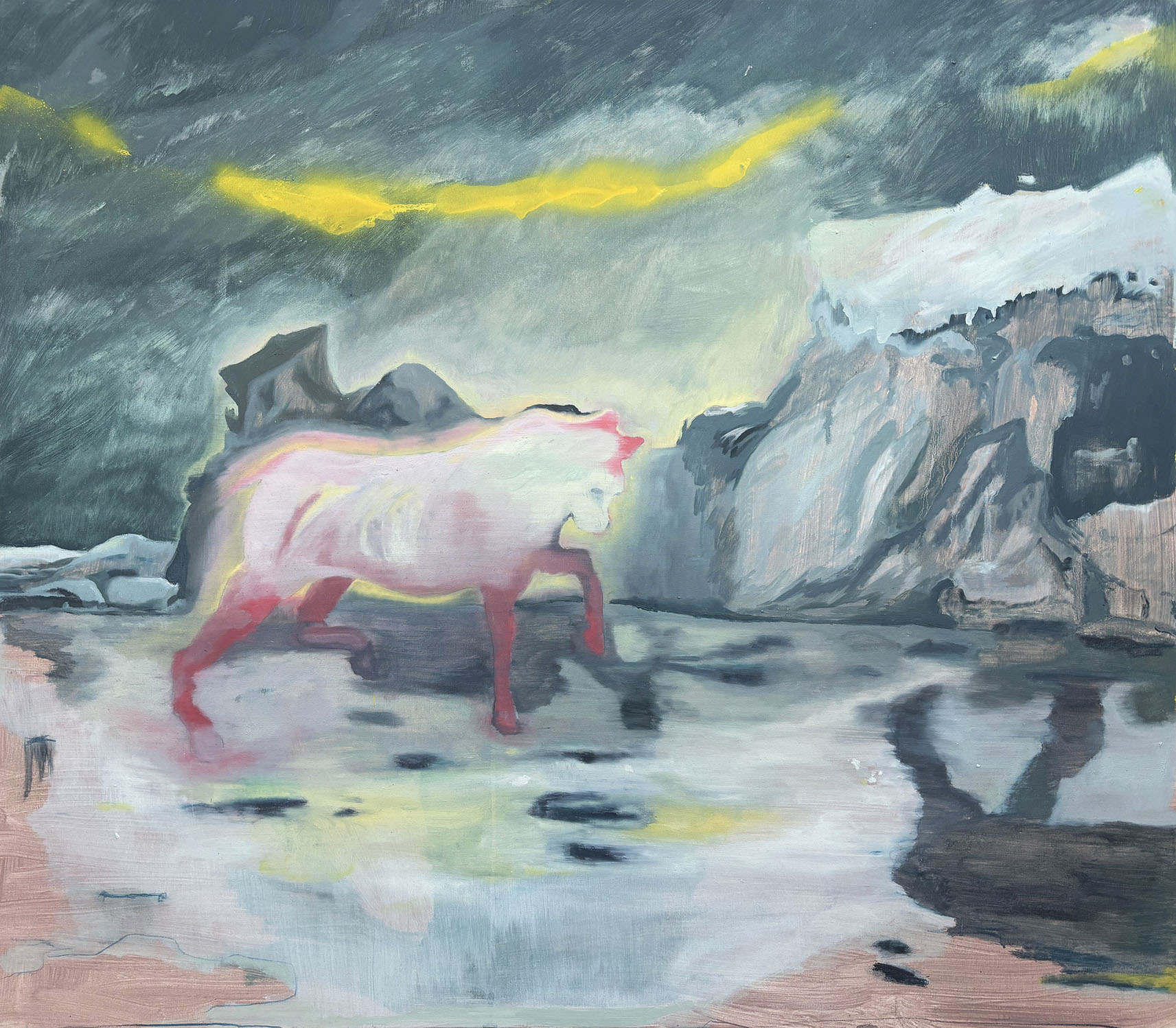
Her painting is figurative and refined, executed using traditional techniques and drawing inspiration from the great pictorial tradition of the twentieth century. However, she does not seek to depict reality as it is, but rather to question it. The figures emerge from a molten background through layers of color and glazes, like silhouettes not yet fully defined, leaving it up to the viewer to complete them with their gaze and imagination. Alongside the paintings, ceramics expand the artist’s artistic language, and it is precisely the interplay between these two mediums that the award jury highlighted.
The exhibition’s introductory text frames Giulianini’s work within a philosophical context. The artist is compared to the tightrope walker Nietzsche evokes in the Preface to Thus Spoke Zarathustra, precariously balanced over the abyss of nothingness: like him, she proceeds without a safety net along a tightrope stretched between past and future, tradition and technology. In a present where, according to the text, humanity’s deepest desires risk being crushed by the binary logic of the market, Giulianini reaffirms painting as art’s last bastion and final card to play in defending spaces of freedom. Art understood, in the wake of what philosopher Vito Mancuso suggests, as an investment in the ability to understand, transform, and heal the world through emotion and vision, sensitivity and responsibility.
The title, too, has a specific explanation. “Neverland,” the island that isn’t there, stems from the desire to respond to the “non-places” of contemporary life—the anonymous and impersonal transit spaces we pass through ever more frequently—by proposing, in their place, a place to truly inhabit, in a more conscious and human way. According to the presentation, this sense of urgency is one that the artist shares with many painters today.
The commission’s rationale for awarding the prize also emphasizes this same theme. The jury, composed of Paola Ballesi, Katiuscia Cassetta, Loretta Fabrizi, Andrea Giusti, Paolo Gobbi, Marina Mentoni, Mauro Mazziero, Maria Letizia Paiato, and Giuliana Pascucci, emphasizes how the artist’s work, “in direct dialogue with the works of Palazzo Buonaccorsi’s ancient collection,” explores “stories, episodes, and characters that lie dormant and silent in the palace’s memory,” transforming them into “a tangible image of a possible coexistence, built on authentic bonds, care, and mutual sharing.” It points to the union between painting and ceramics as the path “toward an ‘elsewhere’ that leaves room for radical questions,” going so far as to define Giulianini’s work as “a Neverland for future New Inhabitants.”
The Pannaggi/Nuova Generazione Award, now in its ninth edition, was conceived by the Associazione Amici di Palazzo Buonaccorsi to promote artists from the Marche region under the age of 40, offering them visibility and support to establish themselves on the national and international scene. The 2026 edition is sponsored by the association together with the City of Macerata, Macerata Musei and Macerata Cultura, in collaboration with the Marche Region and the Carima Foundation, and is held under the patronage of the Marche Cultura Foundation, the University of Macerata, the Academy of Fine Arts, and the Municipality of Recanati. The project’s main sponsor is the Simonelli Group.
The exhibition is accompanied by a bilingual catalog published by Vydia, featuring a critical essay by curator Paola Ballesi and a conversation between the artist and essayist and art critic Daniele Capra. “Neverland” by Federica Giulianini opens on November 27, 2026, at 5:30 p.m. on the main floor of the Civic Museums of Palazzo Buonaccorsi in Macerata and runs through March 29, 2027.
 |
| An Island That Isn't There Among the Old Paintings: Federica Giulianini at Palazzo Buonaccorsi |
Warning: the translation into English of the original Italian article was created using automatic tools. We undertake to review all articles, but we do not guarantee the total absence of inaccuracies in the translation due to the program. You can find the original by clicking on the ITA button. If you find any mistake,please contact us.