





From October 17, 2026, to March 4, 2027, the “Carlo Servolini” Municipal Art Gallery, located within the Villa Carmignani complex in Collesalvetti ( Livorno), will host the exhibition Carlo Böcklin: The Secret of Pan: From the Sacred Grove to the Shores of the Tyrrhenian Sea. The exhibition, promoted and organized by the Municipality of Collesalvetti, is curated by Francesca Cagianelli, Emanuele Bardazzi, and Andrea Muzzi, under the patronage of the Swiss Embassy in Italy, the Honorary Consulate of Switzerland in Florence, the Region of Tuscany, and the Canton of Basel-Stadt, as well as with the support of the Livorno Foundation and the collaboration, as a media partner, of the Ugo Guidi Museum in Forte dei Marmi.
The exhibition represents a milestone in studies dedicated to Symbolism, shining the spotlight for the first time on an artistic figure who has never really been explored before: Carlo Böcklin (1870–1934), son of the great Swiss master Arnold Böcklin. Long overshadowed by what is known as the “magical circle” of his father’s studio, the young Böcklin reveals his own personal artistic style on this occasion through a comprehensive exhibition featuring approximately one hundred works, including paintings, watercolors, drawings, engravings, and illustrations. Among these, more than sixty are previously unseen works of great value, drawn directly from the collection of the artist’s heirs, alongside masterpieces of Italian and European art that attest to the profound influence the Böcklinian myth exerted both in Italy and throughout Central Europe.
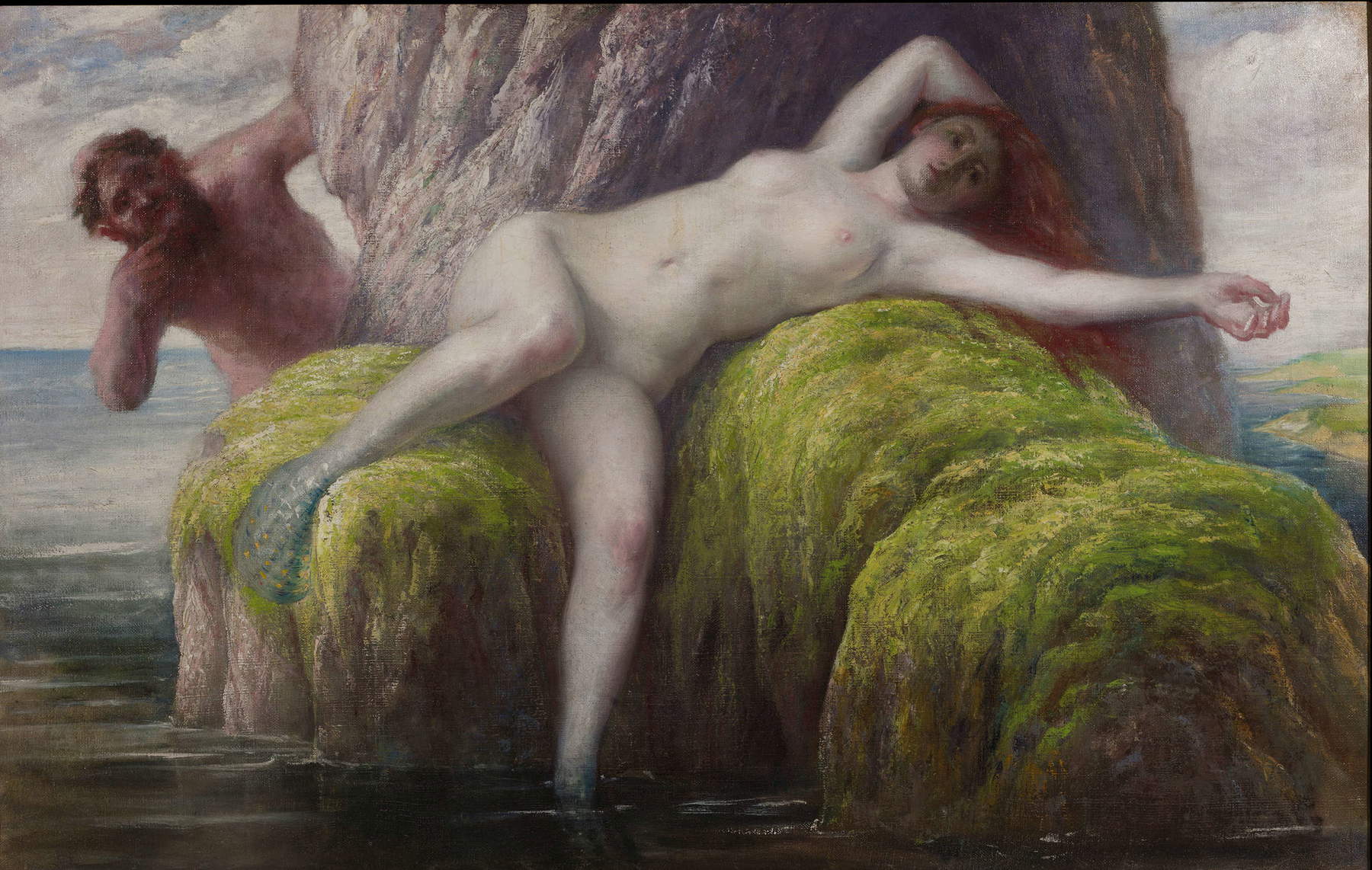
Among the works on display is a particularly significant painting, *Triton and Nereid*, which had belonged to the Gonnelli Antiquarian Bookshop since the post-World War II period and was purchased directly from the descendants of the Böcklin family: the work had already been exhibited and published in the catalog of the exhibition *Frammenti di cultura visiva* in Forte dei Marmi in 1983. The painting shares characteristics with those found in the 1901 version of *The Isle of the Dead*, considered by some scholars to be the sixth variant of the famous masterpiece and bearing the dual signature “A. Böcklin invenit” and “Carlo Böcklin fecit 1901.” Thanks to recent diagnostic tests and a technical analysis—the first ever conducted specifically on *Triton and Nereid*—evidence has emerged that strengthens the hypothesis that the work was a collaborative effort: The painting is therefore being presented to the public once again as a valuable testament to the collaboration between Arnold Böcklin and his son Carlo, and offers a unique opportunity to observe the stylistic and painterly differences between the two artists within the same canvas.
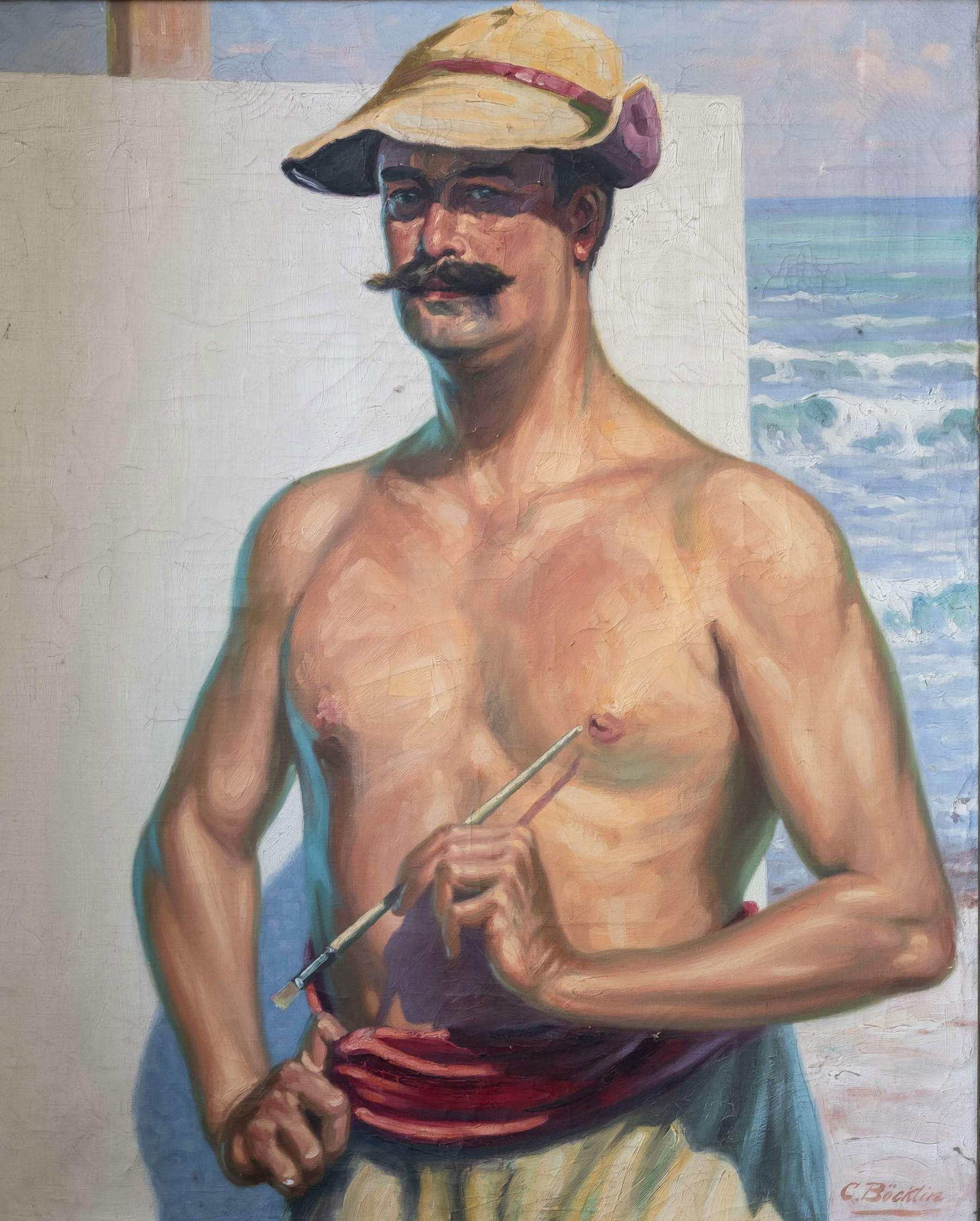
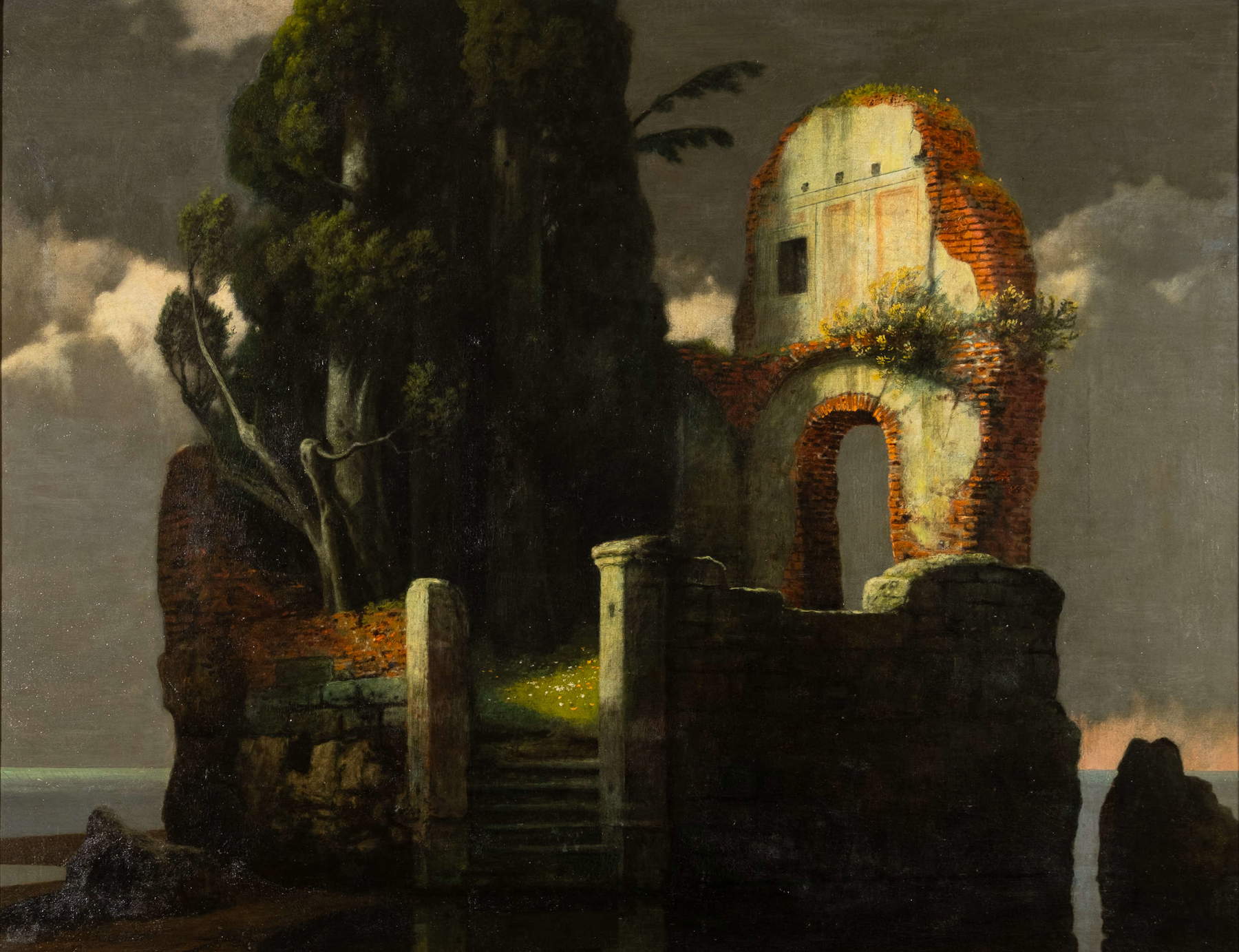
The exhibition itinerary, conceived by the curators as a circular structure designed to celebrate the ongoing intellectual and personal dialogue between father and son, is divided into four thematic sections. The first section, titled “A Magical Circle: Arnold and Carlo as if in a 15th-Century Workshop” and curated by Francesca Cagianelli, Emanuele Bardazzi, and Andrea Muzzi, traces Carlo Böcklin’s journey as a student, assistant, and close collaborator of his father between 1894 and 1901—a partnership that grew even stronger after Arnold suffered a heart attack in Zurich in 1892. Despite a solid architectural education at the Swiss Federal Institute of Technology in Zurich and experience managing the construction site of the Reichsbank in Berlin on behalf of the Henschel company, Carlo chose to devote himself to painting, working closely with his father and creating, during his early career, several masterpieces that are now largely scattered but are reappearing for the first time in the exhibition catalog, published by Silvana Editoriale, thanks to the discovery of a previously unpublished album preserved by the heirs. The heart of this section is represented by the series inaugurated by the famous diptych *Einst und Jetzt* (“Once and Now”), described by critics as a grandiose poem of time and oblivion, in which the artist recounts the lost history of the Tyrrhenian coast and the end of an ancient era, exemplified by works from the Böcklin family and major private collections, including *Island with Trees and Ruins*, created between 1900 and 1902, and *Ruins of a Doric Temple by the Sea*, from 1902. The same section also presents a body of work never before explored, relating to Carlo Böcklin’s activity as a puppet director and illustrator between 1910 and 1911 for magazines such as *Boecklin Bonus Kasperl*, in which his ancestral connection to his father reemerges through theatrical and grotesque elements.
The second section, titled “The Search for Another Feeling: Dark Shadows and Vivid Fantastic Lights” and curated by Francesca Cagianelli and Andrea Muzzi, examines the period in which Carlo, while keeping alive the memory of his father—to whom he would dedicate the biographical and anecdotal volume *Neben meiner Kunst* in 1909—began to interpret the themes dear to Arnold in his own personal way. Through previously unseen paintings and watercolors dedicated to the motif of ruins by the sea and the *Villa am Meer*, this section documents a gradual stylistic evolution, in which his father’s tragic sensibility progressively gives way to a sense of almost bourgeois tranquility, with somber atmospheres dissolving into fantastical lights and more relaxed, lyrical tones.
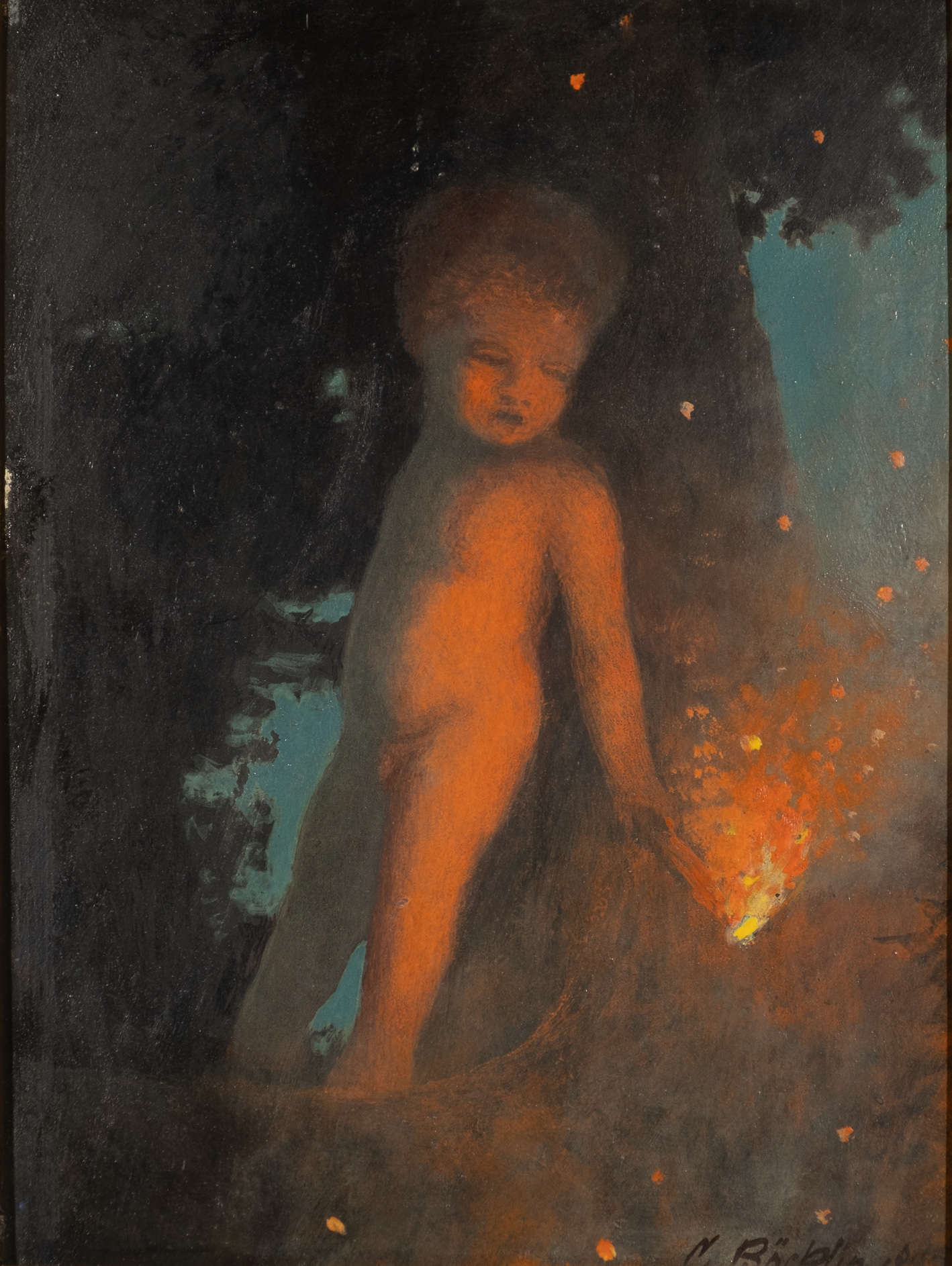
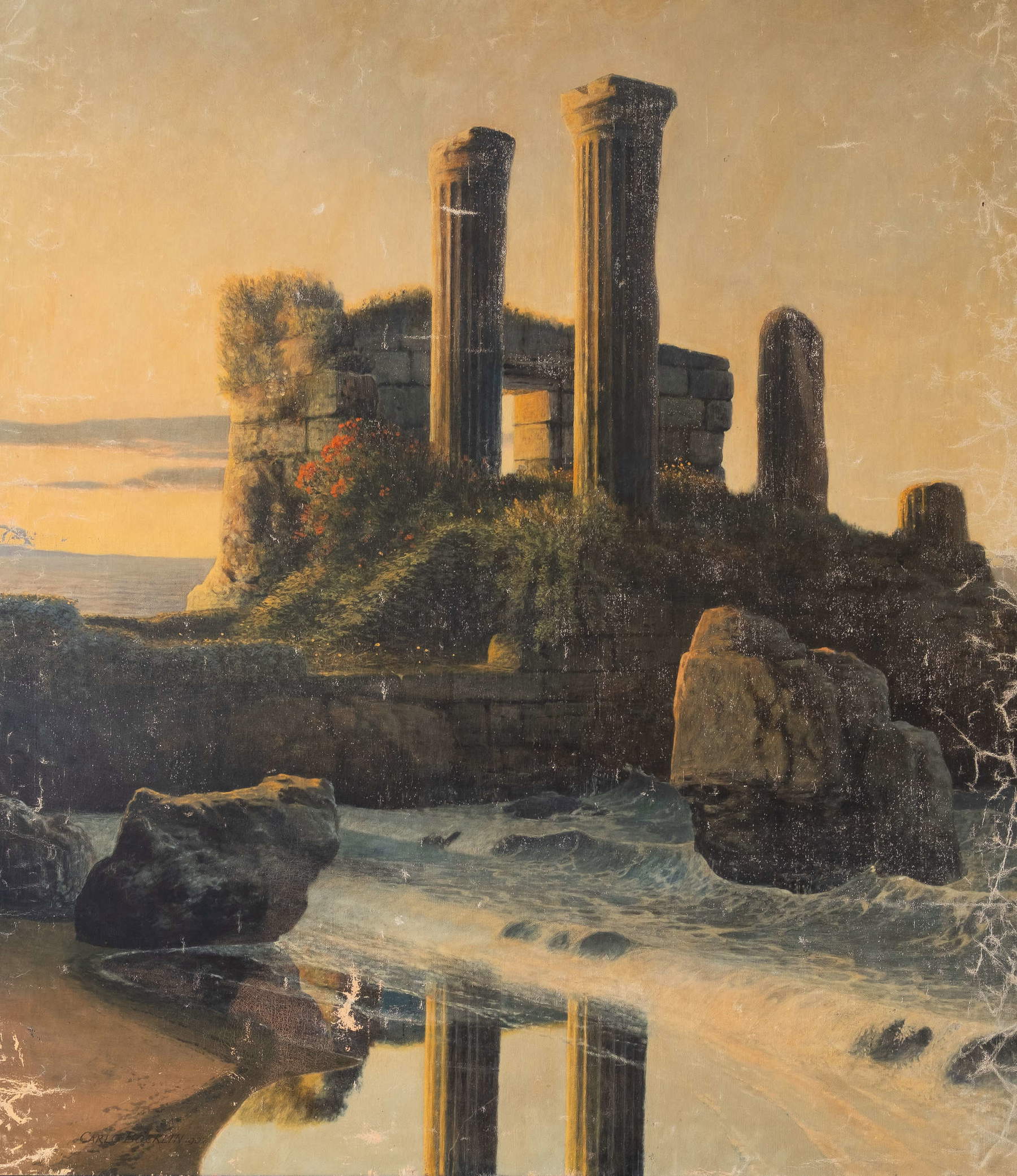
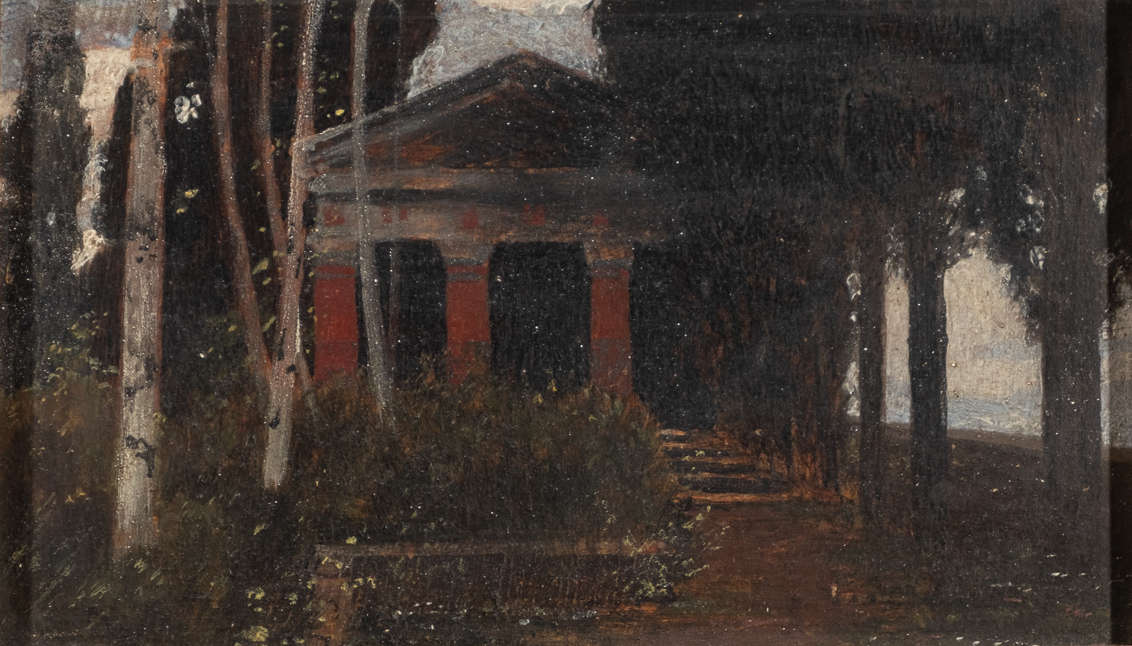
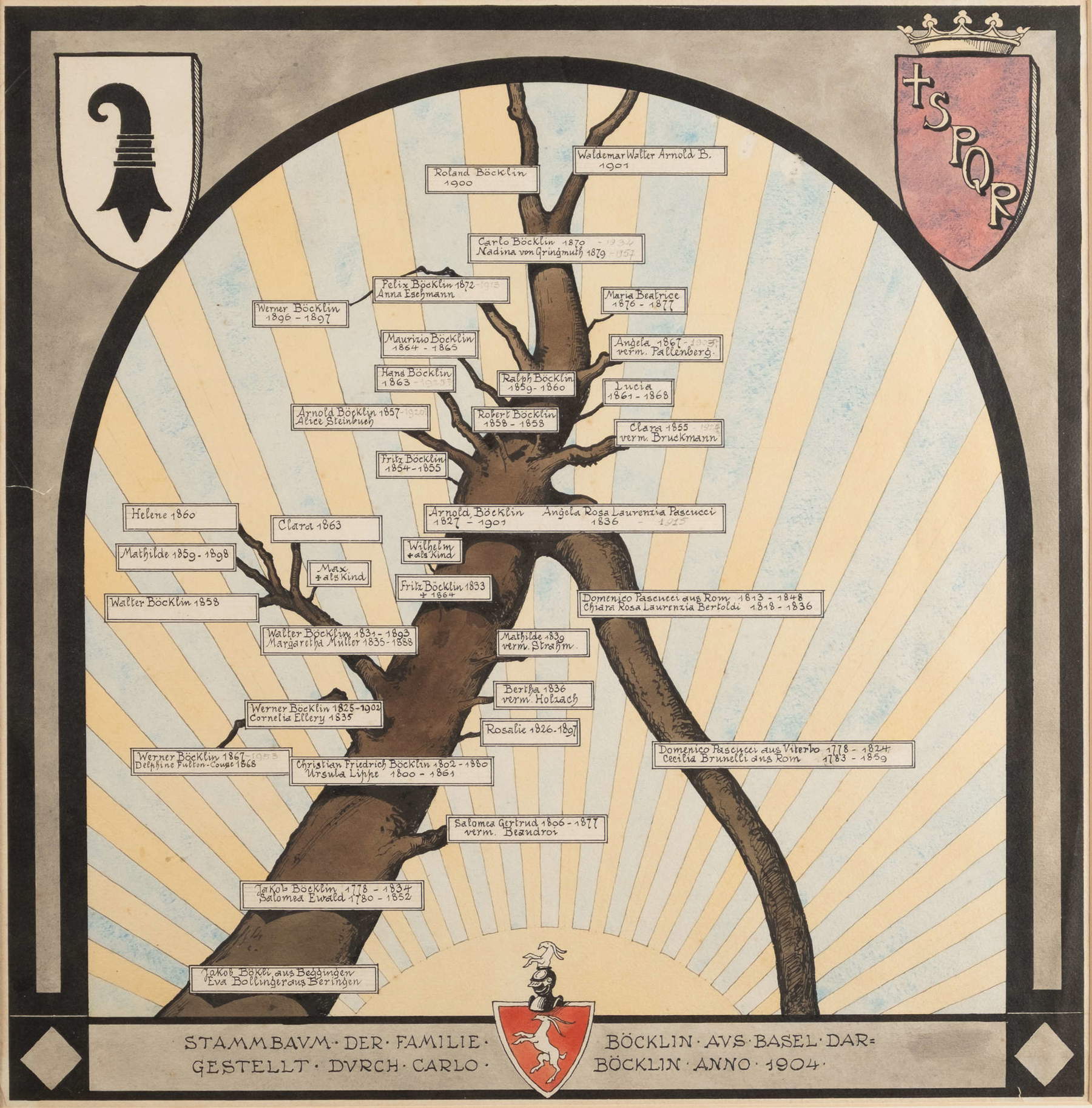
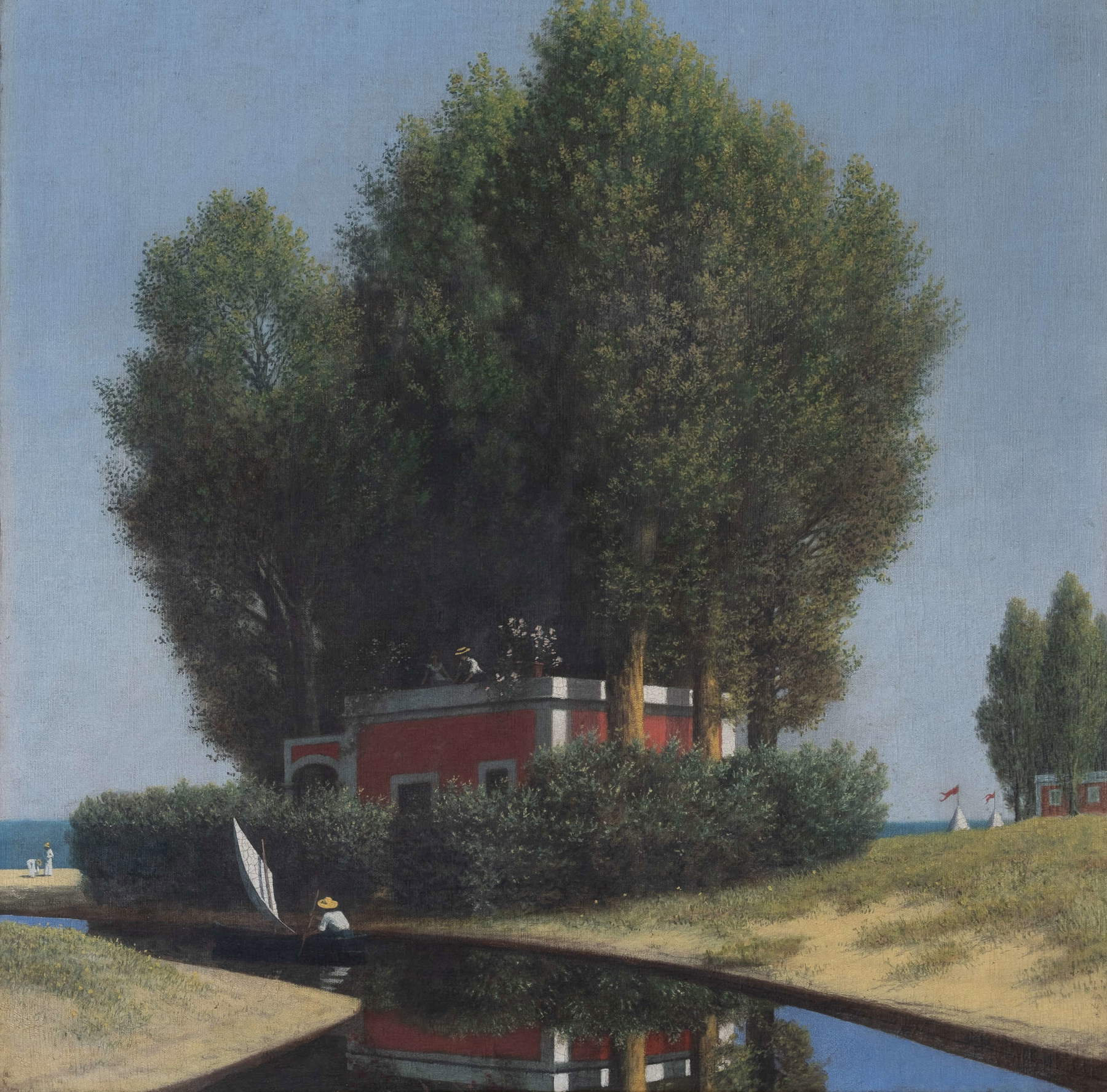
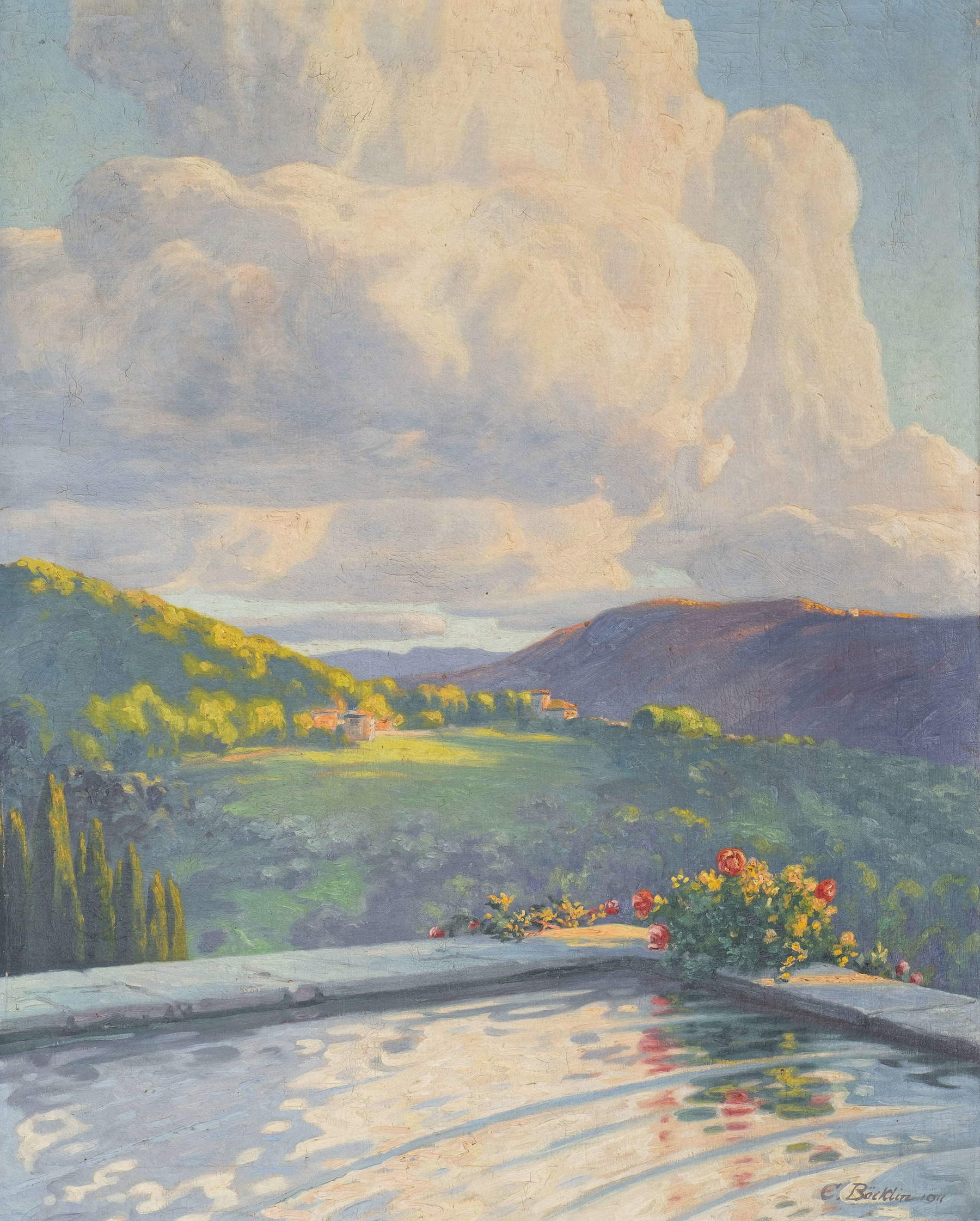
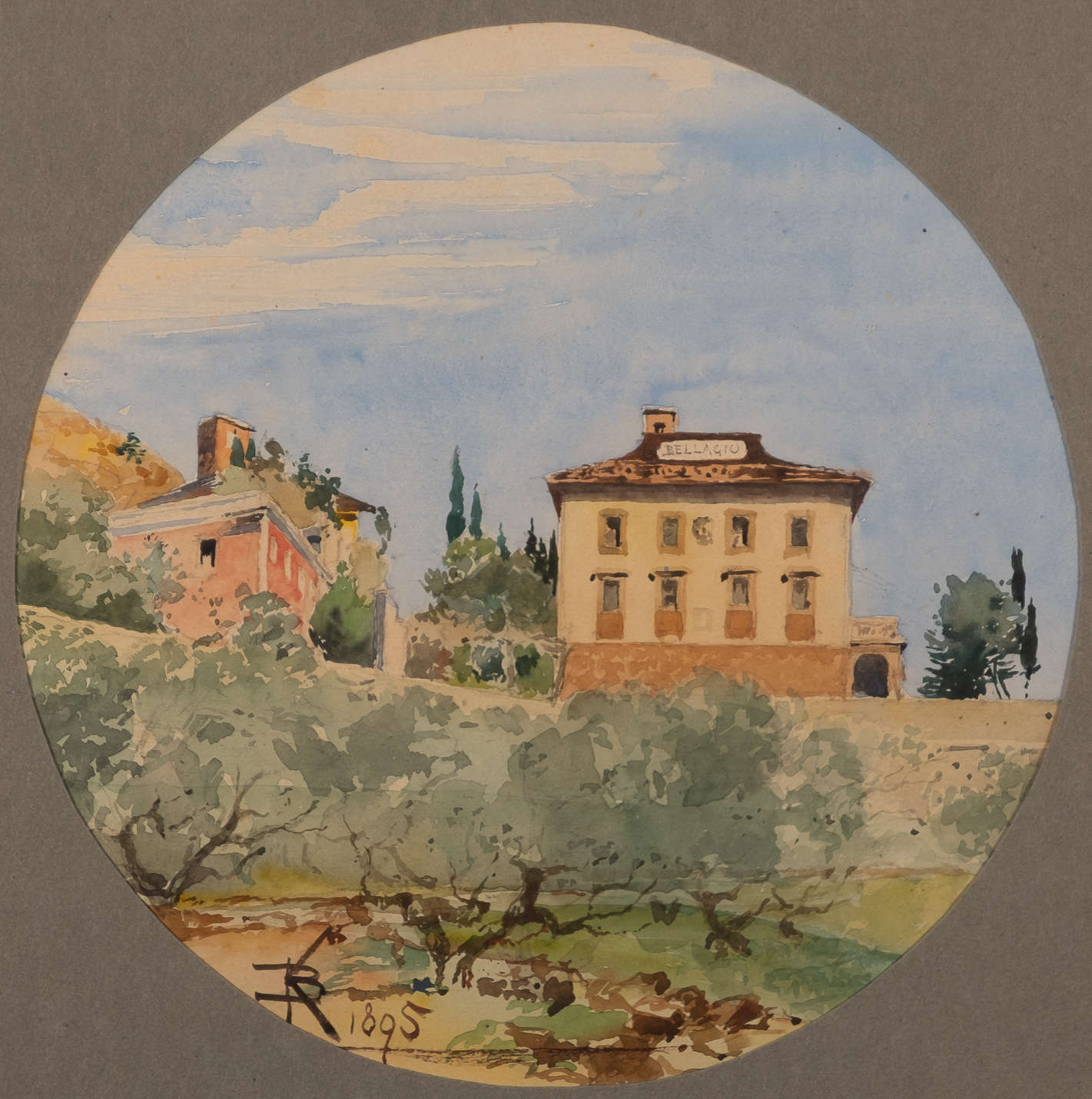
In the third section, “A New Style Between Spiritual Sobriety and Immaterial Delicacy,” also curated by Francesca Cagianelli and Andrea Muzzi, the artist’s full expressive maturity emerges, having developed during his stays in the hills of Fiesole, Tuscany, and Lazio. The centerpiece of this group is an entire body of landscape work, inaugurated by the refined 1895 watercolor depicting Villa Bellagio in Fiesole, an iconic residence where father and son designed an imposing studio, decorating its loggia with encaustic paintings in the Pompeian style. This body of work continued through the 1920s and 1930s, marking the emergence of an independent landscape style characterized by gentle atmospheres, ethereal delicacy, and neo-Quattrocento influences. The exhibition catalog delves further into this crucial phase through an analysis of a collection of over one hundred drawings donated in 1938 to the Uffizi’s Department of Drawings and Prints by the artist’s widow, Nadia Böcklin von Grimuth, the subject of a specific essay by art historian Andrea Muzzi.
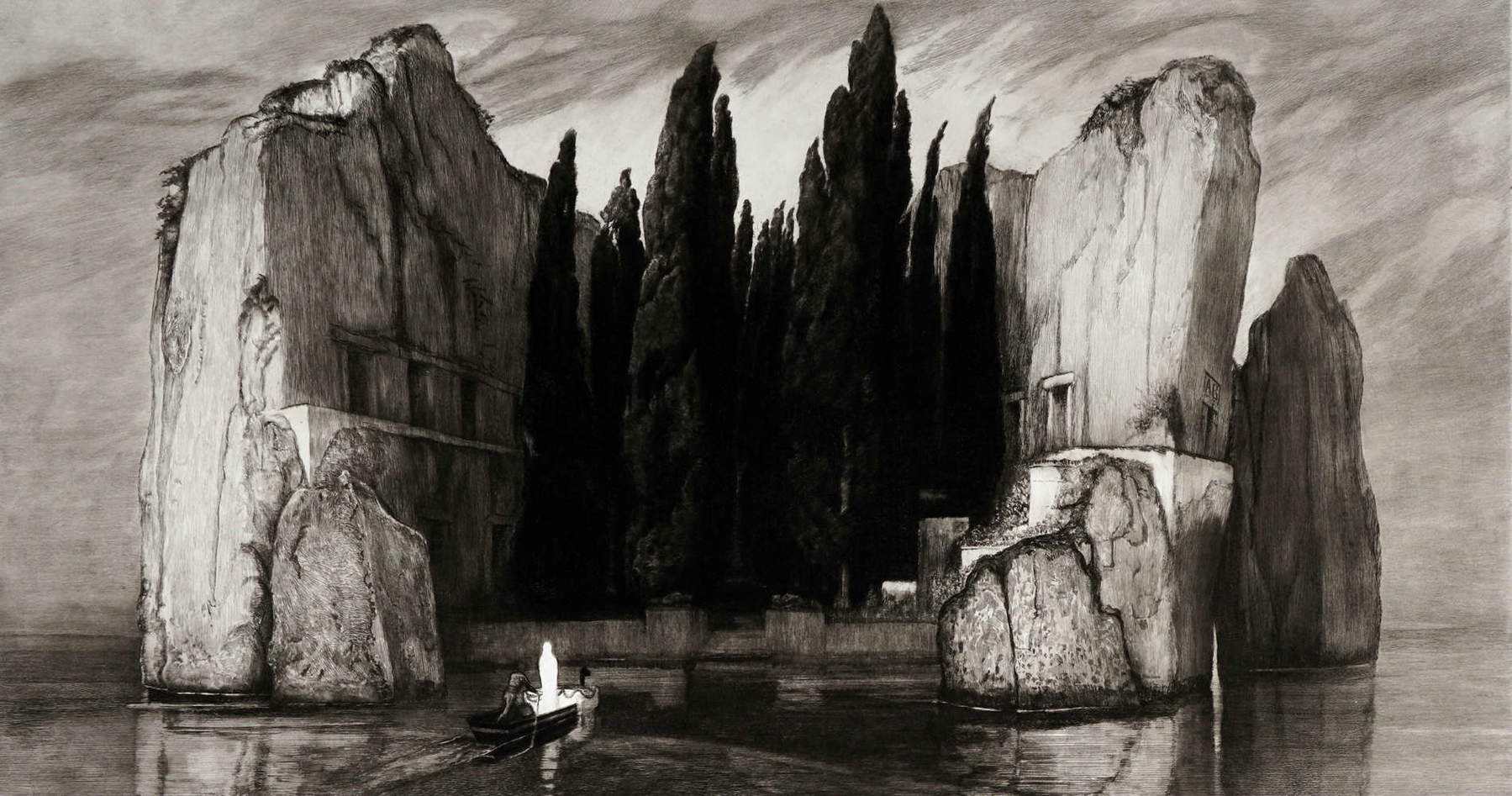
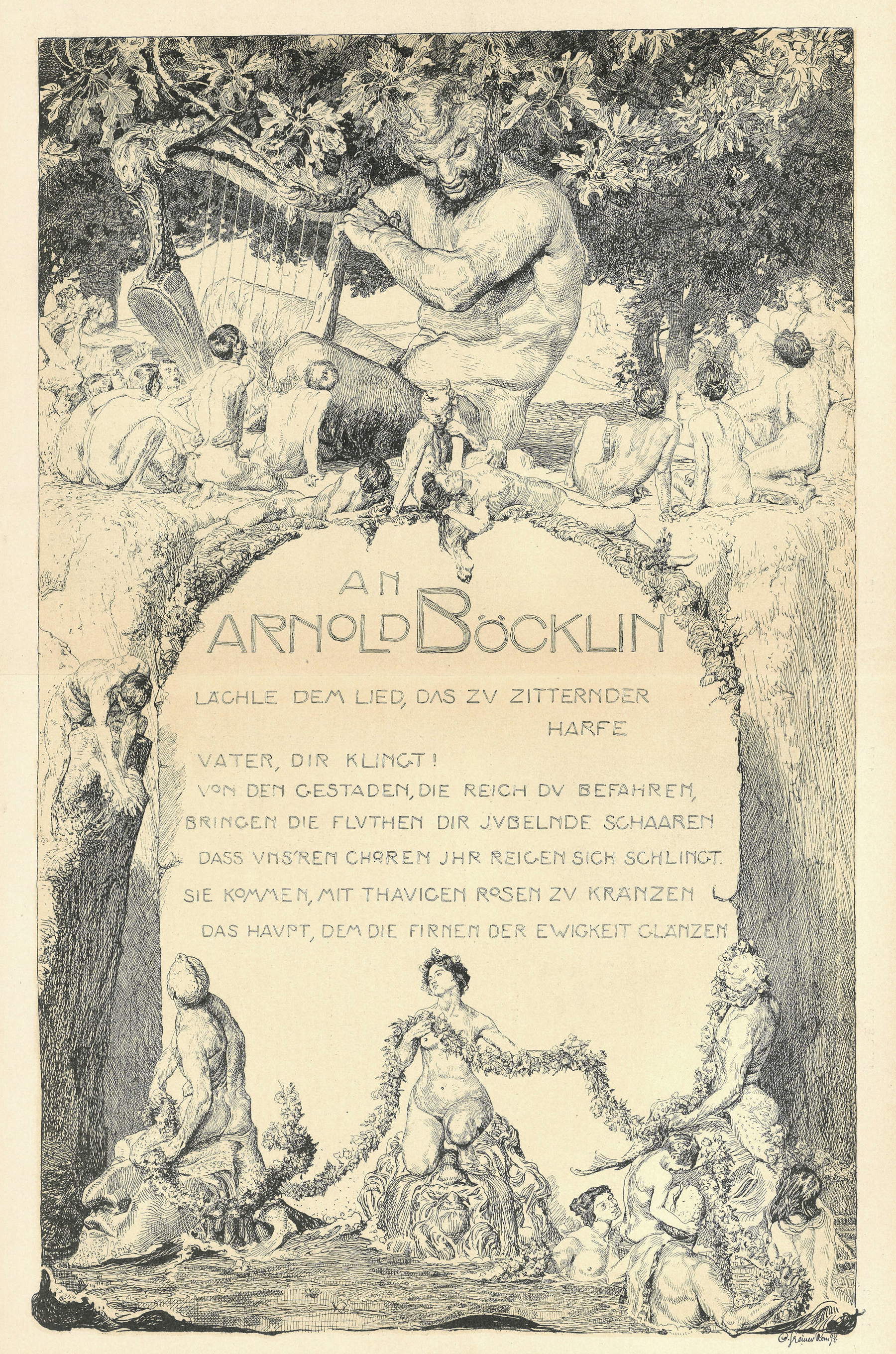
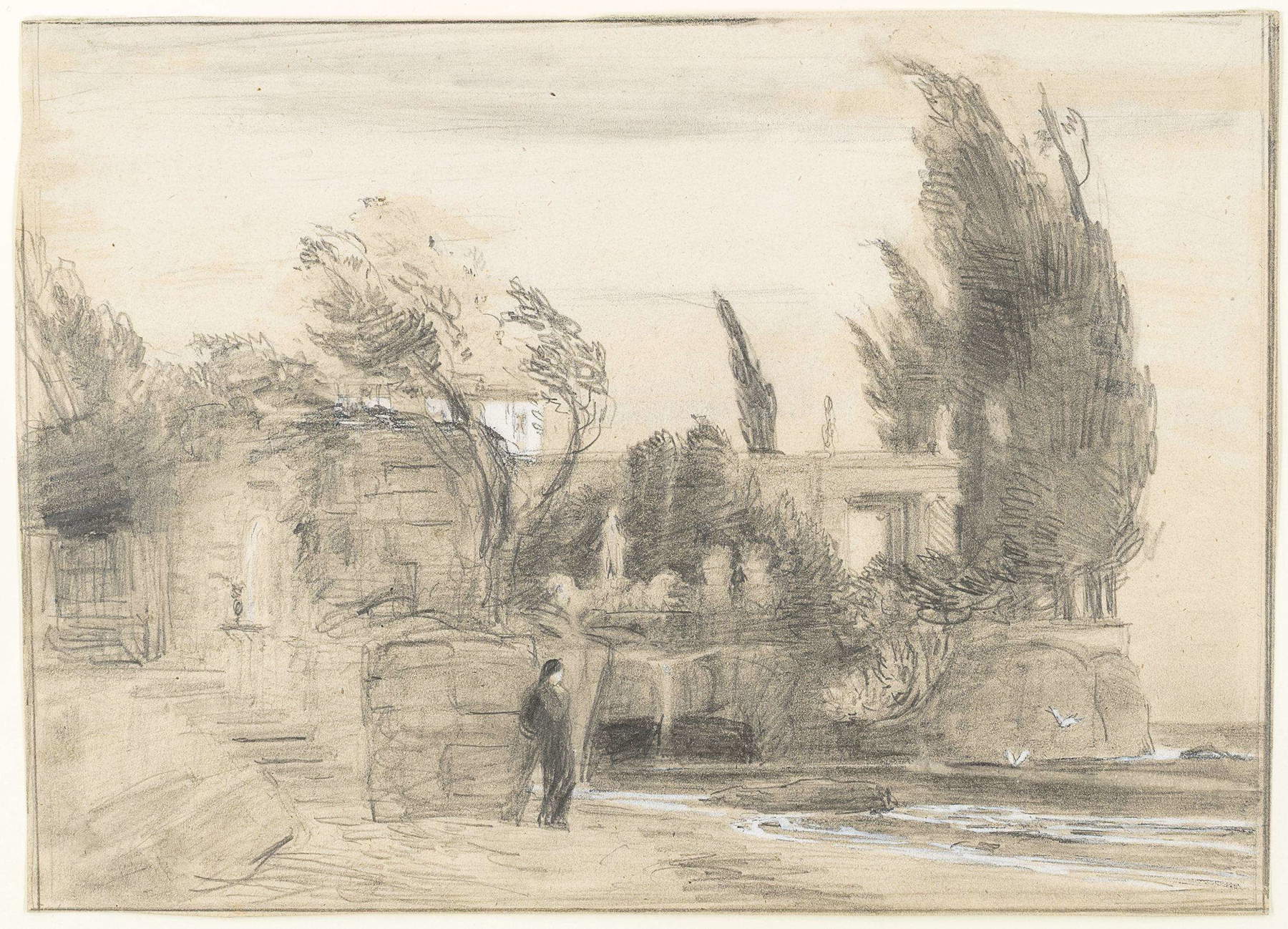
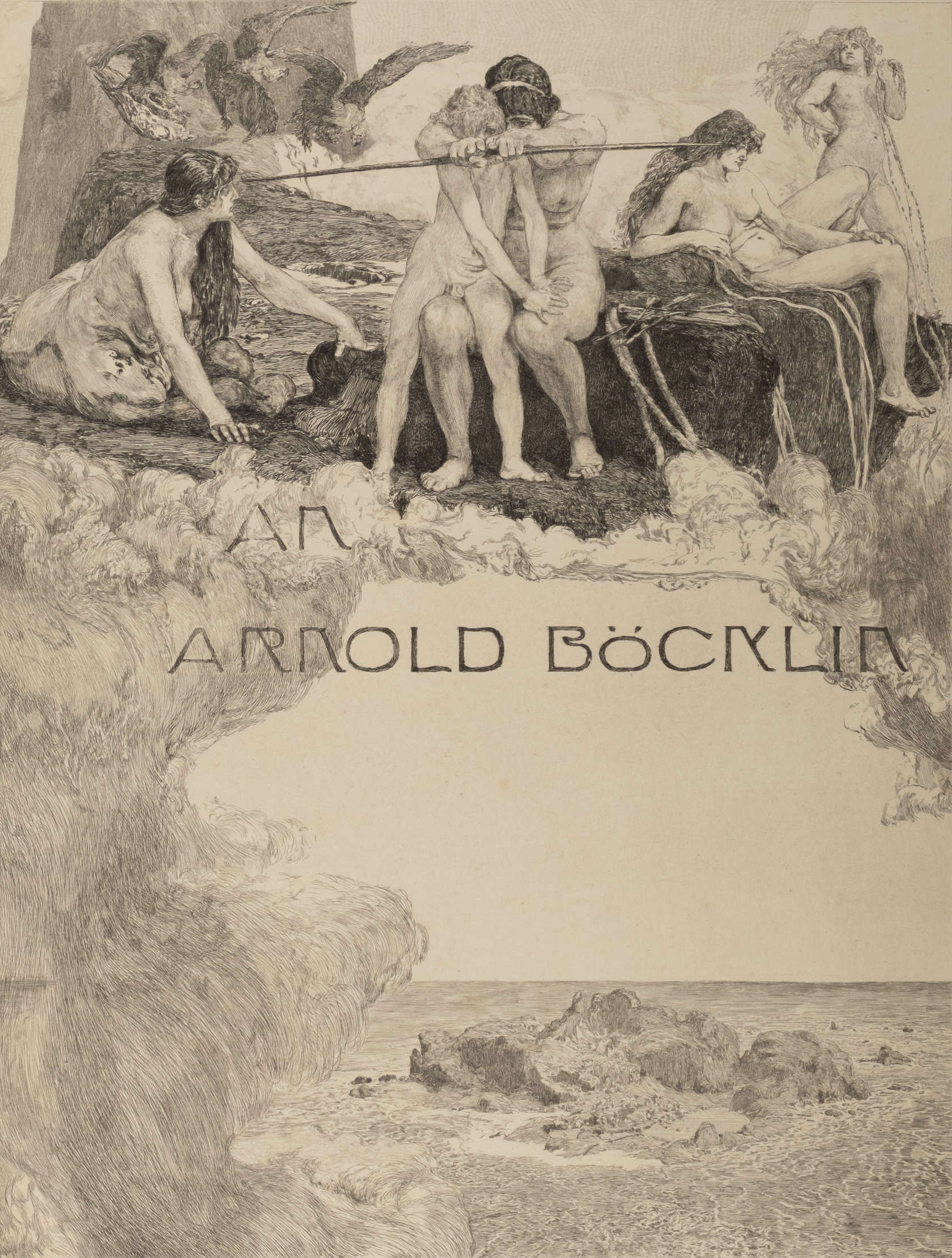
The final section, curated by Emanuele Bardazzi and titled “Böckliniana. The Myth and Influence of Arnold Böcklin in Italy and Central Europe,” concludes the exhibition by exploring the extraordinary impact that Böcklin’s imagery had in Italy and German-speaking countries—contexts in which the Swiss master was revered as a true artistic icon. Among the more than thirty pieces on display—including engravings, drawings, and historical documents—are several issues of the famous magazine *Jugend*, such as the commemorative 1897 issue with a cover designed by Max Klinger, three famous engravings by Klinger himself, including *The Isle of the Dead*, presented in an extremely rare autographed pre-print proof dated 1883, as well as unique graphic works by important international masters such as Adolf Hirémy Hirschl, Alexander Rothaug, and Rudolf Schick.
The exhibition thus stands as the first ever retrospective dedicated to Carlo Böcklin in Italy and Europe, destined to become a major scientific and cultural event for the region and for studies on Symbolism, capable of reconstructing for the first time the artist’s legacy within the context of family memory, stylistic independence, and the great Italian tradition. The exhibition opening is scheduled for Saturday, October 17, 2026, at 5:00 p.m. The Pinacoteca, located at Via Garibaldi 79 in Collesalvetti, will be open to the public with free admission on Thursdays, Saturdays, and Sundays, from 3:30 p.m. to 6:30 p.m. For information and to book free guided tours for small groups, please call 0586 980227, 0586 980174, and 392 6025703, email pinacoteca@comune.collesalvetti.li.it, or visit the Collesalvetti City website.
|
| Carlo Böcklin: The First Italian Exhibition Dedicated to the Artist—Son of Arnold—in Collesalvetti |

Warning: the translation into English of the original Italian article was created using automatic tools. We undertake to review all articles, but we do not guarantee the total absence of inaccuracies in the translation due to the program. You can find the original by clicking on the ITA button. If you find any mistake,please contact us.















 IT
IT FR
FR DE
DE ES
ES CN
CN


