




by Redazione 15/10/2026



Categories: Exhibitions / Disclaimer
From October 3 to February 14, Palazzo de’ Rossi is hosting an exhibition dedicated to Carol Rama’s work from the 1950s to the 1970s, featuring abstraction, recycled materials, inner tubes, and threads sewn onto canvas.


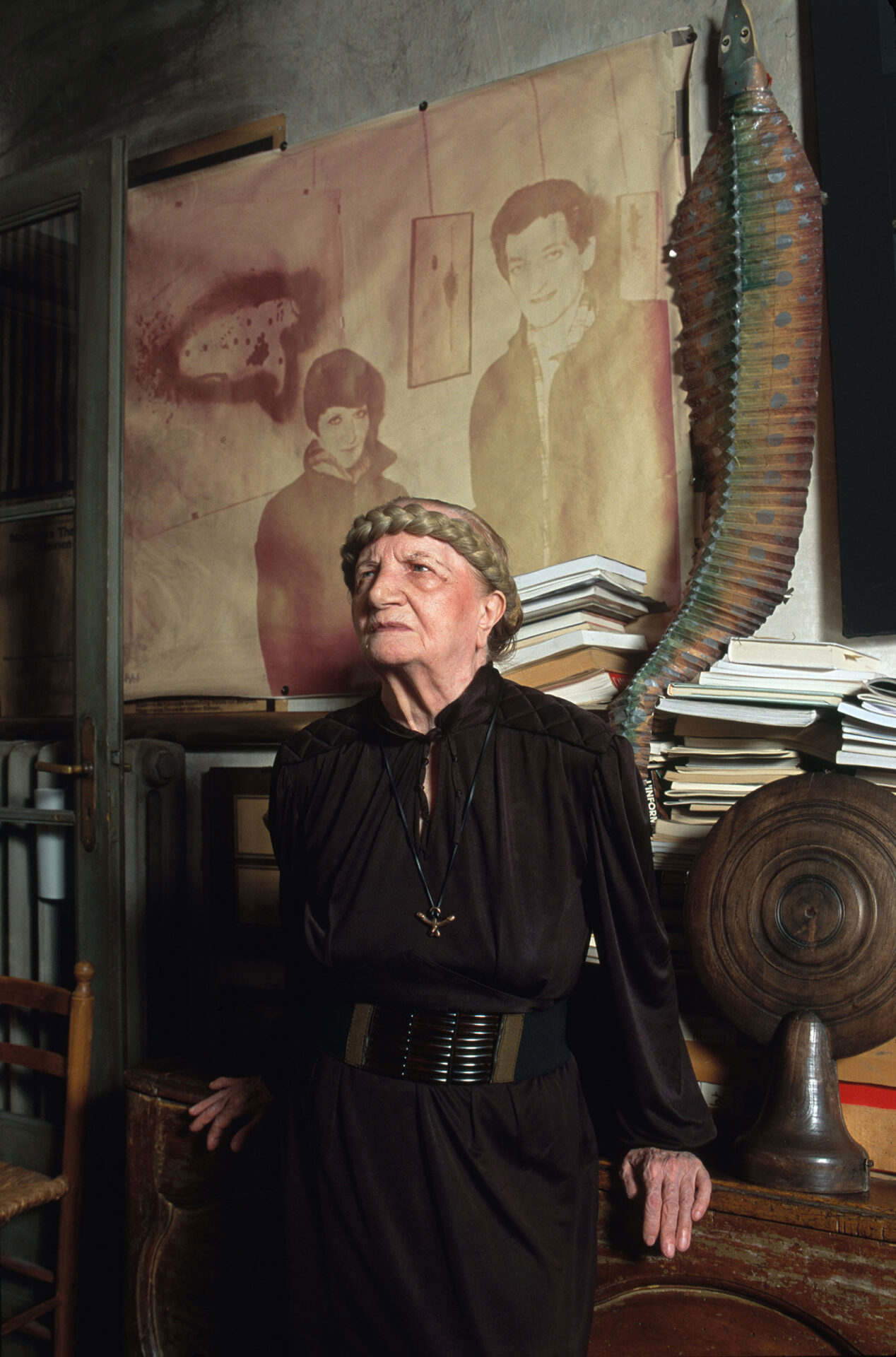
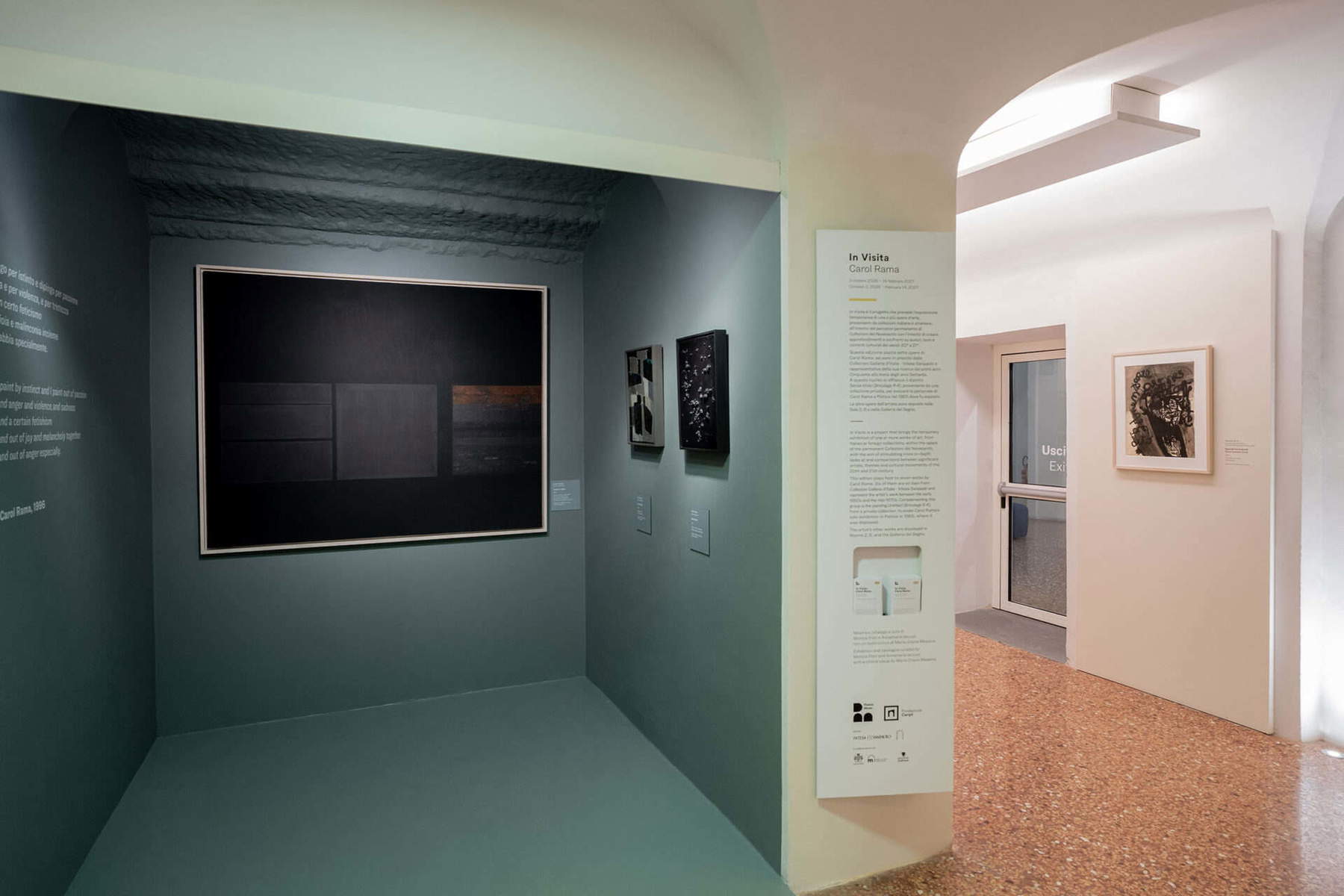
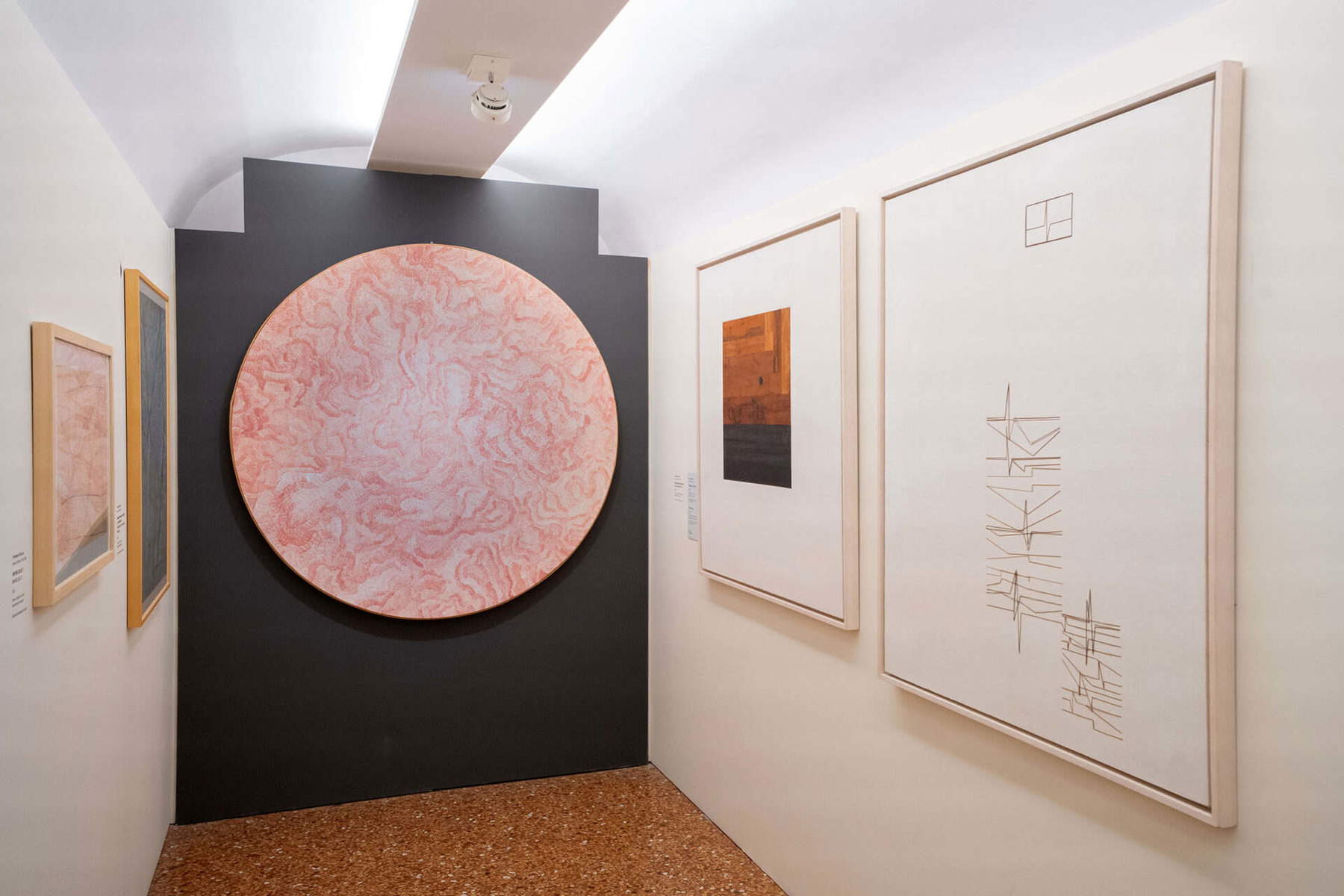
In 1965, Carol Rama (Turin, 1918–2015) exhibited in the Sala Ghibellina of the Palazzo Comunale in Pistoia: it was the first exhibition dedicated to the artist by a public museum. More than sixty years later, the Tuscan city is once again engaging with her work through a selection of seven pieces that document some key stages of her artistic development. Among them is Bricolage R 4, which was previously exhibited on that occasion and is now on view again in Pistoia thanks to a loan from a private collection. The exhibition, titled *In Visita | Carol Rama*, is on view at Palazzo de’ Rossi from October 3, 2026, to February 14, 2027. The project, promoted by Fondazione Pistoia Musei with the support of Fondazione Caript, is curated by Monica Preti, the Foundation’s general director, and Annamaria Iacuzzi, curator of the 20th-Century Collections. The fifth edition of “In Visita” connects the temporarily exhibited works with the permanent exhibition dedicated to artists active in Pistoia, offering the opportunity to closely examine a body of work that, over the course of a few decades, has spanned different artistic languages and materials without conforming to a single formula.


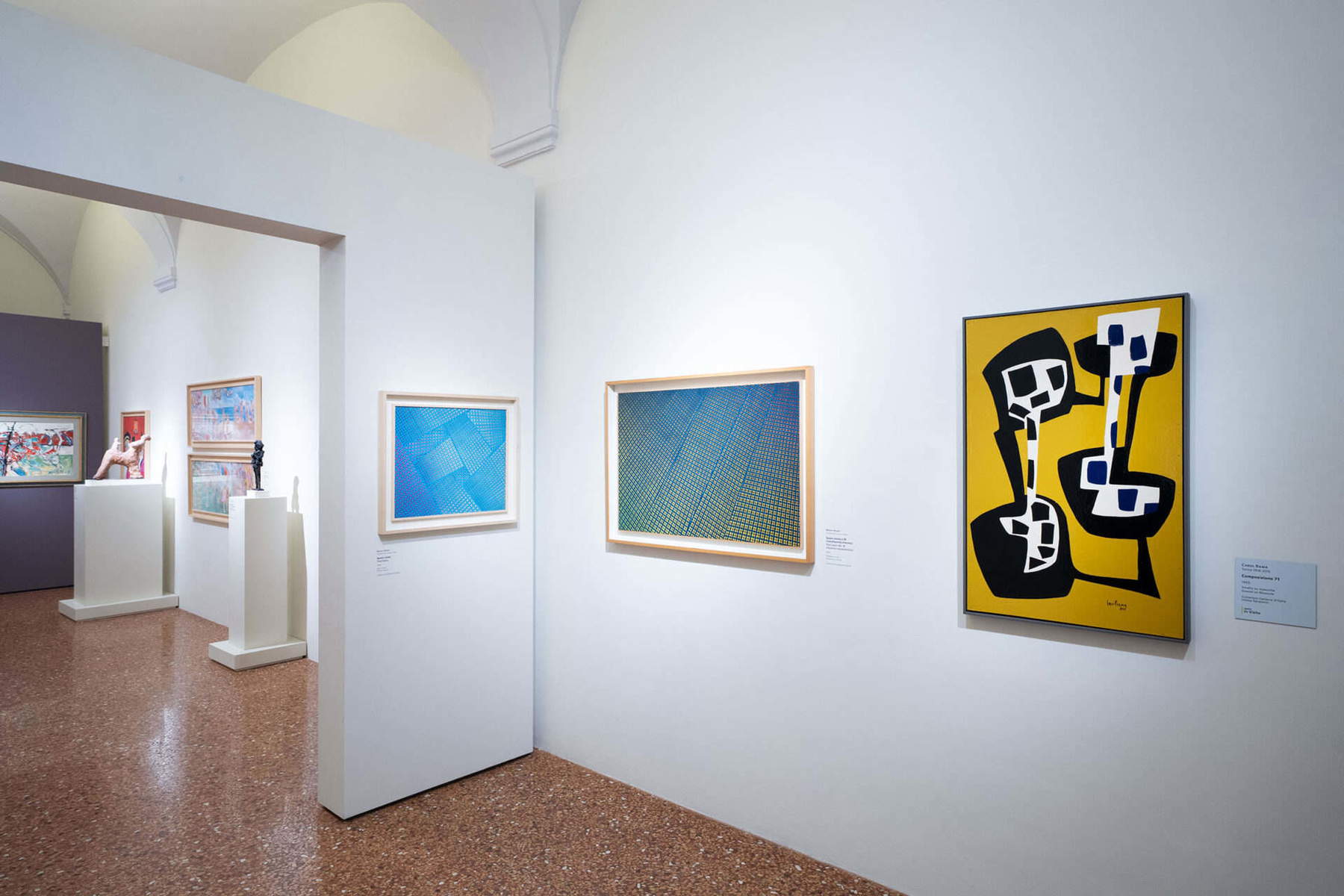
The seven works on view—six from the Gallerie d’Italia – Intesa Sanpaolo Collections and one from a private collection—span a period from the 1950s to the 1970s. This was a crucial period for Carol Rama: initially engaged in an exploration of abstraction, she later became increasingly interested in the possibility of transforming the pictorial surface through the incorporation of objects, heterogeneous materials, and unconventional marks. The exhibition allows visitors to trace these transformations without rigidly separating the different phases, showing instead how each step arises from a rethinking of what a painting can be.


The artist is also known for the freedom with which she addressed themes such as the body, desire, illness, and identity—topics that contributed to her subsequent international critical acclaim. In Pistoia, however, the focus is primarily on the evolution of her visual language: from the non-figurative compositions of the 1950s to the textural surfaces of the *Bricolage* series, and on to works in which inner tubes and sewing thread become constitutive elements of the image.


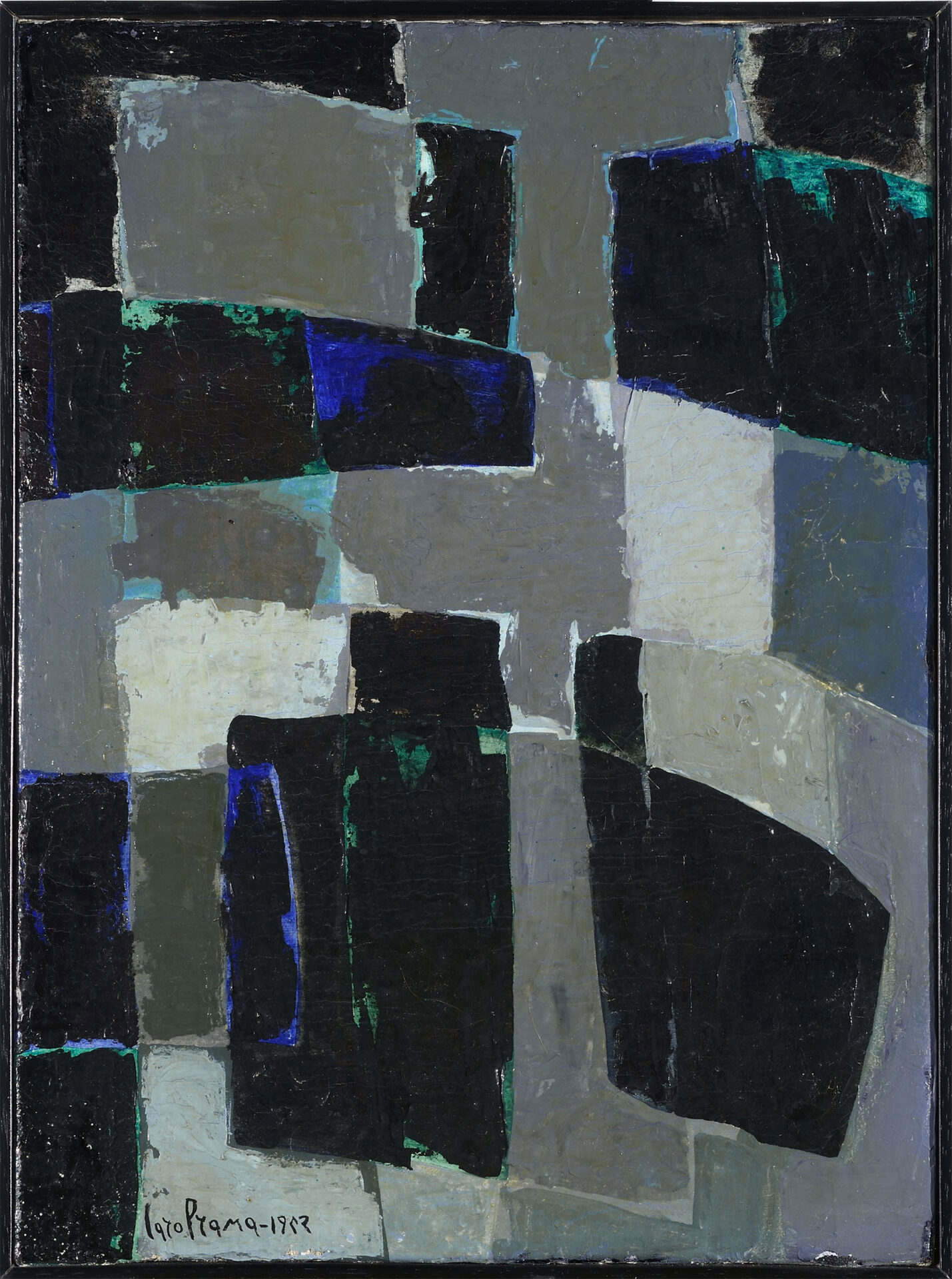
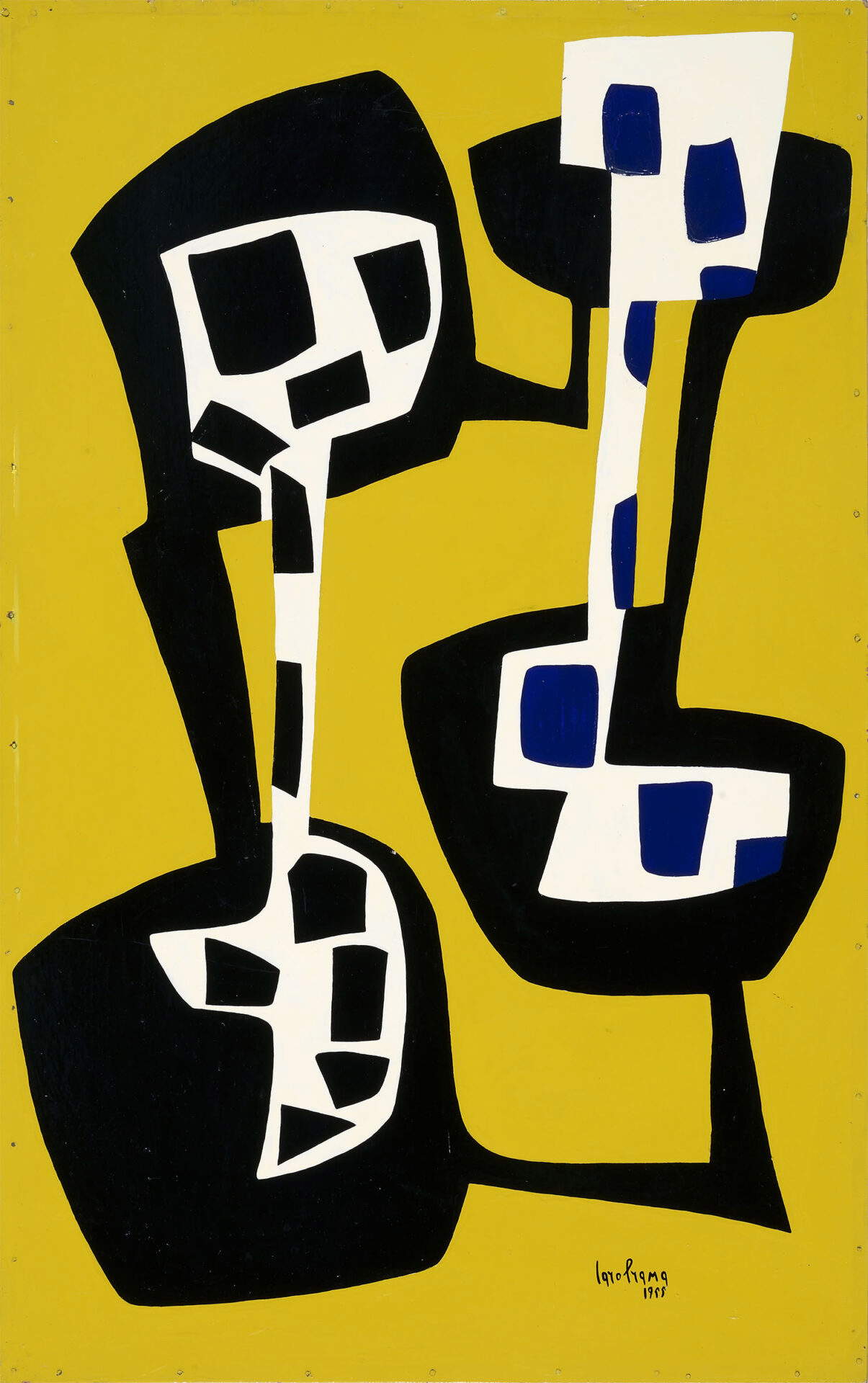
The exhibition begins with *Untitled* (1952) and *Composition 71* (1955), two works linked to the period when Rama was drawn to the Concrete Art Movement. His relationship with abstraction developed within the Turin art scene, in a form that allowed for broader experimental possibilities than the geometric orientation prevalent in the Milanese group. His exploration does not consist solely of organizing forms and colors according to an autonomous order; it also becomes a terrain on which to test painting’s ability to construct relationships and tensions through its own elements. Composition 71 also offers an opportunity to compare it with works by Gualtiero Nativi and Mario Nigro, artists from Pistoia featured in the Collezioni del Novecento: this juxtaposition allows for a comparison of different abstract experiences without erasing their specific characteristics. The works share an interest in a non-figurative language, but they also reflect the variety of approaches that emerged in the post-World War II period as artists sought to move beyond traditional representation.
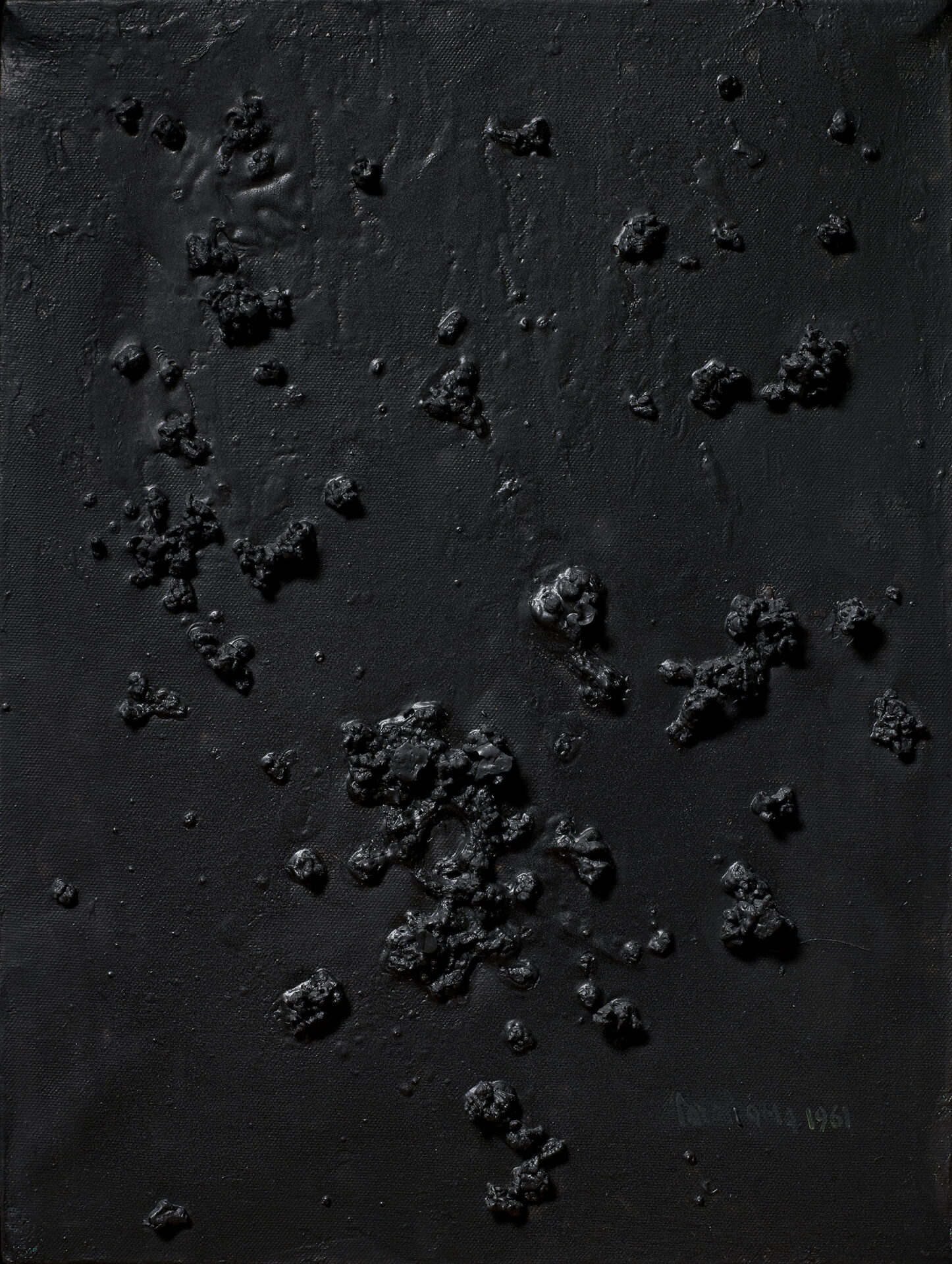
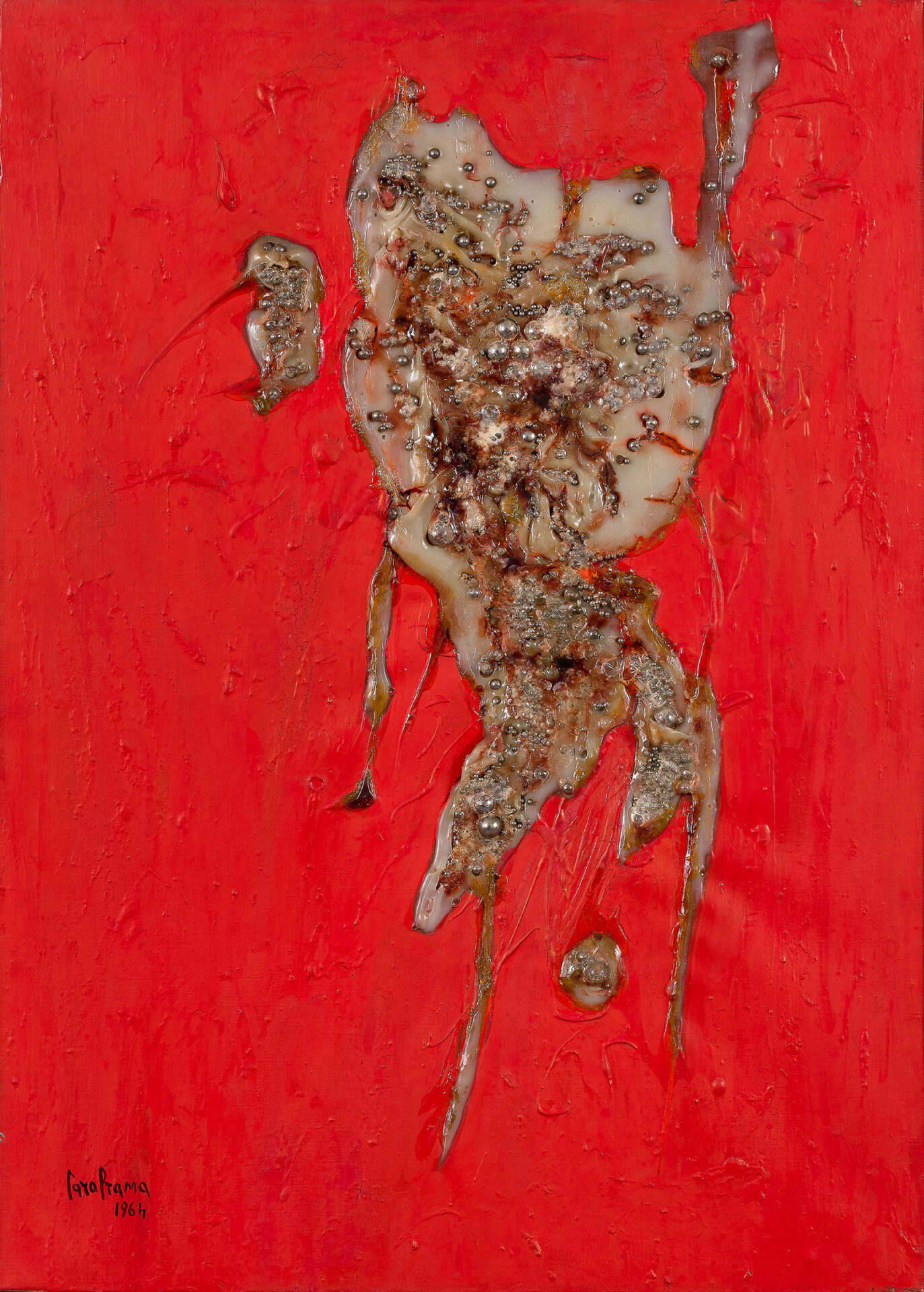
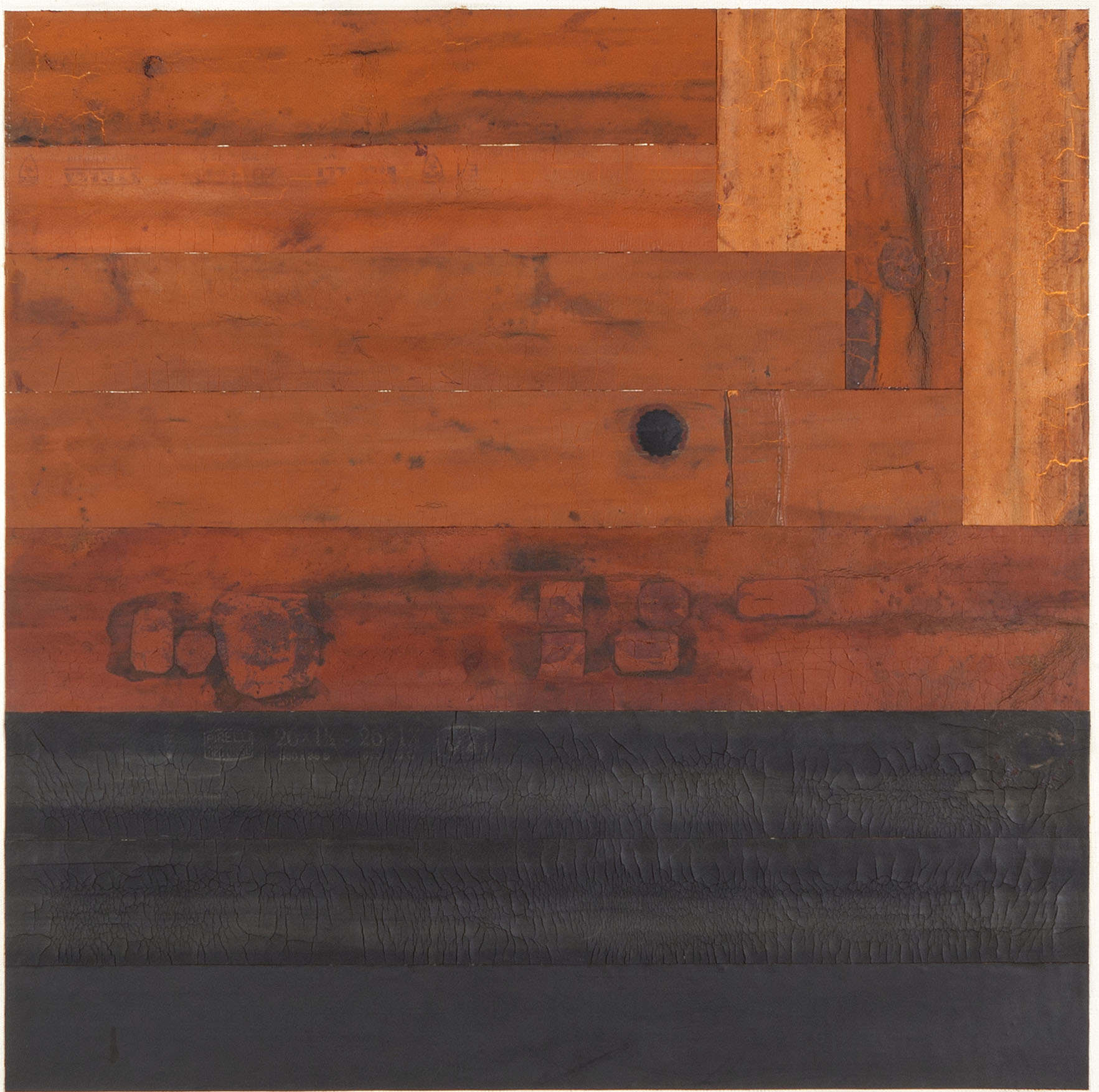
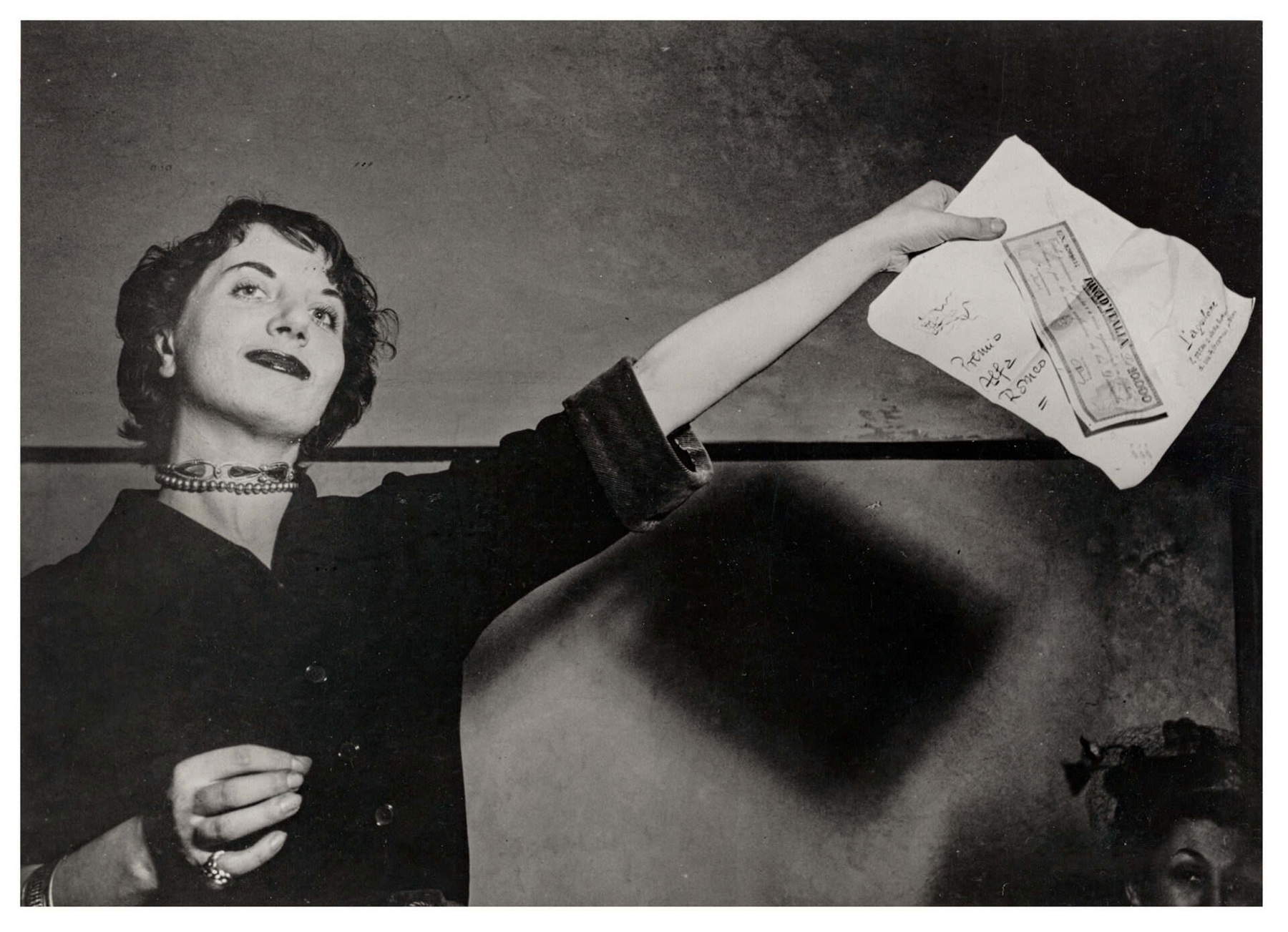
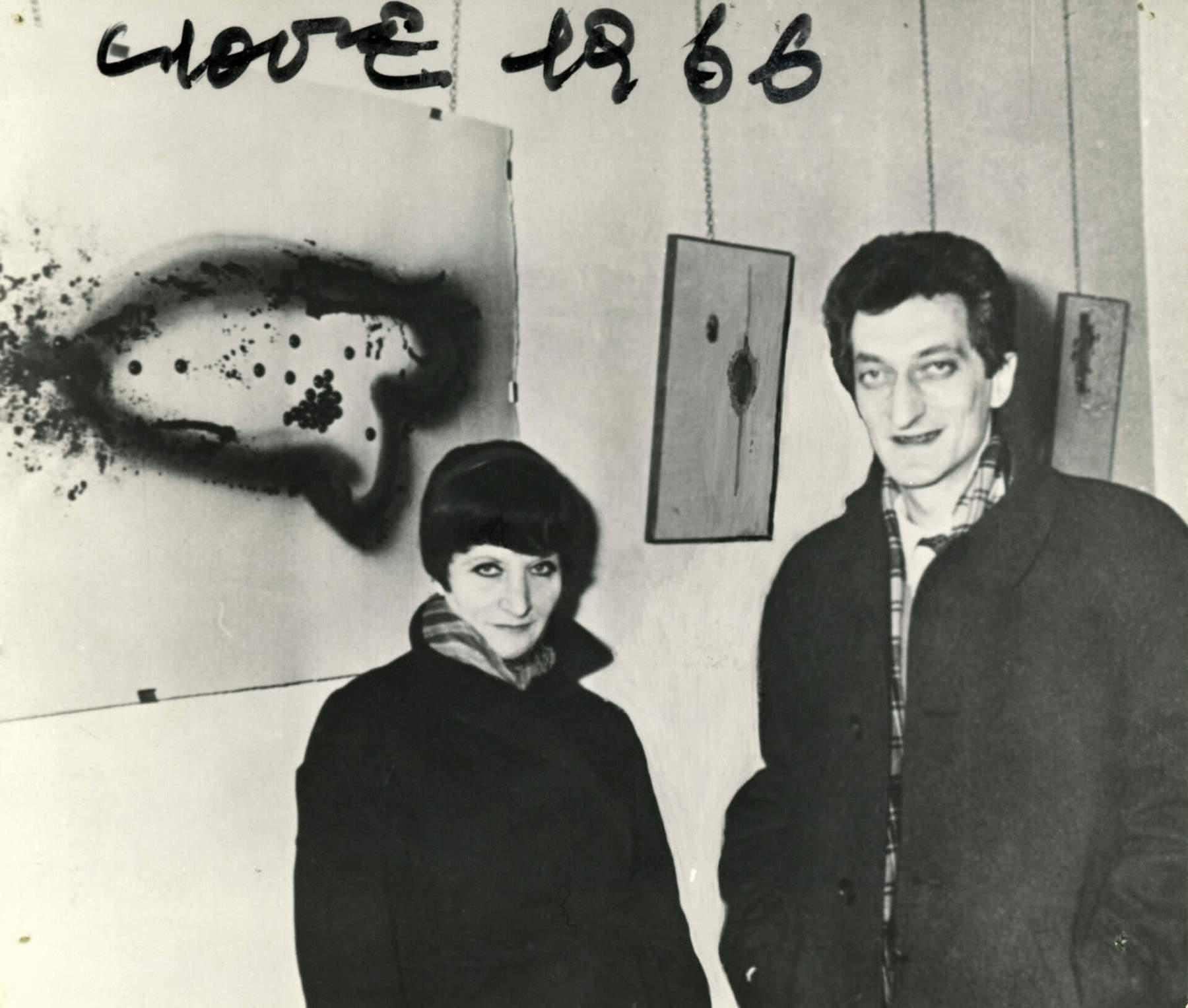
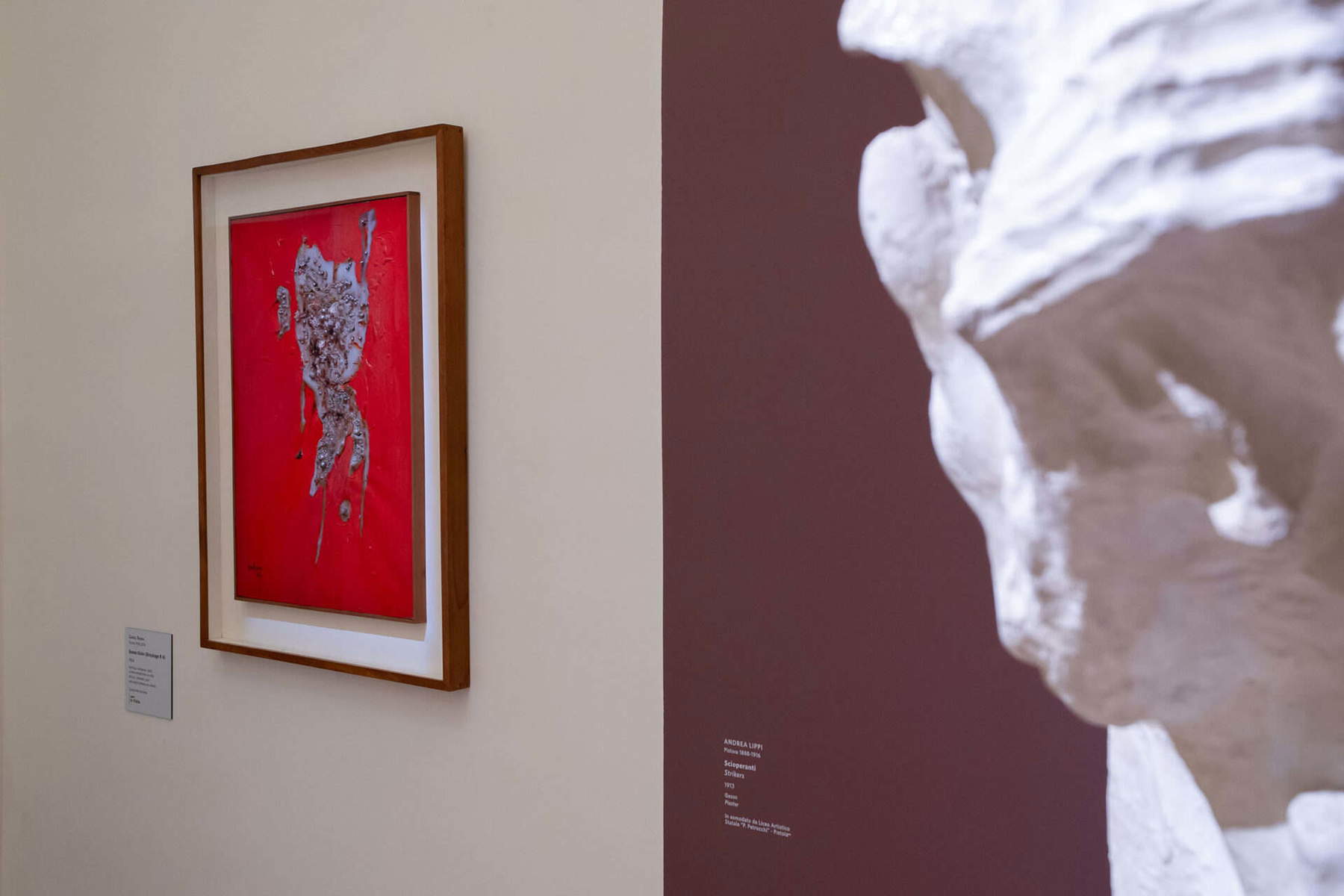
In the 1960s, Rama’s artistic exploration took a new direction. Abstraction did not simply disappear to make way for a new style; rather, the very concept of the pictorial surface underwent a radical reevaluation. In Untitled ( 1961), oil paint is combined with various materials, found objects, and clumps with a vaguely organic appearance. The canvas is no longer merely the support onto which to apply paint: it becomes a space in which materials drawn from everyday life take on a new function and alter the perception of the work. This exploration finds one of its most recognizable expressions in the *Bricolage* series, works in which painting and object enter into a close relationship. The term was used by Edoardo Sanguineti to define this body of work on the occasion of Rama’s solo exhibition at the Galleria Stampatori in Turin in 1964: The intellectual would later play an important role in the presentation of the exhibition staged in 1965 in the Sala Ghibellina of the Museo Civico in Pistoia, which, as mentioned, marked the artist’s entry into a public institution.
Bricolage R 4, now back in the city, was part of that exhibition: its presence is one of the project’s main points of interest, as it allows for a direct connection between the contemporary exhibition and an episode in Rama’s exhibition history. On the canvas, the painterly mark engages with the object—understood as an element stripped of its original function and incorporated into the work. Everyday waste is neither concealed nor transformed into a purely decorative element: it retains its own materiality and, precisely for this reason, challenges the traditional boundaries of painting.
The choice of unconventional materials is not merely a formal device. By introducing elements into the surface that have a different texture and origin from those of the paint, Rama complicates the relationship between image and reality. The painting becomes a collection of physical presences, in which the material can assert itself to the viewer with the same force as the mark, and the surface is no longer a homogeneous space to be filled, but a site of friction between different components.
In the 1970s, this experimentation continued through even more diverse materials and processes. In the series *Luogo e segni* (*Place and Signs*), developed around the middle of the decade and consisting of 35 works of varying formats and approaches, the artist uses inner tubes applied to large black canvas sheets.This industrial element, foreign to the tradition of painting materials, becomes an integral part of the composition. Its presence introduces a concrete and physical dimension that alters the relationship between surface, space, and perception.
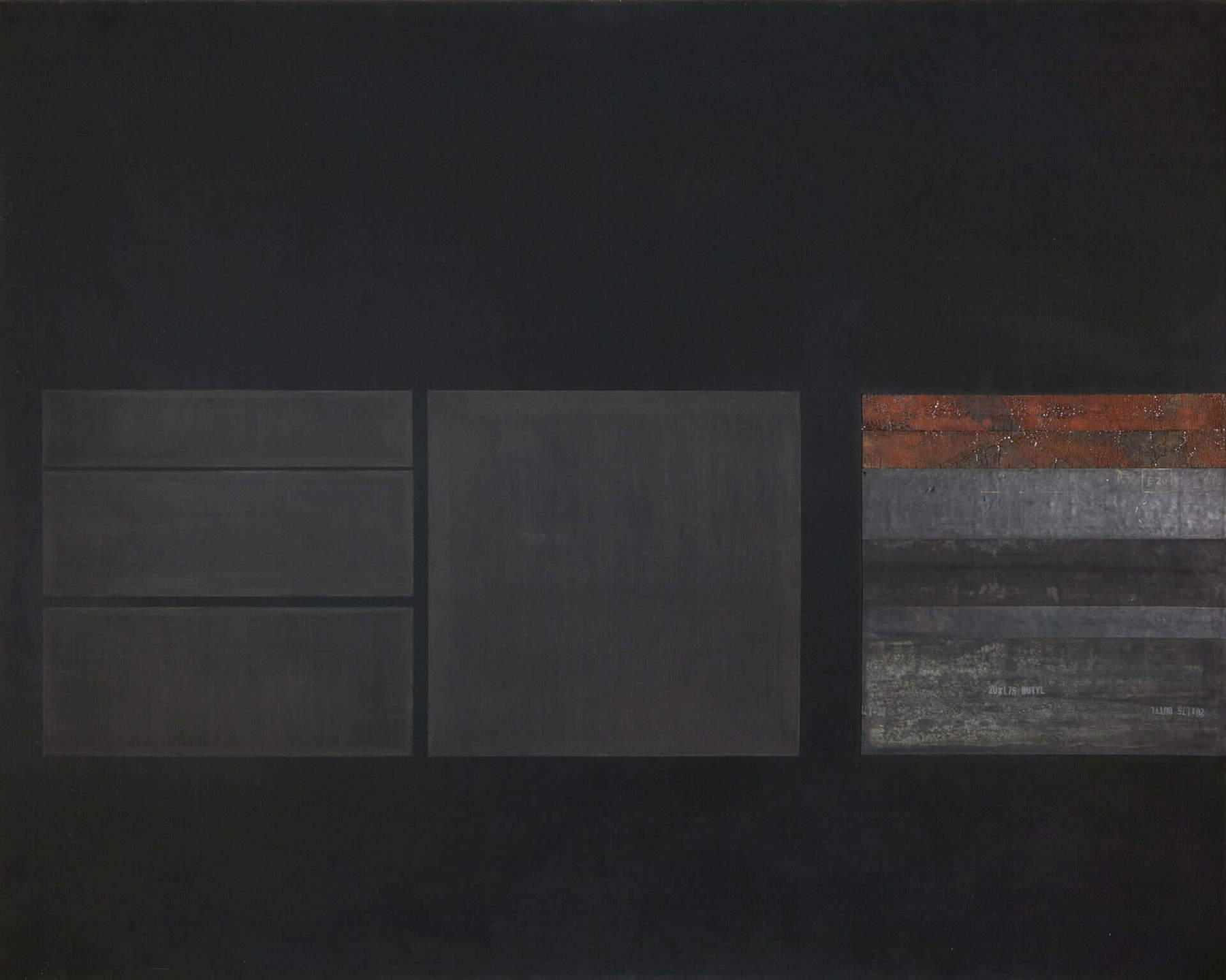
The 1974 work *Luogo e segni* (Place and Signs ), exhibited in Pistoia, demonstrates how her artistic exploration proceeds through a balance between addition and subtraction. The inner tubes organize the surface according to quadrangular patterns, while other areas of color are achieved by scraping away the canvas. The work’s design thus arises from opposing operations: on the one hand, the insertion of materials; on the other, the removal of material from the support ( the surface is constructed through what is applied and what is removed, in a process that makes the artist’s own work visible). The work ties in with the experiments of the series *Fase dal nero* and *Smentire il bianco*, in which Rama had already explored the expressive possibilities of unconventional supports and materials. The black of the canvas does not function merely as a chromatic background: it participates in the construction of the image and helps determine how the applied elements are organized in space. The result is a painting that does not merely represent something, but brings its own material conditions to the forefront.
Another direction of exploration is documented in *Untitled* (1974), a work in which sewing thread, fixed to fabric, becomes a structural element (between 1972 and 1974, Rama created a series of works in which the thread traces paths across the surface, evoking medical-diagnostic charts: the line is no longer merely a mark made with a tool; it is a physical element that traverses the support and alters its interpretation). These paths may recall diagrams and records, suggesting a connection to the language of diagnosis and clinical observation; however, this reference does not exhaust the meaning of the works, in which the thread retains its own formal autonomy and constructs a visual fabric made up of directions, interruptions, and relationships. Here, too, a material associated with everyday life is removed from its ordinary use and transformed into a component of artistic language.
The sewn thread, inner tubes, salvaged objects, and abraded surfaces bear witness to a creative process that proceeds through successive transformations, without adhering permanently to a single artistic movement. The transition from abstraction to the “Bricolage” works and then to the experiments of the 1970s does not correspond to a succession of fixed formulas: rather, it reveals Rama’s willingness to continually reexamine the medium of painting, incorporating materials and gestures into the work that expand its possibilities.
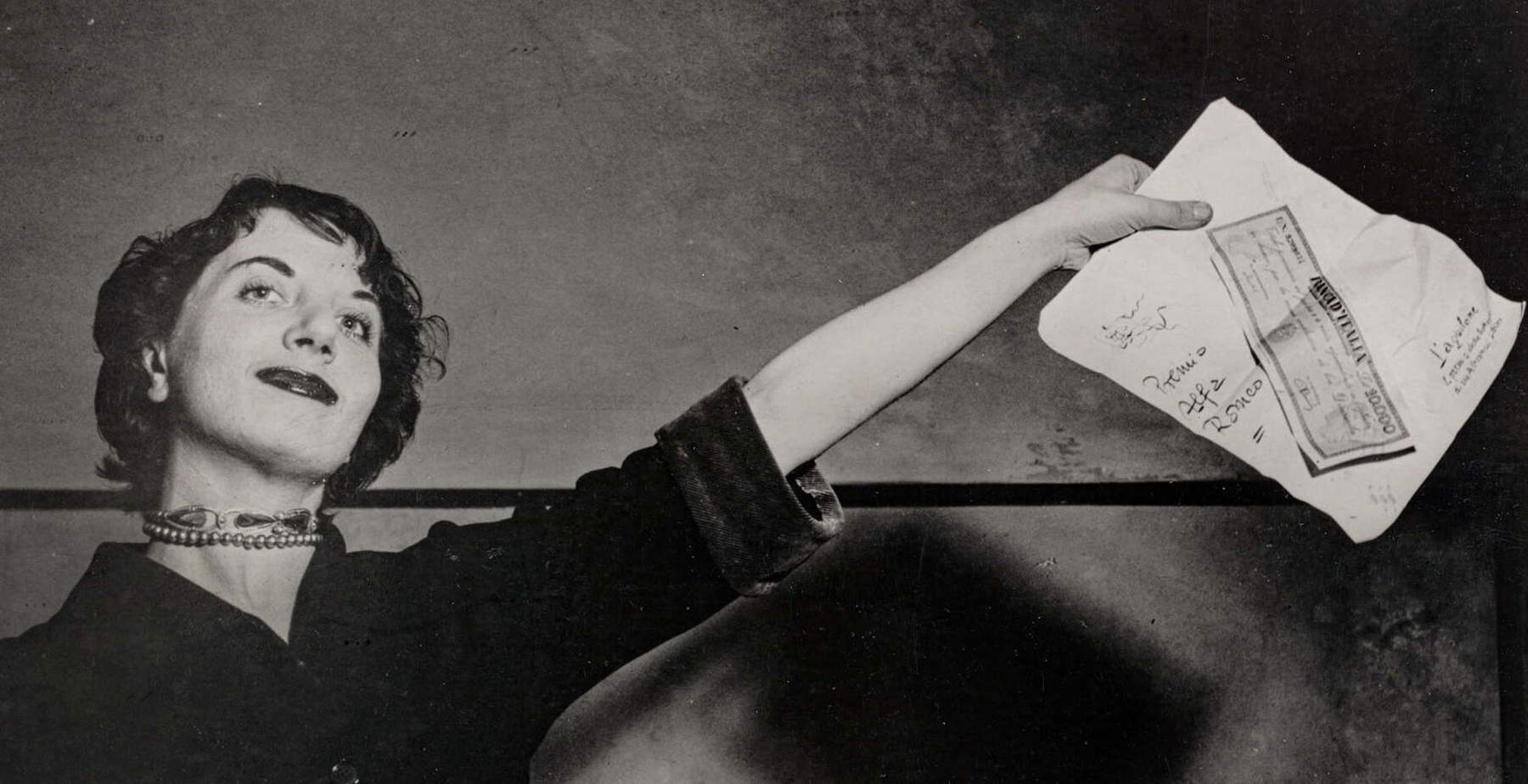
This independence has contributed to the artist’s unique position in the history of Italian art. Active since the 1930s and trained outside the conventional academic path, Rama developed a personal artistic language, often at odds with the expectations of critics and institutions. Her work has been progressively reevaluated since the 1980s, thanks in part to the attention of Lea Vergine, as part of a broader rediscovery of artistic practices that had challenged traditional hierarchies and categories. In 2003, she was awarded the Golden Lion for Lifetime Achievement at the Venice Biennale.
“In Visita | Carol Rama” is presented in partnership with Intesa Sanpaolo, in collaboration with the City of Pistoia, the Civic Museums, and the Carol Rama Archive. Accompanying the exhibition is a book published by Gli Ori-Pistoia, featuring an introduction by the curators, an essay by Annamaria Iacuzzi dedicated to the 1965 exhibition, and a critical essay by Maria Grazia Messina. The book reconstructs the historical and critical context of that exhibition, drawing in part on previously unpublished material, and offers new perspectives on the artist’s career.
During the exhibition period, guided tours, in-depth discussions, and activities for schools, families, and adults are scheduled. The exhibition will be on view at Palazzo de’ Rossi from October 3, 2026, to February 14, 2027, with a public opening featuring free admission on Saturday, October 3, at 5:00 p.m.
 |
| Carol Rama returns to Pistoia with seven works, sixty years after her first museum exhibition |
Warning: the translation into English of the original Italian article was created using automatic tools. We undertake to review all articles, but we do not guarantee the total absence of inaccuracies in the translation due to the program. You can find the original by clicking on the ITA button. If you find any mistake,please contact us.