





From September 26 to February 8, the historic rooms of Palazzo Pretorio in Certaldo (Florence) will host *La materia della vita*, a new solo exhibition by Antonio Barbieri curated by Davide Sarchioni. The project, conceived specifically for the medieval spaces of the former seat of the Florentine Vicariate—now also dedicated to contemporary art—explores the relationship between matter, nature, technology, and the sculptural gesture.
Barbieri’s research begins with the possibility of making physically perceptible phenomena that normally elude direct experience: the data, algorithms, and invisible relationships that govern the growth of a plant, the evolution of species, and the organization of matter. From this perspective, tools such as scanners and data acquisition systems, photogrammetry, algorithms, 3D modeling, and 3D printing become part of the process through which the artist observes, interprets, and reworks reality.
However, the use of technology does not replace manual labor. Barbieri develops the algorithms used in his research and, through the creative act, interprets, breaks them down, and transforms them. He models, assembles, and paints his sculptures by hand, engaging directly with the physical characteristics of the materials. The centrality of manual skill also extends to his tools, some of which are designed or modified by the artist to meet the specific needs of the works.
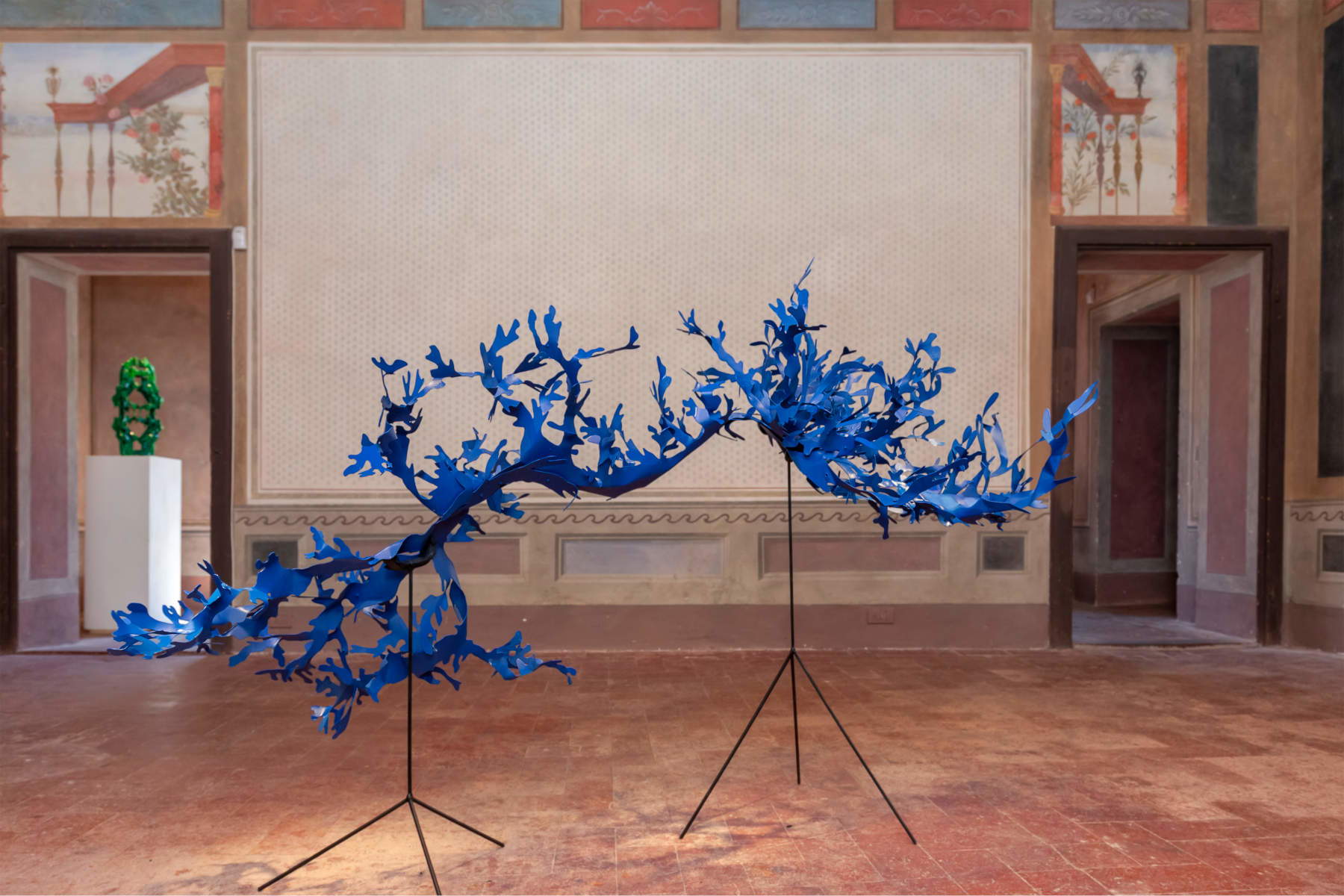
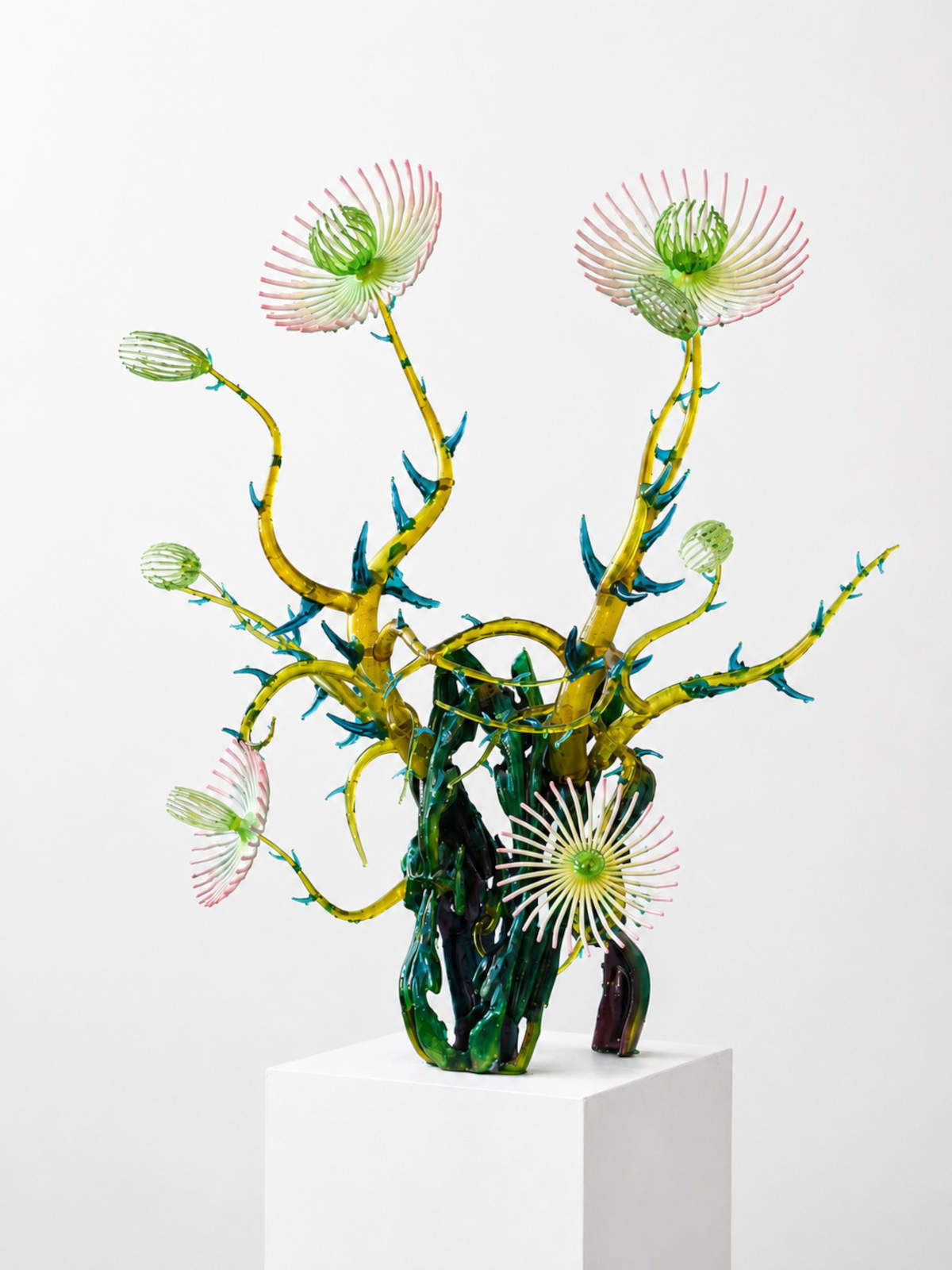
Through these processes, entities take shape that exist in a liminal space between the natural and the artificial, biological reality and imagination. Plant branches, corals, microorganisms, fossils, and unidentifiable creatures serve as formal references for sculptures that seem to originate from a primordial past and, at the same time, from a possible future dimension. The works interpret the rules and formal potential of nature through unique creative processes, in which discovery and wonder become part of the work.
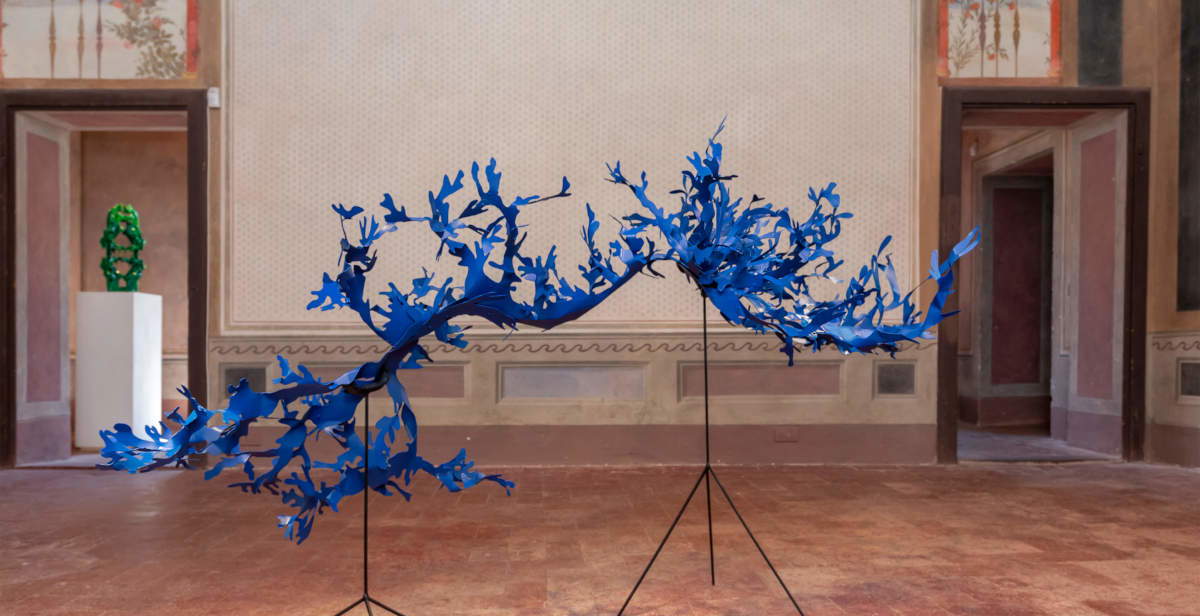
The exhibition journey traverses various levels of biological organization, from phylogenetic trees to structures derived from the processing of biological datasets. Among the core elements of the exhibition are the Chimeras, generated by the fusion of elements belonging to different organisms, alongside works that incorporate robotic systems and generative processes. The body of work includes previously unseen pieces and site-specific installations created for the various spaces of Palazzo Pretorio.
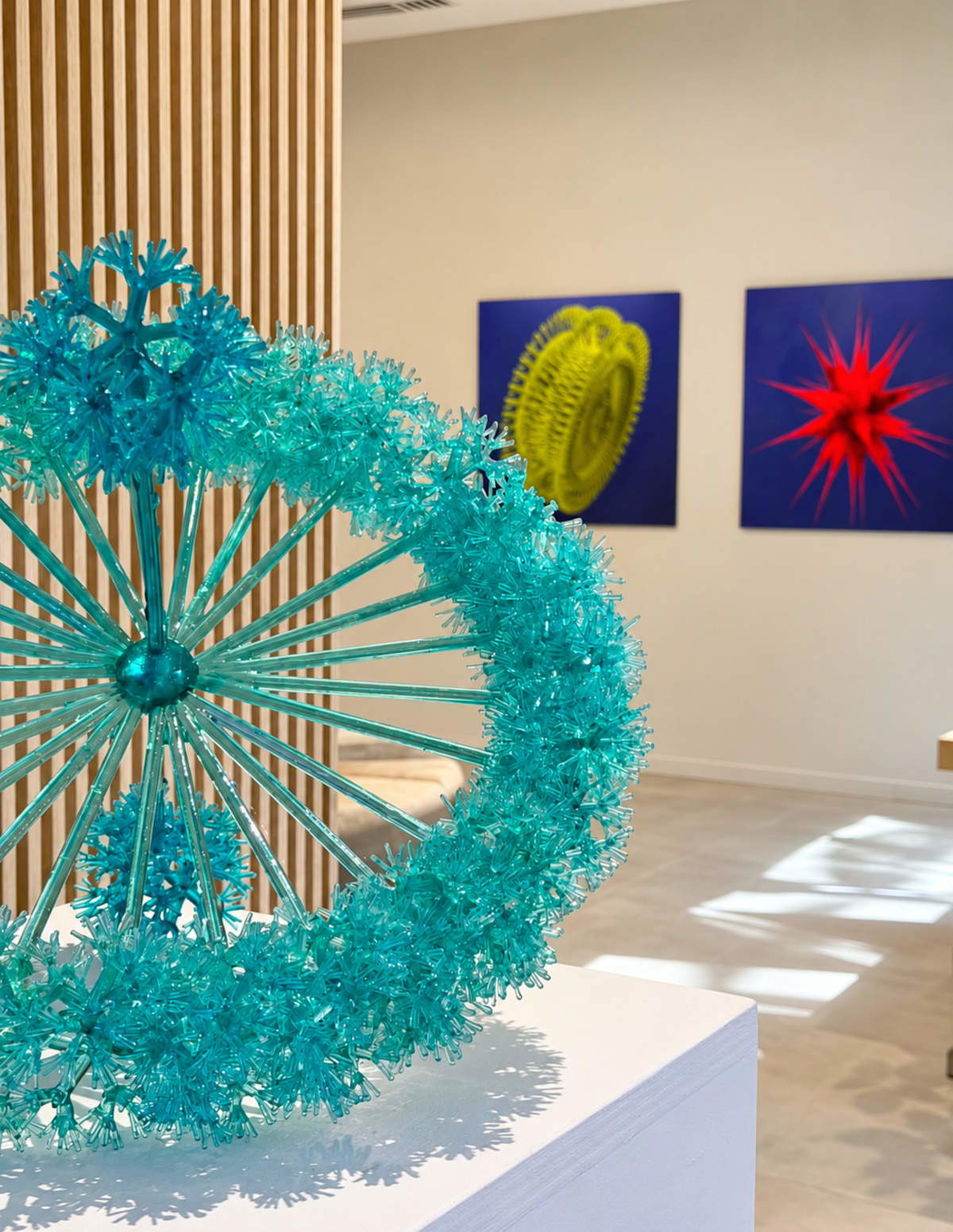
The project thus presents a conception of nature as a constantly evolving system, in which forms, relationships, and transformations can be translated into new sculptural configurations. At the heart of the research lies the relationship between man and machine and the possibility of rethinking sculpture in the technological and digital age, without separating innovation from craftsmanship. In this sense, contemporary technologies are viewed as tools capable of expanding the realm of the visible and the ways in which the artist can explore form. The reference to Renaissance perspective—which transformed the representation of space in the fifteenth century—serves to situate technological change within a broader history of the tools of knowledge and their impact on artistic practice.
“The Matter of Life” is also part of Palazzo Pretorio’s program, which in recent years has hosted exhibitions dedicated to contemporary art featuring works by Vincenzo Marsiglia, Thomas Lange, Valentina Palazzari, Oliviero Rainaldi, and Alfredo Rapetti Mogol. The exhibition is organized by Exponent in collaboration with the NM Contemporary gallery in Munich, under the patronage of the Municipality of Certaldo and the Regional Council of Tuscany.
 |
| Certaldo: Antonio Barbieri Reimagines Sculpture in the Technological and Digital Age at Palazzo Pretorio |

Warning: the translation into English of the original Italian article was created using automatic tools. We undertake to review all articles, but we do not guarantee the total absence of inaccuracies in the translation due to the program. You can find the original by clicking on the ITA button. If you find any mistake,please contact us.














 IT
IT FR
FR DE
DE ES
ES CN
CN


