



by Redazione 22/11/2026


Categories: Exhibitions / Disclaimer
At the Palazzo d’Accursio in Bologna, from December 5, 2026, to February 12, 2027, an exhibition featuring approximately 90 works traces the artistic journey of the Bolognese painter and decorator, from his training in drawing to the gradual emergence of color and light as independent elements.


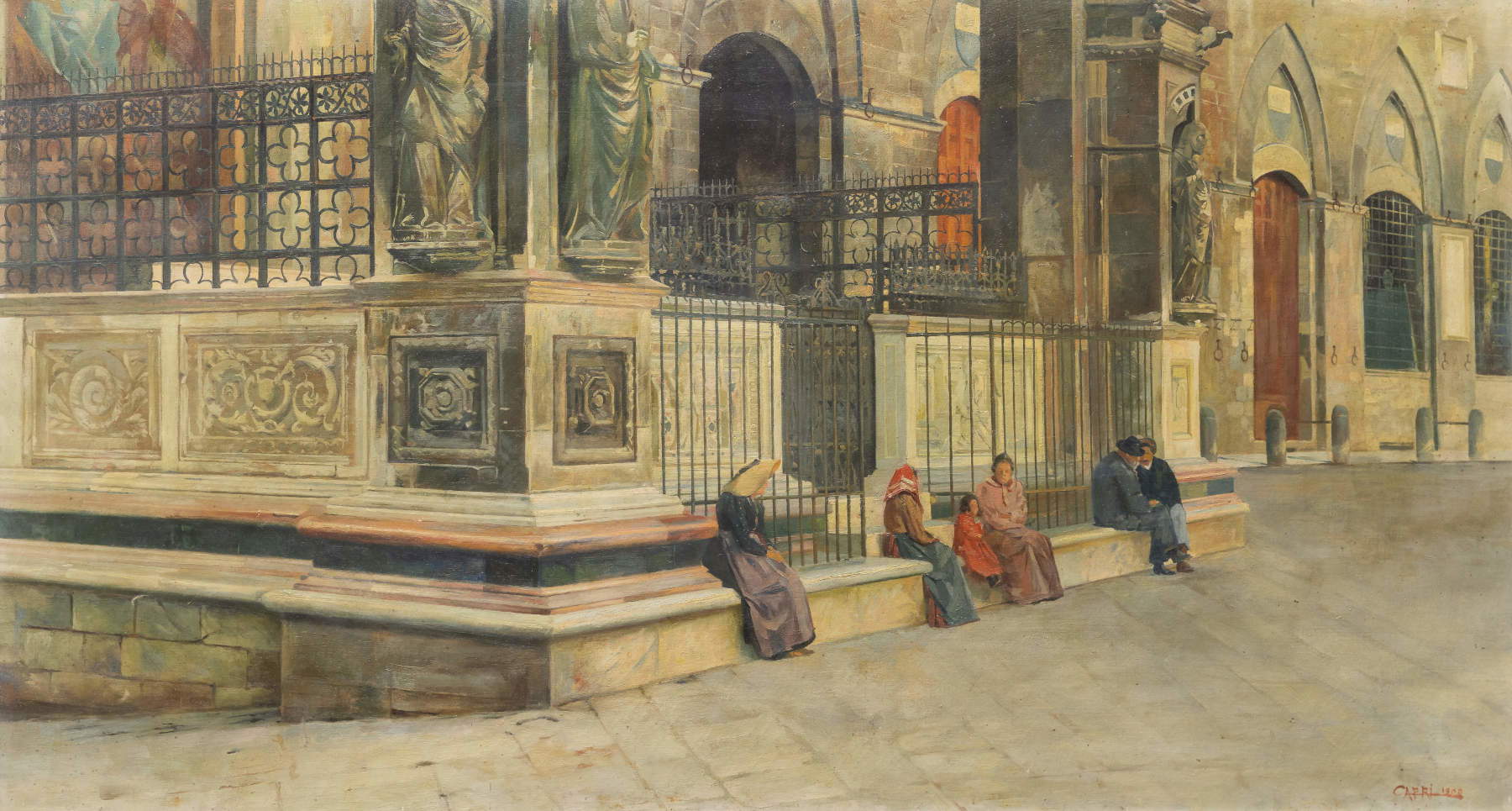
Bologna rediscovers Cleto Capri (1873–1965) with an exhibition that traces his artistic career and the evolution of his pictorial style. From December 5, 2026, to February 12, 2027, the Sala d’Ercole in Palazzo d’Accursio will host “Cleto Capri (1873–1965).” From Line to the Vibration of Light: the first retrospective exhibition dedicated to the Bolognese painter and decorator. Organized by the Bologna Association for the Arts, the exhibition is curated by Daria Ortolani and Alessandra Sandrolini.

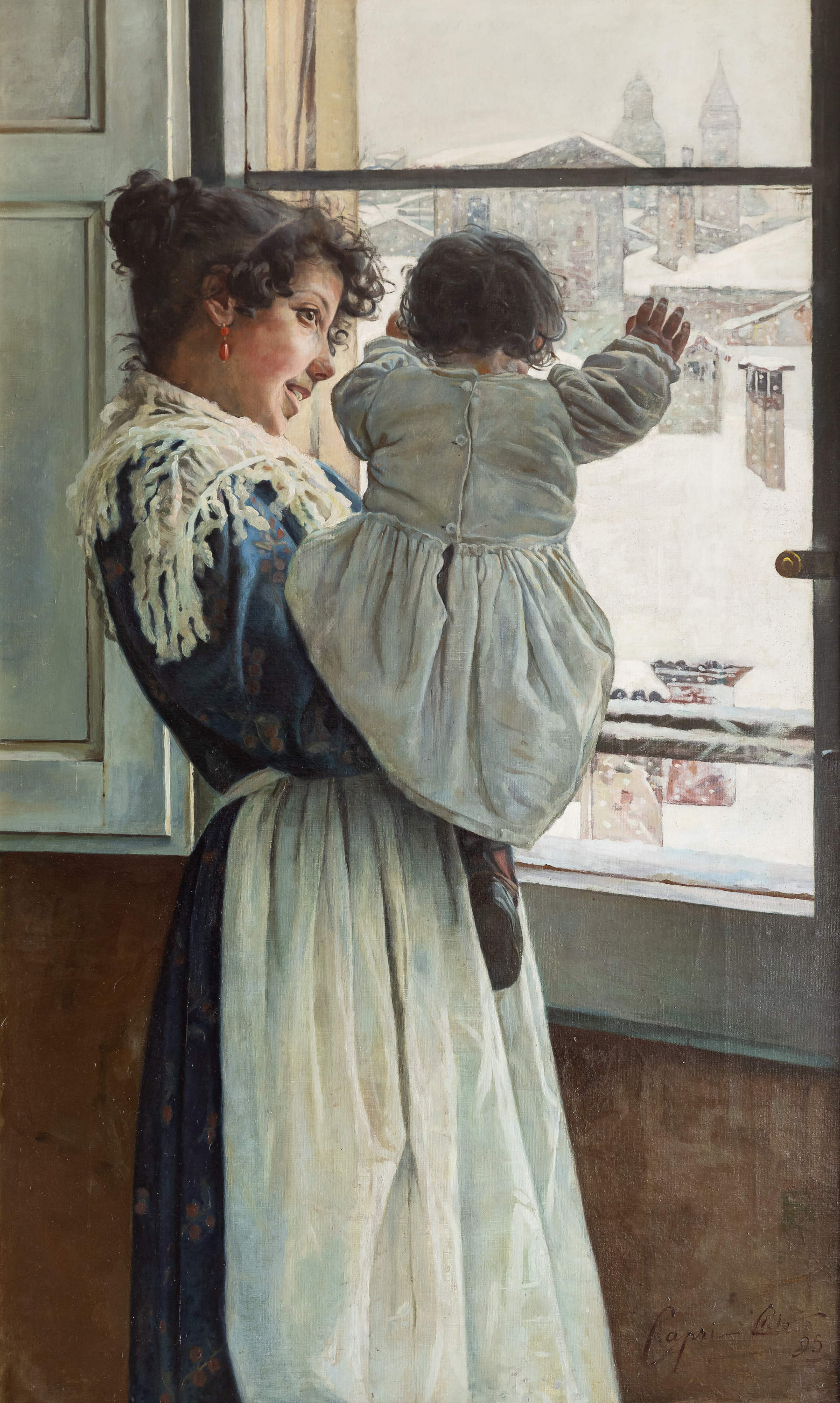
The exhibition brings together approximately 90 works, primarily in oil, and is the result of research conducted in the artist’s family archive and private collections. The paintings come primarily from the collection of Capri’s heirs, but also from several institutions in Bologna, including the Fondazione Cassa di Risparmio in Bologna, the Collegio Artistico Venturoli, and the MAMbo—Museo d’Arte Moderna di Bologna.
Born in Bologna in 1873, Capri trained at the Collegio Artistico Venturoli, which he attended from 1885 to 1893 under the guidance of Luigi Serra, Enrico Barberi, and Alfredo Tartarini. During these years, he acquired a solid foundation in the art of drawing, which would become one of the cornerstones of his artistic practice. Thanks to the Angiolini Prize, he continued his studies in Rome and Venice, where he honed his skills as a painter.



Beginning in the last decade of the nineteenth century, he repeatedly participated in the Baruzzi Competition and the Francesco Francia competitions, receiving awards and acclaim. In 1898, he took part in the General Italian Exhibition in Turin; in 1905, he exhibited at the Exhibition of Amateurs and Connoisseurs of Fine Arts in Rome; and the following year, at the International Exhibition in Milan for the Sempione. In 1911, he designed the facade of the Emilia-Romagna Pavilion for the Regional and Ethnographic Exhibition in Rome. In 1930, he was commissioned to decorate the new Treasury at the Bologna branch of the Bank of Italy, and in 1940 he exhibited at the Venice Biennale.
Alongside his painting, Capri was highly active in the fields of decorative arts and architecture. He participated in the Æmilia Ars project and created mural decorations for several Art Nouveau buildings in Bologna, thus complementing his work on canvas with explorations focused on spaces and environmental arts.
His painting went through several phases. Initially focused on social themes, it gradually shifted toward landscapes—both natural and urban—while maintaining a constant focus on light, atmospheric variations, and the expressive possibilities of color. His artistic development began with a style characterized by a solid foundation in drawing and a realist approach, rooted in the tradition established by Luigi Bertelli and further developed by numerous local artists.
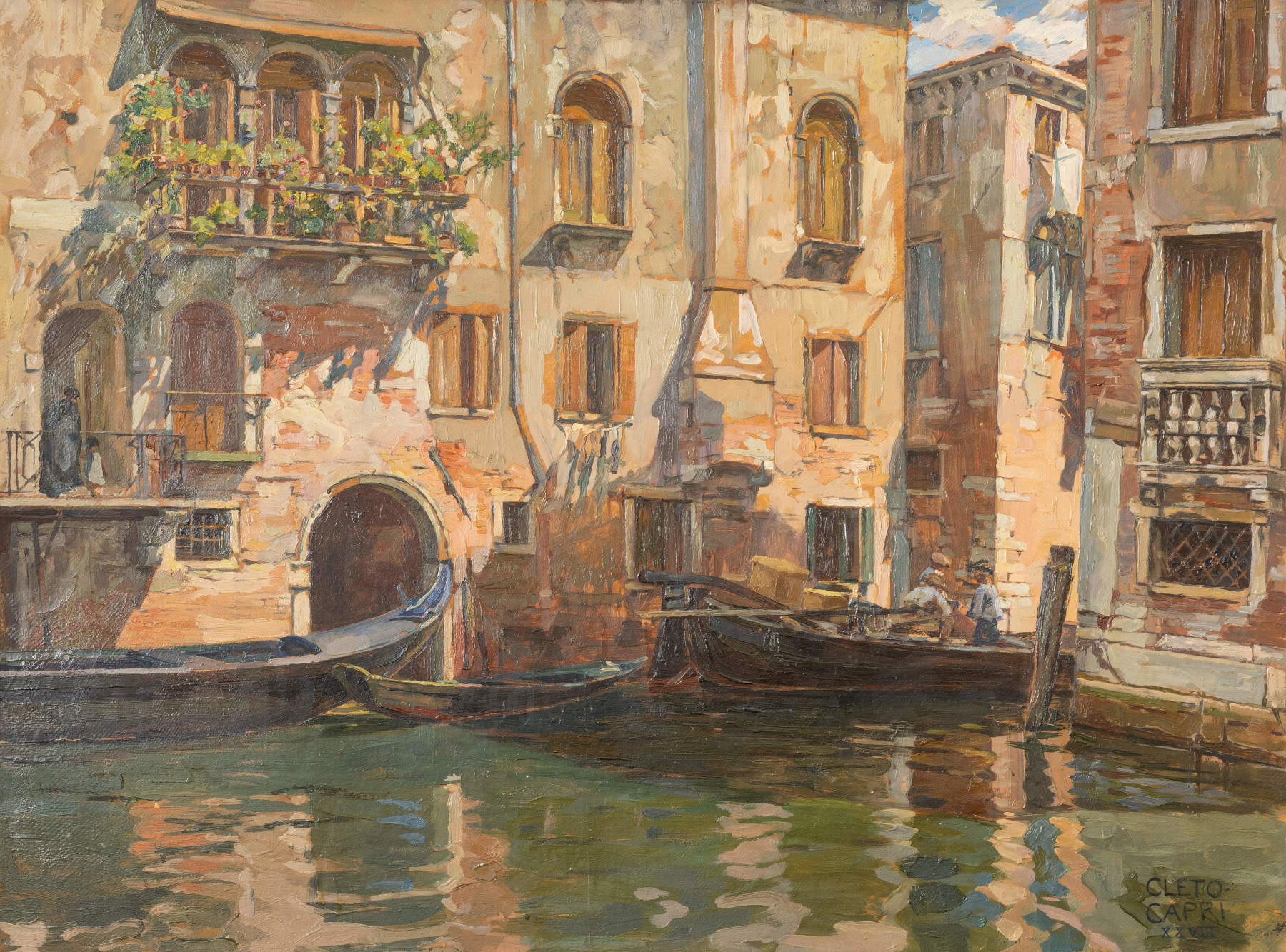
Over time, however, the relationship between line and color changed. The line gradually lost its defining function, while the painterly material gained consistency and autonomy. This shift is particularly evident in the harbor and seascape views of the 1920s, in which the brushstrokes became freer, quicker, and more impasto-like. Color combinations become intense, and the contrasts between complementary hues help to diminish the role of formal definition, sometimes leaving it to color to organize the composition. Water, the sea, and vegetation become subjects through which the artist explores the movement and energy of natural elements.
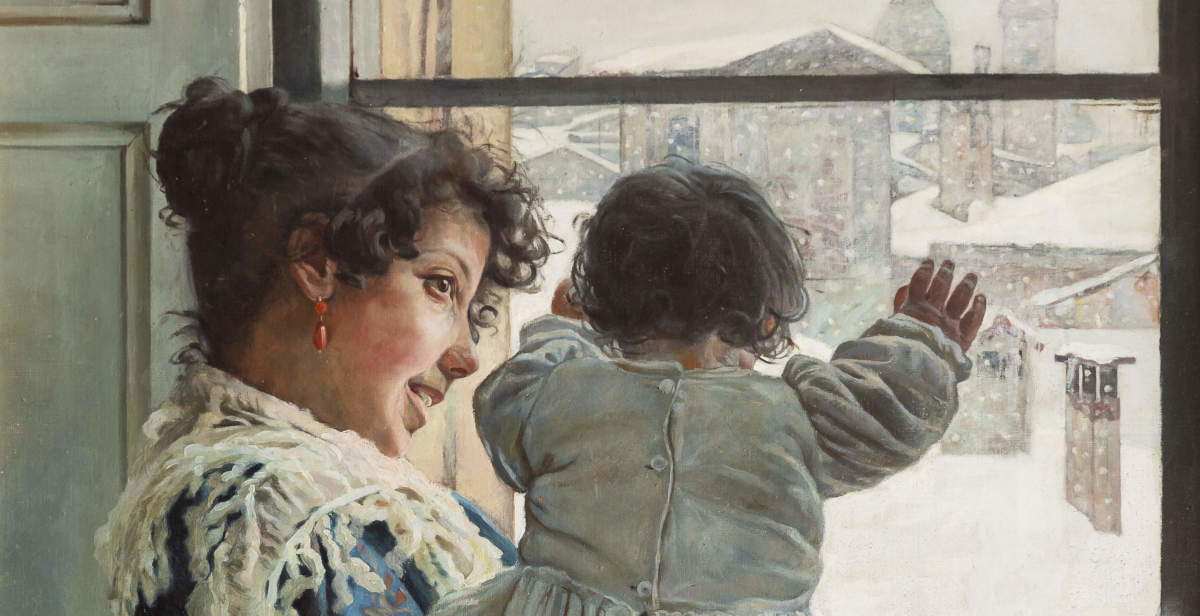
Alongside views of Bologna, the Apennines, and Venice, Capri painted urban and rural scenes, domestic scenes, and moments of life in the fields. His mature compositions are often characterized by close-up framing and original spatial arrangements, which reduce the depth of the horizon and focus attention on the foregrounds. Even in his works from his final years, his artistic exploration returns to engage with the places and landscapes of the city where he had received his training.
The exhibition will be accompanied by a catalog of approximately 200 pages, featuring images and critical essays, as well as a program of in-depth events. On January 14, 21, and 28, 2027, at 5:00 p.m., a new series of Cultural Dialogues will take place at Palazzo d’Accursio, featuring free lectures led by scholars in the Sala degli Anziani. The Bologna Association for the Arts will also organize guided tours; for more information, please contact info@bolognaperlearti.it. Throughout the duration of the exhibition, interns from the University of Bologna and the Academy of Fine Arts will also be present daily to guide visitors on specialized tours free of charge.
This initiative marks the twenty-second retrospective exhibition organized by the Bologna Association for the Arts, which has been active since 1999 in promoting and disseminating the visual arts of the 19th and 20th centuries through exhibitions dedicated to leading figures in the city’s art scene. The exhibitions organized to date have attracted a total of 520,000 visitors; during the most recent 2025–2026 season, attendance totaled 19,500. The project is sponsored by the Emilia-Romagna Region, the City of Bologna, the University of Bologna, the Academy of Fine Arts in Bologna, and the Fondazione Collegio Artistico Venturoli.
 |
| Cleto Capri and the Evolution of Painting: The First Retrospective Dedicated to Him Opens in Bologna |
Warning: the translation into English of the original Italian article was created using automatic tools. We undertake to review all articles, but we do not guarantee the total absence of inaccuracies in the translation due to the program. You can find the original by clicking on the ITA button. If you find any mistake,please contact us.