



by Redazione 04/11/2026


Categories: Exhibitions / Disclaimer
From November 6, 2026, to February 28, 2027, the National Etruscan Museum of Villa Giulia will present the results of an interdisciplinary study on the Olla di Cerere and the writing system of the ancient Falisci. Digital analysis has revealed that the fragments attributed to the artifact belong to at least two distinct vases.

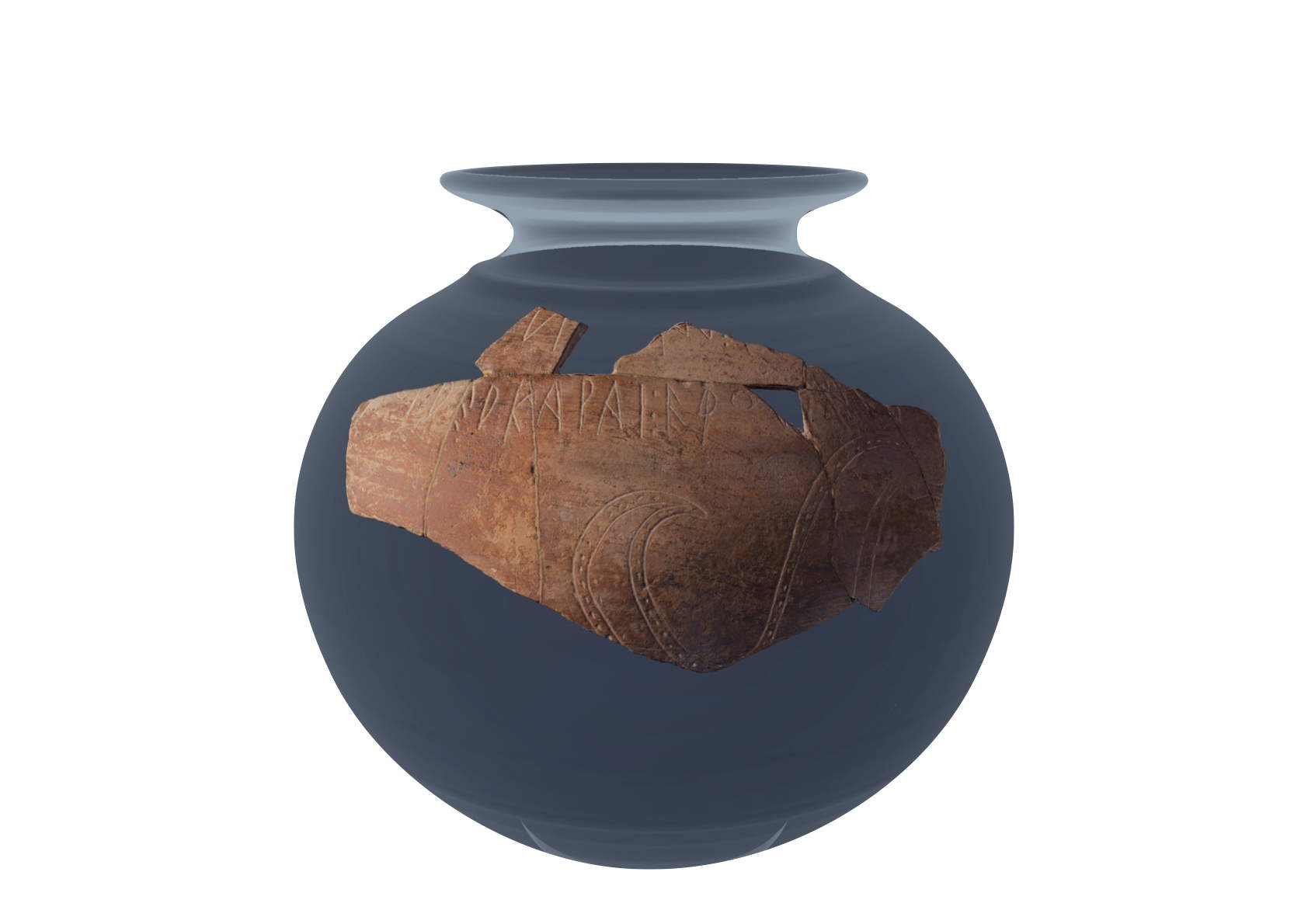
The fragments of the “Olla di Cerere” do not come from a single vessel, but from at least two different jars, all made using the same technique. This is one of the findings to emerge from an interdisciplinary research project that reexamined one of the most important examples of the language and writing of the ancient Falisci, using digital tools to reconstruct the text and the shape of the artifact. The results of the study will be presented in the exhibition *The Olla di Cerere and Others: Voices, Forms, Complexities*, scheduled from November 6, 2026, to February 28, 2027, at the National Etruscan Museum of Villa Giulia in Rome.


At the center of the exhibition isthe “Olla di Cerere,” so named because the goddess’s name appears at the beginning of the inscription. The artifact is a significant document for the study of early forms of writing in ancient Italy and of Faliscan civilization. The exhibition offers a new interpretation of the vase and the text engraved on its surface, placing them within the context of Falisc epigraphic production from the Archaic period, dating to the 7th–6th centuries B.C., during the Orientalizing phase.


Since its discovery, the inscription has attracted the attention of scholars, giving rise to numerous scholarly studies dedicated to the language in which it is written and the interpretation of its content. However, the length and complexity of the text, combined with the fragmentary nature of the ceramic vessel, have made it particularly difficult to reconstruct its original structure. To address these challenges, the research team utilized digital technologies to create a virtual model that allowed them to manipulate the fragments and formulate new hypotheses regarding their reassembly and interpretation.

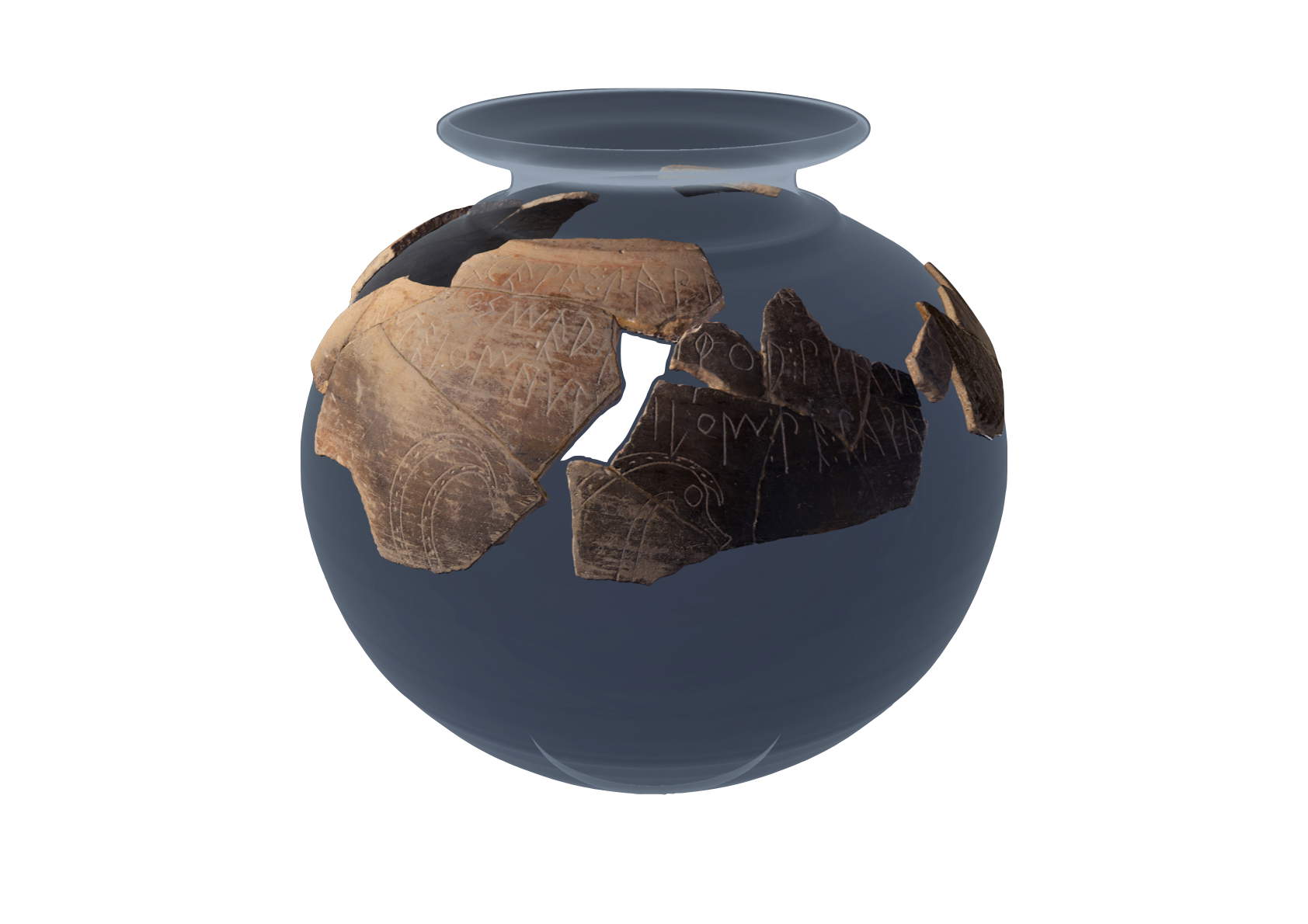
The investigations have established that the examined fragments belong to at least two distinct jars, though of the same craftsmanship. Furthermore, it cannot be ruled out that one of the fragments may belong to a third jar of the same type. The inscriptions bear witness to Faliscan writing culture in a particularly early phase, documenting the use of pottery as a medium for complex texts.
The exhibition expands the investigation beyond the main artifact, presenting a selection of inscribed vases and fragments from Falerii, roughly contemporary with the earthenware jars. These objects were also used to bear long and elaborate inscriptions and allow for a deeper exploration of the linguistic characteristics of the Faliscan area. Through ceramic forms, symbols, and material traces, the exhibition reconstructs certain aspects of writing practices and culture in pre-Roman Italy.
Part of the exhibition is directly dedicated to the methods used by scholars. Two interactive tables will allow visitors to explore research procedures, the languages of ancient Italy, and archaeometric analyses. Digital tools will make certain stages of the scientific process accessible, illustrating the possibilities offered by the integration of archaeological, linguistic, and technological expertise in the study of an inscription and its material substrate.
The project to reexamine the inscription was launched in 2023 and is sponsored by the Department of Humanities at Ca’ Foscari University of Venice. Collaborating on the research are La Sapienza University of Rome, through the course on Pre-Roman Italian Civilizations; the University of Bologna – Alma Mater Studiorum, with the Department of Civil, Chemical, Environmental, and Materials Engineering, CINECA – Data Visualization, and the Polytechnic University of Milan, through the “Giulio Natta” Department of Chemistry, Materials, and Chemical Engineering. The National Etruscan Museum of Villa Giulia has also joined the project, contributing to the integration of archaeological, linguistic, scientific, and computational expertise.
The initiative also benefits from the collaboration of the Superintendence of Archaeology, Fine Arts, and Landscape for the Province of Viterbo and Southern Etruria, and the Lazio Regional Directorate of National Museums. The project is sponsored by the National Institute of Etruscan and Italic Studies and the Municipality of Civita Castellana.
To mark the opening of the exhibition, two days of scientific and interdisciplinary conferences are scheduled for November 5 and 6, hosted respectively at La Sapienza University of Rome and the National Etruscan Museum of Villa Giulia. These events will bring together specialists in archaeology, linguistics, computer science, geomatics, and chemistry to present the results of the collaboration and discuss the prospects opened up by the new research. *The Vase of Ceres and Others: Voices, Forms, Complexity* will be included in the admission ticket to the National Etruscan Museum of Villa Giulia.
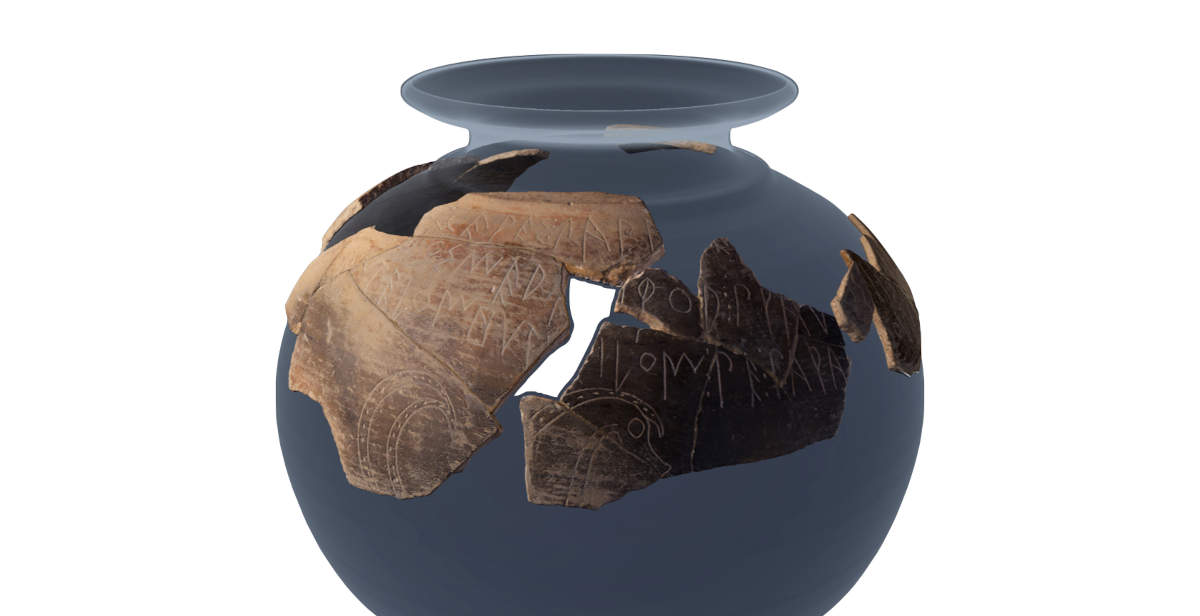 |
| Fragments of the Ceres Vase Reveal an Unexpected Story: The Research on Display at Villa Giulia |
Warning: the translation into English of the original Italian article was created using automatic tools. We undertake to review all articles, but we do not guarantee the total absence of inaccuracies in the translation due to the program. You can find the original by clicking on the ITA button. If you find any mistake,please contact us.